Medically Reviewed by Prof. Dr. Akram
Chief Medical Content Strategist | Senior Neurologist & Pediatric Care Consultant | 30+ Years Clinical Experience
Patient Guide & Clinical Index
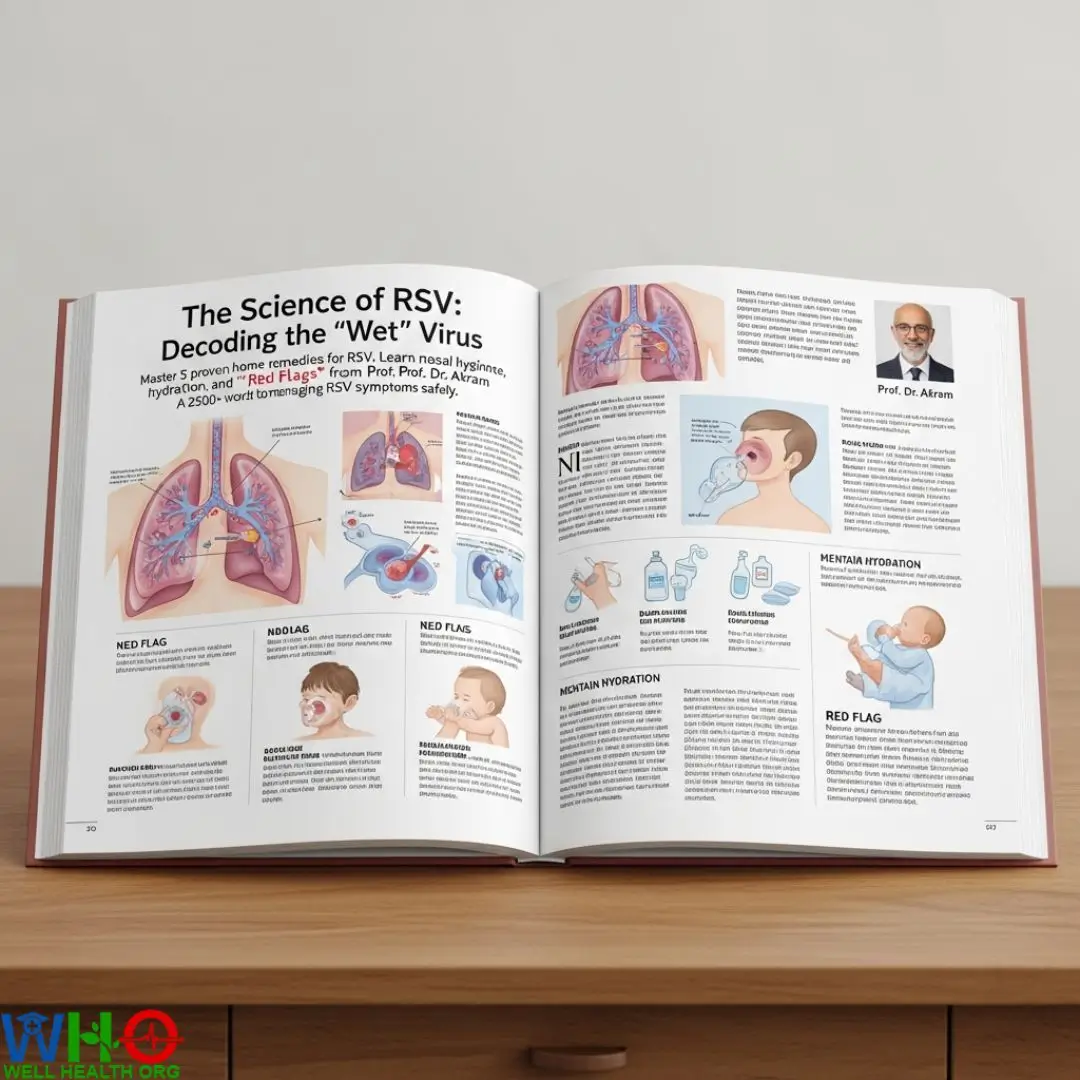
Use the links below to navigate this comprehensive clinical resource on Respiratory Syncytial Virus (RSV) management.The Science of RSV: Decoding the “Wet” Virus
Home Remedies for RSV
Remedy 1: Mastering Nasal Hygiene (The Art of the Suction)

- Step 1: The Saline Prime. Never suction a “dry” nose. Use 2-3 drops of saline in each nostril. Wait 60 seconds. This is the “soaking phase” where the salt water breaks the chemical bonds of the mucus.
- Step 2: The Suction. Use a bulb syringe or a human-powered aspirator (like the NoseFrida). Control is key.
- Step 3: The Recovery. Only suction 3-4 times a day. Over-doing it causes “rebound swelling,” making the nose feel even more stuffed.
Asaan Alfaz mein Summary (हिंदी सारांश) – Click to Expand
- RSV फेफड़ों की छोटी नलियों में सूजन और बलगम पैदा करता है।
- बच्चों की नाक साफ रखना सबसे जरूरी है।
- नाक साफ करने के लिए हमेशा पहले सलाइन (खारे पानी) की बूंदें डालें।
- सूखी नाक में सक्शन (हवा खींचने वाला पंप) कभी न लगाएं।
- 1 साल से छोटे बच्चों को शहद (Honey) बिल्कुल न दें।
- 1 साल से बड़े बच्चों को खांसी के लिए शहद दिया जा सकता है।
- ठंडी भाप वाला ह्यूमिडिफायर (Humidifier) कमरे में चलाएं।
- बच्चे को थोड़ा-थोड़ा करके बार-बार दूध या पानी पिलाएं।
- दिन में कम से कम 4-6 गीले डायपर होने चाहिए।
- अगर बच्चा सांस लेते समय पसलियां चलाए, तो तुरंत डॉक्टर के पास जाएं।
- अगर होंठ नीले पड़ें, तो यह इमरजेंसी है।
- बुखार के लिए डॉक्टर की सलाह पर ही दवा दें।
- दूध पीने से बलगम नहीं बनता, यह एक मिथक है।
- सफाई का ध्यान रखें और हाथ बार-बार धोएं।
- RSV आमतौर पर 5 दिन में अपने चरम (Peak) पर होता है।
Quick Insights in Hinglish (Roman Hindi) – Click to Expand
- RSV phephdo ki choti naliyo mein balgam (mucus) bhar deta hai.
- Nasal Hygiene: Bacche ki naak saaf rakhen taki wo araam se feed le sake.
- Saline Drops: Pehle saline drops dalein, phir hi suction pump use karein.
- Honey Warning: 1 saal se kam umar ke baccho ko honey (shahad) na dein.
- Hydration: Bacche ko dehydrated hone se bachayein, bar-bar liquids dein.
- Humidifier: Thandi bhaap wala humidifier mucus ko patla karne mein help karta hai.
- Wet Diapers: Din mein 4-6 baar peshab hona chahiye.
- Red Flag: Agar baccha saans lete waqt pasliya (ribs) andar kheenchi, toh turant hospital jayein.
- Feeding: Choti-choti servings dein, kyunki baccha jaldi thak jata hai.
- Fever: Fever se darna nahi hai, bas bacche ko comfortable rakhein.
- Hygiene: Hath dhote rahein, ye virus bahut tezi se failta hai.
- Mistake: Kabhi bhi dry nose mein suction na karein, isse swelling badhti hai.
- Steam: Garam shower wala bathroom ‘natural steam room’ ka kaam karta hai.
- Milk Myth: Doodh pine se balgam nahi badhta, be-fikar hokar feed karayein.
- Recovery: RSV ka peak 5th day hota hai, uske baad halat sudharne lagti hai.
Remedy 2: Environmental Optimization (The Power of Moisture)

Remedy 3: Natural Cough Soothers (The Honey Paradox)

- For Children 1 year+: 1 teaspoon of dark honey. Honey is a demulcent, meaning it coats the throat with a protective film, reducing the urge to cough due to irritation.
- How it works: Honey triggers the production of saliva and secretions that thin out airway mucus.
- The Danger (Reaction Treatment): Never give honey to infants under 12 months. It contains Botulism spores. If accidental ingestion occurs, watch for “floppy baby syndrome” (loss of muscle tone) and seek immediate emergency care.
Remedy 4: Strategic Hydration (The Liquid Life-Line)

| Strategy (How it Works) | Impact (Result) |
|---|---|
| Frequent Small Feedings | Reduces fatigue; maintains steady calorie intake. |
| Electrolyte Solutions (Pedialyte) | Replaces salts lost through fever and fast breathing. |
| Avoiding Dry Air Exposure | Prevents “insensible water loss” through the skin. |
Remedy 5: Fever Management & Ear Pressure

The Red Flags: When Home Care is No Longer Enough
This is the most important section of this guide. You must undress your child and look at their bare chest to check for “Work of Breathing.”EMERGENCY CHECKLIST
- Retractions: Skin sucking in around the ribs or neck with every breath.
- Nasal Flaring: Nostrils widening like they are gasping for air.
- Cyanosis: Blue or grey tint around the lips or nails. (Call 911/Emergency immediately).
- Lethargy: The child is “floppy” and very hard to wake up.
- Dehydration: No wet diapers for 8+ hours or no tears when crying.
Common Questions from My Patients (FAQs)
Can I use a nebulizer at home for RSV?
Scientific consensus has changed. Unless your child has underlying asthma, albuterol often doesn’t help RSV because the issue is mucus, not muscle spasms. Use only if prescribed after a clinical exam.Is RSV more dangerous than COVID-19 for infants?
Statistically, yes. RSV is the leading cause of hospitalization for infants worldwide because of the narrowness of their bronchioles compared to adults.Does milk increase mucus production?
No. This is a medical myth. Milk may feel thick in the throat, but it does not cause the body to create more phlegm. Hydration from milk is vital.How long is a child contagious?
Usually 3-8 days. However, infants can shed the virus for up to 4 weeks. Keep washing those hands!What if my child has a reaction to the saline spray?
True saline reactions are rare. If the nose bleeds, you are likely inserting the tip too far or the air is too dry. Stop suctioning for 12 hours and increase humidity.Can adults get RSV?
Yes, but in healthy adults, it feels like a bad cold. It is only dangerous for the elderly or immunocompromised.Why does RSV peak on day 5?
This is the viral life cycle. By day 5, the inflammation and mucus production reach their maximum before the immune system begins the cleanup phase.Are essential oils safe for RSV?
Be very careful. Strong scents like eucalyptus can actually irritate sensitive infant airways. Stick to plain water vapor.How do I clean a humidifier safely?
Daily cleaning with a 1:10 vinegar-to-water ratio. If mold grows, you are breathing in irritants that worsen RSV.Can my child catch RSV twice in one season?
It is rare but possible, as there are different strains of the virus. Usually, the second time is much milder.Is Vicks VapoRub okay for babies?
Not under age 2. The camphor and menthol can trigger mucus production in babies, making the situation worse.Does cold weather cause RSV?
No, the virus causes it. However, cold weather keeps us indoors where the virus spreads easily through the air and on surfaces.Can I give my child ibuprofen for RSV?
Only if they are over 6 months old. For younger infants, use acetaminophen (Tylenol) only after consulting a doctor.What is the “RSV Rattle”?
It’s the sound of air bubbling through mucus. If the child is happy and eating, the rattle itself is not dangerous.Will antibiotics help RSV?
No. RSV is a virus. Antibiotics only kill bacteria. Using them unnecessarily can cause diarrhea and gut issues.Is there an RSV vaccine?
Yes, for pregnant women and the elderly. For infants, there is a monoclonal antibody shot called Nirsevimab that provides passive immunity.How can I prevent the spread to siblings?
Strict handwashing and cleaning high-touch surfaces like doorknobs. If possible, keep the sick child in a separate room.Can RSV cause long-term asthma?
Severe RSV in infancy is linked to a higher risk of childhood asthma, but it is not a guarantee. Most children recover fully.What if my child won’t stop crying?
Inconsolable crying can be a sign of ear pain or difficulty breathing. If comfort measures fail, contact your pediatrician.Should I wake my baby to suction their nose?
If they are sleeping peacefully, let them sleep! Sleep is when the body heals. Suction only if they are struggling to rest or feed.Your 7-Day RSV Recovery Roadmap
Managing this virus is a marathon, not a sprint. Follow this daily checklist to stay ahead of the curve.- Morning: Check temperature, do a 15-minute bathroom steam session, and perform the first nasal suction.
- Every 2 Hours: Offer small amounts of milk or electrolytes. Count wet diapers.
- Afternoon: Monitor “Work of Breathing” (undress and look at the chest).
- Evening: Clean the humidifier, use saline drops, and suction before the final evening feed.
- Night: Keep the child’s head slightly elevated (if they are over 1 year) and keep the humidifier running.
MEDICAL DISCLAIMER:
This content is for educational purposes only and does not constitute medical advice, diagnosis, or treatment. Always seek the advice of your physician or other qualified health provider with any questions you may have regarding a medical condition. Never disregard professional medical advice or delay in seeking it because of something you have read in this article. If you think you may have a medical emergency, call your doctor or 911 immediately.
Medically Reviewed by Prof. Dr. Akram
Orthopedic Surgeon | Professor | Senior Medical Specialist
Prof. Dr. Akram is a distinguished surgeon with over 15 years of clinical expertise. Having served as a lead Emergency Specialist at Complex International Government Hospital, he currently leads a specialized team of 13 medical professionals at his private hospital. As a Professor at top medical universities, he ensures that every article on WellHealthOrg.com meets rigorous clinical standards.
Medical Disclaimer:
The information provided is for educational purposes only and is not a substitute for professional medical advice, diagnosis, or treatment. Always consult your physician for any medical concerns.
Our content is rigorously fact-checked by our 13-member Editorial Team under the clinical supervision of Prof. Dr. Akram.