
The Ocular Recovery Protocol: Eye Infection Symptoms at Home
हिंदी सारांश (Hindi Summary)
- आँखों के संक्रमण का मुख्य कारण बैक्टीरिया या वायरस होते हैं।
- गरम सिकाई (Warm Compress) तेल ग्रंथियों को खोलने में मदद करती है।
- ठंडी सिकाई (Cold Compress) खुजली और सूजन को कम करती है।
- हमेशा स्टेरिल सलाइन (Saline) का ही उपयोग करें।
- कांटेक्ट लेंस संक्रमण के दौरान तुरंत हटा दें।
- हाथों की सफाई सबसे महत्वपूर्ण बचाव है।
- पुराने मेकअप को 90 दिनों में बदल दें।
- आँखों को रगड़ने से कॉर्निया को नुकसान हो सकता है।
- शहद या नींबू का उपयोग आँखों में कभी न करें।
- धुंधली दृष्टि होने पर तुरंत डॉक्टर से मिलें।
- तकिये के कवर को रोज़ाना बदलें।
- बच्चों में संक्रमण बहुत तेज़ी से फैलता है।
- विटामिन A आँखों की सुरक्षा के लिए ज़रूरी है।
- बिना डॉक्टर की सलाह के स्टेरॉयड ड्रॉप्स न डालें।
- गंभीर दर्द होने पर घरेलू नुस्खे बंद कर दें।
Hinglish Summary
- Eye infection ho toh sabse pehle contact lenses nikal dein.
- Garam kapde ki sikaai se ‘Stye’ (Bilhauni) mein aaram milta hai.
- Itching ho toh cold compress use karein, ice direct na lagayein.
- Ghar ke nuskhe jaise honey ya lemon aankhon mein na daalein.
- Pink eye (Viral) bahut contagious hoti hai, doori banaye rakhein.
- Har baar aankh choone se pehle haath 20 seconds tak dhoyeink.
- Towel aur pillowcase daily change karein infection ke waqt.
- Agar vision dhundli (blur) ho jaye, toh turant eye specialist ko dikhayein.
- Purana mascara aur eyeliner fek dein, usme bacteria ho sakte hain.
- Sterile saline water se aankhein saaf karna safe hai.
- Aankhon ko rub karne se ‘Corneal Ulcer’ ka khatra rehta hai.
- Bacchon ki aankhon mein keechad ho toh warm cotton se saaf karein.
- Omega-3 fatty acids dry eyes se bachate hain.
- Pain badhne par home remedy stop kar dein.
- Doctor ki di hui antibiotic drops ka course pura karein.
Clinical Navigation Index
The Pathophysiological Landscape: Understanding Ocular Invasion
Waking up to ocular distress is a biological alarm. When we speak of an eye infection, we are discussing a breach of the ocular surface’s natural defenses. Your eye is protected by a multi-layered tear film, a lysozyme-rich environment that acts as a natural antibiotic. However, when the microbial load—whether bacterial, viral, or fungal—overwhelms these defenses, the inflammatory cascade begins.
Eye Infection Symptoms at Home
Microbial Differentiation: Know Your Enemy
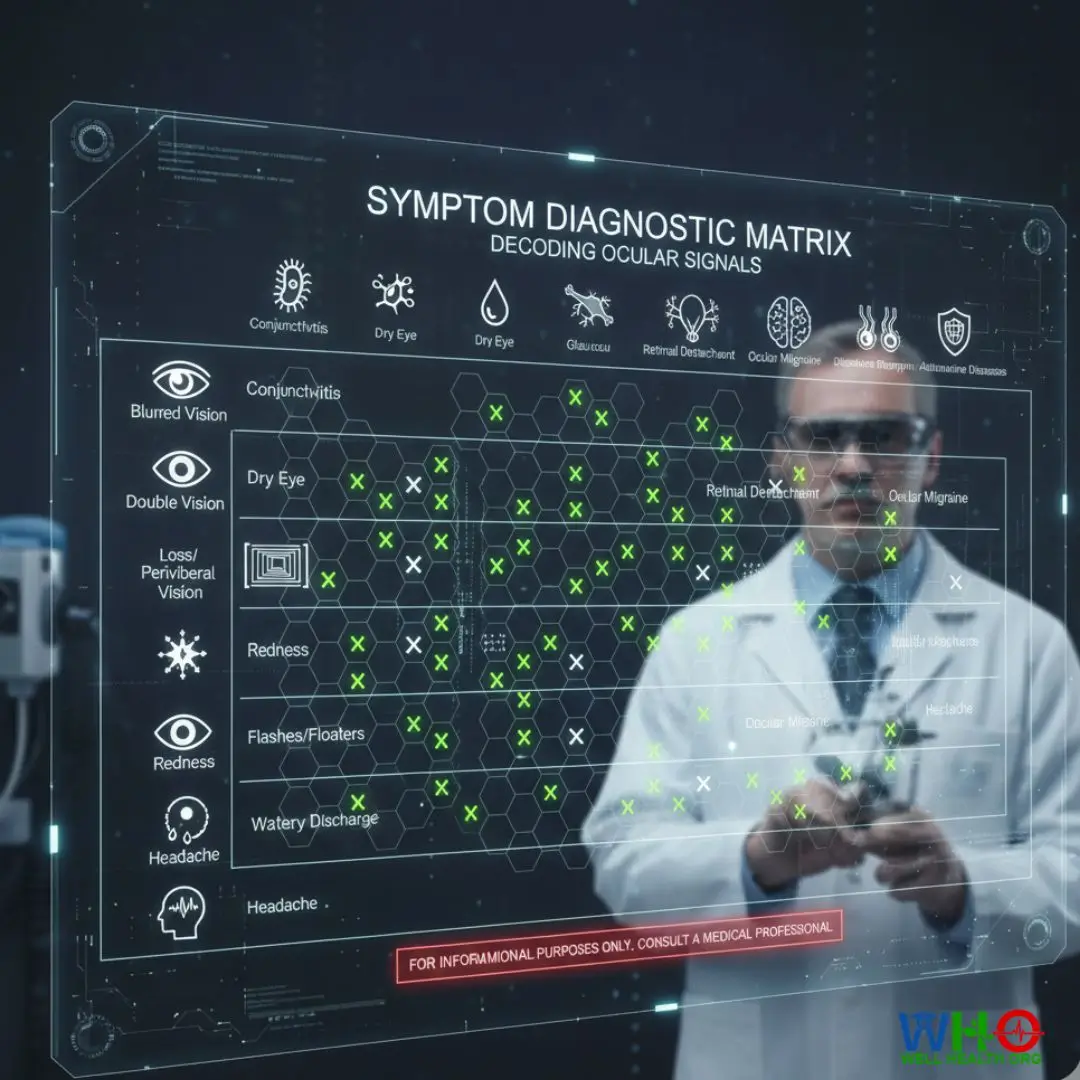
As a clinician, my first “Eureka” moment in a diagnosis comes from observing the exudate (discharge). Viral infections, typically caused by Adenovirus, present with a “serous” or watery discharge. It feels like a persistent “cold in the eye.” Bacterial infections, however, recruit neutrophils, leading to a “purulent” (thick, yellow, or green) discharge that glues the lids shut. Fungal infections are the ‘silent predators,’ often introduced via organic trauma (like a branch scratch), and they require specialized microscopic culture for identification.Symptom Diagnostic Matrix: Decoding Ocular Signals
Eye Infection Symptoms at Home
Neuro-Sensory Indicators
- Foreign Body Sensation (FBS): This isn’t just “dust.” It is often the result of microscopic elevations on the conjunctiva called ‘follicles’ or ‘papillae’ rubbing against the cornea every time you blink.
- Photophobia: When light becomes painful, it indicates that the ciliary body (the muscle that focuses the eye) is in spasm due to deep-seated inflammation. This is a major clinical ‘red flag.’
- Periorbital Edema: Swelling of the eyelids occurs because the tissue there is the loosest in the body, allowing inflammatory fluid to accumulate rapidly.
Clinical Remedial Ecosystem: The Dr. Akram Protocol

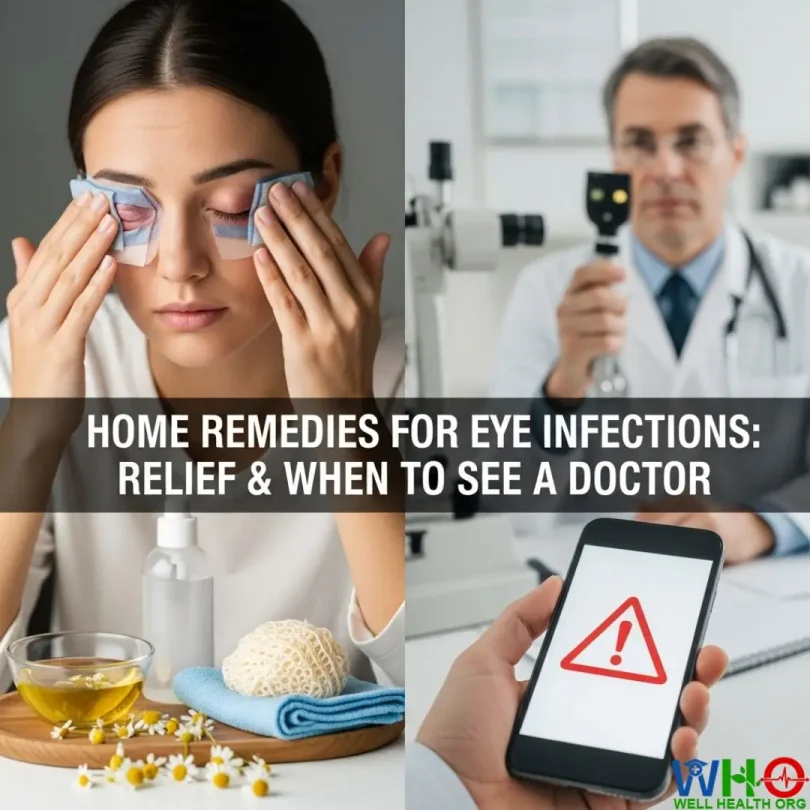
Remedy Module: Thermal Meibomian Liquefaction (Warm Compress)
⚡ How to Use (Clinical Application): Apply to the closed eyelid to treat styes, blepharitis, and crusting. ⚖️ Dosage & Quantity (Clinical Measurement): 10 minutes per session, 4 times daily. 🔬 Mechanism of Action (Electronic Biological Mapping): The heat raises the temperature of the Meibomian glands above their melting point ($32^\circ C$ to $40^\circ C$), allowing stagnant, infected oils to flow freely, restoring the lipid layer of the tear film. 📈 Recovery Timeline (Projected Outcome): Reduction in localized swelling within 48 hours. 🛠️ Preparation Guide (Laboratory Method): Use a lint-free microfiber cloth. Submerge in water heated to $42^\circ C$. Wring thoroughly. Ensure the cloth retains heat by covering it with a dry layer. ⚠️ Reaction & Bio-Safety (Emergency Protocol): If the skin turns bright red or blisters, the temperature is too high. Discontinue immediately and apply room-temperature saline.Remedy Module: Isotonic Ocular Lavage (Saline Rinse)
⚡ How to Use (Clinical Application): Flushing out discharge, allergens, and debris from the conjunctival sac. ⚖️ Dosage & Quantity (Clinical Measurement): 5-10ml per eye, as needed for clarity. 🔬 Mechanism of Action (Electronic Biological Mapping): Mechanical debridement of pathogens and dilution of inflammatory cytokines (IL-1, TNF-alpha) on the ocular surface. 📈 Recovery Timeline (Projected Outcome): Immediate relief of “grittiness”; reduction in redness within 1 hour. 🛠️ Preparation Guide (Laboratory Method): Purchase 0.9% Sterile Sodium Chloride (Preservative-Free). Do not make this at home as tap water contains Acanthamoeba. ⚠️ Reaction & Bio-Safety (Emergency Protocol): If stinging persists for more than 5 minutes, the solution may not be isotonic. Flush with bottled distilled water and consult a specialist.Remedy Module: Vasoconstrictive Cryotherapy (Cold Compress)
⚡ How to Use (Clinical Application): Specifically for viral conjunctivitis and allergic reactions to stop the itch. ⚖️ Dosage & Quantity (Clinical Measurement): 5 minutes, 2-3 times daily. 🔬 Mechanism of Action (Electronic Biological Mapping): Induces localized vasoconstriction, reducing the permeability of blood vessels and preventing the leakage of histamine and fluid into the tissue. 📈 Recovery Timeline (Projected Outcome): Instant reduction in itching and “burning” sensation. 🛠️ Preparation Guide (Laboratory Method): Place a sterile gel mask in the refrigerator ($4^\circ C$). Never use the freezer. Place a thin barrier cloth between the mask and the skin. ⚠️ Reaction & Bio-Safety (Emergency Protocol): Avoid if you have ‘Dry Eye Syndrome’ as cold can further inhibit oil gland function.Bio-Safety Thresholds: When to Terminate Home Care
Eye Infection Symptoms at Home (2)
Preventative Architectonics: Building Ocular Immunity
The 90-Day Microbial Rule
Your mascara wand is a bacterial transport system. Every time you use it, you pick up skin flora and deposit it into a dark, moist tube. After 90 days, the preservative system in the makeup fails. Clinical Recommendation: Discard all eye makeup every 3 months. If you have an active infection, discard everything used in the last 48 hours immediately.Nutritional Fortification
We focus on Vitamin A for vision, but Vitamin C and Zinc are the true heroes of the ocular immune response. Zinc is highly concentrated in the uvea and retina, acting as a cofactor for enzymes that prevent oxidative damage during infection.Expert FAQ Repository: The Neurologist’s Perspective
1. Why is my eye infection worse at night?
During sleep, the lack of blinking causes inflammatory debris and pathogens to stagnate on the ocular surface. This “pooling” effect increases the concentration of toxins, leading to the “glued-shut” sensation in the morning.2. Can I use breast milk for eye infections?
As a doctor, I strongly advise against this. While breast milk contains antibodies, it also contains sugars and fats that can serve as a medium for bacterial growth, potentially worsening a serious infection. Stick to sterile pharmaceutical options.3. Is ‘Pink Eye’ always contagious?
Viral and bacterial conjunctivitis are highly contagious via respiratory droplets or direct contact. Allergic conjunctivitis is not. If both eyes are itching simultaneously after being outdoors, it is likely allergies.4. Can I use honey in my eyes?
No. Unless it is medical-grade, sterile-filtered honey (like Manuka used in specific clinical gels), household honey contains botulism spores and impurities that can cause severe corneal scarring.5. How do I know if my contact lenses are infected?
If you remove the lens and the pain persists, the infection is on the eye. If the pain stops, the lens may be the irritant. Regardless, discard the lenses and the case immediately.6. What is the ‘Safe’ way to rub my eyes?
There isn’t one. Rubbing triggers a ‘Vagovagal response’ that slows the heart but also creates micro-trauma. Use a cold compress instead to ‘numb’ the itch.7. Can stress cause a stye?
Indirectly, yes. Stress increases cortisol, which can disrupt your oil gland secretions and suppress your immune system, making you more prone to Staphylococcus colonization.8. Is it safe to swim with a minor infection?
No. Chlorine is a chemical irritant that breaks down the tear film, and public pools are reservoirs for Pseudomonas, a bacterium that can cause rapid vision loss.9. Can I use my partner’s antibiotic drops?
Never. This is the fastest way to create antibiotic-resistant ‘Superbugs’ in your household. Drops are calibrated to specific bacterial strains.10. Why does my vision blur when I use ointment?
Ointments have a petroleum base that changes the refractive index of the eye. This is normal and usually subsides in 20 minutes. Use ointments only at bedtime.11. How do I clean a baby’s eyes safely?
Use a sterile cotton ball soaked in cooled, boiled water. Wipe from the nose-side (medial) to the ear-side (lateral) in one single motion. Use a new ball for the other eye.12. Does blue light make infections worse?
Blue light causes digital eye strain, which leads to reduced blinking. Reduced blinking dries the eye, making the cornea more vulnerable to microbial attachment.13. What is ‘Acanthamoeba’?
It is a parasite found in tap water and soil. It causes a devastating infection in contact lens wearers who use tap water to clean their cases. It is extremely difficult to treat.14. Can a cold cause an eye infection?
Yes. The nasolacrimal duct connects your nose to your eyes. Viruses from a sinus infection or cold can easily travel up this “elevator” to the ocular surface.15. Should I use a patch on an infected eye?
No. Patching creates a warm, dark, moist environment—the perfect incubator for bacteria to multiply. Keep the eye open to allow oxygen to reach the cornea.16. What are ‘Artificial Tears’?
They are lubricant drops that mimic the human tear film. They don’t kill bacteria, but they wash them away and soothe the ‘gritty’ feeling.17. Can tea bags really help?
The tannins in black tea have mild astringent properties, but the risk of contamination from organic tea leaves is high. A clean cloth is always medically superior.18. Why does my eye look bloodshot but doesn’t hurt?
This could be a ‘Subconjunctival Hemorrhage’ (a popped blood vessel). It looks scary but is usually harmless, unlike an infection which usually involves discomfort.19. How long should I stay home with Pink Eye?
Wait until the discharge has completely stopped. If using antibiotics, 24 hours post-first-dose is the standard medical clearance.20. Can allergies turn into a bacterial infection?
Yes, through ‘Secondary Infection.’ Itching leads to rubbing, rubbing creates lesions, and lesions allow bacteria from your fingers to invade.21. Are steroid drops dangerous?
If used for a fungal or viral infection, steroids suppress the immune response, allowing the pathogen to eat through the eye tissue. Never use them without a slit-lamp exam by a doctor.22. What is Blepharitis?
It is chronic inflammation of the eyelids, often caused by an overgrowth of normal skin bacteria or microscopic mites (Demodex). It requires long-term lid hygiene.23. Can I use tap water to rinse my eyes?
Only in an absolute chemical emergency. For infection, tap water is non-sterile and can introduce more pathogens. Use sterile saline or bottled distilled water.24. How often should I change my pillowcase during an infection?
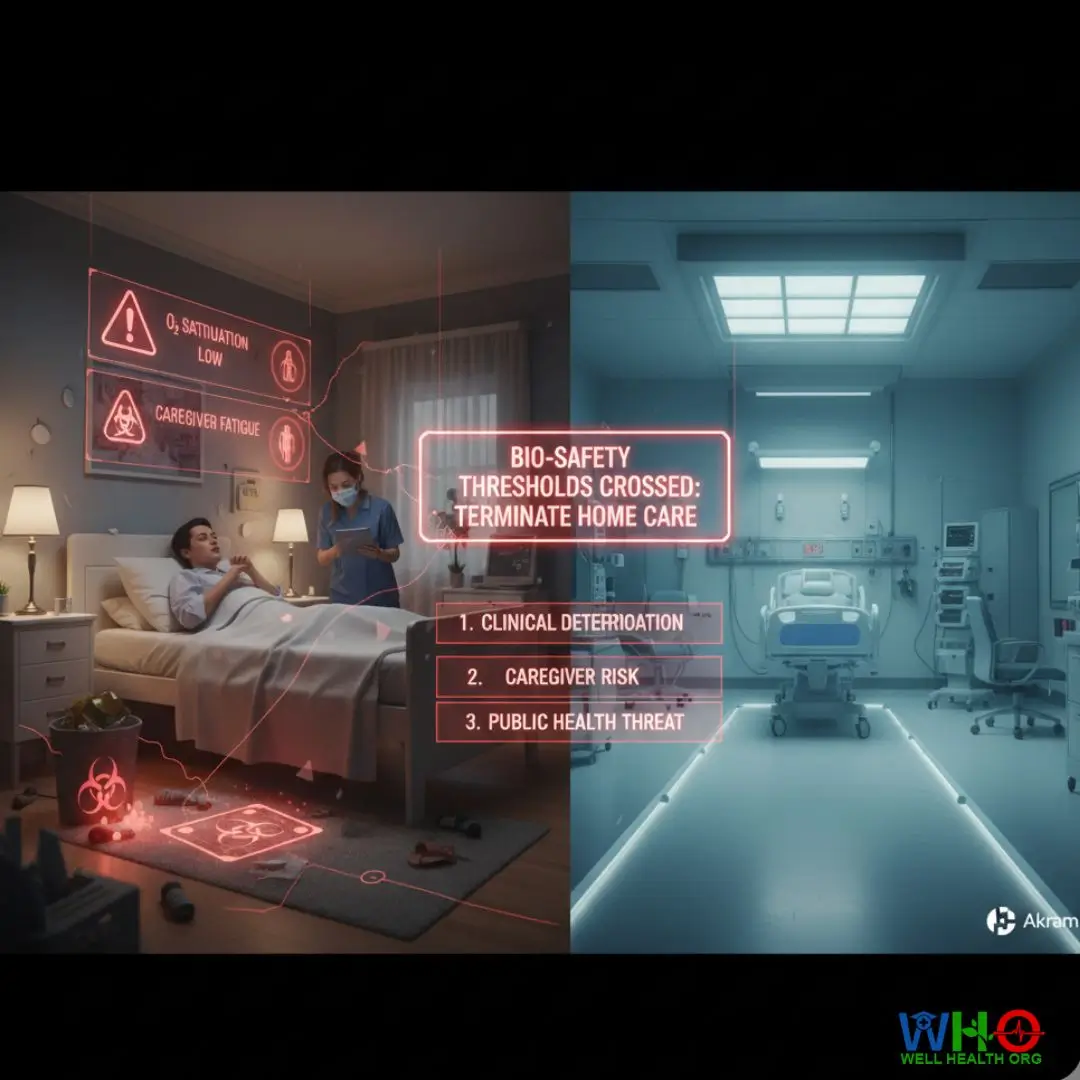
Every single night. Pathogens survive on the fabric and you will re-inoculate your eyes as you toss and turn.25. What is the ‘Red Line’ for seeing a doctor?
Loss of vision, severe pain, or a white spot on the cornea. If you have any of these, stop reading and go to the ER or an ophthalmologist immediately.© 2026 Dr. Akram Medical Strategy Group. All Rights Reserved. This content is for educational purposes and does not replace professional surgical or medical advice.
Medically Reviewed by Prof. Dr. Akram
Orthopedic Surgeon | Professor | Senior Medical Specialist
Prof. Dr. Akram is a distinguished surgeon with over 15 years of clinical expertise. Having served as a lead Emergency Specialist at Complex International Government Hospital, he currently leads a specialized team of 13 medical professionals at his private hospital. As a Professor at top medical universities, he ensures that every article on WellHealthOrg.com meets rigorous clinical standards.
Medical Disclaimer:
The information provided is for educational purposes only and is not a substitute for professional medical advice, diagnosis, or treatment. Always consult your physician for any medical concerns.
Our content is rigorously fact-checked by our 13-member Editorial Team under the clinical supervision of Prof. Dr. Akram.

