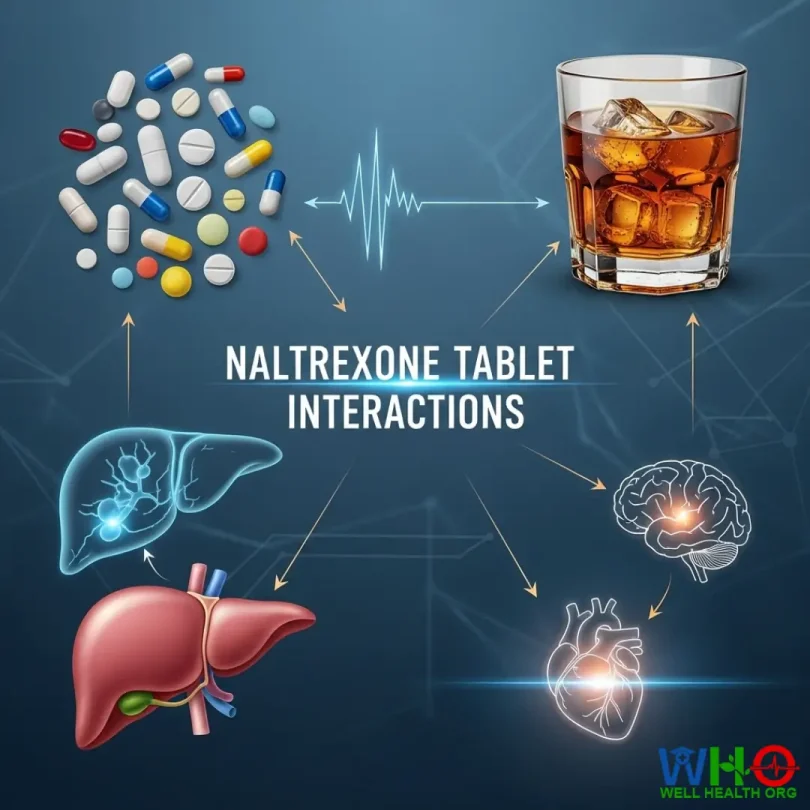
Naltrexone is a proven medication for helping adults manage alcohol use disorder (AUD) and opioid use disorder (OUD), but like all powerful treatments, it comes with important safety considerations. One of the most critical factors in successful treatment is understanding how naltrexone interacts with other medications, substances, and health conditions.
- 1. Understanding How Naltrexone Works in the Body
- Why This Matters for Interactions
- 2. Common Medications That Interact with Naltrexone
- Opioid Medications
- Other Opioid Antagonists
- Thioridazine
- Disulfiram
- 3. Naltrexone and Alcohol: What You Should Know
- If You’re Taking Naltrexone for Alcohol Use Disorder
- If You’re Taking Naltrexone for Opioid Use Disorder
- 4. When Naltrexone Should Be Avoided Completely
- Recent Opioid Use
- Active Withdrawal
- Allergic Reaction History
- 5. Other Important Considerations and Less-Known Interactions
- Cannabis and CBD
- Supplements and Vitamins
- Lab Tests
- 6. Health Conditions That Can Affect Naltrexone Use
- Liver Problems
- Kidney Problems
- Pregnancy and Breastfeeding
- 7. Preventing Dangerous Naltrexone Interactions
- Communicate Openly With Your Healthcare Team
- Keep Updated Medication Records
- Follow Your Prescribing Instructions Exactly
- 8. Watching for Warning Signs of Interactions
- 9. Making Naltrexone Work Safely for You
- Lifestyle Tips for Success
- 10. Final Thoughts on Naltrexone Tablet Interactions
If you’re taking or considering naltrexone, it’s not enough to know that it works — you also need to understand what can interfere with its effectiveness, when it may cause harm, and how to prevent dangerous interactions. This knowledge can help you stay safe, avoid setbacks, and get the most out of your treatment plan.
Quick Reminder: This guide provides general educational information, not medical advice. Always consult your doctor or pharmacist before starting, stopping, or combining any medications.
1. Understanding How Naltrexone Works in the Body
Naltrexone belongs to a drug class known as opioid antagonists. Instead of stimulating opioid receptors (like painkillers and illicit opioids do), naltrexone blocks them. This means:
- If you take opioids, you won’t experience their usual euphoric or pain-relieving effects.
- If you’re recovering from alcohol dependence, it reduces the rewarding “buzz” from drinking.
Why This Matters for Interactions
Because naltrexone works directly on your brain’s reward and pleasure systems, anything that affects these pathways — from other medications to certain supplements — has the potential to interfere. Some interactions can make naltrexone less effective, while others can amplify side effects or cause dangerous withdrawal symptoms.
2. Common Medications That Interact with Naltrexone
Knowing which drugs pose a risk is the first step in preventing serious problems. While some interactions are mild, others can be severe or even life-threatening.
Opioid Medications
This is the most important and dangerous interaction to know about.
If you take opioids while on naltrexone, you can experience precipitated withdrawal — an abrupt, intense withdrawal reaction. This happens because naltrexone suddenly knocks opioids off your receptors, without giving your body time to adjust.
Examples of opioids to avoid:
- Oxycodone (OxyContin, Xtampza ER)
- Hydrocodone (Hysingla ER)
- Codeine combinations (often in cough syrups or pain medications)
- Diphenoxylate/atropine (Lomotil) — used for diarrhea
- Methadone (Methadose)
- Buprenorphine (Suboxone, Sublocade, Brixadi)
Key safety note:
Doctors usually require 7–10 opioid-free days before starting naltrexone. If you’ve been on long-acting opioids like methadone or buprenorphine, the waiting period can extend to two weeks.
Other Opioid Antagonists
Taking two opioid blockers together can over-amplify effects, leading to more side effects without added benefit.
Examples include:
- Naldemedine (Symproic)
- Nalmefene (Opvee)
- Naloxegol (Movantik)
- Naloxone (Narcan, Zimhi)
- Injectable naltrexone (Vivitrol)
Thioridazine
This older antipsychotic medication, used for schizophrenia, can cause sedation and drowsiness. When taken with naltrexone, these effects can intensify, leading to impaired coordination and increased fall risk — especially dangerous for older adults.
Disulfiram
Like naltrexone, disulfiram is used in alcohol use disorder treatment. While they can be prescribed together, this combination increases the risk of liver toxicity. Patients using both typically require frequent liver function tests.
3. Naltrexone and Alcohol: What You Should Know
Naltrexone doesn’t have a direct chemical reaction with alcohol the way some medications do, but alcohol use can still affect your treatment.
If You’re Taking Naltrexone for Alcohol Use Disorder
- The medication’s goal is to help you reduce or stop drinking.
- Continuing to drink heavily can undermine progress, even if cravings are less intense.
- Drinking can also increase strain on your liver — a concern since naltrexone itself is processed there.
If You’re Taking Naltrexone for Opioid Use Disorder
- Alcohol can cause drowsiness, confusion, and liver stress, compounding side effects.
- Some people find alcohol feels “different” while on naltrexone — the pleasure is reduced, but intoxication and coordination problems may still occur.
Best practice: Most doctors recommend avoiding or limiting alcohol during naltrexone treatment, regardless of your primary diagnosis.
4. When Naltrexone Should Be Avoided Completely
In certain cases, naltrexone is not just risky — it’s contraindicated.
Recent Opioid Use
If you’ve recently taken opioids, starting naltrexone can cause sudden, severe withdrawal with symptoms like:
- Intense body aches and cramps
- Nausea, vomiting, diarrhea
- Anxiety, restlessness
- Sweating and goosebumps
Why? Naltrexone blocks opioid receptors instantly, displacing the opioids without allowing for gradual detox.
Active Withdrawal
If you’re already going through withdrawal, naltrexone will make symptoms worse. You’ll need to wait until detox is complete.
Allergic Reaction History
People who have had an allergic response to naltrexone or its ingredients should avoid it entirely.
5. Other Important Considerations and Less-Known Interactions
Not all interactions come from prescription drugs — some involve supplements, cannabis products, or even lab tests.
Cannabis and CBD
- Naltrexone may increase the effects of cannabis, making you feel more sedated or lightheaded.
- Effects can vary widely between individuals.
- Always disclose cannabis or CBD use to your doctor.
Supplements and Vitamins
- No specific vitamin or herbal conflicts are confirmed, but that doesn’t mean they’re impossible.
- Herbs like kava or valerian, which affect the nervous system, could increase sedation.
Lab Tests
- Naltrexone can interfere with opioid drug screens, causing results that don’t match your actual substance use.
- Always inform lab staff you’re on naltrexone.
6. Health Conditions That Can Affect Naltrexone Use
While naltrexone can be effective for many people, certain underlying health conditions can alter how your body processes the medication — or increase your risk of serious side effects. Before prescribing naltrexone, your doctor will carefully review your full medical history.
Liver Problems
Since naltrexone is primarily metabolized in the liver, any pre-existing liver disease can affect its safety.
Examples of conditions that require caution:
- Hepatitis (viral or autoimmune)
- Cirrhosis
- Fatty liver disease
Potential issues:
- Higher drug levels in the bloodstream, leading to more pronounced side effects.
- Increased risk of liver toxicity — a known but uncommon side effect of naltrexone.
Your doctor will likely:
- Order baseline liver function tests before starting.
- Recheck labs periodically during treatment.
- Adjust or stop treatment if liver enzyme levels rise significantly.
Kidney Problems
Although the liver does most of the work, naltrexone and its metabolites are excreted through the kidneys.
- Mild to moderate kidney impairment — May require dose adjustments.
- Severe kidney disease — Naltrexone may not be recommended at all.
Symptoms that might indicate worsening kidney function while on naltrexone:
- Swelling in the ankles or feet
- Sudden weight gain
- Reduced urination
Pregnancy and Breastfeeding
The safety of naltrexone during pregnancy is not fully established.
- Animal studies show some potential risks, but results don’t always apply directly to humans.
- In pregnancy, the decision to use naltrexone involves weighing the risks of untreated AUD or OUD against the possible effects on the baby.
- It is unknown whether naltrexone passes into breast milk. If it does, the impact on infants is unclear.
Doctors may:
- Recommend alternative treatments during pregnancy.
- Closely monitor both mother and baby if naltrexone is continued.
7. Preventing Dangerous Naltrexone Interactions
Even though some drug interactions are unavoidable, you can significantly reduce your risk by being proactive about your treatment.
Communicate Openly With Your Healthcare Team
Before starting naltrexone:
- Provide a complete medication list (prescription, over-the-counter, vitamins, and herbal supplements).
- Be honest about alcohol, cannabis, or recreational drug use — this isn’t about judgment; it’s about safety.
- Share all health conditions, even if they seem unrelated.
Keep Updated Medication Records
Maintaining an up-to-date medication card or list on your phone ensures that:
- Emergency room doctors know you’re on naltrexone.
- You avoid accidental prescriptions for conflicting medications (especially opioids).
- You can quickly verify dosing details if needed.
Follow Your Prescribing Instructions Exactly
- Take naltrexone at the same time each day for steady blood levels.
- Never double up on missed doses unless your doctor specifically advises it.
- Do not attempt to override naltrexone’s blocking effects with higher opioid doses — this can lead to life-threatening overdose.
8. Watching for Warning Signs of Interactions
Early detection of side effects or unusual reactions can prevent small issues from becoming emergencies.
Call your doctor immediately if you notice:
- Extreme drowsiness, confusion, or difficulty staying awake
- Persistent abdominal pain, nausea, or vomiting
- Yellowing of the skin or eyes (jaundice)
- Unusual mood swings or mental changes
- Dark urine or pale stools
- Sudden swelling in the legs or feet
Even mild symptoms like headaches, sleep changes, or digestive upset are worth reporting — they may signal the need for a dosage change.
9. Making Naltrexone Work Safely for You
The most successful naltrexone treatments happen when patients actively participate in their care. This includes:
- Understanding how the medication works.
- Knowing what to avoid.
- Building a strong communication loop with your care team.
Lifestyle Tips for Success
- Pair medication with counseling or support groups — studies show this improves recovery rates.
- Maintain regular checkups — don’t skip follow-ups even if you feel fine.
- Stay hydrated and follow a balanced diet to support liver and kidney health.
- Limit alcohol — even small amounts can put stress on your liver.
10. Final Thoughts on Naltrexone Tablet Interactions
Naltrexone can be a life-changing tool in recovery from alcohol or opioid dependence, but its safety hinges on knowing and managing its interactions. By understanding what substances, conditions, and medications can interfere with its effects, you give yourself the best chance for safe and successful treatment.
Remember:
- Opioid use while on naltrexone is dangerous and can cause sudden withdrawal or overdose.
- Your liver and kidney health play a major role in determining whether naltrexone is safe for you.
- Open, honest communication with your healthcare provider is non-negotiable.
If you experience any unusual symptoms, seek medical advice promptly — early action can prevent serious problems.
Medically Reviewed by Prof. Dr. Akram
Orthopedic Surgeon | Professor | Senior Medical Specialist
Prof. Dr. Akram is a distinguished surgeon with over 15 years of clinical expertise. Having served as a lead Emergency Specialist at Complex International Government Hospital, he currently leads a specialized team of 13 medical professionals at his private hospital. As a Professor at top medical universities, he ensures that every article on WellHealthOrg.com meets rigorous clinical standards.
Medical Disclaimer:
The information provided is for educational purposes only and is not a substitute for professional medical advice, diagnosis, or treatment. Always consult your physician for any medical concerns.
Our content is rigorously fact-checked by our 13-member Editorial Team under the clinical supervision of Prof. Dr. Akram.