Pimples on Private Parts Female
Finding a pimple in your private area can cause immediate panic — your mind might race to worst-case scenarios, from infections to sexually transmitted diseases. But take a deep breath. In most cases, those small bumps are harmless and highly treatable, much like the pimples that appear on your face, back, or chest.
- Pimples on Private Parts Female
- Medical Disclaimer
- Understanding Why Pimples Form on the Pubic Area
- 1. Shaving and Ingrown Hairs
- 2. Folliculitis: Infected Hair Follicles
- 3. Contact Dermatitis: Irritation from Products
- 4. Hormonal Fluctuations
- 5. Sexually Transmitted Infections (STIs)
- Safe and Effective Home Remedies for Pubic Pimples
- 1. Warm Compress Therapy
- 2. Tea Tree Oil: Nature’s Antiseptic
- 3. Aloe Vera Gel for Soothing Relief
- 4. Oatmeal Baths for Itchy or Irritated Skin
- 5. Apple Cider Vinegar (ACV) Rinse
- 6. Witch Hazel for Gentle Healing
- 7. Coconut Oil Moisturization
- 8. Avoid Touching or Squeezing the Pimples
- 9. Maintain Excellent Hygiene
- When to See a Doctor About Pubic Pimples
- Preventing Pimples on Your Private Parts
- 1. Upgrade Your Shaving Routine
- 2. Choose Breathable, Loose Clothing
- 3. Stay Mindful of Skincare and Laundry Products
- 4. Exfoliate the Area Gently
- 5. Manage Hormonal Triggers Naturally
- Understanding What’s Normal and What’s Not
- Lifestyle Habits That Support Skin Health Down There
- When Home Remedies Aren’t Enough
- The Bottom Line: Clear Skin Is Achievable
- Frequently Asked Questions (FAQs) About Pimples on Private Parts
- 1. Are pimples on the private area normal?
- 2. Can shaving cause pimples or bumps down there?
- 3. How can I tell if a bump is a pimple or an STI?
- 4. Should I pop a pimple on my private parts?
- 5. Can hormonal changes cause pimples in the pubic area?
- 6. What’s the best home remedy for genital pimples?
- 7. When should I see a doctor?
- 8. Can I prevent pimples in the pubic area?
- 9. Can I use acne cream or benzoyl peroxide on genital pimples?
- 10. Are pimples in the private area contagious?
- Conclusion: Taking Care of Your Intimate Skin
The skin in the pubic region is sensitive, packed with oil glands, and often subjected to friction, sweat, and shaving — all of which can clog pores and trigger breakouts. Understanding what’s happening beneath the surface can help you choose the right remedies and prevent future flare-ups.
In this comprehensive guide, we’ll explore the common causes of pimples on private parts, the best home remedies for quick relief, when to see a doctor, and how to prevent them naturally. By the end, you’ll feel informed, confident, and equipped with practical steps to restore and maintain healthy skin down there.
Medical Disclaimer
This article is for informational and educational purposes only. It does not replace professional medical advice. Always consult with a qualified healthcare provider for an accurate diagnosis or treatment plan. If you experience severe pain, persistent symptoms, or suspect an infection or sexually transmitted disease (STD), seek medical attention immediately.
Understanding Why Pimples Form on the Pubic Area
Before we dive into remedies, it helps to understand why these bumps appear in the first place. Pimples in the genital or bikini area occur for similar reasons as on your face — blocked pores, excess oil, and bacteria — but the triggers can vary due to unique conditions of the pubic region.
1. Shaving and Ingrown Hairs
Shaving is one of the most common causes of bumps and pimples in the bikini area. When you shave, you remove the hair just above the surface of the skin. As new hair grows, it can curl inward and penetrate the skin instead of growing outward, leading to ingrown hairs.
These ingrown hairs can appear as small, red, and sometimes painful pimples. They may even have a visible dark spot in the center, which is the trapped hair.
Factors that increase your risk include:
- Using a dull or dirty razor
- Shaving against the direction of hair growth
- Skipping lubrication (like shaving cream or gel)
- Wearing tight clothing immediately after shaving
Over time, repeated irritation can lead to folliculitis — a condition where the hair follicle itself becomes inflamed or infected.
💡 Pro Tip: If shaving irritates your skin often, consider trimming instead of shaving, or explore waxing and laser hair removal for longer-lasting results.
2. Folliculitis: Infected Hair Follicles
Folliculitis happens when bacteria (often Staphylococcus aureus) or fungi infect a hair follicle. It typically looks like a cluster of small red bumps or white-headed pimples around the hair roots.
It may itch, burn, or feel tender to the touch. In severe cases, the area may fill with pus or crust over.
Common triggers include:
- Excessive sweating (especially in hot weather or after workouts)
- Friction from tight underwear or leggings
- Hot tubs or poorly cleaned pools
- Prolonged sitting in wet clothing, like after swimming or exercising
Folliculitis is often mild and clears up on its own, but if the infection spreads or becomes painful, a doctor may prescribe an antibiotic ointment or antifungal cream.
3. Contact Dermatitis: Irritation from Products
Your pubic skin is delicate and highly sensitive. Even seemingly harmless products — like fragranced soaps, laundry detergents, lotions, or fabric softeners — can trigger contact dermatitis.
This condition appears as red, itchy, bumpy skin, sometimes with dry patches or a mild rash. The reaction can occur immediately after contact or develop over several days of exposure.
To pinpoint the culprit, think about any new product you’ve recently introduced — from intimate washes to new underwear materials. Switching to hypoallergenic, fragrance-free, and pH-balanced products often solves the problem.
4. Hormonal Fluctuations
Just like facial acne, hormones play a big role in pubic pimples. Hormonal changes during menstruation, pregnancy, menopause, or stress can increase oil production and inflammation.
This excess sebum can clog hair follicles and create an environment where bacteria thrive, leading to breakouts — often just before your period or during times of hormonal imbalance.
If you notice consistent breakouts around your menstrual cycle, your hormones may be the key factor. Maintaining a healthy diet, managing stress, and talking to your doctor about possible treatments (like hormonal birth control or supplements) can help regulate these flare-ups.
5. Sexually Transmitted Infections (STIs)
While most pubic pimples are harmless, some bumps in the genital area can be signs of sexually transmitted infections.
It’s important to recognize how these differ from regular pimples:
| Condition | Appearance | Symptoms |
|---|---|---|
| Genital Herpes | Painful blisters or sores that may crust over | Burning, itching, fever, body aches |
| Genital Warts (HPV) | Flesh-colored, raised or flat bumps | Usually painless but can spread |
| Molluscum Contagiosum | Smooth, dome-shaped bumps with a central dimple | May itch but typically painless |
If you’re unsure, it’s always best to get tested. STIs require professional medical treatment and should never be self-diagnosed or treated with home remedies.
Safe and Effective Home Remedies for Pubic Pimples
For mild, non-infectious pimples caused by clogged pores, shaving, or irritation, several natural remedies can help soothe the skin and speed up healing.
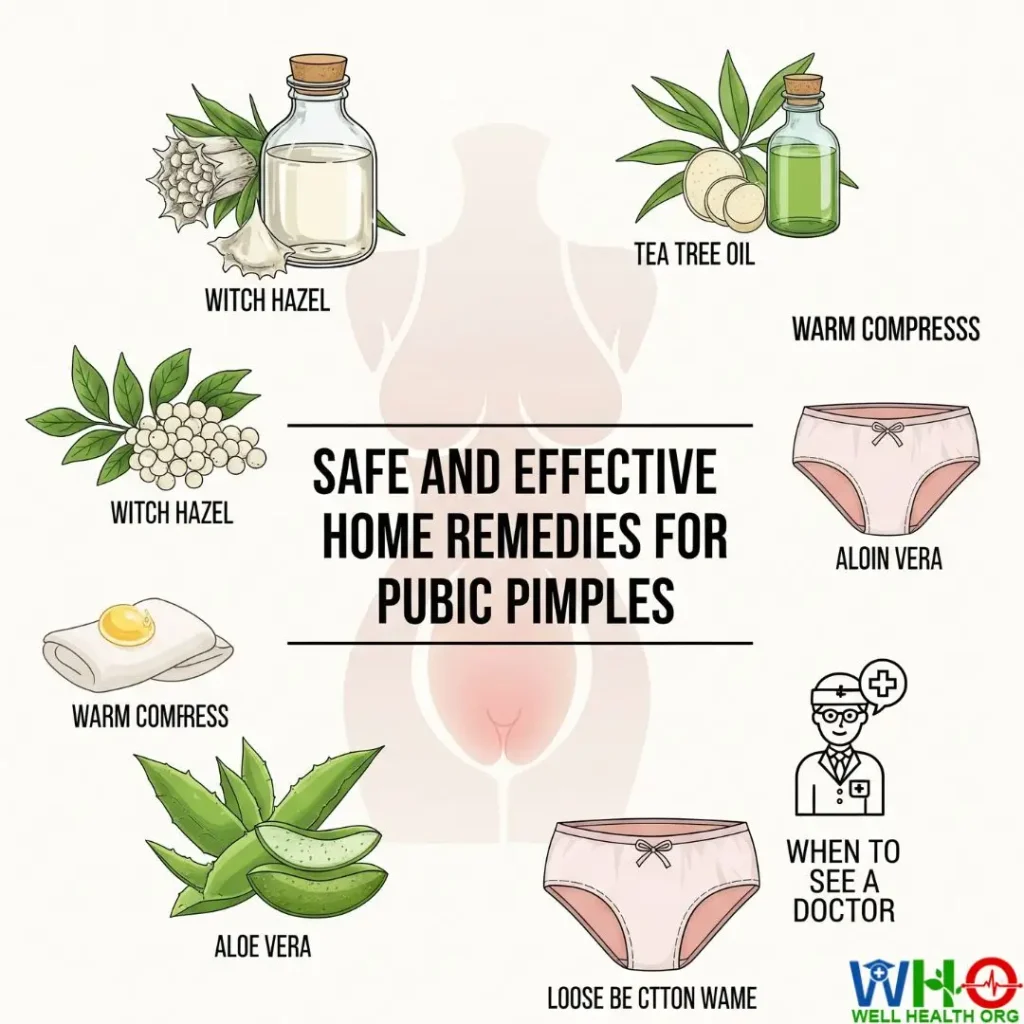
Let’s explore some of the most effective, dermatologist-approved home treatments.
1. Warm Compress Therapy
A warm compress is one of the simplest and most effective remedies for pubic pimples. The warmth helps open up pores, soften trapped sebum, and encourage natural drainage.
How to do it:
- Soak a clean washcloth in warm (not hot) water.
- Wring out excess water and gently place it on the affected area.
- Leave it on for 10–15 minutes.
- Repeat 2–3 times daily until the bump starts to heal.
This not only relieves discomfort but also helps your skin’s natural healing process by increasing circulation.
💡 Tip: Add a pinch of salt to the warm water to enhance its antibacterial effect.
2. Tea Tree Oil: Nature’s Antiseptic
Tea tree oil is a powerful antibacterial and anti-inflammatory essential oil that helps reduce redness and fight bacteria-causing pimples.
How to use it:
- Mix 2–3 drops of tea tree oil with 1 teaspoon of carrier oil (like coconut or jojoba oil).
- Apply the mixture to the bump using a cotton swab.
- Leave it on overnight or rinse off after 30 minutes if your skin is sensitive.
Always do a patch test before using tea tree oil — some people may experience irritation if used undiluted.
3. Aloe Vera Gel for Soothing Relief
Aloe vera is famous for its cooling, anti-inflammatory properties. It can calm irritation, reduce redness, and promote healing.
How to use it:
- Apply a thin layer of pure aloe vera gel directly to the affected area.
- Leave it on until it’s fully absorbed.
- Repeat 2–3 times daily.
Make sure to use 100% natural aloe vera gel (without alcohol or added fragrances).
4. Oatmeal Baths for Itchy or Irritated Skin
If your pubic area feels irritated or itchy, a colloidal oatmeal bath can be a lifesaver. Oatmeal contains soothing compounds that calm inflammation and restore moisture.
How to do it:
- Grind 1 cup of plain oats into a fine powder.
- Add it to a lukewarm bath.
- Soak for 15–20 minutes.
After bathing, pat the area dry gently — avoid rubbing, which can worsen irritation.
5. Apple Cider Vinegar (ACV) Rinse
Apple cider vinegar has natural antibacterial and astringent properties that can help balance skin pH and fight bacteria.
How to use it:
- Mix 1 part ACV with 3 parts water.
- Dip a cotton ball into the solution and dab it gently on the affected area.
- Leave it on for 10 minutes before rinsing.
Do not apply undiluted ACV directly to your skin — it’s too strong and may cause burns or irritation.
6. Witch Hazel for Gentle Healing
Witch hazel is a time-tested natural astringent that can help reduce oil, soothe inflammation, and shrink pimples without over-drying your skin. It’s particularly effective for people with sensitive or reactive skin around the bikini line.
How to use it:
- Apply pure, alcohol-free witch hazel to a cotton pad.
- Dab gently onto the affected area twice a day.
- Let it dry naturally—no rinsing needed.
Witch hazel works by tightening the skin and reducing redness, making it one of the best low-risk treatments for mild irritation and razor bumps.
💡 Pro Tip: Choose an unscented, alcohol-free witch hazel (like one made with aloe or rose water) to prevent stinging.
7. Coconut Oil Moisturization
Coconut oil isn’t just hydrating — it also contains lauric acid, a natural antibacterial compound that can help combat the microbes responsible for minor infections.
How to use it:
- After cleaning the area, apply a thin layer of virgin coconut oil.
- Allow it to absorb into the skin; there’s no need to rinse.
- Use it 1–2 times daily.
Coconut oil keeps the skin moisturized, reduces itching, and forms a gentle barrier that helps prevent bacteria from entering irritated follicles.
8. Avoid Touching or Squeezing the Pimples
It’s tempting to pop or squeeze a pubic pimple, but resist the urge. Picking at it can:
- Push bacteria deeper into the skin, worsening infection.
- Lead to scarring or dark spots.
- Spread bacteria to nearby follicles, causing more breakouts.
Instead, allow the pimple to drain naturally with warm compresses and gentle care.
9. Maintain Excellent Hygiene
The pubic area is warm and moist, creating the perfect environment for bacteria and yeast to thrive. Keeping the area clean and dry is one of the most effective ways to speed up healing and prevent new pimples.
Practical hygiene tips:
- Wash daily with mild, fragrance-free soap and warm water.
- Gently pat dry with a clean towel after bathing.
- Change underwear daily — or more often if you sweat a lot.
- Opt for breathable cotton underwear instead of synthetic fabrics.
If you exercise frequently, make sure to shower right after workouts to wash away sweat and bacteria.
When to See a Doctor About Pubic Pimples
Most pimples in your private area clear up with home care, but some require medical evaluation. It’s important to recognize warning signs that could indicate an infection or another condition that needs treatment.
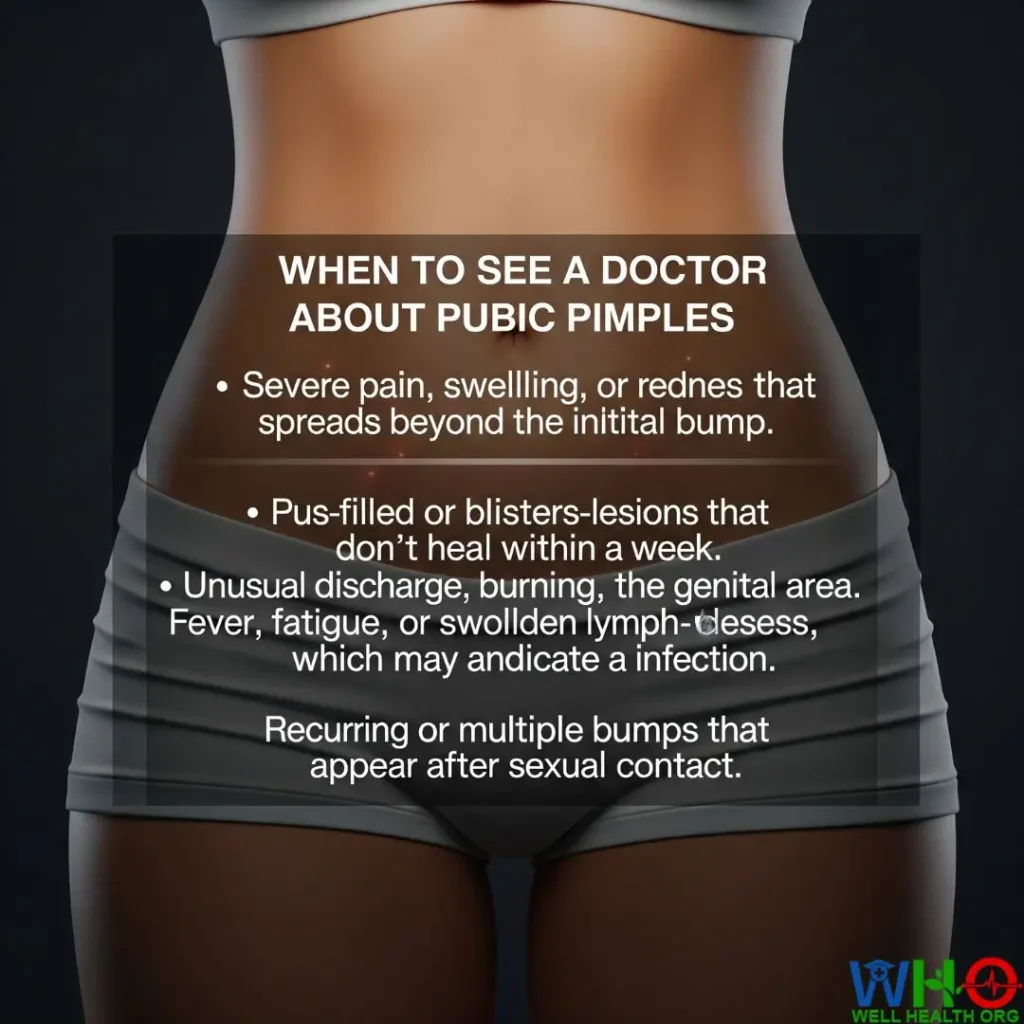
See a doctor if you notice:
- Severe pain, swelling, or redness that spreads beyond the initial bump.
- Pus-filled or blister-like lesions that don’t heal within a week.
- Unusual discharge, burning, or itching around the genital area.
- Fever, fatigue, or swollen lymph nodes, which may indicate an infection.
- Recurring or multiple bumps that appear after sexual contact.
Your healthcare provider may prescribe topical or oral antibiotics, antifungal creams, or antiviral medications depending on the cause.
If there’s any chance your bumps could be linked to a sexually transmitted infection (STI), it’s essential to get tested early for accurate diagnosis and safe treatment.
Preventing Pimples on Your Private Parts
Prevention is the best approach when it comes to pubic pimples. A few mindful habits and hygiene adjustments can drastically reduce your chances of developing new breakouts.

1. Upgrade Your Shaving Routine
Since shaving is one of the most common culprits, making small changes can prevent irritation and ingrown hairs.
Tips for a safe shave:
- Always start with clean skin — wash the area with warm water and mild soap.
- Use a sharp, clean razor to minimize friction and avoid dragging bacteria across the skin.
- Apply a gentle shaving gel or cream to lubricate and soften the hair.
- Shave in the direction of hair growth, not against it.
- Rinse the area with cool water afterward to close pores.
- Finish with a soothing alcohol-free moisturizer or aloe vera gel.
Avoid dry shaving or reusing old razors, which can cause microscopic cuts and bacterial infections.
2. Choose Breathable, Loose Clothing
Tight clothing can trap heat, moisture, and bacteria close to your skin, especially in the bikini area. To allow your skin to breathe:
- Wear cotton or moisture-wicking underwear.
- Avoid thongs or synthetic fabrics that cause friction.
- Change out of sweaty clothes promptly after workouts or hot days.
Letting your skin “breathe” keeps the area dry and reduces inflammation risk.
3. Stay Mindful of Skincare and Laundry Products
If your skin is sensitive, pay attention to the ingredients in the products you use. Common irritants include fragrances, dyes, parabens, and sulfates.
Tips:
- Use hypoallergenic soaps and gentle detergents.
- Skip fabric softeners and heavily perfumed body washes.
- Wash new underwear before wearing it to remove factory chemicals.
The fewer irritants your skin comes into contact with, the less likely you are to experience inflammation.
4. Exfoliate the Area Gently
Regular, gentle exfoliation can help remove dead skin cells and prevent clogged pores, but it must be done carefully due to the sensitivity of the area.
How to exfoliate safely:
- Use a soft washcloth or a sugar-and-honey scrub once a week.
- Rub gently in circular motions — never scrub harshly.
- Rinse thoroughly with warm water and apply a mild moisturizer afterward.
Avoid exfoliating if you currently have open sores, active inflammation, or freshly shaved skin.
5. Manage Hormonal Triggers Naturally
If your pubic pimples are linked to hormonal changes, addressing your overall hormonal balance can help minimize flare-ups.
Try incorporating these lifestyle adjustments:
- Eat a balanced diet rich in fruits, vegetables, and omega-3 fatty acids.
- Avoid excessive sugar and dairy, which can trigger hormonal acne in some people.
- Practice stress management techniques like yoga or journaling.
- Get 7–9 hours of quality sleep per night.
For severe or chronic hormonal acne, consult a healthcare provider. They may suggest hormone-balancing treatments such as birth control or supplements like zinc and evening primrose oil.
Understanding What’s Normal and What’s Not
Occasional pimples in your private area are completely normal, especially after shaving or sweating. However, certain symptoms should not be ignored.
Here’s a quick reference guide:
| Symptom | Likely Cause | Recommended Action |
|---|---|---|
| Small red bump after shaving | Razor burn or ingrown hair | Warm compress, aloe vera, avoid shaving for a few days |
| Cluster of itchy bumps | Folliculitis or contact dermatitis | Keep clean, use tea tree oil or witch hazel |
| Painful blister or sore | Possible herpes infection | Consult doctor immediately |
| Flesh-colored bump | Possible wart (HPV) | Medical diagnosis required |
| Pimple that won’t heal | Possible cyst or infection | Doctor evaluation needed |
Recognizing these patterns helps you take the right steps without panic or delay.
Lifestyle Habits That Support Skin Health Down There
Healthy skin is about more than external care — your overall lifestyle can directly affect how your skin looks and feels, even in intimate areas.
Here are some foundational habits for skin health:
- Stay Hydrated: Drink enough water daily to help your body flush out toxins.
- Maintain a Balanced Diet: Focus on whole foods rich in antioxidants, vitamins A, C, and E, and healthy fats.
- Exercise Regularly: Physical activity improves circulation, which aids in skin healing.
- Limit Sugar and Processed Foods: These can increase inflammation and worsen acne.
- Keep Stress in Check: Chronic stress can trigger hormonal imbalances that lead to breakouts.
Your skin is a reflection of your internal health — treat your body kindly, and your skin will follow suit.
When Home Remedies Aren’t Enough
Even with careful hygiene and home remedies, some pimples might not respond. This can happen if the bump is infected, cystic, or related to an underlying condition like hidradenitis suppurativa (HS) — a chronic inflammatory skin disease that causes painful lumps in sweat-prone areas like the groin.
If you’ve tried home care for over a week with no improvement, or the condition keeps recurring, seek professional medical advice. Your doctor may recommend:
- Antibiotic or antifungal creams
- Prescription-strength retinoids
- Hormonal therapy (for hormone-related acne)
- Minor drainage procedures (for cystic lumps)
Early diagnosis prevents complications like scarring and persistent inflammation.
The Bottom Line: Clear Skin Is Achievable
Finding a pimple on your private parts can be unsettling, but in most cases, it’s nothing serious. With the right care, hygiene habits, and lifestyle adjustments, these bumps can heal quickly — and stay away for good.
To recap:
- Identify the cause — shaving, irritation, or infection.
- Use gentle, natural remedies like warm compresses, aloe vera, or tea tree oil.
- Maintain proper hygiene and wear breathable clothing.
- Know when to see a doctor if symptoms worsen or look unusual.
Remember, your skin in the pubic area deserves the same care and respect as the rest of your body. By understanding what triggers these breakouts and responding calmly and wisely, you can protect both your comfort and confidence.
Your body communicates through your skin — listen to it, care for it, and it will reward you with clarity and comfort.
Frequently Asked Questions (FAQs) About Pimples on Private Parts
1. Are pimples on the private area normal?
Yes — in most cases, pimples in the pubic area are completely normal. The skin in that region has pores and hair follicles just like the rest of your body, so it can develop acne, ingrown hairs, or minor folliculitis. Most are harmless and resolve with simple home care.
2. Can shaving cause pimples or bumps down there?
Absolutely. Shaving is one of the most common causes of pubic pimples. When hair is shaved, it may curl back into the skin, creating ingrown hairs. Using a dull razor, skipping shaving cream, or shaving against the grain can increase irritation and lead to red, itchy bumps.
3. How can I tell if a bump is a pimple or an STI?
Pimples are typically small, red, and may have a white center (like on your face). STIs, on the other hand, often cause:
- Painful blisters (as in herpes)
- Flesh-colored growths (as in genital warts)
- Sores that don’t heal easily
If you have pain, itching, unusual discharge, or multiple recurring bumps, it’s best to see a doctor for a professional diagnosis.
4. Should I pop a pimple on my private parts?
No — you should never pop a pimple in the genital area. Doing so can push bacteria deeper into the skin, cause infection, or leave scars. Instead, apply a warm compress to encourage natural drainage.
5. Can hormonal changes cause pimples in the pubic area?
Yes. Just like facial acne, hormonal fluctuations during menstruation, pregnancy, or menopause can increase oil production and clog pores, leading to breakouts in the bikini area.
6. What’s the best home remedy for genital pimples?
For mild pimples caused by irritation or clogged pores, try:
- Warm compresses to open pores and reduce inflammation
- Aloe vera gel to soothe and heal
- Tea tree oil (diluted) for its antibacterial properties
- Witch hazel for gentle cleansing and inflammation control
Always use clean hands and avoid harsh chemicals or scented products.
7. When should I see a doctor?
You should seek medical attention if:
- The bumps are painful, filled with pus, or spreading
- You experience fever, swelling, or tenderness
- You suspect the bumps might be linked to an STI
- The pimple doesn’t improve within a week of home care
A doctor can diagnose the cause and prescribe the right treatment, such as topical antibiotics or antiviral medication.
8. Can I prevent pimples in the pubic area?
Yes — by adopting these habits:
- Shave with a clean, sharp razor and use shaving gel
- Wear loose, breathable cotton underwear
- Wash daily with gentle, fragrance-free soap
- Exfoliate lightly once a week
- Avoid sharing towels or razors
Keeping the area clean, dry, and irritation-free is key to prevention.
9. Can I use acne cream or benzoyl peroxide on genital pimples?
You should be very cautious with over-the-counter acne treatments like benzoyl peroxide or salicylic acid in the pubic area. The skin there is extremely sensitive, and these products can cause burning or irritation. Always consult a doctor before applying medicated creams near the genitals.
10. Are pimples in the private area contagious?
Ordinary pimples caused by clogged pores, sweat, or shaving are not contagious. However, if the bumps are due to an STI (like herpes or genital warts), they can be transmitted through sexual contact. If you’re unsure of the cause, avoid sexual activity until you’ve been evaluated by a healthcare provider.
Conclusion: Taking Care of Your Intimate Skin
Discovering a pimple on your private parts can be worrying, but it’s often just a simple skin reaction — not a sign of something serious. The key to managing pubic pimples lies in understanding the cause, using gentle home remedies, and practicing proper hygiene.
To recap:
- Most bumps are caused by shaving, sweat, or clogged pores.
- Avoid popping them and use soothing remedies like warm compresses, aloe vera, or diluted tea tree oil.
- Wear breathable fabrics and keep the area clean and dry.
- Be aware of warning signs that suggest infection or an STI, and consult your doctor if needed.
Remember — your skin “down there” is delicate and deserves special care. Treat it kindly, maintain healthy habits, and don’t hesitate to seek medical advice when something doesn’t feel right. With consistency and attention, you can keep your intimate skin smooth, comfortable, and free from irritation.
✨ Final Tip: Confidence begins with comfort — and comfort starts with self-care. Listen to your body, follow a gentle routine, and prioritize your health. Your skin will thank you.
Medically Reviewed by Prof. Dr. Akram
Orthopedic Surgeon | Professor | Senior Medical Specialist
Prof. Dr. Akram is a distinguished surgeon with over 15 years of clinical expertise. Having served as a lead Emergency Specialist at Complex International Government Hospital, he currently leads a specialized team of 13 medical professionals at his private hospital. As a Professor at top medical universities, he ensures that every article on WellHealthOrg.com meets rigorous clinical standards.
Medical Disclaimer:
The information provided is for educational purposes only and is not a substitute for professional medical advice, diagnosis, or treatment. Always consult your physician for any medical concerns.
Our content is rigorously fact-checked by our 13-member Editorial Team under the clinical supervision of Prof. Dr. Akram.