Cherry angiomas — those tiny, bright red bumps that seem to pop up overnight — can be a source of frustration for many adults. While they’re completely harmless, their noticeable color and raised texture often make people self-conscious, leading to a growing curiosity about how to remove them naturally or at home. With about half of adults developing cherry angiomas after age 30, it’s no wonder that “DIY removal” has become such a trending topic online.
- Understanding Cherry Angiomas
- What Exactly Are Cherry Angiomas?
- What Causes Cherry Angiomas to Form?
- When Should You See a Doctor?
- Home Remedies for Cherry Angioma Removal: Myths vs. Facts
- Apple Cider Vinegar
- Tea Tree Oil
- Dandelion Root
- Iodine
- Critical Safety Precautions Before Trying Any Home Remedy
- Why You Should Consult a Professional First
- Safety Guidelines for At-Home Applications
- Risks of Self-Treatment
- Professional Treatment Options: What Actually Works
- 1. Laser Therapy
- 2. Cryotherapy
- 3. Electrocautery (Cauterization)
- 4. Shave Excision (Minor Surgical Removal)
- Preventing Cherry Angiomas: Can You Really Stop Them From Forming?
- Table: Effective Prevention Strategies for Cherry Angiomas
- Choosing the Right Treatment: Balancing Safety and Results
- Home Remedies: Pros and Cons
- Professional Treatments: Pros and Cons
- Expert Insight: What Dermatologists Recommend
- Life After Removal: What to Expect
- The Truth: What Works and What Doesn’t
- Final Thoughts
- FAQs About Cherry Angioma Removal
But how effective are these home remedies? Do any of them actually work, or are they more likely to cause harm than good? In this comprehensive, expert-backed guide, we’ll separate fact from fiction and explore the real science behind cherry angiomas, what causes them, what home treatments claim to do, and — most importantly — when you should see a professional dermatologist instead of trying to handle it on your own.
Understanding Cherry Angiomas
What Exactly Are Cherry Angiomas?
Cherry angiomas — also known as Campbell de Morgan spots or senile angiomas — are small, benign (noncancerous) skin growths made up of clusters of dilated blood vessels. They typically appear as smooth or slightly raised, dome-shaped red bumps that range from the size of a pinhead to about 4 millimeters across.
They can develop anywhere on the body but are most frequently found on the torso, shoulders, arms, and legs. While they may look alarming at first, cherry angiomas are not dangerous and usually don’t cause any pain or discomfort unless irritated or scratched.
Their vibrant red color comes from the network of capillaries inside the growth — essentially tiny blood vessels that sit close to the skin’s surface. Unlike hemangiomas seen in children, which may fade with time, cherry angiomas are primarily an adult phenomenon and tend to increase with age.
People sometimes confuse them with other conditions, such as moles, red freckles, or even early signs of melanoma, which is why correct identification by a dermatologist is crucial.
What Causes Cherry Angiomas to Form?
Although the precise cause remains somewhat of a mystery, researchers have identified several likely contributors to their development. These include:
- Aging:
Age is the strongest known factor. Most people start developing cherry angiomas in their 30s, and the number tends to increase steadily with time. Studies suggest that up to 75% of adults over 75 have at least one or more cherry angiomas. - Hormonal Changes:
Hormone fluctuations — especially those experienced during pregnancy or menopause — can stimulate the formation of these growths. Some women report new angiomas appearing during pregnancy that may fade after childbirth. - Genetics:
If your parents or siblings have them, there’s a higher likelihood that you’ll develop them too. Genetic predisposition plays a notable role, and some specific genetic mutations are associated with angioma development. - Chemical Exposure:
Repeated contact with certain chemicals, such as bromides, butoxyethanol, or nitrogen mustard, has been linked to an increased risk of developing cherry angiomas. These chemicals are occasionally found in industrial solvents or old medical treatments. - Other Factors:
- Skin trauma or irritation
- Certain medical conditions (though rare)
- Possible association with metabolic or vascular changes
Though the exact mechanism isn’t fully understood, these growths are generally considered a normal part of aging rather than a sign of disease.
When Should You See a Doctor?
Most of the time, cherry angiomas don’t need any medical treatment. However, professional evaluation is essential if you notice any unusual changes or symptoms. You should consult a dermatologist if:
- The angioma suddenly changes in color, size, or shape
- It begins to itch, bleed, or feel painful
- The borders look irregular or asymmetrical
- It appears different from other growths on your skin
Although rare, cherry angiomas can occasionally be confused with more serious conditions such as melanoma, basal cell carcinoma, or other vascular lesions. Only a qualified dermatologist can confirm a safe diagnosis using dermatoscopy or, in some cases, a biopsy.
Home Remedies for Cherry Angioma Removal: Myths vs. Facts
With the popularity of DIY skincare, dozens of home remedies for cherry angioma removal have emerged online. But are any of them safe or effective? Let’s take a closer look at some of the most common methods people try — and what science actually says about them.
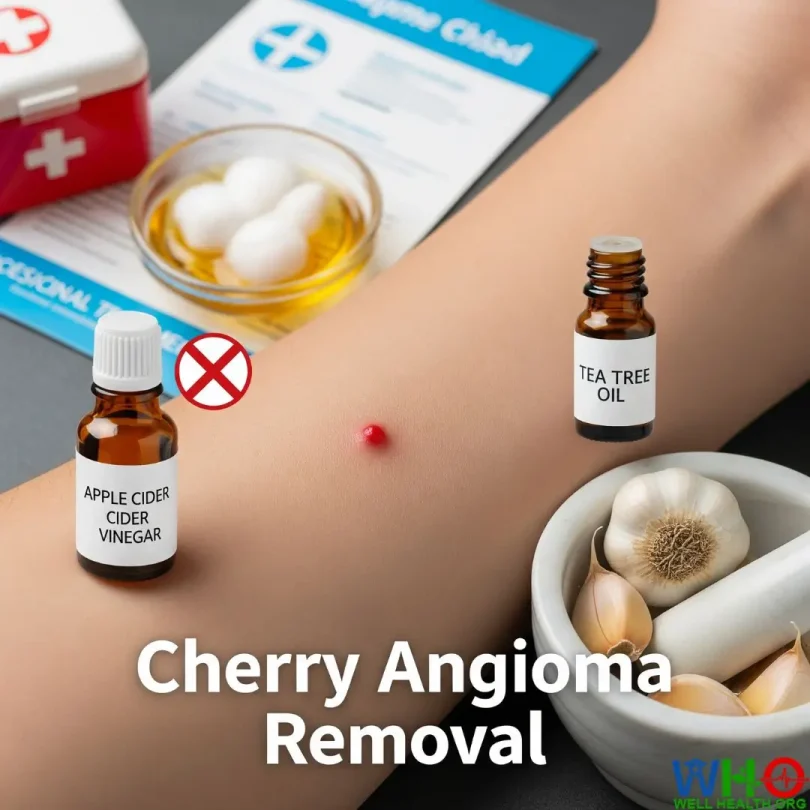
Apple Cider Vinegar
Apple cider vinegar (ACV) is one of the most talked-about natural remedies for skin blemishes of all kinds, including cherry angiomas. The idea is that its acetic acid content might help break down tissue or “dry out” the angioma over time.
A common method involves soaking a cotton ball in diluted ACV and applying it to the angioma daily for several hours. Some people report seeing the spot darken and scab before eventually falling off.
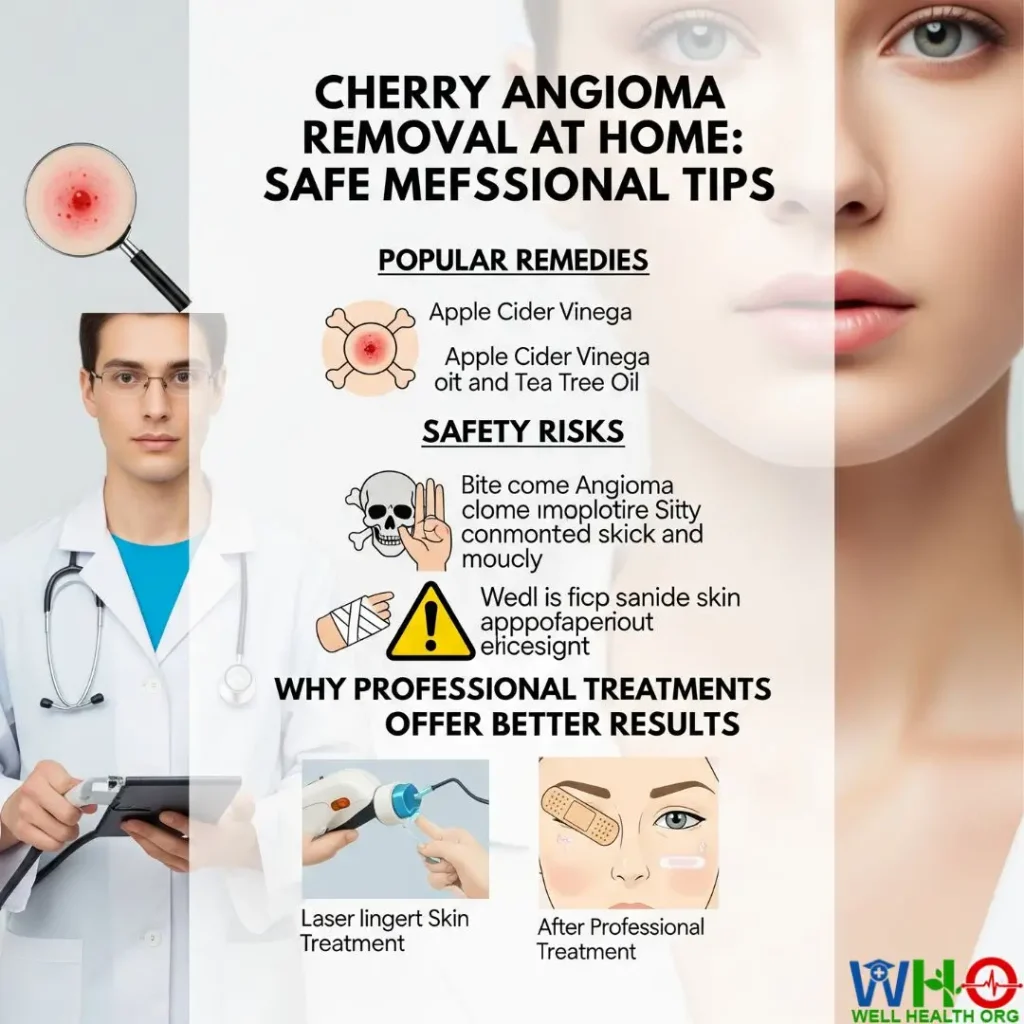
However, despite countless anecdotal claims, no scientific evidence supports the use of apple cider vinegar for cherry angioma removal. The acid can irritate or even burn the surrounding skin, especially when used undiluted. In some cases, it can lead to chemical burns or scarring that looks worse than the original spot.
In short: ACV is not a medically recommended treatment for cherry angiomas.
Tea Tree Oil
Tea tree oil has long been praised for its antibacterial and anti-inflammatory properties, which can be beneficial for acne and fungal infections. Some online sources suggest that it can help shrink angiomas by “drying them out.”
Typically, users dilute a few drops of tea tree oil with a carrier oil (like coconut or jojoba oil) and apply it directly to the angioma once or twice daily.
Unfortunately, like apple cider vinegar, there’s no clinical evidence that tea tree oil can remove cherry angiomas. Moreover, tea tree oil can cause allergic dermatitis, redness, and itching, especially in people with sensitive skin. Overuse may result in irritation and inflammation that could make the lesion appear worse.
Dandelion Root
In herbal medicine, dandelion root extract is used to support liver detoxification and skin health. Some proponents believe applying a dandelion root paste topically may help “draw out” or reduce cherry angiomas.
However, no published studies have demonstrated that dandelion root has any effect on these vascular lesions. While generally safe for internal use as a tea or supplement, its topical effects on angiomas are unproven and largely anecdotal.
Iodine
Another frequently mentioned home treatment is iodine application, based on the belief that iodine can shrink angiomas by affecting the blood vessels within. Users sometimes apply it directly to the bump daily until they expect it to fade.
However, iodine can be harsh on the skin and may cause severe irritation, burns, or allergic reactions. There’s also no research confirming its effectiveness for this purpose. Dermatologists strongly caution against this practice, as it can easily cause unnecessary injury.
Critical Safety Precautions Before Trying Any Home Remedy
Before you grab a bottle of vinegar or essential oil, it’s crucial to understand that even though cherry angiomas are harmless, self-treatment can quickly lead to complications if not done carefully. Many home remedies circulating online lack scientific support and can result in painful side effects or long-term skin damage. Let’s look at the essential precautions to take seriously before attempting any at-home method.
Why You Should Consult a Professional First
It may be tempting to skip a doctor’s visit and rely on what you read online, but a professional consultation with a dermatologist is always the safest first step. Here’s why:
- Accurate Diagnosis: Not every red bump is a cherry angioma. Some skin cancers, like amelanotic melanoma, can mimic their appearance. A dermatologist uses specialized tools (like a dermatoscope) to confirm what you’re dealing with.
- Tailored Advice: A doctor can explain which treatments are safe for your skin type and rule out underlying causes that might need attention.
- Prevention of Complications: Attempting to remove or treat the lesion yourself could lead to infections, scarring, or misdiagnosis delays.
- Professional-Grade Results: If removal is desired for cosmetic reasons, clinical treatments are faster, more effective, and leave minimal marks compared to home experiments.
Bottom line: Before applying anything to your skin, make sure you’re treating the right thing.
Safety Guidelines for At-Home Applications
If you still decide to experiment with mild natural remedies despite their unproven effectiveness, take these essential safety measures seriously:
- Perform a Patch Test:
Always test any substance — whether apple cider vinegar, essential oil, or herbal paste — on a small patch of skin first. Wait 24 hours to check for redness, burning, or swelling. - Dilute Properly:
Never apply strong acids or essential oils undiluted. Always mix with a carrier oil or water in the proper ratio (usually 1 drop essential oil to 1 teaspoon carrier oil). - Avoid Broken Skin:
Do not apply anything to open wounds or areas that are inflamed, bleeding, or recently shaved. - Watch for Reactions:
If you experience burning, blistering, excessive itching, or increased redness, stop immediately and wash the area with mild soap and water. - Never Cut, Pop, or Puncture:
Cutting or squeezing cherry angiomas yourself is extremely dangerous. These lesions are made up of blood vessels — damaging them can cause heavy bleeding, infection, and permanent scarring.
Remember, skin health requires patience. Quick fixes often come with lasting consequences.
Risks of Self-Treatment
Trying to remove cherry angiomas at home may seem cost-effective, but the reality is that these DIY attempts often do more harm than good. Here are the common — and sometimes serious — side effects associated with unverified home methods:
- Chemical Burns:
Substances like undiluted apple cider vinegar or iodine can burn through the skin’s protective layer, leading to painful sores. - Allergic Reactions:
Essential oils and herbal extracts may trigger contact dermatitis, especially in people with sensitive skin or allergies. - Bacterial Infections:
Any open wound or cut from self-removal attempts can become infected, causing pus, swelling, and long-term scarring. - Scarring and Discoloration:
Even minor irritation can lead to pigmentation changes or visible scars that last for months. - Delayed Cancer Diagnosis:
The most concerning risk is misidentification. Treating what you think is a cherry angioma could delay the diagnosis of a more serious skin condition, including melanoma.
The takeaway is simple: DIY removal may cost you far more in skin damage and stress than professional care ever would.
Professional Treatment Options: What Actually Works
When it comes to removing cherry angiomas safely and effectively, medical procedures performed by qualified dermatologists are your best bet. Modern dermatology offers several minimally invasive techniques designed to eliminate angiomas with precision and minimal downtime.
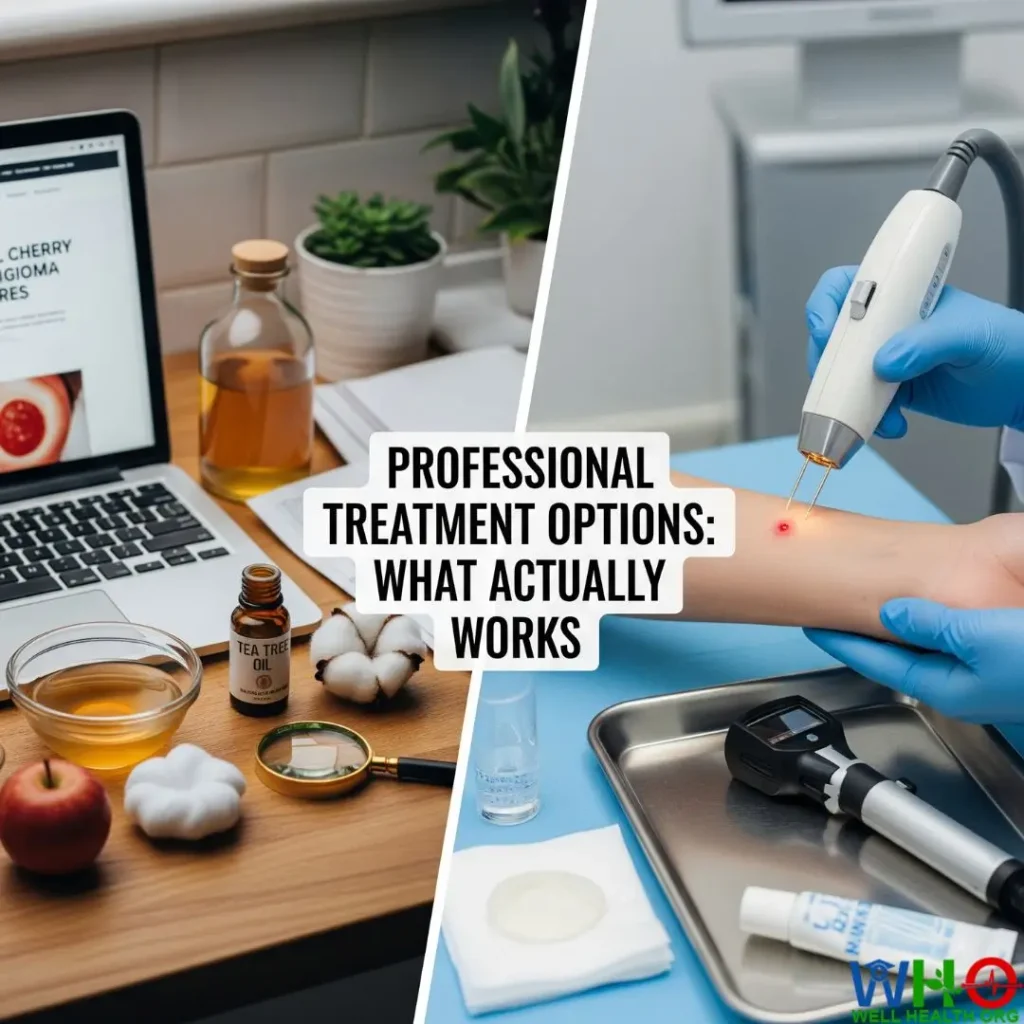
Let’s explore the most common and reliable clinical options available today.
1. Laser Therapy
Laser therapy is considered the gold standard for cherry angioma removal. It works by using concentrated beams of light to target and destroy the small blood vessels within the angioma. Once those vessels collapse, the lesion gradually fades or disappears entirely.
How It Works:
A dermatologist directs a specialized vascular laser — such as a pulsed dye laser (PDL) or Nd:YAG laser — onto the angioma. The light selectively heats and closes off the blood vessels without damaging surrounding tissue.
Advantages:
- Precise targeting with minimal impact on healthy skin
- Quick procedure (often under 15 minutes)
- Minimal pain (usually feels like a rubber-band snap)
- Little to no downtime
- Excellent cosmetic results with low scarring risk
Disadvantages:
- Higher cost than other methods (often $150–$350 per session)
- May require multiple treatments for larger or darker angiomas
- Temporary redness or mild swelling can occur
- Not ideal for all skin tones (risk of hyperpigmentation in darker skin)
Laser therapy is ideal for patients who want a clean, scar-free result and are willing to invest in a professional-grade outcome.
2. Cryotherapy
Cryotherapy is another popular professional method that involves freezing the angioma with liquid nitrogen, causing the lesion to blister and fall off naturally within days.
Advantages:
- Quick and straightforward (usually under a minute)
- Minimal discomfort (a slight stinging sensation)
- Cost-effective compared to laser therapy
- Suitable for small angiomas
Disadvantages:
- May cause temporary blistering or scabbing
- Risk of skin lightening (hypopigmentation), especially in darker skin
- Sometimes requires multiple treatments
- Slightly less precise than laser therapy
Cryotherapy is best for individuals who have only a few small angiomas and prefer a fast, budget-friendly treatment.
3. Electrocautery (Cauterization)
Electrocautery, or electrical cauterization, uses a fine electric needle to burn away the angioma tissue. This method provides immediate results, as the blood vessels are sealed and the lesion is removed in a single session.
Advantages:
- Instant visible removal
- Effective for various angioma sizes
- Often less expensive than laser therapy
- Usually completed in one session
Disadvantages:
- May cause mild discomfort or require local anesthesia
- Potential for minor scarring if performed incorrectly
- Slight burning odor during the procedure
For small or medium-sized angiomas, electrocautery is a highly efficient option that produces quick, lasting results when performed by a skilled dermatologist.
4. Shave Excision (Minor Surgical Removal)
In some cases, dermatologists may opt for a simple shave excision — removing the raised angioma with a sterile surgical blade under local anesthesia. This method is often used when the angioma protrudes noticeably from the skin.
Advantages:
- Quick and definitive removal
- Minimal equipment required
- Can be combined with biopsy if diagnosis is uncertain
Disadvantages:
- Slight bleeding and scabbing during healing
- Possible minor scarring
- Requires sterile environment and professional skill
While this method is more invasive than laser or cryotherapy, it’s very effective when performed under proper medical supervision.
Preventing Cherry Angiomas: Can You Really Stop Them From Forming?
Unfortunately, because cherry angiomas are largely driven by genetics and natural aging, there’s no guaranteed way to prevent them entirely. However, maintaining healthy lifestyle habits and protecting your skin can reduce the likelihood of developing new lesions or worsening existing ones.
Let’s explore simple but effective prevention strategies that can help support long-term skin health.
Table: Effective Prevention Strategies for Cherry Angiomas
| Prevention Method | Description | Practical Tips & Recommendations | Benefits for Skin Health |
|---|---|---|---|
| Sun Protection | While UV exposure doesn’t directly cause cherry angiomas, it accelerates skin aging and may contribute to vascular changes. | – Apply a broad-spectrum SPF 30+ daily – Reapply every 2 hours outdoors – Wear protective clothing and hats – Avoid peak sun hours (10 AM–4 PM) | – Reduces UV-related damage – Supports healthy blood vessels – Prevents premature aging and pigmentation |
| Healthy Lifestyle Habits | A strong immune system and proper circulation support overall skin health and resilience. | – Eat a diet rich in antioxidants, vitamins C & E – Stay hydrated and exercise regularly – Get 7–8 hours of sleep each night – Manage stress with mindfulness or yoga | – Improves skin elasticity – Boosts collagen production – Supports healthy microcirculation |
| Avoid Harmful Chemicals | Certain chemicals (e.g., bromides, butoxyethanol) have been linked to the development of cherry angiomas. | – Avoid harsh industrial solvents or cleaning agents – Use natural or non-toxic household products – Wear gloves and ensure proper ventilation when exposed | – Minimizes chemical-induced vascular stress – Protects skin from irritation and toxin buildup |
| Regular Skin Monitoring | Early identification ensures that new or changing growths are assessed promptly. | – Perform monthly skin checks using a mirror – Look for color, size, or texture changes – Visit a dermatologist yearly for a skin evaluation | – Detects unusual growths early – Reduces anxiety and risk of misdiagnosis |
| Maintain Hormonal Balance | Hormonal fluctuations, especially during pregnancy or menopause, can influence angioma formation. | – Discuss hormonal changes with a healthcare provider – Maintain a balanced diet and regular exercise routine – Avoid unnecessary hormone supplements | – Promotes internal balance – Reduces hormone-related skin issues |
| Limit Alcohol & Smoking | Alcohol dilates blood vessels, and smoking reduces skin oxygenation — both affect vascular health. | – Limit alcohol to moderate levels (1–2 drinks/day max) – Quit smoking or seek cessation support programs | – Improves circulation – Enhances skin tone and overall health |
| Use Gentle Skin Products | Harsh skincare products may irritate the skin and affect vascular stability. | – Choose hypoallergenic, fragrance-free skincare – Avoid over-exfoliating – Use gentle cleansers and moisturizers | – Preserves the skin barrier – Prevents redness, dryness, and irritation |
Choosing the Right Treatment: Balancing Safety and Results
Now that we’ve covered both DIY and professional options, it’s important to consider which route truly makes sense. The decision ultimately depends on your goals, skin sensitivity, and budget, but here’s the bottom line:
Cherry angiomas are not medically dangerous. They do not transform into cancer or threaten your health in any way. However, if their appearance bothers you or if they frequently bleed due to friction from clothing or jewelry, removal might be worth considering.
Let’s weigh the pros and cons of the available paths.
Home Remedies: Pros and Cons
| Pros | Cons |
|---|---|
| Low or no cost | Unproven effectiveness |
| Convenient and accessible | High risk of irritation or burns |
| Natural ingredient appeal | Can cause scarring or infection |
| May provide a placebo effect | No clinical support or guaranteed results |
If you choose to experiment with home remedies, always do so cautiously and discontinue immediately if irritation occurs. But remember: these approaches are not medical treatments, and success stories online often lack verification.
Professional Treatments: Pros and Cons
| Pros | Cons |
|---|---|
| Scientifically proven and safe | Higher upfront cost |
| Quick and precise removal | Requires clinical visit |
| Minimal risk of infection | Possible mild side effects like redness |
| Long-lasting, cosmetic-grade results | May need multiple sessions |
For those seeking reliable, long-term results, professional procedures such as laser therapy, cryotherapy, or electrocautery remain the gold standard. When performed by a certified dermatologist, these treatments are quick, effective, and nearly scar-free.
Expert Insight: What Dermatologists Recommend
Most dermatologists agree on one key point — cherry angiomas do not require removal for health reasons. Treatment is purely cosmetic unless the lesion is frequently irritated or bleeds often.
Experts emphasize the following:
- Avoid cutting or picking: No matter how small it seems, breaking the skin increases your risk of infection.
- Monitor for changes: Take note if a spot grows rapidly, changes color, or starts bleeding unexpectedly.
- Choose professional care: For safe and aesthetic removal, dermatologists can customize a treatment plan based on your skin type and angioma size.
Many patients find that professional removal not only delivers better cosmetic results but also provides peace of mind, knowing that the lesion was properly identified and safely treated.
Life After Removal: What to Expect
Once your cherry angioma is removed, proper aftercare ensures smooth healing and minimal scarring. Regardless of the method used (laser, cryotherapy, or cautery), dermatologists recommend:
- Keeping the area clean and dry for the first 24 hours.
- Applying a gentle healing ointment such as petroleum jelly or prescribed cream.
- Avoiding direct sunlight until the area fully heals.
- Refraining from picking at any scabs — let them fall off naturally.
- Watching for signs of infection (swelling, pus, or excessive pain).
Healing usually takes 7–14 days, depending on your skin type and the size of the angioma. In most cases, the skin returns to normal with little to no visible mark afterward.
The Truth: What Works and What Doesn’t
After reviewing all available evidence and expert insights, the reality is clear:
- Home remedies lack scientific backing and often pose unnecessary risks.
- Professional treatments are the only methods proven to safely and effectively remove cherry angiomas.
- Prevention focuses mainly on healthy habits and skin protection, not guaranteed avoidance.
So while those little red bumps might be annoying, the safest and most reliable path to smoother, spot-free skin is through qualified medical care, not DIY experimentation.
Final Thoughts
Cherry angiomas are an entirely normal — and harmless — part of the human aging process. Almost everyone develops them at some point, and they rarely indicate any underlying health issue. But if they bother you cosmetically, you have safe, effective options available.
Before trying any home treatment, consider the potential consequences: chemical burns, infections, and scars can be far more noticeable than the angioma itself. Professional treatments like laser removal, cryotherapy, and electrocautery are fast, minimally invasive, and deliver lasting results with far fewer risks.
The best approach? Consult a qualified dermatologist before doing anything. An expert can confirm the diagnosis, recommend the safest removal method for your skin type, and help you achieve clear, healthy-looking skin — the right way.
FAQs About Cherry Angioma Removal
1. Can cherry angiomas disappear on their own?
No. Unlike temporary blemishes, cherry angiomas don’t fade naturally. Once they appear, they typically remain unless removed professionally.
2. Are cherry angiomas a sign of liver disease or poor health?
In most cases, no. They’re benign and unrelated to systemic illnesses. However, a sudden increase in number should be evaluated to rule out hormonal or vascular changes.
3. Is laser removal painful?
Most patients describe it as a mild snapping or tingling sensation. Topical numbing cream can be used for comfort, making the procedure virtually painless.
4. Can I prevent new cherry angiomas?
You can’t completely prevent them, but maintaining healthy skin, avoiding harsh chemicals, and protecting yourself from the sun can minimize risk.
5. What happens if I accidentally scratch or cut a cherry angioma?
It may bleed heavily because of the blood vessels inside. Apply pressure with a clean tissue, disinfect the area, and if bleeding persists, seek medical attention.
Medically Reviewed by Prof. Dr. Akram
Orthopedic Surgeon | Professor | Senior Medical Specialist
Prof. Dr. Akram is a distinguished surgeon with over 15 years of clinical expertise. Having served as a lead Emergency Specialist at Complex International Government Hospital, he currently leads a specialized team of 13 medical professionals at his private hospital. As a Professor at top medical universities, he ensures that every article on WellHealthOrg.com meets rigorous clinical standards.
Medical Disclaimer:
The information provided is for educational purposes only and is not a substitute for professional medical advice, diagnosis, or treatment. Always consult your physician for any medical concerns.
Our content is rigorously fact-checked by our 13-member Editorial Team under the clinical supervision of Prof. Dr. Akram.