
A sore throat can make even the simplest daily tasks—like swallowing, talking, or eating—feel like a challenge. That scratchy, raw, or burning sensation in your throat can quickly drain your energy and mood. Millions of people suffer from sore throats every year, most often caused by viral infections such as the common cold or flu. Sometimes, however, bacterial infections like strep throat can also be the culprit.
- 1. Stay Hydrated: The Foundation of Sore Throat Recovery
- Why Hydration Matters So Much
- Best Fluids for a Sore Throat
- What to Avoid
- 2. Saltwater Gargle: The Classic Remedy That Still Works
- How to Make the Perfect Saltwater Gargle
- Why It Works
- Bonus Tip
- 3. Honey: Nature’s Sweet and Powerful Throat Soother
- How Honey Helps Heal Your Throat
- Best Ways to Use Honey for Sore Throat Relief
- Important Safety Note
- 4. Rest: The Overlooked Secret to Faster Healing
- Why Rest Is Crucial
- Voice Rest Tips
- Better Sleep, Faster Recovery
- 5. Over-the-Counter Medications: Fast and Effective Relief
- Pain Relievers That Work Best
- Throat Lozenges and Sprays
- Smart Use Tips
- 6. Use a Humidifier: Restore Moisture and Comfort
- How a Humidifier Helps
- How to Use It Effectively
- No Humidifier? Try These Alternatives
- 7. When to See a Doctor: Recognizing Warning Signs
- Red Flags You Should Never Ignore
- Special Considerations for Children
- What to Expect During Diagnosis
- Take Action Against Your Sore Throat Today
- Frequently Asked Questions
While many sore throats go away on their own within five to seven days, waiting for relief can feel like an eternity when your throat feels like sandpaper. The good news? You don’t have to simply endure the discomfort. With the right remedies, you can ease the pain, calm the inflammation, and speed up recovery naturally.
In this comprehensive guide, we’ll explore seven proven ways to cure a sore throat—ranging from soothing home remedies and hydration hacks to smart over-the-counter solutions. Whether you’re dealing with mild irritation or a more intense soreness, these expert-backed tips will help you get your voice (and your comfort) back quickly.
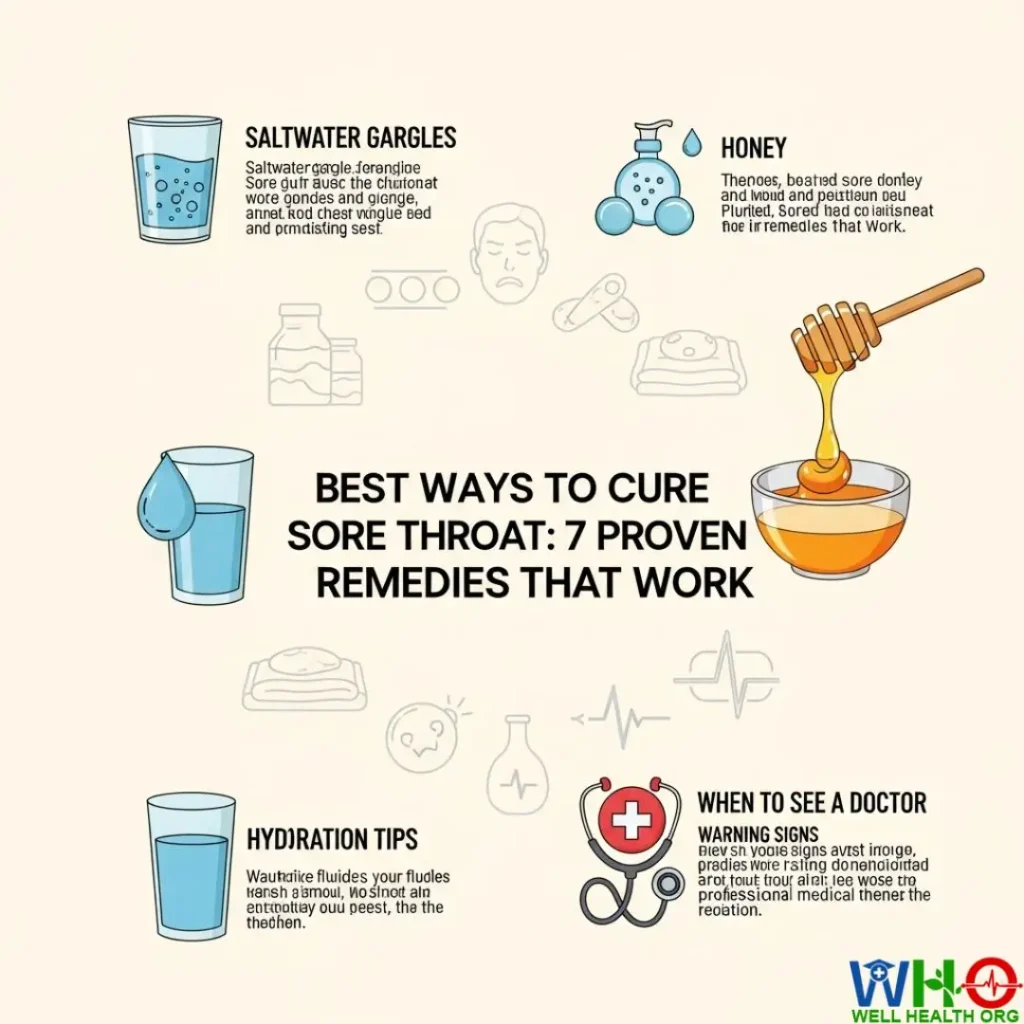
1. Stay Hydrated: The Foundation of Sore Throat Recovery
When you have a sore throat, one of the simplest yet most powerful remedies is to drink plenty of fluids. Hydration keeps your throat moist, reduces inflammation, and supports your body’s natural ability to fight infection.
Think of your throat as a sponge—when it’s dry, it cracks and becomes irritated. When it’s well-hydrated, it stays soft, smooth, and able to heal faster.
Why Hydration Matters So Much
When throat tissues become inflamed, they tend to dry out faster. Dehydration worsens that dryness, creating a cycle of irritation that delays recovery. Drinking enough fluids helps by:
- Thinning mucus, making it easier to swallow and clear from your throat.
- Reducing inflammation, which minimizes pain and discomfort.
- Maintaining the mucous membrane barrier, your throat’s first line of defense against infection.
Best Fluids for a Sore Throat
Not all drinks are created equal. Some can soothe your throat instantly, while others might make it worse. Try these healing fluids:
- Warm water: Gentle on your throat and helps increase blood circulation to the area.
- Herbal teas: Chamomile, ginger, and licorice root teas are known for their anti-inflammatory and antimicrobial properties.
- Warm broths: Chicken or vegetable broth not only hydrates but also replenishes electrolytes and provides warmth to soothe your throat.
- Room temperature water: Perfect if hot drinks feel too harsh.
You can also infuse warm water with honey, lemon, or a slice of ginger for added benefits.
What to Avoid
When your throat is sore, certain drinks can make the pain worse:
- Very cold beverages can tighten throat muscles and worsen soreness.
- Acidic juices like orange or grapefruit juice can irritate the already inflamed lining.
- Alcohol and caffeine both dehydrate your body, slowing down the healing process.
If you’re uncertain about your hydration levels, a good rule of thumb is to check your urine color—it should be pale yellow.
2. Saltwater Gargle: The Classic Remedy That Still Works
Your grandmother probably swore by this one, and for good reason: saltwater gargles are among the most effective, time-tested remedies for sore throats. This simple practice works through osmosis—the salt draws water out of swollen tissues, reducing inflammation and pain.
How to Make the Perfect Saltwater Gargle
Here’s the ideal ratio for maximum comfort and effectiveness:
- Add ¼ to ½ teaspoon of salt to 8 ounces (about 240 mL) of warm water.
- Stir until the salt completely dissolves.
- Take a sip, tilt your head back, and gargle for 15–30 seconds, allowing the solution to reach the back of your throat.
- Spit it out—never swallow.
- Repeat every 2–3 hours for the best results.
Why It Works
A saltwater solution creates a gentle antiseptic environment that helps:
- Pull out excess fluid from inflamed throat tissues, easing swelling.
- Wash away bacteria, allergens, and mucus buildup.
- Improve blood flow to the throat area, which speeds up healing.
Bonus Tip
For extra relief, you can add a pinch of baking soda to the mixture. This enhances the gargle’s soothing effect and helps neutralize acid in the throat—perfect if your sore throat is linked to acid reflux.
3. Honey: Nature’s Sweet and Powerful Throat Soother
If there’s one ingredient that consistently earns its place in natural medicine, it’s honey. Sweet, thick, and packed with healing compounds, honey has been used for centuries to treat sore throats. Modern research confirms its antimicrobial, anti-inflammatory, and soothing benefits.
How Honey Helps Heal Your Throat
Honey coats the throat with a protective layer, instantly easing the burning and scratching sensation. Its natural antibacterial and antiviral properties also help fight off infections. Furthermore, honey’s dense texture locks in moisture, preventing your throat from drying out.
Studies have shown that honey is as effective as some over-the-counter cough suppressants, especially when combined with warm fluids like herbal tea.
Best Ways to Use Honey for Sore Throat Relief
- Pure Honey: Take one teaspoon directly and let it slowly melt down your throat.
- Honey Lemon Tea: Mix one tablespoon of honey with warm water and a squeeze of lemon juice. The honey soothes, while the lemon adds vitamin C and helps cut mucus.
- Honey and Ginger Mix: Combine honey with freshly grated ginger to add anti-inflammatory power and boost immunity.
You can repeat these remedies several times a day. However, make sure to use pure, raw, or manuka honey for the best therapeutic results.
Important Safety Note
Never give honey to infants under 12 months old, as it may cause infant botulism—a rare but serious condition. For adults and older children, honey is perfectly safe and extremely effective.
4. Rest: The Overlooked Secret to Faster Healing
In today’s fast-paced world, it’s easy to underestimate the power of rest. However, when you have a sore throat—especially one caused by infection—resting your body and voice is one of the best medicines available.
Why Rest Is Crucial
When your body is fighting off a virus or bacteria, it directs energy toward your immune system. Pushing yourself too hard—physically or mentally—can divert that energy, prolonging your illness.
During rest, your body increases the production of white blood cells and growth hormones, which repair damaged tissues. Sleep also regulates stress hormones, helping your immune defenses work more efficiently.
Voice Rest Tips
Your vocal cords need a break, too. Try these simple steps:
- Avoid talking unnecessarily, and never shout or sing while your throat is sore.
- Speak in your normal tone; whispering can actually strain your vocal cords more.
- Resist the urge to clear your throat—sip water instead.
- If possible, take a day or two off work or school to recover fully.
Better Sleep, Faster Recovery
Good sleep hygiene speeds up healing. Here’s how to create an ideal environment for recovery:
- Elevate your head slightly with an extra pillow to prevent throat drainage and congestion.
- Use a humidifier to keep the air moist (more on this later).
- Keep a glass of water by your bed in case your throat feels dry at night.
- Avoid late-night snacking, especially acidic foods, as they can worsen irritation.
5. Over-the-Counter Medications: Fast and Effective Relief
Sometimes, home remedies alone aren’t enough to handle a severe sore throat—especially when the pain disrupts your ability to eat, sleep, or talk. That’s when over-the-counter (OTC) medications can make a world of difference. They don’t cure the underlying infection, but they do help you feel more comfortable while your body heals naturally.
Pain Relievers That Work Best
There are several OTC painkillers you can safely use to ease throat pain and reduce inflammation. Each has its own advantages:
- Acetaminophen (Tylenol): Excellent for relieving pain and fever without irritating the stomach.
- Ibuprofen (Advil, Motrin): Provides both pain relief and anti-inflammatory effects, reducing throat swelling.
- Aspirin: Works well for adults but should never be given to children or teenagers due to the risk of Reye’s syndrome, a rare but serious condition.
When taking any medication, always follow dosage instructions carefully. If you’re unsure which option is best for you, consult a pharmacist or healthcare provider.
Throat Lozenges and Sprays
OTC throat lozenges and sprays provide targeted relief by numbing the throat directly. They can also help keep the tissues moist, reducing the painful scratchiness that comes with dryness.
Popular active ingredients include:
- Benzocaine: A mild anesthetic that numbs pain.
- Menthol: Provides a cooling sensation that soothes irritation.
- Eucalyptus oil: Acts as a natural antibacterial and anti-inflammatory agent.
Lozenges are great for on-the-go relief, while sprays can target deeper parts of the throat.
Smart Use Tips
- Don’t exceed the recommended number of lozenges per day.
- Avoid medicated sprays for young children, as they may cause choking if misused.
- If your sore throat is accompanied by a persistent cough, choose a lozenge with honey or pectin to soothe both.
These OTC treatments work best when combined with rest, hydration, and warm fluids. They act as a bridge—helping you manage pain while your body naturally repairs itself.
6. Use a Humidifier: Restore Moisture and Comfort
If you’ve ever noticed that your sore throat feels worse in the morning, dry indoor air might be to blame. During winter—or in air-conditioned spaces—humidity levels drop, leaving your throat dry and irritated. That’s why using a humidifier can be a game changer for sore throat recovery.
How a Humidifier Helps
When you breathe in dry air, it draws moisture away from your throat and nasal passages. This can make your symptoms worse, especially overnight. A humidifier adds moisture back into the air, keeping your throat lubricated and easing discomfort.
Benefits include:
- Reduced irritation and dryness in throat tissues
- Easier breathing, especially if you also have nasal congestion
- Faster healing since moist air supports your throat’s natural defense barrier
How to Use It Effectively
To get the most out of your humidifier:
- Opt for a cool-mist humidifier to avoid burn risks.
- Keep indoor humidity between 30–50%—too much can encourage mold growth.
- Clean your humidifier daily or every other day with a mild vinegar solution to prevent bacteria buildup.
- Position it a few feet from your bed, ensuring the mist spreads evenly throughout the room.
No Humidifier? Try These Alternatives
Don’t worry if you don’t have a humidifier at home. You can still create a more humid environment using these DIY tricks:
- Take a steamy shower and breathe deeply for 5–10 minutes.
- Place a bowl of warm water near a heat vent or radiator.
- Hang damp towels in your bedroom before going to bed.
- Boil water in a pot and carefully inhale the steam (maintaining a safe distance).
Even these small adjustments can make a big difference in your comfort and recovery.
7. When to See a Doctor: Recognizing Warning Signs
While most sore throats are mild and go away within a week, some can signal something more serious—especially if they’re caused by bacterial infections like strep throat or other underlying conditions. Knowing when to seek medical help can prevent complications and ensure proper treatment.
Red Flags You Should Never Ignore
Contact a healthcare professional if you experience any of the following:
- A sore throat lasting more than 7 days
- Fever over 101°F (38.3°C) that doesn’t improve
- Severe pain when swallowing or difficulty breathing
- White patches or pus on your tonsils
- Drooling due to an inability to swallow properly
- Rash, especially if it appears with a fever (possible sign of scarlet fever)
- Blood in saliva or phlegm
- Swollen lymph nodes or severe neck stiffness
These symptoms might point to strep throat, mononucleosis, tonsillitis, or another bacterial infection that needs antibiotics.
Special Considerations for Children
Children can develop sore throats from many of the same causes as adults, but they’re more prone to strep throat and tonsillitis. If your child has trouble swallowing, excessive drooling, or appears unusually tired or irritable, schedule a doctor’s visit right away.
Never try to self-diagnose or give antibiotics without medical advice. Misuse of antibiotics can lead to resistance and worsen the problem.
What to Expect During Diagnosis
At your appointment, a doctor may:
- Examine your throat and lymph nodes for swelling or redness.
- Perform a rapid strep test, which provides results in minutes.
- Order a throat culture, which gives more accurate results within 24–48 hours.
If a bacterial infection is confirmed, antibiotics will be prescribed. Always complete the full course, even if you start to feel better sooner.
Take Action Against Your Sore Throat Today
Sore throats are incredibly common—but they don’t have to keep you miserable. With a combination of simple home remedies, good hydration, proper rest, and mindful care, you can drastically shorten your recovery time.
Here’s a quick recap of what works best:
- Hydrate often with soothing fluids like warm water, tea, and broth.
- Gargle with saltwater several times a day to reduce swelling and clear mucus.
- Soothe with honey, one of nature’s best healers.
- Get enough rest and give your voice a break.
- Use OTC pain relief responsibly for extra comfort.
- Add humidity to your environment to prevent dryness.
- Seek medical help if symptoms persist or worsen.
Consistency is the key. Gargling once won’t do much—but doing it every few hours will. The same goes for staying hydrated and resting regularly. The goal isn’t perfection; it’s persistence.
With the right approach, most sore throats—especially those caused by viruses—will improve within a week. However, if your symptoms linger or worsen, don’t hesitate to see a doctor. Addressing the problem early ensures a smooth and safe recovery.
Before long, you’ll be back to speaking, eating, and laughing pain-free—your throat will thank you for it.
Frequently Asked Questions
1. Can sore throats be prevented?
Yes! You can reduce your risk by washing your hands frequently, avoiding close contact with sick people, using a humidifier in dry environments, and keeping your immune system strong with balanced nutrition and rest.
2. Does drinking cold water make a sore throat worse?
It depends. For some, cold drinks may soothe swelling; for others, they can trigger discomfort. If your throat feels tighter after drinking cold beverages, switch to warm or room-temperature fluids.
3. Are antibiotics always necessary for a sore throat?
No. Most sore throats are caused by viruses, which don’t respond to antibiotics. Only bacterial infections like strep throat require antibiotic treatment.
4. Can spicy foods help clear a sore throat?
While spicy foods can clear nasal congestion, they may irritate a sore throat. It’s best to avoid them until your throat feels better.
5. How long does a sore throat typically last?
Viral sore throats usually improve within 5 to 7 days. If symptoms persist beyond a week or worsen, see your healthcare provider for further evaluation.
Medically Reviewed by Prof. Dr. Akram
Orthopedic Surgeon | Professor | Senior Medical Specialist
Prof. Dr. Akram is a distinguished surgeon with over 15 years of clinical expertise. Having served as a lead Emergency Specialist at Complex International Government Hospital, he currently leads a specialized team of 13 medical professionals at his private hospital. As a Professor at top medical universities, he ensures that every article on WellHealthOrg.com meets rigorous clinical standards.
Medical Disclaimer:
The information provided is for educational purposes only and is not a substitute for professional medical advice, diagnosis, or treatment. Always consult your physician for any medical concerns.
Our content is rigorously fact-checked by our 13-member Editorial Team under the clinical supervision of Prof. Dr. Akram.