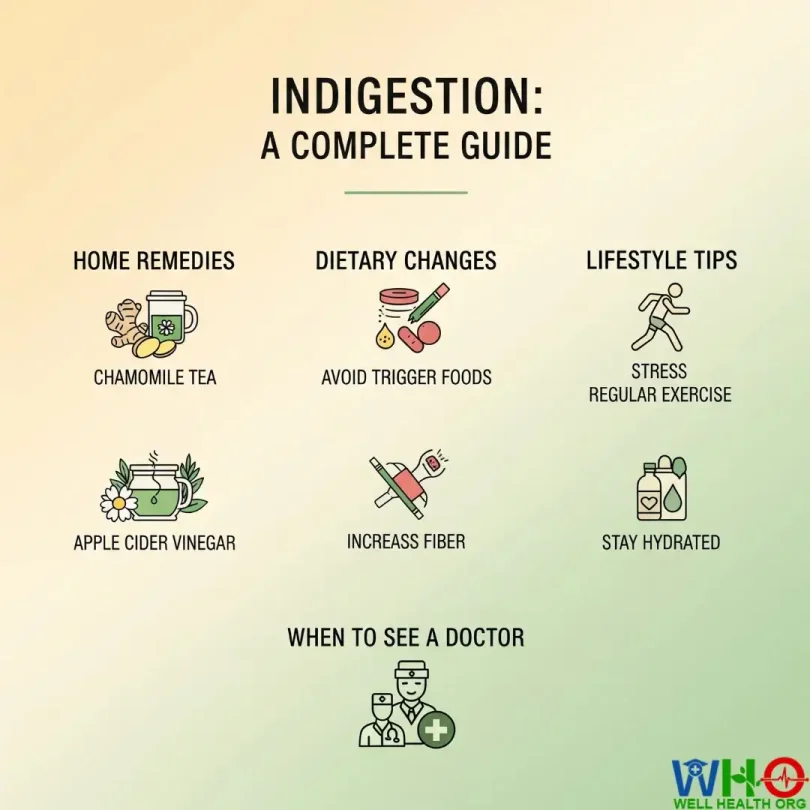
What is Indigestion
That familiar burning in your chest, the uncomfortable bloating that follows a meal, or the dull ache that makes you regret that extra slice of pizza — indigestion can turn an enjoyable eating experience into hours of discomfort. Known medically as dyspepsia, indigestion is not a disease in itself but rather a symptom of how your digestive system is functioning. It’s often linked to what you eat, how you eat, and even your emotional state.
- What is Indigestion
- Understanding Indigestion: What’s Really Happening Inside Your Stomach
- 1. What’s on Your Plate: Smart Dietary Changes for Indigestion Relief
- Identify and Avoid Trigger Foods
- Eat Smaller, More Frequent Meals
- Balance Your Plate
- 2. Quick Fixes: Over-the-Counter (OTC) Relief Options
- Antacids
- H2 Blockers
- Proton Pump Inhibitors (PPIs)
- 3. Long-Term Prevention: Lifestyle Adjustments That Support Better Digestion
- Manage Stress Levels
- Maintain a Healthy Weight
- Quit Smoking and Limit Alcohol
- 4. Gentle and Natural Remedies for Indigestion Relief
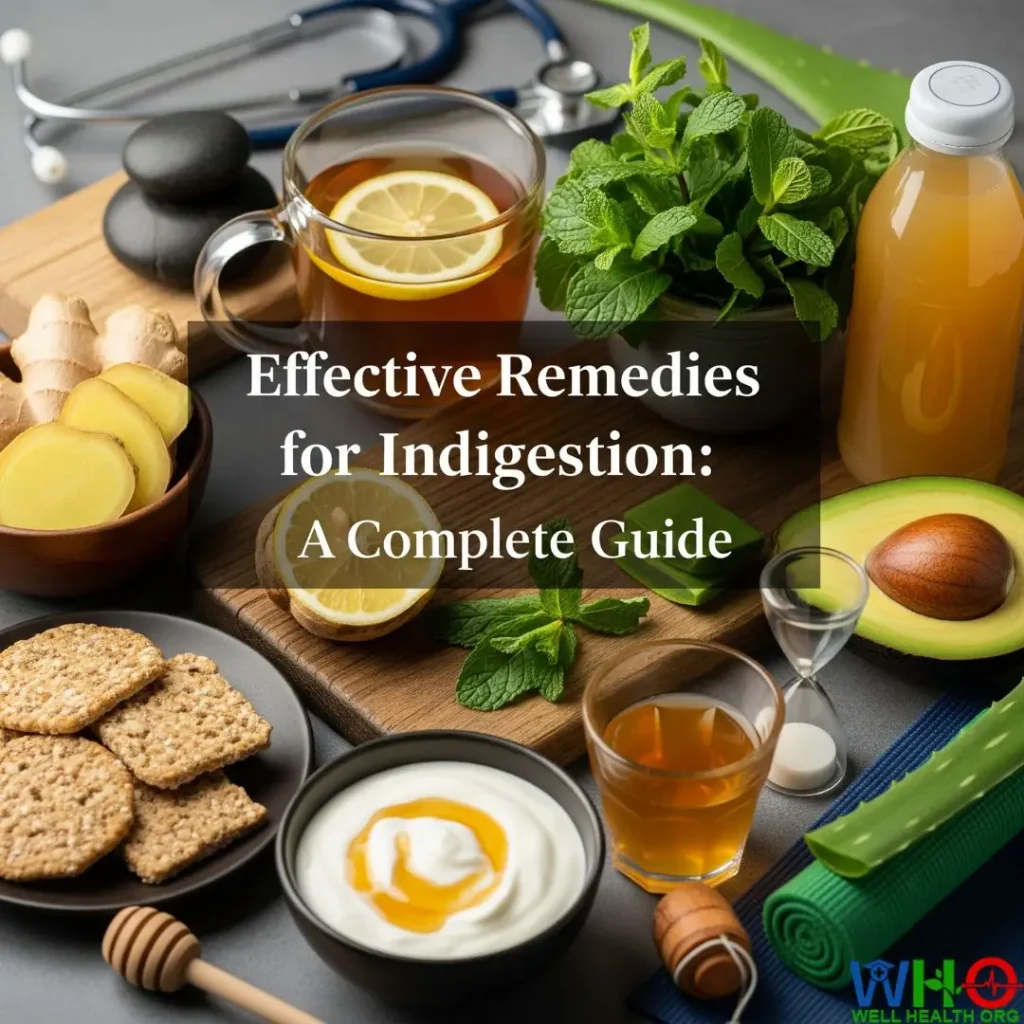
- Ginger
- Peppermint Tea
- Chamomile Tea
- Fennel Seeds
- Baking Soda Solution
- 5. Sleep and Digestion: How Position and Timing Matter
- 6. When to See a Doctor
- 7. Your Personalized Action Plan for Better Digestion
- Conclusion: A Healthier Digestive Future Starts Now
- FAQs About Indigestion Relief
The good news? Most indigestion is manageable — and often preventable — through simple, mindful changes to your diet, lifestyle, and daily habits. In this comprehensive guide, you’ll discover natural and medical approaches to soothe indigestion, improve digestion, and prevent future flare-ups. We’ll explore dietary tweaks, home remedies, stress management, and when to seek medical help — giving you a complete roadmap to lasting digestive comfort.
Understanding Indigestion: What’s Really Happening Inside Your Stomach
Before we talk remedies, it’s helpful to understand what causes that uncomfortable fullness and burning sensation. Indigestion occurs when your stomach struggles to properly break down food. This can happen when you eat too quickly, overeat, or consume foods that irritate your digestive tract.
When your stomach produces too much acid or empties too slowly, the acid can back up into your esophagus, causing heartburn or discomfort. Sometimes, the muscles in the stomach don’t relax properly after eating, leading to a feeling of fullness or pressure.
Common causes of indigestion include:
- Overeating or eating too quickly
- Consuming spicy, greasy, or acidic foods
- Drinking too much caffeine or alcohol
- Smoking or chewing tobacco
- Stress and anxiety
- Certain medications (like NSAIDs or antibiotics)
- Medical conditions such as GERD, gastritis, or peptic ulcers
Understanding these root causes allows you to tailor your relief strategy — not just masking the symptoms, but addressing what triggers them.
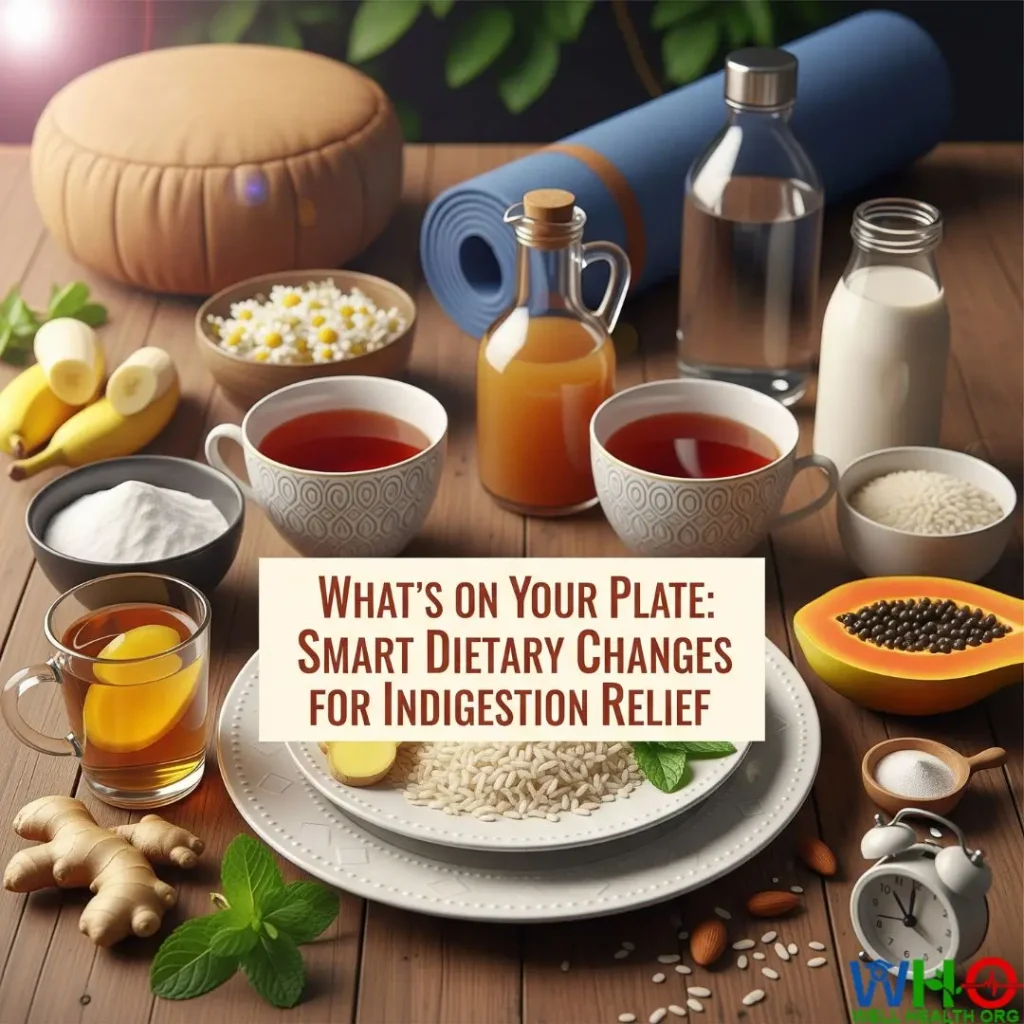
1. What’s on Your Plate: Smart Dietary Changes for Indigestion Relief
Diet is often the first and most effective line of defense against indigestion. By identifying your personal food triggers and replacing them with digestion-friendly choices, you can dramatically reduce episodes of discomfort.
Identify and Avoid Trigger Foods
Everyone’s digestive system is unique, but some foods are known offenders. Keeping a food diary can help you connect what you eat with how you feel afterward.
Common trigger foods include:
- Spicy dishes (chili peppers, hot sauces)
- Fried and fatty foods
- Citrus fruits and tomato-based products
- Chocolate
- Coffee, tea, and energy drinks
- Carbonated beverages
- Alcohol
If you notice patterns — for instance, that fried foods or soda lead to bloating — gradually reduce or eliminate them. Opt for gentler alternatives like baked meals, lean proteins, and steamed vegetables.
Eat Smaller, More Frequent Meals
Large meals overload your digestive system, making your stomach produce excess acid. Instead, aim for five to six smaller meals spaced evenly throughout the day.
This not only prevents acid buildup but also stabilizes your blood sugar and energy levels. Chew your food slowly and thoroughly; digestion begins in your mouth, and mindful eating reduces strain on your stomach.
Balance Your Plate
A digestion-friendly meal includes:
- Fiber: Found in fruits, vegetables, and whole grains — fiber keeps things moving smoothly.
- Healthy fats: Avocado, olive oil, and nuts in moderation can help digestion.
- Lean proteins: Chicken, fish, tofu, or legumes are gentle on the stomach.
Avoid eating heavy or spicy foods late at night, as lying down soon after eating can cause acid reflux and heartburn.
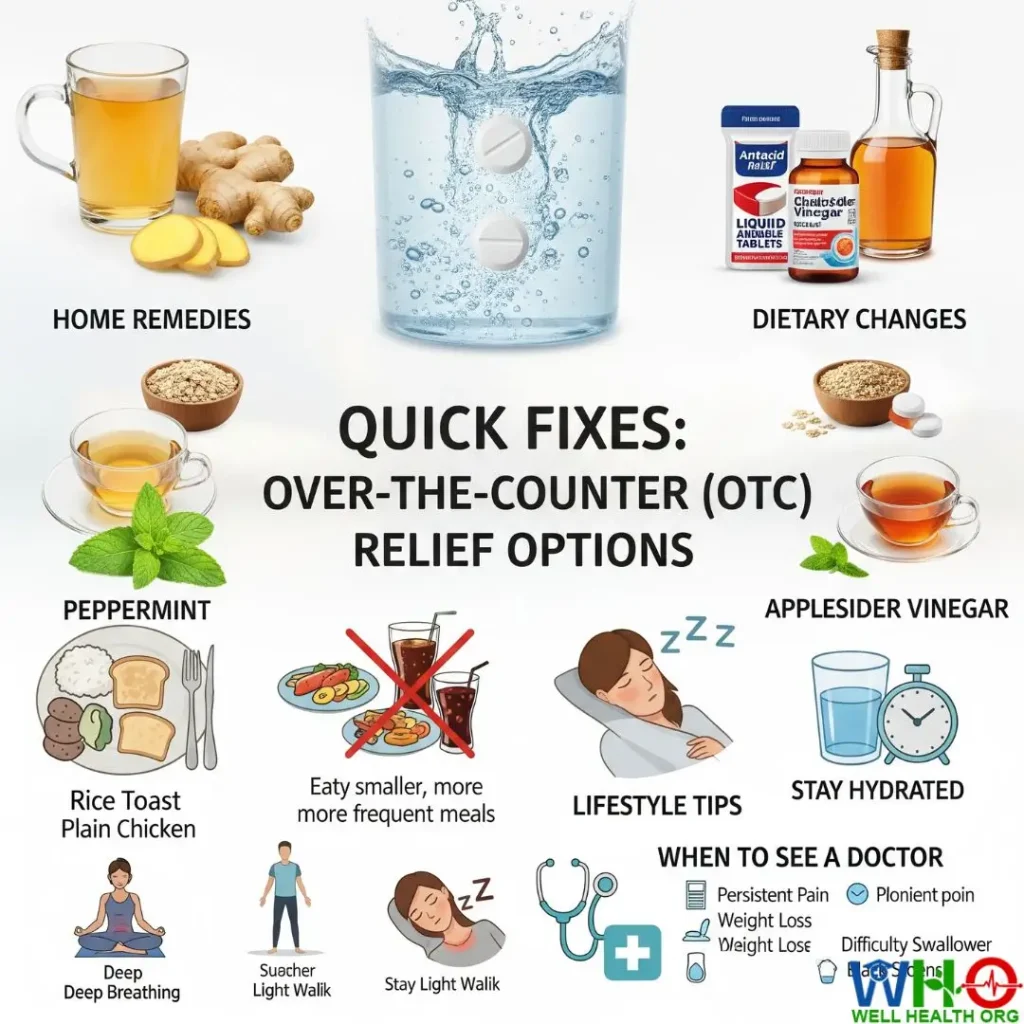
2. Quick Fixes: Over-the-Counter (OTC) Relief Options
Sometimes, despite your best efforts, indigestion strikes unexpectedly. For those moments, OTC medications can offer quick and reliable relief.
Antacids
Products like Tums, Rolaids, or Mylanta work by neutralizing existing stomach acid. They act fast and are best suited for mild, occasional symptoms.
H2 Blockers
Drugs like Pepcid AC and Tagamet HB reduce acid production in the stomach. They take longer to kick in but provide relief for up to 12 hours — ideal for persistent but not chronic symptoms.
Proton Pump Inhibitors (PPIs)
For frequent heartburn or chronic indigestion, PPIs such as Prilosec OTC or Nexium offer stronger, longer-lasting acid control. These are typically taken once daily before meals.
Important Tip:
While OTC medications can be effective, they’re not a long-term solution. Overuse can mask underlying conditions or cause side effects like nutrient absorption issues. If you find yourself relying on them more than twice a week, it’s time to speak with your doctor.
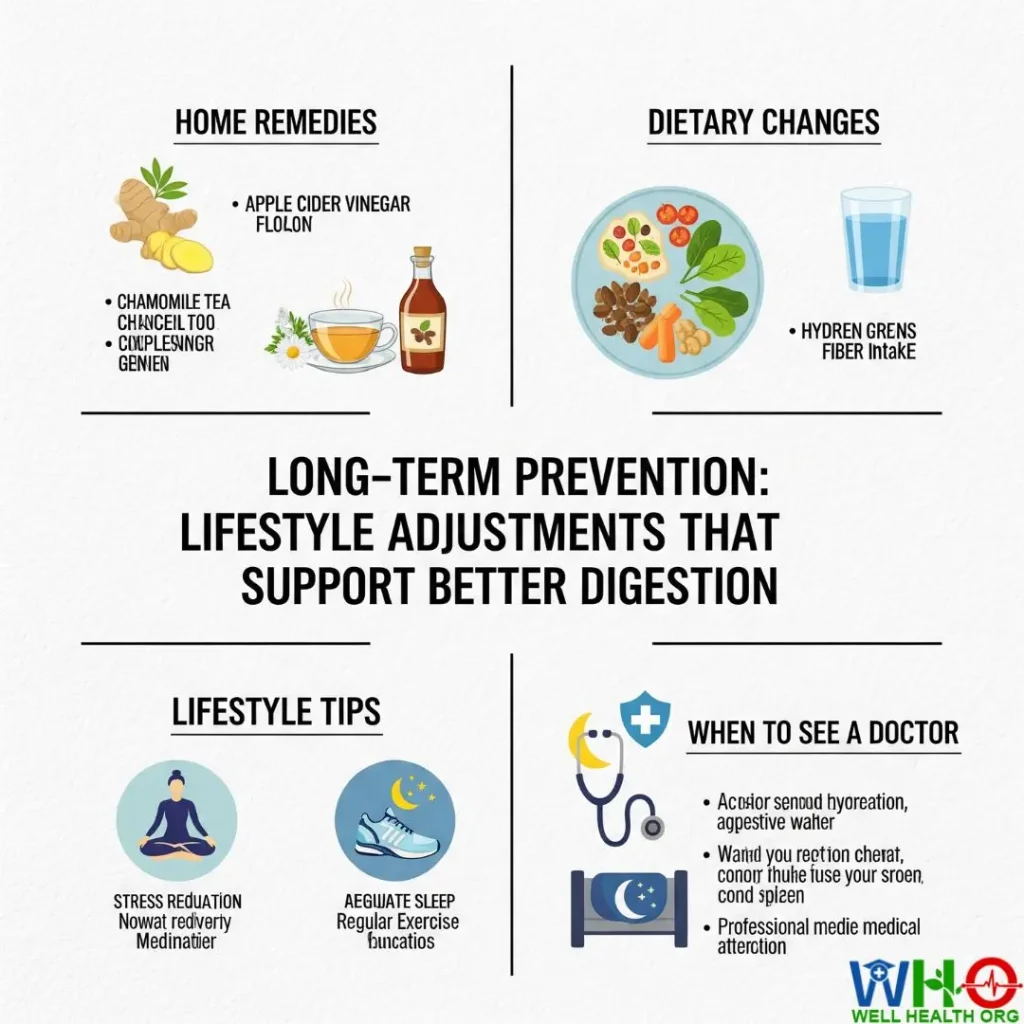
3. Long-Term Prevention: Lifestyle Adjustments That Support Better Digestion
Managing indigestion isn’t just about quick fixes — it’s about creating habits that prevent discomfort in the first place.
Manage Stress Levels
Your gut and brain are closely connected. When you’re stressed, your body diverts energy away from digestion, slowing the process and increasing acid production.
Simple stress-relieving practices can make a big difference:
- Deep-breathing exercises — a few minutes of slow, focused breathing can calm both your mind and your stomach.
- Meditation or yoga — helps regulate your stress hormones and improves digestion.
- Outdoor activities — a short walk in nature after a meal promotes both mental calmness and physical digestion.
Maintain a Healthy Weight
Carrying extra weight — especially around your abdomen — increases pressure on your stomach and can force acid back up into your esophagus. Losing even a small amount of weight can reduce acid reflux and improve overall digestion.
Aim for regular moderate exercise, such as brisk walking or swimming, for at least 30 minutes a day. Avoid intense workouts immediately after meals; give your stomach time to settle.
Quit Smoking and Limit Alcohol
Smoking weakens the muscle that keeps stomach acid where it belongs, while alcohol can irritate your stomach lining. Cutting back on both can significantly reduce indigestion episodes.
4. Gentle and Natural Remedies for Indigestion Relief
Nature provides several simple and effective remedies to soothe your digestive system without the side effects of medication.
Ginger
Ginger is a digestive superhero. It helps food move smoothly through your stomach and reduces inflammation.
How to use:
- Sip ginger tea made from fresh slices steeped in hot water.
- Chew on crystallized ginger or take ginger capsules (up to 4 grams per day).
Avoid excess intake, as too much ginger may cause heartburn in sensitive individuals.
Peppermint Tea
Peppermint relaxes the digestive tract muscles, easing gas and cramps. A cup of peppermint tea after meals can work wonders.
⚠️ Note: Avoid peppermint if you have GERD, as it can relax the esophageal sphincter and worsen acid reflux.
Chamomile Tea
Chamomile has natural anti-inflammatory and calming properties that help soothe your stomach lining and reduce stress-related indigestion.
If you’re on blood thinners, consult your doctor before using chamomile, as it can mildly increase bleeding risk.
Fennel Seeds
In many cultures, fennel is used after meals to aid digestion. The oils in fennel help reduce bloating and cramping. Chew half a teaspoon of fennel seeds or steep them into tea.
Baking Soda Solution
For quick, temporary relief from acid buildup, mix ½ teaspoon of baking soda into a glass of warm water. It neutralizes stomach acid almost instantly.
However, use this occasionally — excessive use can upset your body’s natural pH balance.
5. Sleep and Digestion: How Position and Timing Matter
When and how you sleep has a big impact on digestion. Lying down too soon after eating can cause acid reflux and slow gastric emptying.

Best practices:
- Wait at least 2–3 hours after eating before lying down.
- Sleep on your left side, as this position prevents acid from backing up into the esophagus.
- Elevate your head slightly using an extra pillow or an inclined wedge to help gravity keep stomach acid in check.
A consistent sleep routine also supports healthy digestion by regulating hormones that influence appetite and metabolism.
6. When to See a Doctor
While indigestion is common and often harmless, persistent or severe symptoms can signal an underlying problem that requires medical care.

Seek medical advice if you experience:
- Indigestion lasting longer than two weeks
- Severe abdominal or chest pain
- Unexplained weight loss or fatigue
- Vomiting, black stools, or blood in vomit
- Difficulty swallowing or frequent choking sensations
A healthcare professional can determine whether you have GERD, gastritis, or another gastrointestinal issue, and guide you toward the right treatment — from medication adjustments to diagnostic tests.
7. Your Personalized Action Plan for Better Digestion
Achieving lasting relief from indigestion is about combining awareness, balance, and consistency. You don’t need drastic measures — just small, mindful changes that become part of your daily routine.
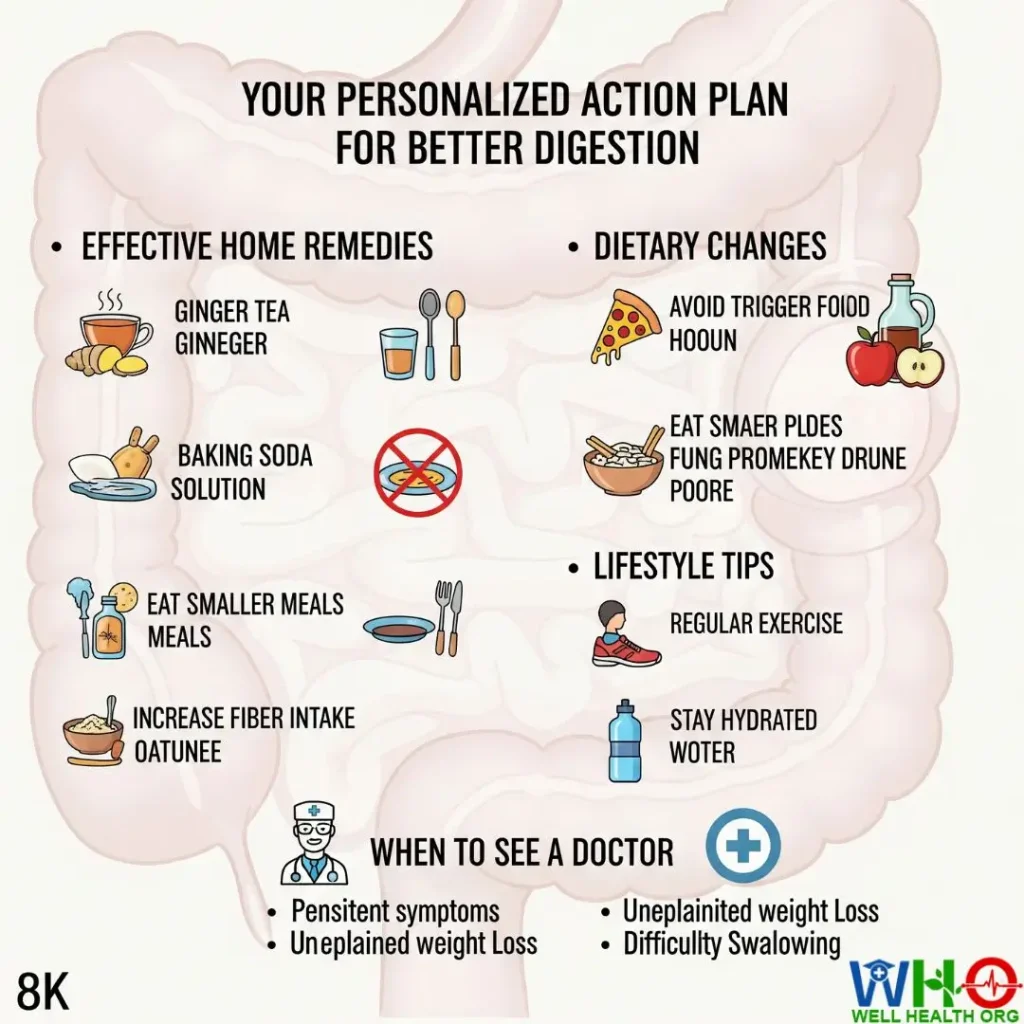
Here’s your 5-step plan to better digestion:
- Track your food — identify and eliminate triggers.
- Eat smart — choose smaller, balanced meals and chew thoroughly.
- Manage stress — use breathing, movement, and rest to support gut calmness.
- Stay active and hydrated — exercise regularly and drink plenty of water.
- Use natural aids — sip ginger or chamomile tea after meals, and keep antacids for emergencies only.
When practiced consistently, these steps not only relieve indigestion but also improve your overall energy, focus, and well-being.
Conclusion: A Healthier Digestive Future Starts Now
Indigestion doesn’t have to be a recurring part of your life. By tuning in to your body, understanding your triggers, and making gradual lifestyle improvements, you can achieve long-term digestive balance. Whether you find relief through mindful eating, herbal teas, or stress management, the key lies in consistency and care.
Your digestive system is resilient — give it the attention it deserves, and it will reward you with comfort, vitality, and peace after every meal.
FAQs About Indigestion Relief
1. Is indigestion the same as heartburn?
No. Heartburn is a symptom of acid reflux, while indigestion refers to a broader range of discomfort in the upper abdomen, including bloating, nausea, and fullness.
2. Can dehydration cause indigestion?
Yes. Insufficient water can slow digestion and make it harder for your stomach to process food efficiently.
3. How long should indigestion last?
Mild indigestion usually resolves within a few hours, but persistent symptoms lasting more than two weeks should be evaluated by a doctor.
4. Can probiotics help with indigestion?
Absolutely. Probiotics promote healthy gut bacteria, improving digestion and reducing bloating. Yogurt, kefir, and supplements are good sources.
5. What’s the best way to prevent indigestion naturally?
Eat smaller meals, avoid late-night eating, reduce stress, and stay hydrated. Consistency in these habits keeps your digestive system functioning smoothly.
Medically Reviewed by Prof. Dr. Akram
Orthopedic Surgeon | Professor | Senior Medical Specialist
Prof. Dr. Akram is a distinguished surgeon with over 15 years of clinical expertise. Having served as a lead Emergency Specialist at Complex International Government Hospital, he currently leads a specialized team of 13 medical professionals at his private hospital. As a Professor at top medical universities, he ensures that every article on WellHealthOrg.com meets rigorous clinical standards.
Medical Disclaimer:
The information provided is for educational purposes only and is not a substitute for professional medical advice, diagnosis, or treatment. Always consult your physician for any medical concerns.
Our content is rigorously fact-checked by our 13-member Editorial Team under the clinical supervision of Prof. Dr. Akram.