
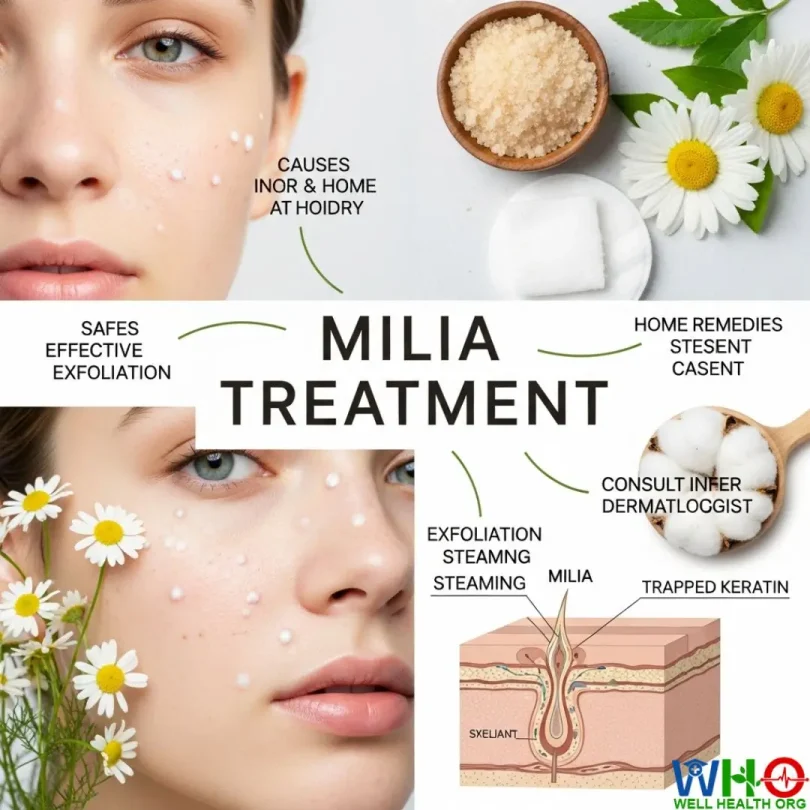
What is Milia
Have you ever looked in the mirror and noticed small, white bumps on your face that just wouldn’t disappear, no matter how carefully you cleansed or exfoliated? Those stubborn, pearl-like spots are called milia, and while they’re completely harmless, they can be frustrating and sometimes even affect confidence. The good news? You don’t have to rush to a dermatologist to start seeing improvement—there are safe, gentle, and highly effective home remedies that can help you treat and prevent milia naturally.
- What is Milia
- Understanding Milia: What Are These Tiny White Bumps?
- Why Do Milia Form? Common Causes You Might Not Know
- 1. Trapped Dead Skin Cells
- 2. Sun Damage
- 3. Heavy or Comedogenic Products
- 4. Skin Trauma or Injury
- 5. Long-Term Steroid Cream Use
- 6. Genetics and Health Conditions
- How to Treat Milia at Home: Gentle Yet Effective Remedies
- 1. Gentle Exfoliation: Out With the Old Skin
- Best Methods for Exfoliation
- 2. Retinoids: The Skin-Renewing Powerhouse
- How to Use Retinoids Safely
- 3. Facial Steaming: Open Up and Detoxify
- How to Steam Your Face
- 4. Honey: Nature’s Gentle Healer
- How to Use Honey for Milia
- 5. Aloe Vera: The Calming Remedy
- Application Method
- 6. Rose Water and Sandalwood: Traditional Yet Effective
- How to Prepare
- 7. Coconut Oil: A Soothing Protective Layer
- How to Use
- 8. Apple Cider Vinegar: Natural Exfoliant and Toner
- How to Use ACV Safely
- 9. Oatmeal and Yogurt Mask: Exfoliate and Nourish
- How to Make the Mask
- 10. Lemon Juice: A Natural Skin Brightener (Use with Caution)
- Application Method
- Daily Skincare Routine for Milia Prevention
- Step 1: Cleanse Properly
- Step 2: Exfoliate Regularly
- Step 3: Hydrate Without Clogging
- Step 4: Protect from the Sun
- Step 5: Review Your Products
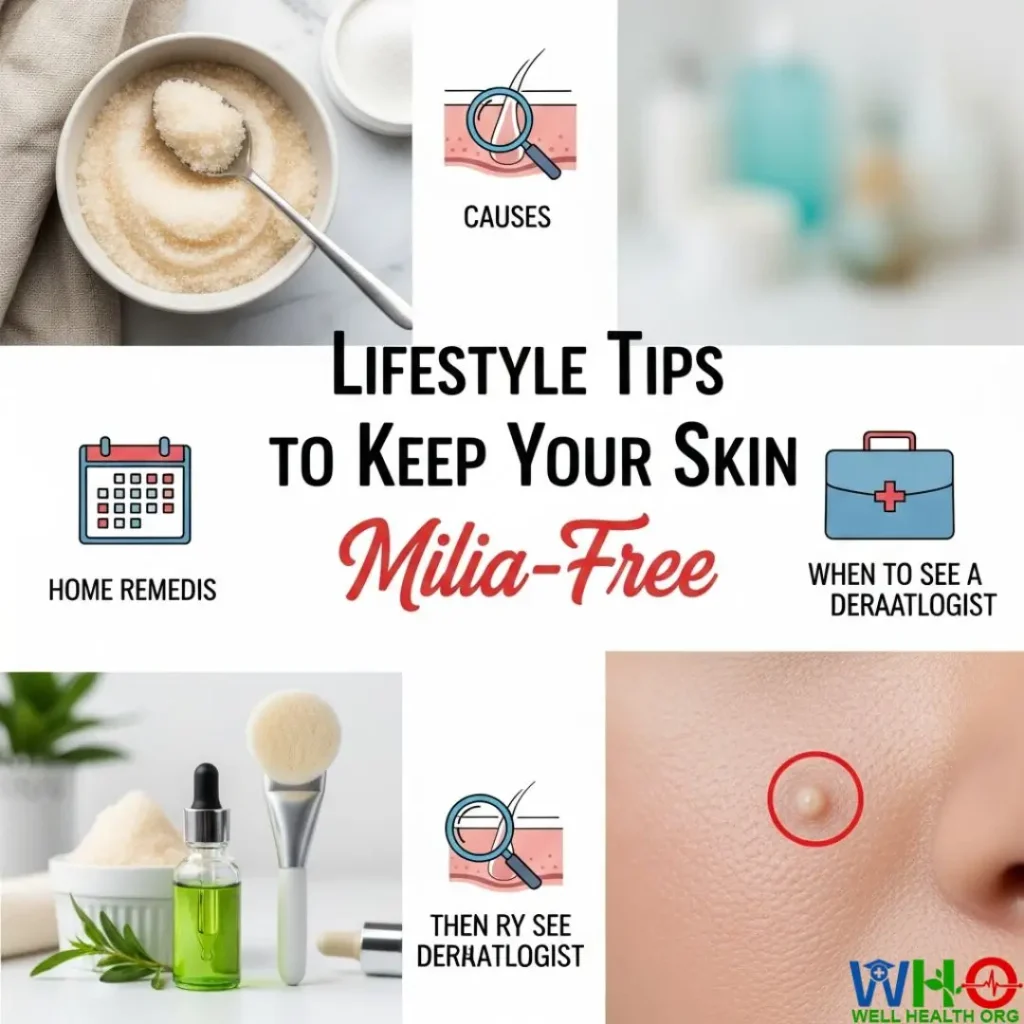
- Lifestyle Tips to Keep Your Skin Milia-Free
- 1. Eat a Skin-Friendly Diet
- 2. Stay Hydrated
- 3. Get Enough Sleep
- 4. Manage Stress
- When to See a Dermatologist
- Final Thoughts: Achieving Smooth, Clear Skin Naturally
- FAQs About Milia
This comprehensive guide will walk you through everything you need to know—what milia are, why they form, the best ways to treat them at home, and how to prevent them from returning. You’ll also find expert-backed skincare advice and practical tips to keep your complexion clear, radiant, and healthy.
Understanding Milia: What Are These Tiny White Bumps?
Milia, often referred to as “milk spots,” are small, white or yellowish cysts that form just beneath the skin’s surface. They are filled with keratin, a natural protein found in the skin, hair, and nails. Unlike pimples, milia aren’t caused by bacteria or excess oil. Instead, they occur when dead skin cells get trapped under new layers of skin, forming tiny, hard bumps that can’t be popped or squeezed out.
You’ll most commonly find them:
- Around the eyes (especially under the lower eyelids)
- On the cheeks, nose, or forehead
- Occasionally on the chest or upper arms
While milia are most common in newborns (affecting nearly half of all babies), adults and teenagers can also develop them due to skin damage, product buildup, or other factors. They aren’t dangerous or contagious—but because they’re firm and visible, many people look for safe, gentle ways to get rid of them.
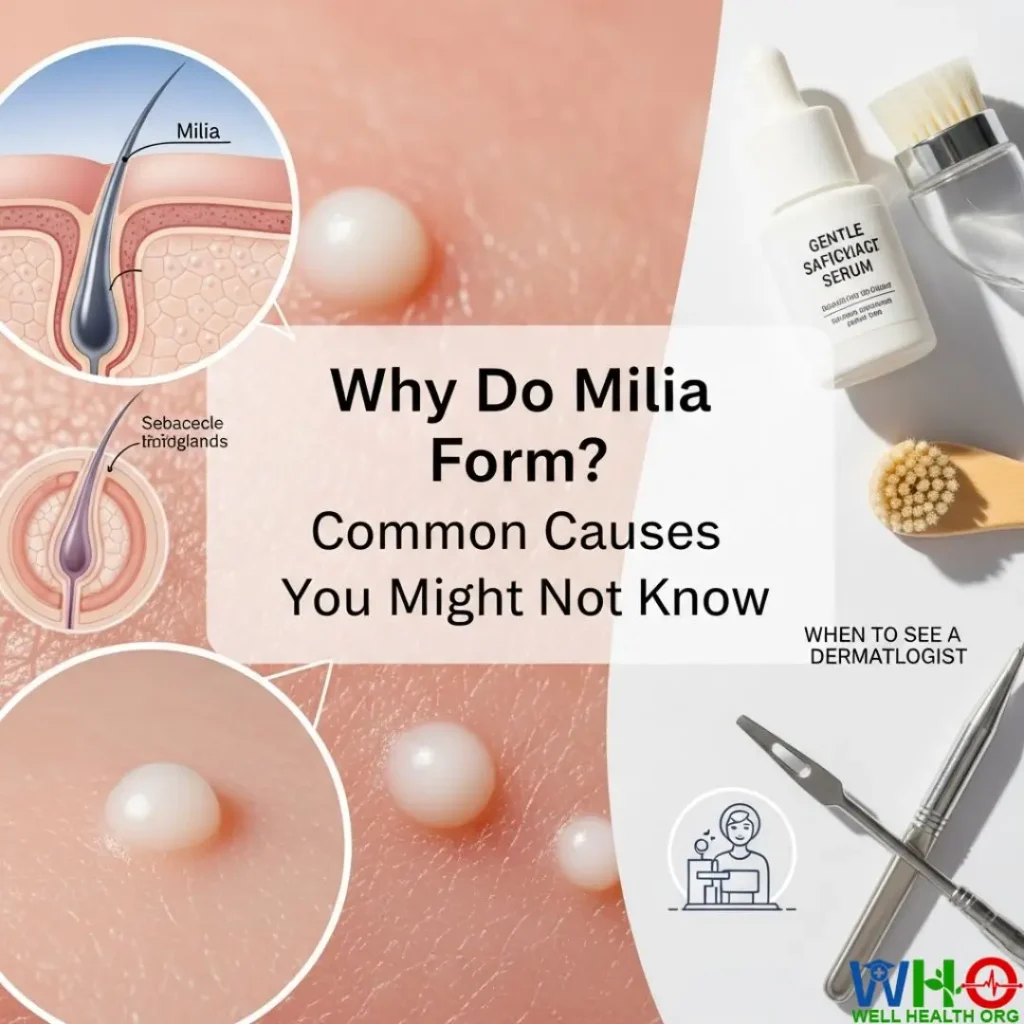
Why Do Milia Form? Common Causes You Might Not Know
Understanding what triggers milia is the first step toward treating and preventing them effectively. Here are the most common culprits:
1. Trapped Dead Skin Cells
The number one cause of milia is dead skin that doesn’t shed properly. When your skin’s natural exfoliation process slows down, keratin becomes trapped underneath new skin layers, forming small, hard cysts.
2. Sun Damage
Long-term exposure to UV rays can thicken the outer layer of your skin, making it more difficult for dead skin cells to shed naturally. This buildup can lead to secondary milia, especially around the eyes and temples.
3. Heavy or Comedogenic Products
Rich creams, thick sunscreens, and certain makeup products can clog pores and trap dead skin, creating the perfect environment for milia to form. Always check for “non-comedogenic” labels on your skincare products.
4. Skin Trauma or Injury
Milia can also appear after burns, blistering, or harsh cosmetic treatments like chemical peels and laser therapy. These procedures can temporarily disrupt your skin’s natural barrier.
5. Long-Term Steroid Cream Use
Using topical steroid creams for extended periods can cause thinning of the skin and lead to the development of milia, particularly around sensitive areas.
6. Genetics and Health Conditions
In rare cases, certain autoimmune disorders or genetic factors may make you more prone to milia, though this is less common.
How to Treat Milia at Home: Gentle Yet Effective Remedies
Treating milia requires patience, consistency, and gentle care. Unlike acne, you can’t “pop” milia—they’re trapped beneath the skin’s surface. The goal of home treatment is to encourage your skin’s natural cell turnover and allow the bumps to resolve on their own.
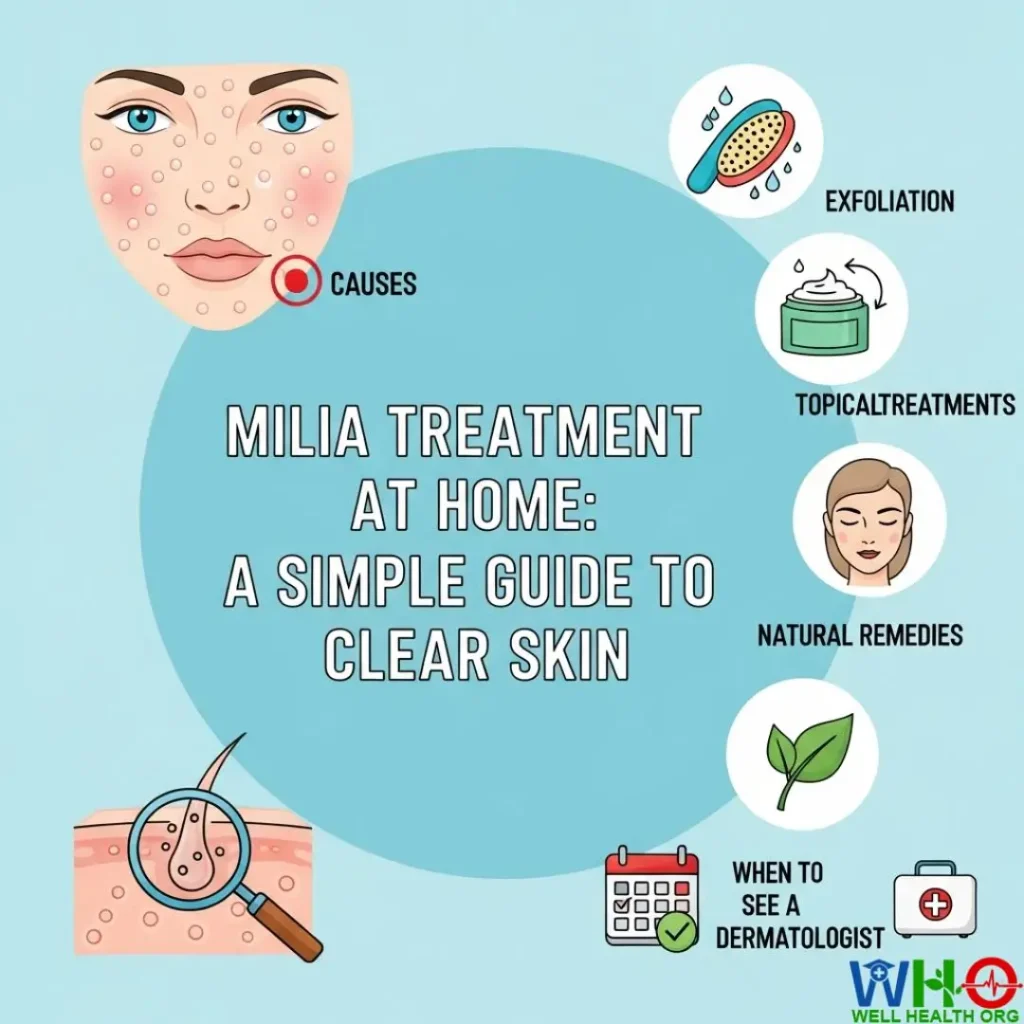
Let’s explore some of the most effective, dermatologist-approved natural remedies and methods you can try at home.
1. Gentle Exfoliation: Out With the Old Skin
Exfoliation helps remove dead skin cells and prevents buildup that can trap keratin beneath the surface. However, when it comes to milia, gentle is the keyword—over-scrubbing can irritate your skin and make things worse.
Best Methods for Exfoliation
- Physical Exfoliation: Choose a mild scrub with fine particles—such as rice powder or oatmeal-based exfoliants. Use light, circular motions two to three times a week.
- Chemical Exfoliation: Products containing Alpha Hydroxy Acids (AHAs) like glycolic acid or lactic acid are excellent for dissolving the bonds between dead skin cells. For sensitive skin, Polyhydroxy Acids (PHAs) are a gentler alternative.
Pro Tip: Always follow exfoliation with a soothing moisturizer to protect your skin’s barrier.
2. Retinoids: The Skin-Renewing Powerhouse
Retinoids (vitamin A derivatives) are among the most effective treatments for preventing and reducing milia. They work by speeding up cell turnover and keeping dead skin from accumulating beneath the surface.
How to Use Retinoids Safely
- Start Slowly: Begin with an over-the-counter retinoid like adapalene gel or a gentle retinol serum. Apply a pea-sized amount to clean, dry skin every other night.
- Moisturize Afterward: Retinoids can cause dryness or mild peeling at first, so follow up with a lightweight, non-comedogenic moisturizer.
- Avoid the Eye Area: Since the skin around your eyes is thin and sensitive, apply retinoids only to surrounding areas unless your product specifies it’s safe for under-eye use.
Note: If your milia persist after a few months, a dermatologist may prescribe a stronger retinoid such as tretinoin.
3. Facial Steaming: Open Up and Detoxify
Facial steaming is one of the simplest yet most relaxing home remedies for milia. The steam helps soften hardened keratin and opens pores, allowing your skin to breathe.
How to Steam Your Face
- Fill a bowl with hot water and let it cool slightly to avoid burns.
- Place a towel over your head and lean over the bowl for about 5–10 minutes.
- Follow up with a gentle cleanser or exfoliating toner.
Alternatively, you can use a warm, damp cloth and press it gently on affected areas for a few minutes each day.
4. Honey: Nature’s Gentle Healer
Honey is a natural humectant and antibacterial agent that helps balance oil production while keeping your skin soft. It doesn’t directly dissolve milia but supports overall skin health and healing.
How to Use Honey for Milia
- Apply a thin layer of raw or manuka honey to clean, dry skin.
- Leave it on for 15–20 minutes, then rinse with lukewarm water.
- Repeat daily for smoother, hydrated skin.
Honey masks are especially beneficial if your skin feels dry or tight after exfoliation.
5. Aloe Vera: The Calming Remedy
Aloe vera gel is famous for its soothing, anti-inflammatory, and healing properties. It helps calm irritation and provides moisture without clogging pores—ideal for sensitive or acne-prone skin prone to milia.
Application Method
- Use fresh aloe vera gel or a pure, organic store-bought version.
- Apply it evenly over your face and leave it on for 20 minutes before rinsing.
- You can also use it as an overnight moisturizer.
Regular use of aloe vera helps improve your skin’s elasticity and natural renewal process, reducing the chance of new milia forming.
6. Rose Water and Sandalwood: Traditional Yet Effective
In Ayurvedic skincare, sandalwood paste mixed with rose water is a well-known remedy for soothing and detoxifying the skin. Sandalwood gently removes impurities, while rose water cools and tones the skin.
How to Prepare
- Mix 1 tablespoon of sandalwood powder with enough rose water to form a smooth paste.
- Apply it to affected areas and let it sit for 15–20 minutes.
- Rinse with cool water and pat dry.
This remedy is especially helpful for calming inflamed or sun-exposed skin.
7. Coconut Oil: A Soothing Protective Layer
Coconut oil contains lauric acid, known for its antimicrobial and anti-inflammatory benefits. It helps soften the skin, making it easier for trapped keratin to work its way out naturally.
How to Use
- Take a small amount of pure, cold-pressed coconut oil and massage it gently over the affected area.
- Leave it overnight and wash it off in the morning.
- Repeat daily for best results.
Avoid using too much if you have oily or acne-prone skin, as excess oil can sometimes contribute to pore congestion.
8. Apple Cider Vinegar: Natural Exfoliant and Toner
Apple cider vinegar (ACV) has natural antibacterial and exfoliating properties thanks to its mild acidic nature. It helps balance your skin’s pH, clears away dead cells, and promotes smoother skin texture — which can indirectly help reduce milia over time.
How to Use ACV Safely
- Dilute Properly: Mix 1 part apple cider vinegar with 3 parts water. Never apply it undiluted, as it can irritate your skin.
- Apply Gently: Use a cotton pad to dab the solution on milia-prone areas, avoiding the eye region.
- Leave and Rinse: Let it sit for 5–10 minutes, then rinse off with cool water.
Use this remedy once daily at first. If your skin tolerates it well, increase to twice a day. Always apply sunscreen afterward, as vinegar can make your skin slightly more sun-sensitive.
9. Oatmeal and Yogurt Mask: Exfoliate and Nourish
Oatmeal is a natural exfoliant rich in antioxidants, while yogurt contains lactic acid, which helps gently dissolve dead skin cells. Together, they create a soothing and effective home treatment for milia-prone skin.
How to Make the Mask
- Mix 1 tablespoon of ground oatmeal with 2 tablespoons of plain yogurt.
- Apply the mixture evenly over your face.
- Let it sit for 15–20 minutes, then massage gently in circular motions before rinsing off with lukewarm water.
This mask is mild enough for regular use (2–3 times per week) and leaves your skin soft, refreshed, and balanced.
10. Lemon Juice: A Natural Skin Brightener (Use with Caution)
Lemon juice is a natural source of citric acid, another type of AHA that promotes exfoliation and skin renewal. It can help fade dark spots left behind by milia and improve overall skin clarity. However, it’s quite strong, so dilution is crucial.
Application Method
- Mix equal parts lemon juice and water.
- Apply with a cotton swab only to affected areas.
- Leave for 5 minutes, then rinse thoroughly with cool water.
- Always follow up with sunscreen or moisturizer.
If you have sensitive skin, consider using rose water instead of lemon juice—it provides gentle toning benefits without irritation.
Daily Skincare Routine for Milia Prevention
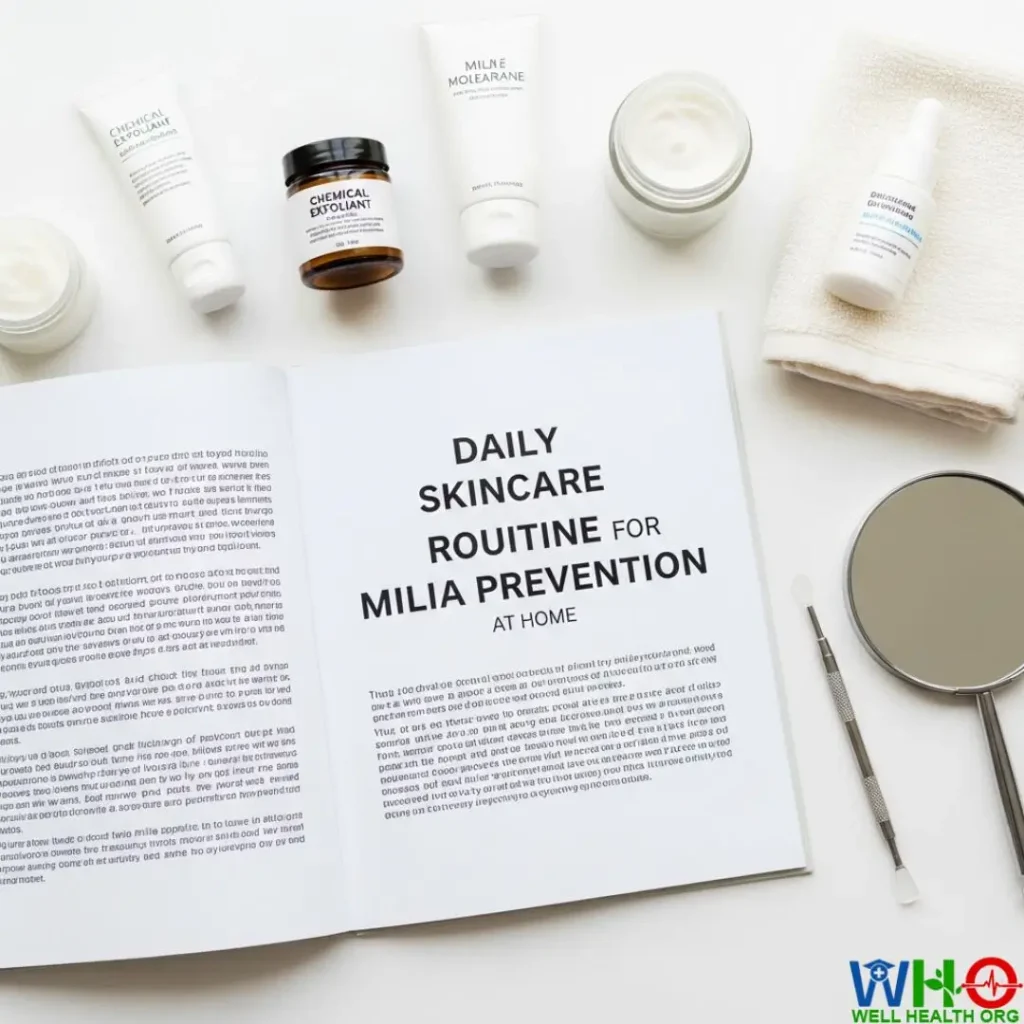
Now that you know how to treat milia, the next step is to build a skincare routine that prevents them from forming in the first place. Prevention is all about maintaining healthy skin turnover, balanced moisture, and avoiding pore-clogging ingredients.
Step 1: Cleanse Properly
Cleansing twice a day keeps your pores clean and your skin balanced. Choose a gentle, sulfate-free cleanser that removes dirt and oil without stripping natural moisture.
Look for ingredients like:
- Ceramides – strengthen your skin barrier
- Salicylic acid – lightly exfoliates and unclogs pores
- Aloe vera or cucumber – soothe irritation
Avoid harsh soaps or foaming cleansers that leave your skin tight and dry.
Step 2: Exfoliate Regularly
Exfoliation should be part of your weekly routine. For most people, exfoliating 2–3 times per week is enough to prevent dead skin buildup. Alternate between physical exfoliants (like oatmeal or rice flour scrubs) and chemical exfoliants (like glycolic or lactic acid toners).
If you’re using retinoids, limit exfoliation to avoid over-sensitizing your skin.
Step 3: Hydrate Without Clogging
Hydration is key — even oily skin needs moisture. The trick is choosing the right kind of moisturizer.
Opt for:
- Oil-free or gel-based moisturizers for oily skin
- Lightweight, non-comedogenic creams for dry or sensitive skin
Ingredients like hyaluronic acid, niacinamide, and squalane hydrate deeply while keeping your skin barrier strong.
Step 4: Protect from the Sun
Sun damage is one of the biggest triggers of secondary milia. Prolonged UV exposure thickens your skin’s outer layer, trapping dead cells underneath.
Always wear a broad-spectrum SPF 30 or higher, even indoors if you’re near windows. Choose mineral sunscreens with zinc oxide or titanium dioxide, as they are less likely to clog pores or cause irritation.
Step 5: Review Your Products
Sometimes, the very products meant to “nourish” your skin are the ones causing issues. Reevaluate your skincare and makeup items — look for terms like:
- “Non-comedogenic”
- “Oil-free”
- “Dermatologist-tested”
Avoid heavy ointments, petroleum-based products, or overly rich night creams if you’re prone to milia, especially around the eye area.
Lifestyle Tips to Keep Your Skin Milia-Free
Healthy skin starts from within. Beyond skincare, small changes in your daily habits can significantly improve your skin’s health and resilience.
1. Eat a Skin-Friendly Diet
Foods rich in antioxidants, vitamins A, C, and E, and omega-3 fatty acids support healthy skin regeneration. Include:
- Leafy greens (spinach, kale)
- Colorful fruits (berries, oranges)
- Fatty fish (salmon, sardines)
- Nuts and seeds (almonds, flaxseeds)
Avoid excessive sugar, refined carbs, and processed foods, which can disrupt skin balance.
2. Stay Hydrated
Your skin reflects your hydration level. Drink 8–10 glasses of water daily, and eat water-rich foods like cucumber, watermelon, and celery.
3. Get Enough Sleep
During sleep, your body repairs and renews skin cells. Aim for 7–9 hours of quality sleep every night to promote smoother, more radiant skin.
4. Manage Stress
High stress can trigger hormonal imbalances and skin inflammation. Incorporate relaxing activities like yoga, deep breathing, or journaling into your daily routine.
When to See a Dermatologist
While most milia resolve naturally or with consistent home care, sometimes professional intervention is necessary. Consider seeing a dermatologist if:
- Your milia persist for more than a few months.
- The bumps spread or become red and irritated.
- You have a large cluster of milia affecting your confidence.
- You’re unsure if the bumps are milia or another condition (like syringoma or acne).
Dermatologists can perform safe extraction using a sterile needle or blade, a procedure that should never be attempted at home. They may also recommend treatments like:
- Chemical peels
- Microdermabrasion
- Cryotherapy (freezing)
- Prescription-strength retinoids
These options help clear existing milia quickly and prevent new ones from forming.
Final Thoughts: Achieving Smooth, Clear Skin Naturally
Milia may be small, but they can cause big frustration—especially when they linger for months. The key to managing them lies in understanding their cause, practicing patience, and committing to a gentle, consistent skincare routine.
You don’t need harsh treatments or costly products. With the right approach—gentle exfoliation, regular hydration, mild natural remedies, and protective sun care—you can help your skin clear itself naturally.
Remember, your skin renews itself every 28–40 days, so results take time. Stick with your routine, and soon you’ll notice smoother texture, fewer bumps, and a healthier glow.
FAQs About Milia
1. Can I pop milia at home?
No. Milia don’t have an opening like pimples, so trying to pop them can cause scarring or infection. Always let them clear naturally or have them professionally extracted.
2. How long do milia take to go away naturally?
Most milia resolve on their own within a few weeks to a few months, depending on your skin’s renewal cycle and care routine.
3. Are milia contagious?
Not at all. Milia are not caused by bacteria or viruses, so they can’t spread from person to person.
4. Can sunscreen cause milia?
Some heavy or oil-based sunscreens can contribute to milia formation. Opt for lightweight, non-comedogenic mineral sunscreens.
5. Which natural ingredient works best for milia?
A combination of gentle exfoliants (like lactic acid or oatmeal) and soothing agents (like aloe vera or honey) tends to be most effective for treating and preventing milia.
Medically Reviewed by Prof. Dr. Akram
Orthopedic Surgeon | Professor | Senior Medical Specialist
Prof. Dr. Akram is a distinguished surgeon with over 15 years of clinical expertise. Having served as a lead Emergency Specialist at Complex International Government Hospital, he currently leads a specialized team of 13 medical professionals at his private hospital. As a Professor at top medical universities, he ensures that every article on WellHealthOrg.com meets rigorous clinical standards.
Medical Disclaimer:
The information provided is for educational purposes only and is not a substitute for professional medical advice, diagnosis, or treatment. Always consult your physician for any medical concerns.
Our content is rigorously fact-checked by our 13-member Editorial Team under the clinical supervision of Prof. Dr. Akram.







