

A mouth ulcer might look small, but if you’ve ever had one, you know how much discomfort it can cause. Eating, drinking, and even talking can suddenly feel like challenges. These little sores — also known as canker sores — often appear on the tongue, gums, or inner cheeks and can make daily life miserable for several days.
- Understanding What Causes Mouth Ulcers
- 1. Saltwater Rinse – A Time-Tested Remedy
- 2. Honey – Nature’s Healing Sweetener
- 3. Coconut Oil – The Soothing Antimicrobial Shield
- 4. Aloe Vera – The Ultimate Natural Soother
- 5. Plain Yogurt – Balancing the Oral Microbiome
- 6. Ice Cubes – Quick Cooling Comfort
- 7. Baking Soda Rinse – Neutralizing Acidity
- 8. Turmeric – The Golden Healer
- 9. Chamomile Tea – Nature’s Gentle Anti-Inflammatory
- 10. Apple Cider Vinegar – Natural Antiseptic Rinse
- 11. Licorice Root – An Ancient Herbal Remedy
- 12. Vitamin and Mineral Boost – Healing from the Inside Out
- 13. Preventing Mouth Ulcers Before They Start
- 14. When to See a Doctor
- 15. Your Path to Relief and Recovery
- FAQs
While most mouth ulcers heal naturally within a week or two, that doesn’t make the wait any easier. Fortunately, there are several safe, natural, and effective home remedies that can ease the pain, fight bacteria, and speed up healing. In this comprehensive guide, we’ll explore the best home remedies for mouth ulcers, understand their causes, prevention tips, and learn when you should consult a doctor.
Understanding What Causes Mouth Ulcers
Before diving into remedies, it’s important to know why mouth ulcers form in the first place. Mouth ulcers are shallow, round or oval sores with a white, yellow, or gray center and a red, inflamed border. They usually develop on the inside of your lips, cheeks, tongue, or gums — not on the outer lips like cold sores.
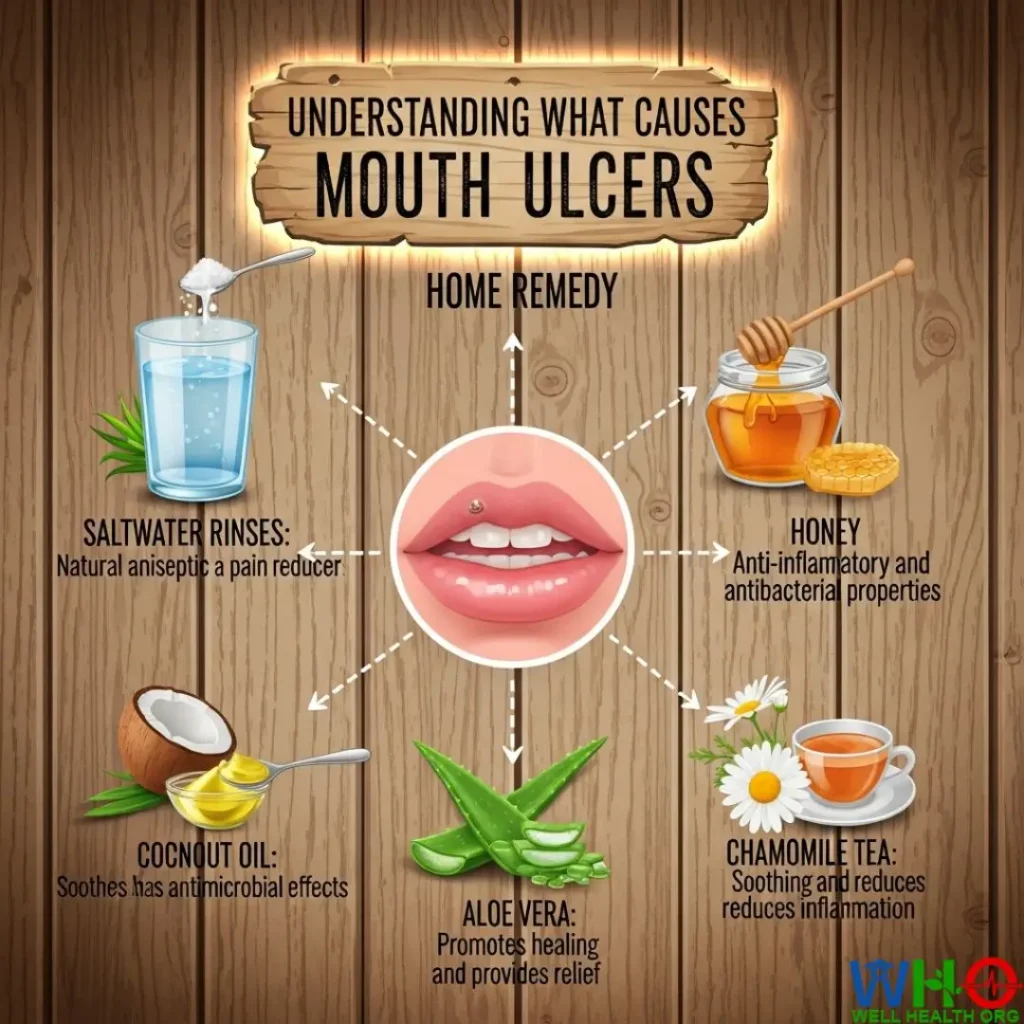
Common causes include:
- Minor injuries: Accidentally biting your cheek, using a hard-bristled toothbrush, or irritation from braces or dentures can cause small wounds that turn into ulcers.
- Stress and fatigue: Emotional stress, anxiety, and lack of sleep can weaken your immune response, making you more prone to ulcers.
- Nutritional deficiencies: A shortage of essential nutrients like vitamin B12, iron, zinc, and folate can lead to recurrent sores.
- Acidic or spicy foods: Citrus fruits, tomatoes, or spicy dishes can trigger or worsen ulcers for some people.
- Hormonal changes: Many women experience mouth ulcers during hormonal shifts, such as menstruation or pregnancy.
- Allergic reactions or sensitivities: Certain ingredients in toothpaste (like sodium lauryl sulfate) or foods may irritate your mouth.
Understanding your triggers can make a huge difference. Once you identify what’s causing your ulcers, you can take preventive steps and reduce their recurrence.
1. Saltwater Rinse – A Time-Tested Remedy
If there’s one natural remedy for mouth ulcers that stands the test of time, it’s the humble saltwater rinse. Salt acts as a natural disinfectant, cleansing the ulcer, reducing inflammation, and helping the sore heal faster.
How to use:
- Dissolve ½ teaspoon of salt in a cup of warm water.
- Swish the solution gently around your mouth for 30–60 seconds.
- Focus on the area where the ulcer is, then spit it out.
- Rinse with plain water afterward to remove excess saltiness.
Frequency: Use this rinse 2–3 times a day until the ulcer disappears.
Why it works:
Salt draws out fluid from the inflamed tissue, reduces swelling, and prevents bacterial growth. It’s simple, affordable, and one of the most effective remedies for speeding up recovery.
Tip: If pure saltwater feels too strong, add a pinch of baking soda to help neutralize acidity and further soothe the ulcer.
2. Honey – Nature’s Healing Sweetener
Honey is far more than a kitchen staple — it’s a natural powerhouse for healing wounds, thanks to its antibacterial, anti-inflammatory, and moisturizing properties. It helps soothe the burning sensation while also preventing infection.
How to use:
- Apply a small amount of raw or Manuka honey directly onto the sore using a clean cotton swab or your fingertip.
- Leave it on and let the honey coat the ulcer for as long as possible.
- Reapply several times a day, especially after meals or brushing your teeth.
Why it works:
Honey creates a moist healing environment that encourages tissue repair and prevents bacterial growth. Research has shown that honey can significantly reduce pain, size, and redness in mouth ulcers.
Bonus tip: Combine honey with a pinch of turmeric powder for an extra anti-inflammatory boost.
3. Coconut Oil – The Soothing Antimicrobial Shield
Coconut oil is another excellent home remedy for mouth ulcers, especially if your sore feels inflamed or swollen. It contains lauric acid, which has both antibacterial and antiviral properties. Coconut oil also provides a soothing, protective layer that reduces friction and irritation when you eat or talk.
How to use:
- Dab a small amount of pure virgin coconut oil directly onto the ulcer using a clean finger or cotton swab.
- Reapply several times throughout the day, particularly after eating or rinsing your mouth.
Why it works:
The oil helps reduce inflammation, fights bacteria, and soothes pain almost immediately. It’s safe for daily use and suitable for children as well.
Alternative method: You can try oil pulling — swishing a tablespoon of coconut oil in your mouth for 5–10 minutes before spitting it out — to promote overall oral health.
4. Aloe Vera – The Ultimate Natural Soother
Aloe vera is known as the “plant of immortality” for a reason. It’s packed with vitamins, minerals, and healing enzymes that soothe pain and speed up recovery from mouth ulcers. Its cooling nature provides instant relief from burning sensations.
How to use:
- Apply pure aloe vera gel directly to the ulcer using a cotton swab.
- Let it sit for several minutes before rinsing your mouth with water.
- Repeat 2–3 times daily.
Why it works:
Aloe vera reduces inflammation, fights bacteria, and encourages new tissue growth. You can use fresh aloe gel extracted from a plant or a commercial gel labeled safe for oral use.
Pro tip: Keep your aloe vera gel in the refrigerator for a cooling, pain-relieving effect.
5. Plain Yogurt – Balancing the Oral Microbiome
The bacteria in your mouth play an important role in maintaining oral health. An imbalance can lead to irritation or infections that trigger ulcers. Plain yogurt with live probiotics helps restore that balance and reduces inflammation.
How to use:
- Eat a few spoonfuls of plain, unsweetened yogurt daily.
- For direct relief, hold a small spoonful in your mouth for a minute before swallowing.
Why it works:
Probiotics in yogurt promote healing by restoring healthy bacteria and lowering acidity levels in your mouth. It’s a gentle, safe option suitable for all ages.
Pro tip: Avoid flavored or sweetened yogurt, as added sugars can irritate the ulcer further.
6. Ice Cubes – Quick Cooling Comfort
For immediate pain relief, nothing beats a simple ice cube. Ice numbs the nerves, reduces swelling, and minimizes discomfort almost instantly.
How to use:
- Wrap an ice cube in a clean cloth or paper towel.
- Hold it gently against the ulcer until it melts.
- Repeat several times a day as needed.
Tip: Avoid applying ice directly to the ulcer without a barrier, as this may cause mild tissue irritation.
7. Baking Soda Rinse – Neutralizing Acidity
Baking soda (sodium bicarbonate) is another age-old remedy for mouth ulcers. It helps neutralize acid in your mouth, reduces inflammation, and restores the pH balance needed for healing.
How to use:
- Mix 1 teaspoon of baking soda in a cup of warm water.
- Swish the mixture around your mouth for 30 seconds and spit it out.
Why it works:
Baking soda neutralizes acids and creates an environment where bacteria can’t thrive. It’s especially effective if your ulcers are caused by acidic foods or stomach acidity.
8. Turmeric – The Golden Healer
Turmeric is not just a spice that gives curry its rich yellow color — it’s a potent anti-inflammatory and antimicrobial herb that’s been used in Ayurvedic medicine for centuries. The active compound, curcumin, helps reduce inflammation, fight bacteria, and promote faster healing of mouth ulcers.
How to use:
- Mix ½ teaspoon of turmeric powder with a few drops of water or honey to form a paste.
- Apply it directly to the ulcer using a clean finger or cotton swab.
- Leave it on for a few minutes, then rinse with lukewarm water.
Frequency: Apply 2–3 times daily until the ulcer heals.
Why it works:
Turmeric’s curcumin helps relieve pain and inflammation while promoting tissue regeneration. When mixed with honey, it forms a soothing protective coating over the sore, making it easier to eat and talk.
Pro tip: For overall oral health, you can also mix turmeric with coconut oil for a powerful anti-inflammatory mouth mask.
9. Chamomile Tea – Nature’s Gentle Anti-Inflammatory
Chamomile tea isn’t just relaxing — it’s healing. This herbal tea contains compounds like azulene and bisabolol, which soothe inflammation, fight infection, and calm irritation inside the mouth.
How to use:
- Steep a chamomile tea bag in hot water for a few minutes.
- Let it cool slightly, then press the tea bag directly against the ulcer for 5–10 minutes.
- Alternatively, use the cooled tea as a mouth rinse.
Frequency: Do this 2–3 times daily until you see improvement.
Why it works:
Chamomile acts as a natural anti-inflammatory and antimicrobial agent, providing pain relief and encouraging the ulcer to heal faster.
Bonus tip: Combine chamomile with a drop of honey for even more healing benefits.
10. Apple Cider Vinegar – Natural Antiseptic Rinse
Apple cider vinegar (ACV) can help kill bacteria and restore a healthy pH balance in your mouth. However, it’s important to dilute it properly because undiluted ACV is too acidic and may cause irritation.
How to use:
- Mix 1 teaspoon of apple cider vinegar in half a cup of warm water.
- Swish gently in your mouth for 30 seconds.
- Spit it out and rinse your mouth with clean water.
Frequency: Use once daily until your ulcer begins to heal.
Why it works:
The mild acidity of ACV helps cleanse the mouth, reduce bacterial load, and speed up the healing process.
Caution: Never apply apple cider vinegar directly on the ulcer — always dilute it to avoid burning the sensitive tissue.
11. Licorice Root – An Ancient Herbal Remedy
Licorice root, also known as mulethi, has been used in traditional medicine for soothing sore throats, ulcers, and digestive issues. It contains glycyrrhizin, a compound known for its anti-inflammatory and antimicrobial effects.
How to use:
- Crush a small piece of dried licorice root and soak it in a cup of warm water for a few hours.
- Use the infused water as a mouth rinse 2–3 times daily.
Why it works:
Licorice helps form a soothing protective layer over the ulcer, reduces swelling, and accelerates healing.
Alternative: Licorice extract gel is also available in health stores and can be applied directly to the sore.
12. Vitamin and Mineral Boost – Healing from the Inside Out
Recurrent mouth ulcers are often your body’s way of signaling nutritional deficiencies. Vitamins and minerals like B12, iron, folate, and zinc are vital for maintaining healthy mucous membranes.
What to include in your diet:
- Vitamin B12: Eggs, dairy, fish, and fortified cereals.
- Iron: Spinach, lentils, red meat, and pumpkin seeds.
- Folate: Leafy greens, beans, and citrus fruits.
- Zinc: Nuts, seeds, and whole grains.
Why it works:
A nutrient-rich diet strengthens your immune system and prevents future flare-ups. Supplements may be beneficial if your diet lacks these nutrients — but always consult a healthcare professional before starting any.
13. Preventing Mouth Ulcers Before They Start
While natural remedies can heal ulcers effectively, prevention is always better than cure. Here’s how you can minimize your risk:

1. Maintain excellent oral hygiene
Brush twice a day with a soft-bristled toothbrush and floss gently to remove bacteria and debris. Avoid harsh mouthwashes that contain alcohol, as they can irritate your mouth.
2. Avoid trigger foods
If certain foods like citrus fruits, spicy dishes, or nuts tend to cause ulcers, reduce or eliminate them from your diet.
3. Stay hydrated
Drink plenty of water to keep your mouth moist and prevent irritation.
4. Manage stress
Chronic stress is a major contributor to mouth ulcers. Try relaxation techniques like yoga, deep breathing, or spending time outdoors.
5. Protect your mouth
If you wear braces or dentures, make sure they fit properly to avoid rubbing against the inner cheeks or gums.
6. Eat a balanced diet
Include plenty of fruits, vegetables, and whole grains to keep your body nourished and resilient against infections.
14. When to See a Doctor
Most mouth ulcers heal within 7–14 days with home care. However, if your ulcers are severe, recurring, or not healing, it’s time to consult a doctor or dentist.
You should seek medical help if:
- The ulcer lasts longer than two weeks.
- You have multiple large sores or they appear frequently.
- The pain is intense enough to prevent you from eating or drinking.
- You notice fever, swollen lymph nodes, or fatigue.
- You experience ulcers along with skin rashes or other unusual symptoms.
Persistent ulcers could indicate underlying conditions like vitamin deficiencies, celiac disease, Crohn’s disease, or autoimmune disorders. A healthcare provider can diagnose the cause and prescribe appropriate treatment.
15. Your Path to Relief and Recovery
Mouth ulcers may be small, but the discomfort they cause can be big. Luckily, with the right care, healing can be quick and simple. Remedies like saltwater rinses, honey, coconut oil, aloe vera, and turmeric are safe, effective, and easy to find in most homes.
Combining these natural treatments with good oral hygiene, a balanced diet, and stress management can prevent future outbreaks. Always remember — consistency matters. Use your chosen remedy regularly and give your body the time it needs to heal.
And if your ulcers persist or keep returning, don’t hesitate to seek professional advice. Sometimes, the mouth can reveal what your body needs most — rest, nutrition, or medical attention.
Your healing starts with small, mindful steps — and before you know it, that painful sore will be just a memory.
FAQs
1. How long does it take for mouth ulcers to heal naturally?
Most mild ulcers heal on their own within 7–14 days. Home remedies can help relieve pain and speed up the healing process.
2. Can toothpaste cause mouth ulcers?
Yes, some toothpastes containing sodium lauryl sulfate (SLS) can irritate the lining of your mouth. Switch to an SLS-free toothpaste if you experience frequent ulcers.
3. Is it okay to use hydrogen peroxide on mouth ulcers?
Hydrogen peroxide can be used in very diluted form as an antiseptic rinse, but it may cause stinging. Always mix one part hydrogen peroxide with four parts water before using.
4. Are mouth ulcers contagious?
No, canker sores are not contagious. They are caused by irritation, stress, or internal imbalances — not by viral infection.
5. What foods help mouth ulcers heal faster?
Foods rich in vitamins B12, C, and zinc — like eggs, leafy greens, citrus fruits, and nuts — can help speed up healing and strengthen your immune system.
Medically Reviewed by Prof. Dr. Akram
Orthopedic Surgeon | Professor | Senior Medical Specialist
Prof. Dr. Akram is a distinguished surgeon with over 15 years of clinical expertise. Having served as a lead Emergency Specialist at Complex International Government Hospital, he currently leads a specialized team of 13 medical professionals at his private hospital. As a Professor at top medical universities, he ensures that every article on WellHealthOrg.com meets rigorous clinical standards.
Medical Disclaimer:
The information provided is for educational purposes only and is not a substitute for professional medical advice, diagnosis, or treatment. Always consult your physician for any medical concerns.
Our content is rigorously fact-checked by our 13-member Editorial Team under the clinical supervision of Prof. Dr. Akram.







