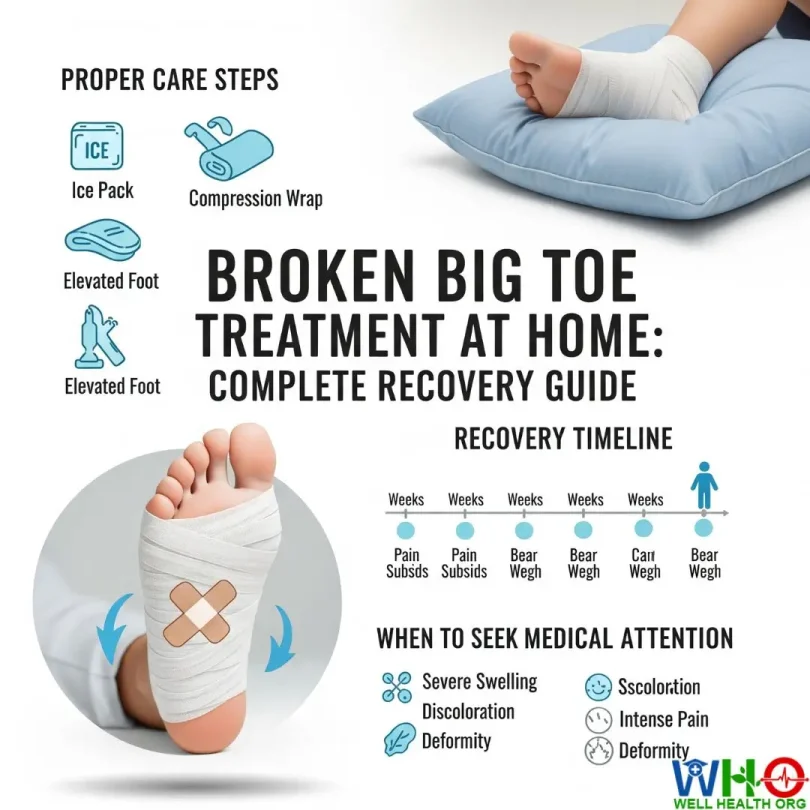
Broken Big Toe Treatment at Home
A broken big toe might seem like a small problem, but anyone who’s experienced it knows just how much it can interrupt your daily routine. Every step you take suddenly becomes painful, and even standing can feel like a challenge. The good news? Many big toe fractures can heal successfully at home with the right care, patience, and attention to detail.
- Broken Big Toe Treatment at Home
- Understanding the Nature of a Broken Big Toe
- Recognizing the Signs of a Broken Big Toe
- 1. Immediate, Sharp, and Persistent Pain
- 2. Swelling and Bruising
- 3. Deformity or Misalignment
- 4. Reduced Function and Sensation
- 5. Pain Behavior and Patterns
- When Professional Medical Care Becomes Essential
- 1. Severe Deformity or Visible Bone
- 2. Loss of Mobility or Sensation
- 3. Involvement of the Toe Joint
- 4. Displaced or Complicated Fractures
- 5. Underlying Health Conditions
- 6. Lack of Improvement with Home Care
- Step-by-Step Home Treatment for a Broken Big Toe
- 1. Rest and Immobilization Techniques
- 2. Proper Ice Application for Pain and Swelling
- 3. Elevation Strategies for Swelling Control
- 4. Pain Management Options
- Over-the-Counter (OTC) Pain Relief
- Topical Pain Relievers
- Natural and Holistic Approaches
- 5. Buddy Taping Technique: Stabilizing the Toe Naturally
- How to Perform Buddy Taping Correctly
- Maintenance Tips
- 6. Appropriate Footwear Selection During Recovery
- Ideal Footwear Options
- Avoid These Types of Shoes
- Recovery Timeline and Gentle Rehabilitation
- Early Recovery Phase (Weeks 1–2): Protect and Rest
- Middle Recovery Phase (Weeks 3–4): Controlled Movement Begins
- Suggested Exercises:
- Late Recovery Phase (Weeks 5–8): Strengthen and Return to Normal
- Effective Prevention Strategies for Future Toe Injuries
- 1. Optimize Your Home Environment
- 2. Choose Footwear That Supports and Protects
- 3. Strength and Balance Training
- 4. Lifestyle and Health Factors That Affect Bone Strength
- Boost Bone Density Naturally
- Watch for Medical Conditions
- 5. Activity Modifications for Safer Movement
- Supporting Your Recovery Journey
- 1. Listen to Your Body
- 2. Prioritize Nutrition and Hydration
- 3. Keep the Toe Clean and Protected
- 4. Transition Back to Activity Gradually
- 5. Mental and Emotional Recovery
- Conclusion: Healing Your Big Toe the Right Way
- Frequently Asked Questions (FAQs)
Your big toe (the hallux) plays a vital role in maintaining balance, stabilizing your body while walking, and absorbing impact during movement. That’s why even a minor injury can affect the way you move. However, not every fracture requires surgery or hospital treatment — several can recover naturally when managed correctly with conservative methods.
This complete recovery guide will walk you through everything you need to know — from identifying a fracture and determining whether home treatment is safe, to step-by-step recovery techniques and long-term prevention strategies.
Understanding when to rest, when to seek professional help, and how to care for your toe at home is key to a smooth recovery. With the proper approach, you can heal efficiently, minimize pain, and prevent complications such as stiffness or chronic joint problems later on.
Understanding the Nature of a Broken Big Toe
A broken big toe occurs when one or more bones in the toe — either the proximal or distal phalanx — suffer a crack or complete break due to trauma or repetitive stress. Common causes include stubbing your toe against furniture, dropping a heavy object on your foot, or sports-related injuries like kicking a ball incorrectly.
While it may sound simple, the big toe bears much of your body’s weight when walking. That means fractures in this area need careful management to avoid long-term mobility issues.
There are different types of toe fractures, including:
- Hairline (stress) fractures: Small cracks in the bone often caused by repetitive use or pressure.
- Non-displaced fractures: The bone breaks but remains aligned.
- Displaced fractures: The bone fragments shift out of alignment and may require medical intervention.
- Open fractures: When bone breaks through the skin, creating a risk of infection.
Understanding which type you have helps determine whether home treatment or medical care is best suited for recovery.
Recognizing the Signs of a Broken Big Toe
Identifying a broken big toe isn’t always as straightforward as it sounds. The symptoms can easily mimic those of a severe sprain or deep bruise. However, there are telltale signs that set a fracture apart from a mild injury.
1. Immediate, Sharp, and Persistent Pain
When a fracture occurs, the pain is often sharp, intense, and unrelenting. Unlike a sprain, where discomfort might ease after a few hours, fracture pain usually lingers or intensifies. You may find it nearly impossible to move the toe or bear any weight on it without severe discomfort.
2. Swelling and Bruising
Swelling often appears within minutes of the injury and can extend beyond the toe into the foot. Bruising — especially under the toenail — might turn dark purple, blue, or black, signaling internal bleeding beneath the skin.
3. Deformity or Misalignment
If your big toe looks crooked or bent at an odd angle, it may indicate a displaced fracture. This kind of misalignment means the bone pieces have shifted and typically requires professional correction.
4. Reduced Function and Sensation
Struggling to move your toe or feeling numbness and tingling could suggest more than just a simple break — potentially nerve involvement or severe tissue swelling. In some cases, you might even hear or feel a faint “crunching” sound when attempting movement — a classic sign of bone fragments rubbing together.
5. Pain Behavior and Patterns
Fracture pain tends to throb continuously, worsening at night or when you change positions. The discomfort may radiate from the toe into the rest of the foot or even up your leg when you try to walk.
These symptoms often make it difficult to continue regular activities, which is why early identification is critical.
When Professional Medical Care Becomes Essential
While many big toe fractures heal well with home care, certain warning signs indicate it’s time to seek immediate medical attention. Ignoring these can lead to long-term issues such as improper bone healing, chronic pain, or joint arthritis.
1. Severe Deformity or Visible Bone
If your toe looks severely bent or there’s a bone protruding through the skin, it’s a medical emergency. Such open fractures carry a high infection risk and must be treated promptly with professional cleaning, antibiotics, and possible surgery.
2. Loss of Mobility or Sensation
If you cannot move your toe at all or experience complete numbness, nerve or tendon damage may be present. This requires urgent evaluation by a doctor to prevent permanent impairment.
3. Involvement of the Toe Joint
Fractures that affect the joint where your big toe meets your foot (the metatarsophalangeal joint) often need precise realignment to prevent arthritis or stiffness in the future. In these cases, a podiatrist or orthopedic specialist should assess your injury.
4. Displaced or Complicated Fractures
If the bones have moved significantly apart, professional reduction (manual realignment) is usually necessary. Attempting to “reset” it at home can cause more harm than good.
5. Underlying Health Conditions
If you have diabetes, poor circulation, or an immune system disorder, self-treating a fracture can be risky. These conditions can slow healing and increase the risk of infection or ulceration, making medical supervision essential.
6. Lack of Improvement with Home Care
If after 2–3 days of proper rest, elevation, and pain management, your symptoms worsen — such as increased swelling, bruising, or persistent pain — it’s best to consult a doctor. Early intervention can prevent complications like bone displacement or delayed healing.
Step-by-Step Home Treatment for a Broken Big Toe
If your injury is mild and a healthcare professional confirms it’s safe for at-home care, a structured plan can promote recovery efficiently. The key goals of treatment are to control pain, reduce swelling, prevent further damage, and support bone healing.
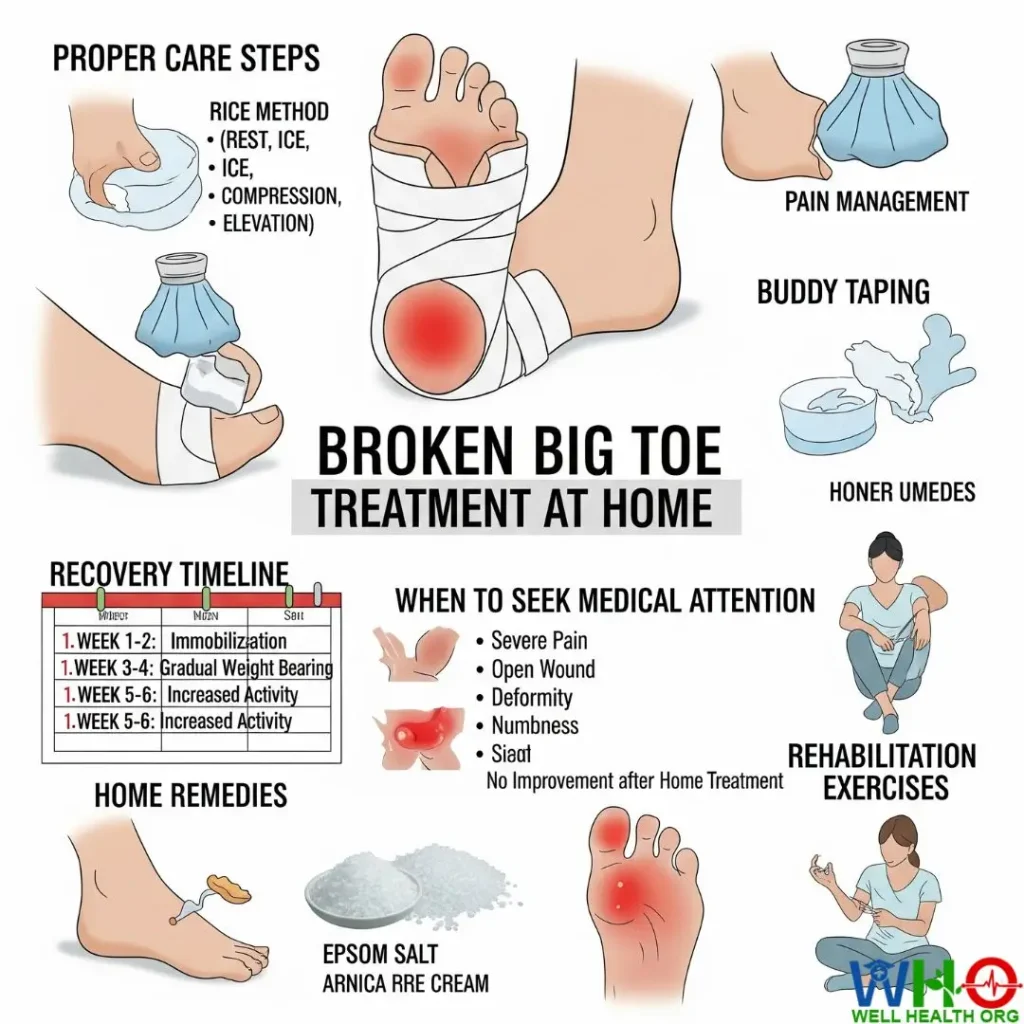
Below is a detailed, evidence-based guide for managing your broken big toe from home.
1. Rest and Immobilization Techniques
Rest is the single most critical factor in recovery. For at least the first 48 to 72 hours, avoid putting any weight on your injured foot. Walking or standing forces pressure on the fracture site and can delay healing or worsen the break.
Use crutches or ask for assistance during daily tasks to keep weight off the foot. If you must move around, wear protective footwear like a stiff-soled medical shoe or sandal that prevents toe flexion.
When resting, remove shoes and socks to allow air circulation and gently place your foot in a neutral, relaxed position. Avoid bending or flexing your toe — early bone healing can easily be disrupted by unnecessary movement.
To enhance comfort and reduce throbbing, elevate your foot on two or three pillows while sitting or lying down. Keeping your foot above heart level prevents blood pooling and reduces inflammation.
Pro tip: During the first few days, schedule short rest periods throughout the day, and avoid long durations of walking or standing, even if the pain seems better. Healing bones are fragile — consistent rest ensures stronger bone formation later.
2. Proper Ice Application for Pain and Swelling
Ice therapy, or cryotherapy, is one of the most effective ways to control swelling and ease pain in the early stages of recovery. But timing and method matter.
Wrap a few ice cubes or a gel pack in a thin towel before applying it to your toe — never place ice directly on your skin, as it can cause frostbite or tissue irritation.
Apply for 15–20 minutes every 2–3 hours during the first two days following the injury. This regular schedule helps minimize inflammation and constricts blood vessels, reducing internal bleeding and swelling.
After the initial 48 hours, you can continue icing as needed for comfort. Some individuals find alternating between cold and warm compresses after the first few days beneficial — warmth improves circulation, while cold controls inflammation. However, avoid heat if the swelling hasn’t subsided yet.
Expert tip: Using a bag of frozen peas works well as it conforms to your toe’s shape, providing more effective coverage than rigid ice packs.
3. Elevation Strategies for Swelling Control
Elevation is more than just propping your leg up — it’s a critical method to control inflammation, reduce pain, and promote healing. When your foot stays below heart level, gravity causes fluid and blood to pool around the injured area, increasing swelling and discomfort. Elevating your leg above heart level reverses that effect, helping excess fluid drain away naturally.
To do it right, position two to three firm pillows under your entire leg, not just under the foot. This slight incline ensures proper circulation from the foot through the calf and thigh, minimizing fluid buildup. Avoid using overly soft cushions that let your leg sink in, as that can block blood flow.
During the first week, try to keep your leg elevated as often as possible — ideally, several hours per day. Many people find sleeping with their leg elevated tricky at first, but it can significantly reduce morning stiffness and swelling.
If your foot feels numb, cold, or changes color, lower it immediately — this could mean the position is restricting blood circulation. Alternate periods of elevation with short breaks where your foot rests flat to maintain healthy blood flow.
Bonus tip: Combine elevation with ice therapy. Icing your toe while elevated doubles the anti-inflammatory effect, giving faster relief during the first few days of injury.
4. Pain Management Options
Managing pain effectively allows your body to focus energy on healing rather than constant discomfort. While pain is an unavoidable part of a fracture, you can minimize it with a combination of medications, natural remedies, and self-care practices.
Over-the-Counter (OTC) Pain Relief
For most people, common non-prescription painkillers work well:
- Ibuprofen (Advil, Motrin): Reduces both pain and inflammation. Take 400–600 mg every 6–8 hours with food.
- Acetaminophen (Tylenol): Helps reduce pain without affecting inflammation. You can alternate it with ibuprofen for continuous coverage, but avoid exceeding recommended doses.
Topical Pain Relievers
Creams or gels containing menthol, capsaicin, or lidocaine can be gently massaged around the area (never directly over the fracture). These topical products create a cooling or warming sensation that distracts the brain from deeper pain signals.
Natural and Holistic Approaches
Some people prefer non-medicated options:
- Epsom salt soaks (after the swelling subsides) can soothe soreness and relax muscles.
- Essential oils like lavender or peppermint mixed with carrier oil may offer gentle comfort.
- Deep breathing and relaxation techniques can help manage pain perception naturally.
Remember, pain serves as your body’s way of signaling that the toe needs rest. If pain intensifies despite medication and care, it’s a sign to ease off your activities or seek medical guidance.
5. Buddy Taping Technique: Stabilizing the Toe Naturally
Buddy taping is one of the most common and effective home treatments for a simple, stable toe fracture. It involves gently binding the injured big toe to its neighboring toe for added support and stability, acting like a natural splint.
How to Perform Buddy Taping Correctly
- Gather supplies: You’ll need medical tape (not band-aids), soft padding such as gauze or cotton, and scissors.
- Clean your feet: Wash and dry your toes thoroughly to prevent infection or skin irritation.
- Add a cushion: Place a small piece of cotton or gauze between your big toe and the second toe. This prevents friction and blistering.
- Apply the tape: Wrap the tape gently around both toes — snug enough to provide support but loose enough to maintain circulation. Avoid wrapping the tape too tightly.
- Check circulation: Your toes should remain pink and warm. If they become pale, cold, or numb, remove and reapply the tape more loosely.
Maintenance Tips
- Replace the tape daily or whenever it gets wet.
- Keep the area clean and dry.
- Continue buddy taping until walking becomes pain-free, usually around 3–4 weeks for a mild fracture.
Buddy taping is most suitable for non-displaced fractures — where bones are cracked but remain properly aligned. If your toe looks bent or twisted, this technique alone won’t be sufficient, and you’ll need professional care.
6. Appropriate Footwear Selection During Recovery
Choosing the right footwear can make or break your recovery progress. Since your big toe supports much of your body weight when walking, improper footwear can strain the healing bone and delay recovery.
Ideal Footwear Options
- Rigid-soled shoes: These prevent your toe from bending while walking, reducing pain and stress on the fracture.
- Post-surgical shoes: Available at medical supply stores, they feature stiff soles and adjustable straps, offering stability and protection.
- Wide-toe box shoes: Allow your toe to rest comfortably without squeezing or pressure.
If specialized shoes aren’t available, you can modify your existing footwear by adding a stiff insole or orthotic insert for added stability.
Avoid These Types of Shoes
- High heels or narrow shoes: They force the toe into unnatural positions.
- Flip-flops or slippers: They provide no support or protection.
- Flexible running shoes: The toe bends too much during walking, which can reopen healing fractures.
Pro tip: When you start walking again, always wear shoes indoors and outdoors to avoid accidental stubbing or pressure on the toe. Even a small misstep can undo weeks of recovery progress.
Recovery Timeline and Gentle Rehabilitation
Healing from a broken big toe doesn’t happen overnight — it’s a gradual process that typically spans six to eight weeks, depending on the fracture type and your body’s healing ability. Understanding each phase of recovery helps you set realistic expectations and avoid rushing back into activity too soon.
Early Recovery Phase (Weeks 1–2): Protect and Rest
During the first two weeks, the main goal is to reduce pain and swelling while giving your body time to start building new bone tissue. Expect your toe to feel tender and swollen during this stage, with pain that may intensify in the evenings due to accumulated inflammation.
Stick closely to the R.I.C.E. method (Rest, Ice, Compression, Elevation). Continue buddy taping if your doctor advised it, and avoid walking without protective footwear.
It’s normal for your toe to appear bruised or slightly discolored — this typically improves by the end of week two. However, don’t let visual improvement fool you into resuming normal activity; the bone structure underneath still needs time to solidify.
Middle Recovery Phase (Weeks 3–4): Controlled Movement Begins
As pain subsides, you’ll enter the stage where you can start gentle mobility exercises. Controlled movement helps maintain flexibility and prevent joint stiffness — but only move within pain-free limits.
Suggested Exercises:
- Toe Flexion/Extension: Gently bend and straighten the big toe without forcing it.
- Towel Scrunches: Place a towel on the floor and use your toes to pull it toward you.
- Ankle Circles: Rotate your ankle to promote circulation in the foot.
At this point, you can begin partial weight-bearing, walking short distances in supportive shoes. Listen to your body — if the pain increases, scale back your activity immediately.
Late Recovery Phase (Weeks 5–8): Strengthen and Return to Normal
By now, most of the bone healing has occurred. Pain and swelling should be minimal, and you can begin reintroducing normal walking patterns and strengthening exercises.
Add activities like:
- Toe curls with resistance bands
- Picking up marbles or small objects with your toes
- Calf raises to rebuild balance and foot strength
You may also start low-impact exercises like swimming or cycling to regain fitness without stressing the toe joint. Continue using supportive footwear until you can walk pain-free in regular shoes.
Avoid jumping, running, or contact sports until your doctor confirms full recovery through physical assessment or X-rays.
Effective Prevention Strategies for Future Toe Injuries
Preventing a repeat injury is just as important as healing from your current one. A fractured big toe can make you more vulnerable to future injuries if not fully rehabilitated or if lifestyle factors aren’t corrected. Fortunately, adopting a few smart habits can dramatically reduce the risk of another fracture.
1. Optimize Your Home Environment
Your home should be a safe zone for your feet, especially during recovery. Toe fractures often occur in familiar settings — like bumping into furniture, tripping over clutter, or walking barefoot in dim lighting.
Here are a few simple yet powerful ways to make your home toe-friendly:
- Improve lighting: Keep hallways, staircases, and bathrooms well-lit at night with motion-activated or plug-in night lights.
- Declutter pathways: Remove loose rugs, boxes, cords, or furniture that block walkways.
- Wear indoor shoes: Soft house slippers with firm soles protect your toes from accidental stubs and dropped objects.
- Secure furniture: Rearrange sharp-edged items or coffee tables to provide wider walking space.
A small change in your environment can prevent a painful repeat injury — think of it as safeguarding your mobility.
2. Choose Footwear That Supports and Protects
Footwear plays a critical role in preventing fractures and maintaining foot health overall. Shoes that are too tight, unstable, or lacking support can contribute to balance issues, improper gait, and toe injuries.
Look for:
- Roomy toe boxes that allow your toes to move naturally.
- Shock-absorbing soles to cushion each step.
- Firm midsoles that prevent your foot from rolling inward.
- Secure straps or laces to keep your foot stable.
Avoid walking barefoot, especially in environments like kitchens, garages, or outdoors where heavy or sharp objects might fall. For sports, wear activity-specific footwear with proper toe protection — for example, steel-toe shoes for heavy work or cushioned sneakers for running.
3. Strength and Balance Training
Your body’s balance and strength directly affect how likely you are to injure your toes. Strong muscles and stable joints can absorb impact better and help you recover faster from minor stumbles.
Incorporate these simple exercises into your routine:
- Toe curls: Strengthen intrinsic foot muscles by gripping a towel or picking up marbles with your toes.
- Single-leg stands: Practice balancing on one leg for 30 seconds at a time.
- Heel-to-toe walk: Walk in a straight line, placing your heel directly in front of your opposite toe.
- Calf raises: Strengthen the calves, which stabilize the ankle and foot.
Perform these exercises three to four times a week to build lasting stability and reduce your risk of future falls or fractures.
4. Lifestyle and Health Factors That Affect Bone Strength
Bone health depends heavily on nutrition, lifestyle, and overall wellness. Weak or brittle bones are far more susceptible to fractures, even from minor impacts.
Boost Bone Density Naturally
- Calcium-rich foods: Include dairy products, leafy greens, almonds, and fortified foods.
- Vitamin D: Sun exposure and foods like salmon, tuna, and egg yolks help your body absorb calcium effectively.
- Protein: Necessary for rebuilding bone and muscle tissue.
- Limit alcohol and caffeine: Both can deplete bone minerals over time.
Watch for Medical Conditions
If you have conditions like osteoporosis, diabetes, or circulatory disorders, maintaining strong bones and proper foot care becomes even more crucial. Regular checkups, medication management, and nutritional support can prevent minor injuries from turning serious.
5. Activity Modifications for Safer Movement
Certain environments or activities carry higher risks for toe injuries — for instance, working in construction, playing contact sports, or even gardening barefoot. The goal is not to stop being active but to adapt how you move.
Here’s how:
- Use protective footwear like steel-toed boots or reinforced athletic shoes.
- Avoid walking barefoot in outdoor or cluttered indoor areas.
- Be cautious when carrying heavy objects — dropping them on your foot can easily cause another fracture.
- For sports enthusiasts, warm up and stretch your feet before playing to increase flexibility and prevent missteps.
Small mindful actions make a big difference when it comes to foot protection.
Supporting Your Recovery Journey
Recovering from a broken big toe requires more than just rest — it demands patience, consistency, and self-awareness. While it’s tempting to rush back to normal life once the pain fades, premature activity can easily undo weeks of healing progress.
Think of recovery as a gradual climb: each day of rest, each ice pack, and every careful step you take builds toward full restoration of strength and mobility.
1. Listen to Your Body
Healing speeds vary. A healthy adult might recover within six to eight weeks, while others may need ten or more depending on age, nutrition, or health conditions. Persistent swelling, stiffness, or pain after the eighth week warrants a follow-up with a podiatrist or orthopedic specialist.
2. Prioritize Nutrition and Hydration
Bone healing requires nutrients — particularly calcium, magnesium, and vitamin D. Include foods like milk, yogurt, nuts, seeds, and oily fish in your diet. Staying hydrated helps transport nutrients to the healing area and flush out toxins.
3. Keep the Toe Clean and Protected
Even if you’re feeling better, continue monitoring your toe for signs of infection or skin irritation, especially if you’re still taping or wearing protective footwear. Avoid soaking your foot for long periods until the fracture has fully healed, as moisture can soften skin and increase infection risk.
4. Transition Back to Activity Gradually
Once your doctor or physical therapist approves, start with low-impact exercises like swimming or cycling before moving on to running or jumping. Focus on regaining full toe flexibility and strength before returning to strenuous activities.
5. Mental and Emotional Recovery
Injuries, even minor ones, can affect your mental health — particularly if they limit mobility and independence. Use recovery time to rest your mind too: meditate, read, or explore hobbies that don’t require physical strain. A positive mindset can speed up healing as much as any physical treatment.
Conclusion: Healing Your Big Toe the Right Way
A broken big toe may seem like a small setback, but it plays a significant role in your body’s overall function and movement. Treating it properly — whether at home or under medical supervision — is essential for avoiding chronic pain, arthritis, or permanent deformity.
Home care methods such as rest, ice, elevation, and buddy taping can work wonders for mild fractures, provided you follow each step carefully and stay consistent with your recovery plan. At the same time, knowing when to seek professional help is just as vital — open fractures, severe deformities, or persistent pain should never be ignored.
Recovery is not just about waiting for the pain to disappear; it’s about nurturing your body back to balance, stability, and confidence. With the right approach, patience, and mindful self-care, your big toe — and your mobility — can return to full strength, allowing you to move freely and comfortably once again.
Frequently Asked Questions (FAQs)
1. How can I tell if my big toe is broken or just badly bruised?
A bruised toe typically improves within a few days, while a broken one causes persistent pain, swelling, and possibly deformity. If your toe looks crooked or you can’t bear weight on it, it’s more likely a fracture.
2. How long does it take for a broken big toe to heal completely?
Most mild fractures heal in 6–8 weeks, but more severe ones may take up to 12 weeks. Healing time depends on the fracture type, your overall health, and how well you follow aftercare instructions.
3. Should I sleep with my foot elevated after a toe fracture?
Yes, especially during the first week. Elevating your foot while sleeping helps reduce overnight swelling and throbbing pain.
4. When can I start walking again after breaking my big toe?
You can start gradual weight-bearing once your pain significantly decreases and you can walk without limping. Always wear supportive shoes during this stage to avoid reinjury.
5. Can I prevent future big toe fractures?
Absolutely. Wearing sturdy shoes, keeping your home clutter-free, strengthening your feet, and improving your balance can drastically reduce your risk of future toe injuries.
Medically Reviewed by Prof. Dr. Akram
Orthopedic Surgeon | Professor | Senior Medical Specialist
Prof. Dr. Akram is a distinguished surgeon with over 15 years of clinical expertise. Having served as a lead Emergency Specialist at Complex International Government Hospital, he currently leads a specialized team of 13 medical professionals at his private hospital. As a Professor at top medical universities, he ensures that every article on WellHealthOrg.com meets rigorous clinical standards.
Medical Disclaimer:
The information provided is for educational purposes only and is not a substitute for professional medical advice, diagnosis, or treatment. Always consult your physician for any medical concerns.
Our content is rigorously fact-checked by our 13-member Editorial Team under the clinical supervision of Prof. Dr. Akram.