

Pimples in Your Ear
Discovering a pimple in your ear can be unexpectedly uncomfortable and even alarming. The ear is a delicate area filled with sensitive skin, small pores, and numerous nerve endings. When a pimple develops there, it can cause sharp pain, tenderness, itching, and irritation — making even simple actions like sleeping on your side or wearing headphones unpleasant.
- Pimples in Your Ear
- Understanding Why Pimples Form Inside Your Ear
- Common Causes of Ear Pimples
- How to Identify a Pimple in Your Ear
- Typical Characteristics of an Ear Pimple
- Differentiating From Other Ear Conditions
- Warm Compress Therapy: A Gentle, Effective Remedy
- How to Use a Warm Compress Correctly
- Why It Works
- Tea Tree Oil: Nature’s Antibacterial Powerhouse
- How to Apply Tea Tree Oil Safely
- Precautions
- Why It Helps
- Salt Water Rinse: A Natural Cleansing Solution
- How to Make a Salt Water Solution
- How It Works
- Avoiding Common Irritants: Protecting Your Ears from Further Breakouts
- Things to Avoid While Healing
- Better Habits for Faster Healing
- When to Seek Medical Attention
- Warning Signs That Need Medical Evaluation
- Possible Medical Treatments
- Prevention Strategies for Future Ear Pimples
- Daily Prevention Habits
- Weekly Maintenance
- Long-Term Ear Care and Skincare Tips
- 1. Maintain Clean Surroundings
- 2. Stay Hydrated and Eat Smart
- 3. Manage Stress Levels
- 4. Be Mindful of Weather Changes
- 5. Choose the Right Fabrics
- 6. Schedule Regular Check-ups
- Your Path to Clearer, Healthier Ears
- Frequently Asked Questions (FAQs)
- 1. Can I pop a pimple in my ear?
- 2. How long do ear pimples take to heal?
- 3. Is it safe to use hydrogen peroxide for ear pimples?
- 4. Can stress cause ear pimples?
- 5. How can I prevent pimples inside the ear canal?
- ✨ Final Thoughts
While ear pimples usually disappear on their own, the healing process can take several days or even weeks. Fortunately, there are many safe, effective, and natural home remedies that can help ease discomfort, reduce inflammation, and speed up recovery without the need for harsh chemicals or medications.
This comprehensive guide explores the causes, symptoms, and most effective home remedies for pimples in the ear, along with essential safety precautions and prevention strategies. With consistent care and a few natural ingredients, you can find relief quickly and help prevent future breakouts.
Understanding Why Pimples Form Inside Your Ear
Before jumping into treatments, it’s important to understand why ear pimples occur in the first place. Just like the skin on your face or back, your ears have sebaceous glands that produce natural oils called sebum. When sebum mixes with dead skin cells, dirt, or bacteria, pores can become clogged — resulting in inflammation and a pimple.
The outer ear (called the pinna) and the ear canal both have hair follicles and pores, which makes them prone to the same issues that cause acne elsewhere. However, the skin in this area is thinner and more sensitive, which is why pimples here tend to feel much more painful.
Common Causes of Ear Pimples
Several triggers can contribute to ear acne, including:
- Bacterial contamination: Using dirty earbuds, earphones, or inserting unclean fingers into your ear introduces bacteria that clog pores.
- Excess oil production: Hormonal changes, stress, or heat can increase oil secretion, creating a breeding ground for pimples.
- Poor ear hygiene: Irregular cleaning leads to the buildup of dead skin, oil, and sweat inside the ear.
- Environmental exposure: Dust, pollution, and sweat can irritate and block pores.
- Allergic reactions: Hair care products, shampoos, or skin creams that enter the ear canal can cause irritation and breakouts.
- Pressure and friction: Wearing tight helmets, hats, or headphones for long periods traps moisture and bacteria.
- Swimming in contaminated water: Pool or lake water that carries bacteria can easily infect ear pores.
Understanding what’s causing your ear pimple helps you choose the most effective remedy and make simple lifestyle changes to prevent future breakouts.
How to Identify a Pimple in Your Ear
Not every bump inside or around your ear is a simple pimple. Sometimes, people confuse ear pimples with cysts, boils, or even minor ear infections. Knowing the difference can help you treat the issue properly and avoid making it worse.
Typical Characteristics of an Ear Pimple
You’re likely dealing with a pimple if you notice:
- A small, raised bump that may be red, white, or flesh-colored.
- Tenderness or soreness when you touch or move your ear.
- A localized swelling around the bump.
- Occasional discharge or a tiny whitehead if the pimple comes to a head.
- A sensation of pressure or fullness inside the ear canal.
Differentiating From Other Ear Conditions
It’s important to remember that not all lumps in the ear are acne-related:
- Sebaceous cysts feel like firm lumps under the skin and usually move slightly when pressed.
- Boils are larger, more painful, and may cause fever or drainage of pus.
- Otitis externa (swimmer’s ear) causes widespread inflammation, itching, and pain in the ear canal.
If your symptoms don’t improve after a few days of home care or if the pain becomes severe, consult a healthcare professional for proper diagnosis and treatment.
Warm Compress Therapy: A Gentle, Effective Remedy
One of the simplest yet most effective remedies for ear pimples is the warm compress technique. Applying gentle heat helps reduce inflammation, soften the blockage, and promote natural drainage. The warmth also soothes pain by improving blood flow to the affected area, which speeds up healing.
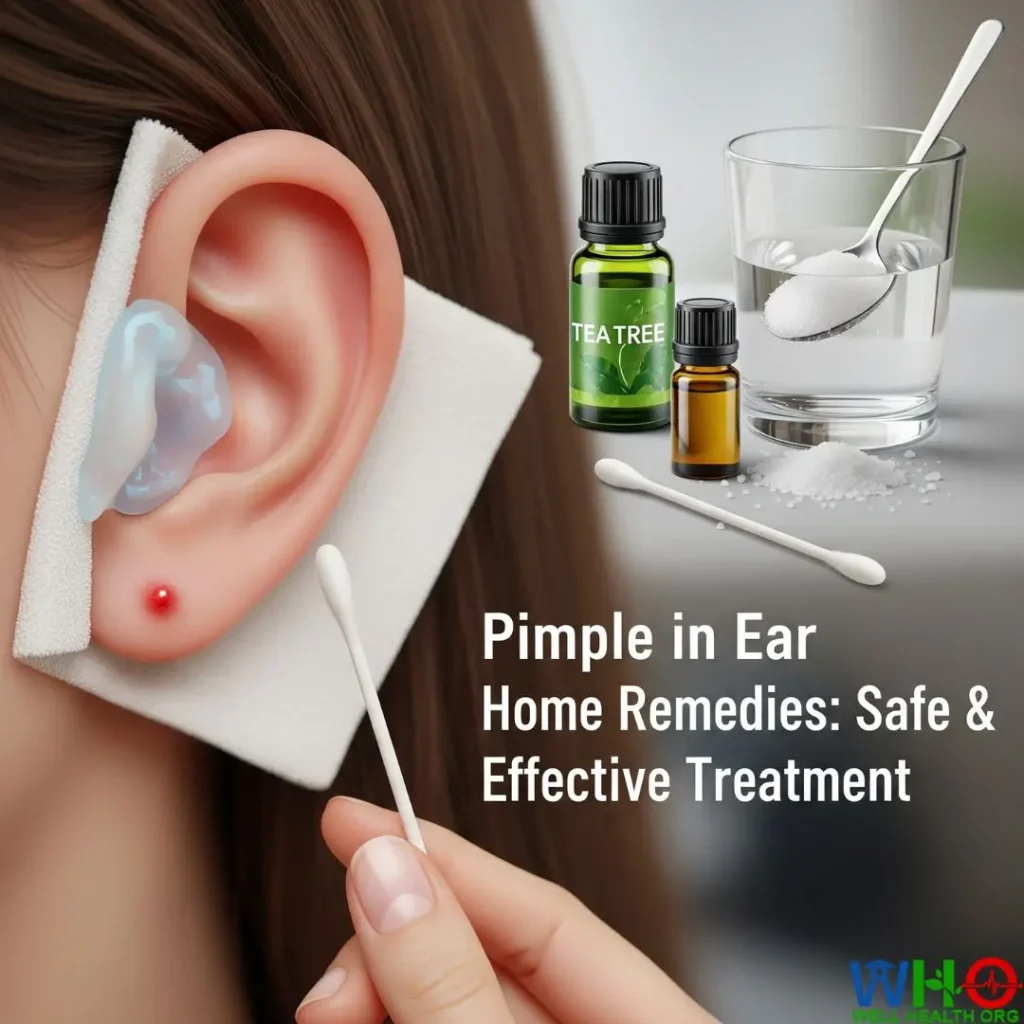
How to Use a Warm Compress Correctly
- Soak a clean washcloth in warm (not hot) water.
- Wring out excess water to prevent dripping.
- Hold the compress against your ear for 10–15 minutes.
- Repeat this 3–4 times a day until the pimple begins to shrink or drain naturally.
If the pimple is located deeper in your ear canal, you can hold the compress near the opening of your ear — the steam and warmth will still help without risking burns or injury. Always test the temperature on your wrist first to ensure it’s comfortably warm.
Why It Works
Warm compresses encourage vasodilation, meaning they open up tiny blood vessels, bringing more oxygen and nutrients to the affected area. This helps your immune system naturally fight bacteria and inflammation. Many people experience noticeable relief within the first day of consistent application.
Tea Tree Oil: Nature’s Antibacterial Powerhouse
Tea tree oil is widely known for its powerful antibacterial, antifungal, and anti-inflammatory properties. It’s particularly effective against the bacteria that cause acne and pimples. However, because the skin in and around your ear is delicate, it must be diluted before use to prevent irritation or burns.
How to Apply Tea Tree Oil Safely
- Mix 1–2 drops of tea tree oil with 1 tablespoon of carrier oil (such as coconut, jojoba, or olive oil).
- Dip a clean cotton swab into the mixture.
- Gently dab the solution on the outer ear or just around the opening — never insert the swab deep into your ear canal.
- Leave it on; there’s no need to rinse.
- Repeat once or twice daily for best results.
Precautions
- Always do a patch test on your arm before applying near your ear to check for sensitivity.
- Avoid using undiluted tea tree oil, as it can cause redness or burning.
- Discontinue use immediately if irritation occurs.
Why It Helps
Tea tree oil’s active compound, terpinen-4-ol, has natural antimicrobial properties that kill acne-causing bacteria (like Propionibacterium acnes). It also helps reduce inflammation, making the skin less swollen and red. When used properly, this remedy can help an ear pimple dry up and heal within days.
Salt Water Rinse: A Natural Cleansing Solution
Salt water (saline) is a gentle, time-tested remedy that helps clean and soothe inflamed skin. It’s especially helpful for pimples on the outer ear, as it removes excess oil and reduces bacteria without drying out the skin.
How to Make a Salt Water Solution
- Mix ¼ teaspoon of sea salt (or non-iodized salt) in 1 cup of warm distilled water.
- Stir until the salt dissolves completely.
- Soak a cotton ball or soft pad in the solution.
- Gently press it against the pimple for 2–3 minutes.
- Pat dry with a clean towel.
- Repeat 2–3 times daily until the pimple subsides.
How It Works
The mild saline solution acts as a natural antiseptic, drawing out impurities from the pores while reducing swelling and redness. It also helps balance your skin’s pH level, preventing bacterial overgrowth. Many dermatologists recommend saline solutions as a safe cleansing method for minor skin irritations, including pimples and piercings.
Avoid using iodized table salt or strong antiseptics, as they may cause dryness or irritation, especially in sensitive areas like the ear.
Avoiding Common Irritants: Protecting Your Ears from Further Breakouts
When dealing with an ear pimple, one of the most important things to remember is that what you avoid matters just as much as what you apply. Many people unknowingly irritate the area, spreading bacteria or delaying healing through simple everyday habits.
Your ear skin is extremely sensitive, and once inflamed, it becomes vulnerable to infection or scarring. Therefore, eliminating irritants and adopting better hygiene habits is a key part of recovery and prevention.
Things to Avoid While Healing
Here are some common culprits that worsen or prolong ear pimples:
- 🚫 Dirty earbuds or headphones: Earbuds trap moisture, oil, and bacteria, which can easily enter your pores. Always wipe them with alcohol pads before and after each use.
- 🚫 Touching or picking: Your fingers carry bacteria that can worsen inflammation and push the infection deeper into the skin. Avoid squeezing or scratching, no matter how tempting.
- 🚫 Hair and beauty products: Sprays, gels, and oils can clog pores if they drip into the ear. When applying, cover your ears or wipe away any residue immediately.
- 🚫 Tight-fitting accessories: Helmets, hats, or earphones that press against your skin trap heat and sweat — perfect conditions for bacterial growth. Choose looser-fitting options until the area heals.
- 🚫 Unclean water exposure: Avoid swimming in pools, lakes, or hot tubs with questionable hygiene standards. Waterborne bacteria can worsen ear pimples or cause infection.
- 🚫 Sharing personal items: Never share earbuds, headphones, or towels. Even a small amount of bacteria can transfer and trigger a new breakout.
Better Habits for Faster Healing
To help your ears recover naturally and prevent future irritation, consider these proactive habits:
- Clean your ears gently: Use a damp, warm washcloth to wipe the outer ear area during your shower. Avoid inserting cotton swabs, which can push debris deeper.
- Disinfect ear devices regularly: Clean earbuds and headphones with rubbing alcohol or antibacterial wipes at least twice a week.
- Keep hair away from your ears: Tie back long hair when it’s oily or freshly styled to prevent buildup in the ear area.
- Use hypoallergenic products: Choose gentle, fragrance-free shampoos and conditioners to reduce the risk of irritation.
- Practice mindful hygiene: Wash your hands often, especially before touching your ears, face, or applying any remedy.
Taking these small steps can drastically reduce your risk of recurring ear pimples while supporting faster, irritation-free healing.
When to Seek Medical Attention
While most ear pimples are harmless and heal within a week or two, some situations call for professional medical care. Knowing when to visit a doctor can prevent complications like ear infections, abscesses, or scarring.
Even though home remedies can work wonders, never ignore symptoms that signal something more serious.
Warning Signs That Need Medical Evaluation
Contact your healthcare provider if you notice:
- Severe or throbbing pain: Persistent pain that interferes with sleep or daily activities may indicate infection or an abscess.
- Worsening redness or swelling: If inflammation spreads beyond the pimple or into your ear canal, it needs medical assessment.
- Fever or general illness: A systemic infection may be developing, especially if you feel feverish or weak.
- Discharge with a foul smell or pus: This may indicate bacterial infection that requires antibiotic treatment.
- Hearing loss or ear blockage: Swelling or trapped pus might be obstructing the ear canal, which only a doctor can safely clear.
- Recurring pimples: Frequent flare-ups could signal hormonal imbalance, chronic irritation, or improper ear hygiene.
Possible Medical Treatments
If your doctor determines that you need medical intervention, they may recommend:
- Topical antibiotics: Creams or drops to reduce bacterial infection and inflammation.
- Oral antibiotics: In severe or spreading infections, a short course of oral medication helps eliminate bacteria from within.
- Steroid creams: To calm redness and swelling when inflammation is excessive.
- Incision and drainage: If a large pimple turns into a painful boil, your doctor can drain it safely to relieve pressure and promote healing.
Never attempt to pop or lance a pimple yourself — especially in or near your ear canal. Doing so risks deeper infection and potential damage to delicate ear structures.
Prevention Strategies for Future Ear Pimples
Preventing ear pimples is entirely possible with consistent care and smart hygiene practices. The key is keeping your ears clean, dry, and bacteria-free, while avoiding behaviors that clog pores or irritate the skin.
Daily Prevention Habits
- Gentle Ear Cleaning Routine:
Wash your outer ears daily with a mild cleanser or plain warm water. Avoid inserting cotton swabs — they can compact debris instead of removing it. - Clean Your Ear Devices:
Wipe earbuds, hearing aids, and headphones with alcohol-based wipes regularly. Replace old silicone tips every few months. - Hands Off Approach:
Resist the urge to touch your ears unnecessarily. Your fingertips can transfer oils, dirt, and bacteria that trigger breakouts. - Healthy Hair and Skin Products:
Choose non-comedogenic (non-pore-clogging) products. When using hair oils or sprays, shield your ears with a towel to prevent residue buildup. - Change Pillowcases Frequently:
Pillowcases collect oil, sweat, and bacteria from your face and hair. Washing them every few days keeps your sleeping area clean. - Balanced Diet and Hydration:
Foods rich in antioxidants, zinc, and vitamins A and E support clear, healthy skin. Drink plenty of water daily to flush out toxins naturally.
Weekly Maintenance
- Deep Clean Accessories: Sanitize headphones, hats, and any items that regularly contact your ears.
- Exfoliate the Outer Ear (Gently): Use a mild exfoliating wipe once a week to remove dead skin and prevent clogged pores.
- Monitor Product Build-up: If you use hair serums or oils, check for residue behind your ears — it’s a common spot for clogged pores.
Consistency is everything. Maintaining these habits doesn’t just prevent ear pimples; it promotes overall ear hygiene and keeps your skin calm and balanced.
Long-Term Ear Care and Skincare Tips
Clear skin is not just about treatment — it’s about maintenance. Once your ear pimple has healed, adopting a consistent routine helps ensure that it doesn’t come back.
Here’s how to keep your ears healthy in the long run:
1. Maintain Clean Surroundings
Your environment plays a major role in skin health. Keep your living area, phone screen, and personal items clean to minimize bacteria exposure. Remember, the side of your phone often touches your ear and can transfer dirt or oil every time you take a call.
2. Stay Hydrated and Eat Smart
Your skin reflects your internal health. Eat foods rich in:
- Vitamin C and zinc (for faster skin healing)
- Omega-3 fatty acids (for inflammation control)
- Antioxidants (to repair skin cells)
Avoid excessive sugar and greasy fast foods that can trigger breakouts.
3. Manage Stress Levels
Stress causes hormonal fluctuations that can increase oil production — a key acne trigger. Practice relaxation techniques like meditation, yoga, or deep breathing to keep stress in check.
4. Be Mindful of Weather Changes
Hot, humid weather leads to more sweating and oil buildup, while cold air can dry and irritate the skin. Adjust your ear care routine accordingly — cleanse more in summer, moisturize lightly in winter.
5. Choose the Right Fabrics
If you wear headbands, scarves, or helmets, opt for breathable materials that don’t trap sweat or friction against the ears. Cotton and bamboo fabrics are great choices.
6. Schedule Regular Check-ups
If you’re prone to skin problems or ear blockages, see a dermatologist or ENT specialist periodically. A quick professional cleaning or evaluation can help prevent issues before they escalate.
Your Path to Clearer, Healthier Ears
Dealing with a pimple in your ear can be frustrating, but the good news is that with the right approach, it’s temporary and easily manageable. Home remedies like warm compresses, diluted tea tree oil, and gentle salt water rinses provide fast, safe relief for most cases.
Combine these remedies with clean habits, gentle ear hygiene, and a mindful lifestyle, and you’ll not only heal faster but also prevent future flare-ups. Remember — patience is key. Avoid popping or over-treating, as these can worsen the situation.
If your symptoms persist or worsen despite consistent home care, never hesitate to seek medical help. A healthcare professional can identify the root cause and offer solutions that work best for your skin and ear type.
Taking proactive care ensures your ears stay healthy, comfortable, and pimple-free, so you can go about your day without discomfort or worry.
Frequently Asked Questions (FAQs)
1. Can I pop a pimple in my ear?
No. Popping ear pimples can push bacteria deeper into the skin, causing infection or scarring. Instead, use warm compresses to help it drain naturally or see a doctor for safe removal.
2. How long do ear pimples take to heal?
Most ear pimples heal within 7 to 10 days with proper care. Deep or infected ones may take longer and might require medical treatment.
3. Is it safe to use hydrogen peroxide for ear pimples?
It’s best avoided unless recommended by a doctor. Hydrogen peroxide can irritate delicate skin and worsen inflammation if used too often.
4. Can stress cause ear pimples?
Yes. Stress can increase oil production through hormonal changes, leading to clogged pores and acne — including in the ears.
5. How can I prevent pimples inside the ear canal?
Keep your ears dry, avoid inserting objects like cotton swabs, clean your earbuds regularly, and maintain overall hygiene. If you’re prone to recurring pimples, consult a dermatologist.
✨ Final Thoughts
Ear pimples might be small, but their discomfort can feel overwhelming. The best way to handle them is through gentle, consistent care — combining natural remedies, good hygiene, and prevention practices. Listen to your body, treat your ears kindly, and give your skin the support it needs to heal.
Remember, your ears are delicate, but with the right approach, you can easily keep them clear, healthy, and irritation-free.
Medically Reviewed by Prof. Dr. Akram
Orthopedic Surgeon | Professor | Senior Medical Specialist
Prof. Dr. Akram is a distinguished surgeon with over 15 years of clinical expertise. Having served as a lead Emergency Specialist at Complex International Government Hospital, he currently leads a specialized team of 13 medical professionals at his private hospital. As a Professor at top medical universities, he ensures that every article on WellHealthOrg.com meets rigorous clinical standards.
Medical Disclaimer:
The information provided is for educational purposes only and is not a substitute for professional medical advice, diagnosis, or treatment. Always consult your physician for any medical concerns.
Our content is rigorously fact-checked by our 13-member Editorial Team under the clinical supervision of Prof. Dr. Akram.







