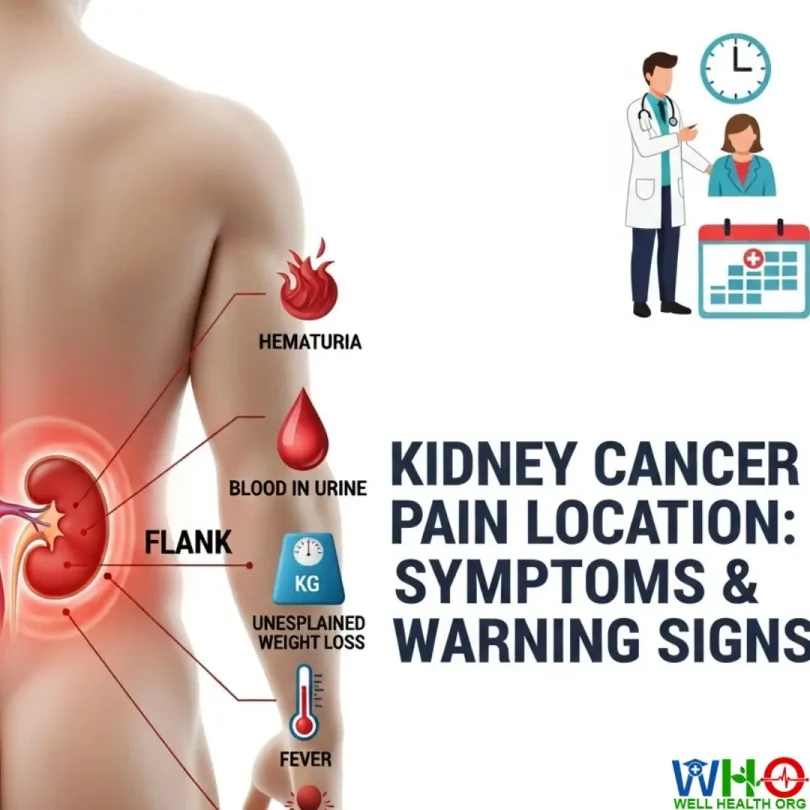
Kidney Cancer Pain
Sarah never imagined that her nagging lower back ache could be anything serious. She had just started using a new standing desk and assumed the discomfort came from poor posture or fatigue from long workdays. For nearly six months, she brushed off the pain—until her routine annual physical revealed abnormalities in her blood tests. Further imaging uncovered a kidney tumor. Sarah’s experience is far from unique. Many individuals living with kidney cancer experience subtle, easily dismissed warning signs that only become obvious when the disease progresses.
- Understanding Kidney Cancer and Its Symptoms
- Kidney Cancer Pain Location: Where It Hurts Most
- Primary Pain Areas
- What Kidney Cancer Pain Feels Like
- Other Common Kidney Cancer Symptoms
- Blood in Urine (Hematuria)
- Unexplained Physical Changes
- Systemic and Secondary Symptoms
- Less Common Kidney Cancer Symptoms
- When Kidney Cancer Pain Typically Develops
- Why Pain Appears Late
- Risk Factors and Prevention Strategies
- Major Risk Factors
- Prevention Strategies
- Diagnostic Process for Kidney Cancer
- 1. Medical History and Physical Examination
- 2. Laboratory Tests
- 3. Imaging Studies
- 4. Tissue Confirmation (Biopsy)
- The Importance of Early Testing
- Pain Management and Treatment Options
- Managing Kidney Cancer Pain
- Treatment Approaches
- When to Contact Your Healthcare Provider
- Immediate Concerns
- Ongoing Symptoms
- Why Prompt Action Matters
- Questions to Ask Your Doctor
- Frequently Asked Questions About Kidney Cancer Pain
- 1. Where does kidney cancer pain typically begin?
- 2. At what stage does kidney cancer typically cause pain?
- 3. What does kidney cancer pain feel like?
- 4. Can kidney cancer pain come and go?
- 5. How is kidney cancer pain different from regular back pain?
- Taking Action for Your Health
- Why Awareness Matters
- Proactive Health Habits
- A Final Word on Prevention
- Conclusion
Understanding where kidney cancer pain occurs, how it feels, and which additional symptoms to watch for can be life-saving. Kidney cancer affects nearly 79,000 Americans every year, yet many people are diagnosed only when the tumor has already grown significantly. Early symptoms often masquerade as common back or abdominal discomfort, which makes timely recognition and medical evaluation critically important.
This comprehensive guide dives into the pain patterns associated with kidney cancer, what differentiates them from ordinary back pain, and which warning signs signal the need for medical evaluation. Whether you’ve been struggling with unexplained pain, have a family history of kidney disease, or simply want to be proactive about your health, understanding these signals empowers you to take control early.
Understanding Kidney Cancer and Its Symptoms
Kidney cancer, medically known as renal cell carcinoma (RCC) in its most common form, develops when cells within the kidneys begin to multiply uncontrollably. The kidneys are two bean-shaped organs located on either side of the spine, beneath the rib cage. Their primary job is to filter waste and excess fluid from the blood, producing urine that exits the body through the urinary tract.
Because of their location deep within the body, kidney tumors often grow silently. In fact, according to the National Kidney Foundation, many people don’t experience any noticeable symptoms until the disease has advanced. This silent progression is one of the reasons why kidney cancer can be difficult to detect in its early stages. By the time pain or other symptoms appear, the tumor might already be sizable or even spreading.
However, the absence of symptoms doesn’t mean the absence of disease. Tumors can slowly expand without pressing on nearby nerves or organs, allowing them to go unnoticed for years. This is why many cases are found incidentally during scans for unrelated medical issues—such as gallstones, back pain, or digestive concerns.
It’s also worth noting that not all kidney tumors are malignant. Some may be benign or slow-growing, but even noncancerous growths can affect kidney function and should be evaluated by a specialist. Recognizing early indicators like subtle pain, fatigue, or changes in urination can make a significant difference in prognosis.
Kidney Cancer Pain Location: Where It Hurts Most
Primary Pain Areas
Pain related to kidney cancer tends to occur in specific regions of the body, often corresponding to where the tumor is located. While everyone’s experience can vary slightly, several pain patterns are common among patients diagnosed with this condition.
- Flank Pain: This is the most classic and recognizable symptom of kidney cancer. The flank refers to the area between your ribs and hips on either side of your spine. Typically, pain occurs only on the side where the tumor is growing. Unlike muscular pain, which may improve with rest or massage, flank pain caused by kidney cancer is persistent. It often feels like a dull, deep ache that doesn’t change significantly with movement or posture.
- Lower Back Pain: In some cases, the discomfort extends to the lower back, where it may feel like a constant, pressure-like soreness. This isn’t your typical “I lifted something wrong” pain. Instead, it lingers, resists over-the-counter pain relievers, and may gradually worsen over weeks or months.
- Abdominal and Groin Pain: As the tumor enlarges, it can press against neighboring tissues, leading to discomfort radiating into the abdomen or groin area. Some individuals describe this as a sharp or shooting sensation that spreads from the kidney region toward the front of the body or down into the groin.
Pain in these areas should never be ignored—especially if it persists beyond a week or two without an obvious cause. Even if it turns out not to be kidney cancer, chronic pain could still point to another underlying medical condition that deserves attention.
What Kidney Cancer Pain Feels Like
The nature and quality of kidney cancer pain can vary depending on the tumor’s size, location, and whether it has spread to nearby tissues. However, most patients describe the discomfort using similar terms—deep, dull, persistent, and one-sided.
Here are key features that distinguish kidney cancer-related pain from typical muscle or nerve pain:
- Constant or Persistent: Unlike muscle strains or sprains, which tend to improve with rest or changes in activity, kidney cancer pain does not subside. It can remain steady throughout the day and night.
- Unilateral: The pain often affects only one side—the side of the affected kidney. Bilateral (both-sided) pain is rare and usually indicates another cause.
- Deep and Aching: Instead of sharp, stabbing sensations, many people report a heavy, internal ache that seems to originate from within the body rather than the surface muscles.
- Progressive in Nature: The pain may begin mildly and worsen gradually over time as the tumor grows or spreads to surrounding structures.
- Resistant to Typical Remedies: Over-the-counter medications such as ibuprofen or acetaminophen might provide minimal or no relief.
Consider Michael’s story—a 58-year-old construction worker who endured constant right-sided back pain for months. He chalked it up to years of heavy lifting, but when the pain began disrupting his sleep and rest provided no improvement, he sought medical help. Imaging revealed a large kidney tumor, which had likely been developing silently for months. His case is a powerful reminder that persistent pain should never be ignored, especially if it behaves differently from typical muscle-related discomfort.
In addition to pain, some people experience a pressure sensation or even a feeling of fullness in the abdomen. This occurs when the tumor presses on nearby organs or blood vessels. Occasionally, the pain can intensify during physical activity or while lying on the affected side. The key takeaway is that any unusual, unrelenting pain in the flank or back area deserves evaluation, particularly in individuals with known risk factors such as smoking, high blood pressure, or obesity.
Other Common Kidney Cancer Symptoms
While pain location provides important diagnostic clues, kidney cancer often reveals itself through a combination of physical and systemic symptoms. Recognizing these signs early can dramatically improve treatment outcomes.
Blood in Urine (Hematuria)
Perhaps the most well-known symptom, hematuria refers to the presence of blood in the urine. Sometimes it’s visible, giving the urine a pink, red, or dark cola-like appearance. In other cases, it’s microscopic—detectable only through laboratory testing. Blood may appear intermittently, disappearing for days or weeks before returning. Even a single episode of blood in urine should never be ignored, as it could indicate not just kidney cancer but also kidney stones or urinary tract issues.
Unexplained Physical Changes
- Unintentional Weight Loss: Many patients experience gradual but unexplained weight loss, even without diet changes or increased activity. This occurs as the cancer alters the body’s metabolism and consumes energy reserves.
- Persistent Fatigue: Beyond ordinary tiredness, kidney cancer-related fatigue can feel overwhelming. It doesn’t resolve with rest and often worsens over time.
- Loss of Appetite: Many individuals find themselves uninterested in food or unable to eat as much as usual, which contributes further to weakness and weight loss.
Systemic and Secondary Symptoms
- Fever Without Infection: Some people experience recurrent low-grade fevers without any clear cause.
- Palpable Lump or Mass: In more advanced cases, a lump may be felt in the side or lower back region, especially during physical exams.
- Swelling (Edema): Swelling in the ankles, legs, or even the face can occur if the tumor interferes with normal kidney or vascular function.
Collectively, these symptoms paint a clearer picture of what’s happening inside the body. However, none of them alone can confirm kidney cancer, which is why medical imaging and lab tests are crucial for accurate diagnosis.
Less Common Kidney Cancer Symptoms
Not everyone experiences the same set of symptoms. Some less common but noteworthy signs of kidney cancer include:
- High Blood Pressure (Hypertension): The kidneys play a key role in regulating blood pressure. A tumor can disrupt this process, leading to sudden or unexplained hypertension.
- Anemia: Because the kidneys help produce erythropoietin, a hormone that stimulates red blood cell production, cancer can interfere and lead to low red blood cell counts, resulting in fatigue and pallor.
- High Calcium Levels: Elevated calcium in the bloodstream may cause nausea, confusion, or muscle weakness.
- Excessive Hair Growth in Women (Hirsutism): Hormonal changes triggered by certain kidney tumors can lead to unusual hair growth patterns.
These symptoms may seem unrelated, but they all stem from the kidneys’ complex role in hormone regulation and waste filtration. When cancer disrupts these functions, system-wide effects can appear.
When Kidney Cancer Pain Typically Develops
One of the most deceptive aspects of kidney cancer is its timing. Pain usually doesn’t develop until the disease has progressed to a more advanced stage. In fact, research shows that nearly half of all patients with renal cell carcinoma have no noticeable symptoms when they’re first diagnosed. This delay happens because early tumors are typically small, slow-growing, and located deep in the retroperitoneal space—a part of the abdomen that allows room for growth before discomfort sets in.
Why Pain Appears Late
Several factors explain this delayed symptom onset:
- Small Tumors Don’t Press on Nerves: The kidneys are relatively isolated organs, surrounded by fat and tissue that can buffer growing tumors. As a result, pain doesn’t begin until the tumor pushes against nerves or nearby structures.
- Functional Reserve: Each kidney has a remarkable ability to compensate for the other. Even if one kidney begins to fail, the other can often maintain adequate filtration for years, hiding signs of disease.
- Subtle Internal Changes: The kidneys’ deep position in the abdomen means that early growth rarely affects daily movement or posture, unlike conditions that affect muscles or bones.
A real-world example brings this to life: Lisa, a 49-year-old accountant, underwent a CT scan after experiencing mild digestive issues. Unexpectedly, her doctors found a 3-centimeter tumor on her right kidney—a finding completely unrelated to her initial complaint. She had experienced no pain, no visible blood in her urine, and no fatigue. Because it was caught early, she underwent a successful partial nephrectomy, and her prognosis was excellent. Lisa’s experience is common; many kidney cancers are discovered accidentally, often giving patients a crucial advantage in treatment.
The key lesson here? Don’t wait for pain to appear. Routine health screenings and imaging—especially for those with known risk factors—can catch kidney cancer before symptoms start. Early detection often means the difference between a simple surgical procedure and a complex, life-threatening battle with metastatic disease.
Risk Factors and Prevention Strategies
While anyone can develop kidney cancer, some people face higher risks due to lifestyle, genetics, or environmental exposure. Recognizing these risks and taking proactive measures can dramatically lower your chances of developing the disease.
Major Risk Factors
- Smoking: Cigarette smoke contains carcinogens that damage kidney tissue and interfere with cellular DNA repair. Smokers are twice as likely to develop kidney cancer as nonsmokers. Quitting smoking immediately reduces this risk over time.
- Obesity: Excess body fat can alter hormone levels—particularly insulin and growth factors—that promote abnormal cell growth in the kidneys. Studies show that obesity increases risk by 30–40%, especially in women.
- High Blood Pressure: Hypertension not only stresses blood vessels but also appears to influence kidney cancer development, possibly due to long-term kidney strain or the effects of certain medications.
- Family History: Having a parent or sibling diagnosed with kidney cancer increases your risk, especially in families with inherited conditions like von Hippel-Lindau disease.
- Chemical Exposure: People who work in industries involving asbestos, cadmium, benzene, or certain solvents face elevated risks due to prolonged exposure to carcinogenic compounds.
Prevention Strategies
While genetics can’t be changed, modifiable lifestyle factors can greatly reduce your overall risk. Consider these proven strategies:
- Quit Smoking: Stopping smoking is the single most powerful step you can take. Within a few years, your kidney cancer risk can drop to near-normal levels.
- Maintain a Healthy Weight: Follow a balanced diet rich in vegetables, fruits, and whole grains, and engage in regular exercise to support kidney function.
- Manage Blood Pressure: Limit salt intake, stay hydrated, and follow medical guidance on hypertension medications.
- Stay Hydrated: Drinking enough water supports the kidneys’ natural detoxifying processes, helping flush out potential carcinogens.
- Limit Exposure to Toxins: Use protective gear if you work with industrial chemicals and follow safety guidelines strictly.
Take James’s story as inspiration. After learning that both his father and uncle were diagnosed with kidney cancer, he decided to take control of his health. He quit smoking, lost 40 pounds, and scheduled yearly checkups with imaging scans. Although he can’t change his genetics, James drastically reduced his risk by managing what he could control. Prevention, as his case shows, is a lifelong commitment—not a one-time effort.
Diagnostic Process for Kidney Cancer
If your symptoms or medical history suggest possible kidney cancer, your healthcare provider will follow a structured diagnostic process designed to confirm or rule out the disease. Early and accurate diagnosis is vital because treatment outcomes are directly tied to stage at detection.
1. Medical History and Physical Examination
Your doctor will begin by gathering details about your symptoms, lifestyle, and family history. They may ask:
- How long you’ve been experiencing pain or fatigue
- Whether you’ve noticed blood in your urine
- If you smoke or have exposure to hazardous chemicals
A thorough physical exam often follows, where the doctor may:
- Gently press on your abdomen or flank to check for tenderness or masses
- Assess blood pressure, since hypertension can accompany kidney disease
- Look for signs of swelling, particularly in the legs or ankles
2. Laboratory Tests
Laboratory testing helps identify abnormalities that point toward kidney dysfunction or cancerous changes.
- Blood Tests: These evaluate kidney function by checking creatinine, urea, and calcium levels. High calcium or abnormal red blood cell counts may hint at cancer.
- Urinalysis: Detects blood, proteins, or other irregularities in the urine, often before visible symptoms appear.
- Tumor Markers: While not specific to kidney cancer, certain markers may support the diagnosis when correlated with imaging findings.
3. Imaging Studies
Modern imaging plays a central role in diagnosing kidney cancer accurately.
- CT Scans: Considered the gold standard, CT imaging provides detailed, cross-sectional views that distinguish between solid tumors and benign cysts.
- MRI Scans: Useful for people allergic to contrast dye or when doctors need a more precise picture of surrounding tissue involvement.
- Ultrasound: Often used as the first-line tool to detect masses or abnormalities. It’s noninvasive, quick, and radiation-free.
4. Tissue Confirmation (Biopsy)
A kidney biopsy may be recommended to confirm the diagnosis. This procedure involves inserting a thin needle through the skin to remove a small tissue sample for microscopic evaluation. While not always necessary—especially when imaging is conclusive—a biopsy helps determine the exact cancer type and grade, guiding personalized treatment plans.
The Importance of Early Testing
The earlier kidney cancer is confirmed, the better the outlook. Localized cancers often have five-year survival rates exceeding 90%, while metastatic cases drop significantly. That’s why any persistent symptoms—especially flank pain or hematuria—should prompt immediate testing rather than a “wait and see” approach.
Pain Management and Treatment Options
Coping with kidney cancer pain is not just about physical comfort—it’s about maintaining quality of life during treatment. Modern oncology offers a range of medical, surgical, and supportive therapies that address both the disease and the discomfort it causes.
Managing Kidney Cancer Pain
Effective pain relief requires a multimodal approach, often combining medication, lifestyle changes, and supportive therapies.
- Non-Opioid Medications:
- Acetaminophen can ease mild pain without straining the kidneys.
- NSAIDs like ibuprofen may reduce inflammation but must be used cautiously under supervision, as they can affect kidney function.
- Topical creams or heat therapy can offer localized relief for surface-level discomfort.
- Opioid Medications: For moderate to severe pain, doctors may prescribe opioids in controlled doses. These include short-acting types for sudden pain spikes and long-acting formulations for constant pain. Regular monitoring ensures safety and prevents dependence.
- Adjuvant Therapies:
- Corticosteroids can reduce inflammation around the tumor.
- Antidepressants and anticonvulsants sometimes help manage nerve-related pain.
- Physical therapy or gentle yoga can improve mobility and reduce tension.
Treatment Approaches
The cornerstone of kidney cancer treatment depends on the tumor’s size, location, and stage:
- Surgery:
- Partial Nephrectomy: Removes only the tumor, preserving healthy kidney tissue—ideal for small, localized tumors.
- Radical Nephrectomy: Removes the entire kidney when the tumor is large or centrally located.
- Laparoscopic and Robotic Techniques: Offer faster recovery and fewer complications.
- Targeted Therapy: These drugs specifically attack cancer cells’ growth pathways without damaging healthy tissue. Examples include tyrosine kinase inhibitors (TKIs) and mTOR inhibitors.
- Immunotherapy: Boosts the body’s natural defenses to recognize and destroy cancer cells. Drugs such as nivolumab and pembrolizumab have revolutionized advanced kidney cancer care.
- Ablative Treatments: For patients who cannot undergo surgery, treatments like radiofrequency ablation (RFA) or cryotherapy use heat or extreme cold to destroy tumor cells directly.
When treatment begins, patients often notice rapid improvement in pain as the tumor shrinks or pressure on surrounding tissues decreases. For many, pain reduction becomes one of the first encouraging signs that therapy is working.
When to Contact Your Healthcare Provider
Recognizing when to see a doctor can make all the difference between catching kidney cancer early and facing it in a more advanced stage. Because symptoms like back or flank pain are so common and often caused by less serious issues, many people delay seeking help—a dangerous mistake. The truth is that your body often whispers before it screams. Listening to those early signals is crucial.
Immediate Concerns
You should schedule an appointment with your healthcare provider immediately if you notice any of the following warning signs:
- Blood in the Urine: Even a small streak of blood or a single occurrence of pinkish urine can be a sign of something serious. Don’t dismiss it.
- Persistent Flank or Back Pain: If pain lingers for more than a week, doesn’t respond to rest, or keeps you awake at night, medical evaluation is essential.
- Palpable Lump: Feeling a lump or swelling in your side or back warrants immediate medical attention.
- Unexplained Fever: Persistent or recurring fevers without infection can sometimes signal cancer-related inflammation.
Ongoing Symptoms
You should also see your healthcare provider if you experience ongoing, unexplained symptoms such as:
- Fatigue that doesn’t improve with rest
- Unintentional weight loss (more than 10 pounds without trying)
- Loss of appetite lasting for more than two weeks
- Swelling in your ankles, feet, or legs without any clear cause
Why Prompt Action Matters
Kidney cancer, when caught early, is highly treatable—often through a single surgical procedure. However, when diagnosis is delayed, the tumor can spread to nearby organs or even the lungs, bones, and liver. That’s when treatment becomes more complex and less effective.
Consider Maria’s story. She noticed blood in her urine one morning but brushed it off, assuming it was dehydration or a minor urinary tract infection. Over the next few months, the symptom came and went. By the time she finally sought medical attention, imaging revealed a sizable tumor that required major surgery. Had she visited her doctor sooner, her treatment could have been far simpler—and her recovery faster.
When in doubt, always choose to investigate rather than ignore. Even if your symptoms turn out to be caused by something benign, the peace of mind is worth it.
Questions to Ask Your Doctor
When you visit your doctor about possible kidney cancer symptoms, being prepared with the right questions can help you get the most accurate information and care plan. Medical appointments can feel overwhelming, so consider writing your questions down beforehand.
Here are some important ones to discuss:
- What tests will help identify the cause of my symptoms?
Understanding whether you need imaging, lab work, or a biopsy can help set clear expectations. - How soon should I complete these tests?
Timing can make a difference, especially if your doctor suspects a fast-growing tumor. - What are my treatment options if kidney cancer is diagnosed?
Each case is unique—some require surgery, while others benefit from targeted or immunotherapy. - How can I manage pain and side effects during treatment?
Discuss both medical and nonmedical strategies to improve your comfort. - Should my family members get screened?
A family history of kidney cancer may mean your relatives need earlier or more frequent screenings. - What lifestyle changes can support my recovery and kidney health?
Ask about diet, exercise, hydration, and supplements that may enhance overall wellness.
By taking an active role in your health discussions, you empower yourself to make informed, confident choices. Knowledge isn’t just power—it’s prevention.
Frequently Asked Questions About Kidney Cancer Pain
1. Where does kidney cancer pain typically begin?
Kidney cancer pain usually starts in the flank area—the region between your ribs and hips on one side of your body. This pain may extend into the lower back, abdomen, or even groin. It often affects just one side and tends to be persistent rather than intermittent.
2. At what stage does kidney cancer typically cause pain?
Pain most often appears in later stages, once the tumor has grown large enough to press on nearby tissues or nerves. However, it’s important to remember that absence of pain doesn’t mean absence of disease—many cases are caught incidentally during imaging for unrelated health issues.
3. What does kidney cancer pain feel like?
Most people describe it as a deep, dull ache or pressure that doesn’t go away. Unlike muscular pain, it doesn’t improve with rest or stretching. Some also report that it feels internal, as if coming from deep within the body rather than the surface muscles.
4. Can kidney cancer pain come and go?
Yes, it can fluctuate in intensity—sometimes easing slightly, then returning. However, the pain rarely disappears entirely and tends to worsen as the tumor grows. Any recurring pain in the flank area should be evaluated by a doctor.
5. How is kidney cancer pain different from regular back pain?
Kidney cancer pain is typically one-sided, persistent, and unresponsive to posture changes or painkillers. It’s often accompanied by other symptoms such as blood in the urine, fatigue, or unexplained weight loss, which are uncommon with typical musculoskeletal back pain.
Taking Action for Your Health
Understanding where kidney cancer pain occurs—and the other subtle warning signs that accompany it—can be life-saving. While experiencing these symptoms doesn’t necessarily mean you have cancer, it does mean your body is asking for attention.
Why Awareness Matters
Early detection dramatically improves treatment success. For localized tumors, surgery can often be curative. In contrast, once the cancer spreads beyond the kidney, treatment becomes more complex and long-term. Knowing the difference between harmless back pain and potential kidney-related pain gives you the power to act early.
Healthcare providers today have access to advanced diagnostic tools—from high-resolution CT and MRI scans to specialized blood tests—that can identify kidney tumors with remarkable precision. If you’re experiencing persistent flank pain, blood in your urine, or unexplained fatigue, scheduling a medical evaluation is one of the smartest moves you can make for your health.
Proactive Health Habits
Here are a few practical steps you can take today to support your kidney health and lower your cancer risk:
- Stay Hydrated: Drinking enough water helps your kidneys filter toxins effectively.
- Eat a Balanced Diet: Limit processed foods and focus on fruits, vegetables, lean proteins, and whole grains.
- Avoid Smoking and Excessive Alcohol: Both substances increase cancer risk and stress the kidneys.
- Exercise Regularly: Physical activity supports healthy blood pressure and weight management.
- Schedule Routine Check-Ups: Regular medical exams and blood tests can detect issues long before symptoms appear.
A Final Word on Prevention
If there’s one takeaway, it’s this: never ignore persistent or unusual symptoms. Whether it’s a dull ache in your side, fatigue that won’t go away, or changes in your urine, your body may be signaling something important.
Early detection is not just about survival—it’s about maintaining your quality of life, independence, and peace of mind. By being aware, staying proactive, and seeking medical guidance promptly, you can turn what might seem like a frightening diagnosis into a story of resilience and recovery.
Your health is your greatest investment—protect it wisely, listen to your body, and never underestimate the power of early action.
Conclusion
Kidney cancer often hides in plain sight, presenting subtle symptoms that mimic common, everyday aches. Yet behind these mild discomforts can lie a serious—and potentially life-threatening—disease. By understanding the location, nature, and persistence of kidney cancer pain, as well as associated symptoms like hematuria, fatigue, or unexplained weight loss, you empower yourself to take action when it matters most.
Remember, pain that refuses to fade, blood in your urine, or persistent tiredness are not normal—and should never be ignored. With modern medicine’s advanced imaging tools and surgical precision, kidney cancer caught early can often be cured or managed effectively.
Take a proactive stance toward your health today. Whether it means quitting smoking, managing your blood pressure, or simply listening to your body’s signals, every small step contributes to prevention and early detection. Awareness truly is the first line of defense.
Your vigilance could save your life—or the life of someone you love.
Medically Reviewed by Prof. Dr. Akram
Orthopedic Surgeon | Professor | Senior Medical Specialist
Prof. Dr. Akram is a distinguished surgeon with over 15 years of clinical expertise. Having served as a lead Emergency Specialist at Complex International Government Hospital, he currently leads a specialized team of 13 medical professionals at his private hospital. As a Professor at top medical universities, he ensures that every article on WellHealthOrg.com meets rigorous clinical standards.
Medical Disclaimer:
The information provided is for educational purposes only and is not a substitute for professional medical advice, diagnosis, or treatment. Always consult your physician for any medical concerns.
Our content is rigorously fact-checked by our 13-member Editorial Team under the clinical supervision of Prof. Dr. Akram.