
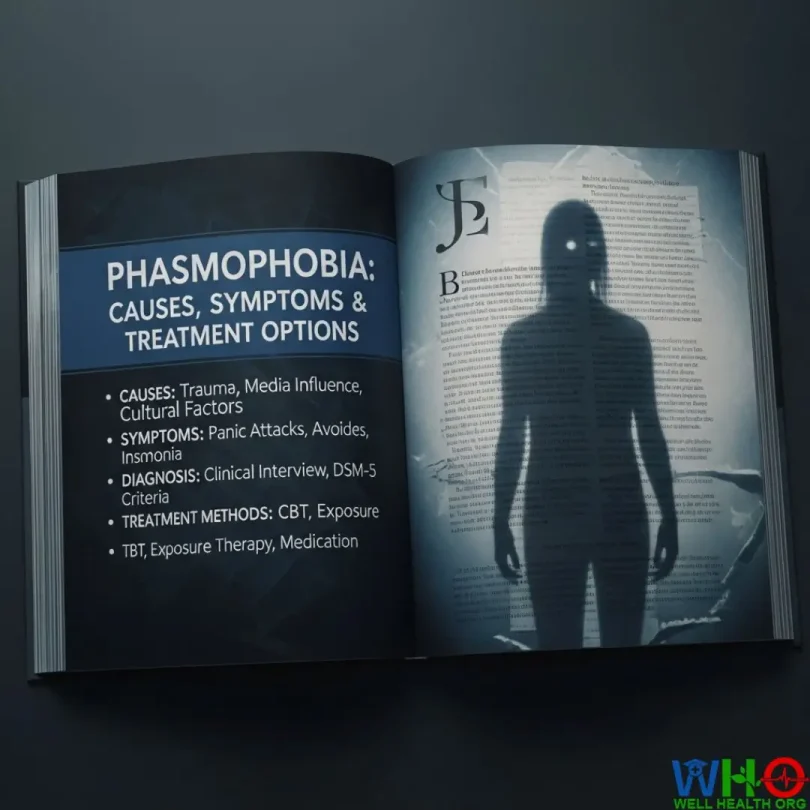
For many people, ghost stories, haunted houses, and scary movies are nothing more than harmless thrills. But for individuals with phasmophobia—an intense and persistent fear of ghosts—these experiences are far from entertaining. Instead, they can trigger overwhelming anxiety, disrupt daily routines, and significantly reduce quality of life.
- What is Phasmophobia?
- How It Differs from Normal Fear
- Impact on Daily Life
- Symptoms of Phasmophobia
- Psychological and Emotional Symptoms
- Physical Symptoms
- Causes and Triggers of Phasmophobia
- 1. Conditioning Experiences
- 2. Childhood Susceptibility
- 3. Observational Learning
- 4. Genetic and Biological Factors
- 5. Cultural Influences
- Diagnosing Phasmophobia
- Diagnostic Process
- Treatment Options for Phasmophobia
- 1. Cognitive Behavioral Therapy (CBT)
- 2. Exposure Therapy
- 3. Relaxation and Coping Techniques
- 4. Virtual Reality (VR) Therapy
- 5. Hypnotherapy
- 6. Medication (Adjunct Use)
- Living with Phasmophobia
- Practical Coping Tips
- Support Systems
- Final Thoughts
- FAQs about Phasmophobia
Unlike the casual unease most people feel when walking through a dark basement or watching a horror film, phasmophobia is classified as a specific phobia under the DSM-5. It involves an irrational, disproportionate, and uncontrollable fear of ghosts or supernatural entities, even though there is no actual threat of harm.
This comprehensive guide breaks down everything you need to know about phasmophobia: what it is, how it develops, its psychological and physical symptoms, and the most effective treatment options. Whether you’re a psychology student, mental health professional, or someone who suspects they may suffer from this condition, understanding phasmophobia is the first step toward managing it.
What is Phasmophobia?
Phasmophobia is the clinical term for an intense fear of ghosts or supernatural beings. It goes beyond mild discomfort—it is a persistent and excessive fear that can interfere with everyday activities, relationships, and mental well-being.
While most people can watch a horror movie and later brush it off as fiction, someone with phasmophobia may avoid these situations altogether. Even being in the dark, hearing strange noises, or thinking about ghosts can trigger extreme anxiety.
How It Differs from Normal Fear
- Normal fear: Feeling startled when you hear an unexplained sound at night.
- Phasmophobia: Experiencing panic, trembling, or insomnia for days after hearing that sound, convinced it might be caused by a ghost.
Impact on Daily Life
- Leaving lights on overnight because of fear of ghostly encounters.
- Avoiding basements, attics, or old buildings.
- Difficulty sleeping alone or living independently.
- Declining social invitations involving haunted attractions, horror movies, or nighttime outings.
A 2018 case study revealed that individuals with phasmophobia often go to extreme lengths to avoid triggers, such as refusing to stay in unfamiliar places, moving out of houses they consider “haunted,” or developing secondary fears like nyctophobia (fear of the dark).
Symptoms of Phasmophobia
Like other specific phobias, phasmophobia triggers both psychological distress and physical symptoms. Recognizing these signs is essential for diagnosis and treatment.
Psychological and Emotional Symptoms
- Persistent anxiety when thinking about ghosts or the supernatural.
- Panic attacks triggered by ghost-related conversations, movies, or environments.
- Intrusive, vivid mental images of ghosts.
- Belief in being watched or haunted, even without evidence.
- Avoidance behaviors—refusing to enter certain rooms, avoiding night activities, or refusing to sleep alone.
Physical Symptoms
Phasmophobia activates the body’s fight-or-flight response, leading to:
- Rapid heartbeat and palpitations.
- Shortness of breath or choking sensations.
- Trembling, sweating, or chills.
- Dizziness, nausea, or fainting.
- Crying, especially in children or severe cases.
Chronic symptoms often extend to secondary issues: insomnia, fatigue, poor concentration, and heightened general anxiety. Over time, this can affect school, work, and relationships.
Causes and Triggers of Phasmophobia
Phasmophobia rarely arises from a single cause—it’s usually the result of a combination of experiences, personality traits, and sometimes genetics.
1. Conditioning Experiences
Many phobias develop through classical conditioning. For example:
- A child watches a terrifying ghost movie in a dark room.
- Later, any dark room triggers fear, even without the movie.
This creates a learned association between darkness and supernatural fear.
2. Childhood Susceptibility
Children are particularly prone to developing this fear because of their vivid imagination. Stories about ghosts, folklore, or media portrayals can leave long-lasting impressions.
3. Observational Learning
If a parent, sibling, or caregiver expresses extreme fear of ghosts, a child may adopt that fear. This “learned phobia” can persist into adulthood.
4. Genetic and Biological Factors
Research suggests that phobias may have a hereditary component, meaning some individuals are biologically predisposed to heightened anxiety responses.
5. Cultural Influences
In cultures where ghosts and spirits are heavily emphasized, individuals may be more likely to develop phasmophobia. Belief systems and local folklore can amplify fears.
Diagnosing Phasmophobia
Phasmophobia is formally recognized as a specific phobia under the DSM-5 criteria. For a diagnosis, the following must be present:
- Marked fear or anxiety about ghosts or ghost-related stimuli.
- Fear is out of proportion to the actual danger.
- Avoidance or intense distress when faced with triggers.
- Symptoms persist for six months or more.
- Fear causes clinically significant distress or impairment in daily functioning.
Diagnostic Process
- Psychiatric evaluation: Interviews to explore symptoms, triggers, and severity.
- Medical history review: To rule out physical conditions that may mimic anxiety.
- Differential diagnosis: Distinguishing phasmophobia from OCD, PTSD, or generalized anxiety.
Some practitioners may use screening questionnaires to assess symptom severity before formal diagnosis.
Treatment Options for Phasmophobia
The good news is that phasmophobia is highly treatable. With the right therapy and support, individuals can learn to manage their fear effectively.
1. Cognitive Behavioral Therapy (CBT)
CBT is the gold standard treatment for specific phobias. It helps individuals:
- Recognize irrational thought patterns about ghosts.
- Replace fear-based thinking with rational alternatives.
- Develop coping skills for when triggers appear.
2. Exposure Therapy
A form of CBT, exposure therapy involves gradual and controlled exposure to ghost-related triggers. For instance:
- Looking at cartoon drawings of ghosts.
- Watching mild scenes from supernatural films.
- Sitting in a dark but safe room.
- Progressing toward more challenging scenarios.
Over time, repeated exposure desensitizes the fear response, teaching the brain that the threat is not real.
3. Relaxation and Coping Techniques
- Deep breathing exercises calm rapid heart rate.
- Progressive muscle relaxation reduces physical tension.
- Visualization techniques replace fear with calming mental imagery.
4. Virtual Reality (VR) Therapy
An innovative approach where patients face simulated haunted environments in a safe, controlled setting. This can replicate exposure therapy while reducing risk.
5. Hypnotherapy
Some therapists use hypnosis to access subconscious fears and reframe ghost-related anxieties.
6. Medication (Adjunct Use)
Medication isn’t the first-line treatment but may be used when symptoms are severe. Options include:
- SSRIs or SNRIs (antidepressants) to reduce anxiety.
- Benzodiazepines for short-term relief in extreme cases.
Living with Phasmophobia
Phasmophobia can be isolating, especially since many people feel embarrassed discussing it. But recognizing it as a legitimate psychological condition is key to overcoming it.
Practical Coping Tips
- Talk openly: Share your experiences with a trusted friend or therapist.
- Challenge avoidance behaviors: Take small steps to face your fears.
- Maintain healthy habits: Good sleep, regular exercise, and balanced diet reduce anxiety.
- Limit horror exposure: Avoid unnecessary triggers like ghost movies, haunted attractions, or late-night horror podcasts.
Support Systems
- Join online or local support groups for people with phobias.
- Seek reassurance from loved ones without relying on them excessively.
- Work with a licensed therapist for long-term management.
Final Thoughts
Phasmophobia may seem unusual to some, but for those living with it, the fear is deeply real and often debilitating. The important takeaway is that this condition is treatable. Through therapy—especially CBT and exposure therapy—combined with coping techniques, individuals can reclaim control of their lives.
The goal isn’t to eliminate fear entirely—fear is a natural human emotion—but to reduce it to a manageable level where it no longer interferes with daily functioning.
If you or someone you know struggles with an overwhelming fear of ghosts, reaching out to a mental health professional can be the first step toward recovery. With the right support, it’s possible to live confidently—free from the shadows of irrational fear.
FAQs about Phasmophobia
1. Is phasmophobia the same as being afraid of the dark?
Not exactly. While the two can overlap, phasmophobia is specifically the fear of ghosts, while nyctophobia is the fear of darkness itself.
2. At what age does phasmophobia usually begin?
It often develops in childhood, but symptoms can persist into adulthood if left untreated.
3. Can phasmophobia go away on its own?
Mild cases may lessen with age, but severe phasmophobia typically requires therapy to fully resolve.
4. Is medication necessary for phasmophobia treatment?
Not always. Therapy—especially CBT and exposure therapy—is usually more effective, but medication may help with severe anxiety.
5. How long does treatment take?
It varies. Some people see improvement after a few months of therapy, while others may need longer, depending on severity and response to treatment.
Medically Reviewed by Prof. Dr. Akram
Orthopedic Surgeon | Professor | Senior Medical Specialist
Prof. Dr. Akram is a distinguished surgeon with over 15 years of clinical expertise. Having served as a lead Emergency Specialist at Complex International Government Hospital, he currently leads a specialized team of 13 medical professionals at his private hospital. As a Professor at top medical universities, he ensures that every article on WellHealthOrg.com meets rigorous clinical standards.
Medical Disclaimer:
The information provided is for educational purposes only and is not a substitute for professional medical advice, diagnosis, or treatment. Always consult your physician for any medical concerns.
Our content is rigorously fact-checked by our 13-member Editorial Team under the clinical supervision of Prof. Dr. Akram.







