Since 2016, an unusual medical phenomenon has puzzled scientists, doctors, and intelligence officials alike. Known as Havana Syndrome, this condition first appeared among American diplomats stationed in Havana, Cuba. What initially seemed like isolated cases of illness soon grew into a global mystery, spreading to other countries and sparking heated debates over potential causes and national security risks.
- Recognizing the Symptoms of Havana Syndrome
- Neurological and Cognitive Effects
- Sensory Disturbances
- Physical and Emotional Symptoms
- Theories Behind Havana Syndrome: Searching for Answers
- Directed Energy Attacks
- Microwave Energy Exposure
- Sonic or Ultrasonic Weapons
- Environmental and Chemical Factors
- Psychological and Psychosomatic Explanations
- Government Investigations: What Have We Learned?
- Agencies Involved
- Recent Developments
- Challenges in the Investigation
- Brain Imaging Evidence: What the Scans Reveal
- Structural Brain Changes
- Functional Connectivity Differences
- Geopolitical Impact and Diplomatic Fallout
- Strained Diplomatic Relations
- Security Protocol Adjustments
- Impact on Personnel and Families
- Current Treatment Approaches and Support
- Symptom Management Strategies
- Government-Sponsored Medical Programs
- Looking Ahead: Research and Future Directions
- Research Priorities
- The Role of International Cooperation
- Technology and Detection Tools
- Conclusion: The Mystery Continues
- FAQs About Havana Syndrome
Unlike ordinary illnesses, Havana Syndrome doesn’t follow predictable patterns. The symptoms range from headaches and dizziness to more severe neurological problems like memory loss and cognitive impairment. Some people bounce back quickly, while others endure lingering effects that can last months or even years. The absence of a confirmed cause has made this one of the most perplexing medical enigmas of the modern era.
Beyond its medical mystery, Havana Syndrome has geopolitical weight. It has influenced international relations, security protocols, and the way governments protect their personnel abroad. With diplomats and intelligence officers at the center of the crisis, understanding the condition has become more than just a medical priority—it’s also a matter of national security.
In this article, we’ll explore everything we currently know about Havana Syndrome: its symptoms, the leading theories behind its origins, how governments have responded, and what the future may hold for those affected.
Recognizing the Symptoms of Havana Syndrome
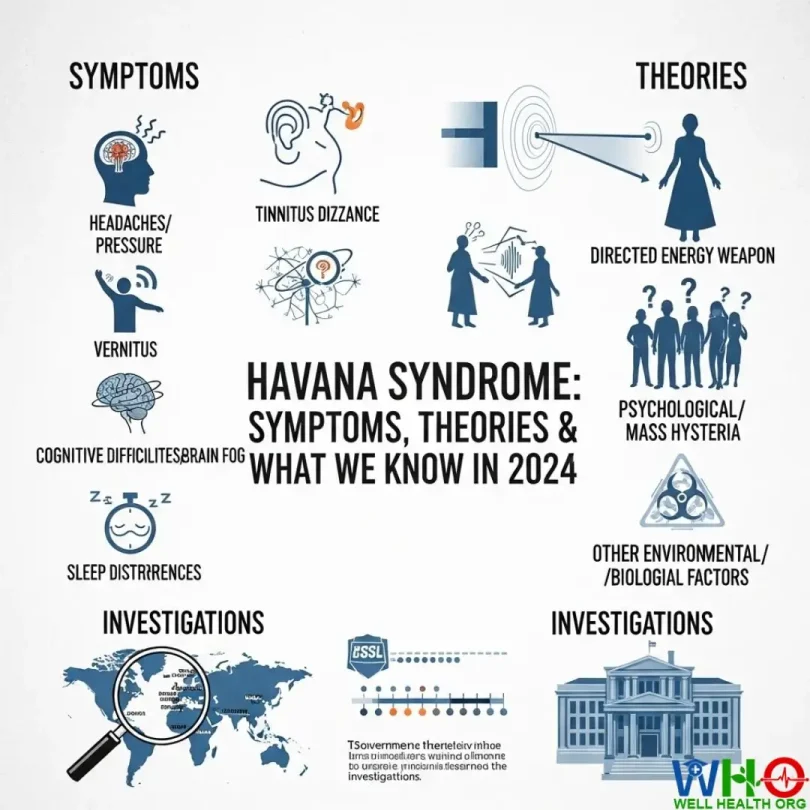
The earliest warning signs of Havana Syndrome were strikingly unusual. Many affected individuals reported hearing a sudden high-pitched sound, buzzing, or even a strange pulsing noise just before symptoms began. In some cases, this auditory experience was accompanied by a sensation of intense pressure in the head or ears, almost like being caught in a powerful sound wave.
This strange sequence of events marked the beginning of a condition that would soon challenge both medical science and international diplomacy. While the symptoms vary significantly from person to person, they can generally be grouped into neurological, sensory, physical, and emotional categories.
Neurological and Cognitive Effects
The neurological impact of Havana Syndrome is one of its most concerning features. For diplomats and intelligence officers—whose jobs rely heavily on mental sharpness—these symptoms have been especially debilitating. Reported neurological effects include:
- Short-term memory problems – difficulty recalling recent conversations, events, or instructions.
- Cognitive “fog” – trouble focusing on tasks, reading, or processing information.
- Balance and coordination issues – dizziness, vertigo, and frequent loss of equilibrium.
- Chronic headaches – sometimes described as migraines that persist for weeks.
- Nausea and disorientation – often accompanying dizziness, making normal daily activities nearly impossible.
In real-world cases, some affected individuals found themselves unable to continue their diplomatic duties. For example, former embassy employees have spoken about struggling to perform simple work tasks, attend meetings, or even drive safely.
Sensory Disturbances
Havana Syndrome also seems to disrupt how the brain processes sensory information. Many victims report changes in hearing, vision, and spatial perception:
- Tinnitus – persistent ringing, buzzing, or humming in the ears.
- Hearing loss – sudden or gradual, sometimes permanent.
- Hypersensitivity to sound – ordinary noises, like conversations or traffic, may feel painfully amplified.
- Vision problems – light sensitivity, blurred vision, or trouble tracking moving objects.
- Distorted spatial awareness – difficulty judging distances or navigating spaces.
These sensory disruptions further complicate daily life. For instance, some patients reported being unable to read for more than a few minutes because the words seemed to shift on the page. Others described disorientation in familiar settings, as if their sense of space had been altered.
Physical and Emotional Symptoms
Beyond the neurological and sensory challenges, Havana Syndrome also takes a toll on physical health and emotional well-being:
- Chronic fatigue – many sufferers feel exhausted even after rest.
- Sleep disturbances – including insomnia, fragmented sleep, or unusually vivid dreams.
- Irritability and mood swings – sudden emotional changes not typical for the individual.
- General malaise – a lingering sense of sickness or weakness.
- Reduced energy levels – difficulty engaging in both professional and personal activities.
The duration and severity of these symptoms differ widely. Some individuals recover in a few weeks, while others live with lasting impairments that affect their quality of life for years. Experts believe factors such as proximity to the initial event, overall health, and stress levels may influence the severity of the illness.
Theories Behind Havana Syndrome: Searching for Answers
With symptoms this strange and disruptive, researchers quickly began searching for explanations. However, despite years of investigation, no single theory has been proven. Instead, several competing ideas have emerged, ranging from high-tech weapons to environmental toxins and even psychological factors.
Directed Energy Attacks
The most controversial—and widely discussed—theory is that Havana Syndrome results from directed energy attacks. This idea suggests that affected individuals may have been deliberately targeted using advanced technology.
Microwave Energy Exposure
Some scientists believe pulsed microwave radiation could be behind the syndrome. Microwaves can penetrate the skull and interact with brain tissue, potentially causing the types of neurological symptoms observed. Unlike blunt-force trauma, microwave exposure doesn’t necessarily leave visible injuries, making it harder to confirm.
Sonic or Ultrasonic Weapons
Another possibility is the use of sonic devices that emit high-frequency or low-frequency sound waves. While ultrasonic weapons are known to cause discomfort or disorientation, researchers remain divided on whether they could explain the full range of Havana Syndrome’s symptoms.
Interestingly, when the first cases were reported in Cuba, the U.S. State Department even referred to them as “health attacks,” underscoring how seriously officials considered the directed-energy theory.
Environmental and Chemical Factors
Not all experts are convinced by the attack hypothesis. Some argue the symptoms might be linked to environmental exposures, such as:
- Pesticides – Cuba has historically used strong insecticides to control mosquito populations. Certain neurotoxic chemicals could theoretically cause dizziness, headaches, and memory issues.
- Infectious diseases – Viral or bacterial infections that target the nervous system may mimic Havana Syndrome.
- Industrial pollutants – Exposure to toxic substances in specific locations could lead to similar neurological problems.
This explanation would suggest that Havana Syndrome may not be a deliberate attack but rather an unintended consequence of environmental hazards.
Psychological and Psychosomatic Explanations
A third school of thought considers Havana Syndrome a form of mass psychogenic illness—essentially a collective psychosomatic response triggered by stress and fear.
Diplomatic postings are already high-stress environments. Some psychologists argue that the intense pressure, combined with fears of surveillance or attack, may have amplified ordinary symptoms into a widespread phenomenon. In this view, the strange noises described by victims might have been environmental sounds later associated with illness due to heightened anxiety.
While controversial, this theory has gained traction in part because not all cases show clear physical evidence of brain injury. Still, critics argue it doesn’t fully explain the documented neurological abnormalities found in some patients.
Government Investigations: What Have We Learned?
The U.S. government has invested considerable resources into understanding Havana Syndrome, mobilizing medical experts, intelligence agencies, and independent researchers.
Agencies Involved
- U.S. Department of State – first to respond when diplomats fell ill.
- CIA – conducted its own investigation into potential foreign involvement.
- Department of Defense – assessed the possibility of directed energy weapons.
- National Institutes of Health (NIH) – studied the medical and neurological aspects.
- Independent research institutions – collaborated on brain imaging and case studies.
Together, these investigations have analyzed hundreds of cases across multiple continents, but findings remain inconclusive.
Recent Developments
The House Intelligence Committee has recently launched inquiries into how U.S. agencies have handled Havana Syndrome. This new oversight reflects growing concern that earlier explanations—such as environmental factors or stress—may not fully account for the problem.
Challenges in the Investigation
Understanding Havana Syndrome has been extraordinarily difficult for several reasons:
- Lack of consistent physical evidence – no clear biological markers across all patients.
- Difficulty replicating symptoms – laboratory settings can’t reproduce the experiences described.
- Diplomatic barriers – some host nations have limited cooperation.
- Variability in symptoms – no two cases look exactly alike.
Despite these hurdles, progress has been made through advanced brain imaging, which we’ll explore next.
Brain Imaging Evidence: What the Scans Reveal
One of the most compelling pieces of evidence supporting the reality of Havana Syndrome comes from advanced brain imaging studies. Researchers have used tools like MRI scans to analyze the brains of affected individuals, and the findings reveal measurable changes that go beyond stress or psychosomatic explanations.
Structural Brain Changes
Several studies have noted abnormalities in specific areas of the brain, particularly in regions responsible for balance, memory, and sensory processing. Some of the documented findings include:
- Altered white matter integrity – White matter is responsible for communication between different parts of the brain. Damage or irregularities here could explain problems with memory, concentration, and sensory processing.
- Volume changes in gray matter and white matter – Certain brain regions appeared either reduced or abnormally altered compared to healthy controls.
- Cerebellar disruptions – The cerebellum, which helps regulate coordination and balance, showed unusual structural differences in some patients.
These findings suggest that the symptoms of Havana Syndrome may be linked to physical changes in brain structure, rather than being purely psychological.
Functional Connectivity Differences
Beyond structural damage, researchers have also found altered brain network activity. Functional MRI (fMRI) studies indicate that the brains of Havana Syndrome patients may process sensory input differently, particularly in areas related to:
- Vision and hearing – aligning with reports of tinnitus, hearing loss, and light sensitivity.
- Spatial navigation – possibly explaining disorientation and vertigo.
- Memory and executive function – correlating with cognitive fog and concentration issues.
While these imaging studies are not definitive proof of a specific cause, they add weight to the argument that Havana Syndrome represents a genuine neurological condition, not just a stress-related phenomenon.
Geopolitical Impact and Diplomatic Fallout
The consequences of Havana Syndrome extend far beyond individual health. Its emergence has reshaped diplomatic relations, heightened tensions between nations, and forced governments to rethink security protocols for overseas personnel.
Strained Diplomatic Relations
- Cuba – The initial outbreak in Havana triggered major diplomatic fallout. The U.S. reduced embassy staff, issued travel advisories, and accused Cuba of failing to protect its diplomats. Cuba, in turn, denied responsibility and dismissed the directed-energy theory as “science fiction.”
- China – Similar incidents at the U.S. consulate in Guangzhou raised new concerns, widening the scope of the issue beyond Cuba.
- Russia – Cases reported in Moscow have fueled suspicions of Russian involvement, given the country’s history of experimenting with advanced surveillance and energy technologies.
While no conclusive evidence has been presented against any government, the mere possibility of a deliberate attack has deepened mistrust and complicated international diplomacy.
Security Protocol Adjustments
In response to the threat, U.S. agencies have introduced new measures to safeguard personnel abroad:
- Medical monitoring – Diplomats and intelligence officers now undergo more rigorous health screenings.
- Assignment adjustments – Some postings are classified as higher risk, influencing where officials are stationed.
- Emergency response protocols – Systems are in place to quickly evacuate or treat personnel showing symptoms.
- Training programs – Staff are educated on recognizing early warning signs and reporting unusual sensory experiences.
These precautions underscore the seriousness with which Havana Syndrome is treated, regardless of its still-unconfirmed cause.
Impact on Personnel and Families
Perhaps the most under-discussed consequence of Havana Syndrome is the human toll. Many diplomats and intelligence officers have been forced into early retirement, reassignment, or extended medical leave. For some, the illness has meant the end of a once-promising career.
Families have also faced significant hardships. Spouses and children of affected individuals often report heightened anxiety, disrupted schooling, and relocation stress. The uncertainty surrounding the syndrome—combined with the lack of a clear treatment—has only deepened the psychological impact on diplomatic families.
Current Treatment Approaches and Support
With no confirmed cause, treatment for Havana Syndrome remains focused on managing symptoms rather than addressing an underlying trigger. The medical response combines physical rehabilitation, neurological care, and psychological support.
Symptom Management Strategies
Doctors tailor treatment to each patient, depending on which symptoms are most severe. Approaches include:
- Pain management – prescription medications and non-drug therapies for persistent headaches.
- Vestibular therapy – specialized exercises to improve balance and reduce vertigo.
- Cognitive rehabilitation – brain training exercises, memory strategies, and neurofeedback to help restore mental function.
- Audiological support – including hearing aids and tinnitus management programs.
Some patients also benefit from integrative therapies such as meditation, mindfulness, and physical activity to improve resilience and energy levels.
Government-Sponsored Medical Programs
The U.S. government has established dedicated support systems for affected personnel, including:
- Specialized clinics – where doctors are trained to recognize and treat Havana Syndrome.
- Cutting-edge diagnostics – access to advanced brain imaging and neurological testing.
- Rehabilitation services – comprehensive recovery programs involving multiple specialists.
- Mental health support – counseling and therapy for both patients and their families.
These programs are essential for helping affected individuals regain as much normal function as possible, even if complete recovery is not always achievable.
Looking Ahead: Research and Future Directions
Despite years of investigation, Havana Syndrome remains an unsolved puzzle. However, ongoing research continues to explore possible causes, treatments, and preventive measures.
Research Priorities
Current scientific efforts focus on:
- Better diagnostic criteria – establishing clear medical guidelines for identifying cases.
- Mechanisms of brain changes – understanding how structural and functional brain differences arise.
- Potential treatments – testing therapies that target neurological recovery.
- Environmental and technological investigations – examining whether toxins, pathogens, or energy devices could be responsible.
The Role of International Cooperation
Since Havana Syndrome affects personnel in multiple countries, solving the mystery may require greater international collaboration. Allies such as Canada and the U.K., which have also reported cases, are sharing data and research insights. Broader cooperation could help uncover common factors and speed up solutions.
Technology and Detection Tools
One promising avenue is the development of real-time detection systems capable of identifying potential threats, such as microwave radiation or unusual acoustic signals. These tools could serve as both diagnostic aids and protective technologies for diplomats abroad.
Conclusion: The Mystery Continues
Havana Syndrome remains one of the most perplexing medical and security challenges of the modern age. Despite years of research, we still lack definitive answers about its cause. What we do know is this:
- The symptoms are real and often debilitating.
- Brain imaging shows measurable differences in some patients.
- The condition has altered diplomatic relations and national security practices.
As science progresses, there is hope that ongoing research will bring clarity, uncover effective treatments, and ensure better protection for those serving their countries abroad. Until then, Havana Syndrome stands as a reminder of how much we still have to learn about the intersection of human health, technology, and geopolitics.
FAQs About Havana Syndrome
1. Is Havana Syndrome contagious?
No, there is no evidence to suggest that Havana Syndrome is contagious. It does not spread from person to person like an infectious disease.
2. Who is most at risk of developing Havana Syndrome?
Cases have primarily been reported among U.S. diplomats, intelligence officers, and military personnel stationed abroad. However, their family members have occasionally reported symptoms as well.
3. Can Havana Syndrome cause permanent brain damage?
Some brain imaging studies suggest structural changes in affected individuals. While some recover fully, others report long-term neurological issues that impact daily life.
4. Has any government been proven responsible?
As of now, no government has been definitively linked to Havana Syndrome. Investigations remain inconclusive, though suspicions have fallen on several foreign actors.
5. How is Havana Syndrome treated today?
Treatment focuses on symptom management—rehabilitation for balance and memory issues, medications for headaches, and mental health support. There is no single cure at this time.
Medically Reviewed by Prof. Dr. Akram
Orthopedic Surgeon | Professor | Senior Medical Specialist
Prof. Dr. Akram is a distinguished surgeon with over 15 years of clinical expertise. Having served as a lead Emergency Specialist at Complex International Government Hospital, he currently leads a specialized team of 13 medical professionals at his private hospital. As a Professor at top medical universities, he ensures that every article on WellHealthOrg.com meets rigorous clinical standards.
Medical Disclaimer:
The information provided is for educational purposes only and is not a substitute for professional medical advice, diagnosis, or treatment. Always consult your physician for any medical concerns.
Our content is rigorously fact-checked by our 13-member Editorial Team under the clinical supervision of Prof. Dr. Akram.