When you or a loved one is navigating the challenges of advanced prostate cancer, the number of treatment options and medical terms can feel overwhelming. It’s natural to want clarity—especially when considering newer therapies that may not be as familiar as standard chemotherapy or hormone treatments. One such option is Provenge (sipuleucel-T), an innovative immunotherapy that uses your body’s own immune cells to help fight the cancer.
- 1. What Is Provenge?
- Who It’s For
- How It Differs From Other Treatments
- Key Characteristics
- 2. How Provenge Works
- Provenge’s Role
- Why This Matters
- 3. Provenge Form and Strength
- Form
- Strength
- Manufacturing Timeline
- 4. Recommended Dosage for Prostate Cancer
- Standard Regimen
- Infusion Details
- Importance of Timing
- 5. The Provenge Treatment Process Explained
- Step 1: Cell Collection (Leukapheresis)
- Step 2: Cell Activation at the Facility
- Step 3: Infusion Day
- Cycle Repeats
- 6. What If I Miss a Dose of Provenge?
- If You Miss an Appointment
- Consequences of Delays
- Practical Tips to Avoid Missed Doses
- 7. When Is Provenge the Right Choice?
- Ideal Candidates for Provenge
- Who May Not Be a Good Fit
- Factors Your Oncologist Will Evaluate
- 8. Provenge: Benefits, Risks, and Side Effects
- Key Benefits of Provenge
- Potential Side Effects
- Less Common but Serious Risks
- How Side Effects Are Managed
- 9. Maximizing Treatment Effectiveness
- Consistency Is Critical
- Support Your Immune System
- Work With Your Healthcare Team
- Mental and Emotional Health
- 10. Long-Term Management After Provenge
- What to Expect After Treatment
- Lifestyle and Self-Care for Survivorship
- Emotional Well-Being
- 11. Frequently Asked Questions About Provenge
- How does Provenge differ from chemotherapy?
- Will Provenge cure my prostate cancer?
- How quickly will I notice results?
- Can I receive other treatments after Provenge?
- What happens if my PSA levels continue to rise during or after Provenge?
- Is Provenge covered by insurance?
- 12. Real-World Patient Experiences With Provenge
- Positive Experiences
- Challenges Patients Face
- Caregiver Perspectives
- Example Patient Story (Composite Based on Common Experiences)
- 13. Final Takeaways: Is Provenge Right for You?
- Key Points to Remember
- Why Consider Provenge?
- The Bigger Picture
- Conclusion
- FAQs (Quick Reference)
If Provenge has been recommended for you, it’s likely that you have questions: How is it given? What does the dosage look like? How does the process work? What can I expect throughout the treatment?
This guide provides a comprehensive breakdown of Provenge dosage and administration, including its form, strength, infusion schedule, and safety considerations. By the end, you’ll have a clearer understanding of how Provenge works, what the treatment process involves, and how to prepare for each step.
1. What Is Provenge?
Provenge is the brand name for sipuleucel-T, a prescription-only biologic immunotherapy approved by the U.S. Food and Drug Administration (FDA). It is specifically used in men diagnosed with metastatic, castration-resistant prostate cancer (mCRPC).
Who It’s For
- Metastatic: The cancer has spread beyond the prostate to other areas of the body, such as bones or lymph nodes.
- Castration-resistant: The disease is no longer responding to treatments that reduce testosterone, a hormone that fuels prostate cancer growth.
- Few or no symptoms: Provenge is most effective when started before severe symptoms appear.
How It Differs From Other Treatments
Unlike standard treatments such as chemotherapy, which directly attack cancer cells, or hormone therapy, which lowers testosterone levels, Provenge belongs to a different category: autologous cellular immunotherapy.
This means each dose is custom-made from your own immune cells. These cells are collected from your blood, activated in a lab to recognize prostate cancer, and then re-infused back into your bloodstream to fight the disease.
Key Characteristics
- Personalized therapy tailored to each patient.
- Non-chemotherapy option with a different side effect profile.
- Biologic medication, meaning it’s made from living cells rather than synthetic chemicals.
- No generic or biosimilar version is available, since the process is highly individualized.
In short, Provenge is not a “one-size-fits-all” drug—it’s more like a specialized immune boost designed just for you.
2. How Provenge Works
To understand Provenge, it helps to think of your immune system as an army. Normally, this army patrols your body, looking for threats such as viruses, bacteria, or abnormal cells. But prostate cancer is clever—it hides from the immune system, preventing your defenses from recognizing it as dangerous.
Provenge’s Role
Provenge essentially gives your immune system a “wanted poster” of prostate cancer cells. Here’s how:
- Cell Collection: Your dendritic cells (a type of white blood cell) are collected through a process called leukapheresis.
- Activation: These cells are shipped to a specialized facility, where they are combined with a protein (PAP-GM-CSF) that helps them recognize prostate cancer cells.
- Reinfusion: The activated cells are returned to your doctor and infused back into your bloodstream.
- Immune Response: Once inside your body, these trained cells signal your T-cells to attack prostate cancer.
Why This Matters
- Targeted approach: Provenge doesn’t attack healthy cells, reducing collateral damage.
- Different from chemotherapy: You won’t experience the same type of hair loss, severe nausea, or extreme fatigue often linked with chemo.
- Potential survival benefit: Clinical trials show Provenge can extend overall survival in men with mCRPC, giving more time while maintaining quality of life.
This is why doctors may recommend Provenge early in the advanced prostate cancer journey, before symptoms worsen.
3. Provenge Form and Strength
Unlike pills or injections that have a standardized milligram dose, Provenge is unique for every patient because it is made from your own cells.
Form
- Provenge is prepared as a liquid suspension.
- It is delivered through an intravenous (IV) infusion, administered by healthcare professionals in a clinic, infusion center, or hospital.
- You cannot take Provenge at home or in pill form.
Strength
- The strength of Provenge is personalized—it depends on the number and quality of immune cells collected during leukapheresis.
- Each dose is custom-manufactured specifically for you, meaning no two patients receive exactly the same infusion.
Manufacturing Timeline
- After cell collection, your personalized Provenge dose is manufactured within 3 days.
- It must then be shipped quickly and infused on schedule, as the product has a short shelf life.
This personalized approach makes Provenge both powerful and time-sensitive, requiring strict coordination between you, your healthcare team, and the manufacturing facility.
4. Recommended Dosage for Prostate Cancer
The Provenge dosage schedule is standardized, even though the product itself is personalized.
Standard Regimen
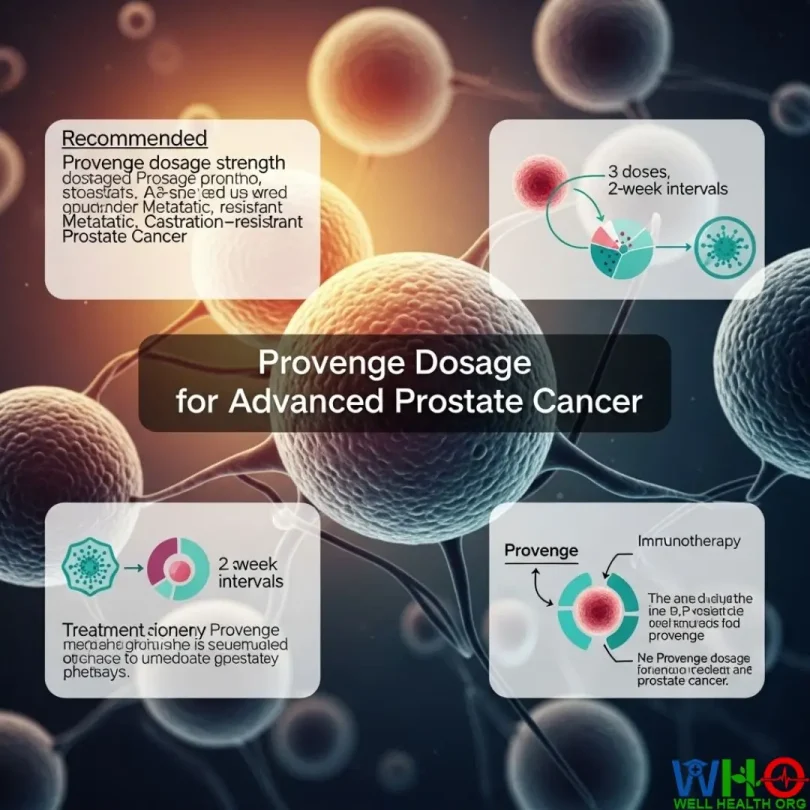
- Total doses: 3 infusions.
- Timing: Each infusion is given about two weeks apart.
- Treatment duration: The full course is completed in six weeks.
Infusion Details
- Each infusion lasts about 60 minutes.
- Before the infusion, your doctor may give you acetaminophen (Tylenol) and an antihistamine (such as diphenhydramine/Benadryl) to minimize infusion-related side effects.
- After infusion, you’ll stay under observation for at least 30 minutes to ensure no severe reactions occur.
Importance of Timing
Because each Provenge dose is custom-made and perishable, keeping your appointments is absolutely critical. If you miss an infusion, you’ll likely need to repeat leukapheresis to create a new dose.
Your doctor will coordinate the schedule carefully to make sure the collection, manufacturing, and infusion all align.
5. The Provenge Treatment Process Explained
Provenge is not a single drug you take—it’s a multi-step therapy journey involving both cell collection and infusion. Here’s what you can expect:
Step 1: Cell Collection (Leukapheresis)
- Timing: About 3 days before each infusion.
- Process:
- Blood is drawn and circulated through a machine.
- The machine separates out white blood cells (dendritic cells).
- The rest of your blood is returned to your body.
- Duration: Typically 2–4 hours.
- Possible side effects: Fatigue, dizziness, chills, or tingling around the lips and fingers. These are usually temporary and monitored closely by your medical team.
Step 2: Cell Activation at the Facility
- Your collected cells are shipped to a specialized facility.
- They are exposed to a fusion protein (PAP-GM-CSF) designed to “teach” them how to recognize prostate cancer cells.
- Within 2–3 days, these trained cells are packaged and sent back to your treatment center.
Step 3: Infusion Day
- You’ll receive your Provenge infusion via IV at your clinic.
- The infusion itself takes about one hour.
- Pre-medications may be given to minimize infusion-related reactions like chills or fever.
- After infusion, you’ll be monitored for 30 minutes or more before going home.
Cycle Repeats
This process—collection, cell activation, infusion—repeats three times total, spaced about two weeks apart.
By the end of the six-week course, your immune system has been trained and boosted to better recognize and fight prostate cancer cells.
6. What If I Miss a Dose of Provenge?
Because Provenge is a customized treatment, missing a scheduled infusion is not the same as forgetting to take a pill. Every dose is created using freshly collected immune cells, which have a limited shelf life once manufactured. That means strict timing is essential.
If You Miss an Appointment
- Contact your healthcare provider immediately. They will work with the manufacturer to determine whether your existing dose can still be infused or if a new collection is required.
- In most cases, if an infusion cannot be delivered on time, you will need to undergo leukapheresis again so another dose can be prepared.
Consequences of Delays
- Delaying infusions can disrupt the immune training process, potentially reducing effectiveness.
- If your immune system doesn’t receive all three scheduled doses, you may not get the full benefit of the therapy.
Practical Tips to Avoid Missed Doses
- Use digital reminders: Set alarms on your phone for both leukapheresis and infusion appointments.
- Arrange transportation in advance: Some patients feel fatigued after procedures, so planning a ride can prevent last-minute cancellations.
- Keep communication open: Inform your healthcare team as soon as possible if illness, travel, or other issues might interfere with your schedule.
👉 Think of Provenge as a precision-timed treatment—each piece needs to fit perfectly for maximum benefit.
7. When Is Provenge the Right Choice?
Provenge is not designed for every stage of prostate cancer. Doctors consider several factors before recommending it.
Ideal Candidates for Provenge
- Men with metastatic prostate cancer: Cancer has spread to bones or other organs.
- Castration-resistant disease: The cancer has progressed despite hormone-lowering therapies.
- Minimal or no symptoms: Provenge is most beneficial when started before pain or other serious symptoms appear.
- Good overall health: Patients need to be strong enough to undergo repeated procedures.
Who May Not Be a Good Fit
- Patients with rapidly progressing disease may need faster-acting treatments such as chemotherapy.
- Those with weakened immune systems (due to other illnesses or medications) may not mount an effective immune response.
- Individuals unable to commit to the three-step process (cell collection, shipping, infusion) may face challenges completing therapy.
Factors Your Oncologist Will Evaluate
- PSA levels and doubling time (how quickly your PSA rises).
- Extent of metastasis (bone scans, CT scans).
- History of prior treatments such as abiraterone, enzalutamide, or chemotherapy.
- Performance status—your overall ability to perform daily activities.
💡 Real-world insight: Many oncologists recommend Provenge earlier in the advanced cancer journey, even before stronger medications are needed, because it works best when your immune system is relatively intact.
8. Provenge: Benefits, Risks, and Side Effects
Like any medical therapy, Provenge offers significant benefits but also comes with potential risks. Understanding both sides will help you feel more prepared.
Key Benefits of Provenge
- Prolonged survival: Clinical trials showed Provenge extended life by about 4 months on average, with some patients living much longer.
- Improved quality of life: Unlike chemotherapy, Provenge does not usually cause hair loss, mouth sores, or severe nausea.
- One-time treatment course: After six weeks, the therapy is complete. There’s no daily pill burden or ongoing infusion schedule.
- Personalized approach: Since it’s made from your own cells, Provenge is less likely to cause certain immune complications compared to donor-based therapies.
Potential Side Effects
Most side effects are mild to moderate and occur within 1–2 days of infusion. Common ones include:
- Chills and fever (the most reported effects).
- Headache or muscle aches.
- Nausea.
- Back or joint pain.
- Fatigue or weakness.
These reactions are often compared to having flu-like symptoms and usually resolve within a few days.
Less Common but Serious Risks
- Infusion reactions: Low blood pressure, difficulty breathing, or chest pain may occur. Your medical team monitors you during and after infusion to respond quickly if needed.
- Blood clots or stroke (rare): Some patients, especially those with existing risk factors, may face an increased risk.
- Allergic reactions: Though uncommon, severe allergic responses are possible with any infusion therapy.
How Side Effects Are Managed
- Pre-treatment with acetaminophen and antihistamines reduces infusion reactions.
- Staying well-hydrated before procedures may help minimize fatigue.
- Light activity (like short walks) after infusion can ease muscle stiffness and improve recovery.
👉 Many patients report that Provenge side effects are easier to tolerate than chemotherapy, making it a valuable option for maintaining quality of life.
9. Maximizing Treatment Effectiveness
While Provenge itself is a one-time, six-week treatment, your actions before, during, and after therapy can influence how well it works.
Consistency Is Critical
- Stick to your scheduled leukapheresis and infusion dates. Even short delays can disrupt the effectiveness of treatment.
Support Your Immune System
- Eat a balanced diet rich in lean protein, whole grains, and antioxidants to help your body recover from procedures.
- Stay physically active within your limits—light exercise supports immune health.
- Get enough sleep to allow your immune system to regenerate.
Work With Your Healthcare Team
- Keep a treatment journal to track infusion dates, side effects, and how you feel.
- Report unusual symptoms promptly—especially signs of infection, clotting, or allergic reaction.
- Ask about other therapies that may complement Provenge, such as androgen receptor inhibitors or targeted radiation, once Provenge treatment is complete.
Mental and Emotional Health
- Provenge treatment can feel demanding due to multiple procedures. Seek support from:
- Prostate cancer support groups.
- Counseling services to cope with anxiety or treatment fatigue.
- Family involvement, which can help with transportation and scheduling.
💡 Tip: Many patients find it helpful to think of Provenge not as “just another drug,” but as a short, intense investment in long-term immune defense.
10. Long-Term Management After Provenge
Provenge is not a cure for prostate cancer. Instead, it is designed to extend life and strengthen immune defense during a critical stage of the disease. After completing the six-week treatment course, your cancer journey continues.
What to Expect After Treatment
- No ongoing Provenge doses: Once the three infusions are complete, there are no booster doses.
- Regular monitoring: Your doctor will continue checking PSA levels, imaging scans, and overall health to track disease progression.
- Possible next treatments: If the cancer progresses, your oncologist may recommend medications such as:
- Enzalutamide (Xtandi) or abiraterone (Zytiga) to further block testosterone pathways.
- Chemotherapy (docetaxel, cabazitaxel) if the disease becomes aggressive.
- Bone-targeted therapies (denosumab or zoledronic acid) to reduce complications if cancer spreads to the bones.
Lifestyle and Self-Care for Survivorship
- Healthy diet: Foods rich in omega-3s, cruciferous vegetables, and tomatoes (lycopene) may support prostate health.
- Exercise: Weight-bearing activity helps maintain bone strength, which is important if cancer has spread to bones.
- Quit smoking & limit alcohol: Both can worsen outcomes and interfere with recovery.
- Regular screenings: Even after Provenge, ongoing medical supervision is essential for timely detection of changes.
Emotional Well-Being
Living with advanced prostate cancer can feel overwhelming. Provenge may provide more time—but how you spend that time matters just as much. Many patients find renewed focus on:
- Family connections.
- Travel or hobbies that bring joy.
- Spiritual practices or mindfulness, which can ease anxiety.
👉 Provenge is part of a bigger strategy. It is most effective when combined with ongoing medical care, healthy lifestyle choices, and emotional resilience.
11. Frequently Asked Questions About Provenge
Because Provenge is such a unique treatment, many patients and caregivers have questions. Let’s go through the most common ones in detail.
How does Provenge differ from chemotherapy?
Chemotherapy attacks rapidly dividing cells, which includes both cancerous and healthy cells. This is why it causes side effects such as hair loss, nausea, and low blood counts.
Provenge, on the other hand, does not directly attack cancer cells. Instead, it teaches your immune system to recognize and fight them. Side effects are generally milder, and patients can often continue daily activities with fewer disruptions.
Will Provenge cure my prostate cancer?
No. Provenge is not a cure, but it can extend survival and help maintain quality of life. Clinical trials showed patients lived months longer on average, and some had even longer-term benefits. Think of it as part of a larger strategy for managing cancer rather than a final solution.
How quickly will I notice results?
Unlike treatments that shrink tumors quickly, Provenge works gradually. You won’t feel it “kicking in” right away because it’s training your immune system over time. Most patients don’t notice physical changes, but lab results and long-term outcomes reflect its impact.
Can I receive other treatments after Provenge?
Yes. In fact, Provenge is often used before starting other therapies like abiraterone, enzalutamide, or chemotherapy. This sequencing allows you to get the maximum immune benefit first, then follow up with other drugs if needed.
What happens if my PSA levels continue to rise during or after Provenge?
Rising PSA doesn’t necessarily mean Provenge isn’t working. Because it works differently than hormone therapy, PSA levels may continue to rise while your immune system is still building its defense. Your oncologist will consider scans, symptoms, and overall health when evaluating effectiveness.
Is Provenge covered by insurance?
In most cases, yes. Medicare and many private insurers cover Provenge for eligible patients. However, because it is a specialized and costly treatment, always confirm coverage with your insurance provider and ask your care team about financial assistance programs.
12. Real-World Patient Experiences With Provenge
Medical facts are important, but hearing what other patients have gone through can make treatment decisions feel more real. While every journey is unique, common themes emerge in Provenge experiences.
Positive Experiences
- Many patients report that the short, six-week schedule is manageable compared to ongoing therapies.
- Side effects are often described as flu-like and temporary, allowing patients to resume normal routines quickly.
- Some men say the treatment gave them a sense of empowerment, knowing their own immune system was fighting back.
Challenges Patients Face
- Leukapheresis (cell collection) can feel tiring. Sitting for several hours with blood circulating through a machine isn’t easy for everyone.
- Scheduling can be stressful because of the strict timing between cell collection, manufacturing, and infusion.
- A few patients express frustration that Provenge doesn’t provide visible improvements like tumor shrinkage, making results feel “invisible.”
Caregiver Perspectives
Spouses, partners, and adult children often play a big role in the Provenge process. They may:
- Provide transportation to and from appointments.
- Help track infusion schedules.
- Offer emotional support during post-infusion side effects.
For many families, Provenge represents more time together, which is seen as its greatest benefit.
Example Patient Story (Composite Based on Common Experiences)
One patient, in his late 60s, described how he approached Provenge after hormone therapy stopped working. His oncologist recommended starting while he had no major symptoms. After three infusions, he reported mild chills and fatigue but nothing severe. Six months later, although his PSA continued to rise, his scans showed slower cancer progression than expected. Most importantly, he was still able to spend quality time with his grandchildren, which he called “the biggest victory.”
👉 These lived experiences highlight that while Provenge isn’t dramatic in its effects, it often provides meaningful benefits in time and quality of life.
13. Final Takeaways: Is Provenge Right for You?
Provenge is unlike most cancer treatments. It’s not about immediate tumor shrinkage or fast symptom relief. Instead, it’s about training your body’s natural defenses to keep fighting long after the infusions are done.
Key Points to Remember
- Provenge is for men with metastatic, castration-resistant prostate cancer who have minimal symptoms.
- The treatment involves three personalized infusions over six weeks.
- Side effects are usually mild, with flu-like symptoms being the most common.
- Provenge has been shown to extend survival by several months on average, with some patients benefiting even more.
- Timing is everything—starting while you’re relatively healthy gives the immune system the best chance to respond.
Why Consider Provenge?
If you’re at a point in your cancer journey where hormone therapies have stopped working but you’re not yet in severe pain, Provenge could be the right step. It offers a balance between effective cancer management and maintaining quality of life, something not all treatments can promise.
The Bigger Picture
Cancer treatment is rarely about one therapy alone. Provenge is best viewed as a strategic move in a larger plan that may also include hormone blockers, chemotherapy, or targeted therapies later on. By using Provenge early, you may be buying yourself valuable time to explore additional options.
Conclusion
Facing advanced prostate cancer is never easy, but having access to innovative therapies like Provenge changes the landscape. By working with your own immune system, it offers hope in a form that feels less invasive and more natural than traditional treatments.
The key to success is understanding the process, committing to the schedule, and maintaining open communication with your care team. Provenge won’t cure prostate cancer, but it can extend survival, improve quality of life, and provide precious time with loved ones.
If you’re considering this treatment, talk to your oncologist about whether Provenge fits into your personalized care plan. With the right timing and support, it may become a powerful tool in your fight against prostate cancer.
FAQs (Quick Reference)
1. How long does Provenge treatment last?
About six weeks, consisting of three infusions two weeks apart.
2. What are the most common Provenge side effects?
Chills, fever, fatigue, nausea, and headache—similar to mild flu symptoms.
3. Can Provenge be combined with other therapies?
Yes. It is often used first, followed by hormone therapy or chemotherapy if needed.
4. Is Provenge painful?
The infusion itself is not painful, though leukapheresis may feel uncomfortable. Side effects are usually mild.
5. How do I know if Provenge is working?
You may not “feel” the results right away. Effectiveness is measured through survival outcomes and slower disease progression rather than immediate tumor shrinkage.
Medically Reviewed by Prof. Dr. Akram
Orthopedic Surgeon | Professor | Senior Medical Specialist
Prof. Dr. Akram is a distinguished surgeon with over 15 years of clinical expertise. Having served as a lead Emergency Specialist at Complex International Government Hospital, he currently leads a specialized team of 13 medical professionals at his private hospital. As a Professor at top medical universities, he ensures that every article on WellHealthOrg.com meets rigorous clinical standards.
Medical Disclaimer:
The information provided is for educational purposes only and is not a substitute for professional medical advice, diagnosis, or treatment. Always consult your physician for any medical concerns.
Our content is rigorously fact-checked by our 13-member Editorial Team under the clinical supervision of Prof. Dr. Akram.