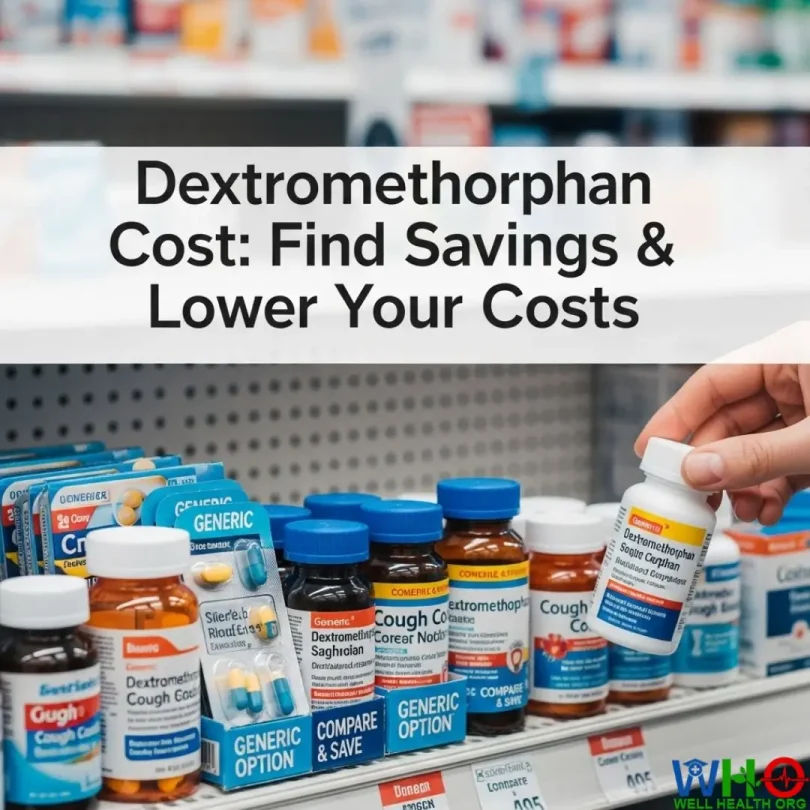
A nagging cough can make even the simplest tasks exhausting—whether it’s trying to sleep at night, hold a conversation, or get through a workday without interruptions. When you’re already feeling worn down, the last thing you want to worry about is paying too much for cough medicine. Thankfully, dextromethorphan, a well-known over-the-counter (OTC) cough suppressant, offers effective relief at a relatively low cost.
- Understanding Dextromethorphan and Its Role in Cough Relief
- Common Forms of Dextromethorphan
- Why Accessibility Matters
- Key Factors That Influence the Cost of Dextromethorphan
- 1. Brand Name vs. Generic
- 2. Formulation and Dosage
- 3. Quantity Purchased
- 4. Pharmacy or Retailer Differences
- Generic vs. Brand-Name Dextromethorphan: What’s the Difference?
- Effectiveness and Safety
- Cost Comparison Example
- When to Consider Brand Name
- Smart Strategies for Saving on Dextromethorphan
- 1. Use Pharmacy Discount Cards and Coupons
- 2. Compare Prices at Different Pharmacies
- 3. Leverage Insurance (When Possible)
- 4. Look Into Patient Assistance Programs
- Exploring Patient Assistance Programs in Detail
- How Patient Assistance Programs Work
- Who Qualifies?
- Where to Look for Help
- Comparing Pharmacies: Why Location Matters More Than You Think
- Why Prices Differ
- Practical Price-Checking Tips
- Real-Life Example
- Insurance Coverage: Can It Really Help with Dextromethorphan?
- When Insurance Might Cover Dextromethorphan
- How to Check If You’re Covered
- Tips for Using Insurance Benefits Wisely
- Choosing the Right Formulation for Your Budget
- Liquid Suspensions (Syrups)
- Liquid-Filled Gel Capsules
- Extended-Release Liquids
- Combination Products
- Smart Buying Tip
- Dosage and Cost: Why Milligrams Matter
- Typical Dosage Ranges
- Impact on Cost
- Example Breakdown
- Budgeting Tip
- Frequently Asked Questions About the Cost of Dextromethorphan
- Do dextromethorphan capsules cost less than syrup?
- What’s the typical out-of-pocket cost without insurance?
- Does dosage strength affect the price?
- Can I use HSA or FSA funds to buy dextromethorphan?
- Is there ever a reason to stick with brand-name Delsym over generic DXM?
- Smart Shopping Strategies for Dextromethorphan
- 1. Buy Store Brands Whenever Possible
- 2. Time Your Purchases
- 3. Consider Bulk or Family-Size Packages
- 4. Explore Online Retailers
- When to Talk to Your Pharmacist About Cost Savings
- What a Pharmacist Can Help With
- Why This Matters
- Avoiding Common Mistakes When Buying Dextromethorphan
- Mistake #1: Buying Brand Name Without Checking Generic Options
- Mistake #2: Ignoring Cost Per Dose
- Mistake #3: Overbuying Combination Products
- Mistake #4: Not Shopping Around
- Smart Strategies for Affordable Access to Dextromethorphan
- Practical Takeaways
- The Bottom Line
- Conclusion: Affordable Relief Without the Stress
- FAQs About Dextromethorphan and Cost Savings
- 1. Is there a “best” time of year to buy dextromethorphan at lower prices?
- 2. Are online subscriptions for cough medicine worth it?
- 3. Does generic dextromethorphan ever differ in effectiveness?
- 4. What’s the best way to calculate the real value of a product?
- 5. Can children take dextromethorphan, and is it more expensive for pediatric versions?
But here’s the catch: the price of dextromethorphan isn’t always straightforward. Depending on where you buy it, the brand you choose, and even the form it comes in, the cost can fluctuate more than you’d expect. Understanding these factors is the first step toward making informed, budget-friendly choices.
In this detailed guide, we’ll break down the true cost of dextromethorphan, explore the differences between brand-name and generic versions, and share practical strategies for saving money—without sacrificing quality. You’ll also learn about available assistance programs, price comparison tactics, and insider tips to stretch your dollar further.
Understanding Dextromethorphan and Its Role in Cough Relief
Dextromethorphan, often abbreviated as DXM, is one of the most widely used cough suppressants in the world. Found in dozens of OTC cough and cold products, it works by targeting the brain’s cough center, reducing the urge to cough and giving your throat much-needed rest.
Unlike medications that thin mucus or treat infection, DXM doesn’t “cure” the cause of your cough—it simply calms the reflex so you can breathe, talk, and sleep more comfortably. This makes it particularly helpful for dry, irritating coughs that linger long after a cold or flu has otherwise cleared up.
Common Forms of Dextromethorphan
Dextromethorphan comes in several forms, giving consumers flexibility based on preference and severity of symptoms:
- Liquid suspensions (syrups): The classic form, easy to measure and swallow, often flavored to make it more tolerable.
- Liquid-filled gel capsules: Pre-measured doses for convenience, no measuring cups needed.
- Extended-release liquids: Designed to provide relief for up to 12 hours, reducing the number of doses per day.
- Combination products: Many cold medicines pair DXM with other ingredients such as acetaminophen (for fever) or guaifenesin (an expectorant).
Each form has its pros and cons. For example, syrups might be cheaper upfront but require frequent dosing, while extended-release formulas can be pricier but save you from middle-of-the-night doses.
Why Accessibility Matters
Since dextromethorphan is available without a prescription, it’s easy to find in local pharmacies, supermarkets, and online retailers. But “easy to find” doesn’t always mean “easy to afford.” Small price differences can add up quickly, especially if you’re dealing with frequent or chronic cough issues. This is why understanding the cost structure and available savings options is so important.
Key Factors That Influence the Cost of Dextromethorphan
If you’ve ever shopped for cough medicine and noticed price tags ranging from just a few dollars to well over $15 for what seems like the same thing, you’re not imagining things. Several factors contribute to these cost variations. Let’s break them down.
1. Brand Name vs. Generic
Brand-name versions, like Delsym, tend to cost more because you’re paying not just for the medication but also for branding, marketing, and packaging. Generic dextromethorphan, on the other hand, is usually much cheaper—sometimes half the price or less—while delivering the exact same active ingredient.
This means the cough relief you get from a $6 store-brand bottle is essentially the same as that from a $14 brand-name bottle. Unless you have a personal preference for a specific taste or packaging, generics almost always give you better value.
2. Formulation and Dosage
Not all dextromethorphan products are created equal. Extended-release liquids, for example, are convenient because they last longer, but they usually come with a higher price tag. Likewise, liquid-filled capsules may cost more per dose than syrup, even though some people prefer their portability and ease of use.
Another factor is whether the product contains additional ingredients. Combination cold-and-cough medicines often carry a higher cost compared to plain DXM-only products.
3. Quantity Purchased
Buying in bulk is often cheaper in the long run. A larger bottle or multipack of capsules may lower the per-dose cost, even if the upfront price seems higher. However, this only makes sense if you actually plan to use all of it before the expiration date.
4. Pharmacy or Retailer Differences
Here’s something many people don’t realize: the same exact bottle of cough syrup can cost noticeably different amounts depending on where you buy it. Large chain pharmacies, independent local stores, grocery chains, and big-box retailers often set their own prices. Online platforms also add another layer of variation, sometimes offering discounts or subscription-based savings.
Pro Tip: Never assume your usual pharmacy is the cheapest. A quick comparison can reveal surprising price gaps.
Generic vs. Brand-Name Dextromethorphan: What’s the Difference?
Dextromethorphan is the generic name of the medication, while Delsym is one of the most popular brand names on the market. Many people wonder if choosing a brand-name option means they’re getting something “better.” The short answer? Usually, no.
Effectiveness and Safety
The FDA requires that generic medications have the same active ingredient, strength, dosage form, and route of administration as their brand-name counterparts. This means that when you buy a generic DXM syrup, you’re getting the same cough-suppressing effect as you would from Delsym.
The main differences typically lie in:
- Inactive ingredients: Flavoring, coloring, or fillers may vary, which can affect taste but not effectiveness.
- Packaging: Brand names often use more “premium-looking” packaging.
- Marketing costs: Big advertising campaigns increase the price of brand-name products.
Cost Comparison Example
- A 5 oz bottle of generic dextromethorphan syrup may cost around $5–$7.
- The same size of Delsym might cost $12–$15.
When you break it down, you’re essentially paying extra for branding rather than stronger cough relief. For budget-conscious shoppers, generic is the smart choice.
When to Consider Brand Name
There are cases where some people prefer sticking with a brand-name product:
- Taste preference: Some users find that Delsym has a smoother taste compared to generic syrups.
- Allergies or sensitivities: Rarely, inactive ingredients in generics can cause mild reactions, so switching to a brand name may help.
- Trust factor: Some individuals simply feel more comfortable with a recognizable brand.
Ultimately, though, for most people, going generic is one of the easiest and most effective ways to cut costs.
Smart Strategies for Saving on Dextromethorphan
Paying full price for cough medicine is rarely necessary. With a little effort, you can save significantly on dextromethorphan without compromising on quality. Below are proven strategies to keep more money in your pocket.
1. Use Pharmacy Discount Cards and Coupons
Discount programs are one of the easiest ways to instantly lower your medication costs. Many are free to use, widely accepted at pharmacies across the country, and can apply to both brand-name and generic medications.
- How it works: You search for “dextromethorphan” in the program’s database, compare prices at local pharmacies, and print or download a coupon to show at checkout.
- Savings potential: Discounts can range from a couple of dollars to 70% or more, depending on the pharmacy and product.
- Pro Tip: Some retailers offer their own loyalty programs with special discounts on OTC items, including cough and cold medicine.
2. Compare Prices at Different Pharmacies
It might sound tedious, but calling around or checking online price tools can save you a surprising amount. In some cases, the same bottle of DXM may cost $6 at one store and $12 at another. That’s essentially paying double for no reason.
- Chain vs. independent: Don’t assume chain stores are always cheaper; smaller pharmacies sometimes run better promotions.
- Big-box stores: Retail giants like Walmart, Target, and Costco often offer highly competitive OTC pricing.
- Online options: Platforms like Amazon and other online pharmacies frequently run promotions or bulk deals.
3. Leverage Insurance (When Possible)
Normally, OTC medications like dextromethorphan aren’t covered by insurance. However, if your doctor writes a prescription for it, some insurance plans may allow reimbursement. This is especially worth exploring if you have a health savings account (HSA) or flexible spending account (FSA), which can be used for OTC purchases.
4. Look Into Patient Assistance Programs
Although more common for prescription drugs, some manufacturers and nonprofits extend support for OTC medicines in cases of financial hardship. Programs like NeedyMeds occasionally list opportunities for free or discounted access. Even if you don’t qualify, it’s worth checking—you might uncover savings resources you hadn’t considered.
Exploring Patient Assistance Programs in Detail
When it comes to over-the-counter medications like dextromethorphan, many people assume that patient assistance programs (PAPs) don’t apply. While it’s true that these programs are more common for prescription drugs, there are still opportunities for help. The key is knowing where to look and how to qualify.
How Patient Assistance Programs Work
Pharmaceutical companies, nonprofit organizations, and even some state-run initiatives provide PAPs to ensure that people who can’t afford medications still get access to them. These programs may:
- Provide vouchers or coupons for significant discounts
- Offer rebates on purchases
- Give free medication to qualified patients in financial hardship
For OTC medications, the scope is usually narrower, but certain manufacturers occasionally extend programs to popular products like dextromethorphan-based cough syrups.
Who Qualifies?
Eligibility often depends on:
- Income level: Typically based on federal poverty guidelines
- Insurance status: Those without adequate insurance may qualify
- Medical necessity: If your doctor confirms long-term use of dextromethorphan for chronic conditions, this can strengthen your case
Even if you don’t meet every requirement, it’s worth applying—some programs are surprisingly flexible.
Where to Look for Help
- Manufacturer websites: Start with the company that produces your preferred brand (such as Delsym).
- Nonprofit resources: Sites like NeedyMeds and RXAssist compile lists of available PAPs, including some that extend to OTC drugs.
- Local clinics: Community health centers sometimes distribute coupons or samples to patients in need.
While you might not find free medication every time, these resources can open the door to lower prices that you wouldn’t have found otherwise.
Comparing Pharmacies: Why Location Matters More Than You Think
It’s easy to assume that all pharmacies charge about the same price for OTC cough medicine. But in reality, there can be a surprisingly wide variation between retailers—sometimes up to 50% or more for the same exact product.
Why Prices Differ
- Business model: Large chain pharmacies often have higher operating costs, which may lead to higher shelf prices.
- Local demand: High-traffic urban areas may see slightly higher costs compared to suburban or rural stores.
- Promotions and sales: Independent pharmacies sometimes run weekly deals to compete with bigger chains.
- Membership clubs: Stores like Costco and Sam’s Club often offer lower prices but may require a membership fee.
Practical Price-Checking Tips
- Call ahead: A quick phone call can save you a wasted trip. Ask for the out-of-pocket cost of a specific product.
- Use online tools: Several free price comparison platforms let you search for “dextromethorphan” and instantly see price differences in your area.
- Check store brands: Grocery chains and big-box retailers often sell their own label versions, which can be dramatically cheaper.
Real-Life Example
Imagine you’re shopping for a 5 oz bottle of extended-release dextromethorphan syrup:
- Big-box store price: $6.99
- Chain pharmacy price: $12.49
- Independent pharmacy price: $9.00
Over the course of a cold season, buying two or three bottles could mean saving $10–15 just by choosing your store wisely.
Insurance Coverage: Can It Really Help with Dextromethorphan?
At first glance, insurance and OTC drugs like dextromethorphan don’t usually mix. Most insurance providers exclude OTC medications from their standard coverage. But that doesn’t mean you’re out of options.
When Insurance Might Cover Dextromethorphan
- Doctor-prescribed OTC drugs: If your doctor writes a prescription for DXM—especially if it’s needed for a chronic cough condition—some insurers may reimburse the cost.
- Flexible Spending Accounts (FSAs): You can often use FSA funds to purchase OTC cough medicine, provided you keep the receipt.
- Health Savings Accounts (HSAs): Similar to FSAs, HSAs allow tax-free purchases of medical supplies, including OTC drugs.
How to Check If You’re Covered
- Review your plan’s formulary (the list of covered medications).
- Call your insurance provider directly and ask about OTC reimbursement.
- Ask your doctor whether writing a prescription for DXM could qualify for coverage.
Tips for Using Insurance Benefits Wisely
Even if your insurance doesn’t cover dextromethorphan directly, you can still maximize your savings:
- Save all receipts and submit them for FSA or HSA reimbursement.
- Buy in larger quantities if you know you’ll use the product throughout cold season.
- Look for “dual eligible” discounts—some pharmacies combine manufacturer coupons with insurance reimbursements.
Choosing the Right Formulation for Your Budget
One often-overlooked factor in managing cough medicine costs is the form of dextromethorphan you choose. While the active ingredient remains the same, the formulation can dramatically impact both convenience and price.
Liquid Suspensions (Syrups)
- Pros: Widely available, often the cheapest upfront option, easy for children to take.
- Cons: Require frequent dosing, taste may not be pleasant for some users.
Liquid-Filled Gel Capsules
- Pros: Convenient, no measuring required, easy to carry.
- Cons: Usually more expensive per dose compared to syrups.
Extended-Release Liquids
- Pros: Provide up to 12-hour relief, fewer daily doses required, ideal for nighttime use.
- Cons: Higher initial price, sometimes harder to find generic versions.
Combination Products
- Pros: Convenient for treating multiple symptoms (like cough + fever or congestion).
- Cons: More expensive, and you may pay for ingredients you don’t actually need.
Smart Buying Tip
Always calculate the cost per dose, not just the sticker price. A $12 bottle that provides 30 doses may actually be cheaper long-term than an $8 bottle that provides only 12 doses.
Dosage and Cost: Why Milligrams Matter
The amount of dextromethorphan in each dose directly affects how much you’ll pay over time. Understanding this relationship can help you make smarter, more economical choices.
Typical Dosage Ranges
- Immediate-release products: Often require dosing every 4–6 hours, with 10–20 mg of DXM per dose.
- Extended-release products: Usually provide 60 mg per dose, lasting up to 12 hours.
Impact on Cost
- If you need frequent dosing, a small bottle can run out quickly, making it more expensive in the long run.
- Extended-release products, while pricier upfront, often last longer, reducing your per-day cost.
Example Breakdown
- A 4 oz bottle of regular syrup might cost $6 but last only 2–3 days if taken regularly.
- A 5 oz bottle of extended-release syrup might cost $12 but last 5–6 days, offering better value per dose.
Budgeting Tip
When comparing products, divide the total cost by the number of doses per bottle. This simple calculation often reveals the “true cost” more clearly than the shelf price.
Frequently Asked Questions About the Cost of Dextromethorphan
Shoppers often have similar concerns when buying dextromethorphan—especially when it comes to price, dosage, and insurance. Let’s address some of the most common questions in detail so you can shop with confidence.
Do dextromethorphan capsules cost less than syrup?
Not always. The price difference between capsules and syrup depends on:
- Brand: Brand-name capsules may cost more per dose compared to a generic syrup.
- Quantity purchased: Bulk packs of capsules sometimes lower the per-dose cost.
- Convenience factor: Capsules may be priced slightly higher because they’re pre-measured and portable.
In many cases, syrup is cheaper upfront, but capsules may provide longer-lasting value if you prefer ease of use and accurate dosing without measuring cups.
What’s the typical out-of-pocket cost without insurance?
Since dextromethorphan is an OTC drug, most people pay out-of-pocket. Prices can range from $5 to $15 per bottle depending on:
- Whether you buy generic or brand-name
- The size of the bottle (small 3–4 oz vs. larger 6–8 oz bottles)
- The retailer (chain pharmacy vs. discount store)
If you’re budget-conscious, generic options are almost always the better deal.
Does dosage strength affect the price?
Yes. Higher-dose formulations—like extended-release liquids—often cost more at the checkout counter. However, because they require fewer doses per day, they can actually save you money in the long run.
For example:
- Standard syrup (immediate-release): Cheaper per bottle but may require 4–6 doses a day.
- Extended-release syrup: Costs more upfront but usually only requires 2 doses per day.
The key is to compare cost per dose, not just the sticker price.
Can I use HSA or FSA funds to buy dextromethorphan?
Yes, in many cases. Since 2020, the IRS has allowed OTC medications—including cough suppressants—to qualify for both Health Savings Accounts (HSAs) and Flexible Spending Accounts (FSAs). That means you can pay for DXM with pre-tax dollars, effectively lowering your overall cost.
Is there ever a reason to stick with brand-name Delsym over generic DXM?
While most people save money by choosing generic, there are exceptions:
- You prefer the taste or texture of the brand-name syrup.
- You’ve experienced mild side effects with a generic due to different inactive ingredients.
- You simply feel more comfortable with a recognizable brand.
In all other cases, generic dextromethorphan is equally safe, effective, and budget-friendly.
Smart Shopping Strategies for Dextromethorphan
Whether you’re dealing with a seasonal cough or stocking up for flu season, a few simple strategies can help you save big on dextromethorphan.
1. Buy Store Brands Whenever Possible
Pharmacies and big-box retailers often sell their own generic versions of DXM. These are typically:
- Packaged under the store’s label (e.g., CVS, Walgreens, Walmart, Target).
- Up to 40–60% cheaper than brand-name alternatives.
- Just as effective, since they contain the exact same active ingredient.
2. Time Your Purchases
Cold and flu season usually drives up demand for cough suppressants. Prices can fluctuate, but savvy shoppers know to:
- Buy ahead of peak season, when sales are more frequent.
- Stock up during promotions like “Buy One, Get One 50% Off” at chain pharmacies.
- Watch for holiday sales, as many retailers include OTC medicines in their discount events.
3. Consider Bulk or Family-Size Packages
If you’re buying for multiple family members or expect to need cough medicine for several weeks, larger bottles and multi-packs of capsules are usually cheaper per dose. Just make sure to check the expiration date so none of your purchase goes to waste.
4. Explore Online Retailers
Online shopping has become a powerful tool for saving on OTC drugs. Platforms like Amazon, Walmart.com, and online pharmacies often:
- Offer bulk deals
- Run seasonal sales
- Provide subscription options with automatic savings
This is especially helpful for people with chronic cough issues who may need regular access to DXM.
When to Talk to Your Pharmacist About Cost Savings
Pharmacists aren’t just there to count pills—they’re a valuable resource when it comes to saving money on medications.
What a Pharmacist Can Help With
- Identifying generics: If you’re unsure whether a cheaper alternative exists, ask your pharmacist.
- Recommending the best formulation: They can guide you on whether syrup, capsules, or extended-release is the most cost-effective choice for your situation.
- Explaining discounts: Pharmacists often know about coupons, loyalty programs, or manufacturer rebates you may not be aware of.
Why This Matters
A quick conversation at the pharmacy counter could save you several dollars per purchase. Over time, especially if you or your family frequently need cough medicine, these savings can add up significantly.
Avoiding Common Mistakes When Buying Dextromethorphan
While DXM is widely available and relatively affordable, shoppers often make small mistakes that lead to overspending. Here are a few pitfalls to avoid:
Mistake #1: Buying Brand Name Without Checking Generic Options
Many people grab Delsym out of habit, assuming it’s “better.” In reality, most store brands offer the same relief for half the price.
Mistake #2: Ignoring Cost Per Dose
The cheapest bottle at first glance may not always be the best deal. Always compare how many doses you’re actually getting for your money.
Mistake #3: Overbuying Combination Products
Some cold medicines mix DXM with other ingredients like acetaminophen or antihistamines. If you don’t actually need those extras, you’re paying more for ingredients you don’t use.
Mistake #4: Not Shopping Around
Prices can vary dramatically from store to store. Spending five minutes comparing prices can lead to meaningful savings.
Smart Strategies for Affordable Access to Dextromethorphan
At the end of the day, managing a cough shouldn’t mean stretching your budget to the limit. By combining the strategies we’ve covered, you can consistently save money on dextromethorphan without sacrificing quality or effectiveness.
Practical Takeaways
- Go generic whenever possible—same medicine, lower cost.
- Use coupons and discount cards—easy, often instant savings.
- Compare pharmacies—don’t assume your local store is cheapest.
- Leverage insurance benefits—especially HSAs and FSAs.
- Consult your pharmacist—they can often point you to the best deals.
The Bottom Line
Cough relief is essential for your comfort and well-being, but it doesn’t need to break the bank. With a proactive approach—comparing prices, choosing generics, and taking advantage of available discounts—you can secure affordable access to the cough medicine you need.
If you’re still unsure which option works best for your budget, ask your pharmacist for personalized advice. A two-minute conversation could save you money not just today, but for every cough season to come.
Conclusion: Affordable Relief Without the Stress
A cough may be uncomfortable, but finding relief with dextromethorphan doesn’t need to be complicated—or expensive. By understanding what drives the cost of this widely used medication, you put yourself in a stronger position to make smart purchasing decisions. Whether it’s choosing generic over brand-name, comparing prices across pharmacies, or taking advantage of coupons and discount programs, there are always ways to save.
Here’s what we’ve learned:
- Generic DXM is just as effective as brand-name options like Delsym but usually costs much less.
- Formulation matters—extended-release syrups may seem pricier, but their longer-lasting relief often provides better value.
- Pharmacy shopping pays off—prices for the same product can vary dramatically between retailers.
- Insurance and savings programs may help in some cases, especially if you use HSAs or FSAs.
- Pharmacists are your allies—they can suggest cost-effective alternatives you might not know about.
By applying these strategies, you can ease your cough without putting extra strain on your wallet. Think of it as a win-win: comfort for your throat and peace of mind for your budget.
FAQs About Dextromethorphan and Cost Savings
1. Is there a “best” time of year to buy dextromethorphan at lower prices?
Yes. Buying just before or after flu season often leads to better deals, as stores clear out stock or run promotions. Also, major holiday sales events (like Black Friday or back-to-school season) can include OTC medicines at discounted prices.
2. Are online subscriptions for cough medicine worth it?
If you or your family frequently use dextromethorphan, subscription services from Amazon, Walmart, or other online retailers can save you 5–15% per order. Just ensure you’re not overstocking beyond what you’ll realistically use before expiration.
3. Does generic dextromethorphan ever differ in effectiveness?
No—the FDA requires generics to contain the exact same active ingredient, dosage, and effectiveness as brand-name drugs. The only differences are in inactive ingredients like flavoring or coloring, which don’t affect cough relief.
4. What’s the best way to calculate the real value of a product?
Divide the total price by the number of doses listed on the packaging. This “cost per dose” method prevents you from overpaying for smaller bottles or products with unnecessary extra ingredients.
5. Can children take dextromethorphan, and is it more expensive for pediatric versions?
Pediatric formulations are available, usually in liquid syrup with child-friendly flavors. While the cost per bottle is often similar, children’s formulas may be slightly more expensive per dose. Always follow pediatric dosing instructions carefully, as children’s cough treatments require special precautions.
Final Thoughts
Finding affordable cough relief doesn’t have to be a challenge. Dextromethorphan is a reliable, widely accessible option, and with the right strategies, you can keep your costs manageable. From generic alternatives to smart shopping tactics, you have plenty of tools at your disposal to stay comfortable and save money at the same time.
So the next time a stubborn cough keeps you up at night, remember: relief is only as far as your local pharmacy—or online cart—without straining your budget.
Medically Reviewed by Prof. Dr. Akram
Orthopedic Surgeon | Professor | Senior Medical Specialist
Prof. Dr. Akram is a distinguished surgeon with over 15 years of clinical expertise. Having served as a lead Emergency Specialist at Complex International Government Hospital, he currently leads a specialized team of 13 medical professionals at his private hospital. As a Professor at top medical universities, he ensures that every article on WellHealthOrg.com meets rigorous clinical standards.
Medical Disclaimer:
The information provided is for educational purposes only and is not a substitute for professional medical advice, diagnosis, or treatment. Always consult your physician for any medical concerns.
Our content is rigorously fact-checked by our 13-member Editorial Team under the clinical supervision of Prof. Dr. Akram.