
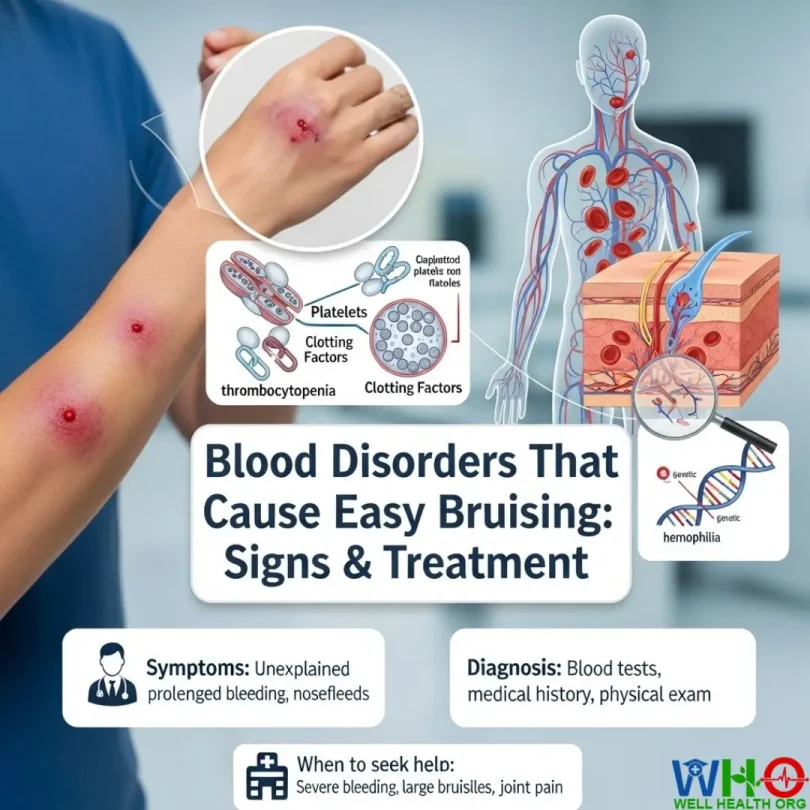
Most of us develop a bruise now and then after bumping into something, tripping, or engaging in physical activity. These small skin discolorations—often purple, blue, or green—are usually harmless and fade on their own within a week or two. But what if bruises keep showing up for no clear reason, last longer than usual, or appear larger and darker than expected?
- Understanding How Blood Disorders Affect Bruising
- Major Blood Disorders That Cause Easy Bruising
- 1. Hemophilia
- 2. Von Willebrand Disease (VWD)
- 3. Thrombocytopenia
- 4. Leukemia
- 5. Rare Clotting Factor Deficiencies
- 6. Platelet Function Disorders
- Recognizing Symptoms Beyond Bruising
- Diagnosis: How Doctors Identify Blood Disorders
- Treatment Options for Blood Disorders Causing Bruising
- When to See a Doctor for Bruising
- Living with a Blood Disorder: Practical Tips
- Conclusion: Protecting Your Health by Understanding Bruising
- Frequently Asked Questions (FAQs)
- 1. Why do I bruise so easily?
- 2. Can low platelets cause frequent bruising?
- 3. How do I know if my bruising is serious?
- 4. What blood tests detect bruising disorders?
- 5. Can blood disorders that cause bruising be cured?
In many cases, unexplained bruising may be a sign of an underlying blood disorder. These conditions affect how your body forms clots, heals injuries, and manages bleeding. If left untreated, some of these disorders can lead to serious complications beyond cosmetic skin changes.
This comprehensive guide explores the connection between bruising and blood disorders, the specific conditions that can cause it, their symptoms, diagnosis, and treatment options. Whether you’re concerned about your own bruising patterns or supporting a loved one, this article will help you understand when to take bruising seriously and seek medical attention.
Understanding How Blood Disorders Affect Bruising
Bruising happens when tiny blood vessels beneath the skin—called capillaries—break due to trauma. Blood leaks into nearby tissues, leading to the familiar discoloration we see on the surface. Normally, the body quickly activates a healing response involving:
- Platelets, which form an initial plug to stop bleeding.
- Clotting factors, proteins that stabilize the clot and help blood solidify.
- Repair mechanisms, which restore the integrity of blood vessels.
When one or more parts of this process malfunction due to a blood disorder, bruises may:
- Appear more easily (from very minor or no injury).
- Cover larger areas of skin.
- Take longer to heal.
- Be accompanied by other bleeding problems, such as frequent nosebleeds, prolonged bleeding from cuts, or heavy menstrual periods.
👉 In short: while occasional bruising is harmless, frequent or unusual bruising can signal deeper issues with your blood’s ability to clot and heal.
Major Blood Disorders That Cause Easy Bruising
Several blood-related conditions are strongly linked to abnormal bruising. Below are the most common ones explained in detail.
1. Hemophilia
Hemophilia is one of the best-known bleeding disorders. It is genetic and caused by a deficiency in specific clotting factors.
- Hemophilia A: Deficiency of clotting factor VIII.
- Hemophilia B: Deficiency of clotting factor IX.
Without these proteins, the body struggles to form stable clots. Even minor injuries can cause large, deep bruises known as hematomas. In severe cases, people may experience spontaneous internal bleeding into muscles or joints, which can be painful and damaging if untreated.
👉 Example: A child with hemophilia may come home from playing with bruises covering their legs after very light contact—bruises that appear far worse than expected for the level of activity.
Treatment usually involves regular infusions of the missing clotting factor, either on demand (to treat active bleeding) or prophylactically (to prevent bleeding episodes).
2. Von Willebrand Disease (VWD)
VWD is the most common inherited bleeding disorder, affecting around 1 in 100 people. It occurs due to a deficiency or dysfunction of von Willebrand factor (vWF), a protein that helps platelets stick together and stabilizes clotting factor VIII.
Key features include:
- Large, persistent bruises after mild injuries.
- Frequent nosebleeds.
- Heavy menstrual periods in women.
- Prolonged bleeding after dental work or surgery.
👉 Example: A woman with undiagnosed VWD may experience both unusually heavy menstrual cycles and frequent unexplained bruises, assuming they’re unrelated—when in fact, both stem from the same disorder.
Treatment depends on severity and may include:
- Desmopressin (DDAVP), a medication that boosts vWF levels.
- Clotting factor replacement therapy.
- Antifibrinolytic drugs to stabilize blood clots.
3. Thrombocytopenia
Thrombocytopenia means having too few platelets. Since platelets are the first responders to blood vessel damage, a shortage makes bruising and bleeding much more likely.
Causes include:
- Autoimmune conditions (immune thrombocytopenic purpura, or ITP).
- Certain medications (like chemotherapy drugs or blood thinners).
- Viral infections (e.g., hepatitis, HIV).
- Bone marrow disorders.
Common signs:
- Tiny red or purple spots on the skin (petechiae).
- Easy bruising from light contact.
- Gum or nose bleeding.
Treatment varies by cause and may include steroids, immunosuppressants, platelet transfusions, or bone marrow treatments.
4. Leukemia
Leukemia, a cancer of the bone marrow and blood, can disrupt normal production of blood cells. This often leads to low platelet counts, impairing clotting.
Bruising may be one of the first warning signs, along with:
- Fatigue.
- Frequent infections.
- Weight loss.
- Night sweats.
👉 Example: A person might notice new, unexplained bruises appearing on their arms and legs, combined with unusual tiredness—early signals that warrant urgent medical testing.
Treatment involves chemotherapy, targeted therapy, or bone marrow transplantation, depending on the type and stage of leukemia.
5. Rare Clotting Factor Deficiencies
Beyond hemophilia, deficiencies in other clotting factors (II, V, VII, X, XI, XIII, and fibrinogen) can also cause excessive bruising and bleeding. These are much rarer but can lead to severe complications if undiagnosed.
Diagnosis often requires specialized blood tests, and treatment typically involves factor replacement therapy or other supportive care.
6. Platelet Function Disorders
Sometimes, the platelet count is normal, but the platelets don’t function properly. Conditions such as:
- Glanzmann thrombasthenia.
- Bernard-Soulier syndrome.
- Gray platelet syndrome.
All interfere with platelet ability to form clots, causing easy bruising and bleeding despite normal lab results.
Recognizing Symptoms Beyond Bruising
Unusual bruising rarely appears in isolation. Additional symptoms often give clues about an underlying blood disorder:
- Frequent or prolonged nosebleeds.
- Bleeding gums after brushing teeth.
- Heavy or irregular menstrual bleeding.
- Fatigue or weakness (possibly linked to anemia).
- Tiny pinpoint spots (petechiae) on the skin.
- Prolonged bleeding from small cuts.
👉 If bruises are large, unusually painful, appearing without injury, or accompanied by the above symptoms, a medical evaluation is essential.
Diagnosis: How Doctors Identify Blood Disorders
Doctors begin with a physical exam and a detailed history of bruising patterns. Key diagnostic tests include:
- Complete Blood Count (CBC): Checks platelet count, red and white blood cells.
- Clotting tests (PT, aPTT): Measure how long it takes blood to clot.
- Bleeding time/platelet function tests: Assess how well platelets work.
- Genetic testing: Identifies inherited conditions like hemophilia or VWD.
- Bone marrow biopsy: Used if leukemia or bone marrow failure is suspected.
Early diagnosis makes a big difference—many patients manage their condition successfully once identified.
Treatment Options for Blood Disorders Causing Bruising
Treatment depends on the specific disorder but generally includes:
- Clotting factor replacement therapy (for hemophilia and rare deficiencies).
- Desmopressin (DDAVP) or clotting stabilizers (for VWD).
- Steroids or immunosuppressants (for autoimmune thrombocytopenia).
- Chemotherapy or bone marrow transplant (for leukemia).
- Platelet transfusions in severe thrombocytopenia or platelet dysfunction.
Supportive measures include avoiding unnecessary trauma, using protective gear during activities, and monitoring for signs of internal bleeding.
When to See a Doctor for Bruising
Seek medical care if you notice:
- Bruises that appear without known injury.
- Large or growing bruises that don’t heal in 2 weeks.
- Bruises accompanied by fatigue, frequent infections, or weight loss.
- Sudden onset of multiple bruises.
- Bruising while on blood-thinning medications.
👉 Don’t ignore persistent or unexplained bruising—it could be your body’s way of signaling a serious condition.
Living with a Blood Disorder: Practical Tips
Managing a chronic blood disorder means making adjustments to daily life:
- Stay on treatment plans prescribed by your doctor.
- Avoid high-risk activities that could cause injury.
- Maintain a balanced diet rich in vitamin K, iron, and antioxidants.
- Inform healthcare providers about your condition before any procedure.
- Seek emotional support—living with a bleeding disorder can be stressful, and support groups can help.
Conclusion: Protecting Your Health by Understanding Bruising
Occasional bruises are part of everyday life. But when bruises are frequent, severe, or unexplained, they may point to an underlying blood disorder that needs attention.
Conditions such as hemophilia, von Willebrand disease, thrombocytopenia, leukemia, and platelet function disorders can all disrupt normal clotting and cause excessive bruising. With modern treatments, however, most people with these disorders can live active, fulfilling lives—especially when diagnosed early.
👉 The key takeaway: Listen to your body. If your bruises seem unusual, don’t dismiss them. A timely medical checkup could make all the difference in protecting your health and preventing serious complications.
Frequently Asked Questions (FAQs)
1. Why do I bruise so easily?
Easy bruising can result from minor factors like aging or certain medications (such as aspirin or blood thinners). However, frequent or unusually large bruises may signal a blood disorder such as hemophilia, von Willebrand disease, thrombocytopenia, or leukemia. If bruises appear without clear injury or take weeks to heal, it’s best to see a doctor.
2. Can low platelets cause frequent bruising?
Yes. Low platelet counts—also known as thrombocytopenia—make it difficult for blood to clot properly. This leads to easy bruising, nosebleeds, gum bleeding, and small red or purple spots (petechiae) on the skin. Depending on severity, treatment may include steroids, transfusions, or other medical interventions.
3. How do I know if my bruising is serious?
Bruising is concerning if:
- It appears without injury.
- Bruises are unusually large or painful.
- They don’t fade within 2 weeks.
- You notice other symptoms like fatigue, frequent infections, or unexplained weight loss.
If any of these apply, seek medical attention promptly to rule out blood disorders or other health problems.
4. What blood tests detect bruising disorders?
Doctors often start with a complete blood count (CBC) to check platelet levels and red/white blood cells. They may also order:
- Coagulation tests (PT, aPTT) to measure clotting times.
- Platelet function tests to see how well platelets work.
- Genetic testing for inherited disorders like hemophilia or von Willebrand disease.
- Bone marrow biopsy if leukemia or marrow failure is suspected.
5. Can blood disorders that cause bruising be cured?
Some blood disorders, like mild thrombocytopenia caused by medication or infection, can resolve completely. Others, such as hemophilia or von Willebrand disease, are lifelong genetic conditions but can be managed effectively with treatments like clotting factor replacement or medications. Leukemia and other cancers may be treated or even cured with chemotherapy, targeted therapy, or bone marrow transplants. Early diagnosis makes a huge difference.
Medically Reviewed by Prof. Dr. Akram
Orthopedic Surgeon | Professor | Senior Medical Specialist
Prof. Dr. Akram is a distinguished surgeon with over 15 years of clinical expertise. Having served as a lead Emergency Specialist at Complex International Government Hospital, he currently leads a specialized team of 13 medical professionals at his private hospital. As a Professor at top medical universities, he ensures that every article on WellHealthOrg.com meets rigorous clinical standards.
Medical Disclaimer:
The information provided is for educational purposes only and is not a substitute for professional medical advice, diagnosis, or treatment. Always consult your physician for any medical concerns.
Our content is rigorously fact-checked by our 13-member Editorial Team under the clinical supervision of Prof. Dr. Akram.







