
For parents and young adults alike, few healthcare decisions feel as important as those involving vaccines. Among them, the HPV vaccine, Gardasil 9, stands out as one of the most powerful preventive tools available today. By protecting against nine types of human papillomavirus (HPV), this vaccine drastically reduces the risk of several cancers, genital warts, and precancerous conditions.
- What is Gardasil 9 and Why Is It Important?
- Gardasil 9 Form and Strength
- Dosage Schedules by Age
- Ages 9–14: Two or Three Doses
- Ages 15–26: Three Doses
- Ages 27–45: Individualized Approach
- How Gardasil 9 is Administered
- Who Should Get Gardasil 9?
- Special Cases
- Benefits of Gardasil 9
- Side Effects and Safety
- Common Side Effects
- Rare but Serious Side Effects
- Who Should Avoid Gardasil 9?
- Special Considerations
- Timing and Effectiveness
- What If You Miss a Dose?
- Talking to Your Healthcare Provider
- Maximizing HPV Protection Beyond the Vaccine
- Key Takeaways
- FAQs About Gardasil 9 Dosage
- Final Thoughts
Yet, despite its importance, many people have questions. How many doses are needed? At what age should it be given? What happens if a dose is missed? And how safe is it?
This article serves as your comprehensive, expert-informed guide to Gardasil 9 dosage, form, strength, and timing. Whether you are a parent planning vaccination for your child or an adult considering protection for yourself, this breakdown will give you the clarity and confidence you need.
What is Gardasil 9 and Why Is It Important?
Gardasil 9 is an FDA-approved vaccine designed to protect against nine strains of HPV. These strains are responsible for the majority of HPV-related cancers and diseases, including:
- Cervical cancer – One of the most common cancers in women worldwide.
- Other genital cancers – Affecting the vulva, vagina, penis, and anus.
- Head and neck cancers – Including oropharyngeal cancer, now one of the fastest-growing HPV-related cancers in men.
- Genital warts – Though not life-threatening, they cause significant discomfort and emotional stress.
- Precancerous changes – Such as cervical dysplasia, which can progress to cancer if untreated.
Unlike treatments that only address HPV-related disease after it develops, Gardasil 9 offers prevention. It works by training the immune system to recognize and fight HPV before infection occurs.
The vaccine is approved for children, teens, and adults ages 9 to 45, making it a versatile protection tool across different stages of life.
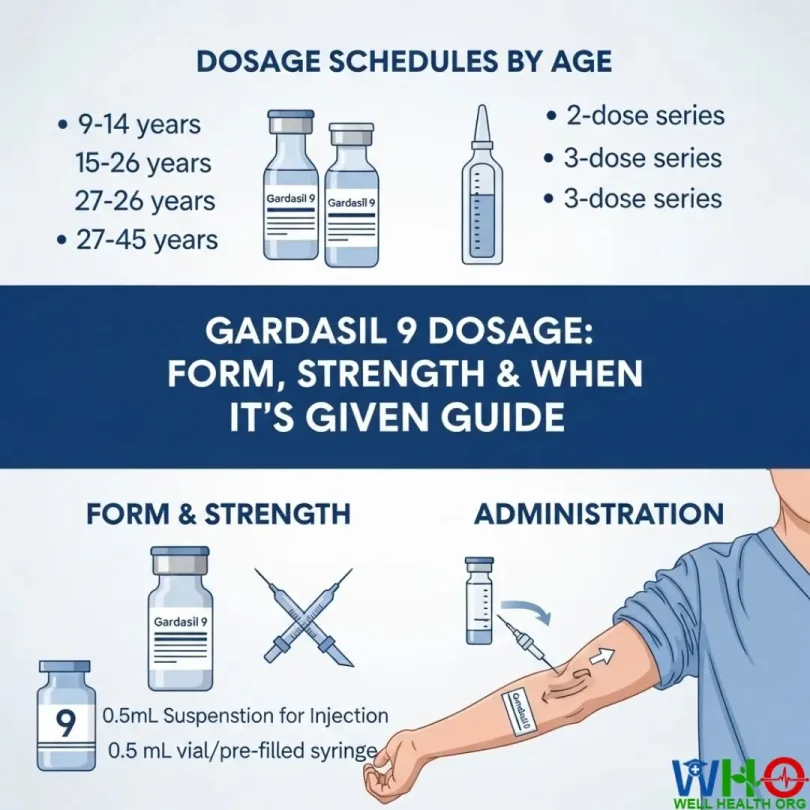
Gardasil 9 Form and Strength
One of the most practical questions parents and patients ask is: What does the vaccine look like, and how is it given?
- Form: Gardasil 9 is supplied as a liquid suspension ready for intramuscular injection.
- Packaging: It comes in single-dose vials or prefilled syringes for convenience and safety.
- Strength: Each dose is standardized at 0.5 mL, regardless of age, weight, or gender.
This consistency simplifies administration for healthcare professionals. Unlike some medications that require weight-based dosing, Gardasil 9’s formulation is universal.
⚠️ Important: Gardasil 9 cannot be self-administered. It must be given by a qualified healthcare provider—doctor, nurse, or trained pharmacist—because proper injection technique and monitoring are essential for safety.
Dosage Schedules by Age
The correct dosing schedule for Gardasil 9 depends on the age at which vaccination begins. This is because younger immune systems often respond more robustly, allowing for fewer doses.
Ages 9–14: Two or Three Doses
For children and adolescents aged 9–14, there are two possible schedules:
- Two-dose schedule (preferred for healthy children):
- First dose: Day 0
- Second dose: 6–12 months later
- Three-dose schedule (used if immune-compromised or other factors apply):
- First dose: Day 0
- Second dose: 2 months after first dose
- Third dose: 6 months after first dose
Healthcare providers decide which schedule is best based on the child’s health status and immune system strength.
Ages 15–26: Three Doses
For teens and young adults starting the series at age 15 or older, the three-dose schedule is required:
- First dose: Day 0
- Second dose: 2 months later
- Third dose: 6 months after the first dose
This ensures that older immune systems, which may not respond as strongly as those of children, receive full protection.
Ages 27–45: Individualized Approach
For adults between 27 and 45 years old, Gardasil 9 is not routinely recommended but can still be beneficial.
- The CDC advises that vaccination in this age group should be decided jointly with a healthcare provider, based on lifestyle and risk factors.
- The same three-dose schedule is used if vaccination is pursued.
How Gardasil 9 is Administered
Gardasil 9 is given as an intramuscular (IM) injection.
- Injection site: Typically, the deltoid muscle of the upper arm. For young children, the upper outer thigh may be used.
- Process:
- Pre-injection check: Medical history and allergies are reviewed.
- Injection: Delivered deep into the muscle using sterile technique.
- Post-vaccination monitoring: Patients remain under observation for 15 minutes to watch for fainting or allergic reactions.
💡 Tip for parents: If your child is nervous about shots, deep breathing techniques, distraction (like videos), or topical numbing creams can ease the process.
Who Should Get Gardasil 9?
The CDC recommendations are clear:
- Routine vaccination at ages 11–12 (can start as early as 9).
- Catch-up vaccination up to age 26 if not previously vaccinated.
- Adults ages 27–45: Consider after discussion with a healthcare provider.
Special Cases
- Immunocompromised individuals (such as those with HIV): Require three doses, regardless of age.
- Previously exposed individuals: Even if someone has had HPV or an HPV-related condition, Gardasil 9 can still provide protection against other strains.
Benefits of Gardasil 9
The impact of Gardasil 9 cannot be overstated. Its benefits include:
- Cancer prevention – Reduces risk of multiple HPV-related cancers.
- Genital wart prevention – Protects against strains that cause the majority of cases.
- Precancer prevention – Stops cervical dysplasia and other precancerous changes before they progress.
- Broad coverage – Protects against nine strains, making it the most comprehensive HPV vaccine available.
Protection begins after the first dose, but maximum immunity is only achieved when all doses are completed.
Side Effects and Safety
Like all vaccines, Gardasil 9 can cause side effects. Fortunately, most are mild and temporary.
Common Side Effects
- Pain, redness, or swelling at injection site
- Headache or mild fever
- Fatigue or nausea
- Dizziness or fainting (especially in adolescents)
Rare but Serious Side Effects
- Severe allergic reaction (anaphylaxis) – extremely rare
- Swelling of face/throat, difficulty breathing, or severe hives require emergency medical attention
Who Should Avoid Gardasil 9?
- People allergic to yeast or vaccine ingredients
- Anyone who had a severe allergic reaction to a previous HPV vaccine dose
- People with moderate/severe illness should wait until recovery
Special Considerations
- Pregnancy: Vaccination is typically delayed until after pregnancy.
- Bleeding disorders: Inform your provider, as extra precautions may be needed.
Timing and Effectiveness
Understanding when Gardasil 9 becomes effective helps set realistic expectations.
- After the first dose, the body begins producing antibodies.
- By one month after completing the full series, most people have strong immunity to all nine HPV strains.
- Long-term protection: Studies show the vaccine remains highly effective for at least 10+ years, with no sign of waning protection.
What If You Miss a Dose?
Life gets busy, and missed doses happen. The good news is:
- No need to restart the series.
- The next dose should be given as soon as possible.
- Your provider will adjust the schedule depending on how much time has passed.
💡 Pro tip: Book all vaccine appointments in advance and set digital reminders to stay on track.
Talking to Your Healthcare Provider
Before vaccination, it’s wise to have an open discussion with your provider. Key points to cover include:
- Past allergic reactions
- Current medications (especially those affecting immunity)
- Existing health conditions
- Previous HPV infections or abnormal Pap test results
Your provider can personalize the vaccination plan, ensuring it aligns with your health history and needs.
Maximizing HPV Protection Beyond the Vaccine
While Gardasil 9 is highly effective, it should be part of a broader prevention strategy.
- Routine screenings: Pap smears and HPV testing for women remain critical.
- Safe practices: Condom use reduces HPV transmission but doesn’t eliminate it completely.
- Healthy lifestyle: A strong immune system helps fight infections naturally.
Key Takeaways
- Form & Strength: Gardasil 9 is a 0.5 mL intramuscular injection.
- Dosage: Two doses for ages 9–14 (in some cases three), three doses for 15–45.
- Effectiveness: Strongest when all doses are completed before HPV exposure.
- Safety: Generally well tolerated, with most side effects being mild.
- Prevention power: Protects against nine HPV types responsible for most HPV-related cancers and genital warts.
FAQs About Gardasil 9 Dosage
1. Can boys receive Gardasil 9?
Yes. HPV affects all genders, and Gardasil 9 protects both boys and girls against cancer and genital warts.
2. Is Gardasil 9 effective if I’ve already been exposed to HPV?
Yes. Even if exposed to one type, the vaccine protects against the others.
3. How long does Gardasil 9 protection last?
Current evidence shows protection for at least 10+ years, with no booster currently needed.
4. Can Gardasil 9 be given with other vaccines?
Yes, it can often be administered alongside other adolescent vaccines. Your provider will guide you.
5. Is Gardasil 9 required, or optional?
It is strongly recommended but not legally mandated in most places. Many schools and healthcare systems advocate for routine HPV vaccination.
Final Thoughts
Gardasil 9 is not just another vaccine—it is a lifesaving prevention strategy against some of the most common and dangerous cancers worldwide. By following the correct dosage schedule, completing all doses, and consulting your healthcare provider, you can ensure maximum protection for yourself or your child.
Taking this step today means investing in a healthier, safer future.
Medically Reviewed by Prof. Dr. Akram
Orthopedic Surgeon | Professor | Senior Medical Specialist
Prof. Dr. Akram is a distinguished surgeon with over 15 years of clinical expertise. Having served as a lead Emergency Specialist at Complex International Government Hospital, he currently leads a specialized team of 13 medical professionals at his private hospital. As a Professor at top medical universities, he ensures that every article on WellHealthOrg.com meets rigorous clinical standards.
Medical Disclaimer:
The information provided is for educational purposes only and is not a substitute for professional medical advice, diagnosis, or treatment. Always consult your physician for any medical concerns.
Our content is rigorously fact-checked by our 13-member Editorial Team under the clinical supervision of Prof. Dr. Akram.







