Your smile is often the first thing people notice about you. It is a universal language, a sign of warmth, and a key feature of your facial expression. However, for many of us, that confidence takes a hit when we look in the mirror and notice that our lips have lost their natural, vibrant color. Instead of the soft pink or rosy hue we remember, we see a darker, duller, or more pigmented tone staring back.
- Part 1: Understanding the Anatomy of Your Lips
- The Vermilion Border
- No Sweat, No Oil
- Hyperpigmentation: The Core Issue
- Part 2: The Root Causes – Why Did My Lips Get Dark?
- 1. The Sun: The Silent Culprit
- 2. Dehydration and Caffeine
- 3. Smoker’s Melanosis
- 4. “Lip Licking” Dermatitis
- 5. Cosmetic Choices
- 6. Medical Factors
- Part 3: 16 Effective Home Remedies to Lighten Dark Lips
- 1. Lemon Juice (The Vitamin C Powerhouse)
- 2. Lemon and Sugar Scrub (The Dual-Action Polisher)
- 3. Lime, Honey, and Glycerin (The Conditioning Mask)
- 4. Turmeric Paste (The Ancient Brightener)
- 5. Aloe Vera (The Soothing Gel)
- 6. Pomegranate Extract (The Antioxidant Bomb)
- 7. Coconut Oil (The Lipid Barrier Repair)
- 8. Rose Water and Honey (The Delicate Balancer)
- 9. Olive Oil (The Vitamin E Boost)
- 10. Cucumber Juice (The Cool Hydrator)
- 11. Strawberry and Baking Soda Paste (The Berry Peel)
- 12. Almond Paste (The Rich Exfoliant)
- 13. Almond Oil (The Squalene Source)
- 14. Sugar and Butter Scrub (The Kitchen Staple)
- 15. Mustard Oil (The Circulation Booster)
- 16. Beetroot Paste (The Natural Stain)
- Part 4: A Holistic Lip Care Routine
- Morning Routine
- Evening Routine
- Part 5: Lifestyle Changes for Long-Term Prevention
- Hydration from Within
- Dietary Adjustments
- Quit the Habits
- Check Your Toothpaste
- Part 6: When is it Time to See a Doctor?
- Conclusion: Embrace the Journey to Healthier Lips
- Frequently Asked Questions (FAQs)
If you have found yourself constantly reaching for opaque lipsticks to hide this discoloration or feeling self-conscious when you are bare-faced, you are not alone. Darkening of the lips is an incredibly common concern that affects men and women of all ages. While it is rarely a sign of a medical emergency, it can be frustrating and confusing. Why is this happening? Is it something you ate? The sun? Or just bad luck?
The good news is that restoring your lips to their natural glory does not always require expensive laser treatments or harsh chemical peels. Nature provides us with a treasure trove of ingredients—many of which are likely sitting in your kitchen right now—that can gently exfoliate, brighten, and nourish the delicate skin of your lips.
This comprehensive guide is designed to be your go-to resource. We will peel back the layers (pun intended) of lip anatomy to understand why discoloration happens, dive deep into 16 proven natural remedies, and establish a lifestyle routine that ensures your results last.
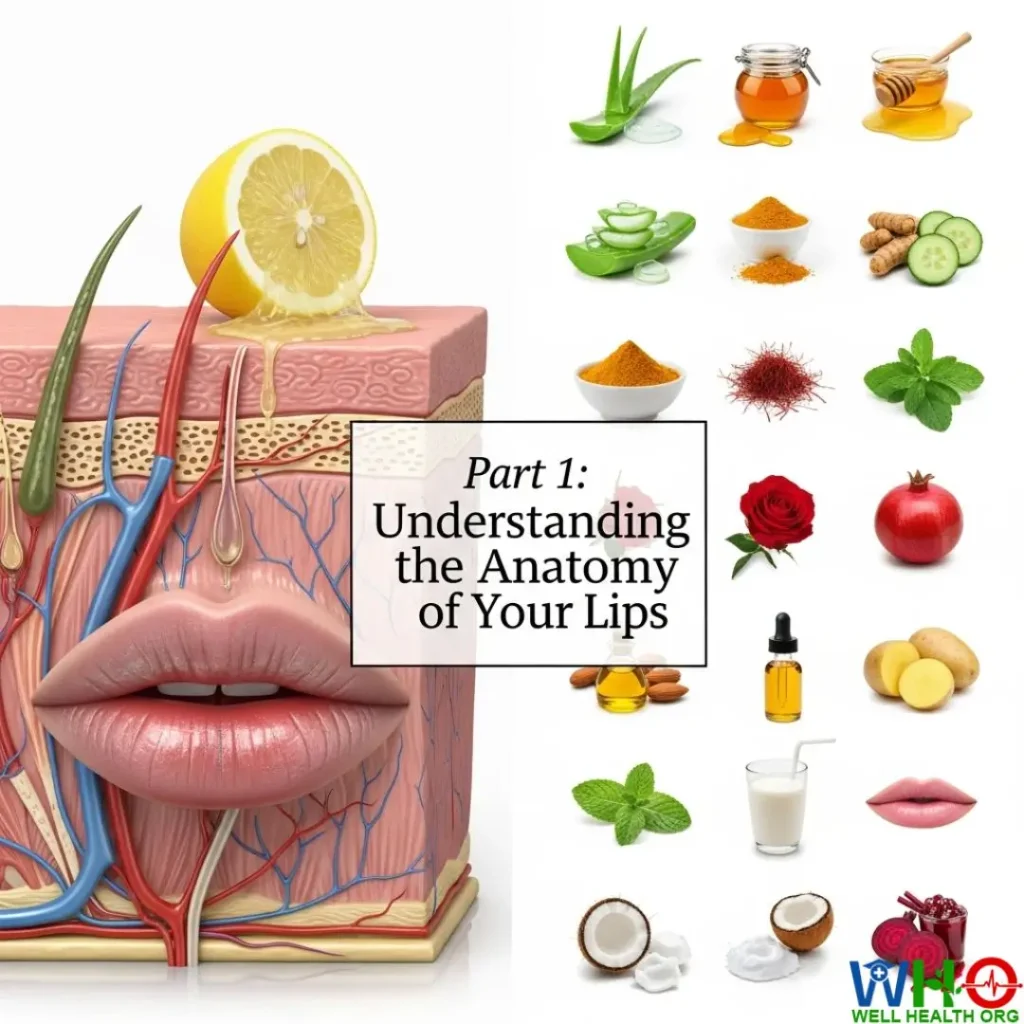
Part 1: Understanding the Anatomy of Your Lips
To treat the problem effectively, we must first understand the canvas we are working on. The skin on your lips is fundamentally different from the skin on the rest of your face.
The Vermilion Border
The skin on your face is composed of up to 16 cellular layers. Your lips, however, are covered by a much thinner layer of skin—typically only 3 to 5 layers deep. This is why the blood vessels underneath are more visible, giving healthy lips their characteristic pink or red color. When this thin skin is damaged or pigmented, the change is immediately noticeable.
No Sweat, No Oil
Unlike your cheeks or forehead, your lips do not have sebaceous (oil) glands or sweat glands. This means they cannot produce their own moisture or protective oils. They are entirely dependent on you for hydration. When they dry out, they are prone to cracking and peeling. In response to this chronic dryness and inflammation, the skin protects itself by thickening and producing more melanin, leading to—you guessed it—darker lips.
Hyperpigmentation: The Core Issue
Dark lips are usually a result of hyperpigmentation. This is a harmless condition where melanocytes (the cells that produce color) go into overdrive and produce excess melanin. This melanin forms deposits in the lip tissue, turning them brown, grey, or black.
Part 2: The Root Causes – Why Did My Lips Get Dark?
Identifying the trigger is half the battle. If you treat the symptom without removing the cause, the darkness will keep coming back.
1. The Sun: The Silent Culprit
We religiously apply SPF to our faces, but we often lick it off our lips or forget to apply it there entirely. The skin on your lips has very little natural melanin to protect it from UV rays. Chronic sun exposure causes the melanocytes to panic and produce pigment as a shield. This is often why the lower lip, which faces the sun more directly, is darker than the upper lip.
2. Dehydration and Caffeine
Think of a grape versus a raisin. A hydrated cell is plump and reflects light (looking pink). A dehydrated cell shrivels and looks dark. Excessive consumption of caffeine (coffee, tea, energy drinks) acts as a diuretic, stripping your body of water. If you aren’t compensating with enough water, your lips are the first place to show it.
3. Smoker’s Melanosis
Smoking is one of the fastest ways to darken lips. It acts as a double-edged sword:
- Heat: The physical heat from the cigarette creates thermal damage to the skin.
- Chemicals: Nicotine and tar narrow the blood vessels (vasoconstriction), reducing blood flow and oxygen to the lips, which leads to a bluish or greyish tint. Over time, this becomes permanent pigmentation known as “Smoker’s Melanosis.”
4. “Lip Licking” Dermatitis
It is a natural reflex: your lips feel dry, so you lick them. However, saliva contains digestive enzymes (like amylase) meant to break down food. When these enzymes sit on your sensitive lip skin, they break down the skin barrier, causing inflammation. As the inflammation heals, it leaves behind dark spots (post-inflammatory hyperpigmentation).
5. Cosmetic Choices
Not all lipsticks are created equal. Some long-wear matte lipsticks can be incredibly drying. Furthermore, cheap or expired cosmetics may contain low-quality dyes or even trace heavy metals that react with your skin, causing staining over time.
6. Medical Factors
Sometimes, your lips are a window into your internal health.
- Anemia: A lack of iron can make lips look pale or grayish.
- Vitamin Deficiencies: A lack of B12 can lead to spotty pigmentation.
- Melasma: Often occurring during pregnancy or while taking birth control, this hormonal condition causes brown patches on the upper lip.
- Medications: Chemotherapy drugs and certain antibiotics can cause darkening as a side effect.
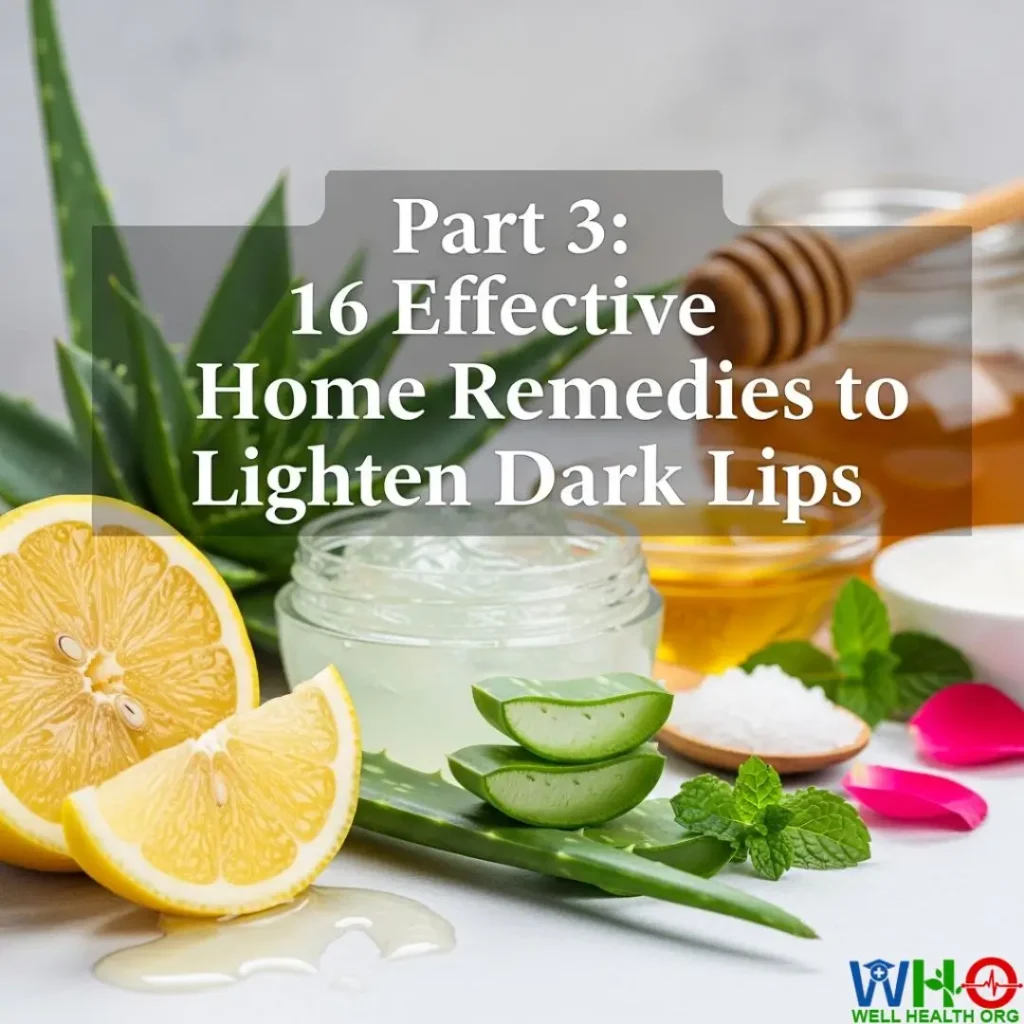
Part 3: 16 Effective Home Remedies to Lighten Dark Lips
Now that we understand the “why,” let’s look at the “how.” These 16 remedies are categorized by their function: exfoliation, hydration, and active lightening.
Note: Natural remedies take time. The skin cycle takes about 28 days, so consistency is key. Always do a patch test on your arm to ensure you aren’t allergic to any ingredients.
1. Lemon Juice (The Vitamin C Powerhouse)
Lemon is the gold standard for natural brightening. It is rich in Vitamin C, which is a potent antioxidant that inhibits tyrosinase (the enzyme that helps produce melanin). It also contains citric acid, an Alpha Hydroxy Acid (AHA) that chemically exfoliates the top layer of dead skin.
- The Ritual: Before bed, cut a fresh lemon wedge. Gently massage the juicy part over your lips for 60 seconds. Let the juice sit overnight.
- The Morning After: Rinse with cool water and immediately apply a hydrating lip balm, as lemon can be drying.
- Pro Tip: Do not do this if your lips are cracked or bleeding—it will sting intensely!
2. Lemon and Sugar Scrub (The Dual-Action Polisher)
While lemon treats the pigment chemically, sugar treats the texture physically. Sugar granules are small and gentle enough to slough off the dead, dark skin cells sitting on the surface, allowing the lemon juice to penetrate deeper.
- The Ritual: Mix one teaspoon of sugar with enough lemon juice to make a gritty paste. Rub this onto your lips in small circular motions for two minutes.
- Frequency: Do this only 2-3 times a week to avoid over-exfoliation.
3. Lime, Honey, and Glycerin (The Conditioning Mask)
Limes are arguably even more acidic than lemons, making them powerful lighteners. However, to prevent irritation, we buffer them with honey (a natural humectant that draws moisture in) and glycerin (which seals moisture).
- The Ritual: In a small jar, mix 1.5 teaspoons of lime juice, 1 teaspoon of honey, and 1 teaspoon of glycerin. Stir until well combined.
- Application: Apply a thick layer before sleep. This acts as an overnight sleeping mask for your lips.
- Why it works: The lime brightens, while the honey and glycerin repair the moisture barrier.
4. Turmeric Paste (The Ancient Brightener)
Turmeric contains curcumin, a compound that has been used in Ayurveda for centuries to treat hyperpigmentation. It helps regulate melanin production and provides anti-inflammatory benefits.
- The Ritual: Mix a pinch of organic turmeric powder with a teaspoon of cold milk (the lactic acid in milk boosts the effect).
- Application: Apply the yellow paste to your lips. Let it dry for 5-10 minutes.
- Warning: Turmeric stains everything bright yellow. Use an old washcloth to remove it, and be prepared for a slight yellow tint on your lips for an hour or so (which can be washed off).
5. Aloe Vera (The Soothing Gel)
If your dark lips are caused by sun damage or irritation, Aloe Vera is your best friend. It contains a flavonoid called aloesin, which has been shown to inhibit the pigmentation process. It is also incredibly hydrating.
- The Ritual: Ideally, cut a leaf from a live plant and scrape out the fresh gel. Apply a generous layer to your lips and leave it on until it dries.
- Frequency: You can do this multiple times a day. It’s gentle, cooling, and leaves no sticky residue.
6. Pomegranate Extract (The Antioxidant Bomb)
Pomegranates are loaded with polyphenols and antioxidants. They not only help lighten pigmentation but also protect the lips from further free radical damage. The red juice also provides a lovely natural stain.
- The Ritual: Crush about a tablespoon of pomegranate seeds to extract the juice and pulp. Mix with a little rose water and fresh heavy cream (for fats).
- Massage: Rub this lush mixture onto your lips for 3 minutes.
- The Result: Immediate hydration and a subtle rosy tint, with long-term lightening effects.
7. Coconut Oil (The Lipid Barrier Repair)
Coconut oil is primarily composed of medium-chain fatty acids, specifically lauric acid. It penetrates the skin barrier easily, providing deep hydration. While it doesn’t “bleach” the skin, it heals the dryness that makes lips look dark and dull.
- The Ritual: Keep a small pot of virgin coconut oil on your nightstand. Apply it as the last step in your skincare routine every night.
- Bonus: It’s naturally anti-bacterial and anti-fungal.
8. Rose Water and Honey (The Delicate Balancer)
Rose water is a gentle astringent that helps balance the skin’s pH and adds a pinkish glow. Honey is antibacterial and healing.
- The Ritual: Mix two drops of pure rose water with six drops of honey.
- Application: Apply this sticky serum to your lips 3-4 times a day. It tastes great and keeps your lips looking glossy and healthy while it works.
9. Olive Oil (The Vitamin E Boost)
Olive oil is packed with Vitamin E and Vitamin A. Vitamin E is crucial for skin repair and helps protect against UV damage.
- The Ritual: Before bed, take a drop of extra virgin olive oil and massage it into your lips.
- Why Massage? The act of massaging increases blood
10. Cucumber Juice (The Cool Hydrator)
Cucumber is mostly water, but it also contains silica and antioxidants that rejuvenate skin. It is a mild bleaching agent (often used for dark circles under eyes) and works similarly on lips.
- The Ritual: Grate a cucumber or blend it to get the juice. Chill it in the fridge. Soak a cotton pad in the cold juice and place it over your lips for 15-20 minutes.
- Sensation: This is incredibly soothing, especially after a day in the sun.
11. Strawberry and Baking Soda Paste (The Berry Peel)
Strawberries are rich in salicylic acid (a BHA used to clear skin) and Vitamin C. Baking soda provides a pH-balancing exfoliation.
- The Ritual: Mash a ripe strawberry into a pulp and mix with a teaspoon of baking soda.
- Application: Apply gently—do not scrub hard, as baking soda is abrasive. Leave for 2 minutes and rinse.
- Effect: The salicylic acid helps dissolve dead skin, revealing the fresh, pink skin underneath.
12. Almond Paste (The Rich Exfoliant)
Almonds are a source of Vitamin E, fats, and gentle abrasion. When mixed with cream, they create a luxurious scrub that moisturizes as it exfoliates.
- The Ritual: Soak almonds overnight, peel them, and grind them into a powder. Mix with heavy cream or milk cream.
- Application: Massage onto lips. The fats in the cream combat the dryness often associated with lightening treatments.
13. Almond Oil (The Squalene Source)
If the paste is too messy, almond oil is a great alternative. It helps sclerosis (hardening of tissues) and brightens the complexion.
- The Ritual: Use sweet almond oil daily as a lip balm. It is lighter than coconut oil and absorbs quickly, making it good for daytime use.
14. Sugar and Butter Scrub (The Kitchen Staple)
This is the most accessible remedy on the list. Butter contains fatty acids that nourish, while sugar exfoliates.
- The Ritual: Mix a pinch of sugar into a small pat of room-temperature butter.
- Massage: Rub vigorously (but carefully) on the lips to stimulate blood flow.
- Result: The butter leaves a protective layer on the lips that prevents moisture loss.
15. Mustard Oil (The Circulation Booster)
A traditional remedy in many cultures, mustard oil is known to be slightly irritating—in a good way. It stimulates blood flow vigorously.
- The Ritual: Apply a single drop. You may feel a slight tingling sensation.
- Warning: Mustard oil is strong. If you have sensitive skin, dilute it with coconut oil first. Do not use on cracked lips.
16. Beetroot Paste (The Natural Stain)
Beetroot doesn’t just treat the lips; it creates an immediate cosmetic improvement. The natural betalain pigments stain the lips a deep pink/red, masking darkness while the antioxidants work on long-term health.
- The Ritual: Slice a raw beetroot and store it in the fridge. Rub a cold slice on your lips for 5 minutes while you watch TV.
- Alternative: Grate it, mix with honey, and apply as a mask.
- The Look: It gives a “just bitten” look that lasts for hours.
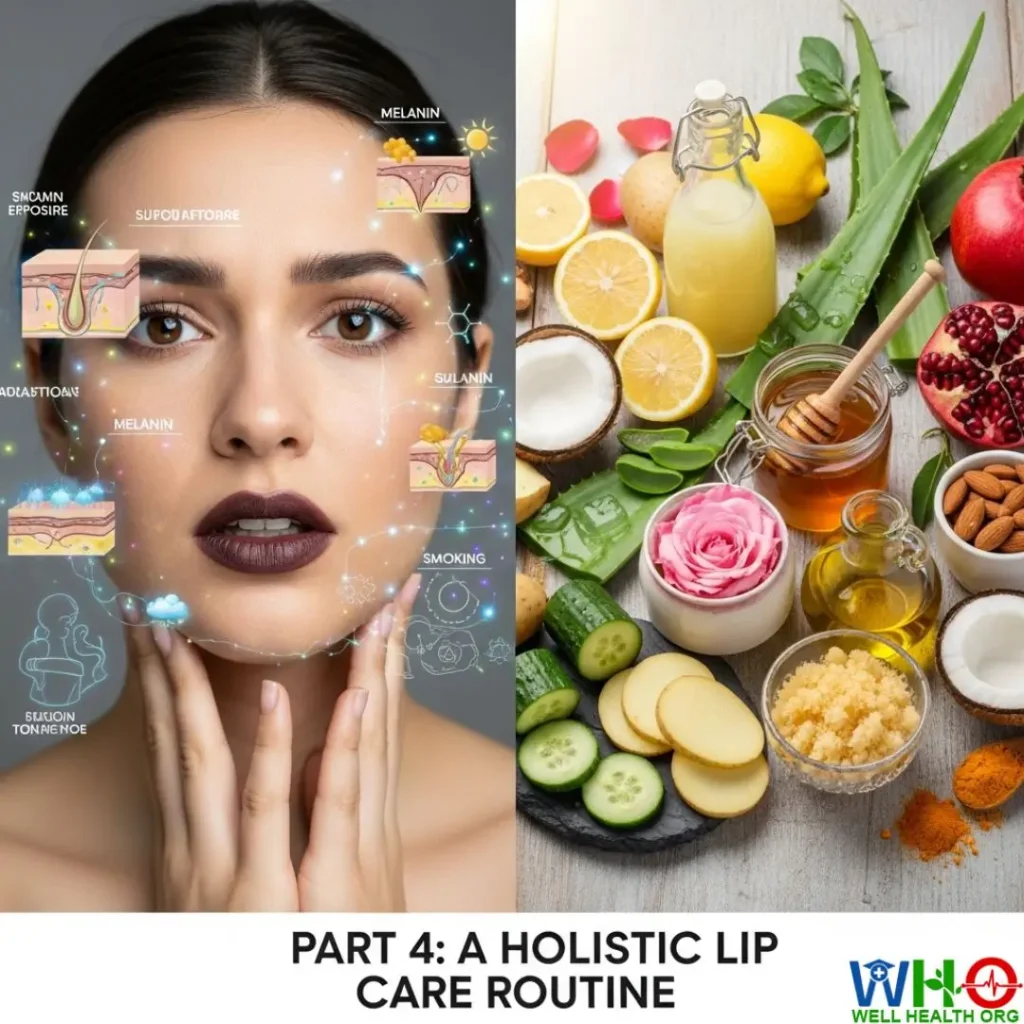
Part 4: A Holistic Lip Care Routine
Using a remedy once a month won’t change much. You need a routine. Here is a suggested daily schedule to maximize your results.
Morning Routine
- Cleanse: When washing your face, gently wash your lips to remove saliva and night creams.
- Hydrate: Apply a thin layer of almond oil or a hyaluronic acid serum.
- Protect: (Crucial Step) Apply a lip balm with at least SPF 30. Reapply after eating or drinking.
Evening Routine
- Remove: Ensure all lipstick is removed. Use an oil-based cleanser to melt away long-wear formulas without rubbing.
- Exfoliate (2x week): Use the sugar/lemon or strawberry scrub.
- Treat: Apply the turmeric, cucumber, or aloe vera mask for 15 minutes.
- Seal: Finish with a heavy layer of coconut oil, ghee, or a thick lip sleeping mask to lock in moisture overnight.
Part 5: Lifestyle Changes for Long-Term Prevention
You are scrubbing and moisturizing, but are your habits sabotaging you?
Hydration from Within
You cannot moisturize your way out of systemic dehydration. If your urine is dark yellow, your lips will be dark too. Aim for at least 8 glasses of water a day. If you drink coffee, add an extra glass of water for every cup to counteract the diuretic effect.
Dietary Adjustments
- Eat the Rainbow: Fruits and vegetables high in Vitamin C (oranges, kiwi, berries) help your body manage melanin production.
- Iron-Rich Foods: Spinach, lentils, and red meat prevent anemia, keeping the blood supplying your lips rich and red.
- Healthy Fats: Avocados, nuts, and fish oil supplements keep your cell membranes (including lip skin) bouncy and hydrated.
Quit the Habits
- Smoking: If you smoke, lightening remedies will be fighting a losing battle. The constant heat and toxin exposure will re-darken the lips immediately.
- Lip Licking: Catch yourself doing it. Keep a lip balm in your pocket, on your desk, and in your car. When you feel the urge to lick, apply balm instead.
Check Your Toothpaste
Some people are allergic to the flavoring agents (cinnamates) or fluoride in toothpaste, causing a condition called contact cheilitis. If your lips are constantly irritated and dark, try switching to a natural, SLS-free toothpaste for a month to see if it helps.
Part 6: When is it Time to See a Doctor?
While most dark lips are cosmetic, some changes warrant medical attention. You should book an appointment with a dermatologist or general practitioner if:
- Sudden Onset: If your lips turn dark overnight or over a few days, rather than gradually over years.
- ** irregular Borders:** If you have a dark spot that is growing, has an irregular shape, or is multiple colors (black, brown, and red mixed). This could be a sign of melanoma (skin cancer).
- Pain or Itching: Hyperpigmentation shouldn’t hurt. If your lips burn, itch, or bleed, you may have an infection or an allergic reaction.
- Systemic Symptoms: If the dark lips are accompanied by fatigue, dizziness, or darkening of other skin areas (like gums or elbows), it could indicate hormonal issues like Addison’s disease.
Conclusion: Embrace the Journey to Healthier Lips
Reclaiming the natural color of your lips is a journey of self-care. It requires patience, consistency, and a little bit of love. By understanding the root causes—be it the sun, smoking, or dehydration—and treating your lips with the gentle, nourishing power of nature, you can reverse the damage.
Start with one or two remedies from this list that appeal to you. Maybe it’s the refreshing ritual of the cucumber slice or the nightly luxury of almond oil. Combine that with aggressive sun protection and proper hydration. Over time, you won’t just see a change in color; you’ll feel a difference in texture. Your lips will be softer, smoother, and healthier.
Remember, the goal isn’t to achieve an artificial standard of perfection, but to restore your skin to its healthiest, most vibrant state. So, pour yourself a glass of water, grab a lemon or some honey, and give your lips the pampering they deserve.
Frequently Asked Questions (FAQs)
Q: Can I use whitening creams meant for the face on my lips?
A: Generally, no. Most facial whitening creams contain hydroquinone or high-strength retinoids that are safe for facial skin but can be dangerous if ingested. Since anything on your lips eventually gets eaten, stick to food-safe, natural remedies or products specifically formulated for lips.
Q: How long does it take to see results?
A: Natural remedies are not instant magic. Depending on the depth of the pigmentation, you can expect to see minor improvements in 2-3 weeks, with significant results appearing after 2-3 months of consistent use.
Q: Is lip darkening permanent?
A: In most lifestyle-induced cases (sun, smoking, licking), it is reversible. However, if the darkening is genetic or caused by certain medical conditions, it may be stubborn. In such cases, the goal is management and prevention of further darkening rather than total reversal.
Q: Does beet juice actually lighten lips or just stain them?
A: It does both! The immediate effect is a stain (which looks great), but beetroot is also rich in Vitamin C and antioxidants that help reduce melanin over time. It’s a great “fake it ’til you make it” remedy.
Q: Why are the corners of my lips dark?
A: Dark corners can be caused by drooling in your sleep (saliva pooling), fungal infections (Angular Cheilitis), or vitamin B deficiency. If the corners are cracked and painful, see a doctor, as you might need an antifungal cream rather than a lightening scrub.
Medically Reviewed by Prof. Dr. Akram
Orthopedic Surgeon | Professor | Senior Medical Specialist
Prof. Dr. Akram is a distinguished surgeon with over 15 years of clinical expertise. Having served as a lead Emergency Specialist at Complex International Government Hospital, he currently leads a specialized team of 13 medical professionals at his private hospital. As a Professor at top medical universities, he ensures that every article on WellHealthOrg.com meets rigorous clinical standards.
Medical Disclaimer:
The information provided is for educational purposes only and is not a substitute for professional medical advice, diagnosis, or treatment. Always consult your physician for any medical concerns.
Our content is rigorously fact-checked by our 13-member Editorial Team under the clinical supervision of Prof. Dr. Akram.