
Imagine waking up in the morning, taking a deep breath, and feeling the air flow effortlessly through your nose, filling your lungs with crisp, clean oxygen. No pressure behind the eyes, no dull ache in the cheekbones, and no frantic search for the nearest tissue box. For millions of people suffering from chronic sinusitis, this simple act of breathing feels like a distant dream.
- Part 1: The Ayurvedic Anatomy of Sinusitis
- The Root Cause: Agni and Ama
- Part 2: Decoding Your “Sinus Personality” (The Doshas)
- 1. Vata-Type Sinusitis (The Dry Congestion)
- 2. Pitta-Type Sinusitis (The Inflamed Congestion)
- 3. Kapha-Type Sinusitis (The Classic Blockage)
- Part 3: The “Golden Trio” of Ayurvedic Sinus Therapies
- 1. Nasya Karma: The Gateway to the Brain
- 2. Jala Neti: The Saline Wash
- 3. Gandusha (Oil Pulling)
- Part 4: Food as Medicine – The Anti-Sinusitis Diet
- The “No-Go” List (Mucus Generators)
- The “Must-Eat” List (Mucus Busters)
- The Concept of Viruddha Ahara (Incompatible Foods)
- Part 5: Herbal Allies from the Ayurvedic Pharmacy
- 1. Tulsi (Holy Basil)
- 2. Ginger (The Universal Medicine)
- 3. Ashwagandha
- 4. Triphala
- Part 6: Yoga and Pranayama for Respiratory Health
- Asanas (Postures)
- Pranayama (Breathwork)
- Part 7: Dinacharya – The Daily Routine for Sinus Prevention
- Morning Rituals
- Evening Rituals
- Part 8: The Emotional Connection
- Conclusion: Your Path to Clear Breathing
We live in a world of quick fixes. When the “concrete block” feeling settles into our forehead, our instinct is to reach for antihistamines, decongestant sprays, or antibiotics. While these modern interventions can provide temporary relief, they often act as a Band-Aid, masking the symptoms while the underlying fire of inflammation continues to smolder. Worse yet, the rebound effect of overuse can leave the delicate nasal membranes drier and more irritated than before.
Enter Ayurveda. Known as the “Science of Life,” this 5,000-year-old medical system from India offers a radically different perspective. Ayurveda does not view sinusitis as merely a localized infection of the nose. Instead, it sees sinus congestion as a red flag waving from your body’s internal systems, signaling that your digestion, immunity, and elemental energies are out of alignment.
This is not just a list of home remedies; it is a deep dive into a holistic lifestyle overhaul. In this comprehensive guide, we will explore the root causes of sinusitis through the lens of Ayurvedic wisdom, decode your specific “sinus personality,” and provide a robust, actionable toolkit of therapies, dietary changes, and daily rituals to help you breathe freely again.
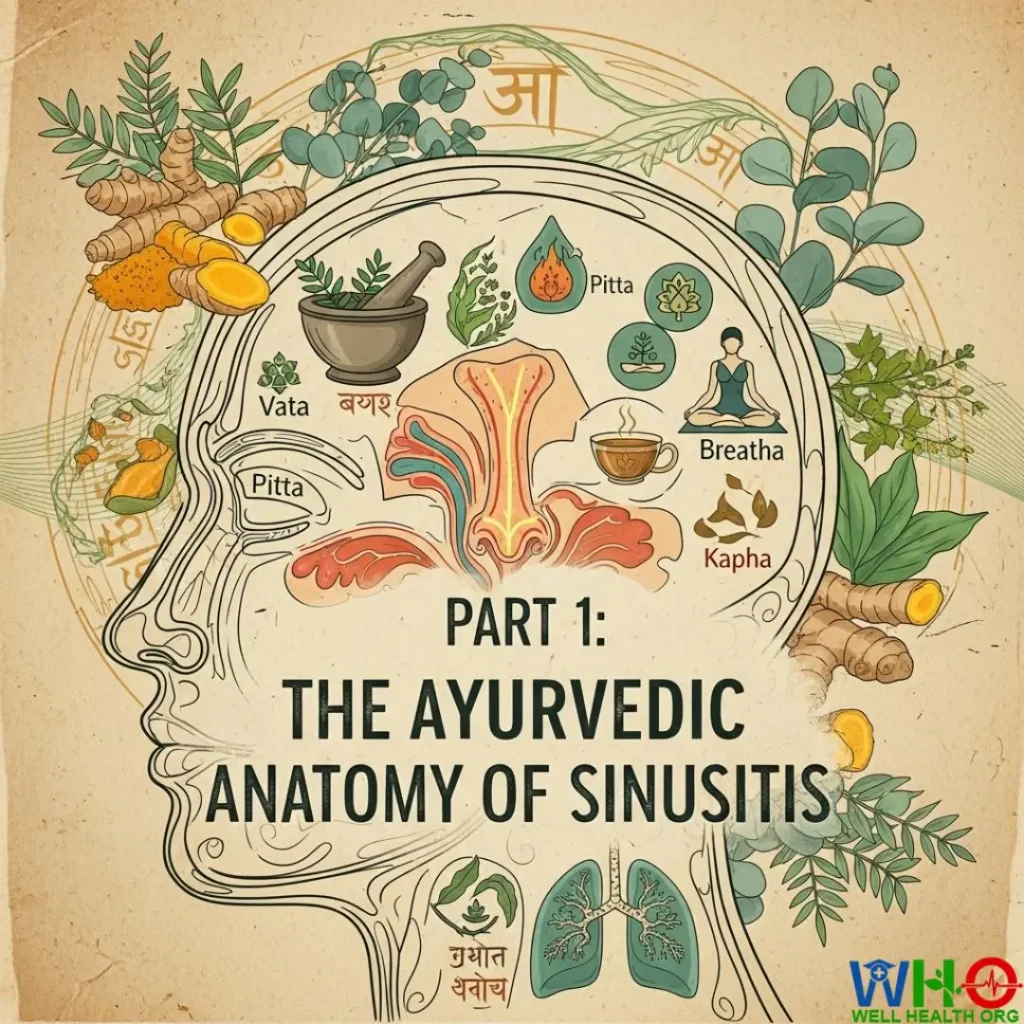
Part 1: The Ayurvedic Anatomy of Sinusitis
To treat sinusitis effectively, we must first understand what is happening inside the body. In Western medicine, sinusitis is inflammation of the tissue lining the sinuses. In Ayurveda, this condition is known as Pinasa or Pratishyaya. However, the nose is merely the stage where the drama plays out; the script is written in the gut.
The Root Cause: Agni and Ama
The central pillar of Ayurvedic health is Agni (digestive fire). Think of Agni as the metabolic engine that processes not just the food you eat, but also your emotions and sensory experiences. When your Agni is strong, you digest food efficiently, absorbing nutrients and eliminating waste.
However, when your digestive fire is weak—due to eating processed foods, stress, irregular meal times, or eating incompatible food combinations—the body fails to digest food completely. This undigested residue transforms into a sticky, toxic substance called Ama.
Ama is the root of almost all disease in Ayurveda. It is heavy, cold, and slime-like. Once formed in the gut, it enters the bloodstream and circulates until it finds a weak spot in the body to lodge itself. For sinus sufferers, that weak spot is the respiratory tract. When Ama mixes with the bodily humors (Doshas) in the upper body, it clogs the Srotas (channels), creating the thick, stubborn mucus and inflammation we recognize as sinusitis.
The Takeaway: You cannot permanently cure sinusitis without fixing your digestion. Treating the nose without treating the gut is like mopping the floor while the sink is still overflowing.
Part 2: Decoding Your “Sinus Personality” (The Doshas)
Ayurveda categorizes all physiological functions into three biological energies or Doshas: Vata (Air/Ether), Pitta (Fire/Water), and Kapha (Earth/Water). While everyone has a mix of all three, usually one or two are dominant.
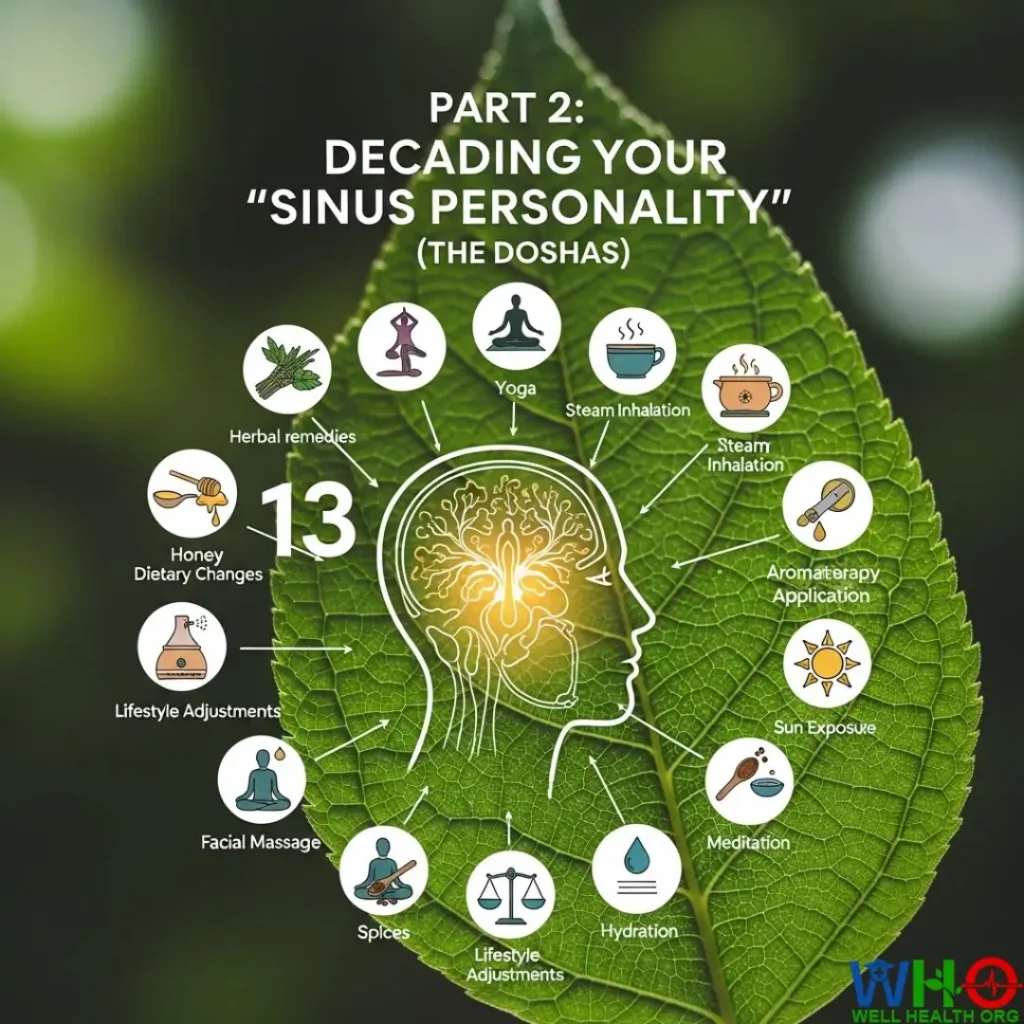
Sinusitis is traditionally seen as a Kapha disorder because Kapha governs the structure, lubrication, and mucus of the body. However, the type of symptoms you experience depends on which Dosha is aggravating the Kapha. Identifying your specific imbalance is crucial because the treatment for a dry, painful sinus infection is vastly different from the treatment for a hot, infected one.
1. Vata-Type Sinusitis (The Dry Congestion)
When Vata (Air) is out of balance, the sinuses become dry and painful.
- The Symptoms: You feel intense pressure and throbbing pain, but when you blow your nose, nothing comes out. The mucus is scanty, dry, or crusty. You may experience headaches that shift location, dryness in the throat, and a hoarse voice.
- The Cause: Exposure to cold wind, irregular sleep, skipping meals, and eating dry, crunchy foods (like crackers or raw salads).
- The Strategy: Focus on hydration, warmth, and oiling.
2. Pitta-Type Sinusitis (The Inflamed Congestion)
When Pitta (Fire) is aggravated, the sinuses become hot and inflamed.
- The Symptoms: The defining characteristic is burning. You may feel a burning sensation in the nose or eyes. The mucus is yellow or green (indicating infection) and may be tinged with blood. You might run a fever, feel irritable, and have sensitivity to light.
- The Cause: Eating spicy or fried foods, alcohol consumption, anger/stress, and exposure to extreme heat.
- The Strategy: Focus on cooling (but not freezing) and anti-inflammatory therapies.
3. Kapha-Type Sinusitis (The Classic Blockage)
This is the most common form. Kapha (Earth/Water) creates heaviness and accumulation.
- The Symptoms: Thick, heavy, white or clear mucus that just won’t stop. You feel a heaviness in the head, lethargy, a loss of appetite, and perhaps a sweet or salty taste in the mouth. The congestion is worse in the morning and in damp weather.
- The Cause: excessive intake of dairy, sugar, cold drinks, heavy oily foods, sleeping during the day, and lack of exercise.
- The Strategy: Focus on drying, heating, and stimulating therapies to liquefy the “mud.”
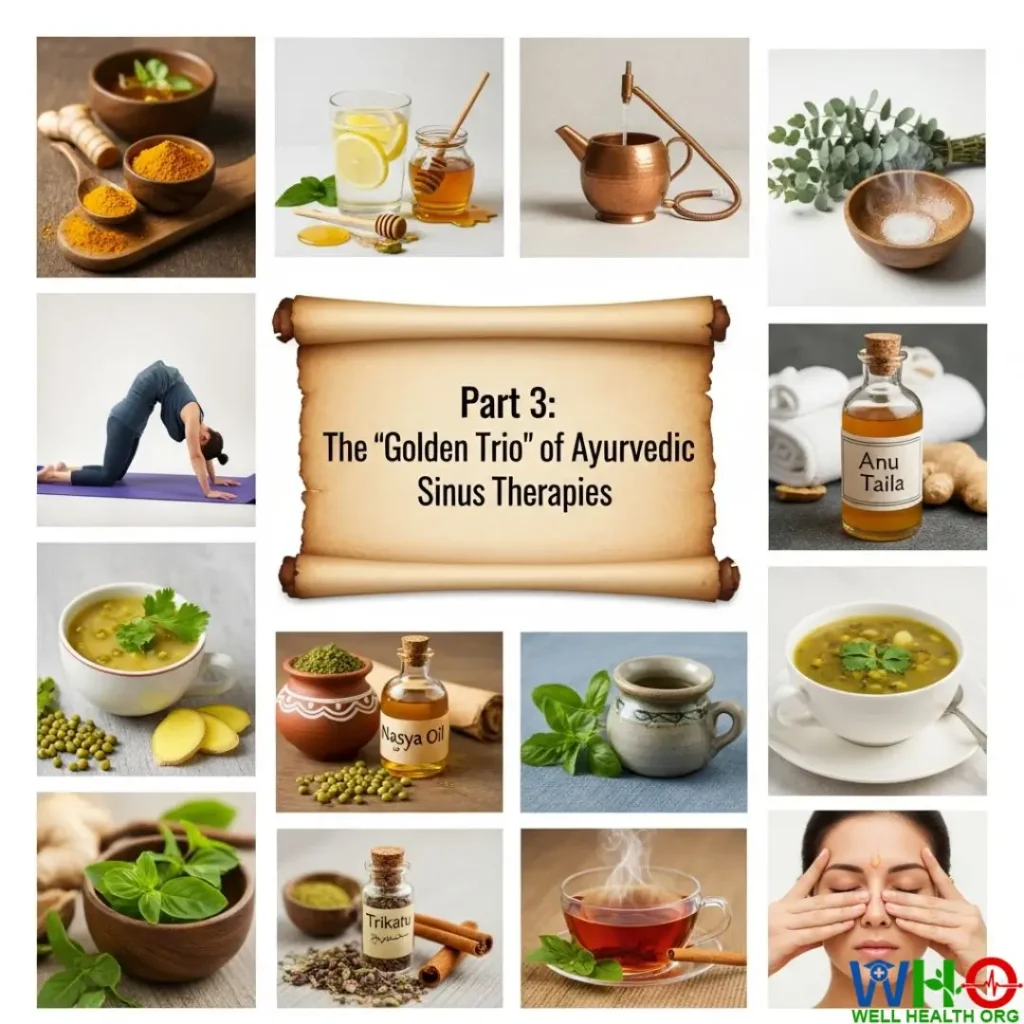
Part 3: The “Golden Trio” of Ayurvedic Sinus Therapies
Once you understand your type, you can begin treatment. These three therapies are the cornerstones of Ayurvedic respiratory care. They are non-invasive but require consistency.
1. Nasya Karma: The Gateway to the Brain
Nasya is the practice of instilling medicinal oil into the nostrils. In Ayurveda, the nose is considered the direct doorway to the brain and consciousness (Prana). Keeping this doorway lubricated is essential.
Why it works: It might seem counterintuitive to put oil in a stuffy nose, but the right herbal oils help dissolve the hardened Ama (toxins) and lubricate the dry membranes, preventing the body from overproducing reactive mucus.
How to do a Home Nasya Routine:
- Timing: Best done in the morning on an empty stomach.
- Step 1 (Massage): Gently massage your face, specifically the sinus points (cheeks, forehead, bridge of nose), with warm sesame oil. This loosens the stagnation.
- Step 2 (Heat): Apply a warm towel to your face for 2 minutes to open the channels.
- Step 3 (Instill): Lie down with your head tilted back (hang it off the edge of the bed). Place 2–3 drops of Anu Thailam (a classic Ayurvedic sinus oil) or warm sesame oil into each nostril.
- Step 4 (Inhale): Sniff deeply. Massage the area around the nose again.
- Step 5 (Clear): If mucus comes into your throat, spit it out. Gargle with warm water.
- Note: Do not do Nasya if you have a high fever, are pregnant, or immediately after eating.
2. Jala Neti: The Saline Wash
While popular in the West now, this yogic cleansing technique originated in ancient India. It involves using a “Neti Pot” to pour saline water through one nostril and out the other.
The Ayurvedic Twist:
While Western medicine emphasizes the salt, Ayurveda emphasizes the after-care. Saltwater strips the nasal lining of its natural protective coating. Therefore, in Ayurveda, Jala Neti must always be followed by Nasya. If you wash and don’t oil, your nose will dry out, signaling your body to produce more mucus to compensate, creating a vicious cycle.
3. Gandusha (Oil Pulling)
Most people know oil pulling for whitening teeth, but its original purpose was to purify the cranial channels. The mouth and the sinuses are intimately connected.
The Protocol:
- Take 1 tablespoon of warm sesame oil (best for Vata/Kapha) or coconut oil (best for Pitta).
- Swish it in your mouth vigorously. You want to push and pull the oil through your teeth.
- Do this for 10 to 15 minutes. The oil will turn milky and thin as it mixes with saliva and toxins.
- Spit it in the trash (never the sink, as it clogs pipes).
- Why it helps sinuses: The mechanical action creates a vacuum effect that helps drain the lymphatic vessels in the neck and jaw, reducing the pressure in the head.
Part 4: Food as Medicine – The Anti-Sinusitis Diet
You can take all the herbs in the world, but if you eat “Kapha-aggravating” foods, your sinuses will remain blocked. In Ayurveda, food is not just calories; it is information.

The “No-Go” List (Mucus Generators)
If you are suffering from chronic congestion, you must ruthlessly eliminate these items for at least 21 days:
- Cold Dairy: Ice cream, cold milk, and yogurt are the biggest offenders. They are Abhisyandi (channel-clogging). If you must have milk, drink it hot with turmeric and black pepper.
- Bananas: Known to be heavy and slime-producing. Avoid them, especially for breakfast or at night.
- Refined Sugar: Sugar suppresses the immune system and feeds the bacteria living in the sinus cavities.
- Ice Water: Drinking cold water extinguishes your digestive fire (Agni). This leads to more Ama (toxins). Sip only warm or hot water.
The “Must-Eat” List (Mucus Busters)
- Warm, Cooked Foods: Soups, stews, and steamed vegetables are easy to digest.
- Pungent Spices: You want to liquefy the mucus. Use generous amounts of:
- Black Pepper: Is drying and heating.
- Turmeric: The ultimate anti-inflammatory.
- Cumin and Coriander: Aid digestion without being too hot.
- Garlic and Onions: Natural antibiotics that are high in sulfur.
- Trikatu: This is a classic Ayurvedic spice blend consisting of Black Pepper, Long Pepper (Pippali), and Dry Ginger. Taking a pinch of Trikatu with honey before meals is one of the most powerful ways to burn up mucus.
The Concept of Viruddha Ahara (Incompatible Foods)
Ayurveda warns against combining foods that have opposite energies, as this confuses the digestion and creates toxins instantly.
- Never mix fruit with dairy (e.g., berry smoothies with milk). The fruit sours the milk in the gut.
- Never mix fish with dairy.
- Do not drink cold water with a hot meal.
Part 5: Herbal Allies from the Ayurvedic Pharmacy
Nature has provided potent herbs that target the respiratory system. While you can find these in capsule form, taking them as teas or powders mixed with honey is often more effective as the taste signals the body to prepare for healing.

1. Tulsi (Holy Basil)
Known as the “Queen of Herbs,” Tulsi is an adaptogen that supports the immune system and respiratory tract. It is anti-viral and helps clear the lungs.
- How to use: Drink Tulsi tea 2-3 times a day. It is excellent for stress-induced sinusitis (Vata type).
2. Ginger (The Universal Medicine)
Ginger is Vishwabhesaj (universal medicine). It serves as a carrier herb, helping other nutrients reach the tissues, and it specifically targets the lungs and stomach.
- For Wet Cough/Congestion: Mix fresh ginger juice with honey. The honey acts as an expectorant (scraping mucus away).
- For Dry Pain: Drink ginger tea with a little ghee.
3. Ashwagandha
Sometimes, chronic sinusitis is the result of a depleted immune system due to burnout. If you feel exhausted and constantly sick, Ashwagandha can help rebuild your strength (Ojas).
- Note: Best taken in warm almond milk with a pinch of cardamom at night.
4. Triphala
Remember the gut-sinus connection? Triphala is a blend of three fruits used to regulate bowel movements. Keeping the colon clean is essential for keeping the head clear. If you are constipated, the toxins reabsorb and manifest as congestion.
- Usage: Take 1 teaspoon of Triphala powder with warm water before bed.
Part 6: Yoga and Pranayama for Respiratory Health
Movement is medicine. When we are congested, we tend to stay still, but stagnation breeds infection. Specific yoga poses help drain the sinuses through gravity and improved circulation.

Asanas (Postures)
- Adho Mukha Svanasana (Downward-Facing Dog): This mild inversion encourages blood flow to the head and helps drain the maxillary sinuses. Hold for 1–2 minutes while breathing deeply.
- Setu Bandhasana (Bridge Pose): This opens the chest and throat, stimulating the thymus gland (immunity) and relieving pressure.
- Matsyasana (Fish Pose): The ultimate chest opener. It stretches the throat and neck, helping to clear blockages in the respiratory tract.
Pranayama (Breathwork)
- Kapalabhati (Skull Shining Breath): This is a vigorous heating breath that involves passive inhalation and forceful, short exhalations using the abdominal muscles.
- Why it works: It generates internal heat that melts mucus and physically forces air through the nasal passages to clear blockages.
- Caution: Do not practice if you have high blood pressure, are pregnant, or have an active nosebleed.
- Anuloma Viloma (Alternate Nostril Breathing): This is a balancing practice. It harmonizes the left (cooling/moon) and right (heating/sun) hemispheres of the brain. It is excellent for chronic Vata-type sinus headaches and stress.
- Bhramari (Humming Bee Breath): This involves covering the ears and eyes and making a humming sound while exhaling. The vibration created in the vocal cords resonates through the skull, physically shaking loose stubborn mucus in the sinus cavities. It also produces nitric oxide, a molecule that increases blood flow and kills bacteria.
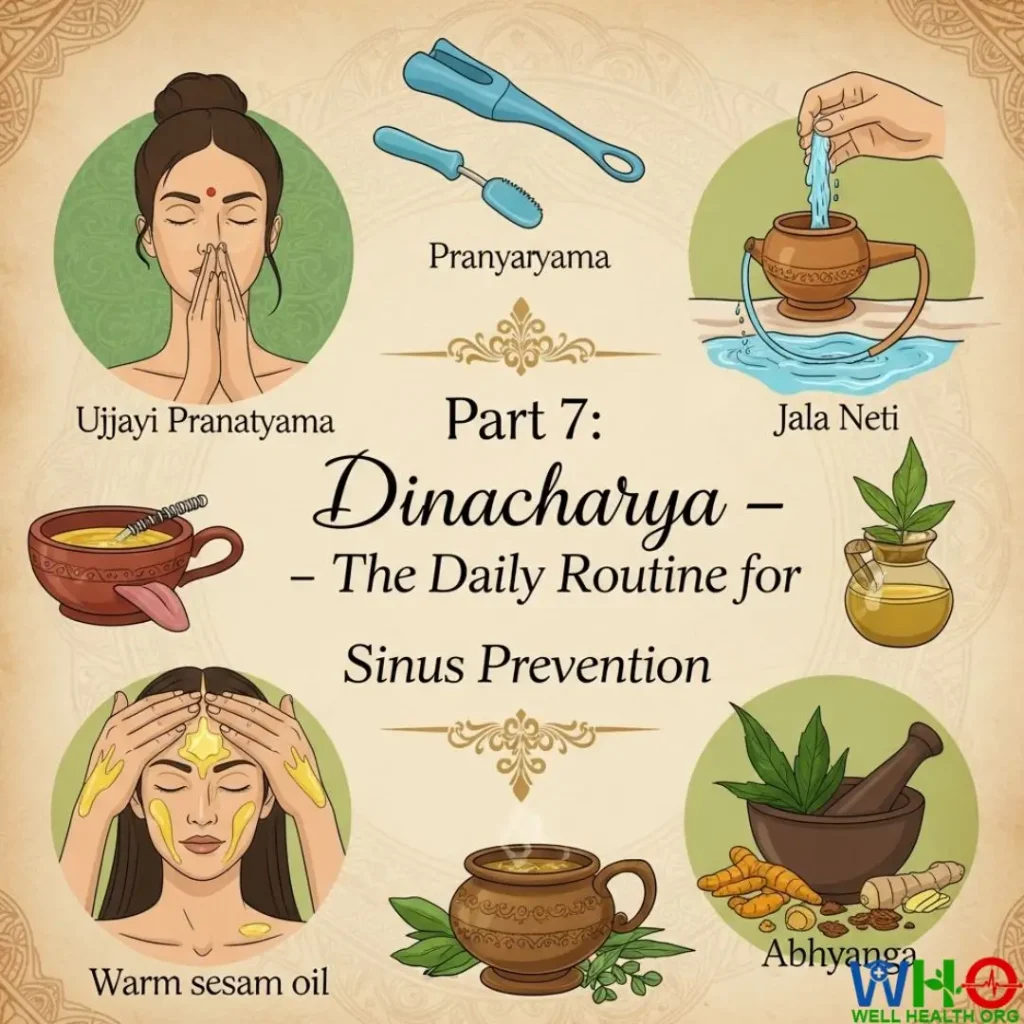
Part 7: Dinacharya – The Daily Routine for Sinus Prevention
Healing sinusitis is not just about what you do when you are sick; it is about how you live when you are well.
Morning Rituals
- Wake Up Early: Try to wake up before 6:00 AM. This is the end of the Vata time of night. If you sleep late into the Kapha time (6:00 AM – 10:00 AM), you will wake up feeling heavy and congested.
- Tongue Scraping: Use a copper scraper to remove the white coating (toxins) from your tongue. This prevents re-swallowing bacteria.
- Drink Warm Water: Start the day with a glass of warm water with lemon to flush the system.
Evening Rituals
- Steam Inhalation: Before bed, do a steam inhalation with a few drops of Eucalyptus or Ajwain (Carom seeds). This keeps the passages moist overnight.
- Humidify: If you live in a dry climate or use central heating, a humidifier is non-negotiable. Dry air causes the nasal turbinates to swell as they try to humidify the air you breathe.
- Elevation: Sleep with an extra pillow. Gravity prevents mucus from pooling in the throat and causing that dreaded morning cough.
Part 8: The Emotional Connection
Ayurveda acknowledges that the body and mind are inseparable. The sinuses are located in the region of the body associated with the Fifth Chakra (Vishuddha) and the Sixth Chakra (Ajna).
- Throat/Sinus issues are often linked to “unshed tears” or suppressed grief (Kapha).
- Inflammation can be linked to repressed anger or frustration (Pitta).
- Dryness/Pain can be linked to anxiety and fear of the future (Vata).
Ask yourself: Is there something I am holding back from saying? Am I “stuffed up” with emotions I haven’t processed? Sometimes, journaling or crying can be just as effective a decongestant as an herbal pill. Stress creates cortisol, and cortisol suppresses the immune system. Integrating mindfulness and meditation into your healing plan is vital for breaking the cycle of chronic infection.
Conclusion: Your Path to Clear Breathing
Transitioning to an Ayurvedic lifestyle for sinus relief is a journey. It requires you to slow down and listen to your body. You might not see the instant “dry up” effect of a chemical decongestant, but you will also avoid the crash that follows.
Start small. Maybe this week you simply switch to warm water and stop eating yogurt at night. Next week, you introduce the Neti pot and Nasya oil. The following week, you try the turmeric-ginger tea.
As you peel back the layers of bad habits and align your life with your unique Dosha, you will notice something profound: the relief won’t just be in your nose. You will have more energy, better digestion, and a clearer mind. In Ayurveda, clear breathing is synonymous with clear thinking. By clearing the fog in your sinuses, you are clearing the fog in your life.
Disclaimer: This guide is for educational purposes and is based on the principles of Ayurveda. It does not replace professional medical advice. If you have severe symptoms, high fever, or chronic conditions, please consult with a qualified Ayurvedic practitioner or your primary healthcare provider.
Medically Reviewed by Prof. Dr. Akram
Orthopedic Surgeon | Professor | Senior Medical Specialist
Prof. Dr. Akram is a distinguished surgeon with over 15 years of clinical expertise. Having served as a lead Emergency Specialist at Complex International Government Hospital, he currently leads a specialized team of 13 medical professionals at his private hospital. As a Professor at top medical universities, he ensures that every article on WellHealthOrg.com meets rigorous clinical standards.
Medical Disclaimer:
The information provided is for educational purposes only and is not a substitute for professional medical advice, diagnosis, or treatment. Always consult your physician for any medical concerns.
Our content is rigorously fact-checked by our 13-member Editorial Team under the clinical supervision of Prof. Dr. Akram.