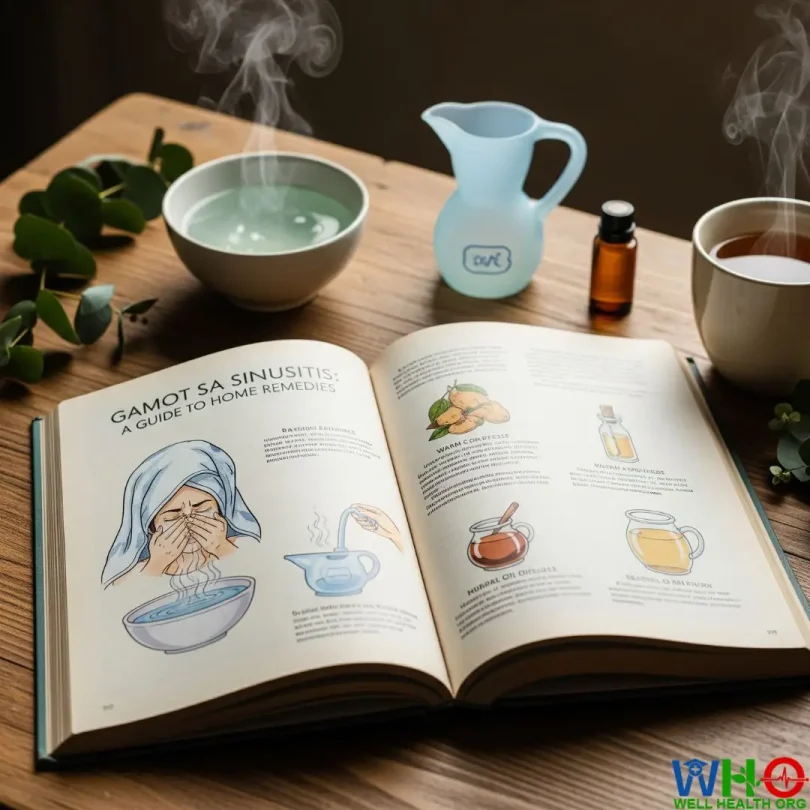
Sinusitis is more than just a stuffy nose; it is a pervasive, throbbing pressure that can derail your entire life. It feels as though a concrete block has been lodged behind your cheekbones, your eyes feel heavy, and every time you lean forward, the pressure intensifies. Whether it is the result of a seasonal allergy flare-up, a lingering cold, or a bacterial infection, sinus inflammation is physically exhausting and mentally draining.
- Chapter 1: Knowing the Enemy – What Exactly is Sinusitis?
- The Anatomy of the Sinus Cavities
- The Blockage
- Types of Sinusitis
- Chapter 2: The Art of Hydrotherapy and Steam
- The Science of Steam
- The “Tent” Method: A Step-by-Step Ritual
- Steamy Showers and Bathroom Saunas
- Important Safety Note
- Chapter 3: Nasal Irrigation – The Neti Pot Guide
- How It Works
- The Critical Safety Rule: Water Quality
- The Perfect Saline Recipe
- Execution Technique
- Chapter 4: Advanced Aromatherapy for Sinus Relief
- The Best Oils for Sinusitis
- How to Use Them Safely
- Chapter 5: Temperature Therapy – Warm and Cold Compresses
- Warm Compresses: For Drainage
- Cold Compresses: For Pain
- The Contrast Method
- Chapter 6: Hydration and Dietary Interventions
- The “Mucus Thinning” Strategy
- Foods That Heal
- Foods to Avoid
- Chapter 7: Manual Therapy – Acupressure and Massage
- The Frontal Sinus Sweep
- The Maxillary Sinus Pumping
- The Bridge Pinch
- Chapter 8: Sleep Hygiene and Posture
- Elevate Your Head
- Create a Sleep Sanctuary
- Chapter 9: Lifestyle and Environmental Factors
- Air Quality Control
- The Role of Stress
- Chapter 10: Natural Supplements for Sinus Health
- Chapter 11: Knowing When to Quit – When to See a Doctor
- The 10-Day Rule
- Immediate Red Flags
- Chronic Sufferers
- Conclusion: Your Path to Breathing Free
While severe or chronic cases often require medical intervention, the vast majority of sinus issues can be managed—and significantly alleviated—within the comfort of your own home. You do not always need to rush to the pharmacy for harsh decongestants that leave you feeling jittery or drowsy. Nature and science provide us with a plethora of tools to reduce inflammation, thin mucus, and restore normal breathing.
This comprehensive guide is designed to be your go-to resource for sinus health. We will move beyond the basics and dive deep into the anatomy of a sinus infection, detailed protocols for home treatment, lifestyle adjustments to prevent recurrence, and advanced natural therapies. By the end of this article, you will have a complete toolkit to help you breathe freely again.
Chapter 1: Knowing the Enemy – What Exactly is Sinusitis?
To effectively treat sinusitis, it is crucial to understand what is happening inside your skull. Many people confuse sinusitis with a common cold or simple allergies, but there are distinct differences.

The Anatomy of the Sinus Cavities
Your sinuses are a system of four paired, air-filled hollows located in the bones of your face and head. They are lined with soft, pink tissue called mucosa.
- Maxillary Sinuses: Located in your cheekbones (often the cause of tooth pain during an infection).
- Frontal Sinuses: Located in the center of your forehead, right above your eyebrows.
- Ethmoid Sinuses: Located between your eyes.
- Sphenoid Sinuses: Located deep behind your nose.
normally, these cavities produce a thin layer of mucus that traps dust, germs, and other pollutants. Tiny hair-like structures called cilia sweep this mucus toward the back of the throat, where it is swallowed and destroyed by stomach acid.
The Blockage
Sinusitis occurs when this drainage system fails. If the tissue lining the sinuses becomes inflamed—due to an allergen, a virus, or smoke—it swells. This swelling blocks the tiny drainage pathways (ostia). When the mucus cannot drain, it gets trapped. The dark, moist, stagnant environment of a blocked sinus is the perfect breeding ground for bacteria, viruses, and fungi.
Types of Sinusitis
- Acute Sinusitis: Usually starts with cold-like symptoms such as a runny, stuffy nose and facial pain. It may start suddenly and last 2-4 weeks.
- Subacute Sinusitis: This inflammation lasts 4 to 12 weeks.
- Chronic Sinusitis: Symptoms persist for 12 weeks or longer. This is often less about an active infection and more about persistent inflammation.
- Recurrent Sinusitis: This happens when you get infections several times a year.
By understanding that the core problem is inflammation and drainage, we can tailor our home remedies to specifically target these two issues.
Chapter 2: The Art of Hydrotherapy and Steam
Water is perhaps the most powerful tool in your arsenal against sinusitis. When used correctly in the form of steam, it acts as a natural solvent for thick, sticky mucus.

The Science of Steam
When you inhale warm, moist air, it rehydrates the cilia in your nose, allowing them to move more effectively. It also dilutes the mucus, making it less viscous and easier to expel. However, simply standing over a cup of tea isn’t enough. You need a concentrated steam session.
The “Tent” Method: A Step-by-Step Ritual
This is the gold standard for home steam therapy.
- Preparation: Boil a pot of water. Once it boils, remove it from the heat and place it on a stable surface (like a kitchen table) on top of a heat-resistant mat. Pour the water into a large ceramic or glass heat-proof bowl. Caution: Do not use plastic, as boiling water can release chemicals.
- The Setup: Sit comfortably in a chair in front of the bowl. Have a large, thick bath towel ready.
- The Tent: Drape the towel over the back of your head and the bowl, creating a sealed “tent” that traps the steam.
- The Process: Close your eyes (steam can irritate them). Lower your face toward the water, but keep it at least 8-10 inches away to avoid steam burns.
- Breathing: Inhale deeply through your nose for a count of four, hold for two, and exhale through your mouth.
- Duration: Do this for 10 to 15 minutes. If it gets too hot, lift the corner of the towel to vent some heat.
Steamy Showers and Bathroom Saunas
If you are too congested to manage the bowl method, turn your bathroom into a steam room. Close the door, stuff a towel under the crack, and turn the shower on the hottest setting. Sit on the toilet lid or a chair (do not get in the scalding water) and breathe in the mist for 20 minutes. The high humidity will help soothe the inflamed membranes.
Important Safety Note
Never use boiling water near children or pets. The risk of accidental spills and burns is high. Always test the steam intensity with your hand before lowering your face.
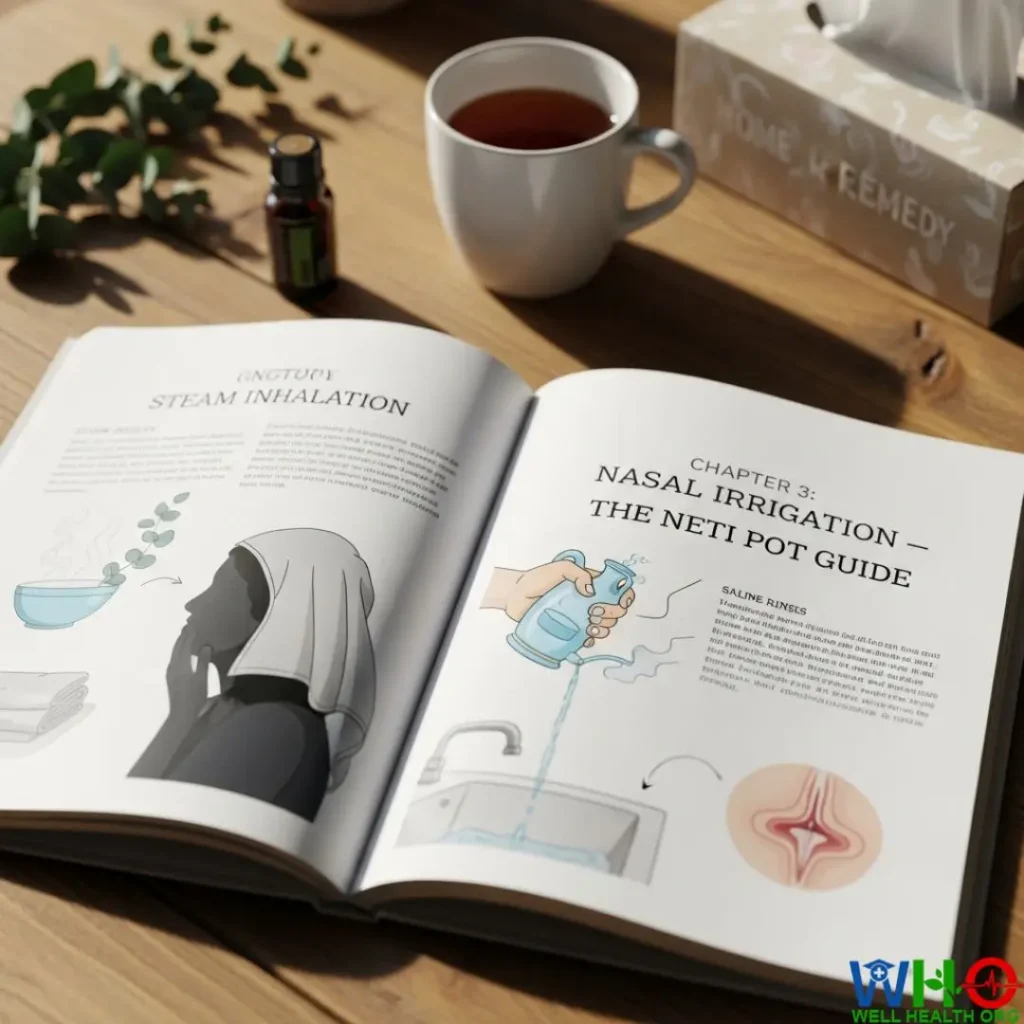
Chapter 3: Nasal Irrigation – The Neti Pot Guide
Nasal irrigation, often done using a Neti Pot, is an ancient Ayurvedic practice called Jala Neti. It is one of the most effective ways to physically flush out allergens, bacteria, and thick mucus from the sinus cavities.
How It Works
The concept is simple: you pour a saline solution into one nostril, and gravity pulls it through your sinus cavities and out the other nostril. This flushes out the “gunk” that is stuck in there.
The Critical Safety Rule: Water Quality
This is the most important part of this section. You must NEVER use tap water for nasal irrigation. Tap water contains low levels of microorganisms that are safe to drink (because stomach acid kills them) but can be deadly in the sinuses. Specifically, a rare brain-eating amoeba called Naegleria fowleri can exist in tap water.
Always use:
- Distilled water (sold in jugs at pharmacies).
- Sterile water.
- Tap water that has been boiled for at least 3-5 minutes and then cooled.
The Perfect Saline Recipe
While you can buy pre-mixed packets, making your own solution is easy and cheap.
- 1 cup (240 ml) of lukewarm distilled/sterilized water.
- 1/2 teaspoon of non-iodized salt (canning salt or sea salt). Do not use table salt with additives, as it irritates the nose.
- 1/4 teaspoon of baking soda (this buffers the solution to make it pH neutral, so it doesn’t sting).
Execution Technique
- Position: Lean over a sink. Tilt your head sideways at a 45-degree angle. Your forehead should be slightly lower than your chin.
- Pour: Place the spout of the Neti Pot (or squeeze bottle) into the upper nostril. Create a seal. Gently pour or squeeze.
- Breathe: Breathe through your mouth.
- Flow: The water should flow in the top nostril and out the bottom nostril. It may feel strange, like you are underwater, but it should not hurt.
- Clearing: After the pot is empty, exhale gently through both nostrils to clear the water.
- Repeat: Switch sides and repeat the process.
Pro Tip: If the water runs down your throat, your head is likely tilted too far back. Adjust your angle so your forehead is lower.
Chapter 4: Advanced Aromatherapy for Sinus Relief
Essential oils are concentrated plant extracts that can possess powerful antimicrobial and anti-inflammatory properties. When combined with steam, they can supercharge your relief.

The Best Oils for Sinusitis
- Eucalyptus Oil: This is the heavyweight champion of sinus relief. It contains a compound called cineole, which has been shown to reduce inflammation and fight bacteria. It creates a cooling sensation that makes airflow feel clearer.
- Peppermint Oil: Contains menthol, which triggers cold receptors in the nose. While it doesn’t technically decongest, it tricks the brain into feeling that airflow is improved, providing significant comfort.
- Tea Tree Oil (Melaleuca): Known for its potent antiviral, antibacterial, and antifungal properties. This is an excellent choice if you suspect a sinus infection is brewing.
- Oregano Oil: Extremely potent antibacterial properties. Note: The smell is very strong and herbal.
- Lavender Oil: Great for the associated headache and stress caused by being sick.
How to Use Them Safely
Method 1: The Steam Additive
Add 3-5 drops of Eucalyptus or Tea Tree oil to your bowl of steaming water (described in Chapter 2). Keep your eyes closed tight, as the vapors can sting the eyes.
Method 2: The Chest Rub
Never apply essential oils directly to the skin (neat). They can cause chemical burns. Mix 3 drops of essential oil with a tablespoon of “carrier oil” (like coconut oil, almond oil, or olive oil). Rub this mixture on your chest and throat. The body heat will release the vapors upward toward your nose.
Method 3: The Shower Disk
Place a few drops of oil on a washcloth and place it on the floor of your shower (away from the direct stream of water). The hot water will vaporize the oil, filling the bathroom with a therapeutic mist.
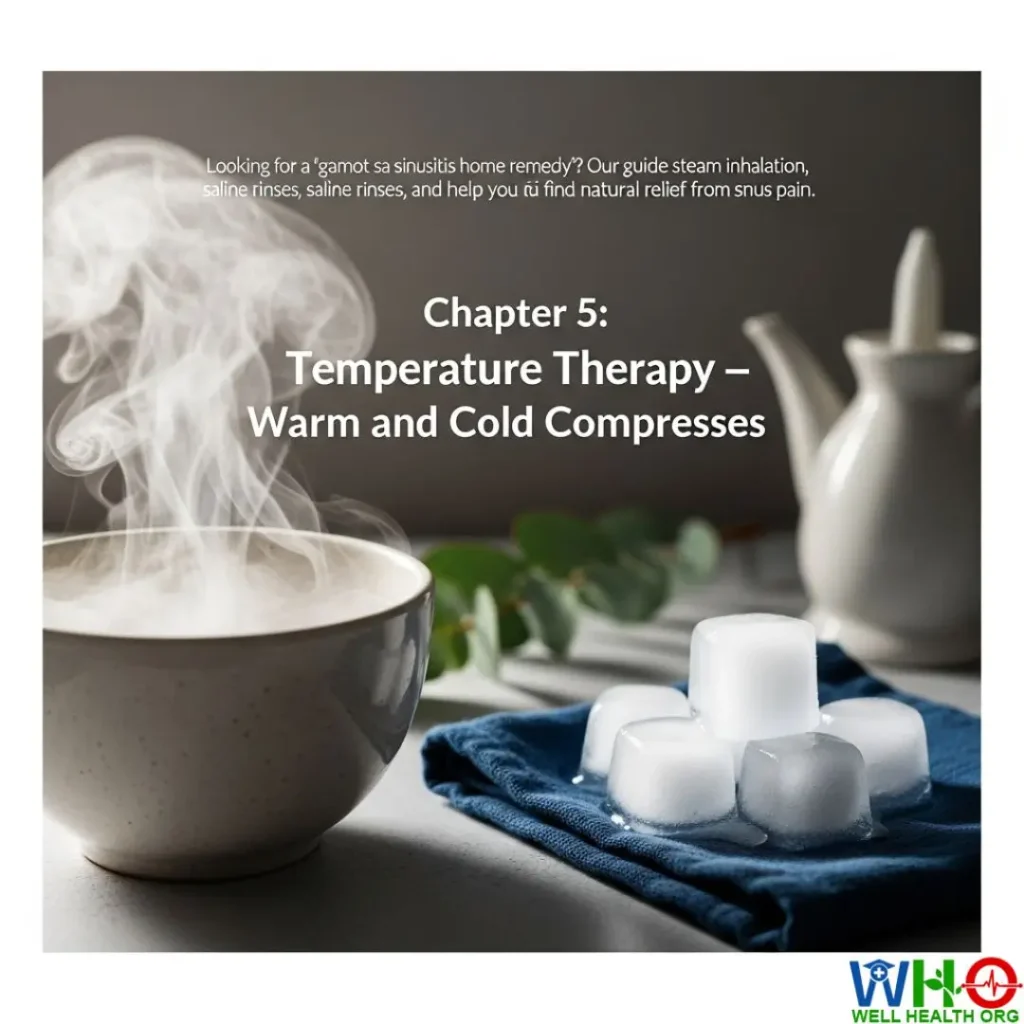
Chapter 5: Temperature Therapy – Warm and Cold Compresses
Pain management is a huge part of dealing with sinusitis. The pressure in the maxillary (cheek) and frontal (forehead) sinuses can be excruciating. Alternating temperature therapy can help.
Warm Compresses: For Drainage
Heat vasodilates (widens) blood vessels and increases circulation. This brings fresh blood and immune cells to the area while relaxing the muscles and loosening mucus.
- How to: Soak a washcloth in hot water (tolerable to touch), wring it out, and place it across the bridge of your nose and cheeks. Leave it until it cools.
Cold Compresses: For Pain
If the throbbing is intense, heat might make it feel “fuller.” Cold constricts blood vessels, which can reduce swelling and numb the pain.
- How to: Wrap a bag of frozen peas or a gel pack in a thin towel. Place it over your eyes and forehead for 10 minutes.
The Contrast Method
For maximum effect, alternate them.
- Warm compress for 3 minutes.
- Cold compress for 1 minute.
- Repeat this cycle 3 times.
This creates a “pumping” action in the circulatory system of the face, potentially helping to move stagnant fluid.
Chapter 6: Hydration and Dietary Interventions
You are what you eat—and when you have sinusitis, what you eat can determine how thick your mucus is.

The “Mucus Thinning” Strategy
Your body needs water to produce thin, flowing mucus. If you are dehydrated, your mucus becomes like glue, sticking to the sinus walls and trapping bacteria.
- Water Goal: Aim for at least 3 to 4 liters of water a day when sick.
- Warm Liquids: Herbal teas, warm water with lemon, and broths are superior to cold water because the heat promotes drainage.
Foods That Heal
- Pineapple (Bromelain): Pineapple is rich in an enzyme called bromelain. Bromelain has been used historically to reduce swelling in the nose and sinuses. Eating fresh pineapple or drinking the juice can be beneficial.
- Spicy Foods (Capsaicin): Have you ever eaten a hot pepper and immediately had your nose run? That is the capsaicin at work. It irritates the mucous membranes, prompting them to produce thinner mucus and run, effectively clearing the blockage. Try adding cayenne pepper, chili flakes, or hot sauce to your soup.
- Garlic and Onions: These contain sulfur compounds that act as natural antibiotics. Crushing raw garlic and letting it sit for 10 minutes releases allicin, a potent immune booster. Add it to soups or eat it with honey if you can stomach it.
- Ginger: A powerful anti-inflammatory. Make a strong ginger tea by boiling fresh ginger slices in water for 15 minutes. Add honey and lemon.
Foods to Avoid
- Dairy: For some people, dairy products (milk, cheese, ice cream) can thicken mucus or make it feel like there is more phlegm in the throat. It is best to avoid them during an active infection.
- Sugar: High sugar intake can suppress the immune system. Bacteria also thrive on sugar.
- Alcohol and Caffeine: Both are diuretics, meaning they dehydrate you. This is the opposite of what you want.
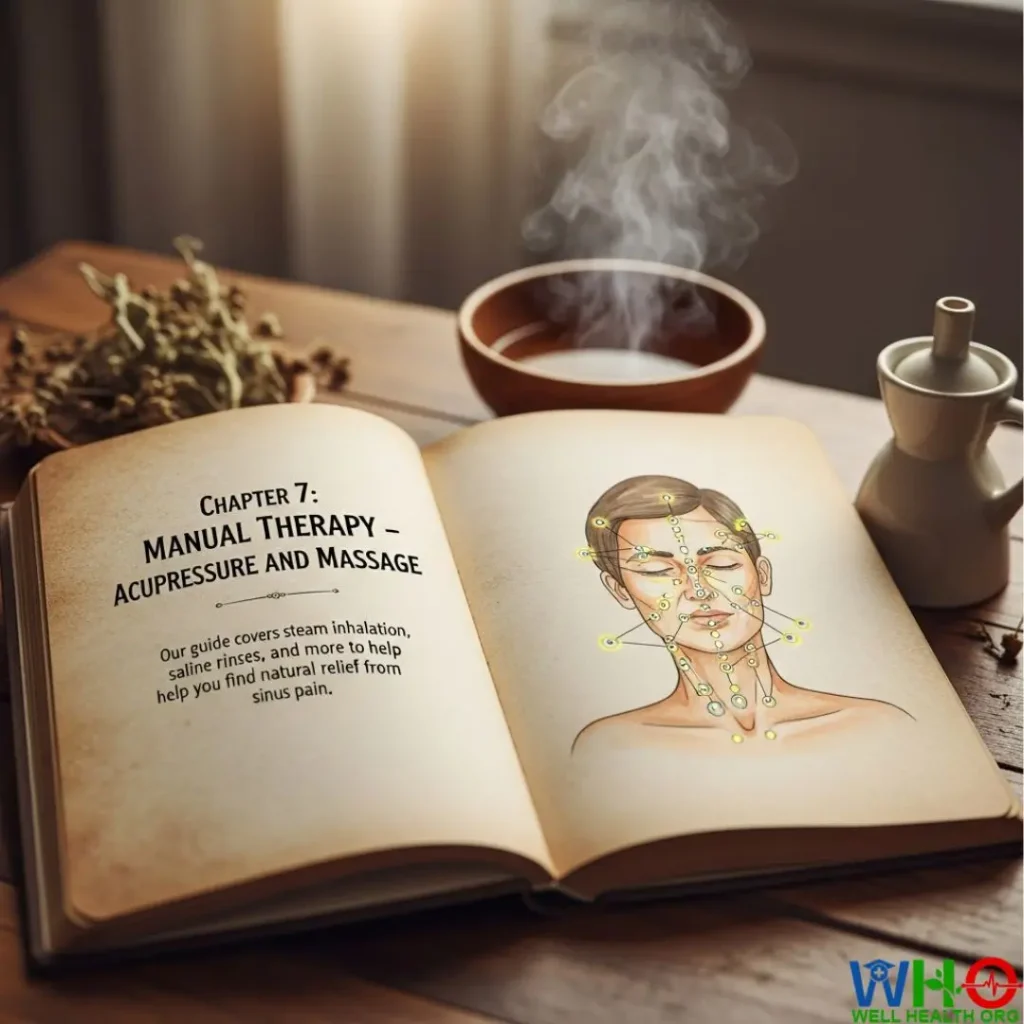
Chapter 7: Manual Therapy – Acupressure and Massage
You can physically encourage your sinuses to drain using your hands. This provides immediate, albeit temporary, relief from pressure.
The Frontal Sinus Sweep
- Place your index and middle fingers of both hands in the center of your forehead, just above the eyebrows.
- Apply firm pressure and slowly slide your fingers outwards toward your temples.
- Repeat this 10 times. This helps move fluid out of the frontal sinuses.
The Maxillary Sinus Pumping
- Place your index fingers on your cheeks, right next to the outside of your nostrils.
- You should feel a slight indentation in the cheekbone.
- Press in firmly and hold for 10 seconds, then release.
- Rub in a small circular motion. This stimulates the main drainage points for the cheek sinuses.
The Bridge Pinch
- Use your thumb and index finger to pinch the bridge of your nose, right near the inner corners of your eyes.
- Hold for a few seconds while breathing deeply.
- Release and repeat.
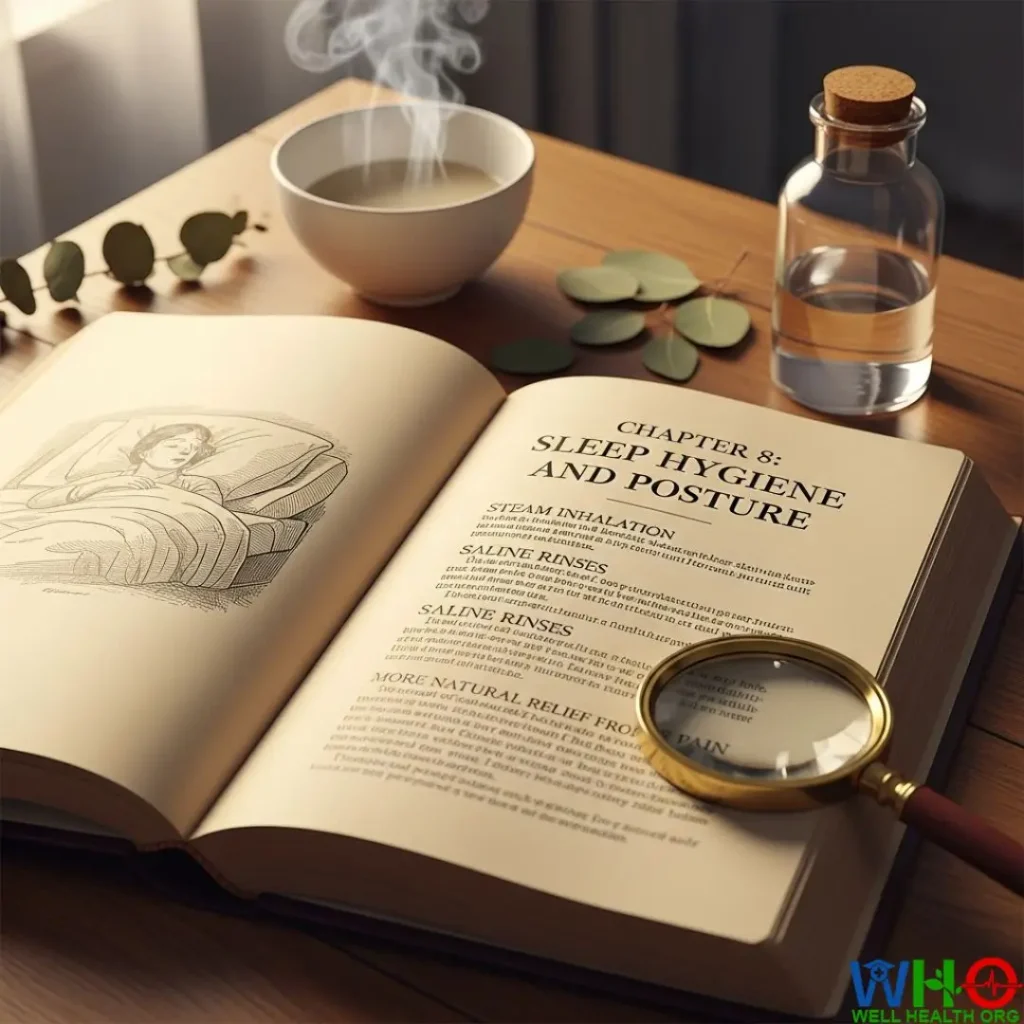
Chapter 8: Sleep Hygiene and Posture
Sinusitis symptoms are notoriously worse at night. This is largely due to gravity. When you lie flat, blood volume increases in the head, causing nasal tissues to swell, and mucus pools in the sinuses rather than draining down the throat.
Elevate Your Head
Sleeping flat is the enemy. You need to enlist gravity to help you.
- The Wedge: Use a wedge pillow or stack 2-3 standard pillows to keep your head elevated above your heart.
- The Angle: Aim for a 20 to 30-degree incline. This prevents the “pooling” effect.
Create a Sleep Sanctuary
- Humidify: Run a humidifier on your bedside table. Dry air from air conditioning or heating systems will dry out your nasal membranes, causing them to crack and become more inflamed. Ideally, keep humidity between 40% and 50%.
- Clean Bedding: If your sinusitis is allergy-triggered, wash your pillowcases in hot water every few days to kill dust mites.
Chapter 9: Lifestyle and Environmental Factors
Sometimes, your environment is keeping you sick. Making small changes to your surroundings can have a massive impact on your recovery speed.
Air Quality Control
- Filters: If you have central heating or cooling, check the filter. A dirty filter recirculates dust and mold spores. Use HEPA filters if possible.
- Smoke: Cigarette smoke is a major irritant. It paralyzes the cilia in the nose, preventing them from sweeping out mucus. Avoid smoking and second-hand smoke completely.
- Chemical Irritants: Strong perfumes, cleaning products with bleach, and scented candles can irritate inflamed sinuses. Switch to unscented or natural cleaning products during your recovery.
The Role of Stress
Chronic stress releases cortisol, which suppresses the immune system. Sinusitis can be stubborn, and if your body is stressed, it cannot fight the infection efficiently. Incorporate relaxation techniques like deep breathing or gentle yoga into your routine to keep your immune system strong.
Chapter 10: Natural Supplements for Sinus Health
While a balanced diet is best, sometimes we need a concentrated boost. Here are supplements often recommended for sinus health.

- Vitamin C: A classic immune booster. It helps strengthen the immune system and acts as a mild antihistamine.
- Zinc: Taking zinc at the first sign of a cold or sinus issue can shorten the duration of the illness.
- Quercetin: This is a plant pigment found in onions and apples. It acts as a powerful natural antihistamine and anti-inflammatory. It is often taken to reduce the swelling in the nasal passages.
- N-Acetyl Cysteine (NAC): This is an amino acid supplement that is widely used as a “mucolytic.” It helps break down the chemical bonds in mucus, making it thinner and easier to cough up or blow out.
Note: Always consult with a healthcare provider before starting new supplements, especially if you are on other medications or pregnant.
Chapter 11: Knowing When to Quit – When to See a Doctor
While this guide focuses on home remedies, it is vital to recognize when “Do It Yourself” becomes dangerous. Sinus infections, if left untreated and severe, can spread to the eyes or even the brain (meningitis).
The 10-Day Rule
Most viral sinus infections resolve on their own within 7 to 10 days. If you have been sick for more than 10 days without improvement, or if you started to get better and then suddenly got much worse (called “double sickening”), you likely have a bacterial infection. Bacterial infections may require antibiotics.
Immediate Red Flags
Seek medical attention immediately if you experience:
- High Fever: A fever over 102°F (38.9°C) or a low-grade fever that persists for days.
- Vision Changes: Blurry vision, double vision, or swelling/redness around the eyes. This indicates the infection may have spread to the eye socket (orbital cellulitis), which is a medical emergency.
- Severe Headache/Stiff Neck: If you have a headache unlike anything you’ve felt before, coupled with a stiff neck or confusion, go to the ER. This could be a sign of meningitis.
- Forehead Swelling: Visible swelling on the forehead (Pott’s Puffy Tumor) indicates an infection in the frontal bone.
Chronic Sufferers
If you have sinusitis for more than 12 weeks, you may have structural issues like a deviated septum or nasal polyps. No amount of steam or tea will fix a deviated septum. In these cases, an ENT (Ear, Nose, and Throat) specialist is necessary to discuss long-term solutions, which might include minor surgery or balloon sinuplasty.
Conclusion: Your Path to Breathing Free
Dealing with sinusitis is a test of patience. The pressure, the fatigue, and the congestion can make you feel helpless. However, by adopting a proactive, multi-faceted approach, you can take control of your recovery.
Don’t just try one remedy; combine them. Start your day with a hot shower and a saline rinse. Drink ginger tea and water throughout the day. Perform a facial massage in the afternoon, and sleep with your head elevated at night. By attacking the inflammation and congestion from all angles—hydration, steam, irrigation, and rest—you give your body the best possible chance to heal naturally.
Your body is resilient. With the right support, the inflammation will subside, the pressure will release, and you will take that first, deep, clear breath through your nose. It’s a feeling of pure relief, and by following this guide, you are well on your way to achieving it.
Disclaimer: The information provided in this article is for educational purposes only and does not constitute medical advice. Always consult with a healthcare professional for diagnosis and treatment of medical conditions.
Medically Reviewed by Prof. Dr. Akram
Orthopedic Surgeon | Professor | Senior Medical Specialist
Prof. Dr. Akram is a distinguished surgeon with over 15 years of clinical expertise. Having served as a lead Emergency Specialist at Complex International Government Hospital, he currently leads a specialized team of 13 medical professionals at his private hospital. As a Professor at top medical universities, he ensures that every article on WellHealthOrg.com meets rigorous clinical standards.
Medical Disclaimer:
The information provided is for educational purposes only and is not a substitute for professional medical advice, diagnosis, or treatment. Always consult your physician for any medical concerns.
Our content is rigorously fact-checked by our 13-member Editorial Team under the clinical supervision of Prof. Dr. Akram.