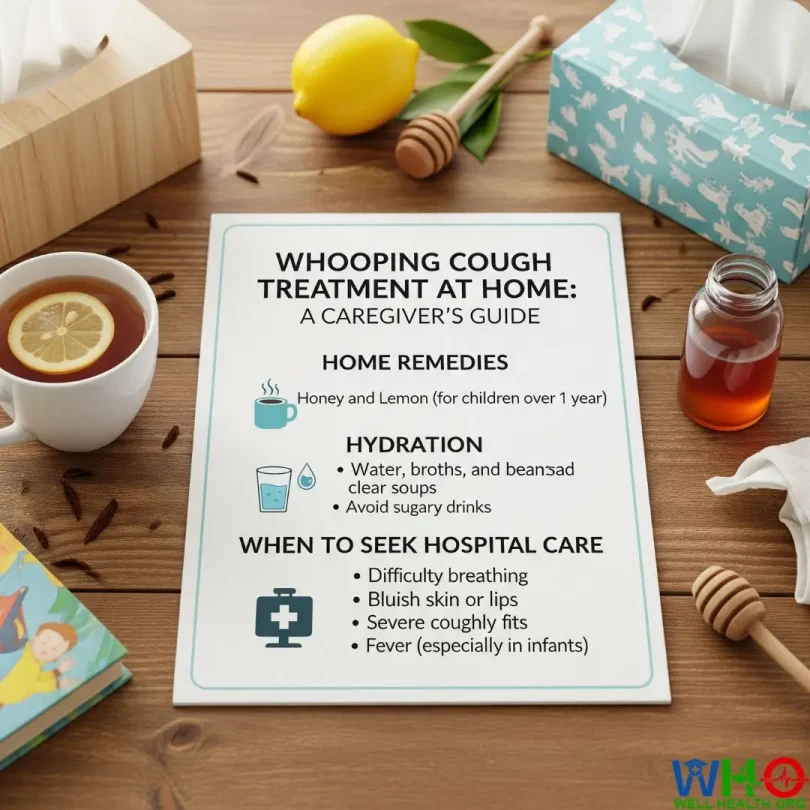
Whooping Cough Recovery at Home
The sound is distinct, haunting, and fundamentally terrifying for any parent or caregiver. It begins with a deep, desperate intake of breath, followed immediately by a rapid-fire series of short, violent coughs that seem to empty the lungs completely. This is the signature “whoop” that gives pertussis its common name, but the reality of the illness goes far beyond a distinctive noise.
- Whooping Cough Recovery at Home
- 1. Deconstructing the Beast: Understanding Pertussis Deeply
- The Biological Mechanism
- The Three Stages of Infection
- 2. The Critical Window: Timing and Medical Intervention
- The Role of Antibiotics
- Why Take Them If It’s “Too Late”?
- 3. Medication Management at Home
- The “Feeling Better” Trap
- The Truth About Cough Syrups
- Practical Alternatives to Cough Syrup
- 4. The Nutritional Strategy: Fighting “Post-Tussive Emesis”
- The “Graze and Sip” Approach
- Safe Foods List
- Aggressive Hydration
- 5. Environmental Control: Creating a Sanctuary
- Mastering Air Quality
- The Humidity Factor
- 6. Managing the Coughing Fit: What to Do in the Moment
- Stay Calm to Keep Them Calm
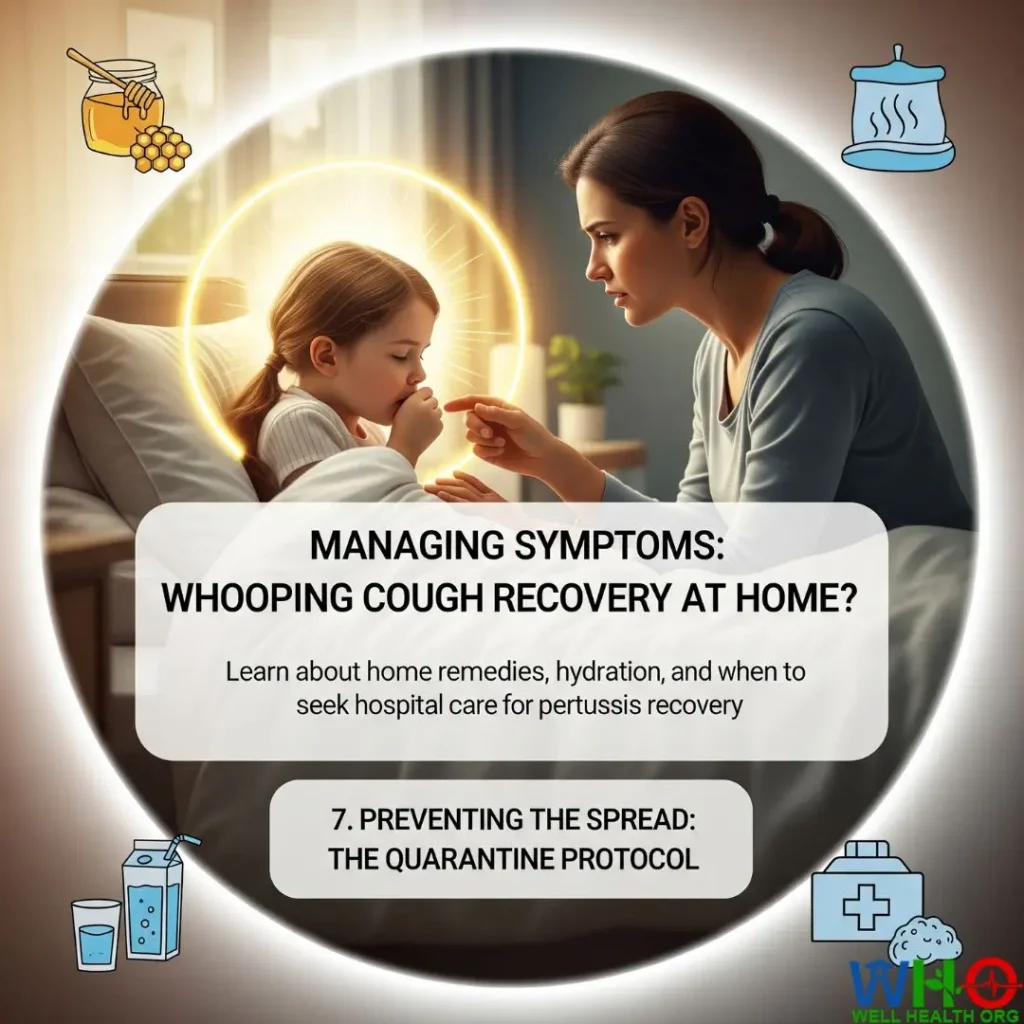
- 7. Preventing the Spread: The Quarantine Protocol
- The Exclusion Period
- Household Hygiene
- “Cocooning” the Vulnerable
- 8. The Emotional and Mental Toll
- For the Patient
- For the Caregiver
- 9. Complications and Red Flags: When to Call 911
- Respiratory Distress
- Severe Dehydration
- Other Warning Signs
- Conclusion: The Path to Recovery
- Frequently Asked Questions About Whooping Cough Recovery
- 1. Why am I still coughing if I finished my antibiotics?
- 2. exactly how long is a person contagious with Whooping Cough?
- 3. Can adults get Whooping Cough, or is it just a childhood disease?
- 4. I was vaccinated against Whooping Cough. Why did I get sick?
- 5. How can I help my child sleep through the night without coughing?
- 6. Can I get Whooping Cough more than once?
- 7. Is there a difference between Whooping Cough and Croup?
- 8. What should I do if the coughing fit stops my child from breathing?
Whooping cough is not simply a “bad cold” or a standard winter bug. It is a formidable, highly contagious respiratory infection caused by the bacterium Bordetella pertussis. It is relentless, exhausting, and famous for its longevity, earning the grim nickname: the “100-day cough.”
Receiving a diagnosis of pertussis can feel overwhelming. The medical advice is often straightforward—antibiotics and rest—but the day-to-day reality of living with the illness is complex. While the diagnosis happens in a doctor’s office, the true battle is fought in the living room, the bedroom, and during sleepless nights at home.
This comprehensive guide is designed to walk you through that journey. Once a healthcare provider has assessed you or your child and prescribed a treatment plan, the focus shifts entirely to home management. Recovery from whooping cough is a marathon, not a sprint. To navigate it successfully, you need a strategy that covers everything from medication discipline and nutritional support to environmental control and emotional resilience.
Here is everything you need to know to manage symptoms, prevent complications, and support the body’s healing process during the long road to recovery.
1. Deconstructing the Beast: Understanding Pertussis Deeply
To treat whooping cough effectively at home, you must first understand what is happening inside the body. Many frustrations arise because patients expect the illness to behave like a flu, where you feel terrible for a week and then bounce back. Pertussis operates differently.
The Biological Mechanism
The Bordetella pertussis bacteria are insidious. When they enter the respiratory system, they latch onto the cilia—the microscopic, hair-like extensions that line your upper respiratory tract. Under normal circumstances, these cilia wave back and forth to clear mucus and debris from your airways.
However, the bacteria release toxins that paralyze and eventually destroy these cilia. Imagine a forest fire that burns away the trees that hold the soil in place; without the cilia, the airways become inflamed and swollen, and mucus accumulates because there is no mechanism to sweep it away. The body’s only remaining defense is to cough—violently—to dislodge the blockage.
The Three Stages of Infection
Understanding the timeline helps manage expectations. Pertussis generally progresses through three distinct stages:
- The Catarrhal Stage (1–2 Weeks): This is the “trojan horse” phase. Symptoms mimic a common cold: runny nose, low-grade fever, and a mild, occasional cough. You are highly contagious during this time, but because it feels minor, many people do not seek treatment, unknowingly spreading the bacteria.
- The Paroxysmal Stage (1–6 Weeks or longer): This is where the battle intensifies. The toxins have done their damage. The cough becomes severe, uncontrollable, and spasmodic. These are the “fits” or “paroxysms” that can induce vomiting and extreme exhaustion.
- The Convalescent Stage (2–3 Weeks or longer): Recovery begins, but it is slow. The cough lessens in severity and frequency, but the airways remain sensitive. A secondary respiratory infection (like a common cold) during this phase can temporarily trigger a return of the coughing fits.
Key Insight for Home Care: The reason the cough lingers long after the bacteria are dead is that the body has to regenerate the cilia. You are not just fighting an infection; you are waiting for the respiratory lining to regrow.
2. The Critical Window: Timing and Medical Intervention
Before diving into home remedies, we must address the medical component. Timing is the single most important factor in the medical treatment of whooping cough.

The Role of Antibiotics
Healthcare providers prescribe antibiotics, such as azithromycin, clarithromycin, or erythromycin, to treat pertussis. However, the goal of these antibiotics changes depending on when they are administered.
- Early Administration: If given during the Catarrhal stage (the first 1-2 weeks), antibiotics can reduce the severity of the illness and potentially shorten its duration.
- Late Administration: If treatment starts after the coughing fits have already begun (usually three weeks in), the medication will likely not stop the symptoms. By this point, the bacteria may be gone, but the damage to the cilia is done.
Why Take Them If It’s “Too Late”?
Even if you are past the point where antibiotics will stop the cough, your doctor will likely prescribe them anyway. This is for containment, not cure. The antibiotics kill the bacteria remaining in your system, rendering you non-contagious after five full days of treatment. This is vital for protecting your community, especially infants who are too young to be vaccinated.
If you suspect exposure or notice a cold turning into a violent cough, immediate medical attention is non-negotiable.
3. Medication Management at Home
Once you return from the pharmacy, you become the project manager of the patient’s health. Managing medications correctly is the first pillar of home care.

The “Feeling Better” Trap
A common mistake in home treatment is stopping antibiotics early. Perhaps the patient seems to be improving, or perhaps the digestive side effects of the antibiotics are unpleasant.
Warning: You must complete the full course of antibiotics exactly as prescribed. Stopping early can lead to two dangerous outcomes:
- Relapse: A small number of bacteria may survive and repopulate.
- Antibiotic Resistance: The surviving bacteria can adapt to the medication, making future infections much harder to treat.
The Truth About Cough Syrups
When a child is turning red in the face from coughing, a parent’s instinct is to reach for the strongest over-the-counter (OTC) cough suppressant available. However, in the case of whooping cough, this is rarely effective and potentially unsafe.
Most OTC cough medicines work by suppressing the cough reflex in the brain. However, the cough from pertussis is caused by physical irritation and accumulating mucus in the airways. The body needs to cough to clear this obstruction. Suppressing the cough can lead to mucus buildup in the lungs, increasing the risk of secondary pneumonia.
Furthermore, medical consensus strongly advises against using cough suppressants for children under 4 years old due to serious side effects, including slowed breathing. Always consult your healthcare provider before introducing any non-prescribed medication.
Practical Alternatives to Cough Syrup
Instead of chemical suppressants, consider these safer alternatives for symptom relief:
- Honey (For children over 1 year): A spoonful of thick honey can coat the throat and soothe irritation. It also has mild antibacterial properties.
- Saline Nose Drops: These help clear nasal congestion, preventing post-nasal drip from trickling down the throat and triggering a cough.
4. The Nutritional Strategy: Fighting “Post-Tussive Emesis”
One of the most distressing aspects of whooping cough is “post-tussive emesis”—vomiting caused by a severe coughing fit. The violence of the cough engages the gag reflex or simply puts so much pressure on the stomach that food is expelled.
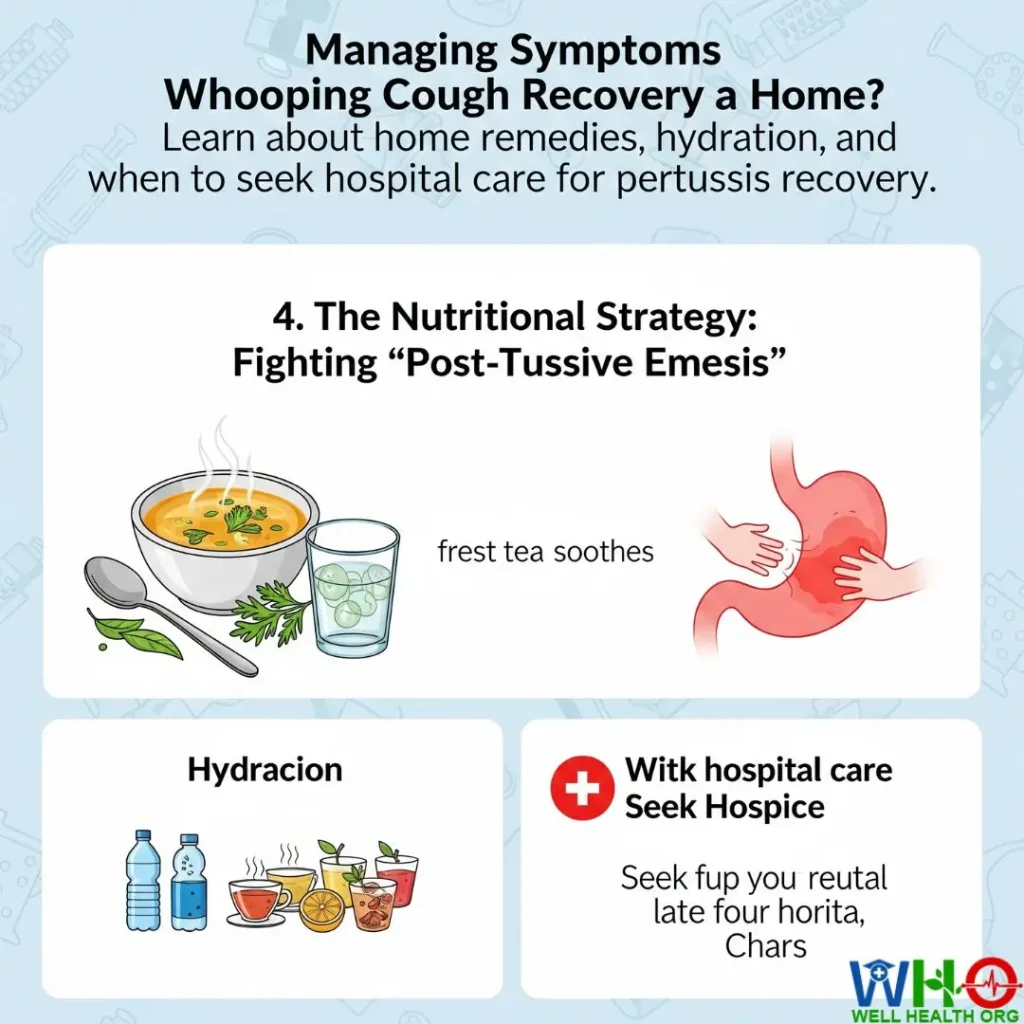
This creates a vicious cycle: the patient coughs, vomits, loses nutrients and fluids, becomes weaker, and has less energy to fight the next coughing fit. Breaking this cycle is a priority.
The “Graze and Sip” Approach
The traditional concept of “breakfast, lunch, and dinner” must be abandoned during the acute phase of whooping cough. A full stomach puts upward pressure on the diaphragm, which can make coughing more painful and vomiting more likely.
The Strategy: Switch to micro-meals. Offer small amounts of food every two hours. The goal is to keep the stomach only partially full.
Safe Foods List
Focus on foods that are easy to digest and, frankly, comfortable to bring back up if vomiting occurs. Avoid acidic foods (orange juice, tomato sauce) or sharp, crunchy foods (chips, crackers) that can scratch the throat.
Recommended Foods:
- Oatmeal and Porridge: Warm, soothing, and filling.
- Smoothies: A great way to sneak in calories and hydration without heavy digestion.
- Scrambled Eggs: Soft protein that is easy on the stomach.
- Bananas and Applesauce: The classic “BRAT” diet components are gentle on the digestive system.
- Broths and Soups: These provide hydration and electrolytes.
Aggressive Hydration
Dehydration is a genuine risk, especially in young children. Thick, sticky mucus is harder to cough up; staying hydrated thins the mucus, making the cough more productive and less painful.
If the patient is vomiting, rapid gulping of water will trigger more vomiting. Use the “Sip Strategy”:
- Offer one teaspoon of fluid every 5 to 10 minutes.
- Use fun straws or sippy cups to control the volume for children.
- Electrolytes: If vomiting is frequent, water is not enough. Use oral rehydration solutions (like Pedialyte) or coconut water to replace lost salts and minerals.
- Popsicles: These are a secret weapon. They numb the inflamed throat, provide hydration, and are usually well-received by sick children.
5. Environmental Control: Creating a Sanctuary
Your home environment can either act as a trigger or a salve. The airways of a pertussis patient are hypersensitive. Dust, dry air, or strong smells that would normally go unnoticed can trigger a 20-minute coughing fit.

Mastering Air Quality
Your goal is to turn the patient’s recovery room into a “clean air zone.”
- Eliminate Smoke: This is non-negotiable. Tobacco smoke, vape vapor, and smoke from wood-burning stoves or fireplaces paralyze cilia and will drastically worsen symptoms.
- Dust Control: Vacuum daily (preferably with a HEPA filter) while the patient is in another room. Dust mites and particulate matter are major irritants.
- Chemical Warfare: Put away the bleach, ammonia, and heavily scented cleaning sprays. The fumes from these products are harsh on damaged airways. Switch to vinegar-and-water solutions or unscented cleaners during the recovery period.
- Scent Bans: Avoid perfumes, scented candles, and air fresheners. What smells “fresh” to you can feel like sandpaper to a pertussis patient’s lungs.
The Humidity Factor
Dry air is the enemy. It dries out the mucus membranes, making secretions thicker and harder to expel.
- Cool Mist Humidifiers: Running a cool mist humidifier in the bedroom is highly recommended. It adds moisture to the air, soothing the throat and loosening mucus.
- Safety Warning: You must clean the humidifier daily according to the manufacturer’s instructions. A dirty humidifier can pump mold spores and bacteria into the air, which can cause secondary infections in lungs that are already compromised.
- The Steam Tent: For an acute fit that won’t stop, take the patient into the bathroom. Turn on the shower to the hottest setting (do not put the patient in the water) and let the room fill with steam. Sit in the steamy room for 10-15 minutes. The warm humidity can often relax the airways and stop a spasm.
6. Managing the Coughing Fit: What to Do in the Moment
Watching a loved one, especially a child, struggle through a paroxysm is terrifying. The face may turn red or purple, eyes may bulge, and they may struggle to inhale. Knowing how to react calmly is essential.
Stay Calm to Keep Them Calm
Anxiety constricts breathing. If you panic, the child will panic, making the fit worse. specific physical techniques can help:
- Positioning: Sit the patient upright or lean them slightly forward. Do not let them lie flat during a fit, as this allows mucus to pool and obstruct the airway further.
- The Recovery Position: If they vomit, lean them forward or turn them to their side immediately to prevent choking.
- Reassurance: Speak in a low, steady voice. Rub their back gently.
- Fresh Air: Sometimes, a sudden change in temperature helps. Wrapping the patient in a blanket and stepping out into the cool night air or standing in front of an open freezer for a few seconds can “shock” the airways into resetting and stopping the cough.
7. Preventing the Spread: The Quarantine Protocol
Whooping cough is incredibly contagious. If one person in a household has it, there is a high probability others will get it unless strict protocols are followed.
The Exclusion Period
If the patient is taking antibiotics, they must remain in isolation for five full days after starting the medication. If they are not taking antibiotics (perhaps because the diagnosis came late), they are generally considered contagious for three weeks (21 days) after the cough began.
During this time:
- No school, daycare, or work.
- No visitors, especially infants, pregnant women, or elderly individuals.
- No trips to the grocery store or public places.
Household Hygiene
- Hand Washing: Implement a strict hand-washing regime for everyone in the house.
- Don’t Share: Do not share utensils, cups, towels, or bedding.
- Surface Cleaning: Frequently disinfect “high-touch” areas like doorknobs, remote controls, and light switches.
“Cocooning” the Vulnerable
If you have an infant in the house who is too young to be fully vaccinated, you must take extreme precautions. The sick family member should be completely isolated from the baby. All other family members should check their vaccination status (Tdap booster) to ensure they form a protective “cocoon” of immunity around the infant.
8. The Emotional and Mental Toll
We often overlook the psychological impact of a long-term illness. The “100-day cough” wears people down.
For the Patient
Children may feel scared to go to sleep for fear of waking up coughing. They may feel isolated from friends or guilty about vomiting. Older children and adults often experience rib pain, sore muscles, and even urinary incontinence due to the force of the coughing. Validation is key. Acknowledge their pain and frustration.
For the Caregiver
Parents often suffer from severe sleep deprivation, as coughing fits frequently worsen at night. The sound of the cough triggers a fight-or-flight response, leading to chronic anxiety.
- Take Shifts: If there are two parents or caregivers, alternate nights “on duty.” You cannot care for someone effectively if you are exhausted.
- Accept Help: If neighbors offer to drop off groceries or meals, say yes. You are running a home hospital; you need the support.
9. Complications and Red Flags: When to Call 911
While most cases are managed at home, pertussis can turn deadly, particularly for infants. Complications can include pneumonia, seizures from lack of oxygen, and hernia from straining.
You must move from “home care” to “emergency care” immediately if you see any of the following signs:
Respiratory Distress
- Cyanosis: The skin, lips, or nail beds turn blue or purple during a coughing spell. This indicates oxygen deprivation.
- Apnea: The patient stops breathing for more than a few seconds. In babies, this may happen without a cough.
- Retractions: You see the skin sucking in between the ribs, above the collarbone, or below the ribcage when they try to inhale.
- Rapid Breathing: Persistent fast breathing even when not coughing.
Severe Dehydration
- No wet diapers for 6-8 hours (infants) or no urination for 10-12 hours (older children/adults).
- Crying without tears.
- Sunken eyes or a sunken soft spot (fontanelle) on a baby’s head.
- Extreme lethargy or difficulty waking up.
Other Warning Signs
- High Fever: Pertussis usually has a low-grade fever. A sudden spike in temperature suggests a secondary infection like pneumonia.
- Exhaustion: If the patient is too weak to drink or speak.
In a hospital setting, treatment can escalate to oxygen therapy, suctioning of thick mucus, and intravenous (IV) fluids to bypass the stomach. Never hesitate to seek help if your gut instinct tells you the situation is deteriorating.
Conclusion: The Path to Recovery
Recovering from whooping cough is a journey that demands resilience. There will be good days where the cough seems to have vanished, followed by bad days where it returns with a vengeance. This rollercoaster is normal.
By strictly adhering to antibiotic courses, managing the environment to reduce triggers, implementing smart nutritional strategies, and maintaining vigilance for complications, you are doing everything possible to support the body.
Remember, the cough will end. The cilia will grow back. The “100-day cough” eventually runs out of days. Until then, your patience, care, and attention to detail are the best medicine available. Keep the fluids coming, keep the air clean, and take it one breath at a time.
Frequently Asked Questions About Whooping Cough Recovery
Navigating a diagnosis of pertussis brings up a storm of questions, especially when the symptoms drag on for weeks. Below are answers to the most common queries regarding home treatment, contagiousness, and the recovery timeline.
1. Why am I still coughing if I finished my antibiotics?
This is the most common frustration for patients. It is crucial to understand that antibiotics kill the bacteria (Bordetella pertussis), but they do not repair the damage the bacteria caused.
Think of it like a small fire in a kitchen. The firefighters (antibiotics) come in and put out the fire. However, the walls are still scorched, and the smoke is still lingering. The fire is gone, but the room isn’t fixed yet. Similarly, the bacteria are gone after the antibiotics, but they have paralyzed and stripped away the tiny hairs (cilia) in your airways. You will continue to cough until those cilia regenerate, which can take weeks or even months. The antibiotics served their purpose by making you non-contagious; the rest is up to your body’s healing process.
2. exactly how long is a person contagious with Whooping Cough?
The window of contagiousness depends entirely on treatment:
- With Antibiotics: You are considered contagious until you have completed 5 full days of antibiotic treatment. By day 6, you are generally safe to return to work or school, even if you are still coughing.
- Without Antibiotics: If the infection was not caught early and no antibiotics were taken, you remain contagious for 21 days (3 weeks) from the onset of the cough.
Because the bacteria are highly efficient at spreading, strict isolation during this contagious window is vital.
3. Can adults get Whooping Cough, or is it just a childhood disease?
It is a myth that whooping cough affects only children. Adults can and do get pertussis, and the rates among adults have been rising. In adults, the “whoop” noise is less common, so it is often misdiagnosed as a lingering bronchitis or a stubborn allergy.
However, the cough in adults can still be violent enough to cause cracked ribs, hernias, and urinary incontinence. Furthermore, adults are often the primary vectors (carriers) who unknowingly pass the infection to vulnerable infants because they assume they just have a “bad cold.”
4. I was vaccinated against Whooping Cough. Why did I get sick?
The pertussis vaccine (DTaP for children, Tdap for pre-teens and adults) is highly effective, but it does not offer lifetime immunity. Protection tends to wane (fade) after 5 to 10 years. This is why booster shots are recommended for teenagers and adults, especially pregnant women.
Additionally, “breakthrough” infections can happen. The good news is that if you are vaccinated and still catch pertussis, the illness is almost always milder. You are less likely to experience the severe “whooping” fits, less likely to vomit, and significantly less likely to require hospitalization compared to an unvaccinated individual.
5. How can I help my child sleep through the night without coughing?
Nighttime is notoriously difficult for pertussis patients because lying flat allows mucus to pool in the throat, triggering spasms. To improve sleep:
- Elevate: Use extra pillows to prop the child up. Sleeping at a 30 to 45-degree angle helps keep airways clearer.
- Cool the Room: Overheated rooms dry out airways. Keep the bedroom cool (around 65°F–68°F) and use a humidifier.
- Pre-Bed Routine: Clear the nose with saline drops and ensure the room is free of dust or pet dander before bedtime.
- Be Prepared: Keep a “clean-up kit” (bucket, towel, water) next to the bed so that if a fit and vomiting occur, you can handle it quickly and get everyone back to sleep without turning on bright lights.
6. Can I get Whooping Cough more than once?
Yes, unfortunately. Neither the vaccine nor a previous natural infection provides permanent, 100% immunity for life. Immunity fades over time. If it has been several years since you had the illness or your last booster shot, you can contract it again. However, subsequent infections are usually less severe than the first one.
7. Is there a difference between Whooping Cough and Croup?
Yes, they are very different, though both sound scary.
- Whooping Cough (Pertussis): Caused by bacteria. The cough is a series of rapid, staccato coughs followed by a high-pitched “whoop” intake of air. It can last for months.
- Croup: Usually caused by a virus. The cough sounds distinctly like a barking seal. It is often worse at night but typically lasts only a few days to a week. Croup is generally treated with steroids to reduce inflammation, whereas pertussis requires antibiotics to kill bacteria.
8. What should I do if the coughing fit stops my child from breathing?
This is the most terrifying scenario for a parent. If a child turns blue, goes limp, or struggles to breathe for a prolonged period, call emergency services (911) immediately.
While waiting for help:
- Try to keep the child calm; panic tightens the airways.
- If they are not breathing, begin CPR if you are trained.
- Sometimes, taking the child into cool night air or placing them in a steam-filled bathroom can help break the respiratory spasm while help is on the way.
Disclaimer: This content is for informational purposes only and does not constitute medical advice. Always consult with a healthcare professional for diagnosis and treatment of any medical condition.
Medically Reviewed by Prof. Dr. Akram
Orthopedic Surgeon | Professor | Senior Medical Specialist
Prof. Dr. Akram is a distinguished surgeon with over 15 years of clinical expertise. Having served as a lead Emergency Specialist at Complex International Government Hospital, he currently leads a specialized team of 13 medical professionals at his private hospital. As a Professor at top medical universities, he ensures that every article on WellHealthOrg.com meets rigorous clinical standards.
Medical Disclaimer:
The information provided is for educational purposes only and is not a substitute for professional medical advice, diagnosis, or treatment. Always consult your physician for any medical concerns.
Our content is rigorously fact-checked by our 13-member Editorial Team under the clinical supervision of Prof. Dr. Akram.