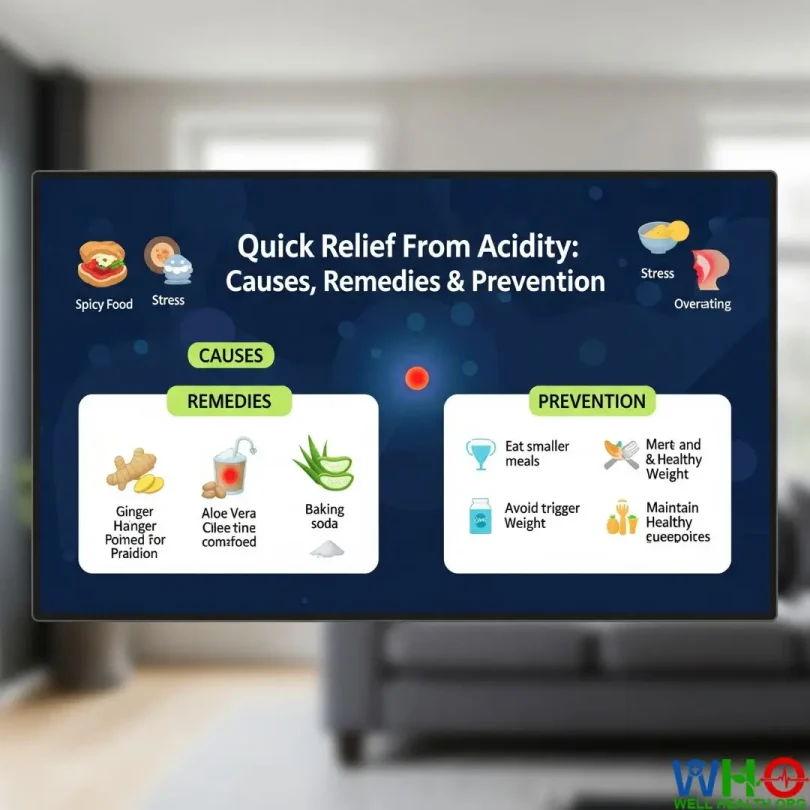
It starts as a subtle discomfort—a feeling of fullness that doesn’t quite sit right. Then, it transforms into a rising heat in the center of your chest, perhaps accompanied by a sour, metallic taste in the back of your throat. For millions of people, this is the daily reality of acidity, commonly known as heartburn or acid reflux.
- The Mechanics of the Burn: What is Actually Happening?
- The Faulty Trapdoor: The LES
- The Acid Bath
- Acidity vs. GERD: What’s the Difference?
- The Root Causes: Why Is This Happening to Me?
- 1. The Dietary Saboteurs
- 2. The Mechanical Triggers
- 3. The Lifestyle Factors
- Immediate Relief: The “Fire Extinguisher” Protocol
- 1. The Baking Soda Solution
- 2. The Power of Chewing Gum
- 3. Ginger: The Stomach Soother
- 4. Fennel Seeds (Saunf)
- 5. Aloe Vera Juice
- 6. The “Stand and Stretch” Maneuver
- Over-The-Counter (OTC) Meds: Knowing Your Options
- 1. Antacids (The Neutralizers)
- 2. H2 Blockers (The Reducers)
- 3. Proton Pump Inhibitors (PPIs) (The Blockers)
- The controversial Remedies: Milk and Apple Cider Vinegar
- The Truth About Cold Milk
- The Apple Cider Vinegar (ACV) Paradox
- Long-Term Prevention: The “Acid-Free” Lifestyle
- 1. The Acid Watcher Diet Protocol
- 2. The “Left Side” Sleeping Rule
- 3. Mindful Eating Habits
- 4. Hydration Timing
- Special Considerations: Stress and Pregnancy
- The Mind-Gut Connection
- Acidity in Pregnancy
- When to See a Doctor: Red Flags Not To Ignore
- Conclusion: Taking Charge of Your Digestive Destiny
- Frequently Asked Questions (FAQ) about Acidity
It is more than just a minor nuisance; it is a disruption. It ruins quiet dinners, interrupts important meetings, and turns a good night’s sleep into a tossing-and-turning nightmare. We often treat acidity as a simple consequence of eating too much spicy food, popping a chalky tablet, and moving on. But your body is trying to tell you something.
Acidity is a signal that the delicate chemical balance of your digestive system is off-kilter. While reaching for quick fixes is understandable, true freedom from the burn comes from understanding the why and the how of your digestive anatomy.
This comprehensive guide is your roadmap to digestive peace. We will move beyond the basic advice of “don’t eat chilies” and dive deep into the mechanics of your stomach, the hidden triggers you might be ignoring, immediate fire-fighting remedies found in your kitchen, and a long-term lifestyle protocol to ensure you never have to fear a meal again.
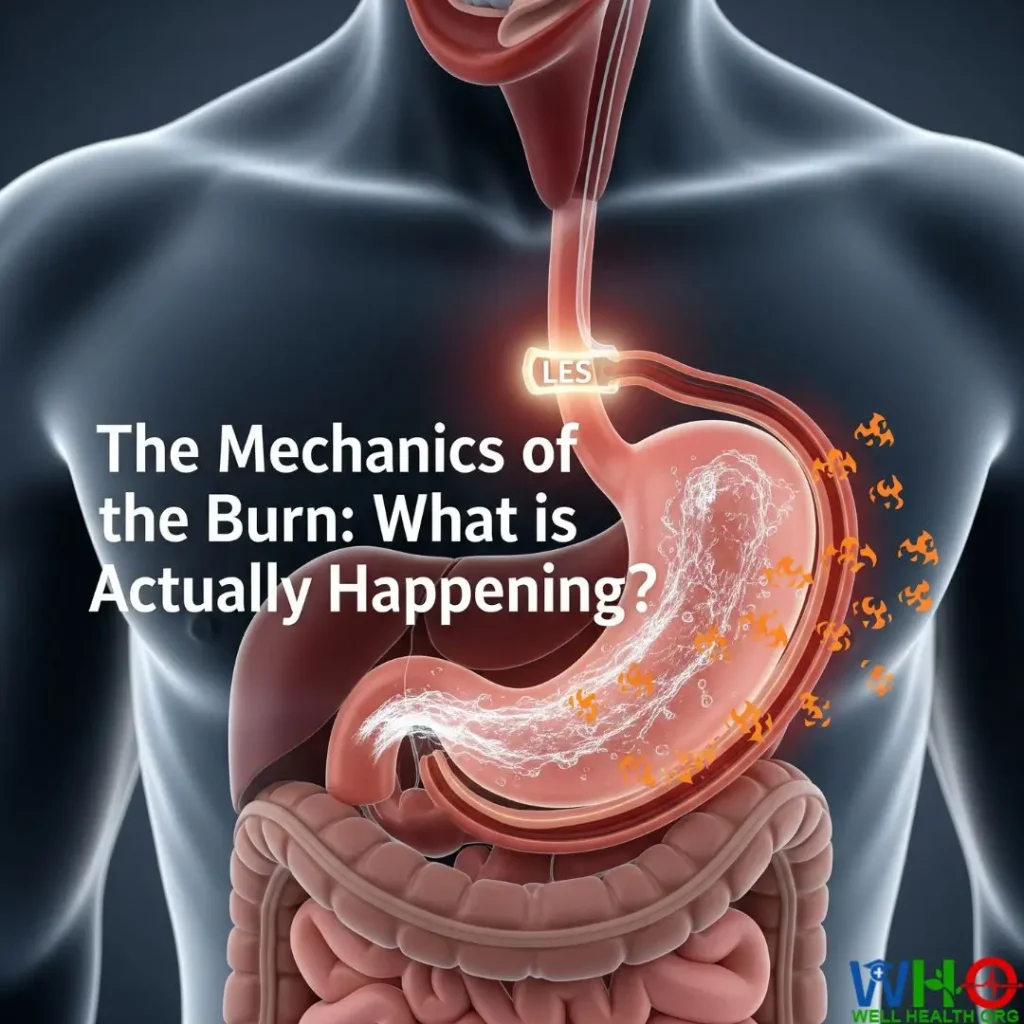
The Mechanics of the Burn: What is Actually Happening?
To defeat the enemy, you must understand the battlefield. To understand acidity, we need to look at the anatomy of the upper digestive tract.
The Faulty Trapdoor: The LES
At the center of the acidity drama is a small ring of muscle called the Lower Esophageal Sphincter (LES). Think of the LES as a trapdoor connecting your esophagus (food pipe) to your stomach.
- Normal Function: When you swallow, the LES opens to let food drop into the stomach, then snaps shut immediately to prevent anything from coming back up.
- The Malfunction: In cases of acidity, this trapdoor becomes lazy or weak. It relaxes when it shouldn’t, or it doesn’t close all the way.
The Acid Bath
Your stomach is an evolutionary marvel. It is designed to handle Hydrochloric Acid (HCl), a substance so corrosive it can dissolve metal. The stomach lining is coated in a protective mucus that shields it from this acid.
The esophagus, however, has no such protection. It is lined with sensitive tissue similar to the inside of your mouth. When the LES fails and stomach contents splash upward, that acid burns the esophageal lining. This chemical burn is what we call “heartburn.” It has nothing to do with the heart, but because the esophagus runs directly behind the heart, the pain is often felt in the chest.
Acidity vs. GERD: What’s the Difference?
It is important to distinguish between an occasional episode and a chronic condition.
- Acid Reflux/Acidity: This is the physical act of acid backing up. Almost everyone experiences this occasionally after a massive holiday meal.
- GERD (Gastroesophageal Reflux Disease): This is the chronic form of acid reflux. If you are experiencing acidity more than twice a week, or if it is causing inflammation in the esophagus, it is classified as GERD. This requires a more structured approach to management.
The Root Causes: Why Is This Happening to Me?
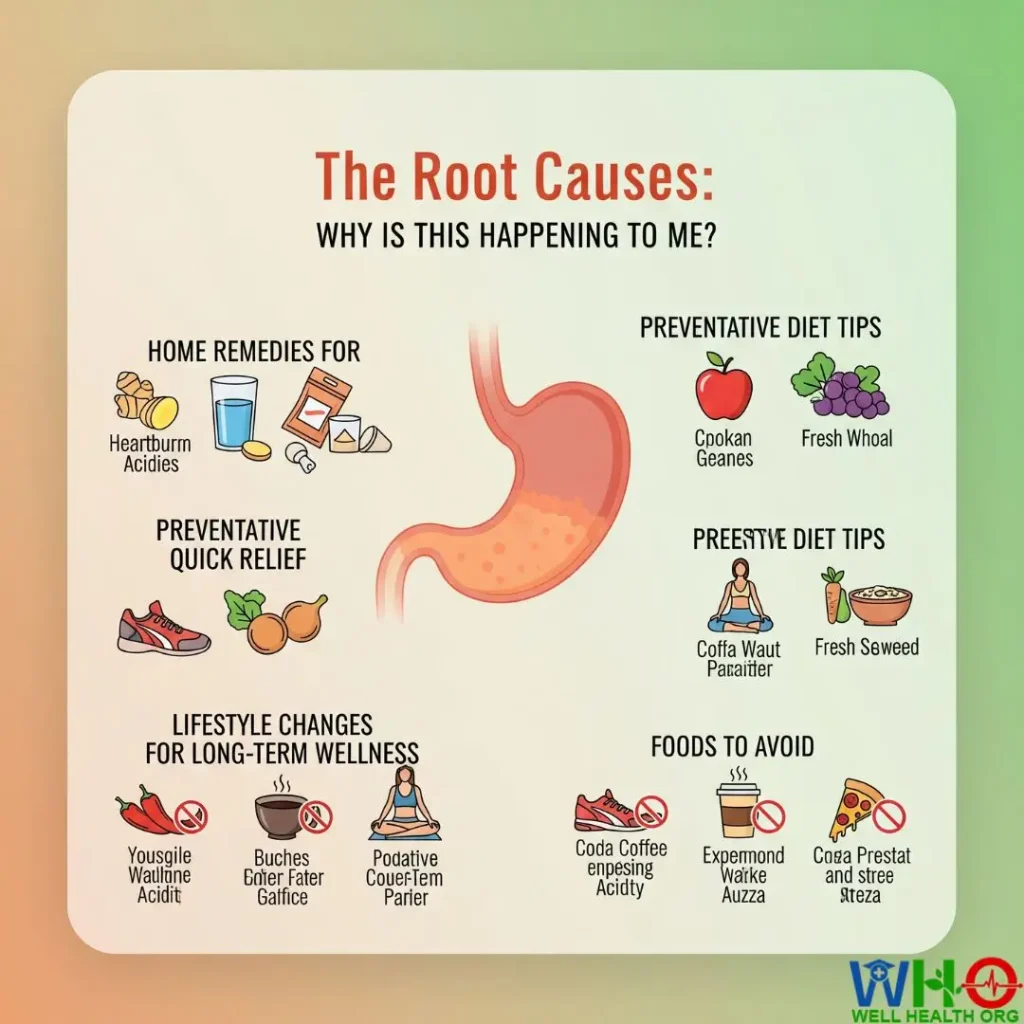
Acidity is rarely random. It is almost always a result of cause and effect. While you might blame the pepperoni pizza you had for lunch, the reality is often a combination of factors creating a “perfect storm” in your gut.
1. The Dietary Saboteurs
We all know spicy food is a trigger, but the list of culprits is more nuanced than that. Foods trigger acidity in two ways: either by being highly acidic themselves or by chemically relaxing the LES muscle.
- The Relaxers (The Silent Killers): These foods might not “burn” when you eat them, but they paralyze the trapdoor muscle.
- Peppermint: Often used for tummies, but for reflux, it’s a disaster because it relaxes the sphincter.
- Chocolate: Contains methylxanthine, a compound that relaxes smooth muscle tissue.
- Caffeine: Found in coffee and tea, it loosens the LES.
- Alcohol: A double threat—it relaxes the valve and stimulates the stomach to produce more acid.
- The Irritants: These directly irritate an already inflamed esophagus.
- Citrus Fruits: Oranges, lemons, and grapefruits.
- Tomatoes: The high acidity in marinara sauce or ketchup is a common trigger.
- Carbonation: The bubbles in soda expand the stomach, increasing pressure and forcing the valve open.
2. The Mechanical Triggers
Sometimes, it’s not what you eat, but the physical pressure on your stomach.
- Hiatal Hernia: A condition where the upper part of the stomach pushes up through the diaphragm into the chest cavity. This physically prevents the LES from closing properly.
- Visceral Fat: Excess weight, particularly around the midsection, acts like a heavy sandbag resting on your stomach. This increased intra-abdominal pressure pushes acid upward against gravity.
- Tight Clothing: High-waisted jeans, tight belts, or shapewear can physically squeeze the stomach, forcing contents upward.
3. The Lifestyle Factors
- The “Gobble” Effect: Digestion starts in the mouth. If you inhale your food without chewing, your stomach has to produce significantly more acid to break down the chunks.
- “Tech Neck” and Posture: Slumping over a computer or phone compresses the abdomen.
- Stress and the Vagus Nerve: The gut and brain are connected via the Vagus nerve. When you are stressed, your body enters “fight or flight” mode. This shuts down digestion, leading to food sitting in the stomach longer (gastric stasis), fermenting, and causing bloating and reflux.
- Tobacco: Nicotine is a potent muscle relaxant—unfortunately, it relaxes the LES while simultaneously reducing saliva production (which naturally neutralizes acid).
Immediate Relief: The “Fire Extinguisher” Protocol
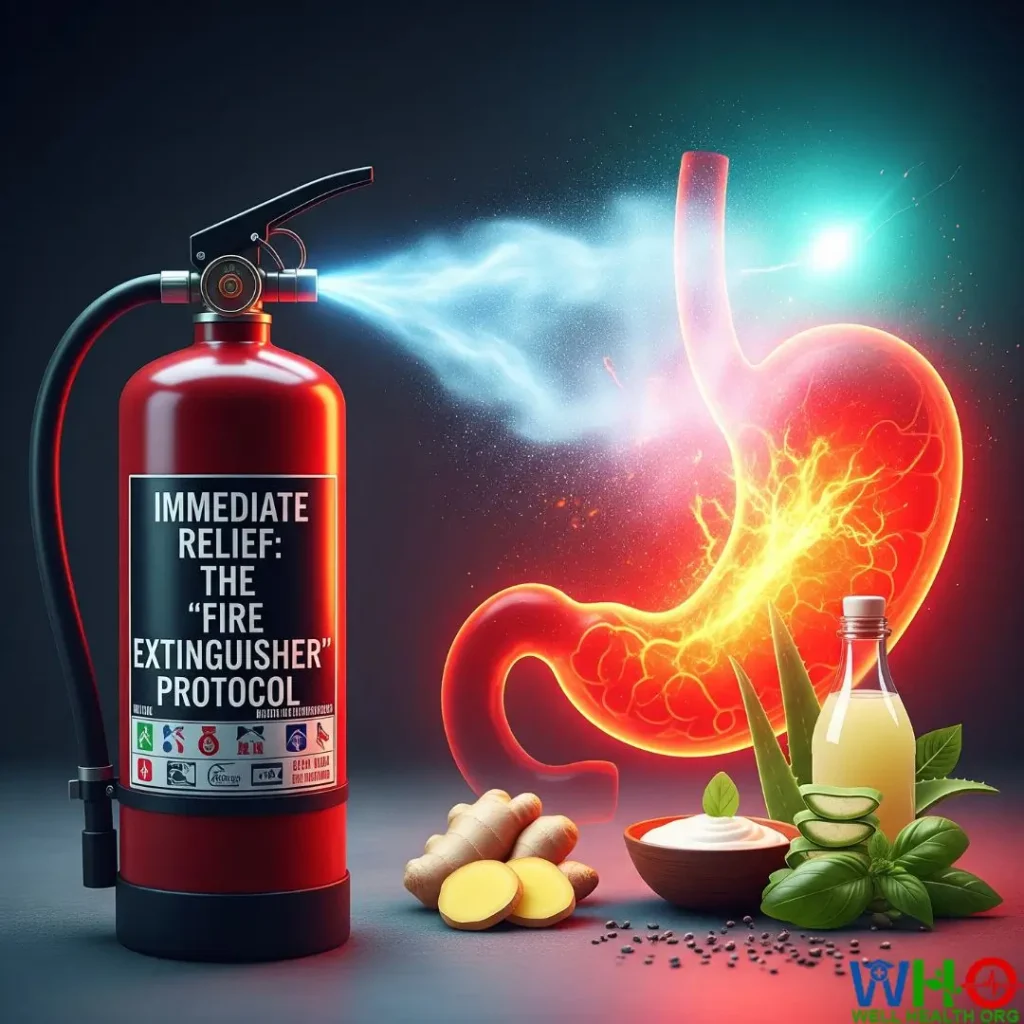
You are in pain right now. You need relief immediately. Before you rush to the pharmacy, try these rapid-response techniques to put out the fire.
1. The Baking Soda Solution
This is the oldest trick in the book because it works on basic chemistry. Baking soda (sodium bicarbonate) is a base (alkaline). Stomach acid is acidic. Mixing them creates a neutral reaction.
- The Recipe: Mix ½ teaspoon of baking soda into a small glass of warm water. Drink it slowly.
- The Feeling: You will likely burp. This is the gas (carbon dioxide) releasing from the chemical reaction. The burn should subside within minutes.
- Warning: Do not use this if you are on a low-sodium diet, and do not use it regularly as it can mess with your electrolyte balance.
2. The Power of Chewing Gum
It sounds too simple to be true, but chewing sugar-free gum is one of the most effective ways to clear acid from the esophagus.
- How it works: Chewing stimulates saliva production. Saliva is naturally alkaline. By swallowing frequently, you are essentially washing the acid back down into the stomach and neutralizing it with your own saliva.
- Tip: Choose a fruit flavor rather than peppermint, as mint can trigger reflux in some people.
3. Ginger: The Stomach Soother
Ginger is a pharmacological powerhouse. It is pro-kinetic, meaning it helps empty the stomach faster. If the stomach empties quickly, there is less pressure pushing acid up.
- How to use: Sip on warm ginger tea, chew on a small piece of candied ginger, or grate fresh ginger into hot water.
4. Fennel Seeds (Saunf)
A staple in Indian culture, fennel seeds contain a compound called anethole, which suppresses stomach spasms and calms inflammation.
- How to use: Chew a pinch of raw or roasted fennel seeds thoroughly after a meal. The act of chewing releases the oils and mixes them with saliva.
5. Aloe Vera Juice
Just as Aloe Vera soothes a sunburn on your skin, it soothes the chemical burn inside your esophagus.
- How to use: Drink 2 to 3 ounces of pure, decolorized Aloe Vera juice. Ensure it is intended for internal use (latex-free) to avoid a laxative effect.
6. The “Stand and Stretch” Maneuver
If you are sitting or lying down, stand up immediately. Gravity is your best friend.
- The Move: Stand straight and slowly raise your arms above your head. This lengthens the torso and opens up the chest cavity, relieving pressure on the stomach and allowing the LES to close more effectively.
Over-The-Counter (OTC) Meds: Knowing Your Options
Natural remedies are fantastic, but sometimes you need pharmaceutical help. It is crucial to understand that not all heartburn pills are the same. They fall into three distinct categories.
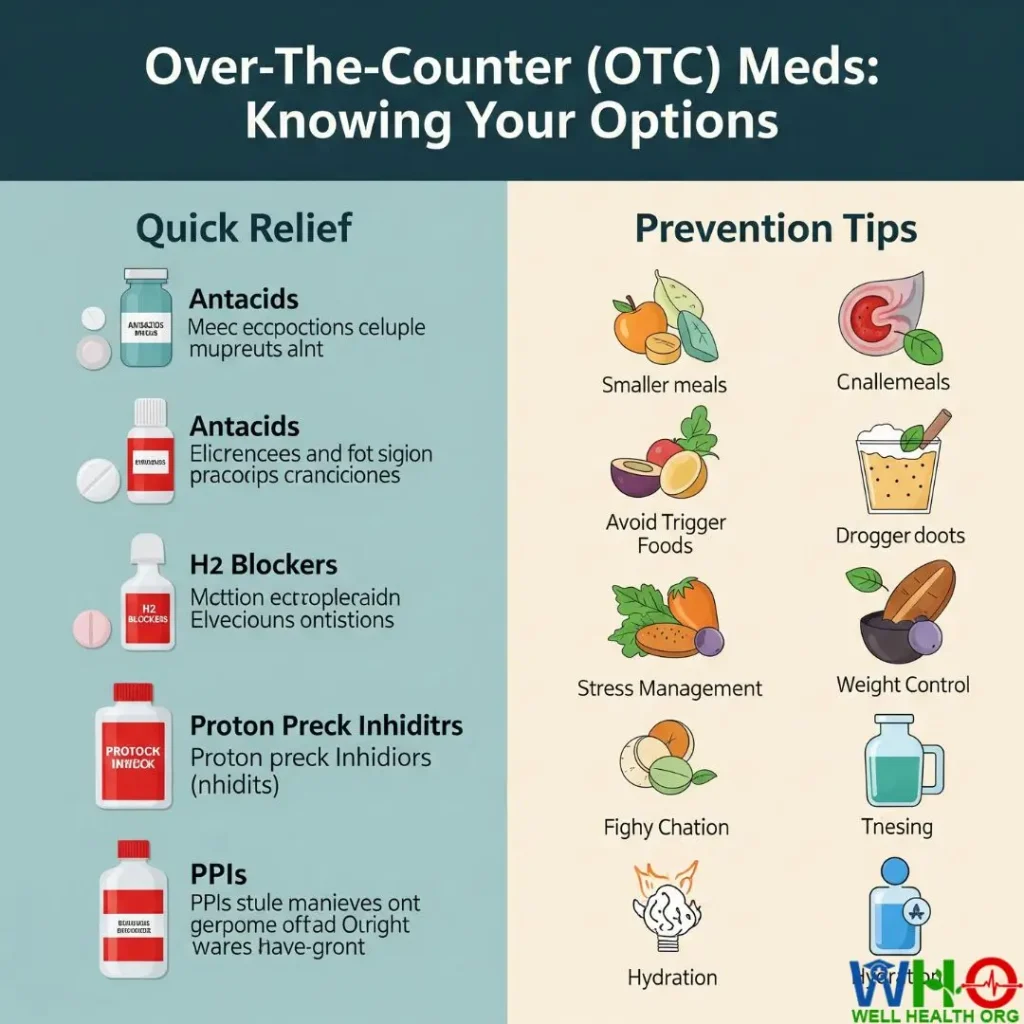
1. Antacids (The Neutralizers)
- Examples: Tums, Rolaids, Mylanta.
- How they work: They contain minerals (calcium carbonate, magnesium hydroxide) that chemically neutralize the acid already in your stomach.
- Speed: Very fast (minutes).
- Duration: Short-lived (30-60 minutes).
- Best for: Occasional mild heartburn after a big meal.
2. H2 Blockers (The Reducers)
- Examples: Famotidine (Pepcid), Cimetidine (Tagamet).
- How they work: They block the histamine receptors in the stomach lining that tell your cells to pump acid. They reduce acid production by about 70%.
- Speed: Slower (takes 30-60 minutes to kick in).
- Duration: Lasts longer (8-12 hours).
- Best for: Preventing heartburn if taken before a trigger meal.
3. Proton Pump Inhibitors (PPIs) (The Blockers)
- Examples: Omeprazole (Prilosec), Esomeprazole (Nexium).
- How they work: They shut down the acid “pumps” in the stomach cells almost completely.
- Speed: Slow (can take 1-4 days to reach full effect).
- Duration: Very long (24 hours+).
- Best for: Frequent, chronic GERD.
- Important Warning: PPIs are not meant for indefinite use without a doctor’s supervision. Long-term use has been linked to kidney issues, bone fractures, and nutrient deficiencies (like B12 and Magnesium) because you need stomach acid to absorb these nutrients.
The controversial Remedies: Milk and Apple Cider Vinegar
If you search online, you will find conflicting advice on these two items. Let’s set the record straight.

The Truth About Cold Milk
- The Myth: “Drink cold milk to put out the fire.”
- The Reality: Milk is temporarily soothing because it coats the throat and is slightly alkaline. However, milk is rich in calcium and fat. Calcium triggers the stomach to produce more acid to digest it.
- The Verdict: You might feel better for 20 minutes, but you may experience a “rebound effect” where the acidity comes back worse an hour later. Plant-based milks like Almond or Oat milk are safer choices as they are alkaline but lower in the proteins that trigger heavy acid production.
The Apple Cider Vinegar (ACV) Paradox
- The Theory: Some holistic practitioners argue that reflux is caused by too little acid (hypochlorhydria), causing the valve to stay open. Therefore, adding acid (vinegar) helps close the valve.
- The Reality: This is true for a subset of people, particularly older adults. However, if you have a raw, inflamed esophagus, drinking vinegar is like pouring alcohol on an open wound.
- The Verdict: Proceed with caution. Dilute 1 teaspoon in a large glass of water. If it burns, stop immediately. If it helps, your issue might be low stomach acid, not high.
Long-Term Prevention: The “Acid-Free” Lifestyle
Stopping the pain is good; preventing it from ever happening is better. By adopting an anti-inflammatory, acid-conscious lifestyle, you can heal your esophagus and strengthen your digestion.
1. The Acid Watcher Diet Protocol
You don’t need to eat bland food forever, but you do need a “healing phase.” Focus on foods with a pH of 5 or higher.
- The Alkaline Champions:
- Melons: Watermelon, cantaloupe, and honeydew are excellent at neutralizing acid.
- Bananas: A low-acid fruit that coats the stomach lining. (Note: A small percentage of people find bananas triggering; listen to your body).
- Oatmeal: A fantastic breakfast that absorbs acid like a sponge.
- Root Vegetables: Sweet potatoes, carrots, and beets are gentle and alkaline.
- Green Vegetables: Broccoli, asparagus, green beans, and cauliflower.
2. The “Left Side” Sleeping Rule
Nighttime reflux is dangerous because gravity isn’t helping keep the acid down, and you aren’t swallowing saliva to wash it back.
- The Anatomy: The stomach is a curved organ that sits on the left side of your body.
- The Hack: When you sleep on your left side, the stomach hangs below the esophagus. Acid pools in the stomach naturally.
- The Mistake: If you sleep on your right side, the stomach sits above the esophagus, allowing acid to drain directly into your throat.
- Recommendation: Buy a body pillow to keep you on your left side, or elevate the head of your bed by 6-8 inches using bed risers (propping yourself up with just pillows can actually compress the stomach and make it worse).
3. Mindful Eating Habits
How you eat is just as important as what you eat.
- The 80% Rule: The Japanese concept of Hara Hachi Bu—eat until you are 80% full. Overeating increases internal pressure (gastric distension), which forces the LES open.
- The 3-Hour Gap: It takes the stomach about 3 to 4 hours to empty a solid meal. If you lie down before the stomach is empty, you are asking for reflux. Set a strict kitchen curfew: no food 3 hours before bed.
- Chew to Liquid: Digestion is an energy-intensive process. By chewing your food until it is essentially liquid, you reduce the workload on the stomach, meaning it needs to produce less acid to get the job done.
4. Hydration Timing
Water is essential, but timing matters.
- Don’t chug a pint of water during your meal. This dilutes digestive enzymes and increases the volume in the stomach, adding pressure.
- Do sip small amounts during meals.
- Do drink the majority of your water between meals (30 minutes before or 1 hour after eating).
Special Considerations: Stress and Pregnancy
The Mind-Gut Connection
Have you ever felt “butterflies” in your stomach? That is the brain-gut axis at work. Chronic stress keeps your body in sympathetic nervous system dominance (high cortisol). This diverts blood flow away from the gut to the muscles. The result? Digestion halts, and acid builds up.
- The Remedy: Incorporate stress-reduction techniques specifically before meals. Try “Box Breathing” (inhale 4, hold 4, exhale 4, hold 4) for one minute before taking your first bite. This switches your body into parasympathetic mode (“Rest and Digest”).
Acidity in Pregnancy
Heartburn is one of the most common complaints in pregnancy, affecting up to 80% of women.
- The Cause: It’s a double whammy. First, the hormone progesterone relaxes muscles to accommodate the baby—but it also relaxes the LES. Second, the growing uterus physically pushes the stomach upward.
- The Solution: Focus on smaller, frequent meals (grazing) rather than three big ones. Yogurt and almond milk are excellent, calcium-rich buffers. Always consult your obstetrician before taking OTC meds.
When to See a Doctor: Red Flags Not To Ignore
While most acidity is manageable at home, there are symptoms that signal a need for professional medical intervention. Chronic exposure to stomach acid can cause cellular changes in the esophagus, leading to conditions like Barrett’s Esophagus (a precursor to cancer) or Esophageal Strictures (narrowing of the throat).
Schedule an appointment immediately if you experience:
- Dysphagia: The sensation of food getting stuck in your chest or throat.
- Odynophagia: Pain upon swallowing.
- Hematemesis: Vomiting blood or material that looks like coffee grounds (a sign of internal bleeding).
- Unexplained Weight Loss: Dropping weight without trying.
- Black, Tarry Stools: A sign of bleeding in the digestive tract.
- New Chest Pain: Especially if accompanied by shortness of breath or arm pain (this can mimic a heart attack).
- Hoarseness: A chronic change in voice or a chronic cough, indicating the acid is reaching your vocal cords (Laryngopharyngeal Reflux).
A gastroenterologist can perform an Endoscopy, where a small camera is used to inspect the lining of your esophagus and stomach to rule out damage or other conditions like ulcers or gastritis.
Conclusion: Taking Charge of Your Digestive Destiny
Living with acidity can feel like walking through a minefield, never knowing which meal will set off an explosion. But it doesn’t have to be this way. Acidity is not a life sentence; it is a feedback loop. Your body is telling you that something in your environment or routine isn’t working.
By combining the quick-relief tactics for emergencies with the slow, steady lifestyle changes of the “Acid-Free” protocol, you can retrain your LES, heal your esophageal lining, and reclaim the joy of eating.
Start small today. Maybe swap your afternoon coffee for herbal tea, chew your dinner a little longer, or commit to sleeping on your left side tonight. These micro-changes compound over time, leading to a life where that burning sensation is nothing more than a distant memory. Listen to your gut—it knows the way to health.
Frequently Asked Questions (FAQ) about Acidity
Q: Can stress cause acidity even if I eat healthy food?
A: Absolutely. Stress triggers the “fight or flight” response, which slows down digestion and can increase pain sensitivity in the esophagus. You can eat a perfect diet, but if you eat it while anxious, you may still experience reflux.
Q: Is lemon water good or bad for acidity?
A: It is controversial. While lemon juice is acidic, some people find that a small amount mixed with warm water and honey has an alkalizing effect on the body after digestion. However, for those with active, raw heartburn, the citric acid can be stinging. It is best to test with caution.
Q: Can exercise help with acidity?
A: Yes and no. Losing weight through exercise reduces pressure on the stomach. However, high-impact exercises (like sprinting or box jumps) or exercises that involve lying flat (like crunches) can force acid up. Low-impact activities like walking, cycling, or swimming are best.
Q: How long does it take for the esophagus to heal?
A: If you adhere to a strict diet and medication regimen (if prescribed), the inflammation in the esophagus usually begins to heal within 2 to 4 weeks, but complete healing of severe erosion can take 8 to 12 weeks.
Q: Does smoking really affect my stomach?
A: Yes. Nicotine is a direct relaxant of the Lower Esophageal Sphincter. Quitting smoking is often cited by gastroenterologists as the single most effective lifestyle change for stopping chronic reflux.
Medically Reviewed by Prof. Dr. Akram
Orthopedic Surgeon | Professor | Senior Medical Specialist
Prof. Dr. Akram is a distinguished surgeon with over 15 years of clinical expertise. Having served as a lead Emergency Specialist at Complex International Government Hospital, he currently leads a specialized team of 13 medical professionals at his private hospital. As a Professor at top medical universities, he ensures that every article on WellHealthOrg.com meets rigorous clinical standards.
Medical Disclaimer:
The information provided is for educational purposes only and is not a substitute for professional medical advice, diagnosis, or treatment. Always consult your physician for any medical concerns.
Our content is rigorously fact-checked by our 13-member Editorial Team under the clinical supervision of Prof. Dr. Akram.