Introduction: Why Hiccups Always Seem to Strike at the Worst Time
You’re sitting in a meeting, or maybe relaxing with friends — and suddenly, hic! That unmistakable sound escapes your mouth before you can even react. Hiccups have a way of showing up uninvited, turning even calm moments into awkward ones. While they usually vanish on their own, persistent hiccups can be both irritating and uncomfortable.
- Introduction: Why Hiccups Always Seem to Strike at the Worst Time
- The Science Behind Hiccups: What’s Actually Happening
- What Triggers Hiccups?
- How Home Remedies Work: Resetting the Hiccup Reflex
- 1. Hold Your Breath: The Classic Reset Technique
- How to Do It
- 2. Breathe Into a Paper Bag: Boost CO₂ Naturally
- How to Do It
- 3. Hug Your Knees: Relieve Diaphragm Pressure
- How to Do It
- 4. Try the Valsalva Maneuver: Stimulate the Vagus Nerve
- How to Do It
- 5. Use Measured Breathing: Calm Your Body Rhythm
- How to Do It
- 6. Sip or Gargle with Ice Water
- How to Do It
- 7. Swallow a Teaspoon of Sugar
- How to Do It
- 8. Bite into a Lemon or Taste Vinegar
- How to Do It
- 9. Suck on an Ice Cube
- How to Do It
- 10. Drink from the Far Side of a Glass
- How to Do It
- 11. Gently Pull on Your Tongue
- How to Do It
- 12. Massage Your Neck
- How to Do It
- 13. Press on Your Diaphragm
- How to Do It
- 14. Get a Sudden Fright
- 15. Apply Gentle Pressure to Your Eyeballs
- How to Do It
- When to See a Doctor: Persistent or Severe Hiccups
- Preventing Hiccups: Tips to Avoid Future Episodes
- Conclusion: Take Control of Your Hiccups Naturally
The good news? You don’t need fancy medicine to get rid of them. People have been experimenting with home remedies for hiccups for centuries, discovering simple tricks that can calm your diaphragm and restore your breathing rhythm naturally.
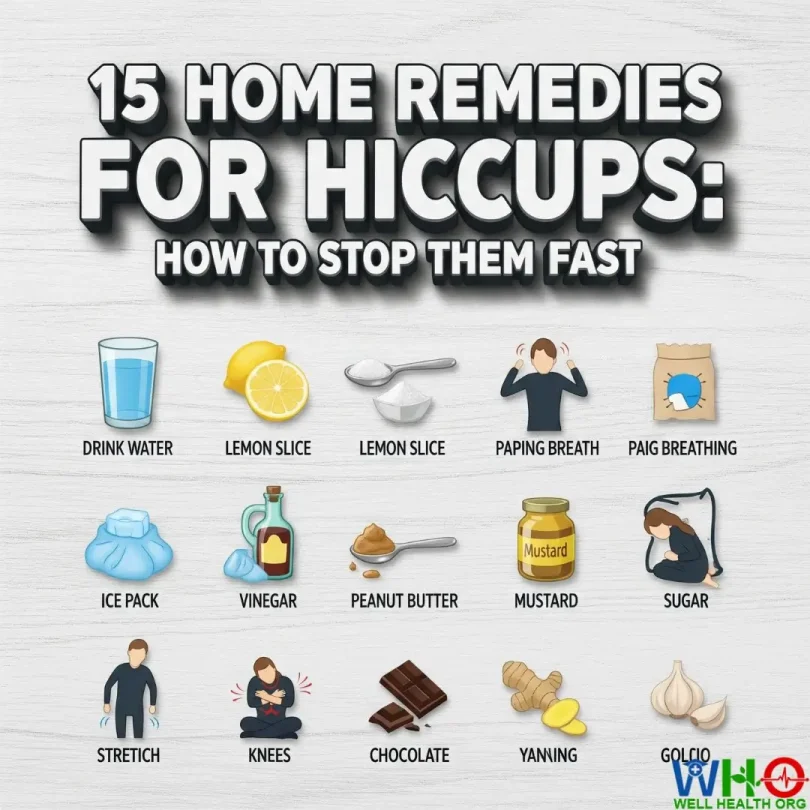
In this guide, we’ll explore 15 tried-and-true home remedies to stop hiccups fast. You’ll learn not only how to use them but why they work — from breathing hacks that reset your diaphragm to surprising sensory tricks that fool your nervous system into stopping the “hic” reflex.
The Science Behind Hiccups: What’s Actually Happening
Before diving into the remedies, it helps to understand what hiccups really are.
At the heart of every hiccup lies your diaphragm — a dome-shaped muscle located below your lungs that controls breathing. When you inhale, your diaphragm contracts and moves downward, pulling air into your lungs. When you exhale, it relaxes and moves upward, pushing air out.
A hiccup happens when this muscle spasms involuntarily. That sudden contraction forces air into your lungs quickly, and just as fast, your vocal cords snap shut — creating that familiar “hic” sound.
What Triggers Hiccups?
Hiccups can be triggered by anything that irritates the nerves controlling your diaphragm — mainly the vagus nerve and the phrenic nerve. Common culprits include:
- Eating too quickly or overeating
- Swallowing air while chewing gum or drinking fizzy drinks
- Consuming very hot, spicy, or cold foods
- Drinking alcohol or carbonated beverages
- Sudden changes in temperature
- Emotional stress or excitement
Most hiccups are harmless and disappear within minutes. However, persistent hiccups that last longer than 48 hours may signal underlying health conditions such as gastroesophageal reflux disease (GERD), nerve irritation, or even certain metabolic imbalances.
How Home Remedies Work: Resetting the Hiccup Reflex
The key to stopping hiccups lies in interrupting the reflex arc between your diaphragm and the nerves that control it. Home remedies do this in one of three main ways:
- Increasing carbon dioxide levels in your blood, which helps your diaphragm relax.
- Stimulating the vagus nerve, which runs from your brainstem to your stomach and plays a major role in hiccup reflex control.
- Distracting or “resetting” your body’s normal breathing rhythm using physical or sensory triggers.
Now, let’s explore 15 natural and effective remedies you can try — no equipment required, just quick, simple techniques that work.
1. Hold Your Breath: The Classic Reset Technique
It might sound too simple to work, but holding your breath is one of the most effective hiccup cures around.
How to Do It
- Take a deep breath in.
- Hold it for 10–20 seconds.
- Exhale slowly and repeat if necessary.
By holding your breath, you’re increasing the carbon dioxide (CO₂) concentration in your bloodstream. This rise in CO₂ helps relax the diaphragm, putting an end to those spasms.
💡 Pro Tip: For stubborn hiccups, try holding your breath, swallowing once, and then exhaling gently. The combination of pressure and CO₂ buildup can stop hiccups almost instantly.
2. Breathe Into a Paper Bag: Boost CO₂ Naturally
This method works on the same principle — raising your body’s carbon dioxide levels to calm the diaphragm.
How to Do It
- Take a small paper bag (never plastic!).
- Place it gently over your mouth and nose.
- Breathe in and out slowly for 10–15 seconds.
As you breathe into the bag, CO₂ builds up, signaling your diaphragm to relax and resume its normal rhythm.
⚠️ Caution: Stop immediately if you feel dizzy or lightheaded, and never use this method for young children or people with breathing difficulties.
3. Hug Your Knees: Relieve Diaphragm Pressure
This simple posture trick helps calm hiccups by gently compressing your chest cavity and putting mild pressure on your diaphragm.
How to Do It
- Sit on a comfortable surface.
- Bring your knees toward your chest.
- Wrap your arms around your legs and hold for 1–2 minutes.
This position restricts the diaphragm’s movement, helping it reset and stop the spasms that cause hiccups.
4. Try the Valsalva Maneuver: Stimulate the Vagus Nerve
This method involves exhaling against a closed airway to stimulate the vagus nerve — one of the main nerves involved in hiccups.
How to Do It
- Take a deep breath.
- Close your mouth and pinch your nose shut.
- Try to exhale forcefully as if you were blowing up a balloon or popping your ears on an airplane.
- Hold for 5–10 seconds, then release.
The pressure you create affects your chest and vagus nerve, often stopping hiccups immediately.
5. Use Measured Breathing: Calm Your Body Rhythm
If hiccups keep coming back, try focusing on slow, rhythmic breathing to stabilize your diaphragm.
How to Do It
- Inhale slowly for a count of 5.
- Exhale slowly for a count of 5.
- Repeat for several minutes until the hiccups stop.
This technique works because it forces your diaphragm to move in a controlled pattern, preventing the spasms that trigger hiccups.
6. Sip or Gargle with Ice Water
Cold water has a shocking effect on your vagus nerve, which can help end hiccups instantly.
How to Do It
- Take small sips of very cold water slowly and continuously.
- Alternatively, gargle with ice-cold water for 30 seconds.
The cold sensation “resets” the nerve signals controlling your diaphragm, helping you regain normal breathing.
7. Swallow a Teaspoon of Sugar
A favorite folk remedy, swallowing dry sugar can interrupt hiccups by stimulating the vagus nerve through the esophagus.
How to Do It
- Place one teaspoon of granulated sugar on your tongue.
- Let it dissolve slightly (5–10 seconds), then swallow it dry.
The grainy texture gently irritates the esophagus, causing nerve stimulation that “distracts” your diaphragm and stops the hiccup reflex.
💡 Alternative: If you prefer, try honey instead — it soothes the throat and provides a similar nerve-triggering effect.
8. Bite into a Lemon or Taste Vinegar
The sour shock method works by overstimulating your vagus nerve, which helps override the hiccup reflex.
How to Do It
- Suck on a lemon wedge, or
- Take a small sip of apple cider vinegar.
The sudden burst of sour flavor sends strong sensory signals to your brain, disrupting the hiccup pattern.
For kids, mixing a few drops of lemon juice with honey makes it more palatable.
9. Suck on an Ice Cube
Like sipping cold water, holding an ice cube in your mouth can also stimulate the vagus nerve and stop hiccups.
How to Do It
- Place a small ice cube in your mouth.
- Let it melt slowly rather than chewing it.
As the ice melts, the continuous cold exposure helps reset your diaphragm’s rhythm.
10. Drink from the Far Side of a Glass
This odd-looking trick has a loyal following because it often works.
How to Do It
- Fill a glass halfway with water.
- Lean forward at the waist.
- Drink from the opposite side of the rim (the far side).
This position forces your abdominal muscles to contract differently as you swallow, resetting the diaphragm and breaking the hiccup cycle.
11. Gently Pull on Your Tongue
Yes, it sounds strange — but gently tugging your tongue can stimulate nerves and muscles in your throat that influence the vagus nerve.
How to Do It
- Grip the tip of your tongue with your fingers.
- Pull it forward gently for 5–10 seconds, then release.
This technique increases pressure in your throat and eases hiccups quickly.
12. Massage Your Neck
Massaging your carotid sinus area can stimulate nerve endings that influence breathing and blood pressure regulation — sometimes halting hiccups.
How to Do It
- Locate the pulse on either side of your neck (just below your jaw).
- Gently massage in small circular motions for 5–10 seconds.
⚠️ Safety Note: Use light pressure, and never perform this technique on both sides simultaneously.
13. Press on Your Diaphragm
Applying light pressure to your diaphragm manually can physically help it relax.
How to Do It
- Place your hand just below your sternum (the area between your ribs).
- Apply gentle, consistent pressure for 10–15 seconds.
This helps stretch the muscle slightly and relieves the tension causing spasms.
14. Get a Sudden Fright
While it might sound silly, a good scare can actually stop hiccups by causing a sudden change in your breathing pattern.
When you’re startled, your body takes a sharp inhale — this sudden gasp can reset your diaphragm and stop the spasms.
💡 Fun fact: That’s why so many old home remedies involve asking someone to surprise or scare you when hiccups won’t stop!
15. Apply Gentle Pressure to Your Eyeballs
This lesser-known technique works by activating the vagus nerve through light pressure near your eyes.
How to Do It
- Close your eyes.
- Gently press your eyelids using your fingertips for 5–10 seconds.
- Release and repeat once if needed.
⚠️ Warning: Use only very light pressure. If you feel any pain or discomfort, stop immediately.
When to See a Doctor: Persistent or Severe Hiccups
Most hiccups are short-lived and harmless. However, when they last longer than 48 hours, they’re classified as persistent. If they continue beyond a month, they’re known as intractable hiccups.
Seek medical attention if you experience:
- Hiccups lasting more than 2 days
- Difficulty breathing, swallowing, or sleeping
- Chest pain or severe heartburn
- Weight loss or fatigue accompanying hiccups
Persistent hiccups may indicate underlying conditions such as:
- Gastroesophageal reflux disease (GERD)
- Central nervous system disorders
- Diabetes-related nerve issues
- Certain medications (like steroids or sedatives)
A doctor can perform tests to determine the cause and recommend appropriate treatment.
Preventing Hiccups: Tips to Avoid Future Episodes
Prevention is better than cure — and hiccups are no exception. Here’s how you can reduce your chances of getting them in the first place:
- Eat slowly and chew food thoroughly.
- Avoid overeating or eating while talking.
- Limit carbonated beverages and alcohol.
- Avoid sudden changes from hot to cold food or drinks.
- Manage stress through deep breathing or mindfulness.
- Stay hydrated throughout the day.
By practicing mindful eating and managing your breathing, you can minimize the risk of triggering hiccups.
Conclusion: Take Control of Your Hiccups Naturally
Hiccups are one of the body’s strangest reflexes — harmless yet incredibly annoying. Fortunately, you don’t need to wait helplessly for them to go away. The 15 home remedies for hiccups we’ve explored give you a variety of quick, natural options to calm your diaphragm, relax your body, and restore normal breathing.
From the simple hold-your-breath trick to surprising techniques like sipping from the far side of a glass, each method works by interrupting your body’s hiccup reflex in a unique way.
So, the next time you feel that first “hic,” take a deep breath, grab a glass of water, or try one of these proven tricks. Relief could be just seconds away.
Medically Reviewed by Prof. Dr. Akram
Orthopedic Surgeon | Professor | Senior Medical Specialist
Prof. Dr. Akram is a distinguished surgeon with over 15 years of clinical expertise. Having served as a lead Emergency Specialist at Complex International Government Hospital, he currently leads a specialized team of 13 medical professionals at his private hospital. As a Professor at top medical universities, he ensures that every article on WellHealthOrg.com meets rigorous clinical standards.
Medical Disclaimer:
The information provided is for educational purposes only and is not a substitute for professional medical advice, diagnosis, or treatment. Always consult your physician for any medical concerns.
Our content is rigorously fact-checked by our 13-member Editorial Team under the clinical supervision of Prof. Dr. Akram.