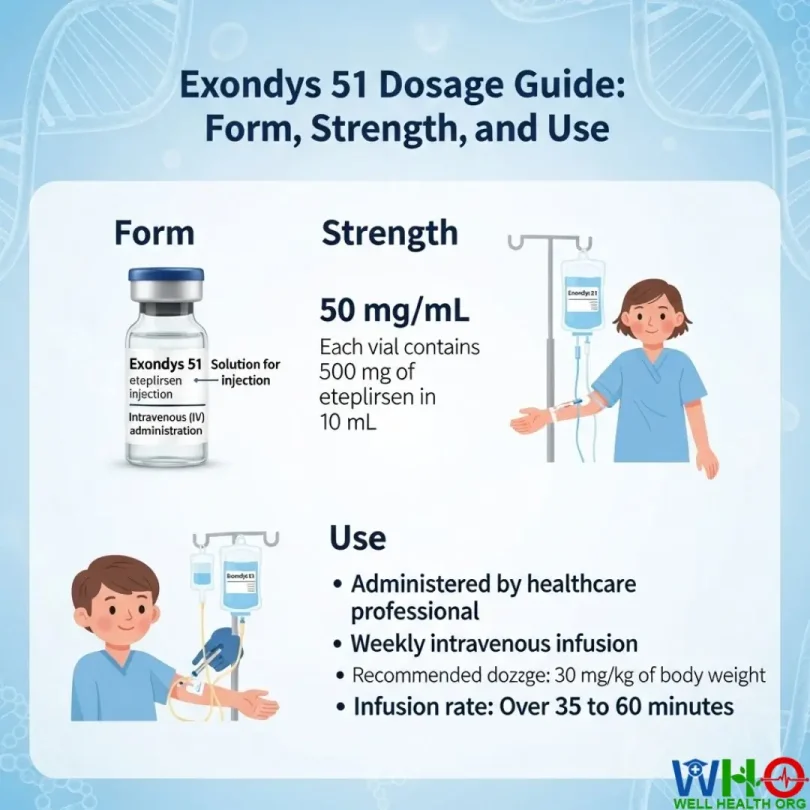
Exondys 51 Dosage Guide
Exondys 51 (eteplirsen) represents a major step forward in the treatment of Duchenne muscular dystrophy (DMD) — a rare and progressive genetic disorder that leads to muscle weakness and degeneration over time. Approved by the U.S. Food and Drug Administration (FDA) under accelerated approval, Exondys 51 offers hope to individuals whose DMD is caused by a specific mutation treatable by exon 51 skipping.
Because Exondys 51 works at the genetic level, it’s unlike traditional treatments. However, understanding how it’s administered, what dosage to expect, and how it works is essential to maximizing its benefits. This comprehensive guide covers everything you need to know about Exondys 51 — including its dosage, form, administration process, and long-term considerations — written to help patients and caregivers make informed treatment decisions with confidence.
What Is Exondys 51?
Exondys 51 is an antisense oligonucleotide, a class of medications that act on RNA to correct genetic mutations. Specifically, it targets a region in the DMD gene called exon 51, helping the body produce a shorter but still functional form of the dystrophin protein — a crucial element that keeps muscle fibers strong and intact.
In Duchenne muscular dystrophy, a mutation in the DMD gene prevents normal dystrophin production, leading to gradual muscle damage. By promoting exon skipping, Exondys 51 allows the body to create a truncated dystrophin protein that can partially restore muscle function and slow disease progression.
It’s important to note that Exondys 51 doesn’t cure DMD, but it can significantly slow down the progression of muscle deterioration and improve quality of life for eligible patients.
The medication was granted accelerated approval by the FDA, meaning it was approved based on initial evidence showing increased dystrophin production in muscle fibers. Ongoing clinical trials continue to evaluate its long-term clinical benefits, which will determine full FDA approval status in the future.
Currently, there is no generic version of Exondys 51 available, and it should only be prescribed and administered under the supervision of a healthcare professional experienced in treating DMD.
Exondys 51 Dosage: Form and Strength
Exondys 51 comes in a liquid solution form that must be administered via intravenous (IV) infusion by a qualified healthcare provider. It is not a pill or injection you can take at home; it must be infused into the bloodstream to ensure the correct amount reaches the body’s muscle tissues.
Form
- Intravenous (IV) infusion solution
Strength
- 50 milligrams per milliliter (mg/mL)
The drug is typically supplied in single-dose vials. Your healthcare team will prepare and dilute the medication before giving it to you. The exact volume used will depend on your prescribed dose, which is calculated according to your body weight.
Standard Dosage Recommendations
The dosage of Exondys 51 is based on body weight, ensuring each patient receives the correct amount relative to their size. The recommended dosage applies to both adults and children with DMD caused by a mutation amenable to exon 51 skipping.
For Adults with Duchenne Muscular Dystrophy
- Recommended dosage: 30 milligrams per kilogram (mg/kg) of body weight
- Frequency: Once weekly via IV infusion
For example, an adult weighing 75 kilograms (165 pounds) would receive:
75 kg × 30 mg = 2,250 mg once per week
This infusion is repeated weekly, generally on the same day and at approximately the same time to maintain a steady therapeutic effect.
For Children with Duchenne Muscular Dystrophy
The dosing for pediatric patients is identical to adults — it is also based on 30 mg/kg of body weight once weekly.
For instance, a child weighing 30 kilograms (66 pounds) would receive:
30 kg × 30 mg = 900 mg once per week
Because children grow, their dosage may need periodic adjustments to match weight changes. Your child’s care team will regularly monitor their height and weight to keep dosing accurate.
How Exondys 51 Is Given
Exondys 51 is administered as an intravenous (IV) infusion, meaning it’s delivered directly into the bloodstream through a vein. A trained healthcare professional — such as a nurse, physician, or infusion specialist — performs this procedure in a medical setting.
Infusion Process
- The medication is diluted with saline before administration.
- The infusion typically lasts 35 to 60 minutes, depending on the total dose and infusion rate.
- After the infusion, the healthcare team may flush the IV line with a saline solution to ensure the full dose is delivered.
Exondys 51 is usually given once a week. Most patients receive treatment in:
- A hospital or infusion center
- A doctor’s office
- Occasionally, at home, if a home-infusion service is arranged and approved by the treating physician
During treatment, your healthcare team will monitor you for any infusion-related reactions, such as headache, flushing, or mild discomfort at the IV site.
Tips for a Comfortable Infusion Experience
- Stay well-hydrated before your appointment.
- Bring something to keep you occupied, like a book or music, since the process takes about an hour.
- Let your care team know if you feel dizzy, lightheaded, or unwell during the infusion.
- Plan your infusion schedule consistently — same day and time each week.
Long-Term Treatment Plan
Exondys 51 is designed for long-term, ongoing therapy. Most patients continue treatment indefinitely, as long as it remains effective and well-tolerated. Stopping treatment could lead to faster progression of muscle weakness because the medication’s benefits depend on maintaining consistent dystrophin production.
Why Long-Term Use Matters
DMD is a lifelong genetic condition. Since Exondys 51 works at the RNA level, it requires ongoing administration to maintain therapeutic effects. Missing doses or stopping treatment could reverse gains made in slowing muscle decline.
Your healthcare provider will develop a personalized long-term plan that includes:
- Regular infusions
- Periodic monitoring of your physical function
- Adjustments to dosage as body weight changes
- Ongoing evaluation for side effects or signs of disease progression
Patients are often encouraged to combine treatment with physical therapy, nutritional support, and gentle exercise to maintain muscle strength and flexibility.
Factors That Can Affect Your Dosage
While body weight is the most important factor, a few other elements may influence your final dosage or infusion schedule.
1. Body Weight
The primary determinant of your dosage. Even small weight changes can alter the amount of medication required. Regular weight monitoring ensures the dose remains accurate.
2. Tolerance and Side Effects
If side effects occur — such as mild flu-like symptoms or infusion reactions — your doctor may adjust the infusion rate or pre-medicate you with antihistamines or corticosteroids to make treatment more comfortable.
3. Overall Health
Liver or kidney function can influence how your body processes medications. Although Exondys 51 is generally well tolerated, doctors may perform periodic lab tests to confirm that your organs are functioning normally throughout treatment.
What to Do If You Miss a Dose
Missing an Exondys 51 infusion appointment can happen — but it’s important to get back on track as soon as possible.
If you miss a scheduled dose:
- Contact your doctor’s office or infusion center immediately to reschedule.
- Do not double doses to make up for a missed infusion.
- Try to maintain your regular weekly schedule to ensure steady drug levels in your system.
Setting reminders on your phone, using a treatment calendar, or asking a family member for support can make it easier to stay consistent with appointments.
Common Questions About Exondys 51
1. Is the dosage of Exondys 51 similar to that of Vyondys 53?
Yes — both medications are part of the same drug class and work through exon skipping. They are given as weekly IV infusions at a dose of 30 mg/kg. However, they are not interchangeable.
- Exondys 51 targets exon 51 mutations.
- Vyondys 53 targets exon 53 mutations.
Your doctor will confirm which gene mutation applies to your case through genetic testing.
2. How long does Exondys 51 take to start working?
Although Exondys 51 begins to act at a molecular level after the first dose, visible or physical improvements are gradual. It may take months of consistent treatment before changes in muscle strength or function are noticeable. Regular monitoring and muscle function assessments help track progress.
3. Can children and adults receive the same treatment?
Yes, both can receive the same weekly IV treatment, but doses differ based on body weight. Pediatric patients should have their weight checked frequently so that the dose remains accurate as they grow.
4. Is Exondys 51 safe for long-term use?
Yes, clinical studies and ongoing patient monitoring suggest that Exondys 51 is generally safe for extended use. Common side effects are mild and include headache, fever, or mild skin reactions at the infusion site. However, regular checkups are necessary to ensure continued safety.
5. What should I do if I experience side effects during infusion?
If you feel unwell during an infusion — such as dizziness, chills, or shortness of breath — notify your nurse immediately. They can adjust the infusion rate or provide supportive care to manage your symptoms safely.
Your Path Forward with Exondys 51
Exondys 51 is more than a medication — it’s a bridge toward a better quality of life for patients and families affected by Duchenne muscular dystrophy. By understanding your dosage, infusion process, and treatment plan, you can play an active role in your care and improve your long-term outcomes.
Always maintain open communication with your healthcare team, follow your infusion schedule closely, and report any unusual symptoms or concerns promptly. Remember, consistency and collaboration are key to getting the most out of your treatment.
Medically Reviewed by Prof. Dr. Akram
Orthopedic Surgeon | Professor | Senior Medical Specialist
Prof. Dr. Akram is a distinguished surgeon with over 15 years of clinical expertise. Having served as a lead Emergency Specialist at Complex International Government Hospital, he currently leads a specialized team of 13 medical professionals at his private hospital. As a Professor at top medical universities, he ensures that every article on WellHealthOrg.com meets rigorous clinical standards.
Medical Disclaimer:
The information provided is for educational purposes only and is not a substitute for professional medical advice, diagnosis, or treatment. Always consult your physician for any medical concerns.
Our content is rigorously fact-checked by our 13-member Editorial Team under the clinical supervision of Prof. Dr. Akram.