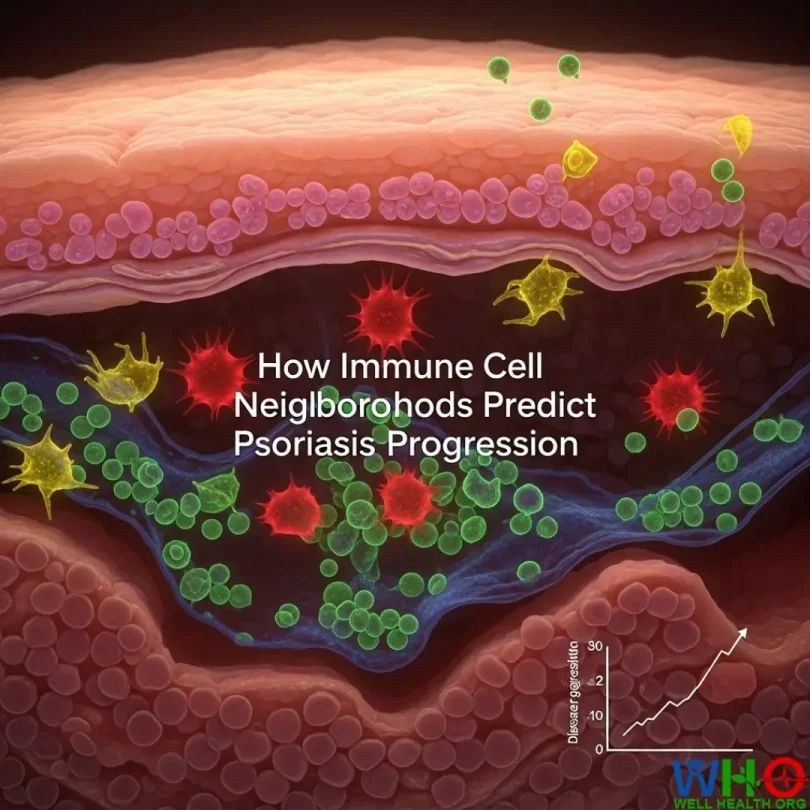
Introduction: A New Era in Psoriasis Research
Psoriasis is one of the most common chronic inflammatory skin diseases, impacting more than 125 million people globally. Despite its prevalence, predicting how the disease will evolve in an individual remains a puzzle for dermatologists and researchers. For some, psoriasis may appear as a single scaly patch that lingers for years without worsening. For others, it transforms into a severe, body-wide condition that not only disrupts skin health but also triggers joint damage, cardiovascular issues, and metabolic disorders.
- Introduction: A New Era in Psoriasis Research
- The Immune System’s Role in Psoriasis: A Complex Puzzle
- Beyond the Skin: Psoriasis as a Systemic Condition
- Immune Cell Neighborhoods: The Missing Link
- Breakthrough Research: How Scientists Are Mapping Psoriasis
- The Predictive Power of Immune Cell Neighborhoods
- Long-Term Studies: What We’ve Learned About Psoriasis Progression
- Why Early Intervention Matters
- Personalized Treatment Through Immune Profiling
- Future Directions in Psoriasis Research
- Transforming Psoriasis Management With Predictive Science
- Bridging Science and Everyday Patient Care
- The Broader Promise: Beyond Psoriasis
- The Ultimate Goal: Predictable, Personalized Psoriasis Care
- Conclusion
- FAQs About Psoriasis and Immune Cell Neighborhoods
This unpredictability is one of the greatest challenges patients face. Treatment strategies often rely on trial and error, and physicians must monitor patients closely for sudden changes in disease severity. But what if science could provide a roadmap—an early-warning system that predicts disease course before symptoms even appear or worsen?
That possibility is no longer just speculation. Thanks to spatial transcriptomics, a cutting-edge technology that maps how immune cells interact within tissue, scientists are discovering hidden “immune cell neighborhoods.” These microscopic communities reveal how immune cells cluster, communicate, and trigger inflammation. Emerging evidence suggests these neighborhoods may hold the secret to predicting psoriasis progression, guiding treatment decisions, and even preventing long-term complications.
The impact of these findings stretches far beyond skin health. Psoriasis is increasingly recognized as a systemic inflammatory disease, intricately tied to heart disease, diabetes, and psoriatic arthritis. By decoding immune cell neighborhoods, researchers hope to build a bridge between what’s happening beneath the skin and how the entire body responds to inflammation.
The Immune System’s Role in Psoriasis: A Complex Puzzle
To understand why immune cell neighborhoods are so revolutionary, it helps to revisit how psoriasis develops. At its core, psoriasis is not just a skin problem—it’s an immune system misfire. Normally, immune cells patrol the body, protecting against infections and repairing damaged tissue. In psoriasis, however, certain immune cells—particularly T cells and dendritic cells—become overactive. They mistakenly signal skin cells, called keratinocytes, to multiply far too quickly.
This overproduction leads to the hallmark psoriasis plaques: raised, inflamed patches covered with silvery-white scales. What patients see on their skin is merely the visible tip of a much larger biological iceberg. Beneath the surface, a network of immune interactions is constantly at play.
The challenge lies in the fact that psoriasis doesn’t follow a straight, predictable path. Patients often experience cycles of flares (sudden worsening of symptoms) followed by remission (a period of relative calm or complete clearance). Why some people experience mild, occasional flares while others progress to severe, chronic disease remains a critical question.
Adding to the complexity, psoriasis comes in different forms:
- Plaque psoriasis (Psoriasis vulgaris): The most common type, marked by thick, scaly patches.
- Guttate psoriasis: Small, drop-like lesions that often appear after infections.
- Inverse psoriasis: Smooth, shiny lesions that develop in skin folds.
- Pustular psoriasis: White pustules surrounded by red, inflamed skin.
- Erythrodermic psoriasis: A rare, life-threatening form involving widespread redness and scaling.
Each subtype has unique triggers, progression patterns, and responses to treatment. This diversity underscores why a one-size-fits-all approach doesn’t work. What dermatologists need is a deeper understanding of the immune system’s hidden architecture—and that’s where immune cell neighborhoods come into play.
Beyond the Skin: Psoriasis as a Systemic Condition
For decades, psoriasis was seen purely as a skin disease. But modern research has shattered that notion. Today, psoriasis is classified as a chronic, systemic inflammatory condition with far-reaching consequences for overall health.
Studies consistently show that people with psoriasis have higher risks of:
- Cardiovascular disease: Psoriasis-related inflammation accelerates plaque buildup in arteries, raising the risk of heart attack and stroke.
- Type 2 diabetes: Chronic immune activity disrupts glucose metabolism, contributing to insulin resistance.
- Metabolic syndrome: A cluster of conditions—including obesity, high blood pressure, and abnormal cholesterol levels—that significantly increase health risks.
- Psoriatic arthritis (PsA): Up to 30% of psoriasis patients develop this painful, joint-damaging condition.
These associations emphasize that the inflammation driving psoriasis isn’t confined to the skin. Even in areas that appear healthy to the naked eye, immune cells may already be orchestrating subtle changes. This silent inflammation may explain why some patients with mild-looking skin symptoms still face elevated risks of serious comorbidities.
Traditional diagnostic methods—such as Psoriasis Area and Severity Index (PASI) scores—rely heavily on visible skin lesions. While useful for grading current disease activity, they cannot capture the invisible immune dynamics simmering below the skin. Patients who appear stable may still harbor immune cell neighborhoods that predict worsening disease or systemic complications.
Immune Cell Neighborhoods: The Missing Link
So what exactly are immune cell neighborhoods, and why are they such a breakthrough?
Think of immune cells like people living in a city. Their behavior depends not only on their individual roles but also on their neighbors—who they interact with, how close they live, and what messages they exchange. Similarly, immune cells don’t act alone; their spatial organization within tissues determines how effectively they launch immune responses.
In healthy skin, immune cells form organized structures. T cells, B cells, dendritic cells, and macrophages settle in defined zones, working together to defend against infections while maintaining tissue balance. But in psoriasis, this organization breaks down. Immune cells begin clustering abnormally, creating chaotic neighborhoods that fuel chronic inflammation.
The tool that unlocked this discovery is spatial transcriptomics. Unlike traditional lab tests that analyze cells in isolation, this method measures gene activity in its original tissue context. In other words, it doesn’t just tell scientists what immune cells are doing—it shows where they’re doing it.
This mapping has revealed that:
- Psoriasis lesions are not just random clusters of immune cells; they form distinct inflammatory neighborhoods.
- The positioning of B cells—not just their numbers—appears crucial in predicting disease flares.
- Even healthy-looking skin in psoriasis patients harbors silent inflammatory neighborhoods that may foreshadow future lesions.
These findings suggest that immune cell neighborhoods could serve as early warning systems—detecting disease activity long before it becomes visible.
Breakthrough Research: How Scientists Are Mapping Psoriasis
One of the most groundbreaking studies on this subject was published in 2023, where researchers used spatial transcriptomics to analyze skin samples from 14 individuals. They compared three groups:
- Patients with active psoriasis lesions
- Patients diagnosed with psoriasis but no current lesions
- Healthy individuals with no psoriasis history
The results challenged conventional understanding of psoriasis progression.
- B cells migrating upward: In active psoriasis, B cells moved into the upper skin layers, suggesting a central role in disease activity. Their migration could serve as an early biomarker of flare-ups.
- Silent inflammation in “normal” skin: Even areas that looked healthy in psoriasis patients showed inflammatory activity. This means the disease spreads beyond visible patches, affecting seemingly unaffected tissue.
- Metabolic disruptions: Gene activity linked to lipid metabolism and energy regulation was elevated in psoriatic skin, providing a molecular explanation for the higher rates of diabetes and heart disease in patients.
- Severity-linked differences: Mild and severe psoriasis were found to have distinct immune neighborhoods. In severe cases, even unaffected skin showed systemic immune changes, pointing to a body-wide shift rather than localized inflammation.
This study was small, but its implications are huge. It provides molecular proof that psoriasis is not only widespread and systemic but also predictable when immune cell neighborhoods are analyzed correctly.
The Predictive Power of Immune Cell Neighborhoods
One of the most frustrating realities of psoriasis is its unpredictability. A patient may live for years with mild plaques, only to suddenly experience a severe flare that spreads across large areas of skin or triggers psoriatic arthritis. Conversely, others may see their symptoms stabilize or even recede without aggressive treatment.
Traditionally, dermatologists have relied on clinical observation—tracking visible lesions, severity scores, and patient-reported symptoms. While helpful, this approach has serious limitations. It’s like trying to predict a storm by looking at the clouds without measuring wind currents or air pressure. The real drivers of change are hidden beneath the surface.
This is where immune cell neighborhoods offer a revolutionary advantage. By analyzing how immune cells are positioned and interacting, researchers can potentially forecast:
- Which patients are likely to progress from mild to severe disease
- Who is at risk for systemic complications like psoriatic arthritis or cardiovascular disease
- How different psoriasis phenotypes (plaque, guttate, etc.) may behave over time
- Which treatments will work best based on individual immune profiles
Dr. Jessica Kaffenberger, a board-certified dermatologist at The Ohio State University Wexner Medical Center, explains the current limitation clearly: “We cannot predict psoriasis course at this time.” But she emphasizes that immune cell mapping could change that: “It would give patients a better roadmap for disease prognosis.”
In other words, immune cell neighborhoods could transform psoriasis management from reactive—treating flare-ups as they happen—to proactive, where doctors anticipate disease progression and intervene before major complications develop.
Long-Term Studies: What We’ve Learned About Psoriasis Progression
While immune cell neighborhood mapping is a relatively new field, long-term cohort studies have already provided valuable insights into how psoriasis evolves over time. One particularly important study, published in 2021, followed 721 people with recent-onset psoriasis for 10 years.
Here’s what the researchers found:
- Almost half (48%) of patients with severe psoriasis at onset remained severe after 10 years.
- Only 14% of patients with initially mild or moderate psoriasis progressed to severe disease.
- 20% of plaque psoriasis patients achieved minimal disease activity without treatment, suggesting that not all cases inevitably worsen.
- 48% of guttate psoriasis patients showed little progression, reinforcing the idea that different phenotypes have different natural histories.
The study also identified clear risk factors for severe progression, including:
- Plaque psoriasis phenotype: Patients with plaque-type psoriasis had a higher likelihood of worsening compared to guttate.
- Scalp involvement: Those with scalp lesions were nearly five times more likely to progress to severe disease.
- Initial severity: Patients starting with more than mild symptoms had a significantly higher risk.
- Joint involvement (peripheral enthesitis): Patients with tendon or ligament inflammation were four times more likely to develop psoriatic arthritis within 10 years.
These insights suggest that psoriasis is not random—it follows identifiable patterns. The challenge is linking those patterns to immune cell neighborhoods to create precise, personalized prediction models.
Why Early Intervention Matters
The ability to predict who will develop severe psoriasis could dramatically reshape treatment strategies. Right now, most treatment decisions are based on visible symptoms and patient-reported quality of life. But what if doctors could identify high-risk patients before their disease spirals out of control?
The 2021 cohort study hinted at this possibility. It found that patients who started systemic therapy early (such as biologics or oral immunosuppressants) were less likely to have severe disease 10 years later compared to those who began treatment later. While the study didn’t prove causation, it strongly suggests that early intervention could alter long-term outcomes.
Imagine two patients:
- Patient A develops mild plaque psoriasis at age 30. Their immune neighborhood mapping shows early signs of systemic inflammation, suggesting high risk for psoriatic arthritis. With this information, their doctor prescribes a biologic therapy early, reducing the chance of joint damage and severe disease.
- Patient B has similar symptoms but doesn’t undergo immune neighborhood analysis. Their psoriasis seems manageable at first, but within a decade, it progresses to severe skin involvement and joint disease, requiring aggressive treatment with more limited success.
This scenario illustrates the transformative potential of predictive immune mapping. Instead of waiting for damage to occur, doctors could act early, sparing patients years of suffering and preventing irreversible complications.
Personalized Treatment Through Immune Profiling
Not all patients respond to the same treatments. Some thrive on topical creams, others require biologics, and still others experience frustrating trial-and-error cycles. Immune cell neighborhood research may finally solve this problem by identifying which therapies are best suited for each patient’s unique immune landscape.
For example:
- B cell–dominated neighborhoods may respond better to therapies targeting B cell activity.
- T cell–heavy neighborhoods might benefit more from T cell–specific biologics.
- Patients with metabolic pathway activation may need dual therapies—addressing both immune dysfunction and metabolic imbalances.
This approach could also improve outcomes for patients with comorbidities. Since psoriasis is linked to diabetes and cardiovascular disease, combining immune-targeted therapies with metabolic interventions might reduce risks across multiple conditions.
Dr. Kaffenberger envisions a future where genetic testing, spatial immune mapping, and metabolic profiling are used together to create precision medicine strategies. Instead of treating psoriasis as a one-size-fits-all disease, doctors would tailor therapy to each patient’s biology.
Future Directions in Psoriasis Research
The field of immune cell neighborhood research is still young, but its future looks promising. Several avenues of exploration are already underway:
- Longitudinal immune mapping: Following patients over years to see how immune neighborhoods change during flares, remission, and treatment.
- Multi-omics integration: Combining spatial transcriptomics with genetics, proteomics, metabolomics, and clinical data to create comprehensive predictive models.
- Artificial intelligence and machine learning: Using AI to detect hidden patterns in massive datasets that humans might miss, enabling more accurate predictions.
- Therapeutic innovation: Designing drugs that specifically alter immune cell positioning or restore healthy neighborhood structures.
- Cross-disease insights: Studying immune neighborhoods in other inflammatory diseases (like lupus, rheumatoid arthritis, or Crohn’s disease) to identify common patterns and potential shared treatments.
The open science approach is also accelerating progress. The 2023 research team publicly shared their immune neighborhood maps, allowing scientists worldwide to collaborate, reanalyze, and build upon the findings. This transparency could shorten the path from discovery to clinical application.
Transforming Psoriasis Management With Predictive Science
The possibility of predicting psoriasis progression with immune cell neighborhood mapping could revolutionize how dermatologists and patients approach this condition. Traditionally, psoriasis care has been reactive—treating symptoms as they appear and adjusting therapies based on trial and error. This often leaves patients in cycles of hope, disappointment, and uncertainty.
With predictive immune mapping, care could shift to a proactive, personalized model:
- Early detection: Identifying hidden inflammation in “healthy-looking” skin before lesions form.
- Risk stratification: Distinguishing between patients likely to remain mild and those at risk for severe, systemic progression.
- Targeted treatment: Choosing therapies based on a patient’s immune neighborhood profile rather than generic severity scales.
- Preventing comorbidities: Addressing systemic inflammation early to reduce the risk of diabetes, cardiovascular disease, and psoriatic arthritis.
This approach could also empower patients. Instead of fearing the unknown, they could receive a clearer picture of what lies ahead—whether their disease is likely to stay manageable or requires aggressive prevention strategies.
Bridging Science and Everyday Patient Care
While these breakthroughs are exciting, translating them into everyday dermatology practice will take time. Spatial transcriptomics and immune mapping are still primarily research tools, requiring specialized labs and advanced computational analysis. For the average patient visiting a dermatologist, these methods aren’t yet available.
However, history shows how quickly medical technology can evolve. Just two decades ago, genetic sequencing was prohibitively expensive; today, consumer DNA kits are commonplace. Similarly, immune neighborhood mapping may one day become part of standard care. A simple skin biopsy could be analyzed not only for visible pathology but also for immune neighborhood signatures predicting disease trajectory.
In the meantime, patients can take proactive steps:
- Regular check-ups: Even if psoriasis seems mild, routine monitoring helps detect early changes.
- Managing comorbidities: Addressing blood pressure, cholesterol, and glucose levels reduces systemic risks.
- Healthy lifestyle habits: Anti-inflammatory diets, exercise, stress reduction, and smoking cessation can ease disease burden.
- Open communication with providers: Sharing flares, triggers, and quality-of-life impacts helps guide treatment decisions.
For dermatologists, the rise of immune neighborhood science underscores the need for integrated care. Collaboration with rheumatologists, cardiologists, and endocrinologists will become increasingly important as the systemic nature of psoriasis gains recognition.
The Broader Promise: Beyond Psoriasis
The concept of immune cell neighborhoods is not limited to psoriasis. Many other chronic inflammatory and autoimmune diseases—such as rheumatoid arthritis, lupus, multiple sclerosis, and inflammatory bowel disease—also involve misdirected immune activity. Understanding how immune cells cluster and communicate in these conditions could unlock entirely new approaches to treatment.
For example:
- In rheumatoid arthritis, immune neighborhoods in joint tissue might explain why some patients progress quickly to joint damage while others don’t.
- In Crohn’s disease and ulcerative colitis, mapping gut immune neighborhoods could reveal why inflammation is patchy and unpredictable.
- In lupus, systemic immune neighborhood mapping might identify early predictors of organ involvement.
This cross-condition perspective could lead to shared therapies that target immune neighborhood dynamics rather than disease-specific symptoms. In the long run, this might transform the entire field of immunology—shifting from treating end-stage inflammation to preventing its development at the neighborhood level.
The Ultimate Goal: Predictable, Personalized Psoriasis Care
For millions living with psoriasis, the unpredictability of the disease often feels like its cruelest aspect. Will today’s mild plaque remain stable, or is it the start of a lifelong struggle with severe inflammation and joint damage? Will current treatments continue working, or will they suddenly lose effectiveness?
Immune cell neighborhood mapping brings us closer to answering those questions with confidence. By making the invisible visible—revealing how immune cells organize and interact—this research gives doctors tools to foresee disease progression, tailor treatment plans, and prevent complications before they arise.
The future of psoriasis care could look very different:
- Patients leave the dermatologist’s office with not only a treatment plan but also a personalized risk profile.
- Therapies are selected based on a patient’s immune architecture, not just symptoms.
- Systemic risks like heart disease or psoriatic arthritis are identified and managed years earlier.
It’s a vision of medicine that replaces uncertainty with clarity and empowers patients to live fuller, healthier lives.
Conclusion
The discovery and mapping of immune cell neighborhoods represent a groundbreaking shift in how we understand psoriasis and, potentially, many other autoimmune diseases. Instead of focusing only on what’s visible on the skin, this approach reveals the invisible patterns of immune activity that drive disease progression and systemic complications.
With further research, immune neighborhood mapping could make psoriasis care predictable, personalized, and preventative. It offers hope for millions who currently live with uncertainty, transforming psoriasis from an unpredictable adversary into a condition that can be anticipated, managed, and controlled.
As science advances, collaboration between dermatologists, immunologists, geneticists, and computational scientists will be key. Together, they hold the power to turn this vision into reality—bringing precision medicine to the forefront of psoriasis care and changing the lives of patients worldwide.
FAQs About Psoriasis and Immune Cell Neighborhoods
1. What exactly are immune cell neighborhoods?
They are clusters of immune cells in tissue that interact closely with each other. Their spatial arrangement and communication patterns influence how the immune system behaves, making them crucial in diseases like psoriasis.
2. How is immune neighborhood mapping different from traditional diagnostic tools?
Traditional tools focus on visible symptoms and severity scores. Immune neighborhood mapping goes deeper, analyzing gene activity and cell positioning in skin tissue to reveal hidden patterns of inflammation.
3. Can immune neighborhood research help prevent psoriatic arthritis?
Yes, potentially. By detecting inflammatory activity in skin and joints before symptoms appear, doctors may one day predict who is at high risk for PsA and intervene earlier.
4. Is this technology available in everyday dermatology clinics?
Not yet. Currently, it’s a research tool used in specialized labs. However, as technology advances, it may become a routine diagnostic option in the future.
5. How can patients manage their condition while waiting for these advances?
Patients should maintain regular check-ups, monitor for new symptoms (especially joint pain), adopt healthy lifestyle habits, and discuss systemic risks with their healthcare providers. Early and open communication remains the best defense.
✨ Final Word: Psoriasis research is entering a new era where invisible immune patterns may soon provide visible answers. By understanding and predicting disease progression, patients and doctors alike can move from uncertainty to empowerment.
Medically Reviewed by Prof. Dr. Akram
Orthopedic Surgeon | Professor | Senior Medical Specialist
Prof. Dr. Akram is a distinguished surgeon with over 15 years of clinical expertise. Having served as a lead Emergency Specialist at Complex International Government Hospital, he currently leads a specialized team of 13 medical professionals at his private hospital. As a Professor at top medical universities, he ensures that every article on WellHealthOrg.com meets rigorous clinical standards.
Medical Disclaimer:
The information provided is for educational purposes only and is not a substitute for professional medical advice, diagnosis, or treatment. Always consult your physician for any medical concerns.
Our content is rigorously fact-checked by our 13-member Editorial Team under the clinical supervision of Prof. Dr. Akram.