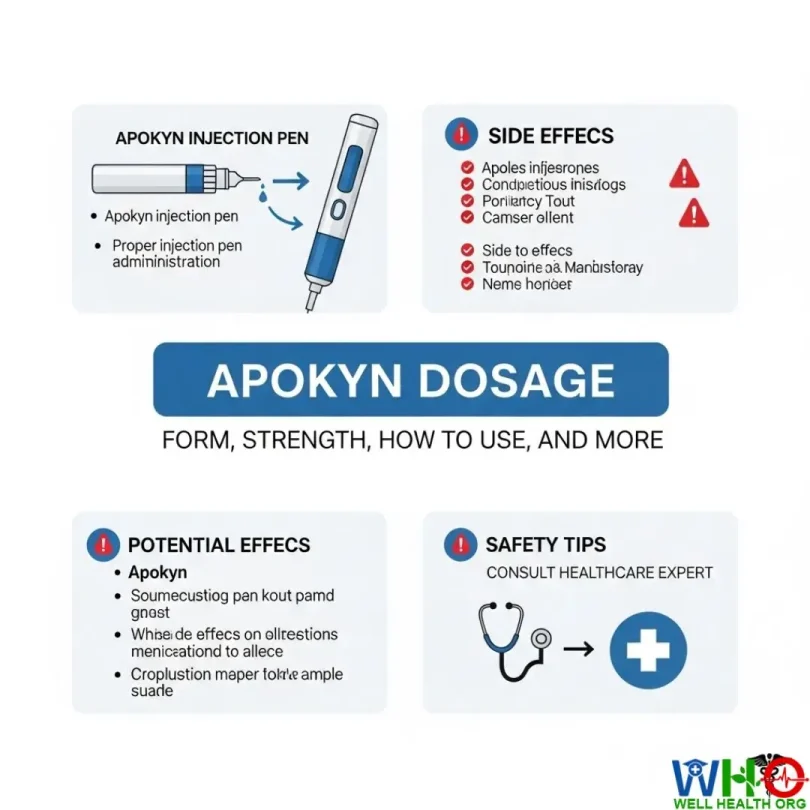
Parkinson’s disease is a complex neurological condition that affects millions of people around the world. Over time, it can cause shaking, stiffness, slowed movements, and challenges with balance and coordination. While daily medications such as levodopa remain the foundation of treatment, many people with Parkinson’s eventually experience “off episodes.” These are periods when symptoms return between doses of their regular medication, making it difficult to move, speak, or function normally.
- Understanding Apokyn: Form and Strength
- Prefilled Cartridges
- Standardized Strength
- Multi-Dose Use
- Apokyn Dosage Guidelines
- Starting Dose Protocol
- Dose Titration Process
- Frequency and Timing
- Proper Administration Techniques
- Choosing Injection Sites
- Site Rotation
- Equipment Preparation
- Potential Side Effects of Apokyn
- Common Side Effects
- Serious Side Effects
- Managing Nausea
- Drug Interactions and Precautions
- Significant Drug Interactions
- Medical Conditions Requiring Caution
- Proper Storage Guidelines for Apokyn
- Storage Conditions
- Cartridge Handling
- Needle Safety
- When to Seek Medical Advice
- Situations Requiring Immediate Medical Attention
- Situations for Prompt Doctor Consultation
- Routine Medical Follow-Up
- Maximizing Treatment Success with Apokyn
- Consistency in Use
- Tracking “Off” Episodes
- Lifestyle and Self-Care
- Integrating Apokyn with Other Treatments
- Frequently Asked Questions About Apokyn Dosage
- 1. What is the maximum dose of Apokyn I can take in a day?
- 2. How quickly does Apokyn start working?
- 3. Do I need to keep taking trimethobenzamide with Apokyn?
- 4. Can I inject Apokyn into the same spot every time?
- 5. What if I accidentally inject too much Apokyn?
- 6. Can Apokyn be used preventively before symptoms start?
- 7. Is Apokyn safe for everyone with Parkinson’s?
- Take Control of Your Parkinson’s Treatment with Apokyn
For patients facing these unpredictable and distressing episodes, Apokyn (apomorphine hydrochloride) provides a valuable treatment option. Unlike daily Parkinson’s drugs, Apokyn is used as needed for sudden symptom relief. When administered properly, it works quickly to help patients regain control of their movement and continue their activities.
This comprehensive guide will help you understand everything you need to know about Apokyn dosage and safe use—from its available form and strength, to step-by-step injection guidance, titration process, potential side effects, and precautions. Whether you’re a patient, caregiver, or healthcare professional, knowing how to use Apokyn correctly is essential for maximizing its benefits while minimizing risks.
Understanding Apokyn: Form and Strength
Apokyn is not taken as a pill or capsule like many Parkinson’s drugs. Instead, it comes as a liquid solution for subcutaneous injection, meaning it is delivered under the skin rather than into a vein or muscle.
Prefilled Cartridges
- Apokyn is supplied in prefilled glass cartridges that contain the medication in a ready-to-use liquid form.
- These cartridges are designed to be inserted into a special reusable injector pen that ensures accurate and consistent dosing.
- This system reduces the risk of contamination, dosing errors, or spills, making it safer and more convenient for at-home use.
Standardized Strength
Apokyn is available in a single, standardized concentration:
- 30 milligrams (mg) per 3 milliliters (mL) of solution.
- This equals 10 mg per mL.
Having a fixed strength simplifies the dosing process, since both patients and doctors can measure precise amounts using the injector pen without needing to calculate multiple formulations.
Multi-Dose Use
Each cartridge can be used for multiple injections. However, a new sterile needle must be attached for every injection to prevent infections and ensure safe delivery.
💡 Pro Tip: Patients and caregivers should be trained on how to load the pen correctly, change needles, and store unused cartridges properly to maintain safety and effectiveness.
Apokyn Dosage Guidelines
Unlike daily Parkinson’s medications, Apokyn is not taken on a fixed schedule. Instead, it is used only during off episodes—those times when Parkinson’s symptoms suddenly re-emerge between doses of regular treatment.
Because Apokyn is fast-acting and powerful, dosing must be carefully tailored to each patient under close medical supervision.
Starting Dose Protocol
- The typical starting dose is 0.1 mL (1 mg) or 0.2 mL (2 mg) injected under the skin.
- This first dose is always given in a medical setting—such as a doctor’s office or clinic—so healthcare providers can monitor your blood pressure, heart rate, and symptom response.
- The biggest concern during initial use is low blood pressure (hypotension), which can cause dizziness, fainting, or even loss of consciousness.
After the test dose, your doctor will observe you closely. If the dose provides good symptom relief without significant side effects, it may become your standard dose. If not, your doctor may adjust it over time.
Dose Titration Process
Apokyn dosing follows a gradual titration process:
- If the initial test dose is not effective enough, the amount may be increased in small steps every few days.
- The goal is to find the lowest dose that relieves off episodes while minimizing side effects.
- The maximum recommended single dose is 0.6 mL (6 mg). Doses above this limit are not more effective and may increase risks.
Frequency and Timing
- Apokyn can be used up to 5 times per day.
- Each injection must be separated by at least 2 hours.
- It should only be used when symptoms appear, not as a preventive drug.
This makes Apokyn a “rescue medication,” designed to be called upon during tough moments rather than forming part of a daily routine.
Proper Administration Techniques
Learning how to self-administer Apokyn—or how to assist a loved one—is essential for safe treatment. While the injector pen makes dosing easier, proper technique prevents complications and ensures the drug works effectively.
Choosing Injection Sites
Apokyn is injected into the fatty tissue just under the skin (subcutaneous tissue). Recommended areas include:
- Abdomen – Avoid the 2-inch area directly around the belly button.
- Front or outer thigh – Common and convenient injection site.
- Upper arm – Usually requires assistance from another person.
Site Rotation
Rotating injection sites is crucial to avoid:
- Skin irritation
- Hardening or lumps under the skin (lipodystrophy)
- Pain or swelling
By switching injection locations each time, patients maintain healthier skin and better absorption.
Equipment Preparation
- Wash your hands thoroughly before handling the injector.
- Insert the prefilled cartridge into the injector pen as instructed.
- Attach a new sterile needle for each use.
- Prime the pen if necessary (your doctor will teach you how).
- Clean the chosen injection site with alcohol before injecting.
After use, dispose of needles in a designated sharps container—never throw them into household trash.
💡 Patient Tip: Many patients find it helpful to practice injections with their healthcare provider until they feel confident. Caregivers can also be trained to administer injections safely.
Potential Side Effects of Apokyn
Like all medications, Apokyn can cause side effects. Some are mild and manageable, while others require immediate medical attention.
Common Side Effects
These usually appear at the start of treatment or after dose increases:
- Nausea and vomiting – The most common side effect.
- Drowsiness or fatigue – Some patients report feeling unusually sleepy.
- Dizziness or lightheadedness – Often related to drops in blood pressure.
- Injection site reactions – Redness, swelling, itching, or tenderness.
- Runny nose – A frequent but generally harmless effect.
Serious Side Effects
Although less common, these require urgent medical attention:
- Severe low blood pressure – Fainting or collapse.
- Loss of consciousness – Can occur during initial titration.
- Persistent severe nausea or vomiting – Beyond what is expected.
- Allergic reactions – Rash, itching, swelling, difficulty breathing.
- Behavioral or mental changes – Hallucinations, confusion, or unusual aggression.
If you or a loved one experiences any severe reaction, seek emergency medical care immediately.
Managing Nausea
Because nausea is so common, doctors often prescribe trimethobenzamide (Tigan), an anti-nausea medication.
- Patients usually start trimethobenzamide 3 days before the first Apokyn dose.
- It may be continued during treatment to improve comfort and reduce vomiting.
This precaution helps more patients tolerate Apokyn successfully.
Drug Interactions and Precautions
Apokyn works by stimulating dopamine receptors in the brain, which means it can interact with other drugs that affect dopamine, blood pressure, or nausea.
Significant Drug Interactions
- Blood pressure medications – May cause dangerously low blood pressure.
- Other anti-nausea drugs (except trimethobenzamide) – Many block dopamine and reduce Apokyn’s effectiveness.
- Certain psychiatric medications – Especially those that alter dopamine, like antipsychotics.
Medical Conditions Requiring Caution
Tell your doctor if you have:
- Kidney disease – May require dosage adjustments.
- Heart problems or low blood pressure – Higher risk of fainting.
- Psychiatric conditions – Risk of worsening hallucinations or confusion.
- Sleep disorders – Apokyn may cause sudden sleep episodes in some patients.
💡 Expert Insight: Patients with Parkinson’s often take multiple medications. A full medication review with your neurologist or pharmacist is critical before starting Apokyn.
Proper Storage Guidelines for Apokyn
Correct storage is essential to maintain Apokyn’s potency, safety, and sterility. Because it is a liquid medication stored in glass cartridges, it can be sensitive to temperature, light, and handling errors. Patients and caregivers should follow strict storage rules to avoid wasting doses or accidentally using compromised medication.
Storage Conditions
- Room temperature: Keep Apokyn between 68°F and 77°F (20°C to 25°C).
- Avoid freezing: Never freeze Apokyn cartridges. Freezing can damage the solution and make it unsafe to use.
- Protect from light: Store cartridges in their original packaging until you’re ready to use them. Light exposure can reduce medication quality.
- No extreme heat: Do not leave Apokyn in hot places such as cars, bathrooms, or near heaters.
Cartridge Handling
- Inspect each cartridge before inserting it into the injector pen.
- Do not use Apokyn if the solution is cloudy, discolored, or contains particles.
- Once a cartridge is loaded into the pen, follow the manufacturer’s instructions regarding how long it can remain in use.
Needle Safety
Always use a new sterile needle for every injection. Needles should be disposed of in an FDA-cleared sharps disposal container. Never reuse or share needles, as this increases the risk of infection or cross-contamination.
💡 Pro Tip: Keep extra cartridges and needles on hand so you are never caught unprepared during an “off” episode. Many patients store a backup injector pen as well, in case their primary device malfunctions.
When to Seek Medical Advice
Because Apokyn is a rescue medication used for sudden episodes, it’s crucial to know when to manage symptoms at home and when to seek urgent care. Not every reaction requires an ER visit, but patients and caregivers should stay alert to warning signs.
Situations Requiring Immediate Medical Attention
- Severe allergic reaction – Signs include swelling of the face or throat, difficulty breathing, or widespread rash.
- Loss of consciousness – A rare but serious risk during dose initiation or titration.
- Severe or persistent nausea/vomiting – Beyond what trimethobenzamide can manage.
- Overdose symptoms – Excessive drowsiness, confusion, extreme dizziness, or breathing difficulty.
If any of these occur, call 911 (or your local emergency number) right away.
Situations for Prompt Doctor Consultation
- Increasing frequency or severity of “off” episodes despite Apokyn use.
- New or worsening psychiatric symptoms (hallucinations, paranoia, or confusion).
- Severe dizziness or fainting episodes related to blood pressure changes.
- Unusual injection site reactions that do not go away with rotation.
Routine Medical Follow-Up
- Regular check-ins with your neurologist are essential.
- Your doctor may adjust your Apokyn dose, review possible drug interactions, and track your overall Parkinson’s treatment plan.
- Keep a treatment journal to record when and how Apokyn is used, how quickly symptoms improve, and any side effects. This provides valuable data for your healthcare team.
💡 Caregiver Insight: Family members or caregivers should be part of these discussions. They can often notice side effects, changes in behavior, or patterns in off episodes that patients may overlook.
Maximizing Treatment Success with Apokyn
Apokyn is most effective when used as part of a comprehensive Parkinson’s disease management plan. Beyond simply injecting during off episodes, patients can take several steps to get the most benefit.
Consistency in Use
- Always follow your doctor’s instructions carefully regarding dose and frequency.
- Do not self-adjust your dosage. If you feel your current dose is too strong or too weak, discuss it with your provider.
- Avoid skipping trimethobenzamide (if prescribed), as nausea is a common barrier to treatment success.
Tracking “Off” Episodes
Keeping a log of off episodes is extremely valuable. Record:
- Time of day episodes occur.
- Activities disrupted by symptoms.
- How long it takes Apokyn to work.
- Any side effects you notice.
Over time, these details help doctors fine-tune treatment and possibly recommend additional therapies.
Lifestyle and Self-Care
While Apokyn helps manage symptoms, lifestyle habits also make a difference in overall Parkinson’s care:
- Exercise regularly: Gentle activities such as walking, tai chi, and stretching improve mobility.
- Balanced diet: Adequate hydration and nutrition support brain health and medication absorption.
- Sleep hygiene: Apokyn may cause drowsiness, so maintaining a structured sleep schedule can reduce risks.
- Stress management: Stress can worsen symptoms. Techniques like meditation, breathing exercises, or support groups can help.
Integrating Apokyn with Other Treatments
Most patients use Apokyn alongside levodopa and other Parkinson’s medications. Your neurologist may adjust your base therapy if off episodes become frequent, rather than relying solely on rescue injections.
💡 Expert Note: Apokyn should never be viewed as a replacement for daily Parkinson’s medications, but rather as a valuable “rescue tool” when standard therapy temporarily fails.
Frequently Asked Questions About Apokyn Dosage
1. What is the maximum dose of Apokyn I can take in a day?
The maximum recommended single dose is 0.6 mL (6 mg). You may use Apokyn up to five times per day, with at least 2 hours between doses. Taking more increases the risk of side effects without providing better symptom relief.
2. How quickly does Apokyn start working?
Most patients notice improvement within 10 to 20 minutes of injection. The exact time may vary depending on individual factors, but Apokyn is generally considered a rapid-acting rescue medication.
3. Do I need to keep taking trimethobenzamide with Apokyn?
Yes, at least during the first few weeks. Your doctor will usually start trimethobenzamide 3 days before your first Apokyn dose to prevent nausea and vomiting. Some patients can stop later, while others may need it long-term.
4. Can I inject Apokyn into the same spot every time?
No. You must rotate injection sites to prevent skin irritation and lumps. Good site rotation ensures the medication is absorbed properly and reduces the risk of discomfort.
5. What if I accidentally inject too much Apokyn?
An overdose is a medical emergency. Symptoms may include severe drowsiness, dizziness, confusion, difficulty breathing, or fainting. Call 911 immediately if this occurs.
6. Can Apokyn be used preventively before symptoms start?
No. Apokyn is only effective when used during an actual off episode. Preventive use is not recommended and may increase the risk of side effects.
7. Is Apokyn safe for everyone with Parkinson’s?
Not necessarily. Patients with heart disease, low blood pressure, kidney problems, or certain psychiatric conditions may not be suitable candidates. A full medical evaluation is required before starting Apokyn.
Take Control of Your Parkinson’s Treatment with Apokyn
Living with Parkinson’s disease can be unpredictable, especially when off episodes disrupt daily activities. Apokyn offers a powerful way to regain control and independence by providing fast, effective relief when symptoms break through.
To use Apokyn safely and effectively:
- Follow your doctor’s dosing instructions exactly.
- Always inject correctly using the pen and rotate injection sites.
- Watch for side effects and report anything unusual to your healthcare provider.
- Use trimethobenzamide (if prescribed) to minimize nausea.
- Keep track of your off episodes to help fine-tune your treatment plan.
Most importantly, remember that Apokyn is just one part of a comprehensive Parkinson’s management strategy. Combined with daily medications, lifestyle adjustments, and support from healthcare professionals, it can significantly improve your quality of life.
If you or your loved one are considering Apokyn, have an open discussion with your neurologist. Together, you can decide whether this rescue therapy is the right choice and learn the skills needed to use it confidently and safely.
Medically Reviewed by Prof. Dr. Akram
Orthopedic Surgeon | Professor | Senior Medical Specialist
Prof. Dr. Akram is a distinguished surgeon with over 15 years of clinical expertise. Having served as a lead Emergency Specialist at Complex International Government Hospital, he currently leads a specialized team of 13 medical professionals at his private hospital. As a Professor at top medical universities, he ensures that every article on WellHealthOrg.com meets rigorous clinical standards.
Medical Disclaimer:
The information provided is for educational purposes only and is not a substitute for professional medical advice, diagnosis, or treatment. Always consult your physician for any medical concerns.
Our content is rigorously fact-checked by our 13-member Editorial Team under the clinical supervision of Prof. Dr. Akram.