Introduction
Intraretinal microvascular abnormalities, better known as IRMAs, represent one of the most important warning signs in diabetic eye disease. For millions of people living with diabetes, these tiny but significant changes in the retina can determine whether vision remains stable—or deteriorates into blindness.
- Introduction
- What Exactly Are Intraretinal Microvascular Abnormalities (IRMAs)?
- IRMAs and the Stages of Diabetic Retinopathy
- IRMAs vs. Neovascularization: Spotting the Difference
- Key Differences Between IRMAs and Neovascularization
- Why This Difference Matters
- Causes and Risk Factors: Why Do IRMAs Develop?
- The Role of High Blood Sugar
- Major Risk Factors for IRMAs
- A Real-World Example
- Diagnosis and Detection: How Do Doctors Find IRMAs?
- Clinical Eye Examination
- Advanced Imaging Techniques for Detecting IRMAs
- Fundus Photography
- Optical Coherence Tomography (OCT)
- Fluorescein Angiography (FA)
- Optical Coherence Tomography Angiography (OCTA)
- Treatment Options for IRMAs
- 1. Diabetes Management: The Foundation of Treatment
- 2. Blood Pressure and Cholesterol Control
- 3. Eye-Specific Treatments
- Laser Photocoagulation
- Anti-VEGF Injections
- Vitrectomy Surgery
- Management and Prevention: Taking Control Before It’s Too Late
- Regular Eye Examinations
- Lifestyle Modifications
- Working with Your Healthcare Team
- Warning Signs to Watch For
- Understanding Your Prognosis with IRMAs
- Factors Influencing Prognosis
- The Good News
- Long-Term Outlook: Living with IRMAs
- Daily Life Considerations
- Emotional and Mental Health
- Taking Control of Your Eye Health
- Step 1: Own Your Diabetes Management
- Step 2: Prioritize Eye Care
- Step 3: Make Lifestyle Changes Stick
- Conclusion
- Frequently Asked Questions (FAQs)
- 1. Are IRMAs reversible once they appear?
- 2. How quickly do IRMAs progress to proliferative diabetic retinopathy?
- 3. Can I prevent IRMAs if I have diabetes?
- 4. Do IRMAs cause vision loss by themselves?
- 5. How often should I see my eye doctor if I have IRMAs?
IRMAs occur when the blood vessels in the retina, the light-sensitive tissue at the back of your eye, become abnormal in response to oxygen deprivation and damage caused by high blood sugar levels. While they may not cause immediate vision loss, they are a red flag that diabetic retinopathy is advancing toward its most dangerous phase.
In this in-depth guide, we’ll break down everything you need to know about IRMAs—from what they are and how they differ from neovascularization, to their causes, risk factors, diagnosis, treatments, and prevention strategies. Most importantly, we’ll show you how early recognition and proactive care can protect your eyesight for years to come.
What Exactly Are Intraretinal Microvascular Abnormalities (IRMAs)?
The name might sound complicated, but let’s unpack it step by step.
- Intraretinal: within the retina.
- Microvascular: involving the very small blood vessels.
- Abnormalities: changes that deviate from the normal structure or function.
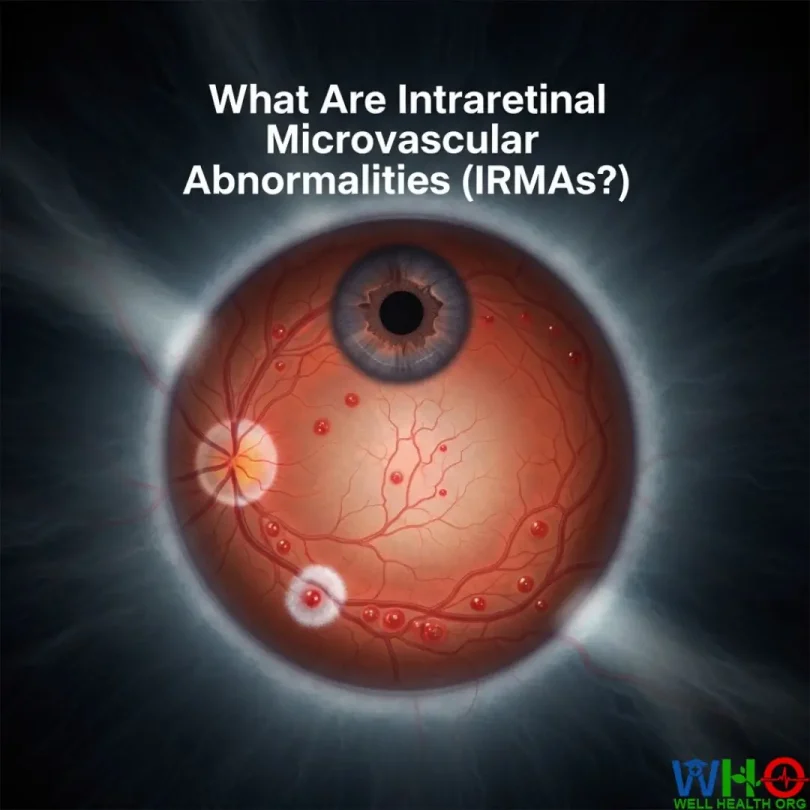
In simple terms, IRMAs are abnormal, tangled blood vessels that form inside the retina. Unlike healthy retinal vessels that branch out in an organized, tree-like structure, IRMAs look irregular, dilated, and disorganized.
They form as a response to oxygen deprivation. When high blood sugar damages the tiny retinal vessels, some areas of the retina no longer receive enough oxygen. In an attempt to survive, the retina tries to create new “detour pathways” for blood flow. Unfortunately, these pathways—IRMAs—are inefficient and unstable. Instead of restoring proper circulation, they signal worsening damage.
IRMAs and the Stages of Diabetic Retinopathy
IRMAs typically appear during severe nonproliferative diabetic retinopathy (NPDR)—the stage just before the most advanced phase, known as proliferative diabetic retinopathy (PDR).
Here’s why that matters:
- NPDR can remain stable for some time if controlled.
- Once IRMAs appear, the risk of progressing to PDR increases significantly.
- In PDR, new abnormal blood vessels (neovascularization) grow on the surface of the retina, leading to bleeding, scarring, and potentially irreversible vision loss.
In other words, IRMAs act as a red flashing warning light—not the disaster itself, but the sign that it’s on the horizon if nothing changes.
IRMAs vs. Neovascularization: Spotting the Difference
One of the most common sources of confusion in diabetic retinopathy is distinguishing IRMAs from neovascularization, the hallmark of PDR. At first glance, they both involve unusual blood vessels, but they are not the same.
Key Differences Between IRMAs and Neovascularization
| Feature | IRMAs | Neovascularization |
|---|---|---|
| Location | Inside the retinal layers (intraretinal) | On the surface of the retina or optic disc |
| Appearance | Disorganized, irregular, with sharp outlines | Rounded, branching, or fan-like patterns |
| Interaction with major vessels | Do not cross over major retinal blood vessels | Can cross over large vessels |
| Leakage tendency | Little to no fluid leakage | Frequently leak fluid, causing swelling and bleeding |
| Disease stage | Severe NPDR (precursor stage) | PDR (most advanced stage) |
Why This Difference Matters
Think of IRMAs as a storm warning—the conditions for a hurricane are present, but it hasn’t fully hit yet. Neovascularization, on the other hand, is the storm itself.
Recognizing IRMAs before they transition into neovascularization provides a critical opportunity for early intervention. It’s the point where doctors can step in to slow, or even prevent, the destructive cascade that leads to vision loss.
Causes and Risk Factors: Why Do IRMAs Develop?
The root cause of IRMAs can be summed up in one word: diabetes.
Both Type 1 and Type 2 diabetes can lead to the vascular changes that give rise to IRMAs. However, not everyone with diabetes develops them at the same pace. The progression depends on a mix of duration, blood sugar control, and additional risk factors.
The Role of High Blood Sugar
Chronically high blood glucose damages the endothelium—the thin inner lining of blood vessels—making them fragile, leaky, and prone to blockages. Over time, this leads to:
- Restricted or blocked circulation in parts of the retina.
- Oxygen starvation in these areas.
- Abnormal compensatory vessels (IRMAs) forming as a response.
Major Risk Factors for IRMAs
- Duration of diabetes: The longer you’ve lived with diabetes, the greater your risk. After 15–20 years, the likelihood of significant retinal damage rises steeply.
- Poor glycemic control: Hemoglobin A1C levels consistently above 7% accelerate microvascular damage.
- High blood pressure (hypertension): Adds extra strain on blood vessels, worsening retinal injury.
- High cholesterol: Contributes to vessel blockages and poor circulation.
- Pregnancy: Diabetic retinopathy can progress more rapidly during pregnancy.
- Kidney disease (diabetic nephropathy): Often linked with more severe retinal complications.
- Smoking: Reduces oxygen supply to tissues, compounding the retina’s oxygen deprivation.
A Real-World Example
Consider two patients:
- Patient A has had diabetes for 18 years but keeps their A1C around 6.8%, exercises regularly, and maintains normal blood pressure.
- Patient B has had diabetes for 10 years, but their A1C averages 9%, they smoke, and their blood pressure is uncontrolled.
Even though Patient A has had diabetes longer, Patient B is far more likely to develop IRMAs sooner because their overall disease management is weaker.
This example shows that while you can’t change how long you’ve had diabetes, you can absolutely influence your risk through lifestyle and medical management.
Diagnosis and Detection: How Do Doctors Find IRMAs?
IRMAs often go unnoticed by patients themselves because they don’t cause symptoms in the early stages. You might have perfectly clear vision while your retina is already undergoing significant stress. That’s why regular eye exams are essential.
Clinical Eye Examination
During a comprehensive dilated eye exam, an ophthalmologist will:
- Dilate your pupils using special drops.
- Use magnifying lenses and lights to examine the retina.
- Look for telltale signs such as microaneurysms, hemorrhages, venous beading, and IRMAs.
Doctors often rely on the 4-2-1 rule to classify severity of NPDR:
- Hemorrhages in all 4 quadrants.
- Venous beading in at least 2 quadrants.
- Moderate IRMAs in at least 1 quadrant.
Having one of these signs indicates severe NPDR. Two or more means very severe NPDR, which carries a high risk of progression to PDR.
Advanced Imaging Techniques for Detecting IRMAs
While a clinical exam provides valuable insights, modern imaging tools allow doctors to see the retina in extraordinary detail. These technologies help distinguish IRMAs from other abnormalities and track disease progression more accurately.
Fundus Photography
This technique uses a specialized camera to capture high-resolution photographs of the retina.
- Why it’s useful: Provides a baseline image so changes over time can be compared.
- For patients: You may see side-by-side photos during your follow-up visits, making it easier to understand how your retina is changing.
Optical Coherence Tomography (OCT)
OCT works like an “ultrasound with light,” using light waves to create cross-sectional images of the retina.
- Benefit: Helps doctors assess the thickness of the retina and identify swelling (macular edema).
- IRMAs on OCT: Appear as irregular structures within the retinal layers.
Fluorescein Angiography (FA)
During this test, a fluorescent dye is injected into your bloodstream. A special camera then takes rapid pictures of the retina as the dye travels through blood vessels.
- Why it’s important: Highlights blocked vessels, leakage, and abnormal circulation patterns.
- IRMAs vs. neovascularization: FA helps distinguish between the two by showing whether the abnormal vessels leak dye (typical for neovascularization but not IRMAs).
Optical Coherence Tomography Angiography (OCTA)
OCTA is one of the newest imaging tools. Unlike fluorescein angiography, it does not require dye injection. Instead, it maps blood flow within the retina using advanced OCT scanning.
- Advantage: Non-invasive, quick, and highly detailed.
- Special role: Particularly useful in separating IRMAs from early neovascularization, ensuring accurate staging of diabetic retinopathy.
💡 Pro Tip: If your doctor suggests OCTA, don’t hesitate—it can detect subtle changes long before you notice symptoms. This early detection often leads to better outcomes.
Treatment Options for IRMAs
Once IRMAs are detected, treatment focuses on two main goals:
- Slowing or halting disease progression.
- Protecting vision before irreversible damage occurs.
1. Diabetes Management: The Foundation of Treatment
IRMAs are a complication of diabetes, so controlling blood sugar is the most important step.
- Hemoglobin A1C target: Generally, below 7% is recommended, but your doctor may individualize the goal.
- Daily habits:
- Take medications as prescribed.
- Monitor blood sugar levels regularly.
- Follow a balanced, diabetes-friendly diet.
- Exercise consistently (both aerobic and resistance training help).
- Maintain a healthy weight.
🌟 Real-life scenario: Patients who lower their A1C from 9% to 7% may not only slow down retinopathy but sometimes even see mild improvements in retinal health.
2. Blood Pressure and Cholesterol Control
- Target blood pressure: Usually below 130/80 mmHg for people with diabetes.
- Cholesterol: Managing LDL cholesterol with diet or statins reduces vascular stress.
These measures not only protect the retina but also reduce the risk of kidney disease, stroke, and heart attack.
3. Eye-Specific Treatments
When IRMAs are advanced or nearing proliferative stages, doctors may recommend targeted eye treatments.
Laser Photocoagulation
- A precise laser seals off leaky or abnormal vessels.
- Reduces oxygen demand in the retina, decreasing the drive for abnormal vessel growth.
- Typically performed in-office with minimal recovery time.
Anti-VEGF Injections
- VEGF (vascular endothelial growth factor) fuels abnormal vessel growth.
- Medications like ranibizumab (Lucentis), aflibercept (Eylea), and bevacizumab (Avastin) block VEGF.
- Injections are given directly into the eye (don’t worry, numbing drops make it painless).
- Especially effective if macular edema (swelling in the central retina) is present.
Vitrectomy Surgery
- Reserved for severe cases when IRMAs progress to proliferative diabetic retinopathy with major bleeding or scar tissue.
- The surgeon removes the vitreous gel (the clear jelly in your eye) and replaces it with a saline-like solution.
- This clears blood and allows light to reach the retina again.
Management and Prevention: Taking Control Before It’s Too Late
Preventing IRMAs—and slowing their progression if you already have them—requires a team approach: you, your eye doctor, and your diabetes care team working together.
Regular Eye Examinations
- Annual eye exams are essential for anyone with diabetes, even if vision seems fine.
- If IRMAs or other diabetic changes are already present, exams may be needed every 3–6 months.
📝 Remember: Diabetic retinopathy can be completely silent until late stages. Skipping check-ups is one of the most dangerous mistakes people make.
Lifestyle Modifications
- Exercise: Aim for at least 150 minutes per week of moderate activity like walking, cycling, or swimming.
- Diet: Focus on whole grains, lean proteins, and high-fiber foods to stabilize blood sugar. Avoid sugary drinks and processed foods.
- Quit smoking: Smoking dramatically accelerates vascular damage. Quitting improves not just eye health but overall health.
- Stress management: Chronic stress can raise blood sugar and blood pressure. Practices like yoga, meditation, or even short daily walks can help.
Working with Your Healthcare Team
- Endocrinologist: Oversees diabetes management.
- Ophthalmologist: Monitors and treats eye changes.
- Dietitian: Helps create realistic meal plans.
- Primary care physician: Coordinates blood pressure, cholesterol, and general health.
Warning Signs to Watch For
IRMAs themselves don’t always cause symptoms, but progression toward proliferative diabetic retinopathy can lead to sudden vision changes. Contact your eye doctor immediately if you notice:
- New floaters (spots or threads drifting in your vision).
- Flashes of light in your field of view.
- Dark spots or shadow-like areas.
- Blurry or distorted vision that persists.
- Sudden vision loss in one or both eyes.
Think of these symptoms as emergency signals—prompt attention can often prevent permanent damage.
Understanding Your Prognosis with IRMAs
The discovery of intraretinal microvascular abnormalities can feel alarming, but it’s important to remember: IRMAs do not guarantee blindness. What they do signify, however, is that your retina is under significant stress and requires careful monitoring.
Factors Influencing Prognosis
- Blood sugar control – Patients who consistently maintain an A1C below 7% generally have a slower disease progression.
- Blood pressure and cholesterol management – Keeping both in check reduces the overall burden on blood vessels.
- Treatment adherence – Following through with laser therapy, anti-VEGF injections, or other recommended treatments can prevent severe vision loss.
- Frequency of eye exams – Early detection of new changes makes interventions far more effective.
- Overall health – Conditions like kidney disease, heart disease, or pregnancy can accelerate progression.
The Good News
With modern treatments, many people with IRMAs maintain good vision for years. Anti-VEGF injections and laser therapy have dramatically improved outcomes compared to even two decades ago.
🌟 Realistic outlook: If you commit to diabetes management and regular eye care, the odds of preserving functional vision are very much in your favor.
Long-Term Outlook: Living with IRMAs
For patients, the big question is often: What does this mean for the rest of my life?
Daily Life Considerations
- Routine checkups become a lifelong necessity—think of them as part of your diabetes care package.
- Lifestyle adjustments (healthy diet, exercise, smoking cessation) aren’t just about your eyes—they protect your heart, kidneys, and nerves too.
- Medication adherence makes the difference between stable disease and rapid progression.
Emotional and Mental Health
Hearing you have IRMAs can feel overwhelming. Many patients worry about losing their independence or their ability to work.
- Support groups (both online and in person) provide encouragement from people going through the same journey.
- Counseling or therapy can help manage anxiety about vision loss.
- Education is empowering—the more you understand about diabetic retinopathy, the more control you regain over your situation.
💡 Remember: IRMAs are not the end of the story—they are a call to action. With vigilance and care, you can lead a full life without major vision impairment.
Taking Control of Your Eye Health
If IRMAs are detected, the ball is in your court—and your doctor’s. Together, you can make a plan that dramatically reduces risks.
Step 1: Own Your Diabetes Management
Think of your blood sugar levels as the steering wheel—you’re in control of where your health goes.
- Aim for stable, steady glucose levels.
- Work with your endocrinologist to adjust medications as needed.
- Don’t underestimate the power of diet and exercise.
Step 2: Prioritize Eye Care
- Never skip an eye exam, even if you feel fine.
- Ask your ophthalmologist about imaging options like OCTA for early detection.
- Discuss treatment options before complications worsen.
Step 3: Make Lifestyle Changes Stick
- Quit smoking—it’s the single most powerful step you can take for your eyes and overall health.
- Exercise—even brisk walking for 30 minutes a day can reduce your risk of complications.
- Healthy eating—opt for foods that stabilize blood sugar, such as legumes, leafy greens, whole grains, and lean proteins.
Conclusion
Intraretinal microvascular abnormalities (IRMAs) are a critical warning sign in diabetic retinopathy. While they represent advancing damage in the retina, they also present a unique opportunity: the chance to intervene before irreversible vision loss occurs.
By understanding what IRMAs are, how they differ from neovascularization, and what risk factors contribute to their development, you can take proactive steps to protect your sight. Through strict diabetes control, regular eye exams, and timely treatments, many patients live for decades without significant vision impairment.
The key takeaway? Don’t wait for symptoms. Diabetic retinopathy often progresses silently, and by the time vision changes appear, damage may already be severe. Schedule your annual dilated eye exam, follow your diabetes care plan faithfully, and make lifestyle choices that safeguard your vision and your overall health.
Your eyesight is priceless—protect it today to enjoy a clearer tomorrow.
Frequently Asked Questions (FAQs)
1. Are IRMAs reversible once they appear?
IRMAs themselves rarely disappear, but with excellent diabetes control and timely treatment, their progression can be slowed dramatically. In some cases, improvements in retinal health are possible if blood sugar is stabilized early enough.
2. How quickly do IRMAs progress to proliferative diabetic retinopathy?
Progression varies widely. Some patients remain stable for years, while others advance within months. The speed depends on blood sugar control, blood pressure, cholesterol, and whether treatments are followed.
3. Can I prevent IRMAs if I have diabetes?
Yes. The best prevention is tight blood sugar control, keeping blood pressure and cholesterol within target ranges, not smoking, and having regular eye exams. Even if IRMAs do develop, prevention strategies can delay their worsening.
4. Do IRMAs cause vision loss by themselves?
Not directly. IRMAs usually don’t cause noticeable vision problems on their own. However, they signal that the retina is under severe stress and that dangerous changes like neovascularization may be coming soon.
5. How often should I see my eye doctor if I have IRMAs?
If IRMAs are detected, your ophthalmologist will likely recommend follow-ups every 3–6 months. This ensures that if proliferative diabetic retinopathy begins, it can be treated immediately before major vision loss occurs.
Medically Reviewed by Prof. Dr. Akram
Orthopedic Surgeon | Professor | Senior Medical Specialist
Prof. Dr. Akram is a distinguished surgeon with over 15 years of clinical expertise. Having served as a lead Emergency Specialist at Complex International Government Hospital, he currently leads a specialized team of 13 medical professionals at his private hospital. As a Professor at top medical universities, he ensures that every article on WellHealthOrg.com meets rigorous clinical standards.
Medical Disclaimer:
The information provided is for educational purposes only and is not a substitute for professional medical advice, diagnosis, or treatment. Always consult your physician for any medical concerns.
Our content is rigorously fact-checked by our 13-member Editorial Team under the clinical supervision of Prof. Dr. Akram.