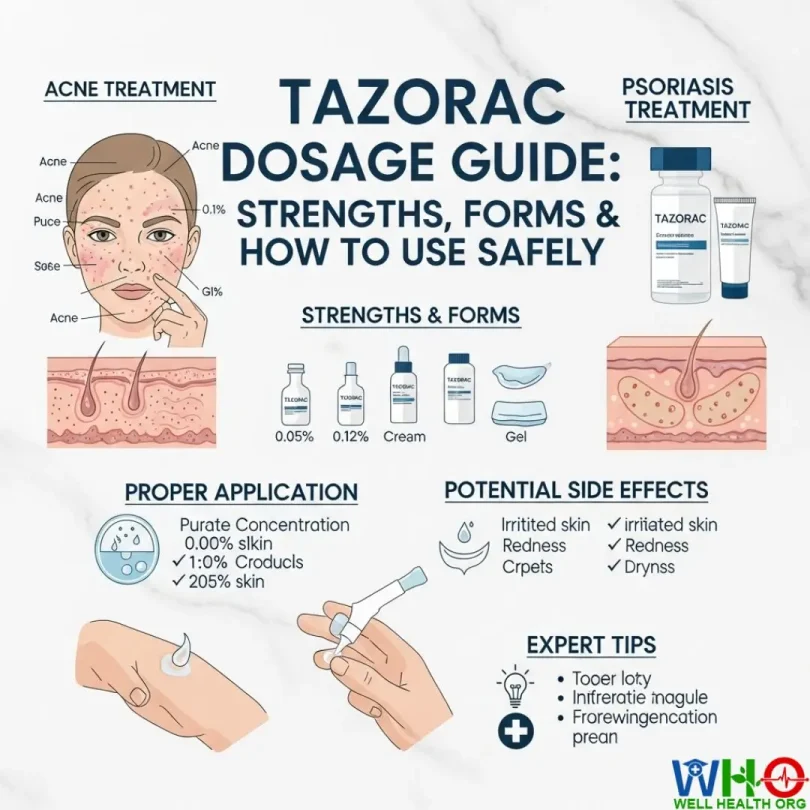
When it comes to treating acne and psoriasis, choosing the right medication can feel overwhelming. Among the wide range of topical therapies available, Tazorac (tazarotene) stands out as one of the most trusted and effective options. This FDA-approved retinoid has been proven to reduce breakouts, smooth skin texture, and manage the scaling and inflammation caused by psoriasis.
- Understanding Tazorac: What It Is and How It Works
- How Tazorac Works on Acne
- How Tazorac Works on Psoriasis
- Tazorac Forms and Available Strengths
- Cream Formulation
- Gel Formulation
- Strengths Available
- Tazorac Dosage Guidelines for Different Conditions
- 1. Dosage for Plaque Psoriasis
- 2. Dosage for Acne Treatment
- 3. Pediatric Dosing
- 4. Treatment Duration
- Managing Potential Side Effects
- Common Side Effects
- How to Minimize Irritation
- When to Call Your Doctor
- Who Should Avoid Tazorac?
- 1. Pregnancy and Breastfeeding
- 2. Patients with Eczema or Very Sensitive Skin
- 3. People on Photosensitizing Medications
- 4. Damaged or Irritated Skin
- Tips for Best Results: Optimizing Your Skincare Routine
- Evening Routine (When Applying Tazorac)
- Morning Routine (Protection & Repair)
- Extra Pro Tips
- Complementary Treatments with Tazorac
- For Acne
- For Psoriasis
- What to Avoid
- Expert Dermatologist Insights on Tazorac Usage
- What Experts Emphasize
- Real-World Patient Guidance
- Comparing Tazorac to Other Treatments
- Why Patients Choose Tazorac
- When Another Option May Be Better
- Long-Term Safety and Monitoring with Tazorac
- 1. Safety Monitoring
- 2. Long-Term Benefits
- 3. Realistic Expectations
- Frequently Asked Questions About Tazorac
- 1. How long does it take for Tazorac to work?
- 2. Can I use Tazorac with other acne medications?
- 3. Is Tazorac safe for teenagers?
- 4. Can I use makeup while on Tazorac?
- 5. What happens if I miss a dose?
- 6. Is it safe to use Tazorac long-term?
- 7. Can Tazorac help with anti-aging?
- Practical Patient Tips for Success
- Comparing Cost and Accessibility
- 1. Cost Considerations
- 2. Insurance Coverage
- 3. Alternatives if Unaffordable
- Final Safety Recap
- Moving Forward: Taking Control of Your Skin Health
But here’s the catch: with powerful treatments like Tazorac, the key to success lies in correct usage. Too much can lead to irritation, while too little may not deliver noticeable results. Understanding the right dosage, strengths, and application techniques can make the difference between frustration and clear, healthy skin.
This detailed guide breaks down everything you need to know about Tazorac, including:
- Its forms and available strengths
- Dosage recommendations for acne, psoriasis, and pediatric use
- How to apply it safely and effectively
- Common side effects and how to manage them
- Expert dermatologist tips for best results
- How Tazorac compares to other treatments
By the end, you’ll have a clear roadmap for using Tazorac confidently, whether you’re starting treatment for the first time or looking to optimize your current skincare routine.
Understanding Tazorac: What It Is and How It Works
Tazorac is the brand name for tazarotene, a topical retinoid (vitamin A derivative) used to treat acne vulgaris and plaque psoriasis. Retinoids are often called the “gold standard” in dermatology because they work at the cellular level, improving skin health from the inside out.
How Tazorac Works on Acne
- Reduces clogged pores → Tazorac normalizes skin cell turnover, preventing the buildup of dead skin that leads to blackheads and whiteheads.
- Decreases inflammation → It calms redness and swelling associated with acne breakouts.
- Targets deeper pimples → By reaching deeper layers of the skin, Tazorac helps reduce painful cystic acne.
How Tazorac Works on Psoriasis
Plaque psoriasis occurs when skin cells grow too quickly, creating thick, scaly patches. Tazorac helps by:
- Slowing down excessive cell growth
- Reducing scaling and thickness of plaques
- Improving overall skin appearance
💡 Think of Tazorac as a skin “reset button.” For acne, it clears the pipeline that clogs pores, and for psoriasis, it slows down the overactive factory that produces too many skin cells.
Tazorac Forms and Available Strengths
Tazorac comes in two topical formulations, both designed for slightly different uses and skin types.
Cream Formulation
- FDA-approved uses:
- Plaque psoriasis in adults
- Acne in adults and children 12 years and older
- Texture & feel: More moisturizing, making it ideal for people with normal to dry skin.
Gel Formulation
- FDA-approved uses:
- Facial acne
- Plaque psoriasis affecting no more than 20% of body surface area
- Texture & feel: Lightweight and fast-absorbing, perfect for oily or combination skin types.
Strengths Available
- 0.05% → Lower concentration, usually prescribed first to test tolerance.
- 0.1% → Higher concentration, often introduced if the skin adapts well or if stronger treatment is required.
💡 Dermatologist tip: If you have sensitive skin or are prone to irritation, starting with the 0.05% cream is usually safest. Patients with oilier skin often do better with the gel form.
Tazorac Dosage Guidelines for Different Conditions
Getting the dosage and application right is essential for achieving results without unnecessary irritation. Let’s break down how Tazorac is used for psoriasis, acne, and in children.
1. Dosage for Plaque Psoriasis
- Typical starting point: Tazorac cream 0.05%, applied once daily in the evening.
- Application method:
- Wash skin gently and pat completely dry.
- Apply a thin, even layer only to affected plaques.
- Gel formulation: Used when plaques affect 20% or less of the body surface area.
⚠️ Important: Safety data is limited for treating larger skin areas, so Tazorac should not be used extensively across the body without medical supervision.
2. Dosage for Acne Treatment
- Cream or Gel (0.1%) can both be used.
- Standard routine: Apply a pea-sized amount once nightly to affected areas after cleansing.
- Step-by-step application:
- Cleanse with a gentle, fragrance-free cleanser.
- Wait at least 20–30 minutes until skin is fully dry.
- Apply a thin layer of Tazorac evenly across acne-prone areas, not just active pimples.
- Moisturize afterward (or at least 1 hour before application if skin is very sensitive).
💡 Why dryness matters: Applying Tazorac to damp skin can increase irritation and burning.
3. Pediatric Dosing
- Approved for children 12 years and older.
- For psoriasis: Start with 0.05% gel, adjusting to 0.1% if needed.
- For acne: Dermatologists often prescribe 0.1% strength in either cream or gel form.
- Pediatric dosing always requires medical supervision.
4. Treatment Duration
- Standard course: 12 weeks for both acne and psoriasis.
- Long-term use: Some patients with psoriasis use Tazorac safely for up to a year under supervision.
- Acne patients may continue longer if results are stable and side effects are manageable.
Managing Potential Side Effects
Like all retinoids, Tazorac can cause irritation — especially in the first few weeks. This adjustment period is sometimes called the “retinoid purge” or “retinization phase.”
Common Side Effects
- Redness
- Dryness
- Flaking or peeling
- Burning or stinging
- Increased sun sensitivity
How to Minimize Irritation
- Start slowly: Use every other night for 1–2 weeks before transitioning to nightly use.
- Moisturize strategically: Apply a gentle moisturizer 20–30 minutes after Tazorac. For extra sensitive skin, use the “sandwich method” → moisturizer → Tazorac → moisturizer.
- Sun protection: Always wear SPF 30+ broad-spectrum sunscreen during the day. Tazorac makes skin more prone to sunburn.
- Avoid harsh products: Skip scrubs, alcohol-based toners, and other strong actives like benzoyl peroxide unless approved by your dermatologist.
When to Call Your Doctor
Seek medical guidance if you experience:
- Severe or painful irritation
- Signs of an allergic reaction (swelling, rash, difficulty breathing)
- Worsening skin condition after several weeks
💡 Patient tip: Irritation often peaks in the first 2–4 weeks but improves as your skin builds tolerance. Patience and consistency are key.
Who Should Avoid Tazorac?
While Tazorac is highly effective, it isn’t suitable for everyone. Certain health conditions, skin sensitivities, or lifestyle factors can make this medication riskier.
1. Pregnancy and Breastfeeding
- Pregnancy risk: Tazorac belongs to FDA Pregnancy Category X, meaning it can cause birth defects. Women who are pregnant, planning pregnancy, or not using reliable contraception should avoid it.
- Breastfeeding: It’s not known whether Tazorac passes into breast milk, but since retinoids can cause harm, dermatologists typically recommend avoiding use while nursing.
💡 Tip for women of childbearing age: Always discuss family planning with your dermatologist before starting Tazorac. Reliable birth control methods should be in place throughout treatment.
2. Patients with Eczema or Very Sensitive Skin
Because Tazorac is a strong retinoid, it can worsen eczema flare-ups and cause excessive irritation in people with highly sensitive skin. For these patients, dermatologists often recommend gentler alternatives like adapalene.
3. People on Photosensitizing Medications
Some drugs increase your skin’s sensitivity to sunlight. Combining these with Tazorac can dramatically heighten the risk of burning, redness, and skin damage. Medications in this category include:
- Certain antibiotics (e.g., tetracyclines)
- Diuretics
- Some antifungal drugs
- Blood pressure medications like thiazides
4. Damaged or Irritated Skin
Avoid applying Tazorac to:
- Sunburned skin
- Open wounds or cuts
- Areas of eczema rash
- Around eyes, lips, or inside the nose
💡 Real-world example: A patient using Tazorac on irritated skin from a recent chemical peel experienced severe burning. Always wait until skin has fully healed before applying retinoids.
Tips for Best Results: Optimizing Your Skincare Routine
Success with Tazorac depends not only on dosage but also on how you integrate it into your daily skincare routine.
Evening Routine (When Applying Tazorac)
- Gentle cleanse → Use a mild, non-foaming, fragrance-free cleanser. Avoid harsh scrubs.
- Wait until skin is dry → At least 20–30 minutes. This reduces irritation.
- Apply Tazorac → A pea-sized amount spread thinly across affected areas. Do not “spot treat” — retinoids work best when applied evenly.
- Moisturizer → Apply a soothing, hydrating moisturizer after 20 minutes, unless your dermatologist instructs otherwise.
Morning Routine (Protection & Repair)
- Use a hydrating cleanser to refresh skin.
- Apply a lightweight moisturizer with calming ingredients (ceramides, hyaluronic acid, or niacinamide).
- Always finish with sunscreen SPF 30+. This is non-negotiable, since retinoids make skin photosensitive.
Extra Pro Tips
- If irritation is severe, try the “moisturizer sandwich” method (moisturizer → Tazorac → moisturizer).
- Avoid combining with benzoyl peroxide, salicylic acid, or glycolic acid unless guided by a dermatologist.
- Introduce Tazorac gradually — starting with 2–3 times per week, then working up to nightly use.
💡 Analogy: Think of Tazorac like exercise. If you go too hard on the first day, you’ll be sore and discouraged. Start slow, build tolerance, and you’ll see lasting results.
Complementary Treatments with Tazorac
Dermatologists sometimes combine Tazorac with other treatments to enhance results, but this requires careful management.
For Acne
- Topical antibiotics (like clindamycin) → Help reduce bacteria and inflammation.
- Oral antibiotics → Short-term use for severe acne.
- Moisturizers and barrier creams → Prevent irritation and dryness.
For Psoriasis
- Topical corticosteroids → May be used short-term alongside Tazorac to calm inflammation.
- Vitamin D analogs → Sometimes combined to slow cell growth more effectively.
What to Avoid
- Over-the-counter acne products containing benzoyl peroxide or salicylic acid unless approved by your doctor.
- Harsh physical exfoliants (scrubs, brushes) that worsen irritation.
💡 Dermatologist insight: In some cases, dermatologists recommend using Tazorac every other night and alternating with a hydrating treatment or mild steroid cream to improve tolerance.
Expert Dermatologist Insights on Tazorac Usage
Leading dermatologists agree: the biggest mistake patients make with Tazorac is expecting overnight results.
What Experts Emphasize
- Consistency is everything → Results often appear after 6–12 weeks, not immediately.
- Patience during the purge → Many patients experience worse breakouts before improvement, but this phase usually passes.
- Skin education matters → Patients who understand the process are more likely to stick with treatment and succeed.
Real-World Patient Guidance
Dr. A. Patel, a board-certified dermatologist, advises:
“The first month on Tazorac is about training your skin. Irritation is normal, but it gets better. The long-term benefits — smoother texture, fewer breakouts, and clearer skin — are worth it if you stay the course.”
Regular follow-ups with your dermatologist allow for:
- Adjusting dosage (from 0.05% to 0.1% if tolerated)
- Troubleshooting irritation
- Adding complementary treatments safely
💡 Takeaway: Think of your dermatologist as your treatment coach. Skincare with Tazorac is a team effort, not a solo journey.
Comparing Tazorac to Other Treatments
Tazorac is not the only retinoid available — so how does it compare to other common options?
| Retinoid | Common Uses | Strength | Irritation Risk | Effectiveness for Psoriasis | Effectiveness for Acne |
|---|---|---|---|---|---|
| Tazorac (tazarotene) | Acne, Psoriasis, Photoaging | 0.05% & 0.1% | Moderate to High | Very effective | Highly effective |
| Tretinoin | Acne, Wrinkles, Hyperpigmentation | Multiple strengths | Moderate | Not typically used | Highly effective |
| Adapalene | Acne | 0.1% & 0.3% | Low (gentler) | Not used for psoriasis | Effective but less potent |
| Isotretinoin (oral) | Severe acne | Oral capsules | High systemic side effects | Not used | Extremely effective (systemic) |
Why Patients Choose Tazorac
- More effective for psoriasis than other topical retinoids.
- Often provides faster, stronger results for stubborn acne compared to adapalene.
- Dual-use: can help acne and psoriasis, which is rare in topical treatments.
When Another Option May Be Better
- Patients with very sensitive skin may do better with adapalene (gentler).
- Those focused only on anti-aging may prefer tretinoin.
- Severe acne unresponsive to topicals may require oral isotretinoin.
💡 Bottom line: Tazorac is one of the most versatile topical retinoids, but its strength means it requires careful management to avoid irritation.
Long-Term Safety and Monitoring with Tazorac
Tazorac can be highly effective, but because it is a potent retinoid, dermatologists recommend regular check-ins to ensure safe, long-term use.
1. Safety Monitoring
Unlike oral retinoids such as isotretinoin, topical Tazorac generally has minimal systemic absorption. This means it rarely causes internal side effects. Still, your dermatologist may monitor for:
- Skin irritation levels
- Signs of excessive dryness or peeling
- Unusual skin reactions (e.g., severe redness or blistering)
2. Long-Term Benefits
Patients who stay consistent with Tazorac often see lasting improvements, such as:
- Reduced acne breakouts and fewer new pimples
- Smoother skin texture with less roughness
- Improvement in psoriasis plaques over months
- Decreased risk of long-term acne scarring
3. Realistic Expectations
- Acne patients may see initial purging in the first few weeks.
- Psoriasis patients typically need 8–12 weeks to notice steady improvement.
- Best results appear with months of consistent use, not days.
💡 Pro tip: Many dermatologists recommend taking progress photos every 4 weeks. This helps you track improvements you might not notice day-to-day.
Frequently Asked Questions About Tazorac
1. How long does it take for Tazorac to work?
- For acne: Some improvements may be seen in 4–6 weeks, but full results often take 12 weeks or more.
- For psoriasis: Significant plaque reduction is usually noticeable within 8–12 weeks, with continued progress afterward.
2. Can I use Tazorac with other acne medications?
Yes, but carefully.
- Safe combinations: topical antibiotics (clindamycin), oral antibiotics (short-term), or moisturizers.
- Avoid without medical approval: benzoyl peroxide, strong chemical peels, and salicylic acid — these can worsen irritation.
3. Is Tazorac safe for teenagers?
Yes. Tazorac is FDA-approved for acne in patients 12 and older. For psoriasis, it can also be prescribed in this age group under dermatologist supervision.
4. Can I use makeup while on Tazorac?
Yes, but choose non-comedogenic and fragrance-free products. Always remove makeup gently before applying Tazorac at night. Avoid harsh scrubbing.
5. What happens if I miss a dose?
- If you forget to apply Tazorac at night, just apply it the next evening.
- Do not double the dose — this will not speed up results and may cause irritation.
6. Is it safe to use Tazorac long-term?
Yes, many patients use Tazorac for months or years under medical supervision. Unlike oral retinoids, it does not carry the same risks of liver damage or systemic effects, though irritation management is crucial.
7. Can Tazorac help with anti-aging?
While not FDA-approved specifically for anti-aging, some dermatologists prescribe it off-label for:
- Fine lines and wrinkles
- Uneven skin tone
- Sun damage and hyperpigmentation
Studies suggest Tazorac can stimulate collagen and improve skin texture, similar to tretinoin.
Practical Patient Tips for Success
Tazorac works best when patients adopt certain habits and lifestyle adjustments:
- Moisturize, moisturize, moisturize → A fragrance-free, barrier-repairing moisturizer is your best friend during treatment.
- Never skip sunscreen → SPF 30+ daily is mandatory to prevent irritation and sunburn.
- Introduce slowly → Start with 2–3 nights a week and build up to nightly use.
- Listen to your skin → If redness or peeling is severe, take a short break or apply every other night.
- Stay consistent → Even if results aren’t immediate, long-term commitment pays off.
💡 Real-world story: A 19-year-old acne patient who nearly quit after 3 weeks of irritation stuck with Tazorac after her dermatologist reassured her. By week 12, she had significantly clearer skin and improved self-confidence.
Comparing Cost and Accessibility
1. Cost Considerations
- Brand name Tazorac: Can be expensive, often $150–$350 per tube without insurance.
- Generic tazarotene: More affordable, ranging from $30–$80 depending on pharmacy and insurance coverage.
2. Insurance Coverage
- Most insurance plans cover Tazorac or its generic form for acne and psoriasis treatment.
- Prior authorization may be required for psoriasis treatment.
3. Alternatives if Unaffordable
- Adapalene (Differin): Available over-the-counter, less expensive, gentler but less potent.
- Tretinoin: Often covered by insurance, highly effective for acne and anti-aging.
💡 Money-saving tip: Ask your dermatologist about manufacturer coupons or patient assistance programs if cost is a barrier.
Final Safety Recap
Before starting or continuing Tazorac, remember these key safety points:
- Pregnancy warning: Not safe in pregnancy or breastfeeding.
- Avoid on damaged skin: Do not apply to sunburn, eczema patches, or broken skin.
- Sun sensitivity: Always wear sunscreen and limit sun exposure.
- Potential side effects: Irritation, redness, peeling — usually temporary.
- Medical supervision: Always check with your dermatologist about drug interactions and dosing adjustments.
Moving Forward: Taking Control of Your Skin Health
Tazorac is a powerful, dermatologist-approved retinoid that offers hope for patients with stubborn acne, plaque psoriasis, and even certain signs of aging. By understanding its forms, strengths, proper application methods, and safety guidelines, you can maximize benefits while minimizing side effects.
The most successful patients are those who:
- Commit to consistent use
- Protect their skin with moisturizer and sunscreen
- Stay in regular communication with their dermatologist
- Understand that real transformation takes time, not overnight fixes
💡 Empowering thought: Think of Tazorac as part of a long-term investment in your skin health. With patience, proper care, and expert guidance, this treatment can unlock clearer, healthier, and more confident skin.
Medically Reviewed by Prof. Dr. Akram
Orthopedic Surgeon | Professor | Senior Medical Specialist
Prof. Dr. Akram is a distinguished surgeon with over 15 years of clinical expertise. Having served as a lead Emergency Specialist at Complex International Government Hospital, he currently leads a specialized team of 13 medical professionals at his private hospital. As a Professor at top medical universities, he ensures that every article on WellHealthOrg.com meets rigorous clinical standards.
Medical Disclaimer:
The information provided is for educational purposes only and is not a substitute for professional medical advice, diagnosis, or treatment. Always consult your physician for any medical concerns.
Our content is rigorously fact-checked by our 13-member Editorial Team under the clinical supervision of Prof. Dr. Akram.