Elrexfio marks a groundbreaking development in the treatment of multiple myeloma, especially for patients who have relapsed or no longer respond to traditional therapies. Approved by the FDA in 2023, this medication offers new hope in what can be a difficult treatment landscape. But with a powerful drug like Elrexfio, patients, caregivers, and healthcare providers must understand every aspect—from how it works and how it’s administered to the potential risks, costs, and support programs available.
- What is Elrexfio?
- Who Can Benefit from Elrexfio? (Approved Uses)
- How Elrexfio Works: A Closer Look at the Science
- Elrexfio Dosage and Administration: What Patients Need to Know
- Administration Details
- Elrexfio Side Effects: Common and Serious Risks
- Common Side Effects
- Serious Side Effects (Boxed Warnings)
- Managing Side Effects
- Elrexfio Drug Interactions: What Patients Should Know
- The Cost of Elrexfio: What to Expect
- Factors That Affect Cost
- Planning Ahead for Costs
- Financial Assistance Programs for Elrexfio
- Types of Assistance Available
- How to Apply
- Patient Experience: What It’s Really Like to Start Elrexfio
- The First Doses
- Adjusting to Weekly Visits
- Managing Side Effects at Home
- The Emotional Journey
- Support Systems for Patients and Caregivers
- For Patients
- For Caregivers
- Community Resources
- Long-Term Outlook with Elrexfio
- What Clinical Trials Show
- Survival and Disease Progression
- Balancing Benefits and Risks
- Lifestyle Adjustments During Elrexfio Treatment
- Managing Fatigue
- Nutrition and Hydration
- Protecting Against Infection
- Emotional Wellbeing
- The Role of Caregivers in Elrexfio Treatment
- Practical Responsibilities
- Emotional Support
- Caregiver Self-Care
- Frequently Asked Questions About Elrexfio
- 1. How long do I need to stay on Elrexfio treatment?
- 2. Can Elrexfio cure multiple myeloma?
- 3. How soon will I notice improvements after starting treatment?
- 4. Is Elrexfio safe for elderly patients?
- 5. Can I travel while on Elrexfio?
- Final Guidance: Taking the Next Step with Elrexfio
This guide provides an in-depth look at Elrexfio, explaining its purpose, dosing schedule, side effects, cost factors, and what patients can expect during treatment. Whether you are considering Elrexfio yourself, supporting a loved one, or simply seeking reliable information, this article will give you a clear and practical overview.
What is Elrexfio?
Elrexfio is the brand name for elranatamab-bcmm, a type of targeted immunotherapy designed to fight multiple myeloma, a form of blood cancer that originates in plasma cells. Plasma cells are a type of white blood cell responsible for producing antibodies that help the body fight infections. In multiple myeloma, these cells become abnormal and multiply uncontrollably, crowding out healthy blood cells and causing serious complications.
What sets Elrexfio apart from many other cancer treatments is that it is a bispecific antibody therapy. This means the drug is engineered to attach to two different proteins at the same time:
- BCMA (B-cell maturation antigen): Found on the surface of multiple myeloma cells.
- CD3 (a protein on T cells): Found on immune system cells that can kill cancer cells.
By binding to both, Elrexfio acts like a “bridge,” bringing the body’s own immune cells into direct contact with cancer cells and triggering an immune attack.
Because Elrexfio is a biologic medication—developed using living cells rather than chemical compounds—it cannot be duplicated exactly. This is why there is no generic equivalent, though biosimilars may eventually become available in the future.
💡 Key takeaway: Elrexfio doesn’t simply slow cancer growth; it helps the immune system actively identify and destroy cancer cells, making it a highly innovative therapy in the fight against advanced multiple myeloma.
Who Can Benefit from Elrexfio? (Approved Uses)
The FDA has approved Elrexfio for a very specific patient group: adults with multiple myeloma who have already undergone multiple lines of therapy.
To qualify for Elrexfio, patients must meet these conditions:
- Their multiple myeloma is relapsed (the cancer has returned after prior treatment) or refractory (the cancer has not responded to previous therapies).
- They have previously received at least four different types of treatment, which must include:
- Proteasome inhibitors such as ixazomib (Ninlaro) or carfilzomib (Kyprolis).
- Immunomodulatory drugs (IMiDs) such as lenalidomide (Revlimid) or pomalidomide (Pomalyst).
- Anti-CD38 monoclonal antibodies such as daratumumab (Darzalex) or isatuximab (Sarclisa).
This targeted approval means that Elrexfio is not typically used as a first-line treatment. Instead, it is intended for patients whose disease has proven resistant to standard therapies and who need an alternative approach.
👉 Why this matters: For patients who have run out of effective treatment options, Elrexfio represents a new chance at disease control, extending survival and improving quality of life when other drugs have failed.
How Elrexfio Works: A Closer Look at the Science
To fully understand why Elrexfio is so innovative, it helps to look at the science behind its mechanism:
- Step 1: Targeting Myeloma Cells
Elrexfio binds to the BCMA protein, which is present in high amounts on multiple myeloma cells. - Step 2: Recruiting the Immune System
At the same time, it attaches to CD3 proteins on T cells, which are powerful immune cells capable of destroying abnormal cells. - Step 3: Activating the Attack
By physically bringing T cells into close proximity with cancer cells, Elrexfio “tricks” the immune system into recognizing and attacking the cancer.
This dual action helps overcome one of the biggest challenges in multiple myeloma treatment: the ability of cancer cells to “hide” from the immune system.
📌 Clinical significance: By redirecting the patient’s immune system to kill cancer cells, Elrexfio offers a targeted, personalized approach that is different from traditional chemotherapy, which indiscriminately attacks both healthy and cancerous cells.
Elrexfio Dosage and Administration: What Patients Need to Know
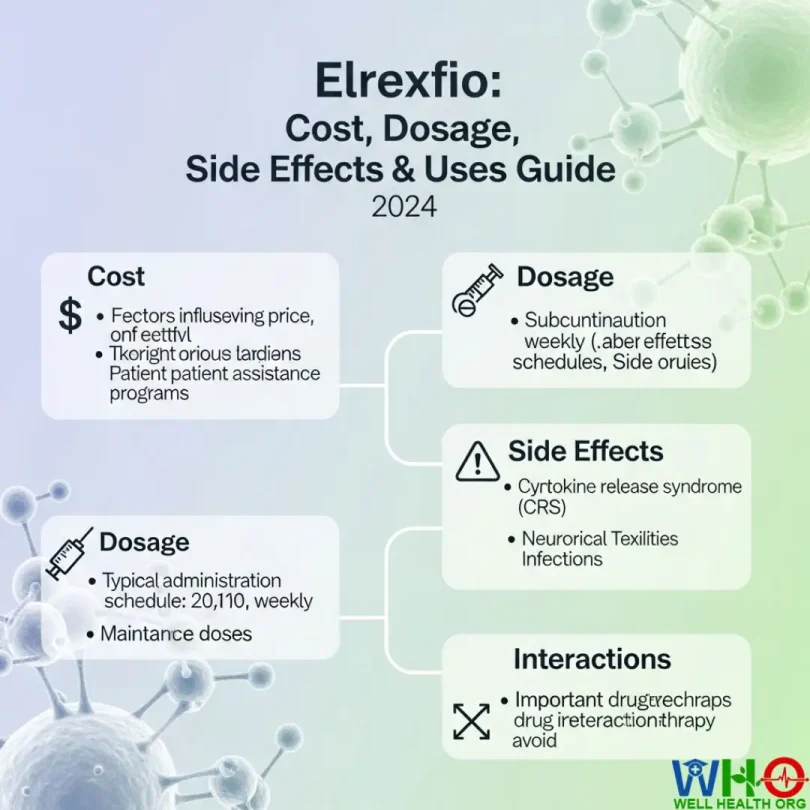
Because Elrexfio is a powerful immunotherapy with potential for serious side effects, dosing must be carefully controlled and monitored. Treatment follows a step-up dosing schedule to allow the body to adjust safely:
- Day 1: 12 mg (starting dose)
- Day 4: 32 mg
- Day 8: 76 mg (first full treatment dose)
- Ongoing: 76 mg once weekly
- After 24 weeks: If the cancer is stable or responding well, the schedule may change to 76 mg every two weeks.
Administration Details
- Method: Subcutaneous injection (under the skin), typically in the abdomen or thigh.
- Location: Must be administered at a facility certified under the Elrexfio REMS (Risk Evaluation and Mitigation Strategy) program.
- Observation Period:
- After the first dose, patients must remain in the treatment facility for at least 48 hours for monitoring.
- After the second dose, a 24-hour monitoring period is required.
These observation periods are in place because of the risk of cytokine release syndrome (CRS) and neurologic toxicity, both of which can be life-threatening if not managed quickly.
💡 Practical tip: Patients should plan ahead for these extended observation stays, arranging transportation, childcare, or work leave as needed.
Elrexfio Side Effects: Common and Serious Risks
Like most cancer therapies, Elrexfio carries the risk of both mild side effects and serious complications. Understanding these helps patients and caregivers know what to expect and when to seek urgent care.
Common Side Effects
Most patients experience some level of discomfort, which may include:
- Fatigue and weakness
- Fever and cough
- Upper respiratory infections
- Muscle and bone pain
- Skin rash
- Digestive problems such as nausea, diarrhea, or reduced appetite
- Injection site reactions (redness, swelling, or tenderness)
These side effects are usually temporary, but if they persist or worsen, patients should contact their healthcare provider.
Serious Side Effects (Boxed Warnings)
Elrexfio carries two black box warnings—the FDA’s strictest safety alerts:
- Cytokine Release Syndrome (CRS)
- Caused by the immune system becoming overactivated.
- Mild symptoms: fever, chills, body aches, nausea, diarrhea.
- Severe symptoms: dangerously low blood pressure, irregular heartbeat, reduced oxygen levels, or liver damage.
- Neurologic Toxicity
- Symptoms may include headaches, confusion, memory problems, or tremors.
- Severe cases can progress to immune effector cell-associated neurotoxicity syndrome (ICANS), which can cause seizures, difficulty writing, muscle spasms, or even loss of consciousness.
Other serious risks may include:
- Severe infections (due to weakened immunity)
- Liver damage
- Significant decreases in blood cell counts
Managing Side Effects
To reduce risks, doctors may prescribe supportive medications before and during Elrexfio treatment, such as:
- Acetaminophen (to reduce fever)
- Dexamethasone (to limit inflammation)
- Diphenhydramine (to prevent allergic reactions)
Patients are also advised not to drive or operate machinery for at least 48 hours after the first three doses due to the possibility of neurologic side effects.
📌 Key reminder: Any sudden changes in breathing, heart rate, or mental status during treatment should be reported immediately, as these may be signs of life-threatening complications.
Elrexfio Drug Interactions: What Patients Should Know
One of the most common concerns with new medications is how they may interact with other prescriptions, over-the-counter drugs, or even herbal supplements. At this time, no specific drug interactions have been officially documented for Elrexfio. However, this does not mean the risk is nonexistent—it simply means interactions have not yet been fully studied.
Because Elrexfio is a biologic therapy that directly modifies the immune system’s activity, it is possible that other medications could influence how it works or increase the risk of side effects. For example:
- Immunosuppressants such as corticosteroids, used at the wrong time or dose, could potentially blunt Elrexfio’s effectiveness.
- Live vaccines should generally be avoided during treatment since the immune system may not respond properly, and patients may be at risk of infection.
- Herbal supplements like echinacea, ginseng, or St. John’s wort could affect immune function in unpredictable ways.
📌 Practical Advice for Patients:
- Always provide your healthcare team with a complete list of everything you take, including prescriptions, over-the-counter medicines, supplements, and vitamins.
- Never start, stop, or adjust any medication while on Elrexfio without checking with your oncologist.
- Ask your healthcare provider specifically about vaccinations and infection prevention before starting treatment.
👉 Bottom line: Even though official drug interaction data is limited, patients should err on the side of caution and maintain open, ongoing communication with their healthcare team.
The Cost of Elrexfio: What to Expect
Like many biologic therapies for cancer, Elrexfio comes with a substantial financial burden. Because it is a newly FDA-approved treatment and does not yet have a generic or biosimilar version, its price remains high.
Factors That Affect Cost
- Insurance Coverage: Depending on whether you have private insurance, Medicare, or Medicaid, coverage can vary widely.
- Treatment Facility Fees: Since Elrexfio must be administered at REMS-certified centers, costs may include facility charges for monitoring.
- Frequency of Treatment: Weekly injections initially, followed by biweekly dosing, can add up significantly over time.
- Geographic Location: Prices may differ across hospitals, clinics, and states.
While exact pricing can vary, many patients report that one cycle of treatment costs tens of thousands of dollars, which makes insurance coverage and financial assistance programs essential.
Planning Ahead for Costs
Before starting Elrexfio, patients should:
- Review their insurance policy for specialty drug coverage details.
- Ask their oncologist’s office about prior authorization requirements, as most insurance providers require approval before covering the medication.
- Request a consultation with a financial counselor or patient navigator at the treatment center.
📌 Tip: Because Elrexfio is usually prescribed after at least four other therapies, many patients may already have experience navigating complex insurance approvals. However, each new drug brings its own challenges, so early financial planning is key.
Financial Assistance Programs for Elrexfio
Recognizing the significant cost of Elrexfio, Pfizer (the drug’s manufacturer) offers Pfizer Oncology Together, a program designed to support patients financially and logistically.
Types of Assistance Available
- Insurance Navigation Support
- Helps patients understand their coverage, including deductibles, co-insurance, and prior authorization.
- Assists with appeals if coverage is denied.
- Copay Assistance
- Eligible patients with private insurance may qualify for reduced out-of-pocket costs.
- Copay cards or direct financial support can lower expenses dramatically.
- Patient Assistance for the Uninsured
- For patients without insurance, Pfizer may provide medication free of charge if they meet certain income requirements.
- Additional Support Services
- Educational resources for patients and caregivers.
- Connection to nurse navigators who help manage treatment logistics.
- Guidance on travel support if patients need to visit a specialized facility.
How to Apply
Patients can apply through their oncologist’s office, where financial counselors often help gather the necessary documents, or directly via Pfizer’s website.
💡 Pro Tip: Because financial aid programs often change, it’s best to check eligibility early and re-apply if your insurance or financial situation changes.
Patient Experience: What It’s Really Like to Start Elrexfio
While the science and clinical data are important, it’s equally valuable to understand what the day-to-day treatment journey feels like for patients.
The First Doses
- Patients often describe the first treatment cycle as the most overwhelming, not only because of the side effects but also due to the mandatory observation stays (48 hours after the first injection and 24 hours after the second).
- Many report fatigue and flu-like symptoms in the first week, which typically improve as the body adjusts.
Adjusting to Weekly Visits
- Weekly appointments can be logistically challenging for patients who live far from certified centers. Planning transportation, work schedules, and family responsibilities is crucial.
- Some patients have expressed relief when the dosing schedule shifts to every two weeks after 24 weeks of treatment.
Managing Side Effects at Home
- Mild fatigue and digestive issues are among the most common home-management challenges.
- Patients often rely on hydration, rest, and light physical activity to help with recovery between doses.
- Supportive medications prescribed by doctors can ease nausea, fever, or inflammation.
The Emotional Journey
Beyond the physical challenges, patients describe a range of emotions—hope from accessing a new therapy, anxiety about side effects, and frustration over the strict monitoring requirements.
👉 Support groups and patient advocacy organizations can make a huge difference by providing encouragement, practical advice, and a sense of community.
Support Systems for Patients and Caregivers
Because Elrexfio treatment is demanding, both patients and their loved ones benefit from strong support systems.
For Patients
- Symptom Tracking: Keeping a journal of side effects and energy levels helps doctors adjust care more effectively.
- Nutrition and Hydration: Eating well-balanced meals and staying hydrated can reduce fatigue and support immune function.
- Rest and Activity Balance: Many patients find that pacing themselves—balancing rest with light exercise—improves overall wellbeing.
For Caregivers
- Practical Support: Caregivers often manage transportation, appointment scheduling, and daily household responsibilities during treatment.
- Emotional Support: Simply being present during observation stays or infusion visits can provide patients with comfort and reassurance.
- Self-Care: Caregivers must also prioritize their own mental and physical health to avoid burnout.
Community Resources
- Patient Advocacy Groups: Organizations such as the Multiple Myeloma Research Foundation (MMRF) offer education, community forums, and treatment updates.
- Hospital Programs: Many cancer centers offer counseling, nutrition guidance, and rehabilitation services.
- Online Communities: Forums and virtual support groups allow patients to connect with others navigating Elrexfio treatment worldwide.
💡 Final note on support: No patient should feel they have to navigate Elrexfio treatment alone. Building a network of healthcare providers, caregivers, and fellow patients creates a foundation for both medical and emotional resilience.
Long-Term Outlook with Elrexfio
For patients with relapsed or refractory multiple myeloma, Elrexfio often represents a turning point. Since the disease tends to progress despite multiple lines of treatment, a new therapy that provides extended disease control can be life-changing.
What Clinical Trials Show
Clinical studies have demonstrated that Elrexfio offers durable responses for many patients who have exhausted other options. While outcomes vary, some patients experience partial remission, while others achieve deep and sustained responses that significantly improve their quality of life.
In clinical trials, a notable proportion of patients responded to treatment within the first two months. For others, responses developed more gradually, emphasizing the importance of ongoing monitoring and patience during the early weeks.
Survival and Disease Progression
Multiple myeloma remains a chronic, relapsing disease, but therapies like Elrexfio can extend remission periods and potentially increase overall survival. Research suggests that patients who respond well may enjoy longer progression-free intervals, giving them more time before the disease advances or requires additional therapy.
Balancing Benefits and Risks
While the potential for remission is promising, patients must weigh the benefits against risks such as cytokine release syndrome, neurotoxicity, or long-term immune system effects. The close observation and monitoring protocols built into Elrexfio’s treatment plan help reduce these risks and improve outcomes.
👉 Takeaway: Elrexfio doesn’t cure multiple myeloma, but it can provide renewed hope and longer control of the disease, especially for those who have limited remaining options.
Lifestyle Adjustments During Elrexfio Treatment
Cancer treatment is not just about the drug itself—it’s also about how patients adapt their daily lives to maintain strength, energy, and emotional balance.
Managing Fatigue
Fatigue is among the most common side effects of Elrexfio. Patients often find success in adopting strategies such as:
- Energy pacing: Prioritizing essential tasks and scheduling rest breaks throughout the day.
- Gentle exercise: Light walking or yoga can improve circulation and reduce fatigue over time.
- Sleep hygiene: Sticking to a consistent sleep schedule and creating a restful bedtime environment.
Nutrition and Hydration
Maintaining proper nutrition supports the immune system and helps manage side effects. Patients are encouraged to:
- Eat protein-rich foods to maintain muscle mass.
- Incorporate fruits, vegetables, and whole grains to boost energy.
- Stay well-hydrated to prevent dizziness and reduce digestive discomfort.
If appetite loss occurs, smaller, more frequent meals and easy-to-digest foods can make eating less overwhelming.
Protecting Against Infection
Because Elrexfio affects the immune system, patients are more vulnerable to infections. Practical steps include:
- Washing hands frequently and avoiding crowded public places during flu season.
- Wearing masks when appropriate.
- Staying up to date on non-live vaccinations recommended by the healthcare team.
Emotional Wellbeing
Coping with both cancer and an intensive therapy can be overwhelming. Patients may benefit from:
- Counseling or therapy to address anxiety and depression.
- Mindfulness practices like meditation or breathing exercises.
- Peer support groups where they can connect with others who understand the journey.
👉 Tip: Patients who integrate lifestyle modifications alongside treatment often report feeling more in control and better able to manage side effects.
The Role of Caregivers in Elrexfio Treatment
Caregivers play a critical role in supporting patients through Elrexfio therapy. From managing logistics to providing emotional encouragement, their involvement often makes a significant difference in outcomes.
Practical Responsibilities
- Transportation: Since patients may feel weak after injections, caregivers often drive them to and from treatment centers.
- Monitoring Symptoms: Keeping an eye out for early warning signs of serious side effects such as confusion, breathing difficulty, or irregular heartbeats.
- Coordinating Care: Helping organize appointments, track medications, and communicate with multiple healthcare providers.
Emotional Support
Beyond the physical aspects, caregivers help patients manage stress and uncertainty. Simply being present during observation periods or helping to manage daily household tasks can relieve a great deal of burden.
Caregiver Self-Care
It’s important for caregivers to also look after their own health and wellbeing. Burnout is common, so strategies such as joining caregiver support groups, practicing self-care, and setting healthy boundaries are essential.
👉 Reminder for caregivers: Supporting a patient with multiple myeloma is a marathon, not a sprint. Taking care of yourself ensures you can continue to provide reliable support.
Frequently Asked Questions About Elrexfio
1. How long do I need to stay on Elrexfio treatment?
Treatment length varies depending on how your cancer responds and how well you tolerate the drug. Some patients remain on Elrexfio for extended periods, while others may need to stop due to side effects or disease progression.
2. Can Elrexfio cure multiple myeloma?
No, Elrexfio is not a cure. However, it can significantly slow disease progression, extend remission, and improve quality of life for many patients.
3. How soon will I notice improvements after starting treatment?
Some patients respond within weeks, while others take longer. Your oncologist will monitor your blood tests and symptoms to evaluate progress.
4. Is Elrexfio safe for elderly patients?
Yes, elderly patients can receive Elrexfio, though they may need closer monitoring due to age-related health conditions and higher risk of side effects.
5. Can I travel while on Elrexfio?
Travel is possible, but planning is essential since Elrexfio requires administration at certified centers. Patients should consult their healthcare team before making travel arrangements.
Final Guidance: Taking the Next Step with Elrexfio
Elrexfio represents a milestone in multiple myeloma treatment. For patients who have undergone multiple previous therapies, this drug provides a renewed chance at disease control and longer remission periods. But while the promise of Elrexfio is real, so are the challenges—serious side effects, high costs, and demanding monitoring protocols.
Patients considering Elrexfio should:
- Have open conversations with their oncologist about benefits, risks, and alternatives.
- Explore financial assistance programs early to reduce financial strain.
- Build a strong care support system involving caregivers, family, and advocacy organizations.
- Stay vigilant in monitoring symptoms and reporting any changes promptly.
👉 Key takeaway: Elrexfio is not just another cancer drug—it’s an opportunity for patients with advanced multiple myeloma to reclaim stability, hope, and time. By working closely with healthcare providers and leaning on support systems, patients can navigate treatment with greater confidence.
Medically Reviewed by Prof. Dr. Akram
Orthopedic Surgeon | Professor | Senior Medical Specialist
Prof. Dr. Akram is a distinguished surgeon with over 15 years of clinical expertise. Having served as a lead Emergency Specialist at Complex International Government Hospital, he currently leads a specialized team of 13 medical professionals at his private hospital. As a Professor at top medical universities, he ensures that every article on WellHealthOrg.com meets rigorous clinical standards.
Medical Disclaimer:
The information provided is for educational purposes only and is not a substitute for professional medical advice, diagnosis, or treatment. Always consult your physician for any medical concerns.
Our content is rigorously fact-checked by our 13-member Editorial Team under the clinical supervision of Prof. Dr. Akram.