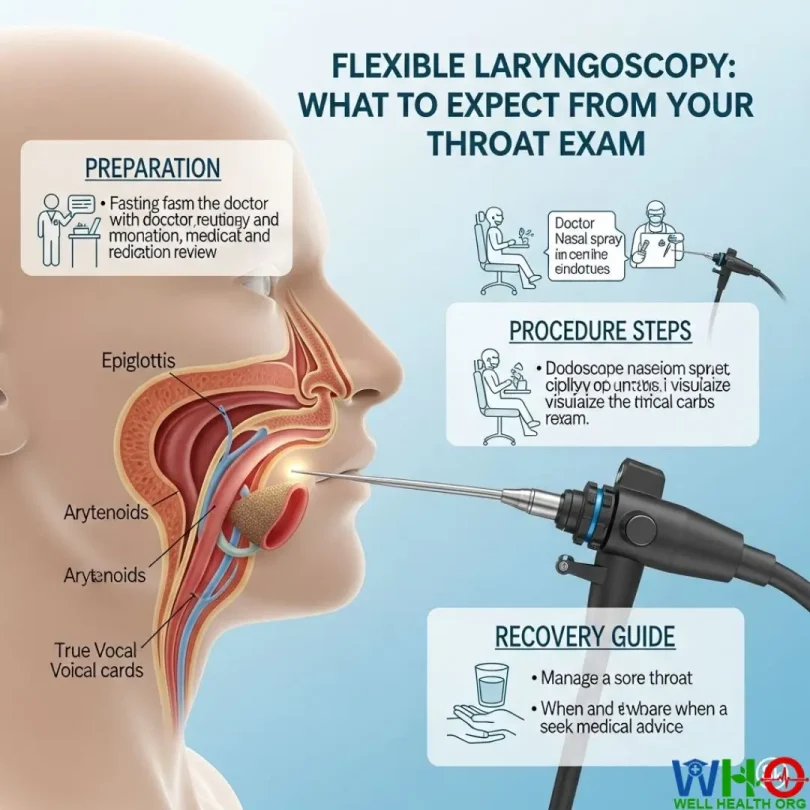
When your doctor recommends a flexible laryngoscopy, it’s normal to feel curious—or even a little nervous—about what’s going to happen. This exam is one of the most effective ways to look closely at your voice box, vocal cords, and the surrounding throat structures. Doctors use it to diagnose everything from voice changes to swallowing difficulties, and the information gained often plays a key role in creating the right treatment plan.
- What Is Flexible Laryngoscopy?
- Why Your Doctor Might Recommend Flexible Laryngoscopy
- Voice and Throat-Related Symptoms
- Safety and Emergency Concerns
- Emergency Airway Management
- Assisting with Biopsies
- Preparing for Your Flexible Laryngoscopy
- Before Your Appointment
- On the Day of the Procedure
- During the Procedure: Step-by-Step Process
- 1. Getting Comfortable
- 2. Numbing Medications
- 3. Inserting the Laryngoscope
- 4. The Examination
- 5. Duration
- Post-Procedure Care and Recovery
- Immediate Aftercare
- Discussing Results
- Returning to Normal Activities
- Understanding the Risks and Benefits of Flexible Laryngoscopy
- Benefits You Should Know
- Possible Risks and Complications
- When Flexible Laryngoscopy May Not Be Recommended
- Contraindications (When It’s Avoided)
- Special Circumstances
- Alternative Examination Options
- Other Types of Laryngoscopy
- Alternative Procedures
- Combined Approaches
- Practical Tips for Patients Undergoing Flexible Laryngoscopy
- Moving Forward With Confidence
- Conclusion
- FAQs About Flexible Laryngoscopy
Understanding the process ahead of time can take much of the anxiety out of the experience. In this expanded guide, you’ll learn exactly what flexible laryngoscopy involves, why doctors recommend it, how to prepare, what happens during the procedure, recovery tips, and the potential risks and alternatives. By the end, you’ll feel ready to approach your throat exam with confidence.
What Is Flexible Laryngoscopy?
Flexible laryngoscopy is a specialized medical procedure that allows doctors to directly examine the inside of your throat with a slender, flexible instrument called a laryngoscope. Unlike older methods that used rigid instruments, this flexible device can bend naturally with the curves of your airway, making the process less invasive and more comfortable for patients.
The laryngoscope is equipped with a light and a tiny camera that sends live images to a screen. This gives doctors a clear, magnified view of your larynx (voice box), vocal cords, and nearby structures. Because the camera can maneuver easily, doctors can evaluate subtle movements and identify even minor irregularities that might not show up in scans or X-rays.
In some cases, you might hear this exam referred to as a nasopharyngoscopy, especially when the laryngoscope is inserted through your nose rather than your mouth. Both terms describe the same general procedure, but the nasal route is often preferred because it provides a more natural angle for visualizing the throat while allowing you to breathe and swallow more easily during the exam.
Flexible laryngoscopy falls under the category of direct laryngoscopy, which means the doctor is looking directly at the structures rather than relying on indirect reflection with mirrors. This direct view gives much more detailed and accurate information.
One of the biggest advantages of using a flexible laryngoscope is that it adapts to your anatomy instead of forcing your body to adapt to the instrument. This makes the exam quicker, safer, and more comfortable compared to rigid alternatives.
Why Your Doctor Might Recommend Flexible Laryngoscopy
Your doctor won’t schedule this exam without reason. Flexible laryngoscopy is typically recommended when there are persistent throat or voice symptoms that need a closer look. Understanding the possible reasons can help you appreciate why the procedure is important.
Voice and Throat-Related Symptoms
Doctors may recommend this exam if you are experiencing:
- Persistent hoarseness or voice changes that don’t improve with rest
- Chronic throat pain or soreness that lingers
- The sensation of a lump or blockage in your throat
- Painful or difficult swallowing
- Chronic coughing without a clear cause
These symptoms often point to issues involving the vocal cords, larynx, or surrounding tissues, and flexible laryngoscopy helps doctors pinpoint the exact problem.
Safety and Emergency Concerns
Sometimes the need is more urgent. Flexible laryngoscopy is used when doctors suspect:
- Coughing up blood (hemoptysis), which may signal a serious condition
- Aspiration, when food or liquid accidentally enters the lungs
- Foreign objects stuck in the throat
- High risk of head or neck cancer, often in patients with a history of smoking, alcohol use, or certain genetic conditions
Emergency Airway Management
In critical care or emergency situations, doctors use flexible laryngoscopy to quickly check a patient’s airway before inserting a breathing tube. The procedure ensures the airway is safe and unobstructed, which can be life-saving.
Assisting with Biopsies
Flexible laryngoscopy can also be combined with biopsies, where a small tissue sample is taken for further testing. This is particularly helpful if doctors notice unusual growths, lesions, or inflammation that requires laboratory analysis.
In short, whether your issue is persistent hoarseness or a medical emergency, this procedure gives doctors direct insight into your throat health and ensures you receive the right treatment.
Preparing for Your Flexible Laryngoscopy
Knowing how to prepare for your throat exam is just as important as understanding the procedure itself. While your healthcare provider will give you personalized instructions, here are the most common preparation steps.
Before Your Appointment
- Medication Review: Inform your doctor about all medications and supplements you are taking, especially blood thinners like aspirin, warfarin, or certain herbal remedies.
- Allergies: Report any known drug or anesthetic allergies so your doctor can choose safe numbing medications.
- Fasting Instructions: Some doctors may ask you not to eat or drink for a few hours before the procedure, especially if sedation is planned.
- Adjusting Blood Thinners: If necessary, you may be asked to stop or adjust blood-thinning medications a few days beforehand to reduce the risk of bleeding.
On the Day of the Procedure
- Outpatient Basis: Flexible laryngoscopy is usually performed as an outpatient procedure, meaning you won’t need to stay overnight in the hospital.
- Transportation: If sedation is used, arrange for someone to drive you home. In many cases, sedation isn’t required, and you’ll be able to resume normal activities shortly after.
- Clothing: Wear comfortable, loose-fitting clothing and avoid wearing necklaces, scarves, or anything around your neck.
- Mindset: Remind yourself that the procedure is short, minimally invasive, and highly valuable for diagnosing your symptoms. Many patients report that it’s much easier than they expected.
Preparing properly helps ensure a smoother experience and reduces the risk of delays or complications.
During the Procedure: Step-by-Step Process
Knowing what will actually happen during the exam can go a long way in calming nerves. Flexible laryngoscopy typically takes less than 10 minutes, though it may be longer if a biopsy is performed. Here’s what to expect, step by step.
1. Getting Comfortable
You’ll be seated upright in a chair, with a headrest to keep you steady. The doctor may ask you to lean slightly forward—similar to taking a deep sniff. This position aligns your throat for easier visualization.
2. Numbing Medications
Before inserting the scope, your doctor will spray your nose and throat with a local anesthetic and possibly a mild nasal decongestant. The spray may taste bitter or feel slightly uncomfortable, but it quickly numbs the area. Within moments, your throat may feel swollen or unusual, but this is normal and temporary.
3. Inserting the Laryngoscope
The flexible laryngoscope is gently inserted through your nose (or sometimes your mouth). You might feel the urge to cough, sneeze, or gag briefly, but this usually passes once the numbing agent takes effect. Breathing is not affected, and you’ll be able to talk when prompted.
4. The Examination
Once in place, the doctor uses the camera to view your throat. Sometimes they look directly through the scope, while other times the images are displayed on a monitor. To help visualize different parts of your throat, you may be asked to:
- Stick out your tongue
- Sniff in through your nose
- Blow out your cheeks
- Turn your head left and right
- Count to ten aloud
- Swallow when asked
- Say “eeee” to vibrate your vocal cords
⚠️ Important: Only swallow if instructed by your doctor. Swallowing clears the lens but may interfere with the exam if done at the wrong time.
5. Duration
The procedure usually lasts around 5–10 minutes. If biopsies or additional checks are needed, it may take a little longer.
By understanding these steps, most patients find the exam far less intimidating than they initially imagined.
Post-Procedure Care and Recovery
Recovery from a flexible laryngoscopy is usually quick and straightforward, but following your doctor’s advice is important for safety.
Immediate Aftercare
- Stay seated for a few minutes until any dizziness or lightheadedness subsides.
- Mild coughing, sneezing, or even a tiny nosebleed may occur—this is completely normal and usually stops within minutes.
- Avoid eating or drinking for at least one hour, as the numbing medicine needs time to wear off. Eating too soon could increase the risk of food or liquid entering your airway.
Discussing Results
In most cases, your doctor can share immediate findings right after the procedure. If a biopsy was performed, however, results may take several days. A follow-up appointment will be scheduled to discuss these results in detail.
Returning to Normal Activities
Most patients return to work, school, or regular activities the same day. You may notice slight throat irritation or an unusual sensation for a few hours, but this quickly resolves. Drinking water and resting your voice can help.
Understanding the Risks and Benefits of Flexible Laryngoscopy
Like any medical procedure, flexible laryngoscopy comes with both clear advantages and a few possible risks. The good news is that complications are extremely rare, and the benefits almost always outweigh the risks—especially when it comes to diagnosing conditions that affect your voice, throat, or breathing.
Benefits You Should Know
- Detailed Visualization: The flexible scope provides a direct and magnified look at your throat structures, allowing doctors to detect even small issues.
- Quick and Minimally Invasive: The exam usually takes less than 10 minutes and does not require incisions or general anesthesia.
- Accurate Diagnosis: Many throat conditions can’t be confirmed through imaging alone. Flexible laryngoscopy provides real-time information about tissue health, vocal cord movement, and airway function.
- Supports Treatment Planning: Whether you need medication, voice therapy, or surgery, the results of this exam help guide your doctor’s next steps.
- Can Be Performed in Multiple Settings: From outpatient clinics to emergency rooms, the exam is adaptable to different situations, including urgent airway checks.
Possible Risks and Complications
Although rare, a few side effects may occur:
- Minor nasal irritation or bleeding from the scope passing through the nose
- Temporary gagging or coughing as the instrument enters
- Hoarseness or throat irritation for a few hours after the procedure
- Laryngospasm (a brief spasm of the vocal cords that can block airflow) – uncommon, but possible in sensitive patients
- Mild allergic reaction to the numbing spray, if you have a sensitivity to anesthetics
Most patients experience no complications beyond minor, short-lived discomfort. Still, if you have a history of bleeding disorders, allergies, or airway sensitivity, make sure your doctor knows in advance.
When Flexible Laryngoscopy May Not Be Recommended
While flexible laryngoscopy is safe for the vast majority of patients, there are certain medical situations where it might not be the best option—or where it needs to be performed under special conditions.
Contraindications (When It’s Avoided)
Doctors may avoid this procedure if you have:
- Suspected epiglottitis (a dangerous swelling of the flap at the back of your throat that can block the airway)
- Croup or other upper airway infections that cause significant swelling
- Active nosebleeds at the time of the exam
- Severe bleeding disorders that increase the risk of complications
- Severe airway obstruction where even minimal interference could be dangerous
Special Circumstances
In cases where a flexible laryngoscopy is necessary despite these risks, your doctor may:
- Perform the procedure in an operating room with full monitoring and specialized staff present.
- Use advanced airway management tools on standby in case of breathing difficulties.
- Choose a different diagnostic method if the risks outweigh the benefits.
This careful evaluation ensures that patients only undergo the procedure when it is safe and appropriate for their individual condition.
Alternative Examination Options
If flexible laryngoscopy isn’t suitable for you, don’t worry—there are other diagnostic tools available. Your doctor will select the one that best fits your health needs and comfort level.
Other Types of Laryngoscopy
- Indirect Laryngoscopy: An older method using a small angled mirror and light to reflect an image of the throat. It’s less invasive but provides limited visibility compared to flexible scopes.
- Rigid Laryngoscopy: Uses a straight, non-flexible metal tube inserted through the mouth. It offers very clear images and is often used during surgery but can be more uncomfortable without anesthesia.
Alternative Procedures
- Bronchoscopy: A flexible scope that extends deeper into the lungs, often used when doctors need to evaluate the airway and lung passages.
- Transcutaneous Laryngeal Ultrasonography: Uses ultrasound imaging from outside the neck to get a look at the throat structures. This is non-invasive and particularly useful for patients who cannot tolerate a scope.
Combined Approaches
In some situations, doctors may combine multiple procedures to get a comprehensive view of your throat and airway. For example, they might use both flexible laryngoscopy and bronchoscopy if symptoms suggest problems extending into the lungs.
The choice of diagnostic method depends on your symptoms, medical history, and the level of detail your doctor needs.
Practical Tips for Patients Undergoing Flexible Laryngoscopy
Having a flexible laryngoscopy may seem intimidating, but a few practical strategies can make the experience smoother.
- Practice Relaxed Breathing: Slow, deep breaths through your nose help minimize gagging and make insertion easier.
- Stay Still but Relaxed: The more relaxed your muscles are, the less discomfort you’ll feel.
- Communicate with Your Doctor: If you feel significant discomfort, signal to your doctor—they can pause or adjust the scope.
- Aftercare Comfort: Drinking cool water or sucking on ice chips after the numbing wears off can soothe throat irritation.
- Voice Rest: Avoid shouting or straining your voice for a few hours after the exam to allow tissues to settle.
These small steps help ensure your procedure and recovery are as smooth as possible.
Moving Forward With Confidence
Flexible laryngoscopy might sound intimidating at first, but for most patients, it turns out to be a quick, tolerable, and highly informative procedure. The insights your doctor gains from this exam can make a huge difference in your diagnosis and treatment plan, whether you’re dealing with hoarseness, swallowing problems, or more serious concerns.
Most people are pleasantly surprised by how simple the process is—and many even describe it as easier than a dental cleaning. The key is preparation: know what to expect, follow your doctor’s instructions, and give your throat a little time to recover afterward.
If you still have concerns, don’t hesitate to ask your healthcare provider specific questions. They can explain how the procedure applies to your situation, which can help put your mind at ease.
Remember: the goal of flexible laryngoscopy isn’t just to check your throat—it’s to give you answers, peace of mind, and the best possible plan for protecting your voice and overall health.
Conclusion
Flexible laryngoscopy is one of the most valuable tools in modern throat and voice care. It’s minimally invasive, quick, and highly effective at uncovering the root causes of symptoms that might otherwise go unexplained.
By preparing properly, knowing what to expect during the exam, and following simple aftercare steps, you can approach your appointment with confidence. While the idea of having a scope inserted may sound uncomfortable, most patients find it far less challenging than anticipated—and they appreciate the clear answers it provides.
Your voice and throat health are essential parts of your daily life. Flexible laryngoscopy helps protect them by giving doctors the detailed information they need to diagnose, treat, and guide you toward better health.
FAQs About Flexible Laryngoscopy
1. Is flexible laryngoscopy painful?
No. While you may feel pressure or a mild gagging sensation, the numbing spray significantly reduces discomfort. Most patients describe it as strange but not painful.
2. How long does the procedure take?
The exam itself usually lasts 5 to 10 minutes. If biopsies or additional checks are needed, it may take a little longer.
3. Can I eat or drink right after the procedure?
You should wait at least one hour until the numbing medication wears off. Eating too soon may increase the risk of food or drink entering your airway.
4. Will my voice change after the exam?
Temporary mild hoarseness is possible, but it typically fades within a few hours. Persistent changes should be reported to your doctor.
5. Is it safe for children?
Yes, flexible laryngoscopy can be safely performed in children. Pediatric specialists often use it to evaluate breathing difficulties, swallowing issues, or chronic throat conditions.
Medically Reviewed by Prof. Dr. Akram
Orthopedic Surgeon | Professor | Senior Medical Specialist
Prof. Dr. Akram is a distinguished surgeon with over 15 years of clinical expertise. Having served as a lead Emergency Specialist at Complex International Government Hospital, he currently leads a specialized team of 13 medical professionals at his private hospital. As a Professor at top medical universities, he ensures that every article on WellHealthOrg.com meets rigorous clinical standards.
Medical Disclaimer:
The information provided is for educational purposes only and is not a substitute for professional medical advice, diagnosis, or treatment. Always consult your physician for any medical concerns.
Our content is rigorously fact-checked by our 13-member Editorial Team under the clinical supervision of Prof. Dr. Akram.