
Homeopathic Medicine for Hypothyroidism
The human body is a masterpiece of biological engineering, relying on a delicate symphony of hormones to function correctly. At the center of this orchestra sits a conductor that is often overlooked until the music stops playing: the thyroid gland. This small, butterfly-shaped organ nestled at the base of your neck is responsible for setting the pace for your entire metabolism. It is your body’s internal thermostat, engine, and battery charger all rolled into one.
- Homeopathic Medicine for Hypothyroidism
- The Silent Epidemic: Understanding Hypothyroidism
- The Autoimmune Connection: Hashimoto’s Thyroiditis
- Beyond the Textbooks: The Real-Life Symptoms
- The Homeopathic Philosophy: Treating the Individual, Not the Label
- Top Homeopathic Remedies for Thyroid Health
- 1. Calcarea Carbonica: The “Slow and Steady” Constitution
- 2. Sepia Officinalis: The Hormonal balancer
- 3. Lycopodium Clavatum: The Digestive Connection
- 4. Natrum Muriaticum: The Remedy of Silent Grief
- 5. Thyroidinum: The Sarcode Approach
- 6. Graphites: The Skin and Metabolism Remedy
- 7. Iodum: The Paradoxical Remedy
- The Holistic Strategy: Diet and Lifestyle Integration
- 1. The Critical Role of Nutrition
- 2. The Gluten and Autoimmune Link
- 3. Understanding Goitrogens
- 4. Healing the Gut
- 5. Stress Management: The Cortisol Connection
- Safety, Precautions, and the “Adjuvant” Approach
- The Adjuvant Model
- The Detox Reaction
- Conclusion: A Journey Back to Vitality
When this gland slows down—a condition known medically as hypothyroidism—the effects can be devastating. It isn’t just about feeling a little tired; it is a profound, bone-deep exhaustion that sleep cannot cure. It is the frustration of watching the scale creep up despite eating a clean diet. It is the brain fog that makes simple tasks feel like climbing a mountain.
For millions of people worldwide, the standard medical solution is straightforward: synthetic hormone replacement therapy (typically Levothyroxine). While this medication is a life-saving necessity for many, it is not always a complete panacea. A significant number of patients report that while their blood test results return to “normal” ranges, they still feel unwell. They still battle the fatigue, the hair loss, and the cold intolerance.
This gap between “normal lab results” and “feeling healthy” is where many turn to holistic and complementary medicine. Homeopathy, a system of medicine used for over two centuries, offers a unique lens through which to view thyroid health. Rather than acting merely as a replacement for missing hormones, homeopathy seeks to stimulate the body’s vital force to self-regulate and heal.
In this extensive guide, we will explore the homeopathic approach to hypothyroidism in depth. We will look beyond the symptoms to the root causes, examine specific remedies used by practitioners, and discuss how lifestyle, diet, and emotional well-being play critical roles in waking up a sluggish thyroid.
The Silent Epidemic: Understanding Hypothyroidism
To understand how to heal the thyroid, one must first understand what has gone wrong. The thyroid produces two primary hormones: Triiodothyronine (T3) and Thyroxine (T4). These hormones travel through your bloodstream to every cell in your body, telling them how much energy to use.
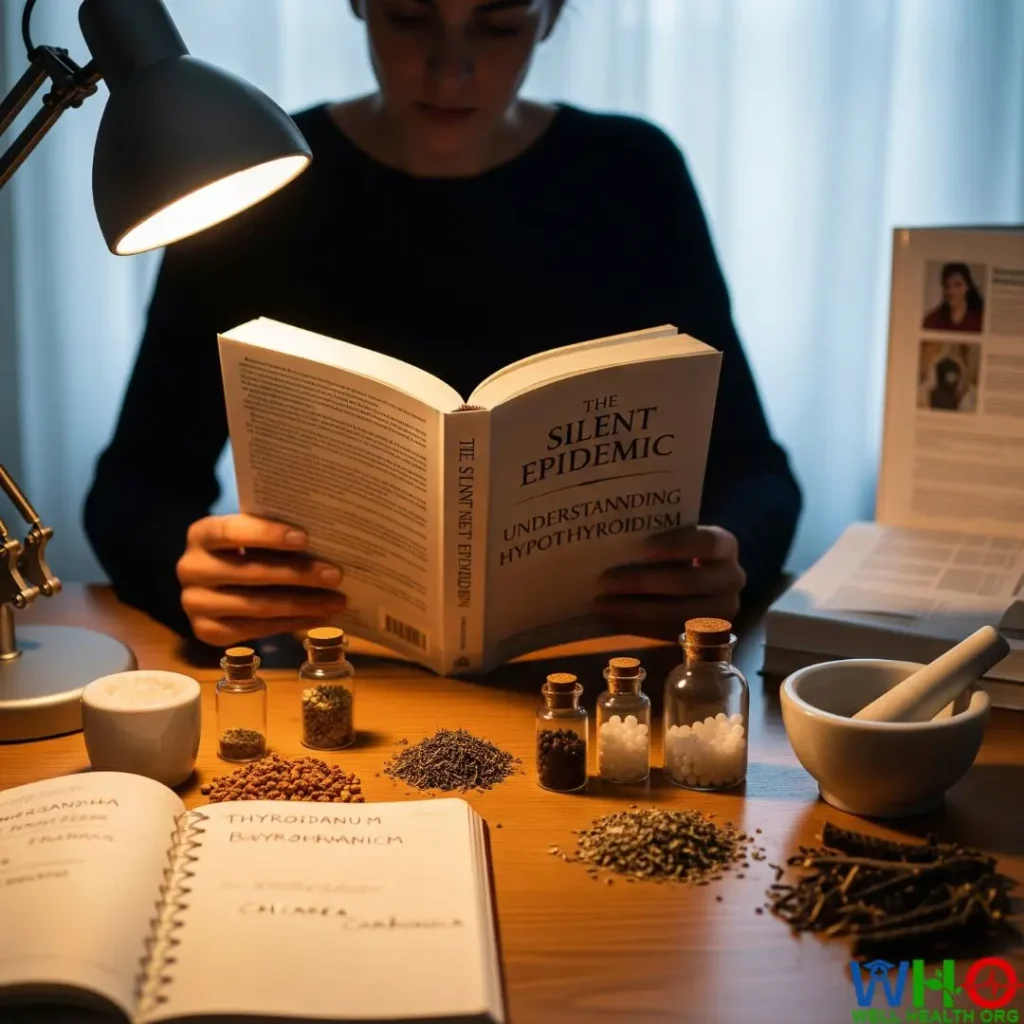
When you have hypothyroidism, your thyroid is underactive. It’s as if the furnace in your house has been turned down to the lowest setting in the middle of winter. Everything slows down. Digestion becomes sluggish (leading to constipation), the heart rate drops, body temperature falls, and the brain processes information more slowly.
The Autoimmune Connection: Hashimoto’s Thyroiditis
In the modern world, the vast majority of hypothyroidism cases—specifically in iodine-sufficient countries—are caused by an autoimmune condition called Hashimoto’s Thyroiditis. This is a crucial distinction. In Hashimoto’s, the problem isn’t just that the thyroid is broken; it’s that the immune system has identified the thyroid gland as a foreign invader and is launching an attack against it.
Conventional medicine treats the result (low hormones) but rarely addresses the cause (the immune system’s confusion). Homeopathy, however, is particularly interested in the immune aspect. Because homeopathy treats the whole person—mental, emotional, and physical—it is often well-suited for complex autoimmune conditions where stress and emotional triggers may be exacerbating the physical attacks.
Beyond the Textbooks: The Real-Life Symptoms
While medical textbooks list the standard symptoms, the lived experience of hypothyroidism is often more nuanced.
- The “3 PM Crash”: Many patients experience a profound dip in energy in the mid-afternoon, requiring caffeine or sugar just to function.
- The “Outer Third” Eyebrow Loss: A classic sign where the outer edges of the eyebrows thin out or disappear.
- Puffy Face and Water Retention: Waking up with swollen eyes or a face that looks rounder than usual due to fluid accumulation (myxedema).
- The Emotional Toll: It is not just sadness; it is a lack of motivation, a feeling of apathy, or anxiety that seems to come from nowhere.
The Homeopathic Philosophy: Treating the Individual, Not the Label
If you walk into a conventional doctor’s office with a diagnosis of hypothyroidism, you will almost certainly leave with a prescription for synthetic T4. If you walk into a homeopath’s office with the same diagnosis, you could leave with any one of fifty different remedies.

Why the difference?
Homeopathy operates on the “Law of Similars” (Similia Similibus Curentur), which suggests that a substance that causes symptoms in a healthy person can cure those same symptoms in a sick person when given in minute, potentized doses.
But the key differentiator is individualization. A homeopath doesn’t treat “hypothyroidism”; they treat you suffering from hypothyroidism. They look at your “constitutional type.”
For example:
- Patient A is overweight, chilly, craves eggs, and is generally anxious and fearful.
- Patient B is thin (despite the thyroid issue), irritable, loves salty food, and hates the heat.
In conventional medicine, both get the same pill. In homeopathy, Patient A might get Calcarea Carbonica, while Patient B might get Iodum or Natrum Muriaticum. The remedy must match the unique vibration and symptom picture of the patient to stimulate the body’s innate healing ability.
Top Homeopathic Remedies for Thyroid Health
Below is a detailed breakdown of the most prominent homeopathic remedies used to support thyroid function. Note: These descriptions are for educational purposes to help you understand the different “profiles” of remedies.

1. Calcarea Carbonica: The “Slow and Steady” Constitution
This is perhaps the most famous remedy for the classic hypothyroid presentation. It is derived from the middle layer of the oyster shell, which biologically speaks to protection and structure.
The Patient Profile:
This remedy is best suited for individuals who fit a “sluggish” profile. They may struggle significantly with weight gain and find it nearly impossible to lose pounds, even with diet changes. Their metabolism seems to be at a standstill.
Key Symptoms:
- Extreme Chills: These patients are always freezing. They wear socks to bed and cannot tolerate cold, damp weather.
- Head Sweats: A peculiar but strong indicator is sweating profusely on the scalp or the back of the neck during sleep, often wetting the pillow.
- Cravings: There is often a strong desire for eggs (boiled or scrambled) and sometimes indigestible things like chalk or raw rice (pica).
- Personality: They tend to be hard workers but can be overwhelmed by exertion. They are often reliable, grounded people who worry about security and the future.
2. Sepia Officinalis: The Hormonal balancer
Derived from cuttlefish ink, Sepia is a powerhouse remedy for women, particularly when the thyroid issue is intertwined with other hormonal milestones like menopause, pregnancy, or postpartum recovery.
The Patient Profile:
The “Sepia state” is often characterized by a feeling of being worn out. It is the remedy for the mother who loves her family but is so exhausted she feels indifferent toward them. She just wants to be left alone.
Key Symptoms:
- Stasis and Dragging: A feeling of heaviness in the pelvic region, as if the organs are bearing down.
- Chilly but Craves Air: They feel cold but feel suffocated in a stuffy room.
- Hair Loss: Significant shedding of hair is common.
- Exercise Amelioration: Interestingly, despite the fatigue, vigorous exercise often makes the Sepia patient feel better, boosting their energy temporarily.
3. Lycopodium Clavatum: The Digestive Connection
Lycopodium is made from club moss spores. It acts profoundly on the digestive system and the liver, which is crucial because a significant portion of T4 hormone is converted into the active T3 hormone in the liver. If the liver is sluggish, the thyroid struggles.
The Patient Profile:
This remedy often suits people who struggle with confidence but cover it up with an intellectual or somewhat arrogant exterior. They may fear public speaking or taking on new responsibilities.
Key Symptoms:
- Right-Sided Complaints: Symptoms often start on the right side of the body or travel from right to left.
- Digestive Distress: excessive bloating, gas, and a feeling of fullness after eating only a few bites.
- Energy Dips: A distinct drop in energy specifically between 4:00 PM and 8:00 PM.
- Dryness: Dry skin and hair are common.
4. Natrum Muriaticum: The Remedy of Silent Grief
Prepared from sodium chloride (common salt), this is a deep-acting remedy that addresses the emotional roots of illness. In homeopathy, suppressed emotions, particularly grief or disappointment, can manifest as physical pathology, including autoimmune thyroid issues.
The Patient Profile:
The Natrum Mur patient is often reserved, introverted, and holds grudges or dwells on past unhappy events. They do not like being consoled by others.
Key Symptoms:
- Emaciation: unlike the typical weight gain, some hypothyroid patients lose flesh, especially around the neck and collarbones, despite eating well.
- Salt Cravings: An intense, unquenchable craving for salt.
- Sun Sensitivity: Heat and sun exposure often cause headaches or weakness.
- Emotional Wall: They build a wall around their heart to protect themselves from further hurt.
5. Thyroidinum: The Sarcode Approach
Thyroidinum is unique because it is a “sarcode”—a remedy made from healthy thyroid tissue (usually from sheep). In homeopathy, sarcodes are used to regulate the function of the corresponding organ in the human body.
How it is Used:
Unlike the constitutional remedies above (which match personality and body type), Thyroidinum is often used as an organ support remedy. It helps to “remind” the thyroid of its blueprint for healthy function. It is often used to assist in cases of arrested development in children or in adults with extreme obesity and muscular weakness related to thyroid failure.
6. Graphites: The Skin and Metabolism Remedy
Graphites (black lead) is a mineral remedy often indicated for metabolic slowdowns that manifest visibly on the skin.
Key Symptoms:
- Obesity: A strong tendency toward gaining weight easily.
- Skin Issues: Eruptions that ooze a sticky, honey-like fluid; dry, rough skin that cracks easily; thick, hard scars.
- Constipation: stubborn constipation is a hallmark of this remedy.
- Mental State: The patient may be indecisive, fidgety, and prone to feeling sad or despondent about trivial things.
7. Iodum: The Paradoxical Remedy
Iodine is the fuel for the thyroid, but in homeopathic potency, it treats specific metabolic dysfunctions.
The Patient Profile:
This is typically for the patient who has a hyper-metabolic picture that has crashed, or a confusing mix of symptoms. They eat voraciously—they are always hungry—yet they lose weight or cannot gain it.
Key Symptoms:
- Heat Intolerance: Unlike most hypothyroid patients, the Iodum patient feels hot and needs cool air.
- Restlessness: They feel an impulse to constantly be moving or doing something; idleness causes anxiety.
- Glandular Swelling: Hardness or swelling in the thyroid (goiter) or lymph nodes.
The Holistic Strategy: Diet and Lifestyle Integration
Homeopathy does not work in a vacuum. You cannot take a remedy to stimulate your thyroid while simultaneously suppressing it with poor diet, lack of sleep, and high stress. To truly recover, you must build a foundation of health that supports the homeopathic treatment.

Here is a practical, lifestyle-based protocol to enhance your recovery.
1. The Critical Role of Nutrition
Your thyroid needs specific raw materials to manufacture hormones. If you are deficient in these nutrients, no amount of medication or homeopathy will fully fix the problem.
- Selenium: This mineral is essential for converting the inactive T4 hormone into the active T3 hormone. Without selenium, your thyroid has the fuel but no spark.
- Source: Brazil nuts are the richest natural source. Just 2-3 Brazil nuts a day can provide your daily requirement.
- Zinc: Zinc works in tandem with selenium and is vital for gut health.
- Source: Pumpkin seeds, oysters, beef, and chickpeas.
- Iron (Ferritin): Low iron stores (ferritin) are a common cause of hair loss and fatigue in thyroid patients. Have your iron levels checked regularly.
2. The Gluten and Autoimmune Link
If you have Hashimoto’s (autoimmune thyroiditis), gluten is often enemy number one. The molecular structure of gliadin (the protein in gluten) closely resembles the structure of the thyroid gland.
When you eat gluten, your antibodies attack it. Because of this molecular mimicry, those antibodies may then get confused and turn their attack on your thyroid tissue. Many patients report a significant reduction in antibodies and bloating simply by going 100% gluten-free. This is not a fad; for autoimmune patients, it is often a medical necessity.
3. Understanding Goitrogens
You may have heard that you should avoid broccoli or kale if you have thyroid issues. These foods contain goitrogens, substances that can interfere with iodine uptake.
- The Reality: You do not need to avoid these healthy vegetables entirely. Cooking (steaming, roasting, boiling) deactivates the vast majority of goitrogenic compounds. You can enjoy them cooked without fear. However, drinking raw kale juice every day might not be advisable.
4. Healing the Gut
There is a saying in holistic medicine: “All disease begins in the gut.” This is especially true for thyroid health. Approximately 20% of the conversion of T4 to T3 happens in the gut bacteria.
If you suffer from “Leaky Gut” (intestinal permeability), food particles escape into the bloodstream, triggering immune responses and inflammation that further attack the thyroid. Incorporating probiotics, bone broth, and fermented foods (like sauerkraut or kimchi) can help seal the gut lining and reduce systemic inflammation.
5. Stress Management: The Cortisol Connection
Your adrenal glands (which produce stress hormones) and your thyroid are inextricably linked. When you are chronically stressed, your body produces high levels of cortisol.
High cortisol inhibits the conversion of T4 to T3 and promotes the production of “Reverse T3″—an inactive hormone that blocks thyroid receptors. Essentially, stress puts the brakes on your metabolism to save energy for “survival.”
Practical Tips:
- Gentle Movement: High-intensity interval training (HIIT) can sometimes be too stressful for a recovering thyroid. Consider restorative yoga, walking, or swimming.
- Sleep Hygiene: Quality sleep is when the body repairs hormonal imbalances. Aim for 8 hours in a completely dark room.
Safety, Precautions, and the “Adjuvant” Approach
It is vital to approach homeopathic treatment with a mindset of safety and responsibility. Hypothyroidism is a medical condition that affects the heart, the brain, and every major organ system. Unmanaged hypothyroidism can lead to serious complications, including heart disease and myxedema coma (in rare, extreme cases).
The Adjuvant Model
The safest and most effective way to use homeopathy is as an adjuvant therapy. This means using it alongside your conventional treatment, not necessarily as an immediate replacement.
- Do Not Stop Medication Abruptly: Never stop taking your prescribed Levothyroxine or thyroid medication without the supervision of your endocrinologist. Doing so can cause a crash in hormone levels.
- Monitor Your Labs: As you begin homeopathic treatment and lifestyle changes, your body may become more efficient at using hormones. You might find that your TSH levels drop and your Free T3 and T4 levels improve.
- Adjusting Dosage: If your blood work shows improvement, your doctor can then safely and gradually lower your dosage of synthetic hormones. The goal for many is to eventually maintain normal levels with minimal or no medication, but this must be done based on data, not guesswork.
The Detox Reaction
Sometimes, when a correct homeopathic remedy is given, a patient may experience a brief “healing crisis” or aggravation. This might manifest as a temporary return of old symptoms or a slight intensification of current ones as the body’s vital force pushes the pathology outward. This is usually a sign the remedy is working, but it should be managed by a professional homeopath.
Conclusion: A Journey Back to Vitality
Healing the thyroid is rarely a straight line. It is a journey that requires patience, observation, and a willingness to listen to your body. The thyroid is a sensitive barometer of your overall health, reacting to what you eat, how you feel, and the environment you live in.
While conventional medicine provides the necessary safety net of hormone replacement, homeopathy offers something else: a key to unlock the body’s dormant potential to heal itself. By finding the “simillimum”—the remedy that matches your unique constitution—you address not just the low hormone levels, but the person experiencing them.
Whether you resonate with the chilly, tired state of Calcarea Carbonica, the hormonal exhaustion of Sepia, or the emotional silent grief of Natrum Muriaticum, there is a path forward. Combined with a nutrient-dense diet, stress reduction, and proper medical monitoring, homeopathy can be a powerful ally in reclaiming your energy, your warmth, and your zest for life.
You do not have to accept fatigue as your “new normal.” With the right tools and a holistic perspective, you can reignite your internal fire and find balance once again.
Disclaimer: This content is for informational purposes only and is not intended to be a substitute for professional medical advice, diagnosis, or treatment. Always seek the advice of your physician or other qualified health provider with any questions you may have regarding a medical condition.
Medically Reviewed by Prof. Dr. Akram
Orthopedic Surgeon | Professor | Senior Medical Specialist
Prof. Dr. Akram is a distinguished surgeon with over 15 years of clinical expertise. Having served as a lead Emergency Specialist at Complex International Government Hospital, he currently leads a specialized team of 13 medical professionals at his private hospital. As a Professor at top medical universities, he ensures that every article on WellHealthOrg.com meets rigorous clinical standards.
Medical Disclaimer:
The information provided is for educational purposes only and is not a substitute for professional medical advice, diagnosis, or treatment. Always consult your physician for any medical concerns.
Our content is rigorously fact-checked by our 13-member Editorial Team under the clinical supervision of Prof. Dr. Akram.