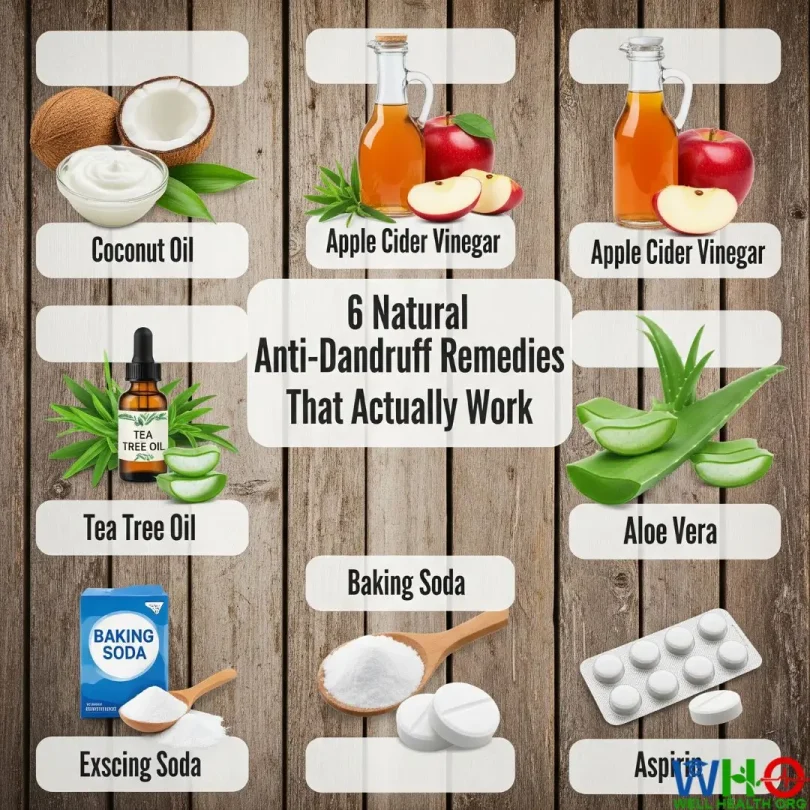
Anti Dandruff Home Remedies
It starts innocently enough. Perhaps it is a slight itch behind the ear or a vague feeling of tightness across the top of your head. Then, you look down at the shoulders of your favorite black sweater or dark blazer and see them: the tell-tale white specks that signal the arrival of dandruff.
- Anti Dandruff Home Remedies
- De-mystifying Dandruff: What Is Actually Happening?
- The Role of the Microbiome
- Dry Scalp vs. Oily Dandruff
- Remedy 1: Tea Tree Oil – The Antifungal Heavyweight
- Why It Works
- How to Use It Safely
- Remedy 2: Coconut Oil – The Deep Hydrator
- Why It Works
- The Deep Conditioning Ritual
- Remedy 3: Aloe Vera – The Inflammation Quencher
- Why It Works
- Harvesting and Application
- Remedy 4: Apple Cider Vinegar – The pH Balancer
- Why It Works
- The ACV Rinse Routine
- Remedy 5: Baking Soda – The Gentle Exfoliant
- Why It Works
- The “Reset” Scrub
- Remedy 6: Lemon Juice – The Acidic Clarifier
- Why It Works
- The Citrus Cleanse
- The Internal Approach: Diet and Lifestyle
- 1. Nutritional Deficiencies
- 2. The Sugar-Yeast Connection
- 3. Stress Management
- 4. Washing Habits
- Troubleshooting: When Natural Remedies Aren’t Enough
- Conclusion
Suddenly, you find yourself checking your reflection in every window you pass. You become self-conscious about scratching your head in public. You might even start avoiding dark clothing altogether. Dandruff is one of the most common dermatological conditions in the world, affecting approximately 50% of the adult population at some point in their lives. Yet, despite its prevalence, it remains a source of significant embarrassment and frustration.
The immediate reaction for most people is to rush to the local pharmacy and purchase the strongest anti-dandruff shampoo available. While these products—often laden with zinc pyrithione, coal tar, or selenium sulfide—can be effective, they can also be harsh. For those with sensitive skin, these chemical formulations may strip the hair of its natural oils, leading to a rebound effect where the scalp becomes even drier and more irritated than before.
Fortunately, the solution to a healthy, balanced scalp may not lie in a laboratory, but in your kitchen pantry. Nature provides us with a formidable arsenal of ingredients possessing antifungal, anti-inflammatory, and moisturizing properties. These natural remedies do not just mask the symptoms; they often address the root cause of the flaking, offering a holistic path to long-term recovery.
In this comprehensive guide, we will delve deep into the science of why dandruff happens, explore six powerful natural remedies in detail, and discuss the lifestyle changes necessary to banish the flakes for good.
De-mystifying Dandruff: What Is Actually Happening?
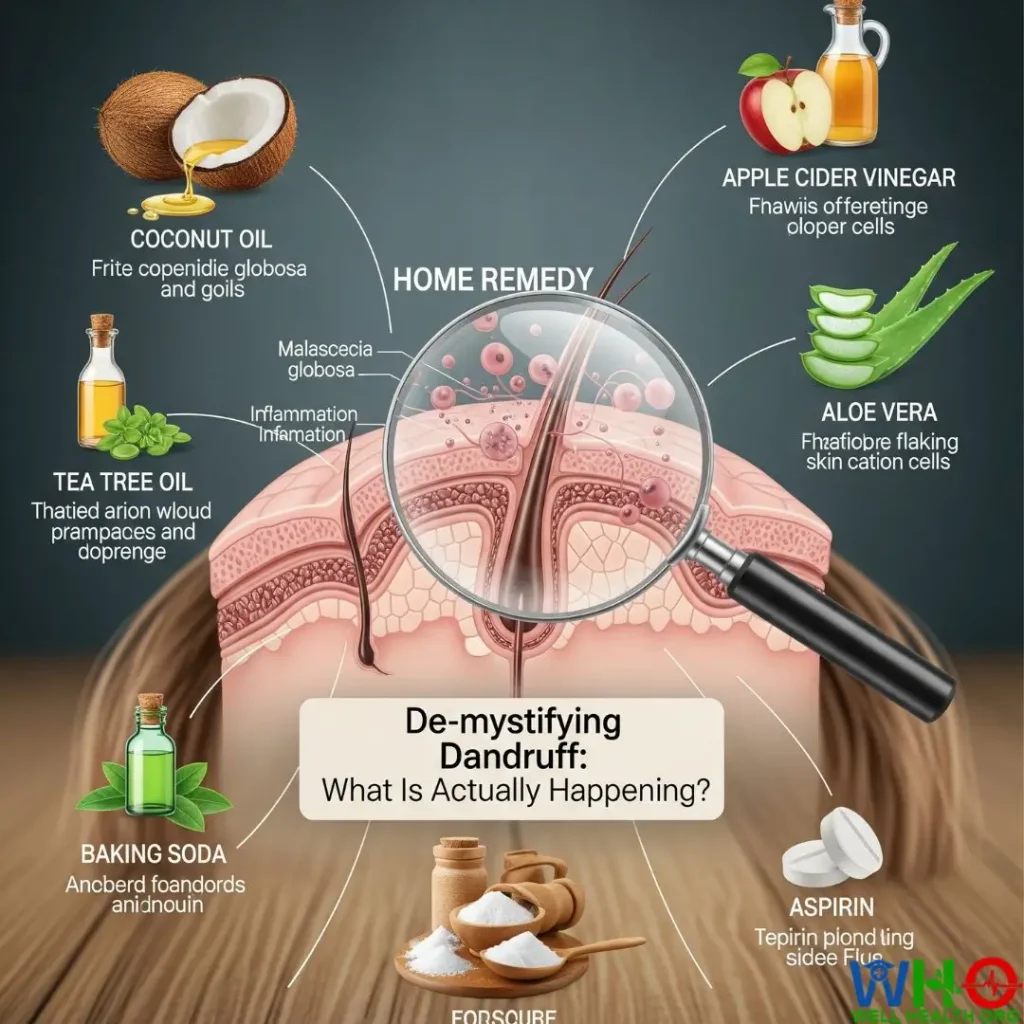
Before we can effectively treat dandruff, we must understand what it is. There is a common misconception that dandruff is simply a result of “dry skin.” While dry skin can cause flaking, true dandruff (medically known as Seborrheic Dermatitis in its more severe form) is actually a complex interplay between your skin, your oils, and a microscopic fungus.
The Role of the Microbiome
Your scalp is home to a microbiome, a community of microorganisms. One of the primary residents is a yeast-like fungus called Malassezia globosa. This fungus lives on the scalps of most adults without causing any issues. It feeds on sebum—the natural oils produced by your hair follicles.
However, for about half the population, this relationship turns sour. As the fungus breaks down the sebum, it produces a byproduct called oleic acid. If your scalp is sensitive to oleic acid (which is determined by genetics), your body reacts with inflammation.
To get rid of the irritant, your scalp accelerates the renewal of skin cells. In a healthy scalp, skin cells mature and shed invisibly over a month. In a dandruff-prone scalp, this process is speeded up to just a few days. The immature cells clump together with oil, becoming the visible white or yellowish flakes we recognize as dandruff.
Dry Scalp vs. Oily Dandruff
It is crucial to distinguish between the two main types of flaking to choose the right remedy:
- Dry Scalp Flaking: caused by cold air, dehydration, or harsh soaps. The flakes are usually small, white, and dry. The scalp feels tight.
- Oily Dandruff (Seborrhea): Caused by the Malassezia fungus and excess oil. The flakes are larger, perhaps yellowish, and greasy. The scalp often feels itchy and oily.
The remedies below cover both ends of this spectrum, helping to regulate oil production, kill the fungus, and hydrate the skin.
Remedy 1: Tea Tree Oil – The Antifungal Heavyweight
If there is a king of natural dandruff remedies, it is Tea Tree Oil. Extracted from the leaves of the Melaleuca alternifolia plant native to Australia, this essential oil has been used for centuries by indigenous communities to treat cuts, wounds, and skin infections.
Why It Works
The power of tea tree oil lies in a compound called terpinen-4-ol. Extensive research has shown that this compound possesses potent antimicrobial and antifungal capabilities. Specifically, it has been shown to inhibit the growth of Malassezia, the very fungus responsible for the irritation-shedding cycle. By keeping the fungal population in check, tea tree oil reduces the inflammation and itchiness that drive the condition.
How to Use It Safely
Tea tree oil is powerful medicine. Using it undiluted can cause contact dermatitis, leading to a red, burning rash. Always handle with care.
The Daily Shampoo Booster:
This is the easiest way to integrate tea tree oil into your routine without changing your habits.
- Pour your regular amount of shampoo into your palm.
- Add 2 to 3 drops of high-quality tea tree essential oil.
- Mix it with your finger.
- Massage into your scalp and let it sit for 2–3 minutes before rinsing.
The Overnight Scalp Treatment:
For stubborn dandruff, a longer application may be necessary.
- Mix 5 to 7 drops of tea tree oil with 2 tablespoons of a carrier oil (like jojoba, almond, or coconut oil).
- Part your hair and apply the oil mixture directly to the scalp, not just the hair strands.
- Massage gently for 5 minutes to stimulate blood flow.
- Leave it on for at least 30 minutes, or overnight (use an old towel on your pillow).
- Wash out thoroughly.
Precaution: Always perform a patch test on your inner arm 24 hours before applying tea tree oil to your scalp to ensure you are not allergic.
Remedy 2: Coconut Oil – The Deep Hydrator
Coconut oil has achieved cult status in the beauty world, and its reputation for hair care is well-deserved. While tea tree oil attacks the fungus, coconut oil focuses on repairing the skin barrier and soothing dryness.
Why It Works
Coconut oil is unique because it is composed primarily of medium-chain fatty acids, specifically Lauric Acid.
- Penetration: Unlike many oils that sit on top of the skin, coconut oil has a low molecular weight, allowing it to penetrate deep into the hair shaft and the layers of the scalp.
- Antimicrobial: Lauric acid has mild antimicrobial properties, offering a “double punch” of hydration and fungus control.
- Barrier Repair: For those suffering from dry-scalp flaking, coconut oil seals in moisture and prevents water loss, instantly stopping the “tight” feeling.
The Deep Conditioning Ritual
To get the most out of coconut oil, you need to use it as a mask.
Step-by-Step:
- Warm it up: Coconut oil is solid at room temperature. Scoop out 2 to 3 tablespoons and melt it between your hands or in a small bowl placed in warm water.
- Application: Apply the liquid oil to your dry scalp. Focus on the areas that are most itchy.
- Comb through: excessive oil can be pulled down to the ends of your hair to condition split ends.
- The Greenhouse Effect: Put on a shower cap or wrap your head in a warm towel. The heat helps the oil penetrate further.
- Timing: Leave for at least 1 hour. Overnight is best.
Pro-Tip for Washing it Out:
Coconut oil is heavy. To avoid looking greasy the next day, apply shampoo to your hair before getting it wet in the shower. Massage the shampoo into the oiled hair to break down the grease, then add water and lather. You may need to rinse and repeat.
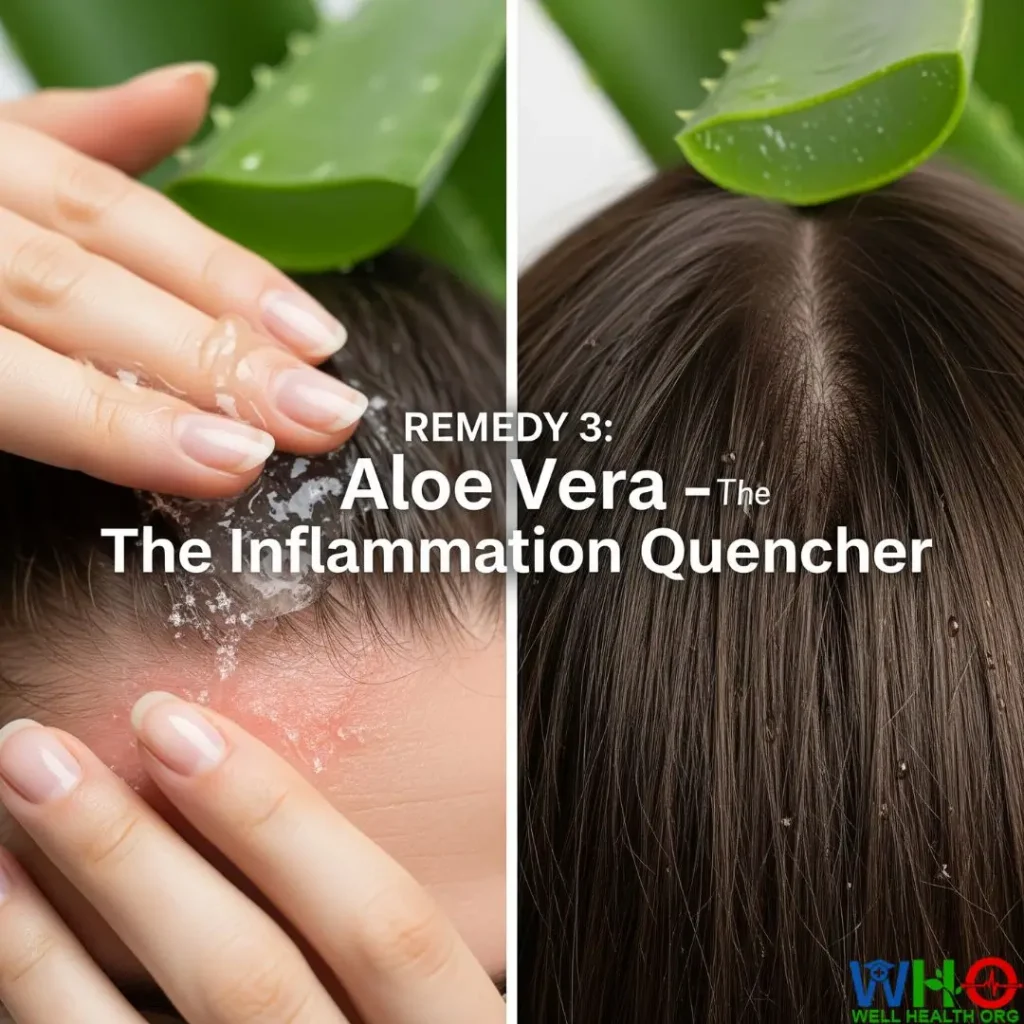
Remedy 3: Aloe Vera – The Inflammation Quencher
We usually associate aloe vera with sunburns, but it is effectively a cure-all for irritated skin conditions. If your dandruff is accompanied by an intense, burning itch or redness, aloe vera is your best first line of defense.
Why It Works
Aloe vera is rich in water, vitamins, and minerals, but its magic lies in its enzymes (like bradykinase) which help reduce excessive inflammation when applied to the skin topically. Furthermore, aloe contains antifungal and antibacterial compounds. It provides an immediate cooling sensation that breaks the “itch-scratch” cycle, allowing the scalp to heal.
Harvesting and Application
While you can buy aloe vera gel in bottles, many contain alcohol or green dyes which can dry out the scalp. The best source is a fresh leaf from the plant.
The Fresh Gel Method:
- Cut a leaf from an aloe plant.
- Stand it upright in a cup for 10 minutes to let the yellow resin (aloin) drain out, as this can be irritating.
- Slice the leaf open and scoop out the clear, jelly-like substance.
- Blend the jelly in a blender to break up clumps until it becomes a smooth, slimy liquid.
- Apply this generously to the scalp. It will feel cool and wet.
- Leave it on for 30 to 45 minutes.
- Rinse with cool water and a mild shampoo.
Frequency:
Because aloe vera is gentle and water-based, it does not grease up the hair. You can use this treatment 3 to 4 times a week without fear of buildup.
Remedy 4: Apple Cider Vinegar – The pH Balancer
Apple Cider Vinegar (ACV) is a polarizing ingredient—people either love the smell or hate it—but its efficacy in scalp care is undeniable. It serves as both a reset button for your scalp’s pH and a clarifier.
Why It Works
The human scalp has a natural acid mantle with a pH of around 4.5 to 5.5. This slight acidity keeps bacteria and fungi in check. However, many commercial shampoos, styling products, and even tap water are alkaline (high pH). This disrupts the acid mantle, creating a breeding ground for Malassezia.
ACV is acidic. By applying it to the scalp, you restore the natural pH balance, making the environment inhospitable for the fungus. Additionally, the acidity helps dissolve product buildup and dead skin cells that are clogging hair follicles.
The ACV Rinse Routine
Do not use straight vinegar, as it is too strong. Dilution is key.
The Recipe:
- Mix 1 part Apple Cider Vinegar (preferably raw, with “the mother”) with 3 to 4 parts cool water.
- Add a few drops of lavender or rosemary essential oil if the smell bothers you.
The Method:
- Shampoo and condition your hair as normal.
- Tilt your head back and pour the ACV mixture over your scalp. Be careful to keep your eyes closed.
- Massage it in thoroughly.
- Let it sit for 2 to 5 minutes.
- Rinse with cool water.
Note on Smell: The vinegar smell will be strong while your hair is wet, but it completely dissipates once your hair is dry.
Remedy 5: Baking Soda – The Gentle Exfoliant
Sometimes, you just need to physically remove the buildup. Baking soda (sodium bicarbonate) acts as a physical exfoliant, similar to a face scrub, but for your head.
Why It Works
Baking soda has a fine, gritty texture. When massaged into the scalp, it acts as a mechanical exfoliant, lifting away dead skin cells and loosening the flakes that are stuck to the scalp. It also has mild antifungal properties.
The “Reset” Scrub
Warning: Baking soda has a very high pH (around 9). Using it too often can be drying and can actually disrupt the pH balance we tried to fix with the Apple Cider Vinegar. Use this remedy only occasionally—perhaps once every two weeks—as a “deep clean.”
How to Use:
- Wet your hair thoroughly in the shower.
- Pour a handful of baking soda into your palm.
- Rub it vigorously into your scalp. It will not lather like shampoo.
- Massage for 1 to 2 minutes.
- Rinse very thoroughly.
The Post-Care:
Because baking soda is alkaline and drying, it is highly recommended to follow this treatment with the Apple Cider Vinegar rinse mentioned above. This restores the pH balance and seals the hair cuticle, leaving hair shiny and soft.
Remedy 6: Lemon Juice – The Acidic Clarifier
Similar to Apple Cider Vinegar, lemon juice utilizes the power of citric acid to combat dandruff. It is particularly effective for those with oily scalps.
Why It Works
Lemon juice is rich in Alpha Hydroxy Acids (AHAs). In skincare, AHAs are used to exfoliate the top layer of skin. On the scalp, they help break down the “glue” holding the dandruff flakes to the skin, making them easier to wash away. The low pH also creates a hostile environment for the fungus.
The Citrus Cleanse
Method 1: Pre-Wash Treatment
- Apply 2 tablespoons of fresh lemon juice directly to the scalp.
- Massage it in and let it sit for 1 minute (it may sting slightly if you have scratched your head recently).
- Mix 1 teaspoon of lemon juice into 1 cup of water and rinse your hair with it.
- Follow with your regular wash routine.
Important Warning:
Lemon juice creates photosensitivity. If you leave lemon residue on your scalp and go out into the sun, you can suffer from a scalp burn or lightening of your hair color. Always rinse thoroughly.
The Internal Approach: Diet and Lifestyle
You can apply all the oils and vinegars in the world, but if your body is inflamed on the inside, the dandruff will likely return. Your skin is a mirror of your internal health. To banish dandruff for good, you must look at your lifestyle.

1. Nutritional Deficiencies
Certain nutrients are vital for skin barrier function. If you are deficient, your skin becomes weak and susceptible to infection.
- Zinc: This is the most critical mineral for dandruff. It regulates oil production and heals the skin. (Found in: Oysters, pumpkin seeds, beef, lentils).
- B Vitamins: Specifically B2 (Riboflavin), B3 (Niacin), and B6. These are essential for metabolic processes in skin cells. (Found in: Eggs, dairy, leafy greens, whole grains).
- Omega-3 Fatty Acids: These healthy fats hydrate the skin from the inside out. A lack of healthy fats often results in dry, flaky skin. (Found in: Salmon, mackerel, flaxseeds, walnuts).
2. The Sugar-Yeast Connection
Yeast and fungi love sugar. If your diet is high in processed sugar, refined carbohydrates, and alcohol, you are essentially providing an all-you-can-eat buffet for the Malassezia yeast on your scalp (and elsewhere in the body).
- The Fix: reducing sugar intake and increasing probiotic foods (like yogurt, kimchi, and sauerkraut) can help balance the gut and skin microbiome.
3. Stress Management
Have you ever noticed your dandruff flares up during exam week or a busy period at work? Stress triggers the release of cortisol. Cortisol signals your sebaceous glands to produce more oil. More oil means more food for the fungus, and consequently, more dandruff.
- The Fix: You cannot eliminate stress, but you can manage it. Regular exercise, meditation, or simply getting adequate sleep can lower cortisol levels and calm your scalp.
4. Washing Habits
There is a “Goldilocks” zone for washing hair.
- Under-washing: Allows oil and dead skin to build up, worsening dandruff.
- Over-washing: Strips natural oils, causing the scalp to panic and overproduce oil to compensate.
- The Balance: Most people dealing with dandruff benefit from washing every other day or every two days.
- Water Temperature: Stop washing your hair with hot water. Hot water inflames the skin and strips moisture. Switch to lukewarm water for washing and a cool rinse to close the cuticles.
Troubleshooting: When Natural Remedies Aren’t Enough
Patience is a virtue when treating skin conditions. Unlike pharmaceutical steroids which work instantly but often have side effects, natural remedies work with the body’s healing cycles. It typically takes 2 to 3 weeks of consistent application to see significant results.
However, it is important to recognize when “DIY” is no longer appropriate. You should stop these treatments and consult a dermatologist if:
- Signs of Infection: The scalp is extremely red, swollen, warm to the touch, or oozing pus.
- Bleeding: You have scratched to the point of creating open sores.
- Hair Loss: You notice patches of hair falling out along with the flakes.
- Stubbornness: You have tried consistent natural remedies and medical shampoos for a month with zero improvement.
In these cases, you may not be dealing with simple dandruff. You could have Psoriasis (an autoimmune condition causing thick, silver scales), Eczema, or a bacterial infection requiring prescription medication.
Conclusion
Dandruff is annoying, but it is not invincible. It is simply a sign that your scalp’s ecosystem is out of balance. By stepping away from harsh chemicals and embracing the antifungal, soothing, and balancing properties of nature, you can restore that harmony.
Whether you choose the cooling relief of aloe vera, the cleansing power of tea tree oil, or the balancing act of apple cider vinegar, the key is consistency. Listen to your body, feed it well, and treat your scalp with the gentle care it deserves. With time and a little effort from your kitchen pantry, you can wear that black sweater with confidence once again.
Medically Reviewed by Prof. Dr. Akram
Orthopedic Surgeon | Professor | Senior Medical Specialist
Prof. Dr. Akram is a distinguished surgeon with over 15 years of clinical expertise. Having served as a lead Emergency Specialist at Complex International Government Hospital, he currently leads a specialized team of 13 medical professionals at his private hospital. As a Professor at top medical universities, he ensures that every article on WellHealthOrg.com meets rigorous clinical standards.
Medical Disclaimer:
The information provided is for educational purposes only and is not a substitute for professional medical advice, diagnosis, or treatment. Always consult your physician for any medical concerns.
Our content is rigorously fact-checked by our 13-member Editorial Team under the clinical supervision of Prof. Dr. Akram.