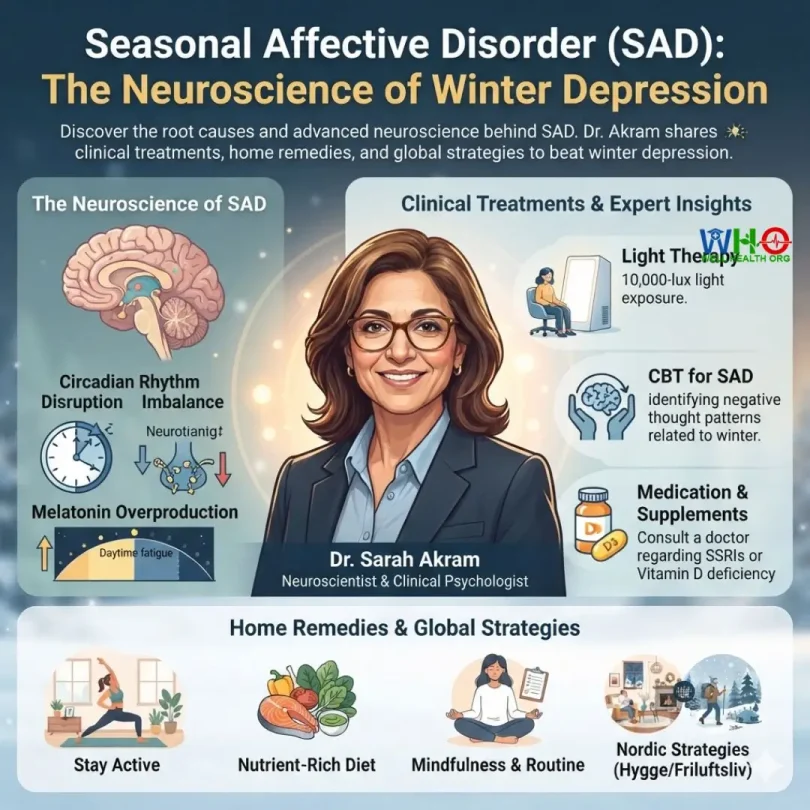
🩺 Dr. Akram’s Private Clinical Notes
“Across three decades of neurological consultations from London to Seoul, I have observed a recurring pattern that begins precisely during the late October transition. Patients enter my consulting rooms reporting what they self-describe as ‘moral weakness’ or ‘unexplained laziness.’ Consider Elena, a 34-year-old architectural engineer whom I evaluated four years ago. Every November, her working memory slowed, her morning alarm became an insurmountable hurdle, and she developed intense, uncontrollable cravings for bread and simple pastries, gaining eight kilograms each winter before spontaneously returning to baseline energy in May.”
“Elena did not have a personal character flaw; she had an undiagnosed, severe circadian phase shift driven by an atypical retinal-hypothalamic response to waning photoperiods. Her brain was effectively attempting to enter an ancestral state of biological dormancy. Once we realigned her circadian pacing via calibrated 10,000-lux ocular stimulation and selective monoaminergic support, her symptoms remitted completely in under three weeks. Seasonal Affective Disorder is a predictable, biologically measurable neurochemical state. When we treat the underlying chronobiological machinery, the recovery rate is remarkably high.”
1. What is Seasonal Affective Disorder (SAD)? Clinical Definition
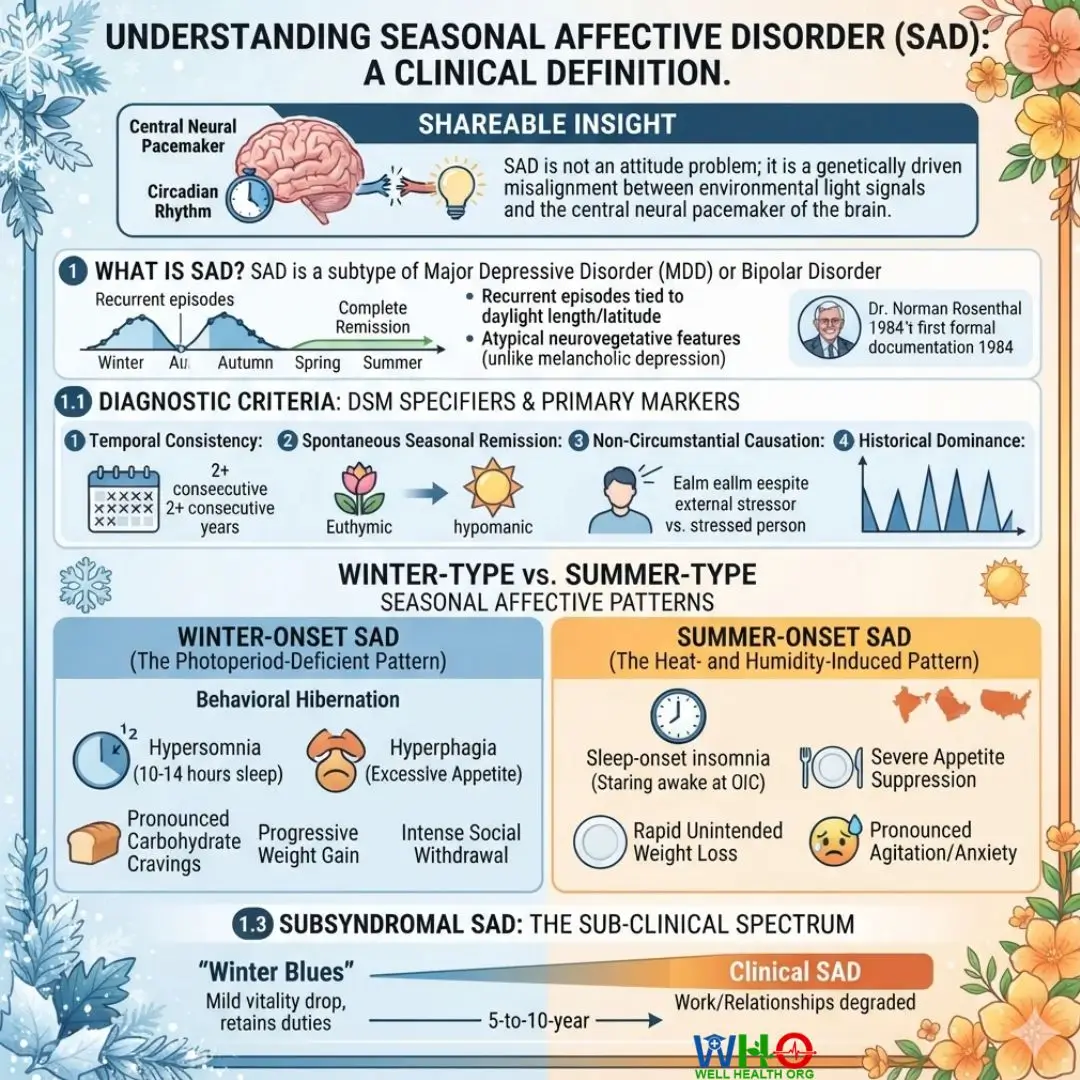
Seasonal Affective Disorder (SAD) is a subtype of major depressive disorder (MDD) or bipolar disorder marked by recurrent episodes of clinical depression that surface and resolve during specific periods of the calendar year. First formally documented in medical literature by Dr. Norman Rosenthal and his colleagues in 1984, this condition is recognized worldwide as an affective illness tied closely to astronomical shifts in daylight length, geographic latitude, and neurological adaptation.
Unlike non-seasonal unipolar depression, which presents with standard melancholic features such as insomnia and diminished appetite, winter-onset seasonal affective disorder characteristically displays atypical neurovegetative features. Patients routinely describe a profound neurophysical deceleration: early-morning awakening becomes exceptionally arduous, an overwhelming desire for sleep persists despite nine or ten hours in bed, physical motor activity slows, and intense cravings emerge for refined carbohydrates and starch-dense foods.
1.1 Diagnostic Criteria: DSM Specifiers and Primary Markers
Within both the Diagnostic and Statistical Manual of Mental Disorders (DSM-5-TR) and the World Health Organization’s International Classification of Diseases (ICD-11), SAD is not coded as an isolated disease entity. Instead, it is classified as a “with seasonal pattern” specifier applied to Major Depressive Disorder or Bipolar I and II Disorders.
To meet strict medical criteria for this diagnosis, an individual must fulfill several objective milestones:
- Temporal Consistency: A systematic onset of major depressive episodes during a distinctive season (most typically autumn or winter) occurring for at least two consecutive years.
- Spontaneous Seasonal Remission: Complete remission, or a switch into a euthymic (or hypomanic) state, at a specific point in the year (most typically spring and early summer).
- Non-Circumstantial Causation: The depressive episodes must not be explainable by predictable seasonal psychosocial stressors, such as recurrent winter unemployment or seasonal academic deadlines.
- Historical Dominance: Over the patient’s lifetime, seasonal depressive episodes must significantly outnumber any non-seasonal depressive periods that may have occurred.
1.2 Winter-Type vs. Summer-Type Seasonal Affective Patterns
While approximately 95% of clinical presentations center on the winter-onset variety, an inverse condition known as Summer-Onset SAD (or reverse seasonal depression) exists in global psychiatric clinics. Distinguishing between the two forms is crucial because their biological drivers and clinical profiles differ sharply:
- Winter-Onset SAD (The Photoperiod-Deficient Pattern): Driven primarily by a lack of ambient photoperiod length, reduced ultraviolet/blue-light flux, and cold temperatures. Symptoms manifest through hypersomnia (sleeping 10–14 hours daily), hyperphagia (excessive appetite), pronounced carbohydrate cravings, progressive weight gain, and intense social withdrawal (a state commonly described as behavioral hibernation).
- Summer-Onset SAD (The Heat- and Humidity-Induced Pattern): Typically observed in tropical and subtropical regions across South Asia, the Middle East, and the southern United States. Precipitated by high ambient temperatures, excessive humidity, and heightened atmospheric pollen or aeroallergen burdens that provoke systemic inflammation. Clinical features are classic melancholic markers: sleep-onset insomnia, severe appetite suppression, rapid unintended weight loss, and pronounced agitation or anxiety.
1.3 Subsyndromal SAD: The Sub-Clinical Spectrum
In clinical neurology, we recognize that seasonal mood variation exists along a broad spectrum. For every patient meeting the complete criteria for a major depressive episode with seasonal pattern, three to four additional individuals suffer from Subsyndromal Seasonal Affective Disorder (S-SAD), colloquially known as the “winter blues.”
Individuals with S-SAD experience measurable drops in morning vitality, mild-to-moderate carbohydrate cravings, and reduced social engagement, yet they retain the psychological capacity to fulfill basic occupational duties. However, untreated S-SAD significantly degrades workplace efficiency, impairs familial relationships, and frequently advances into full-blown clinical SAD over a five-to-ten-year span if circadian vulnerabilities are ignored.
2. The Root Causes: Deep Biological & Neurological Mechanisms
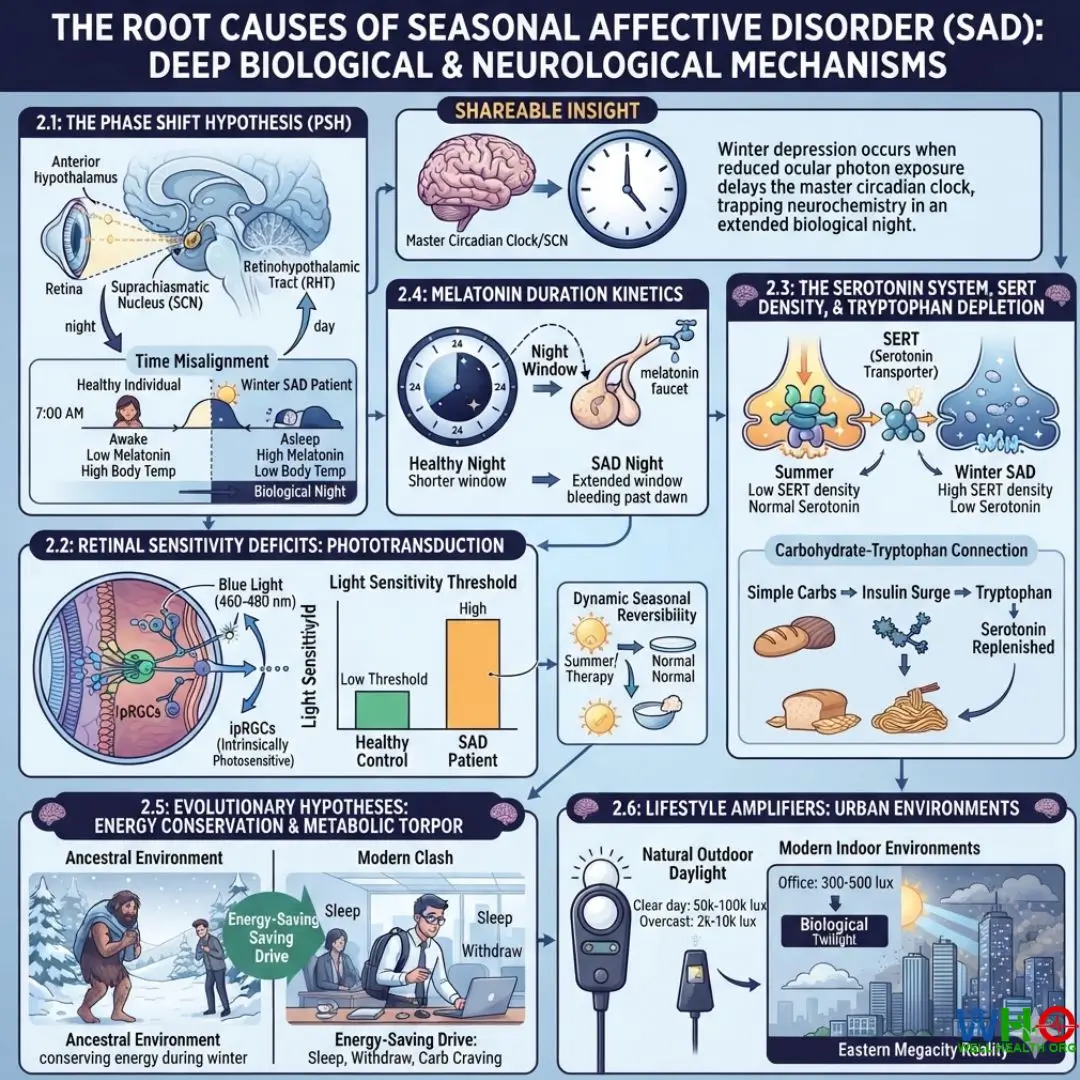
To address Seasonal Affective Disorder successfully, clinicians look past simplistic explanations like “feeling sad about grey weather.” The condition stems from clear physical, biochemical, and neuroanatomical factors. The central nervous system relies on environmental photons to calibrate internal biological clocks. When that calibration fails, a cascade of neurochemical changes follows.
2.1 The Phase Shift Hypothesis and Suprachiasmatic Nucleus Desynchrony
The prevailing chronobiological framework for SAD is the Phase Shift Hypothesis (PSH), spearheaded by Dr. Alfred Lewy. Within the anterior hypothalamus sits a bilateral cluster of roughly 20,000 neurons termed the Suprachiasmatic Nucleus (SCN). The SCN functions as the master circadian pacemaker for all human tissue, orchestrating peripheral clocks found in liver hepatocytes, cardiac myocytes, and skeletal muscle.
In healthy individuals, early morning dawn light hits the retina, firing electrical signals straight down the retinohypothalamic tract (RHT) into the SCN. This signal resets the circadian timing cycle, clears morning melatonin, and triggers cortisol release to help you wake up.
In patients predisposed to winter SAD, the truncated daylight hours of autumn create a phase delay. The central biological clock runs slow relative to real-world clock time. The brain’s night cycle begins late and stretches well into the morning hours. When the patient’s alarm sounds at 7:00 AM, their SCN is still signaling high biological night: core body temperature sits at its lowest point, brainstem arousal circuits remain dampened, and the pineal gland continues to pump melatonin into the bloodstream. This chronic misalignment between social requirements and internal circadian timing generates profound morning exhaustion and daytime mental fog.
2.2 Retinal Sensitivity Deficits: Phototransduction and Electroretinography
A key question in neurology is: Why do two individuals living at the exact same geographical latitude (such as 51°N in London or 43°N in Toronto) respond differently, one developing severe depression while the other remains energetic?
Groundbreaking ocular research highlights variations in the eye itself. The retina is not just a camera lens; it is an exposed outpost of the central nervous system. Within the ganglion cell layer rests a specialized subclass of non-image-forming photoreceptors called intrinsically photosensitive retinal ganglion cells (ipRGCs), which express the photopigment melanopsin. These cells are tuned to capture blue light wavelengths between 460 nm and 480 nm, sending signals directly to the SCN.
Clinical electroretinography (ERG) studies show that patients with seasonal affective disorder display a measurable reduction in retinal sensitivity during winter months. Specifically, both rod photoreceptor sensitivity and cone b-wave maximal amplitudes drop significantly compared to matched control groups:
- Reduced Photon Transduction: The eyes of SAD patients require higher baseline light intensity to generate an equivalent electrical signal to the hypothalamus. Dim winter light simply does not reach the threshold needed to reset their central pacemaker.
- Dynamic Seasonal Reversibility: When tested in mid-summer or after a 4-week course of 10,000-lux light therapy, this retinal sensitivity deficit reverses completely. This proves that low retinal responsiveness is a treatable biological marker of the depressive state itself.
2.3 The Serotonergic System, SERT Density, and Tryptophan Depletion
Serotonin (5-hydroxytryptamine, or 5-HT) is a vital monoamine neurotransmitter responsible for stabilizing mood, modulating impulse control, and regulating appetite within the ventral striatum and prefrontal cortex. In healthy controls, brain serotonin activity stays relatively steady throughout the year thanks to regulatory feedback loops.
Positron Emission Tomography (PET) neuroimaging reveals that individuals with SAD experience abnormal seasonal fluctuations in Serotonin Transporter (SERT) availability:
- During dark autumn and winter months, brain SERT levels climb by 5% to 12%. Because SERT’s job is to pull serotonin out of the synaptic cleft and recycle it back into neurons, elevated transporter counts strip the synapse of active serotonin.
- This seasonal drop in synaptic serotonin leads directly to feelings of despair, anxiety, emotional sensitivity, and loss of pleasure.
- The Carbohydrate-Tryptophan Connection: Patients often wonder why they crave bread, rice, noodles, and sugary treats during depressive episodes. This is actually an instinctive form of self-medication. Digesting simple carbohydrates triggers a rapid insulin surge. Insulin pulls competing large neutral amino acids (such as leucine, isoleucine, and valine) out of the blood and into muscle tissue, allowing the amino acid tryptophan to cross the blood-brain barrier unobstructed. Inside the central nervous system, that tryptophan is converted straight into serotonin. The patient craves carbs because their brain is searching for raw material to replenish empty serotonin stores.
2.4 Melatonin Duration Kinetics and Pineal Gland Signaling
Melatonin, produced by the pineal gland, serves as the body’s primary biochemical signal of darkness. Its synthesis is driven by enzymes (notably serotonin N-acetyltransferase) that activate when the retina detects absence of light.
In seasonally breeding animals, the seasonal expansion of the nightly melatonin window coordinates major changes in coat thickness, reproductive organ size, and social aggression. While humans are not seasonal breeders, our underlying physiology still reacts to these endocrine signals.
In patients with winter SAD, the nightly window of melatonin secretion stretches significantly wider than in healthy individuals. The hormone’s release begins earlier in the evening and extends far past dawn. This lingering melatonin creates a persistent chemical signal of darkness. The brain is continuously told that it is the middle of the night, producing daytime drowsiness, psychomotor slowing, and cognitive fatigue.
2.5 Evolutionary Hypotheses: Energy Conservation and Metabolic Torpor
From an evolutionary standpoint, the symptoms of SAD make clear survival sense. Evolutionary biologists suggest that winter depression is a vestigial human variation of seasonal torpor or dormancy.
In ancestral environments outside equatorial zones, winter brought life-threatening cold and acute food scarcity. Foragers who remained highly active burned precious calories while facing minimal opportunities for hunting or gathering.
By shifting into an energy-sparing behavioral mode—staying in shelter (social withdrawal), minimizing physical exertion (hypoactivity), sleeping longer hours (hypersomnia), and consuming high-calorie carbohydrates to build adipose tissue—early humans increased their likelihood of surviving harsh winter environments until resources returned in the spring. In modern societies, however, where workplace and economic demands continue unchanged through all 12 months, this ancestral energy-saving adaptation clashes with modern expectations.
2.6 Lifestyle Amplifiers: Western Urban Workspaces vs. Eastern High-Density Environments
Modern built environments actively worsen seasonal vulnerabilities. Natural outdoor daylight on a clear day can easily surpass 50,000 to 100,000 lux, and even on an overcast, drizzly winter afternoon, ambient outdoor light sits between 2,000 and 10,000 lux. In contrast, modern indoor spaces—whether in Europe, North America, or Asia—rarely exceed 300 to 500 lux.
- Western Sedentary Office Environments: Long commutes that start before sunrise and finish after dark, combined with sealed office layouts and low-energy artificial lighting, keep workers in what chronobiologists call “biological twilight.” The brain never receives a light signal bright enough to firmly suppress melatonin and mark daytime hours.
- Eastern Megacity and High-Density Realities: In dense urban hubs across East and South Asia—such as Tokyo, Seoul, Shanghai, and northern metropolises—high-rise apartments and narrow street designs block access to natural horizontal sunlight. Combined with heavy particulate pollution (PM2.5) that filters out morning blue wavelengths, long corporate hours, and intense indoor study routines, urban populations face elevated rates of circadian desynchrony and chronic winter exhaustion.
3. Advanced Medical Treatments (Evidence-Based Protocols)
Managing Seasonal Affective Disorder requires a systematic approach matching the underlying neurobiology. The treatment modalities detailed below are backed by randomized controlled trials and are recognized by major health guidelines, including the American Psychiatric Association (APA) and the UK National Institute for Health and Care Excellence (NICE).
3.1 Bright Light Phototherapy (10,000-Lux Precision Protocols)
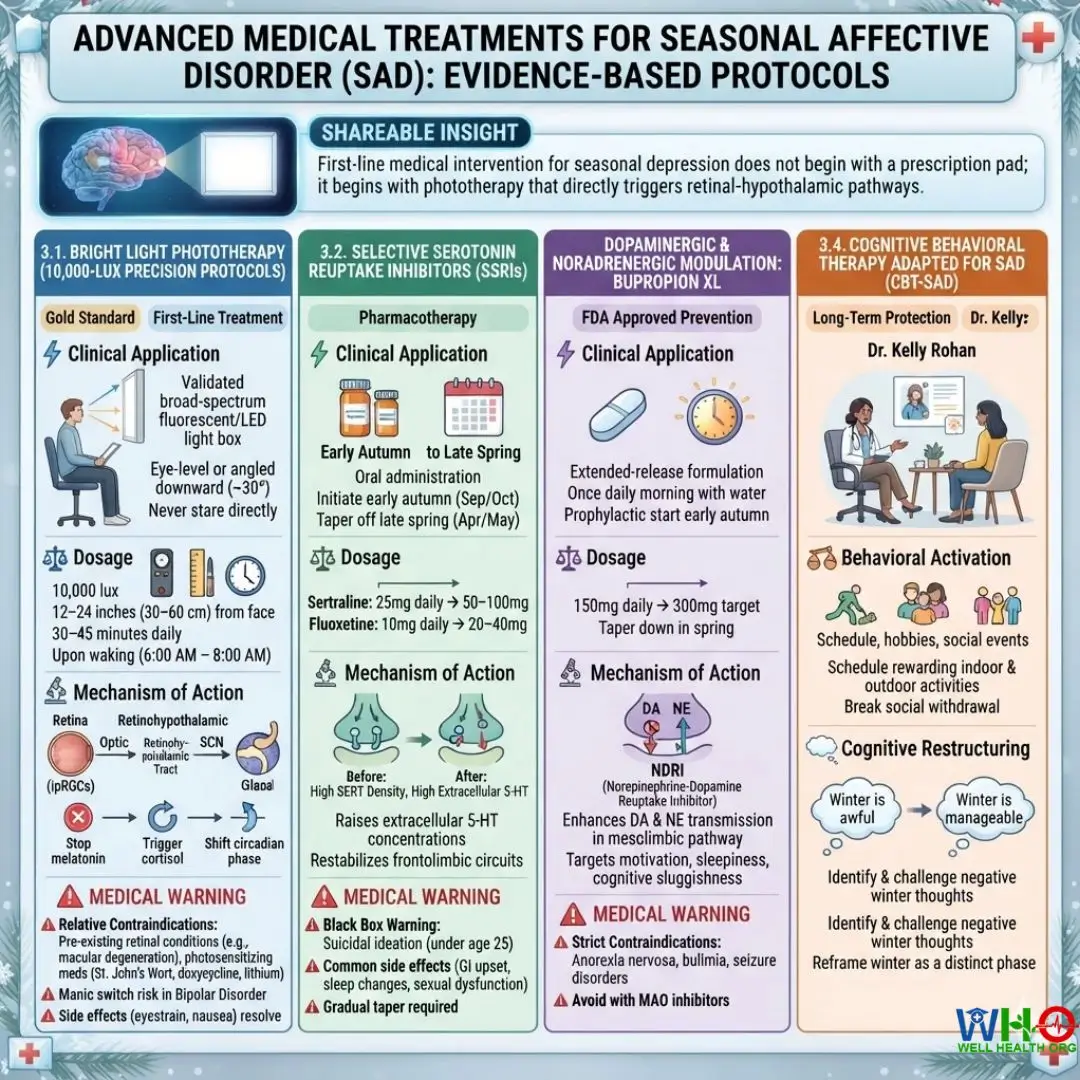
Phototherapy serves as the undisputed gold standard and first-line treatment for winter-type SAD, demonstrating response rates between 60% and 80% when applied according to strict clinical parameters.
Clinical Treatment Protocol: Bright Light Therapy
⚡ Clinical Application: Patient sits in front of a clinically validated, broad-spectrum fluorescent or UV-filtered LED light box. The box must be placed at eye level or angled downward at approximately 30 degrees to directly reach the inferior retina, where ipRGCs are concentrated. The patient must keep their eyes open while reading or working; they should look toward the light intermittently, but never stare directly into the light source.
⚖️ Dosage (US/Metric): 10,000 lux delivered at a measured distance of 12 to 24 inches (30 to 60 cm) from the face for precisely 30 to 45 minutes daily. Treatment must begin immediately upon waking, ideally between 6:00 AM and 8:00 AM.
🔬 Mechanism of Action: High-density photons activate melanopsin within ipRGCs, transmitting electrical spikes through the retinohypothalamic tract. This quickly stops pineal melatonin production, triggers immediate cortisol release, and shifts the SCN circadian phase forward, correcting the patient’s phase delay.
⚠️ Medical Warning: Relative contraindications include pre-existing retinal conditions (such as macular degeneration or diabetic retinopathy) and use of photosensitizing medications (like St. John’s Wort, doxycycline, or lithium). In patients with underlying Bipolar Disorder, unmonitored light therapy can trigger manic or hypomanic switches. Mild side effects like eyestrain, mild nausea, or headache typically resolve within 72 hours.
3.2 Selective Serotonin Reuptake Inhibitors (SSRIs)
When light therapy provides only partial recovery or when severe psychomotor slowing prevents patients from sitting consistently in front of a light box every morning, pharmacological intervention targeting monoamines is clinically indicated.
Clinical Treatment Protocol: SSRI Pharmacotherapy (Sertraline / Fluoxetine)
⚡ Clinical Application: Oral administration of a selective serotonin reuptake inhibitor. For patients with predictable, recurring seasonal episodes, medication is initiated in early autumn (late September to October) before depressive symptoms emerge, and tapered off in late spring (April to May).
⚖️ Dosage (US/Metric): Sertraline: Initial dose of 25 mg daily for 7 days, titrated to 50–100 mg daily based on clinical response. Fluoxetine: Initial dose of 10 mg daily, titrated to a target range of 20–40 mg daily.
🔬 Mechanism of Action: Blocks presynaptic Serotonin Transporters (SERT), raising extracellular 5-HT concentrations within the synaptic cleft. This counteracts the seasonal rise in SERT density, restabilizes emotional processing in frontolimbic circuits, and helps advance the circadian phase rhythm.
⚠️ Medical Warning: Black Box warning regarding increased suicidal ideation in children, adolescents, and young adults under age 25. Common initial side effects include transient gastrointestinal upset, sleep changes, and sexual dysfunction. Tapering must always be managed gradually under medical supervision to avoid discontinuation syndrome.
3.3 Dopaminergic & Noradrenergic Modulation: Bupropion XL
Bupropion is the only pharmacological agent with formal FDA approval for the prevention of recurrent seasonal major depressive episodes.
Clinical Treatment Protocol: Bupropion Hydrochloride Extended-Release
⚡ Clinical Application: Extended-release formulation taken once daily in the morning with water. Prophylactic treatment starts in early autumn while the patient is still asymptomatic and maintained through winter.
⚖️ Dosage (US/Metric): 150 mg once daily in the morning for 7 days, adjusted up to a target dose of 300 mg once daily. Taper down to 150 mg daily for two weeks before discontinuing in the spring.
🔬 Mechanism of Action: Functions as a Norepinephrine-Dopamine Reuptake Inhibitor (NDRI). By enhancing dopaminergic and noradrenergic transmission within the mesolimbic pathway, it targets core SAD symptoms: severe lack of motivation, excessive daytime sleepiness, and cognitive sluggishness.
⚠️ Medical Warning: Strictly contraindicated in individuals with a current or past diagnosis of anorexia nervosa, bulimia, or known seizure disorders due to dose-dependent lowering of the seizure threshold. Avoid co-administration with MAO inhibitors.
3.4 Cognitive Behavioral Therapy Adapted for SAD (CBT-SAD)
While light therapy and pharmacology address physiological drivers, Cognitive Behavioral Therapy adapted for SAD (developed by Dr. Kelly Rohan) offers long-term protection. Longitudinal clinical trials demonstrate that while light therapy and CBT-SAD show equal efficacy in the first winter, patients receiving CBT-SAD experience significantly fewer depressive recurrences in subsequent winters.
CBT-SAD focuses on two primary interventions:
- Behavioral Activation: Actively identifying and breaking patterns of social withdrawal, avoidance, and excessive sedentary time. Patients schedule rewarding, low-friction indoor and outdoor activities rather than withdrawing into physical isolation.
- Cognitive Restructuring: Actively addressing automatic negative thoughts linked to the winter season (such as “I despise winter,” or “I cannot function until spring”). Patients learn to reframe cold-weather months as a distinct, manageable environmental phase rather than an overwhelming catastrophe.
4. Proven Home Remedies and Chronobiological Lifestyle Hacks
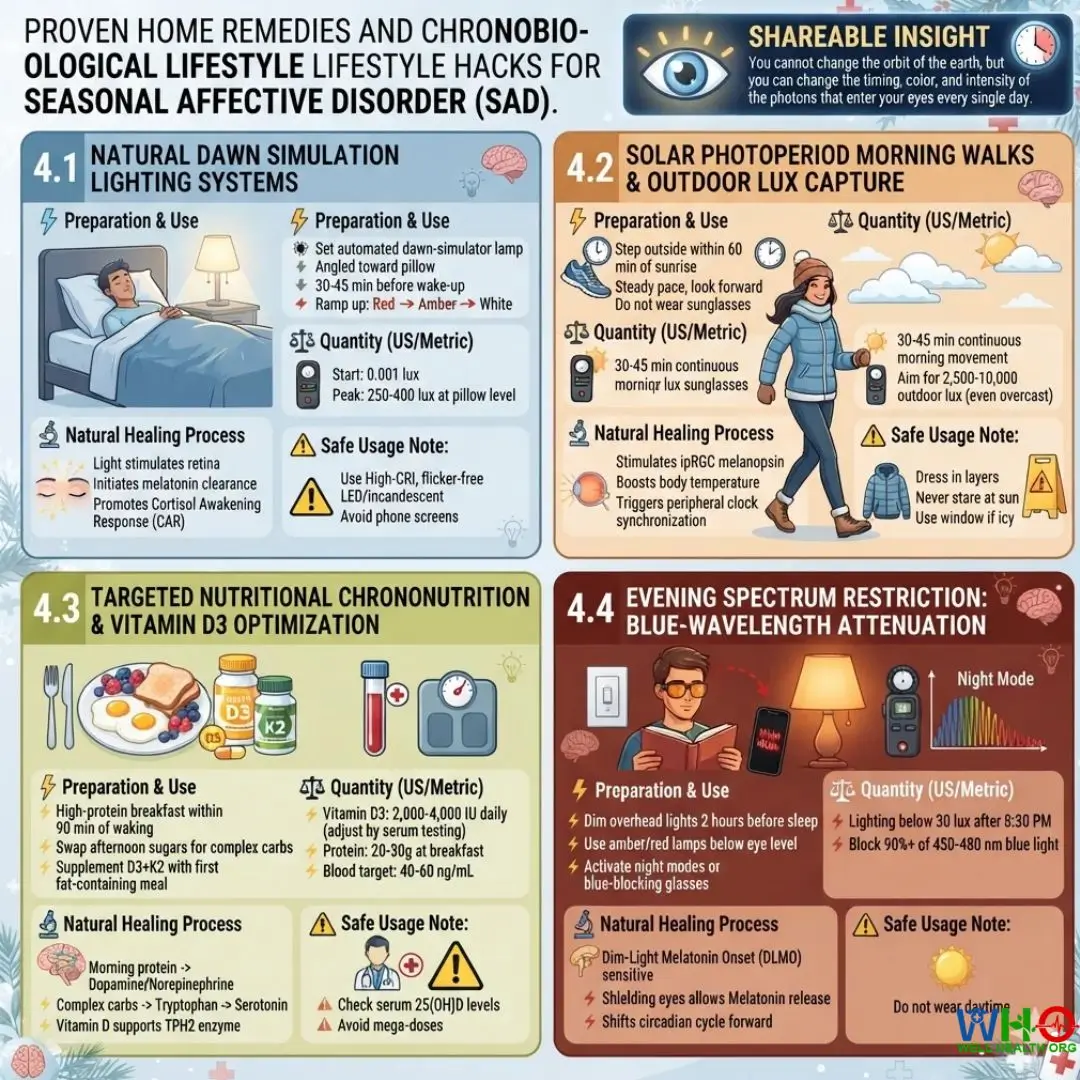
Alongside clinical medical treatments, everyday lifestyle choices can make a substantial difference in managing seasonal depression. These evidence-based self-care strategies help reinforce circadian stability throughout dark winter periods.
4.1 Natural Dawn Simulation Lighting Systems
Waking up to a loud alarm clock in pitch darkness triggers sudden sympathetic nervous system activation, spiking heart rate and blood pressure without properly engaging SCN wakefulness pathways. Dawn simulation offers a physiological, gentle alternative.
Home Remedy: Biological Dawn Simulation
⚡ Preparation & Use: Set an automated dawn-simulator lamp at your bedside, angled toward your pillow. Program the device to begin illuminating 30 to 45 minutes before your scheduled wake-up time, gradually transitioning from deep red, through amber, to full white daylight.
⚖️ Quantity (US/Metric): A gradual illumination increase starting from 0.001 lux and peaking between 250 and 400 lux at pillow level right as your alarm sounds.
🔬 Natural Healing Process: Photons penetrate closed human eyelids during the final stages of sleep. This low-intensity dawn signal stimulates the retina, initiating slow melatonin clearance and prompting the Cortisol Awakening Response (CAR). You wake up naturally feeling clearer, with much less sleep inertia.
⚠️ Safe Usage Note: Ensure the light source uses high-CRI, flicker-free LED or incandescent technology. Avoid using phone screen alarms as dawn replacements, as direct micro-screens lack sufficient diffuse illumination to penetrate closed eyelids effectively.
4.2 Solar Photoperiod Morning Walks & Outdoor Lux Capture
Many people assume an overcast winter morning is too dark to provide biological value. In reality, an overcast sky offers far more usable light than typical indoor environments.
Home Remedy: Morning Natural Photoperiod Walks
⚡ Preparation & Use: Step outside within 60 minutes of sunrise. Walk at a steady, moderate pace while looking forward toward the horizon. Do not wear sunglasses during this walk (standard corrective lenses are fine, as they do not block natural ambient photon flux).
⚖️ Quantity (US/Metric): 30 to 45 minutes of continuous morning outdoor movement. Aim for between 2,500 and 10,000 outdoor lux, even on grey, cloud-covered days.
🔬 Natural Healing Process: Natural daylight strikes the inferior and peripheral retina, delivering broad-spectrum light that stimulates ipRGC melanopsin. Combining this with gentle physical exercise boosts core body temperature and triggers peripheral clock synchronization throughout skeletal muscles.
⚠️ Safe Usage Note: Dress warmly in layers to protect against cold air triggers. Never stare directly at the sun. If icy conditions pose a slip hazard, sit safely near an unobstructed, south-facing open window or sunlit doorway.
4.3 Targeted Nutritional Chrononutrition & Vitamin D3 Optimization
During winter, reduced solar UVB radiation reaching higher latitudes makes it impossible for skin to synthesize vitamin D naturally. At the same time, metabolic shifts lead to irregular meal timing and increased cravings for simple sugars.
Home Remedy: Chrononutrition & Vitamin D3 Optimization
⚡ Preparation & Use: Consume a high-protein, amino-acid-rich breakfast within 90 minutes of waking (such as eggs, tofu scramble, or Greek yogurt). Swap simple afternoon sugars for slow-digesting complex carbohydrates like oats, quinoa, lentils, or sweet potatoes paired with healthy fats. Supplement daily with vitamin D3 and vitamin K2 alongside your first meal containing dietary fat.
⚖️ Quantity (US/Metric): Vitamin D3: 2,000 to 4,000 IU (50 to 100 mcg) daily, adjusted according to baseline serum 25-hydroxyvitamin D blood testing. Dietary protein target: 20 to 30 grams at breakfast.
🔬 Natural Healing Process: Morning dietary tyrosine and protein promote dopamine and norepinephrine synthesis to support alertness. Slow-digesting complex carbohydrates consumed later in the day offer a sustained supply of tryptophan for steady serotonin production without the steep insulin spikes and crashes that worsen lethargy. Vitamin D supports the gene expression of tryptophan hydroxylase 2 (TPH2), the rate-limiting enzyme in brain serotonin production.
⚠️ Safe Usage Note: Check your serum 25(OH)D levels through your primary doctor before and after winter supplementation. Aim for a target range of 40 to 60 ng/mL (100 to 150 nmol/L). Avoid taking mega-doses without medical guidance to prevent hypercalcemia.
4.4 Evening Spectrum Restriction: Blue-Wavelength Attenuation
Because SAD is driven largely by a circadian phase delay, exposure to blue light late in the evening worsens the problem. Screen light tricking your brain into thinking it is still daytime pushes your master clock even further behind schedule.
Home Remedy: Evening Blue-Light Shielding
⚡ Preparation & Use: Two hours before sleep, switch household overhead lights off in favor of low-wattage, warm amber or red lamps placed below eye level. Activate system-wide night modes on all digital devices, or wear certified amber-tinted blue-blocking glasses that filter out wavelengths below 500 nm.
⚖️ Quantity (US/Metric): Keep residential lighting below 30 lux after 8:30 PM. Block 90% or more of blue spectrum emissions (450–480 nm) during late-evening hours.
🔬 Natural Healing Process: Dim-Light Melatonin Onset (DLMO) is very sensitive to short-wavelength blue light. Shielding the eyes in the evening allows the pineal gland to release melatonin at the correct time, helping initiate sleep earlier and naturally shifting your circadian cycle forward.
⚠️ Safe Usage Note: Do not wear blue-blocking glasses during daytime morning hours, as daytime eyes require clear exposure to blue wavelengths to sustain alertness and maintain mood stability.
5. Doctor’s Final Verdict & The Bottom Line
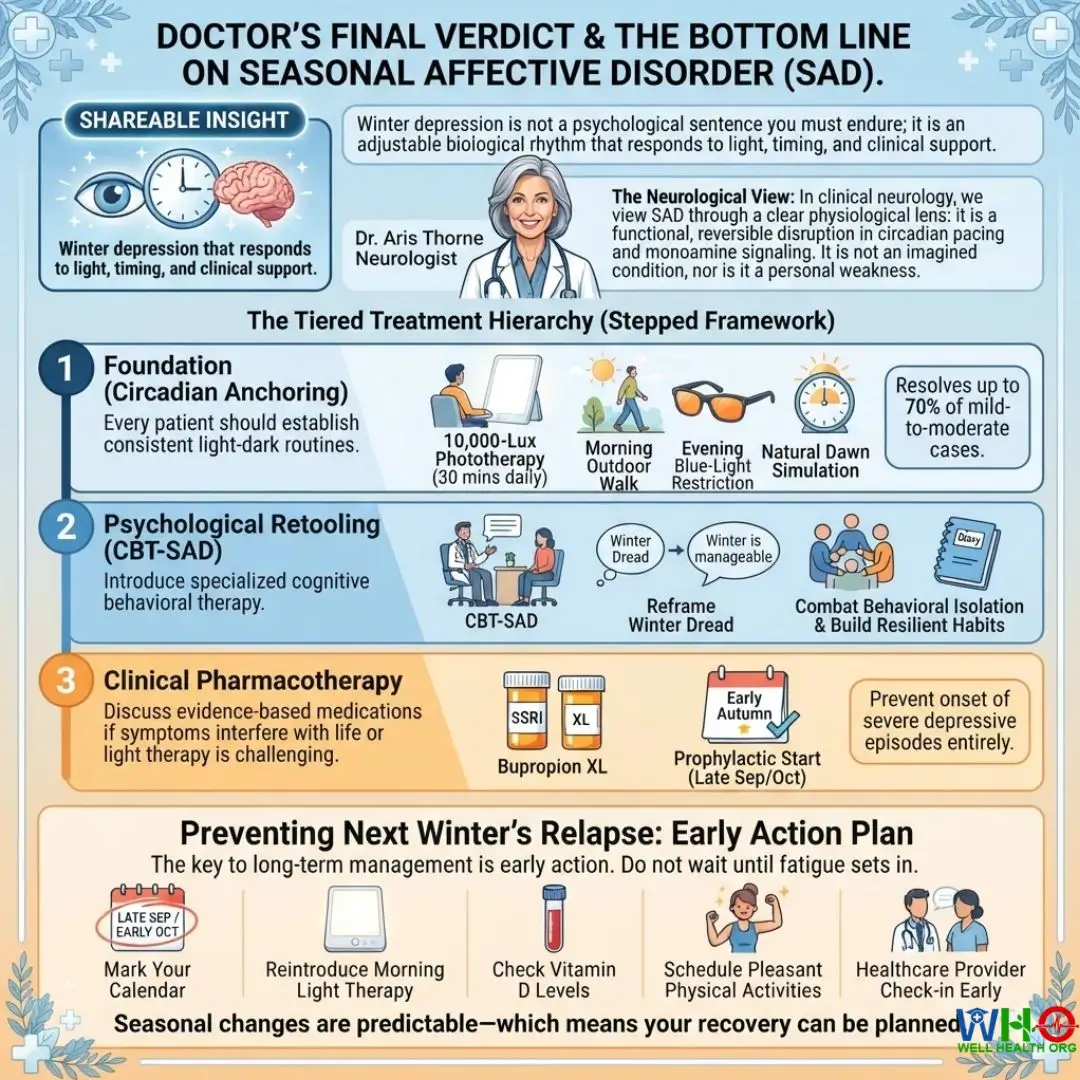
In clinical neurology, we view Seasonal Affective Disorder through a clear physiological lens: it is a functional, reversible disruption in circadian pacing and monoamine signaling. It is not an imagined condition, nor is it a personal weakness.
The Tiered Treatment Hierarchy
Based on over thirty years of neurological practice and current international guidelines, I recommend addressing winter depression through a structured, stepped framework:
- Tier 1: Foundation (Circadian Anchoring): Every patient should establish consistent light-dark routines. Begin each day with 30 minutes of calibrated 10,000-lux phototherapy or a morning walk outdoors. Combine this with evening blue-light restriction and natural dawn simulation. These measures resolve symptoms for up to 70% of mild-to-moderate cases.
- Tier 2: Psychological Retooling (CBT-SAD): Introduce specialized cognitive behavioral therapy to reframe winter dread, combat behavioral isolation, and build resilient daily habits that protect against seasonal relapses in future years.
- Tier 3: Clinical Pharmacotherapy: If symptoms significantly interfere with your work or personal life, or if you struggle to keep up with daily light therapy, discuss evidence-based medications with your physician. Initiating an SSRI or prophylactic Bupropion XL in early autumn can prevent the onset of severe depressive episodes entirely.
Preventing Next Winter’s Relapse
The key to managing SAD long term is early action. Do not wait until late December when fatigue and low mood have already set in. Mark your calendar for late September or early October. Reintroduce your morning light box, check your vitamin D levels, schedule pleasant physical activities, and speak with your healthcare provider early. Seasonal changes are predictable—which means your treatment and recovery can be planned just as reliably.
6. Regional Adaptation Strategies (Western vs. Eastern Climates)
🌍 Guidance for US, UK, Canada & European Lifestyles (Click to Expand)
Workplace Lighting Solutions: Western office layouts often feature sealed tinted windows and low-output overhead fluorescents (typically under 400 lux). Request or set up an adjustable 10,000-lux desktop phototherapy box to use during your first hour of desk work. Position your workstation within two meters of south-facing windows whenever possible.
Navigating Commutes: For those traveling in darkness both before and after work, portable battery-powered light visors or dedicated 10,000-lux desk lamps at your office destination can provide the needed morning circadian cue.
Dietary Balance: Counteract comfort-food tendencies during cold snaps by preparing warm, nutrient-dense meals: slow-cooked stews made with lean meats, root vegetables, legumes, and cruciferous greens rather than relying heavily on processed bakery items and fast foods.
🌏 Guidance for East Asian & South Asian High-Density Environments (Click to Expand)
High-Rise Living & Urban Smog: In dense cities like Seoul, Tokyo, Beijing, or northern Indian metropolises, high-rise buildings and winter haze block natural sunlight. Since window access may not provide enough usable light, rely on an indoor 10,000-lux medical light box right at your breakfast table.
Balancing Evening Schedules: Many Asian urban professionals work long evening hours or commute late on illuminated subway networks. Shield your eyes from harsh fluorescent lighting and smartphone screens after 8:30 PM using night filters or amber-tinted glasses to protect your natural melatonin onset.
Traditional Dietary Integration: Take advantage of traditional winter dishes that support brain health: warm broths made with tofu, bone broths, fatty fish (mackerel, salmon), fermented soybean dishes (natto, miso), and steamed root vegetables. These provide clean protein and gut-friendly nutrients without the heavy refined sugars that trigger energy crashes.
7. Frequently Asked Clinical Questions (FAQs)
Can commercial tanning beds or solariums treat Seasonal Affective Disorder?
No. In fact, doing so is dangerous. Commercial tanning beds emit high levels of Ultraviolet-A (UVA) and Ultraviolet-B (UVB) radiation designed to stimulate skin melanin. These wavelengths carry significant risks of premature skin aging and cutaneous melanoma. Phototherapy for SAD works through the retinal-hypothalamic pathway via the eyes, not through the skin. Clinical SAD light boxes are specifically designed to filter out 100% of harmful UV rays while delivering broad-spectrum visual light safely. You should never look into tanning bed bulbs, as they can cause serious ultraviolet photokeratitis and retinal damage.
How does a doctor differentiate between standard Major Depression and Seasonal Affective Disorder?
The primary distinction lies in seasonality and symptom characteristics. Non-seasonal Major Depressive Disorder (MDD) often includes classic melancholic features: middle-of-the-night insomnia, early morning awakening with inability to return to sleep, loss of appetite, and weight loss. Winter-onset SAD presents with atypical neurovegetative features: hypersomnia (excessive, unrefreshing sleep), intense carbohydrate cravings, overeating, and weight gain. Furthermore, SAD follows a strict calendar pattern, remitting reliably in spring or summer for at least two consecutive years.
Can children and teenagers develop Seasonal Affective Disorder?
Yes. Although SAD is most frequently diagnosed in women aged 18 to 45, it is well-documented in pediatric and adolescent populations. In younger individuals, symptoms often look like behavioral challenges: school avoidance, morning tantrums, declining academic grades between November and February, withdrawal from extracurricular sports, and irritability rather than open sadness. Pediatric light therapy protocols (often 15 to 30 minutes of morning exposure) should always be supervised by a pediatrician or child psychiatrist.
Why do women experience winter depression more frequently than men?
Epidemiological studies consistently show a female-to-male ratio of roughly 2:1 to 4:1 for SAD, particularly during reproductive years between puberty and menopause. This increased vulnerability involves the interaction between ovarian steroids and central monoaminergic systems. Estrogen and progesterone actively modulate serotonin transporter availability, serotonin receptor sensitivity, and circadian gene expression. When daylight declines in autumn, these hormonal interactions can leave women more susceptible to drops in synaptic serotonin.
How long does it take for 10,000-lux light therapy to produce noticeable improvements?
When used correctly every morning upon waking, many patients notice improvements in energy levels and reduced morning brain fog within 3 to 5 days. Significant improvements in mood, reduction in carbohydrate cravings, and alleviation of depressive symptoms generally occur within 14 to 21 days of continuous daily use. If no meaningful response occurs after three weeks, your clinician may re-evaluate the timing, distance, or duration of the protocol, or recommend adding CBT-SAD or medical pharmacotherapy.
Does taking high doses of Vitamin D alone cure winter SAD?
While vitamin D deficiency is common in winter and impairs the enzyme (tryptophan hydroxylase 2) needed to produce serotonin, clinical trials demonstrate that taking vitamin D supplements on their own rarely resolves moderate-to-severe SAD. Vitamin D supplementation is an essential supportive element for overall endocrine, immune, and neural health, but it does not produce the direct retinal-hypothalamic phase shift that morning light therapy provides. The most effective approach combines nutritional support with consistent phototherapy.
Medically Reviewed by Prof. Dr. Akram
Orthopedic Surgeon | Professor | Senior Medical Specialist
Prof. Dr. Akram is a distinguished surgeon with over 15 years of clinical expertise. Having served as a lead Emergency Specialist at Complex International Government Hospital, he currently leads a specialized team of 13 medical professionals at his private hospital. As a Professor at top medical universities, he ensures that every article on WellHealthOrg.com meets rigorous clinical standards.
Medical Disclaimer:
The information provided is for educational purposes only and is not a substitute for professional medical advice, diagnosis, or treatment. Always consult your physician for any medical concerns.
Our content is rigorously fact-checked by our 13-member Editorial Team under the clinical supervision of Prof. Dr. Akram.