Introduction: Understanding Arzerra and Its Role in CLL Treatment
Chronic lymphocytic leukemia (CLL) is one of the most common types of leukemia in adults, affecting the white blood cells that are crucial for fighting infections. While some patients live for years with slow-progressing CLL, others experience aggressive disease that requires more intensive treatment. For individuals whose condition doesn’t respond well to first-line therapies or who cannot tolerate certain standard medications, Arzerra (ofatumumab) has become a valuable treatment option.
- Introduction: Understanding Arzerra and Its Role in CLL Treatment
- Forms and Strengths of Arzerra
- Arzerra Dosage Overview
- Dosage for Previously Untreated CLL
- Dosage for Relapsed CLL
- Dosage for Refractory CLL
- Dosage for Extended CLL Treatment (Maintenance Therapy)
- How Arzerra Is Administered
- Pre-infusion Preparation
- Infusion Duration
- Monitoring During Infusion
- Monitoring During and After Treatment
- Potential Side Effects of Arzerra
- Common Side Effects
- Serious Side Effects
- Important Precautions Before and During Treatment
- Medical History Considerations
- Pregnancy and Breastfeeding
- Vaccination Precautions
- Drug Interactions with Arzerra
- Medications to Discuss with Your Doctor
- Over-the-Counter and Supplements
- Proper Storage of Arzerra
- Frequently Asked Questions
- 1. How does Arzerra compare to other CLL treatments?
- 2. When will I see results from Arzerra treatment?
- 3. What happens if I miss an infusion?
- 4. Can Arzerra cure CLL?
- 5. Can I travel while on Arzerra treatment?
- Moving Forward with Arzerra Treatment
- Final Thoughts
- Final Word
Arzerra is a monoclonal antibody, which means it’s a highly targeted therapy designed to attack specific proteins on cancer cells. Unlike traditional chemotherapy that affects both healthy and unhealthy cells, Arzerra zeroes in on CD20 proteins found on B lymphocytes (a type of white blood cell). By binding to these proteins, Arzerra helps the immune system identify and destroy cancerous cells, slowing down disease progression.
Because this treatment is powerful and highly specialized, understanding Arzerra dosage is critical. The right dose, given at the correct time, ensures the therapy works effectively while minimizing risks. Dosage varies based on multiple factors: the stage of your disease, whether you’ve received prior treatments, and how your body responds to therapy.
This comprehensive guide explores:
- The form and strength of Arzerra
- Standard dosing schedules for different CLL scenarios
- How infusions are administered in medical settings
- Safety precautions and monitoring during treatment
- Potential side effects and how they’re managed
- Important considerations about drug interactions, storage, and long-term care
While this guide provides detailed information, remember: your doctor will always individualize your dosage plan to suit your health profile. Never adjust your dose or schedule without professional medical guidance.
Forms and Strengths of Arzerra
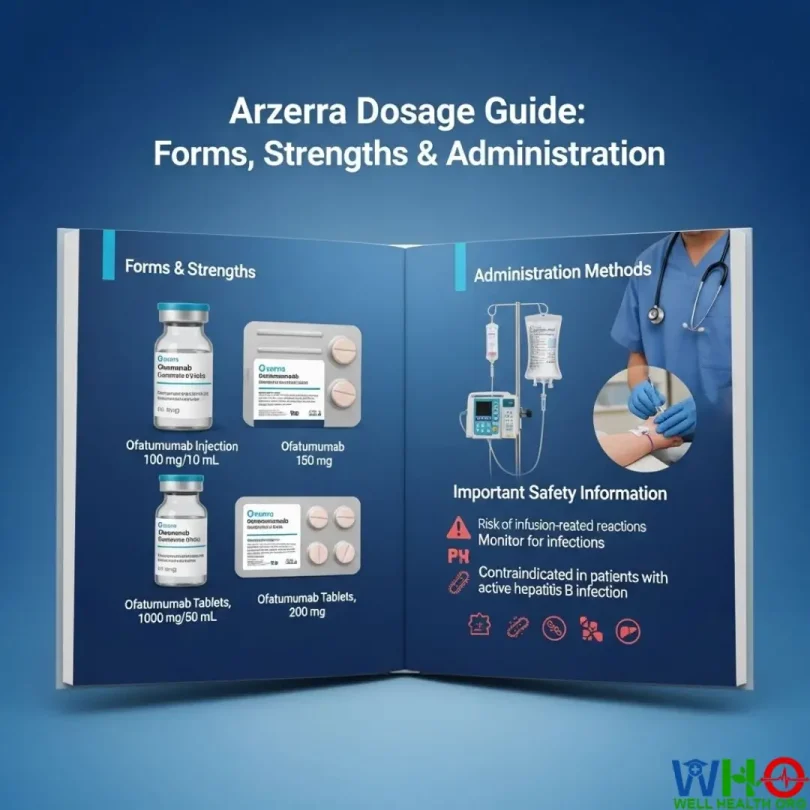
Unlike many oral cancer therapies that patients can take at home, Arzerra is available only as an intravenous (IV) solution. This means it must be administered directly into your bloodstream by a trained healthcare professional in a hospital, clinic, or infusion center.
The medication comes in a single standardized strength of 20 milligrams per milliliter (mg/mL). To provide dosing flexibility, it is supplied in two different vial sizes:
- 5 mL vial (containing 100 mg of Arzerra total)
- 50 mL vial (containing 1,000 mg of Arzerra total)
This standardized strength ensures consistency across all patients, while the vial sizes allow healthcare providers to measure out precise amounts for different treatment regimens. The correct dose is calculated based on your treatment protocol and sometimes your body weight or treatment phase.
Because the drug is biologically delicate, it requires special storage and handling. Clinics keep it refrigerated between 36°F and 46°F (2°C to 8°C), protect it from light, and never freeze or shake it. Once a vial is opened, it must be used within a set timeframe to maintain effectiveness. Patients don’t handle storage directly, but knowing these details can help you understand why treatment is always done in controlled medical environments.
Arzerra Dosage Overview
The exact dosage of Arzerra depends on several clinical factors:
- Your CLL treatment history – whether you’re treatment-naïve, relapsed, or refractory.
- Your overall health condition – including any organ complications, infections, or immune suppression.
- The treatment goal – whether the objective is initial disease control, relapse management, or extended maintenance therapy.
The FDA has approved Arzerra for four specific treatment scenarios in CLL:
- First-line (previously untreated) CLL
- Relapsed CLL (when the disease returns after earlier therapy)
- Refractory CLL (when the disease does not respond to prior treatment)
- Extended treatment/maintenance therapy for patients in partial or complete remission
Each situation has a unique dosing schedule, carefully structured to maximize effectiveness while balancing potential risks.
Dosage for Previously Untreated CLL
For patients who have never received CLL treatment before and are not good candidates for fludarabine-based therapies (often due to age, medical comorbidities, or intolerance), Arzerra may be prescribed in combination with Leukeran (chlorambucil).
The treatment is delivered in 28-day cycles:
- Cycle 1:
- Day 1: 300 mg (starter dose)
- Day 8: 1,000 mg
- Cycles 2 and onward:
- Day 1: 1,000 mg infusion every 28 days
Most patients continue for at least three cycles, but the total should not exceed 12 cycles. This ensures both effectiveness and safety, as longer durations may increase the risk of side effects without proven added benefit.
This schedule translates into monthly infusions after the first cycle, giving patients time between treatments to recover. Many find this manageable compared to more intensive therapies, especially when combined with supportive care.
👉 Patient Insight: For newly diagnosed patients, this schedule often feels like a balance—intensive enough to fight leukemia effectively, but spaced out enough to maintain quality of life. The combination with Leukeran enhances cancer control while keeping the regimen tolerable for patients who might struggle with harsher drugs.
Dosage for Relapsed CLL
If CLL comes back after earlier treatment, doctors may recommend Arzerra in combination with fludarabine and cyclophosphamide, two well-established chemotherapy agents. This is typically reserved for patients whose disease remains sensitive to chemotherapy but requires additional support from targeted immunotherapy.
The dosing pattern closely mirrors that of first-line treatment but with a shorter total duration:
- Cycle 1:
- Day 1: 300 mg
- Day 8: 1,000 mg
- Cycles 2–6:
- Day 1: 1,000 mg infusion
The treatment is capped at six cycles (roughly six months). Beyond this point, the risk-benefit ratio shifts, as prolonged treatment may not yield stronger responses but can increase complications.
👉 Patient Insight: Many patients describe relapse treatment as emotionally challenging, since it means the disease has returned. Knowing there’s a clear, time-limited plan with Arzerra can provide reassurance, as each infusion cycle represents another step toward regaining control over the disease.
Dosage for Refractory CLL
Refractory CLL refers to cases where the disease either does not respond to prior treatment or stops responding after an initial improvement. These patients often face limited options, but Arzerra provides a targeted approach that has shown benefits when standard therapies fail.
In refractory cases, the dosing schedule is more intensive during the early phase to aggressively reduce cancer activity:
- Week 1: 300 mg (starter dose to minimize infusion reactions)
- Weeks 2–8: 2,000 mg once weekly (for a total of seven consecutive weeks)
- Weeks 12, 16, 20, 24: 2,000 mg every four weeks (maintenance phase)
This regimen lasts about six months. The higher doses in the early phase help maximize immune targeting of resistant leukemia cells, while the transition to monthly infusions supports longer-term disease control without overwhelming the body.
👉 Patient Insight: Patients undergoing refractory CLL treatment often need extra support from caregivers and medical teams. The weekly visits during the first two months can feel demanding, but many find comfort knowing that the frequent monitoring allows doctors to quickly address any side effects or complications.
Dosage for Extended CLL Treatment (Maintenance Therapy)
For patients who have achieved either a partial or complete remission after other CLL treatments, Arzerra may be prescribed as maintenance therapy to keep the disease under control for as long as possible.
The schedule is designed to spread out over time:
- Week 1: 300 mg (starter dose)
- Week 2: 1,000 mg
- Week 9: 1,000 mg
- Ongoing: 1,000 mg every eight weeks
This can continue for up to two years, depending on how well the patient tolerates treatment and how effective it remains.
The extended dosing approach offers two major benefits:
- Reduced relapse risk – Maintenance therapy helps suppress hidden disease activity that might otherwise cause the leukemia to return sooner.
- Improved long-term stability – By spacing doses every two months, patients have more time between infusions to live normally, travel, and focus on quality of life.
👉 Patient Insight: Many patients find the maintenance schedule to be the most manageable, since visits are less frequent. However, it still requires consistency—missing scheduled doses can reduce the treatment’s effectiveness.
How Arzerra Is Administered
Arzerra is always given via intravenous (IV) infusion, meaning the medication is delivered directly into a vein. This process must be supervised by trained medical staff in a hospital, cancer center, or infusion clinic.
Pre-infusion Preparation
To minimize the risk of infusion-related reactions, most patients receive premedication 30 minutes to 2 hours before each infusion. This typically includes:
- A corticosteroid (e.g., prednisolone) – reduces inflammation and allergic responses
- An antihistamine (e.g., diphenhydramine/Benadryl) – helps prevent allergic reactions like itching, rash, or swelling
- Acetaminophen (Tylenol) – helps control fever and mild infusion symptoms
These pre-meds are standard with monoclonal antibody therapies and make the infusion process much safer and more tolerable.
Infusion Duration
The length of each infusion varies based on the dose and the patient’s reaction history:
- First infusions: usually 5–7 hours (to allow slower administration and closer monitoring)
- Later infusions: may be reduced to 4–5 hours if no severe reactions occur
The infusion rate is carefully controlled by nurses and gradually increased if tolerated.
Monitoring During Infusion
Throughout the infusion, healthcare staff will:
- Check vital signs (blood pressure, heart rate, temperature, oxygen levels) regularly
- Watch for signs of infusion reactions (such as chills, fever, shortness of breath, or rash)
- Provide supportive care immediately if symptoms occur
👉 Patient Experience Tip: Bring comfort items such as a blanket, water bottle, or headphones to infusion appointments. Since the process takes several hours, having something to read, watch, or listen to can make the time pass more comfortably.
Monitoring During and After Treatment
Because Arzerra affects the immune system and blood cell counts, ongoing monitoring is critical. Patients will undergo regular:
- Blood tests – to check white blood cell counts, red blood cell counts, and platelets
- Liver and kidney function tests – to ensure the body is processing the drug safely
- Infection screenings – particularly for hepatitis B and other latent viruses that could reactivate during therapy
- Physical exams – to assess for enlarged lymph nodes, spleen size, and other CLL-related symptoms
Even after infusions are complete, some patients require follow-up appointments for weeks to months to ensure no delayed complications develop.
👉 Patient Insight: Many patients find the monitoring phase reassuring, since it provides consistent feedback on how their body is responding to treatment. Doctors can adjust schedules, add supportive medications, or modify care plans as needed.
Potential Side Effects of Arzerra
Like most cancer therapies, Arzerra (ofatumumab) can cause a range of side effects. Some are mild and manageable, while others may require urgent medical attention. Understanding these possibilities helps patients and caregivers prepare for treatment.
Common Side Effects
Many patients experience mild to moderate reactions that usually improve with time or supportive care. These include:
- Fatigue and weakness – one of the most frequent effects, often due to reduced blood cell counts.
- Fever and chills – especially after early infusions.
- Nausea, vomiting, or diarrhea – digestive upset is common but usually manageable with anti-nausea medications.
- Headaches or dizziness – often mild and short-lived.
- Muscle or joint pain – a temporary discomfort some patients report.
- Mild skin reactions – rash, itching, or redness at infusion sites.
These effects are inconvenient but generally not dangerous. Your healthcare team can suggest medications, hydration, and rest strategies to manage them.
Serious Side Effects
Some patients may experience more severe complications that require immediate medical attention. These include:
- Infusion reactions – Some patients develop serious allergic-like responses during or shortly after infusion. Symptoms include chest tightness, difficulty breathing, severe rash, or sudden drop in blood pressure. These are most common during the first or second infusion.
- Infections – Because Arzerra suppresses part of the immune system, it raises infection risk. Even common infections, like pneumonia or urinary tract infections, can become dangerous.
- Low blood cell counts (cytopenias) – Arzerra can lower red blood cells (causing anemia), white blood cells (increasing infection risk), and platelets (increasing bleeding risk).
- Hepatitis B reactivation – Patients who have had hepatitis B in the past may experience a dangerous reactivation while on Arzerra. Doctors screen for this before treatment begins.
- Rare but serious risks – Such as progressive multifocal leukoencephalopathy (PML), a brain infection caused by a weakened immune system. This is extremely rare but life-threatening.
👉 Patient Insight: Always report unusual symptoms—such as severe fatigue, unexplained bruising, shortness of breath, or fevers—to your doctor immediately. Quick action can prevent complications from becoming life-threatening.
Important Precautions Before and During Treatment
Before starting Arzerra, your doctor will carefully review your medical history, current medications, and risk factors to ensure this therapy is safe and appropriate for you.
Medical History Considerations
Inform your healthcare provider if you have:
- A history of hepatitis B infection or any chronic viral illness
- Current or recent infections
- Heart disease or irregular heartbeat
- Kidney or liver problems
- Any recent vaccinations
Pregnancy and Breastfeeding
Arzerra can be harmful to an unborn baby. For this reason:
- Women should avoid pregnancy during treatment and for at least 12 months after the last dose.
- Breastfeeding is not recommended during treatment and for some time afterward, as the drug may pass into breast milk.
- Patients planning pregnancy should discuss family planning and safe alternatives with their healthcare team.
Vaccination Precautions
Because Arzerra weakens the immune system:
- Live vaccines (like measles, mumps, rubella, or yellow fever) must be avoided during treatment and for months after.
- Non-live vaccines may be less effective while receiving therapy. If vaccines are needed, your doctor will help schedule them at safe times.
Drug Interactions with Arzerra
Arzerra can interact with certain medications, increasing the risk of side effects or reducing effectiveness.
Medications to Discuss with Your Doctor
- Blood thinners (anticoagulants): Drugs like warfarin may increase bleeding risk when combined with Arzerra.
- Other immunosuppressants: Combining with drugs like methotrexate or corticosteroids can further weaken the immune system.
- Other cancer therapies: May require close coordination to avoid overlapping side effects.
Over-the-Counter and Supplements
Even non-prescription items can pose risks:
- NSAIDs like ibuprofen may worsen bleeding risk.
- Herbal supplements such as echinacea or St. John’s Wort may interfere with immune responses or drug metabolism.
- Vitamins and minerals should only be used under medical guidance.
👉 Safety Tip: Always give your oncology team a full medication list, including prescription drugs, over-the-counter products, vitamins, and herbal remedies.
Proper Storage of Arzerra
Although patients don’t store Arzerra themselves (since it’s administered in hospitals or infusion centers), it’s helpful to understand how it’s kept safe:
- Stored at 36°F–46°F (2°C–8°C) in medical refrigerators.
- Must never be frozen or shaken, as this damages the protein-based drug.
- Protected from light until used.
- Opened vials are used within strict timeframes to maintain potency.
This ensures every dose patients receive is both safe and effective.
Frequently Asked Questions
Here are some common concerns patients have about Arzerra treatment:
1. How does Arzerra compare to other CLL treatments?
Arzerra is a monoclonal antibody, designed to target CD20 proteins on B cells. Similar drugs include Rituxan (rituximab) and Gazyva (obinutuzumab). Doctors may recommend Arzerra if other options haven’t worked, or if a patient has specific medical needs.
2. When will I see results from Arzerra treatment?
Results vary. Some patients see improvements after the first few cycles, while others may need longer before changes are noticeable. Doctors use blood tests, scans, and physical exams to track progress.
3. What happens if I miss an infusion?
If you miss a scheduled infusion, call your doctor immediately. Never try to “catch up” on your own. Your medical team will adjust your schedule safely.
4. Can Arzerra cure CLL?
Arzerra is not a cure, but it can help control the disease, extend remission periods, and improve quality of life. It is often used as part of a long-term treatment strategy.
5. Can I travel while on Arzerra treatment?
Yes, but plan carefully. Bring medical documents, schedule infusions in advance, and avoid destinations with limited access to medical care. Discuss travel plans with your doctor before booking trips.
Moving Forward with Arzerra Treatment
Arzerra represents an important option for patients living with chronic lymphocytic leukemia. By targeting cancerous B cells directly, it provides another line of defense—particularly for patients whose disease is resistant to traditional therapies.
The key to success with Arzerra is strict adherence to the prescribed dosage and schedule. Because it is always administered by medical professionals, patients receive the benefit of close monitoring, ensuring safety throughout treatment.
- Consistency is critical – missing infusions or stopping treatment early can reduce effectiveness.
- Communication with your care team is essential – reporting side effects promptly allows adjustments to improve comfort and safety.
- Support networks matter – leaning on caregivers, family, or patient support groups helps ease the physical and emotional journey.
For many patients, Arzerra offers renewed hope and the possibility of longer remission. While it is not without challenges, its role in modern CLL treatment continues to expand as researchers refine dosing strategies and explore combination therapies.
Final Thoughts
Understanding Arzerra dosage, administration, side effects, and precautions empowers patients to actively participate in their care. The therapy may not be suitable for everyone, but for those who qualify, it can significantly improve disease management.
If you or a loved one are considering Arzerra treatment, talk with your oncology team about:
- Your CLL type and treatment history
- Potential risks and benefits
- Long-term goals and expectations
The decision to begin Arzerra should always be made collaboratively, balancing medical evidence with patient preferences and lifestyle considerations.
Final Word
Arzerra is more than just a cancer drug—it’s a personalized tool in the fight against CLL. With careful medical oversight, it offers a path toward better disease control, improved quality of life, and renewed hope for patients navigating the challenges of leukemia.
Medically Reviewed by Prof. Dr. Akram
Orthopedic Surgeon | Professor | Senior Medical Specialist
Prof. Dr. Akram is a distinguished surgeon with over 15 years of clinical expertise. Having served as a lead Emergency Specialist at Complex International Government Hospital, he currently leads a specialized team of 13 medical professionals at his private hospital. As a Professor at top medical universities, he ensures that every article on WellHealthOrg.com meets rigorous clinical standards.
Medical Disclaimer:
The information provided is for educational purposes only and is not a substitute for professional medical advice, diagnosis, or treatment. Always consult your physician for any medical concerns.
Our content is rigorously fact-checked by our 13-member Editorial Team under the clinical supervision of Prof. Dr. Akram.