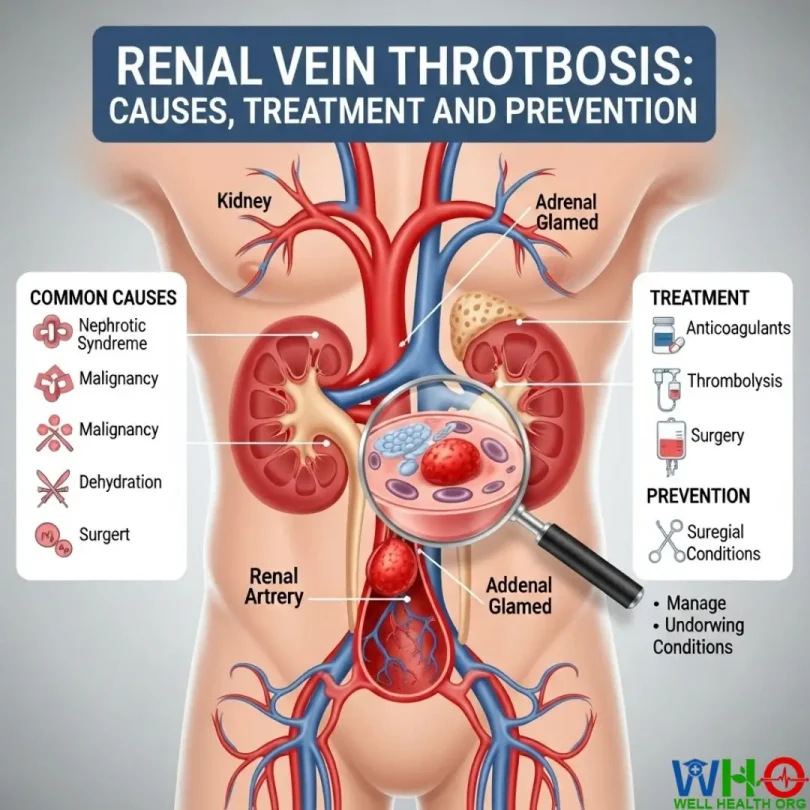
The kidneys play a remarkable role in keeping us alive and healthy. Every single day, these bean-shaped organs filter gallons of blood, removing toxins, balancing electrolytes, and regulating fluid levels. This constant filtration relies on an intricate web of blood vessels, including the renal veins, which carry cleansed blood away from the kidneys and back toward the heart.
- What Is Renal Vein Thrombosis (RVT)?
- Why Is RVT Dangerous?
- Causes and Risk Factors of Renal Vein Thrombosis
- Common Causes of RVT
- Key Risk Factors That Increase Susceptibility
- Recognizing the Symptoms of Renal Vein Thrombosis
- Common Symptoms of RVT
- Acute vs. Chronic RVT
- How Doctors Diagnose Renal Vein Thrombosis
- Initial Evaluation
- Key Diagnostic Imaging Tests
- Treating a Kidney Blood Clot (RVT Treatment Options)
- 1. Anticoagulation Therapy (Blood Thinners)
- 2. Thrombolysis (Clot-Dissolving Therapy)
- 3. Surgical Options (Rarely Used)
- 4. Treating Underlying Conditions
- Preventing Renal Vein Thrombosis
- Medical Prevention Strategies
- Lifestyle-Based Prevention Tips
- Living with Renal Vein Thrombosis: Long-Term Outlook
- Possible Long-Term Complications
- Quality of Life After RVT
- When to Seek Medical Attention
- Conclusion
- FAQs About Renal Vein Thrombosis
But what happens when this vital process is disrupted? One dangerous condition that can interrupt kidney function is renal vein thrombosis (RVT) — a blood clot forming in one or both renal veins. While RVT is relatively rare, it can lead to severe complications, including kidney damage and pulmonary embolism, if not detected and treated promptly.
In this comprehensive guide, we’ll dive deep into everything you need to know about renal vein thrombosis — from what causes it, how to recognize its symptoms, the diagnostic methods doctors use, treatment options, and, most importantly, how you can lower your risk.
What Is Renal Vein Thrombosis (RVT)?
Renal vein thrombosis occurs when a blood clot (thrombus) forms inside the vein that drains blood from the kidney. Each kidney has its own renal vein, which carries deoxygenated blood to the inferior vena cava, the large vein that transports blood back to the heart.
When a clot blocks one of these veins, the blood has nowhere to go. As pressure builds up, the kidney may swell, its delicate structures can be damaged, and filtration efficiency drops. Depending on whether the clot develops gradually or suddenly, RVT can cause anything from mild discomfort to life-threatening emergencies.
One particularly dangerous complication occurs if a piece of the clot breaks free and travels to the lungs, resulting in a pulmonary embolism — a blockage in the pulmonary arteries. This can cause sudden shortness of breath, chest pain, and even death if untreated.
Why Is RVT Dangerous?
- It can cause permanent kidney damage by restricting blood flow.
- It increases the risk of pulmonary embolism, a leading cause of sudden death in clotting disorders.
- In infants, it may cause acute kidney failure.
- In adults, it may remain silent for years until complications arise.
Think of the kidneys like a city’s water treatment plant. If the main drainage pipe gets blocked, the whole system backs up, affecting not only the plant itself but also the larger city it serves. That’s exactly what happens when the renal veins are obstructed — the “backflow” creates widespread problems.
Causes and Risk Factors of Renal Vein Thrombosis
Renal vein thrombosis rarely appears without a trigger. Instead, it is usually the result of an underlying health condition, injury, or inherited tendency that increases the risk of blood clotting. Understanding these causes and risk factors is essential, especially for people already managing kidney or blood-related disorders.
Common Causes of RVT
- Nephrotic Syndrome
- This is the most common cause of RVT in adults.
- Nephrotic syndrome occurs when damaged kidneys leak large amounts of protein into urine. This loss disrupts the balance of clotting and anti-clotting proteins in the blood, tipping the scale toward clot formation.
- Patients with nephrotic syndrome often have swelling (edema), foamy urine, and high cholesterol — all of which can complicate clot risk.
- Kidney Cancer (Renal Cell Carcinoma)
- Tumors in or near the kidneys can invade or compress the renal vein.
- Cancerous cells may directly grow into the blood vessel, providing a perfect site for a clot to form.
- Kidney Transplant Complications
- Within the first 48 hours after a kidney transplant, RVT can develop as a sign of early graft rejection.
- Quick recognition is critical because untreated clots may destroy the transplanted kidney.
- Trauma or Physical Injury
- A severe blow to the back or abdomen can damage the renal veins.
- For instance, a car accident or sports-related injury could directly injure blood vessels around the kidneys.
- Severe Dehydration (Especially in Infants)
- In newborns, dehydration thickens the blood, increasing the chance of clot formation.
- This explains why infants are at higher risk compared to older children.
Key Risk Factors That Increase Susceptibility
Even without an obvious cause, some individuals are naturally more prone to developing renal vein thrombosis. The most significant risk factors include:
- Inherited or Acquired Clotting Disorders (Hypercoagulability)
People with conditions such as Factor V Leiden mutation or antiphospholipid syndrome have blood that clots more easily than normal. - Pregnancy and Postpartum Period
Hormonal changes during pregnancy increase clotting tendency, while pressure from the growing uterus can restrict blood flow in veins. - Estrogen-Containing Medications
Birth control pills or hormone replacement therapies with estrogen are well-documented to increase the risk of blood clots. - Chronic Inflammatory Disorders
Diseases like Behçet’s syndrome and systemic lupus erythematosus (SLE) can inflame blood vessels, making clot formation more likely. - Severe Infections (including COVID-19)
Infections can trigger widespread inflammation and activate the body’s clotting system. Doctors noted increased clotting complications, including RVT, in some COVID-19 patients. - Advanced Age
According to the CDC, the likelihood of developing deep vein thrombosis (DVT) and related clots increases significantly with age. - Lifestyle Factors
Smoking, obesity, prolonged immobility, and dehydration all contribute to clot risk.
👉 Key takeaway: RVT is rarely random — it usually occurs when risk factors stack up. Being aware of your personal risk profile can help in prevention and early detection.
Recognizing the Symptoms of Renal Vein Thrombosis
One of the trickiest aspects of RVT is that it often produces no symptoms at all, especially if the clot develops gradually. In many cases, doctors discover it accidentally during imaging for another issue.
However, when symptoms do occur, they vary based on how fast the clot forms, whether one or both kidneys are affected, and whether complications like pulmonary embolism arise.
Common Symptoms of RVT
- Flank Pain – A sharp or dull ache in the side of the body between the ribs and hips. This pain can sometimes mimic kidney stones.
- Lower Back Pain – Especially on one side, linked to swelling of the affected kidney.
- Hematuria (Blood in Urine) – Urine may appear pink, reddish, or cola-colored. Sometimes microscopic blood is only detected through lab testing.
- Proteinuria (Protein in Urine) – Not visible to the naked eye but detectable through urinalysis.
- Reduced Urination (Oliguria) – When the clot impairs kidney filtration.
- Nausea and Vomiting – Linked to kidney stress and toxin buildup.
- Fever – Especially if infection complicates the clot.
Acute vs. Chronic RVT
- Acute RVT develops suddenly, blocking the vein almost completely. This often causes severe pain, hematuria, and sometimes kidney failure.
- Chronic RVT develops slowly. The kidney may adapt over time, and symptoms can be subtle or absent until a complication, like pulmonary embolism, occurs.
👉 Many patients don’t realize they have RVT until a secondary complication — such as sudden chest pain from a pulmonary embolism — forces urgent medical care.
How Doctors Diagnose Renal Vein Thrombosis
Because the symptoms are vague and overlap with other kidney or urinary conditions, diagnosing RVT requires imaging studies in addition to routine exams.
Initial Evaluation
- A doctor may notice swollen kidneys during a physical exam.
- Basic tests often include urinalysis (to detect blood/protein) and kidney function blood tests.
Key Diagnostic Imaging Tests
- Ultrasound with Doppler
- A safe, non-invasive first-line test.
- Can detect changes in blood flow and possible blockages in the renal vein.
- CT Angiography (CTA)
- Involves injecting contrast dye and using CT imaging for a detailed view of blood vessels.
- CTA can quickly confirm the presence, size, and location of a clot.
- Magnetic Resonance Angiography (MRA)
- Uses magnetic fields instead of radiation.
- Useful for patients who cannot tolerate contrast dye used in CT scans.
- Renal Venography
- Once considered the “gold standard.”
- Involves inserting a catheter directly into the renal vein and injecting dye.
- Rarely used today due to invasiveness, but still valuable in complex cases.
👉 Early and accurate diagnosis is essential because untreated RVT can silently damage the kidneys or lead to sudden life-threatening complications.
Treating a Kidney Blood Clot (RVT Treatment Options)
The treatment of renal vein thrombosis focuses on three major goals:
- Preventing the existing clot from growing larger
- Stopping new clots from forming
- Restoring or protecting kidney function
Since RVT can be triggered by multiple causes, the treatment plan is personalized, taking into account the patient’s overall health, underlying conditions, and the severity of the clot.
1. Anticoagulation Therapy (Blood Thinners)
This is the mainstay of RVT treatment. Anticoagulants reduce the blood’s ability to clot, giving the body time to dissolve the thrombus naturally.
- Heparin (usually injected) is often the first-line choice in hospitals because it acts quickly.
- Warfarin (Coumadin) or newer oral anticoagulants like Rivaroxaban (Xarelto), Apixaban (Eliquis), and Dabigatran (Pradaxa) are used for long-term management.
- The typical duration of therapy can range from 6 months to lifelong, depending on whether the patient has an ongoing clotting disorder.
💡 Example: A patient with RVT caused by nephrotic syndrome may need long-term anticoagulation until the underlying kidney condition is under control.
2. Thrombolysis (Clot-Dissolving Therapy)
When the clot is very large or causing significant kidney damage, doctors may recommend catheter-directed thrombolysis.
- In this procedure, a catheter is guided into the renal vein.
- Special clot-dissolving drugs (like tissue plasminogen activator, tPA) are delivered directly into the thrombus.
- This helps break down the clot more quickly than anticoagulation alone.
While effective, thrombolysis carries a higher risk of bleeding and is usually reserved for severe cases.
3. Surgical Options (Rarely Used)
Surgery is considered a last resort for life-threatening RVT.
- Thrombectomy: Surgical removal of the clot.
- Nephrectomy: Removal of the kidney, if irreversible damage has occurred.
Modern medicine relies on surgery only in exceptional cases since anticoagulation and thrombolysis are usually sufficient.
4. Treating Underlying Conditions
Because RVT almost always develops due to an underlying condition, treatment must go beyond just dissolving the clot.
- Nephrotic Syndrome: Controlling protein loss with steroids or immunosuppressants.
- Kidney Cancer: Surgery, chemotherapy, or targeted therapy may be necessary.
- Infections: Prompt antibiotic treatment helps reduce clot-related complications.
- Dehydration (infants): Intravenous fluids can quickly restore normal blood consistency.
👉 Key Insight: Treating RVT is never just about “removing the clot” — it’s about addressing the root cause while preventing dangerous complications like pulmonary embolism.
Preventing Renal Vein Thrombosis
For people with risk factors such as chronic kidney disease, clotting disorders, or a history of DVT, prevention is critical. While there is no way to guarantee RVT won’t develop, proactive lifestyle and medical strategies can significantly lower the risk.
Medical Prevention Strategies
- Anticoagulants for High-Risk Patients
Individuals with clotting disorders or prior RVT episodes may be prescribed long-term blood thinners. - Post-Transplant Monitoring
Patients who receive a kidney transplant are closely monitored for early signs of RVT, especially in the first 48 hours. - Controlling Chronic Conditions
Managing nephrotic syndrome, high blood pressure, and diabetes reduces strain on the kidneys and lowers clotting risk.
Lifestyle-Based Prevention Tips
- Stay Hydrated
- Drinking adequate water prevents blood from becoming too thick.
- Adults should aim for 2–3 liters per day, unless restricted by a doctor.
- Eat a Kidney-Friendly Diet
- Choose whole grains, lean proteins, fruits, and vegetables.
- Limit salt (sodium), processed foods, and trans fats.
- Maintain a Healthy Weight
- Obesity increases pressure on the circulatory system and promotes inflammation.
- Exercise Regularly
- Even light activities like walking or yoga improve circulation.
- Avoid sitting for long periods without movement.
- Avoid Smoking and Excess Alcohol
- Smoking thickens the blood and damages blood vessels.
- Alcohol, in excess, can harm the kidneys and increase dehydration risk.
- Review Medications with Your Doctor
- If you’re on estrogen-containing birth control or hormone therapy, discuss safer alternatives.
👉 Prevention is about reducing clot triggers. Small changes in daily habits can greatly reduce the risk of developing not only RVT but also other clot-related conditions like deep vein thrombosis.
Living with Renal Vein Thrombosis: Long-Term Outlook
The good news is that with early detection and proper treatment, most people with RVT can live normal, healthy lives. However, outcomes depend heavily on:
- How quickly RVT is diagnosed
- The presence of underlying conditions (like cancer or nephrotic syndrome)
- Whether complications such as pulmonary embolism occur
Possible Long-Term Complications
- Chronic Kidney Damage: If the clot isn’t treated early, scarring may reduce kidney function.
- Recurring Clots: Patients with clotting disorders may face repeated episodes.
- Pulmonary Embolism Risk: Even with treatment, fragments of clots may travel to the lungs.
Quality of Life After RVT
- Most patients can return to regular activities once stabilized on anticoagulants.
- Regular check-ups with a nephrologist (kidney specialist) or hematologist (blood specialist) are recommended.
- Patients must follow strict medication adherence to avoid recurrence.
💡 Real-Life Example: A middle-aged woman with nephrotic syndrome developed RVT but was diagnosed early thanks to flank pain. With prompt anticoagulation and treatment for her kidney condition, she avoided kidney failure and lives a normal life today, though she remains on long-term medication.
When to Seek Medical Attention
Because RVT symptoms can be subtle, many people delay medical care — sometimes with dangerous consequences. Seek urgent medical attention if you experience:
- Severe flank or back pain
- Blood in urine (visible or persistent microscopic hematuria)
- Sudden reduction in urine output
- Unexplained swelling in legs or around the eyes
- Shortness of breath, chest pain, or coughing up blood (possible pulmonary embolism)
👉 Remember: RVT is a silent but serious condition. Early medical intervention can mean the difference between full recovery and permanent kidney damage.
Conclusion
Renal vein thrombosis may be rare, but it’s a condition that demands attention. It serves as a reminder that our kidneys, though small, play a massive role in our health — and any disruption to their blood supply can trigger a cascade of complications.
By understanding its causes, risk factors, symptoms, and treatments, you can take proactive steps to protect your kidney health. Early detection, lifestyle modifications, and adherence to medical advice make all the difference.
So, whether you’re managing a chronic kidney condition, taking medications that affect clotting, or simply aiming to stay healthy, remember this: Your kidneys are your body’s natural filters — keep their lifelines clear.
FAQs About Renal Vein Thrombosis
1. Can renal vein thrombosis go away on its own?
In some mild cases, the body may gradually dissolve the clot, but medical treatment is always necessary to prevent complications like pulmonary embolism.
2. Is RVT the same as kidney stones?
No. Kidney stones cause blockage in the urinary tract, while RVT is a blood clot inside the renal vein. Both may cause flank pain, but they are very different conditions.
3. Can dehydration really cause RVT?
Yes, especially in infants and young children. Severe dehydration thickens the blood, making clots more likely.
4. How long do I need blood thinners after RVT?
It depends. Some patients may take them for 6–12 months, while others with chronic conditions may require lifelong anticoagulation.
5. Can I prevent RVT if I have nephrotic syndrome?
You can lower your risk by managing protein loss, staying hydrated, following a kidney-safe diet, and using prescribed medications consistently.
Medically Reviewed by Prof. Dr. Akram
Orthopedic Surgeon | Professor | Senior Medical Specialist
Prof. Dr. Akram is a distinguished surgeon with over 15 years of clinical expertise. Having served as a lead Emergency Specialist at Complex International Government Hospital, he currently leads a specialized team of 13 medical professionals at his private hospital. As a Professor at top medical universities, he ensures that every article on WellHealthOrg.com meets rigorous clinical standards.
Medical Disclaimer:
The information provided is for educational purposes only and is not a substitute for professional medical advice, diagnosis, or treatment. Always consult your physician for any medical concerns.
Our content is rigorously fact-checked by our 13-member Editorial Team under the clinical supervision of Prof. Dr. Akram.