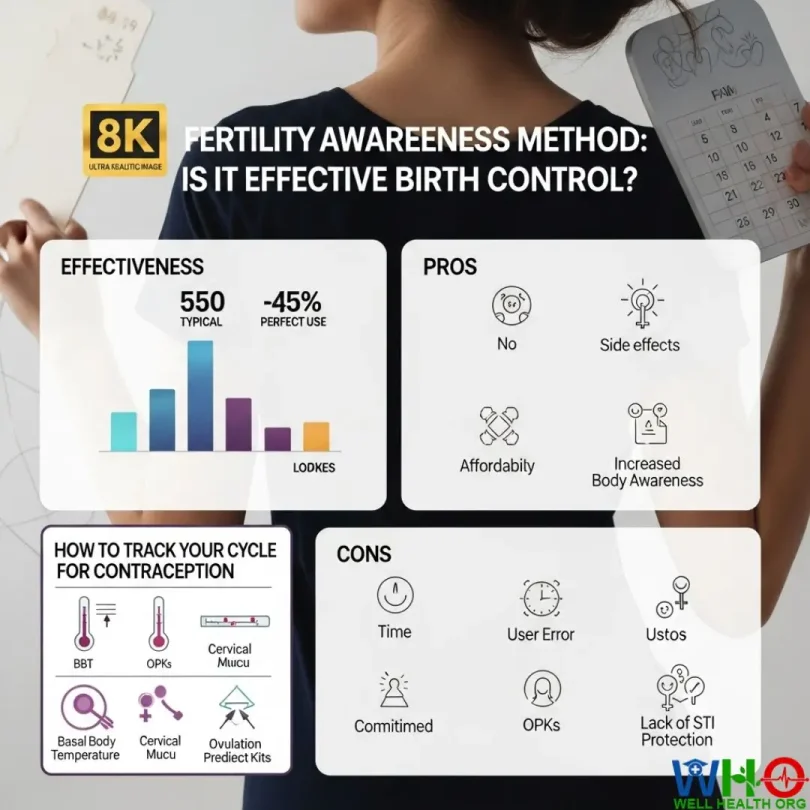
When it comes to birth control, many people think of the pill, IUDs, implants, or condoms. But what if you’re looking for something more natural—something that doesn’t involve hormones, prescriptions, or medical devices? That’s where the Fertility Awareness Method (FAM) comes in.
- What is the Fertility Awareness Method (FAM)?
- How the Fertility Awareness Method Works
- 1. Menstrual Cycle Tracking (Calendar or Rhythm Method)
- 2. Basal Body Temperature (BBT)
- 3. Cervical Mucus Monitoring
- How Effective is FAM for Birth Control?
- Expert Insight
- Improving Success Rates
- Advantages of Using FAM
- 1. No Hormones or Chemicals
- 2. Cost-Effective
- 3. Increased Body Awareness
- 4. Reversible and Flexible
- 5. Empowerment
- Disadvantages and Considerations
- Who is FAM a Good Fit For?
- Your Next Steps with Natural Birth Control
- Conclusion: Is FAM Right for You?
- FAQs About Fertility Awareness Method
FAM is gaining popularity among individuals who want to take a more holistic, hormone-free approach to reproductive health. It’s not new—it’s been practiced in various forms for decades—but modern research, fertility tracking apps, and certified instructors have made it far more accessible than ever before.
But here’s the real question: Is FAM effective enough to be a reliable birth control method?
In this comprehensive guide, we’ll break down everything you need to know about FAM—how it works, its effectiveness, the pros and cons, and whether it’s the right choice for your lifestyle.
⚠️ Important Note: This article is for educational purposes only. It should not be taken as medical advice. Always consult a qualified healthcare provider or a certified fertility awareness instructor before choosing or relying on FAM for birth control.
What is the Fertility Awareness Method (FAM)?
The Fertility Awareness Method is a natural birth control strategy that involves tracking biological signs of fertility to determine which days in your menstrual cycle you are most likely to become pregnant. During this “fertile window,” you either avoid unprotected sex or use a barrier method (like condoms or a diaphragm).
Unlike “one-size-fits-all” contraceptives, FAM is not just one technique. Instead, it combines different tracking practices, including:
- Menstrual cycle charting (calendar-based methods)
- Basal body temperature (BBT) tracking
- Cervical mucus monitoring
When used together—known as the symptothermal method—FAM gives you a clearer and more reliable picture of your fertility patterns.
For some people, this method is not only about birth control. It’s also a way to gain deep insights into reproductive health, track ovulation, and even increase chances of conception when pregnancy is desired.
How the Fertility Awareness Method Works
To understand FAM, it’s helpful to first understand the menstrual cycle. A typical cycle is around 28 days, but it can vary from 21 to 35 days. Ovulation—the release of an egg—usually happens about 12–16 days before the start of the next period. Since sperm can survive up to 5 days inside the female reproductive tract, and an egg remains viable for about 24 hours after ovulation, the “fertile window” lasts around 6–7 days each cycle.
FAM helps identify this window by monitoring specific biological signs:
1. Menstrual Cycle Tracking (Calendar or Rhythm Method)
- This involves recording the length of your cycles for several months to estimate when ovulation occurs.
- The Standard Days Method is a simplified version suitable for cycles consistently 26–32 days long. It designates days 8–19 as fertile.
- While helpful, calendar tracking alone is less reliable since cycle lengths can vary.
2. Basal Body Temperature (BBT)
- BBT is your lowest body temperature at rest.
- After ovulation, progesterone causes a slight rise (about 0.5°F / 0.3°C) in temperature.
- By taking your temperature daily at the same time each morning before rising, you can see a pattern emerge.
- When your BBT stays elevated for 3 consecutive days, it usually confirms ovulation has passed, and you are in a less fertile phase.
3. Cervical Mucus Monitoring
- Hormonal shifts change the texture and volume of cervical mucus.
- As ovulation approaches, mucus becomes clear, slippery, and stretchy (like raw egg whites).
- This fertile-quality mucus helps sperm survive and reach the egg.
- Dry or sticky mucus signals lower fertility days.
By combining these indicators, the symptothermal method significantly improves accuracy compared to using just one sign.
How Effective is FAM for Birth Control?
The effectiveness of FAM depends on how consistently and accurately you use it. This is why statistics often distinguish between perfect use and typical use.
- Perfect Use:
When FAM is followed diligently with no errors, studies (including those from the World Health Organization) show it can be up to 99% effective. This means fewer than 1–5 out of 100 women will get pregnant in a year. - Typical Use:
In real life, people sometimes forget to chart, misinterpret mucus, or skip checking temperatures. With typical use, FAM’s effectiveness drops to about 76%, meaning roughly 24 out of 100 women may become pregnant within a year (CDC data).
Expert Insight
Reproductive health specialist Dr. Emily Brown emphasizes:
“FAM is not a set-and-forget method. It requires daily observation and discipline. But for women who are motivated and supported, it can be an empowering and effective alternative to hormonal contraception.”
Improving Success Rates
- Working with a certified FAM instructor improves accuracy significantly.
- Using modern fertility tracking apps and wearable sensors reduces user error.
- Combining FAM with barrier methods during fertile days can bring effectiveness closer to other contraceptives.
Advantages of Using FAM
FAM offers several unique benefits that appeal to people seeking a natural alternative to conventional birth control.
1. No Hormones or Chemicals
Unlike birth control pills, patches, or hormonal IUDs, FAM is completely natural. You avoid risks like blood clots, mood swings, or weight gain.
2. Cost-Effective
Once you invest in a BBT thermometer, a chart, or an app, there are no ongoing costs like prescriptions or doctor visits.
3. Increased Body Awareness
Tracking your cycle daily helps you understand your body better. Many women report noticing patterns in mood, energy, and health connected to their cycles.
4. Reversible and Flexible
You can stop FAM anytime, with no waiting period for fertility to return. In fact, the same techniques can be used to conceive when you want to get pregnant.
5. Empowerment
Many users feel FAM gives them control over their reproductive health in a way that’s deeply personal and empowering.
As FAM instructor Maria Garcia puts it:
“The key to success is consistent tracking and communication with your partner. FAM is as much about connection and awareness as it is about contraception.”
Disadvantages and Considerations
While FAM is empowering, it’s not for everyone. It comes with some challenges and limitations:
- Requires Daily Commitment: Skipping checks or inconsistent tracking can make it less reliable.
- No STI Protection: FAM does not protect against sexually transmitted infections (STIs). A condom is still needed if STI prevention is a concern.
- Learning Curve: It can take 3–6 cycles before you feel confident in interpreting your signs.
- Not Ideal for Irregular Cycles: If you have PCOS, thyroid issues, are postpartum, or approaching menopause, FAM can be harder to use.
- Life Disruptions Affect Accuracy: Stress, illness, sleep changes, and travel can alter your signs, making interpretation tricky.
Who is FAM a Good Fit For?
FAM tends to work best for people who are:
- In a committed, monogamous relationship
- Willing to track fertility signs daily
- Comfortable using a backup method (like condoms) during fertile days
- Looking for a hormone-free, natural alternative
- Interested in gaining deep body awareness
OB-GYN Dr. Jane Smith notes:
“FAM can be an excellent birth control option for motivated women. It offers not only contraception but also valuable insight into reproductive health.”
Your Next Steps with Natural Birth Control
If you’re curious about FAM, here’s how to get started:
- Educate Yourself: Read books or guides on FAM (like Taking Charge of Your Fertility by Toni Weschler).
- Get the Tools: Purchase a reliable BBT thermometer and a charting system or app.
- Work With an Instructor: A certified FAM teacher can walk you through interpretation and boost your confidence.
- Track Consistently: Commit to daily observations for at least 3 months before fully relying on FAM.
- Communicate With Your Partner: Success requires both partners to be on the same page about abstinence or barrier use during fertile days.
Conclusion: Is FAM Right for You?
The Fertility Awareness Method can be a powerful and natural birth control option—but it’s not for everyone. When used correctly, it can be as effective as many traditional contraceptives. However, it requires discipline, consistency, and commitment.
For those who value natural living, body awareness, and hormone-free choices, FAM is an empowering alternative. For others who prefer convenience and “set it and forget it” methods, options like IUDs or implants may be more practical.
The key is to make an informed decision—one that fits your health, lifestyle, and values.
FAQs About Fertility Awareness Method
1. Is FAM effective for irregular cycles?
It’s more challenging but not impossible. Irregular cycles make prediction harder, so working with an instructor is highly recommended.
2. Can I use FAM right after giving birth?
Postpartum cycles can be unpredictable, especially while breastfeeding. Special adaptations of FAM exist but require extra guidance.
3. Does stress affect FAM accuracy?
Yes. Stress, illness, or travel can influence your temperature and cervical mucus, making interpretation less clear.
4. Is FAM safe for teenagers?
It can be, but it requires maturity and consistent discipline. Many experts suggest pairing it with condoms for added protection.
5. Can FAM help me get pregnant?
Absolutely! Many couples use the same techniques to identify fertile days and improve their chances of conception.
Medically Reviewed by Prof. Dr. Akram
Orthopedic Surgeon | Professor | Senior Medical Specialist
Prof. Dr. Akram is a distinguished surgeon with over 15 years of clinical expertise. Having served as a lead Emergency Specialist at Complex International Government Hospital, he currently leads a specialized team of 13 medical professionals at his private hospital. As a Professor at top medical universities, he ensures that every article on WellHealthOrg.com meets rigorous clinical standards.
Medical Disclaimer:
The information provided is for educational purposes only and is not a substitute for professional medical advice, diagnosis, or treatment. Always consult your physician for any medical concerns.
Our content is rigorously fact-checked by our 13-member Editorial Team under the clinical supervision of Prof. Dr. Akram.