
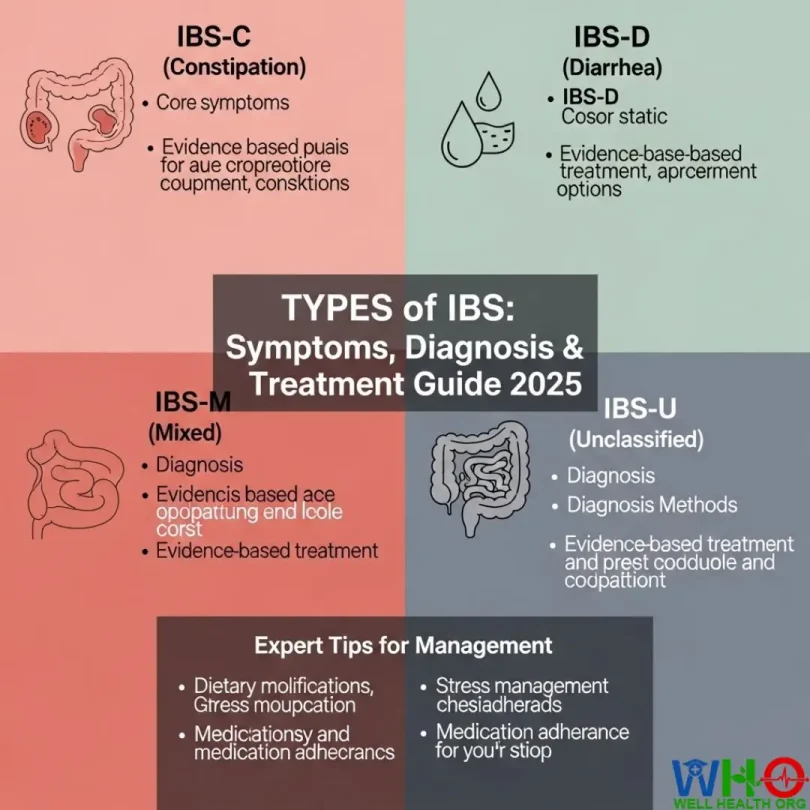
Types of IBS
Living with digestive problems can often feel like riding an unpredictable rollercoaster. One day you may be fine, while the next you’re battling bloating, abdominal cramps, or sudden changes in bowel movements. If these issues sound familiar, you might be experiencing irritable bowel syndrome (IBS)—a common but often misunderstood gastrointestinal disorder.
- Types of IBS
- Understanding IBS and Its Impact on Daily Life
- The Four Main Types of IBS
- 1. IBS with Constipation (IBS-C)
- Key Symptoms of IBS-C:
- 2. IBS with Diarrhea (IBS-D)
- Key Symptoms of IBS-D:
- 3. IBS with Mixed Bowel Habits (IBS-M)
- Common Symptoms of IBS-M:
- 4. IBS Unsubtyped (IBS-U)
- Key Features of IBS-U:
- Secondary IBS Conditions
- Post-Infectious IBS (PI-IBS)
- Contributing Factors:
- Post-Diverticulitis IBS
- The Rome IV Criteria
- Other Diagnostic Steps
- Red Flag Symptoms
- 1. Dietary Interventions for IBS
- The Low FODMAP Diet
- Fiber Adjustments
- Hydration and Meal Timing
- Food Diary Tracking
- 2. Medications for IBS
- For IBS-C (Constipation-Predominant)
- For IBS-D (Diarrhea-Predominant)
- For All Types (Symptom Relief)
- 3. Lifestyle Modifications for IBS
- Stress Management
- Regular Exercise
- Improved Sleep Hygiene
- 4. Complementary and Alternative Therapies
- Probiotics
- Peppermint Oil Capsules
- Gut-Directed Hypnotherapy
- Acupuncture
- Common Flare-Up Triggers:
- What to Eat During a Flare-Up
- Practical Tips for Long-Term Management:
- 1. Can IBS turn into something more serious like cancer?
- 2. Is IBS caused by stress?
- 3. Can diet alone cure IBS?
- 4. Is IBS the same as lactose intolerance or gluten sensitivity?
- 5. What should I do during an IBS flare-up?
According to the American College of Gastroenterology, IBS affects between 25 and 45 million people in the United States alone, making it one of the most widespread digestive health concerns. Despite this, many individuals remain unsure about which type of IBS they have, what symptoms to expect, and how to best manage their condition.
This comprehensive guide will walk you through:
- The different types of IBS
- Their unique symptoms
- How IBS is diagnosed
- Evidence-based treatment strategies
- Lifestyle adjustments that can make day-to-day living easier
Whether you’ve just been diagnosed or you’ve been struggling with IBS for years, understanding your subtype is the first step toward regaining control over your digestive health.
Understanding IBS and Its Impact on Daily Life
IBS is a functional gastrointestinal disorder, meaning it causes symptoms without visible structural damage to the digestive tract. Unlike conditions such as Crohn’s disease or ulcerative colitis, IBS doesn’t cause permanent harm to the intestines. Instead, it disrupts how the gut functions—particularly in the way it moves food and communicates with the brain.
Researchers don’t yet know the exact cause of IBS, but several contributing factors have been identified:
- Gut-brain miscommunication – The digestive system and brain are closely connected through the vagus nerve and the enteric nervous system. When this communication is disrupted, symptoms like pain, urgency, or constipation can arise.
- Stress and anxiety – Psychological stress doesn’t cause IBS, but it can intensify flare-ups by triggering abnormal gut contractions and heightened sensitivity.
- Genetics and family history – Some studies suggest IBS runs in families, possibly due to shared genetics or environmental factors.
- Gut microbiota imbalances – An imbalance in the beneficial bacteria within the intestines may play a role.
- Post-infectious changes – IBS sometimes develops after a severe stomach infection, where inflammation alters long-term gut function.
The impact of IBS extends beyond digestion. Many people experience:
- Reduced quality of life – Daily routines, work, and social activities may be disrupted.
- Emotional strain – Anxiety and depression are common due to the unpredictable nature of flare-ups.
- Physical fatigue – Chronic discomfort and disrupted sleep can leave patients drained.
Because symptoms vary widely, IBS is divided into subtypes that help doctors personalize treatment.
The Four Main Types of IBS
Medical professionals classify IBS into four categories based on bowel habits. Identifying your subtype is key to finding the right management strategy.
1. IBS with Constipation (IBS-C)
IBS-C primarily affects individuals who experience chronic constipation as their dominant symptom.
Key Symptoms of IBS-C:
- Infrequent bowel movements – Often fewer than three times per week.
- Hard, lumpy stools – Patients often strain during bowel movements.
- Abdominal pain and cramping – Typically felt in the lower abdomen and relieved after passing stool.
- Bloating and gas – Persistent abdominal fullness is common.
- Incomplete evacuation – A constant sensation that stool hasn’t fully passed.
- Mucus in stool – Some notice a sticky or jelly-like coating on bowel movements.
For many, IBS-C is a long-term struggle, with symptoms occurring regularly but sometimes easing for short periods. Left unmanaged, the constipation can lead to hemorrhoids, anal fissures, and significant discomfort.
Real-life example:
Emily, a 32-year-old teacher, shared that she often missed social gatherings because she felt bloated and uncomfortable. After being diagnosed with IBS-C, her doctor recommended a high-soluble fiber diet combined with adequate hydration and a prescription medication. Within weeks, she noticed a remarkable improvement.
2. IBS with Diarrhea (IBS-D)
IBS-D is marked by frequent diarrhea and sudden urgency.
Key Symptoms of IBS-D:
- Loose, watery stools – Occur more than 25% of the time during abnormal bowel movements.
- Frequent bathroom trips – Often clustered in the morning or after meals.
- Urgency – A sudden, overwhelming need to go, sometimes leading to accidents.
- Abdominal pain and cramping – Typically worse before bowel movements but better afterward.
- Excessive gas and bloating
- Mucus in stool – A common observation.
- Occasional fecal incontinence – Rare, but possible due to urgency.
An important note: IBS-D should not wake you from sleep. If diarrhea disrupts your sleep at night, this could indicate another condition such as inflammatory bowel disease or celiac disease.
Practical Tip:
For IBS-D patients, keeping a “safe food” list and avoiding high-FODMAP triggers like onions, garlic, and certain dairy products can reduce flare-ups.
3. IBS with Mixed Bowel Habits (IBS-M)
IBS-M involves alternating episodes of constipation and diarrhea.
Common Symptoms of IBS-M:
- Alternating stool types – Periods of constipation followed by bouts of diarrhea.
- Abdominal cramping – Pain intensity varies depending on the current bowel pattern.
- Gas and bloating – Present regardless of stool type.
- Incomplete evacuation – Common during constipated phases.
- Urgency – More common during diarrheal phases.
- Mucus in stool
This subtype can feel particularly frustrating because it is unpredictable. Many patients describe it as “never knowing what to expect.”
4. IBS Unsubtyped (IBS-U)
IBS-U is diagnosed when a patient’s symptoms don’t fit neatly into the other three categories.
Key Features of IBS-U:
- Both constipation and diarrhea occur, but neither dominates.
- Abdominal pain, bloating, and stool changes remain present.
- Sometimes considered a transition phase between IBS-C, IBS-D, or IBS-M.
Even though IBS-U doesn’t have a clear stool pattern, it can be just as disruptive.
Secondary IBS Conditions
In addition to the main subtypes, some cases of IBS develop as a secondary condition following infections or other digestive disorders.
Post-Infectious IBS (PI-IBS)
This form develops after a severe stomach infection such as food poisoning or gastroenteritis.
Contributing Factors:
- Persistent inflammation of the intestinal lining
- Altered gut bacteria following infection
- Immune system changes that linger after recovery
- Nerve sensitivity changes in the digestive tract
Patients often report that their IBS symptoms began immediately after a stomach bug and persisted long-term.
Post-Diverticulitis IBS
A 2013 study suggested that individuals who suffer from diverticulitis (inflammation of pouches in the colon) may develop IBS symptoms afterward. Though research is ongoing, inflammation appears to play a major role in this subtype.
Diagnosing IBS: How Doctors Identify the Condition
Unlike some digestive diseases, IBS doesn’t have a single test that provides a definitive diagnosis. Instead, doctors rely on a combination of symptom assessment, medical history, and exclusion of other conditions.
The Rome IV Criteria
The most widely used diagnostic tool for IBS is the Rome IV criteria, which requires:
- Recurrent abdominal pain occurring at least one day per week in the last three months.
- Symptom onset at least six months before diagnosis.
- Pain associated with two or more of the following:
- Related to bowel movements (pain improves or worsens after a bowel movement).
- Linked to changes in stool frequency.
- Associated with changes in stool appearance.
Other Diagnostic Steps
To ensure IBS isn’t confused with more serious conditions such as inflammatory bowel disease (IBD), celiac disease, or colon cancer, doctors may recommend:
- Blood tests – To check for anemia, thyroid issues, or celiac disease.
- Stool analysis – To rule out infections, parasites, or blood in the stool.
- Colonoscopy – Often used for patients over 45 or those with alarm symptoms like unexplained weight loss, rectal bleeding, or persistent pain.
- Imaging tests – In some cases, CT scans or ultrasounds help eliminate other possibilities.
Red Flag Symptoms
Certain warning signs suggest that IBS might not be the cause. If you notice any of the following, immediate medical evaluation is needed:
- Blood in stool
- Unexplained weight loss
- Persistent vomiting
- Nighttime symptoms (waking from sleep due to diarrhea or pain)
- Family history of colon cancer or inflammatory bowel disease
Comprehensive IBS Treatment Approaches
Treating IBS isn’t a one-size-fits-all solution. Management is highly individualized and depends on the type of IBS, severity of symptoms, and lifestyle factors.
A leading gastroenterologist once explained:
“Effective IBS treatment usually combines diet, lifestyle changes, and targeted medical therapies. No single approach works for everyone.”
Let’s break down the primary strategies.
1. Dietary Interventions for IBS
Diet plays one of the biggest roles in managing IBS symptoms.
The Low FODMAP Diet
The low FODMAP diet is currently considered one of the most effective strategies for IBS. FODMAPs are short-chain carbohydrates that the gut poorly absorbs, leading to gas, bloating, and diarrhea.
- High FODMAP foods to avoid: Onions, garlic, beans, apples, wheat, milk, and artificial sweeteners.
- Low FODMAP alternatives: Rice, potatoes, oats, zucchini, strawberries, grapes, and lactose-free dairy.
This diet has been shown to reduce IBS symptoms in up to 70% of patients.
Fiber Adjustments
Fiber is essential for gut health, but its type and amount matter:
- Soluble fiber (beneficial for IBS-C): Found in oats, bananas, psyllium husk. Helps soften stools and regulate bowel movements.
- Insoluble fiber (can worsen symptoms): Found in whole grains and raw vegetables, sometimes irritating for IBS sufferers.
Hydration and Meal Timing
- Drinking 6–8 glasses of water daily helps prevent constipation.
- Eating smaller, more frequent meals may ease bloating and reduce post-meal urgency.
Food Diary Tracking
Keeping a food journal can help identify personal triggers. For instance, some patients tolerate coffee while others find it a major trigger for diarrhea.
2. Medications for IBS
Doctors may prescribe medications based on the IBS subtype.
For IBS-C (Constipation-Predominant)
- Osmotic laxatives – Such as polyethylene glycol (MiraLAX).
- Prescription drugs – Linaclotide (Linzess) and lubiprostone (Amitiza) increase intestinal fluid, easing constipation.
- Fiber supplements – Psyllium (Metamucil) is preferred over wheat bran.
For IBS-D (Diarrhea-Predominant)
- Antidiarrheals – Loperamide (Imodium) helps reduce stool frequency.
- Bile acid binders – Cholestyramine may help when excess bile acids contribute to diarrhea.
- Alosetron – Approved for women with severe IBS-D that doesn’t respond to other treatments.
For All Types (Symptom Relief)
- Antispasmodics – Medications like hyoscine (Buscopan) reduce abdominal cramping.
- Low-dose antidepressants – Tricyclic antidepressants (TCAs) and SSRIs help regulate gut-brain communication and reduce visceral pain.
3. Lifestyle Modifications for IBS
Medication and diet alone aren’t always enough—lifestyle choices play a critical role in controlling IBS.
Stress Management
The gut and brain are directly connected, meaning stress can trigger flare-ups. Proven stress-reduction techniques include:
- Mindfulness meditation
- Yoga and stretching
- Cognitive Behavioral Therapy (CBT)
- Breathing exercises
Regular Exercise
A 2023 review found that low-to-moderate exercise helps reduce bloating, improve bowel motility, and ease constipation. Activities like walking, swimming, or cycling are excellent for IBS patients.
Improved Sleep Hygiene
- Going to bed and waking up at the same time daily.
- Avoiding heavy meals, caffeine, or alcohol before bedtime.
- Managing sleep disorders, such as sleep apnea, that worsen IBS symptoms.
4. Complementary and Alternative Therapies
Many patients find relief with natural or alternative therapies, especially when conventional methods fall short.
Probiotics
- Help restore gut bacteria balance.
- Strains like Bifidobacterium infantis and Lactobacillus plantarum have shown effectiveness in reducing bloating and abdominal pain.
Peppermint Oil Capsules
- Act as natural antispasmodics.
- Can relieve cramping and gas, but may cause heartburn in sensitive individuals.
Gut-Directed Hypnotherapy
Studies suggest this technique helps patients relax the digestive tract and improve overall quality of life.
Acupuncture
Though research is mixed, some patients report reduced pain and improved bowel regularity with acupuncture.
Managing IBS Flare-Ups
Even with the best management strategies, flare-ups can still occur.
Common Flare-Up Triggers:
- Stressful life events
- Travel and disrupted routines
- High-FODMAP meals
- Hormonal fluctuations (especially in women)
- Lack of sleep
What to Eat During a Flare-Up
- Easily digestible foods: Rice, oatmeal, bananas, eggs, chicken, or fish.
- Hydrating fluids: Herbal teas, water, electrolyte drinks.
- Avoid: Caffeine, alcohol, fatty foods, spicy dishes, artificial sweeteners.
Living with IBS: Long-Term Outlook
Although IBS is a chronic condition, it is not life-threatening. With the right strategies, many patients live full, productive lives.
Practical Tips for Long-Term Management:
- Work with a gastroenterologist and dietitian for personalized care.
- Regularly update your doctor on symptom changes.
- Practice patience—management often involves trial and error.
- Use support groups to connect with others facing similar challenges.
Take Control of Your Digestive Health
IBS may be complex and unpredictable, but knowledge is power. By identifying your subtype, working with healthcare professionals, and adopting a tailored treatment plan, you can significantly reduce flare-ups and reclaim your daily life.
If digestive issues are interfering with your routine, don’t ignore them. Early diagnosis and a personalized treatment approach can prevent years of discomfort.
Remember: While IBS can’t yet be “cured,” it can be managed effectively—allowing you to live with confidence and control.
Conclusion: Taking Charge of Your IBS Journey
Irritable bowel syndrome is one of the most common yet misunderstood digestive conditions. While its unpredictable nature can make daily life challenging, it is important to remember that IBS does not define you. By understanding your specific IBS subtype—whether it’s constipation-predominant, diarrhea-predominant, mixed, or unsubtyped—you can work with your healthcare team to develop a personalized management plan.
Treatment isn’t about one quick fix but rather a combination of strategies: dietary modifications, medications tailored to your subtype, lifestyle improvements, and in some cases, complementary therapies. With patience, trial, and adjustment, many people with IBS find lasting relief and regain control of their health.
The path forward begins with awareness, consistency, and collaboration with knowledgeable healthcare professionals. While IBS cannot currently be “cured,” it can be effectively managed so that you can lead a healthy, fulfilling, and active life.
Take the first step by identifying your triggers, working with your doctor, and committing to small but meaningful lifestyle changes. With the right approach, living well with IBS is not just possible—it’s entirely achievable.
Frequently Asked Questions (FAQs) About IBS
1. Can IBS turn into something more serious like cancer?
No, IBS does not increase your risk of colon cancer or inflammatory bowel disease. It is a functional disorder—meaning it affects how the gut works, not its structure. However, because symptoms overlap with more serious conditions, it’s important to see a doctor for proper diagnosis.
2. Is IBS caused by stress?
Stress does not directly cause IBS, but it can worsen symptoms. The gut and brain communicate closely through the gut-brain axis, meaning emotional stress can trigger flare-ups. Managing stress with relaxation techniques, yoga, or therapy can significantly reduce IBS severity.
3. Can diet alone cure IBS?
Diet changes can greatly improve IBS symptoms but typically do not “cure” the condition. The low FODMAP diet and individualized food plans are highly effective, but treatment often also includes lifestyle adjustments and sometimes medications.
4. Is IBS the same as lactose intolerance or gluten sensitivity?
Not exactly. While lactose intolerance and gluten sensitivity can cause digestive symptoms, IBS is a broader condition that affects bowel function. Some people with IBS may also be sensitive to lactose or gluten, but they are separate conditions.
5. What should I do during an IBS flare-up?
During flare-ups, stick to bland, easily digestible foods such as rice, bananas, or plain chicken. Drink plenty of fluids, avoid alcohol and caffeine, and practice relaxation techniques. Keeping a food and symptom diary helps identify what triggered the episode.
Medically Reviewed by Prof. Dr. Akram
Orthopedic Surgeon | Professor | Senior Medical Specialist
Prof. Dr. Akram is a distinguished surgeon with over 15 years of clinical expertise. Having served as a lead Emergency Specialist at Complex International Government Hospital, he currently leads a specialized team of 13 medical professionals at his private hospital. As a Professor at top medical universities, he ensures that every article on WellHealthOrg.com meets rigorous clinical standards.
Medical Disclaimer:
The information provided is for educational purposes only and is not a substitute for professional medical advice, diagnosis, or treatment. Always consult your physician for any medical concerns.
Our content is rigorously fact-checked by our 13-member Editorial Team under the clinical supervision of Prof. Dr. Akram.







