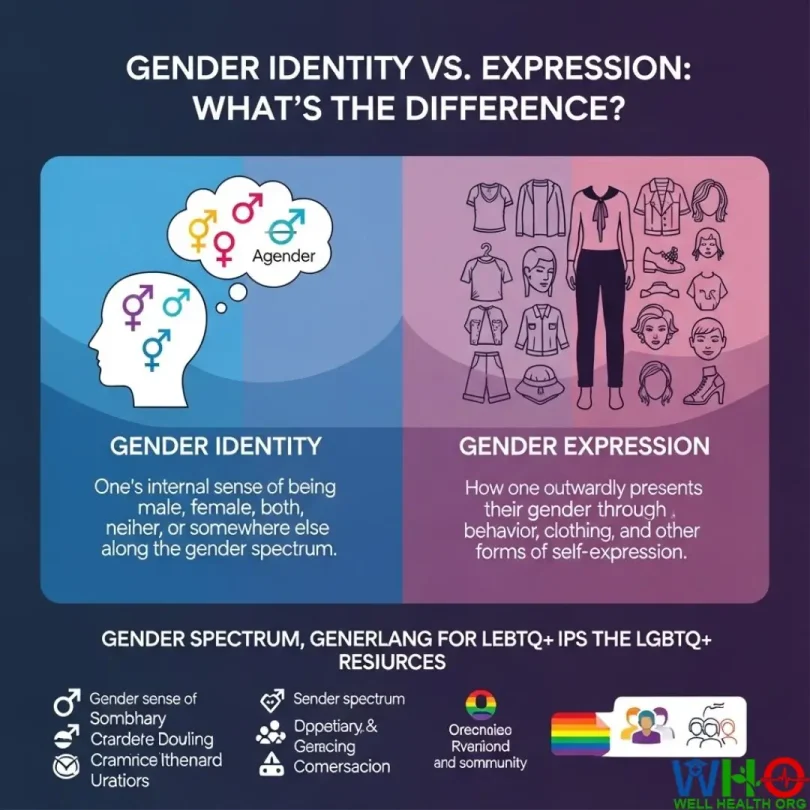
Gender Identity vs Gender Expression
In today’s conversations about inclusivity, diversity, and respect, one of the most important—and often misunderstood—topics is gender. Many people hear terms like gender identity and gender expression but don’t always know the difference. The confusion is understandable: the words sound similar, and society has historically lumped everything about “gender” into one narrow box.
- Gender Identity vs Gender Expression
- What Is Gender Identity?
- Key Point
- The Spectrum of Gender Identity
- What Is Gender Expression?
- Important Reminder
- The Intersection of Gender Identity and Expression
- Exploring Your Own Gender Journey
- The Role of Societal Norms
- Examples of Identity vs. Expression
- Why Understanding the Difference Matters
- Finding Support and Community
- FAQs: Gender Identity vs. Expression
- Final Thoughts: Building an Inclusive Future
But here’s the truth: gender identity and gender expression are not the same thing. They are connected, but they describe two very different aspects of human experience. Understanding this difference is crucial if we want to create spaces—whether in families, workplaces, schools, or communities—that are genuinely respectful and inclusive.
In this guide, we’ll break it all down. You’ll learn:
- What gender identity means and how it develops
- What gender expression is and how people show it
- How identity and expression intersect—but don’t always match
- The impact of cultural stereotypes and societal norms
- Real-world examples that make these concepts clearer
- Practical ways to support yourself or others exploring gender
By the end, you’ll not only know the difference between gender identity and gender expression—you’ll also understand why it matters for building a more compassionate world.
What Is Gender Identity?
At its core, gender identity is your deep, internal sense of who you are as a gendered being. It’s not about clothing, hairstyle, or how you act. It’s about your innermost understanding of yourself.
Someone’s gender identity could be:
- Man
- Woman
- Both
- Neither
- Somewhere else entirely on the gender spectrum
Importantly, gender identity is not the same as biological sex (the physical characteristics you’re assigned at birth). While many people’s gender identity aligns with their birth-assigned sex (cisgender), many others don’t (transgender, non-binary, genderfluid, etc.).
Key Point
Gender identity lives in the mind and heart—it’s how you know yourself, not how others perceive you.
The Spectrum of Gender Identity
For centuries, many societies reinforced the idea that there are only two genders: male and female. But human experience is much more nuanced. Today, we recognize that gender exists on a spectrum, with many valid identities.
Here are some examples:
- Cisgender: Your gender identity matches the sex you were assigned at birth.
- Transgender: Your gender identity is different from the sex assigned at birth. Example: someone assigned male at birth who identifies as a woman.
- Non-binary: An umbrella term for identities that don’t fit neatly into “male” or “female.”
- Agender: Someone who doesn’t identify with any gender.
- Genderfluid: A person whose identity shifts over time or across situations.
- Two-Spirit: A term used in many Indigenous North American cultures to describe people who embody both masculine and feminine spirits or fulfill third-gender roles.
⚡ Tip: The best way to honor someone’s gender identity is simple—use the name and pronouns they ask you to use.
What Is Gender Expression?
While gender identity is internal, gender expression is external. It’s how you show your gender to the world through things like clothing, hairstyle, mannerisms, and voice.
Examples of gender expression include:
- Clothing: Dresses, suits, jeans, saris, or hijabs—all can express gender in different cultural contexts.
- Hairstyles: Long hair, shaved heads, braids, or beards.
- Makeup and Accessories: From bold eyeliner to nail polish or jewelry.
- Mannerisms: How someone walks, talks, or gestures.
- Names and Pronouns: Choosing “he/him,” “she/her,” “they/them,” or others.
But here’s the key: gender expression doesn’t always match gender identity. A cisgender man might wear nail polish. A non-binary person might choose a mix of masculine and feminine clothing. A transgender woman might present in a traditionally feminine way—or she might not.
Important Reminder
Expression doesn’t define identity. What you see on the outside may not fully reflect who someone is on the inside.
The Intersection of Gender Identity and Expression
Although distinct, gender identity and gender expression often intersect. For many people, aligning their outer expression with their inner identity feels empowering and affirming.
This process—sometimes called transitioning—looks different for everyone:
- Some change their clothing and hairstyles.
- Others adopt new names and pronouns.
- Some pursue legal changes (driver’s license, passport).
- Others choose medical steps like hormone therapy or surgery.
But there’s no single “right” path. Transitioning (or not transitioning) is deeply personal, and every choice is valid.
Exploring Your Own Gender Journey
If you’re questioning or exploring your gender, you’re not alone. Many people take time to figure it out. Self-reflection questions can help, such as:
- How do I feel about the gender I was assigned at birth?
- What pronouns feel most natural to me?
- How do I want others to see me?
- When I picture my future, what gender feels right?
Transitioning, if you choose it, might involve:
- Social steps (coming out, name/pronoun changes)
- Legal steps (updating documents)
- Medical steps (hormones, surgeries, voice training)
Each step is optional. The journey is about what feels right and safe for you.
The Role of Societal Norms
Society plays a huge role in shaping how we view gender. From the moment babies are born, many cultures enforce rigid rules:
- “Blue is for boys, pink is for girls.”
- “Boys don’t cry.”
- “Girls should be polite and gentle.”
These stereotypes can be harmful, especially for people whose identity or expression doesn’t fit. A boy who loves ballet might be teased. A girl who prefers short hair and sports may be labeled “tomboyish.” Non-binary individuals often face misunderstanding or discrimination.
In fact, studies show that rigid gender norms are linked to higher rates of depression, anxiety, and even violence. Harmful practices like conversion therapy, which attempt to change someone’s identity, are especially damaging.
Examples of Identity vs. Expression
- A non-binary person might use “they/them” pronouns but wear traditionally masculine clothes.
- A cisgender man may enjoy makeup and fashion associated with women—yet still identifies as male.
- An agender person might choose a neutral, minimal style that avoids gendered cues.
These examples show that expression is fluid, personal, and not tied to rigid expectations.
Why Understanding the Difference Matters
Getting these concepts right isn’t just about vocabulary—it’s about respect, safety, and inclusion.
- For individuals: It validates their lived experience.
- For allies: It builds trust and stronger relationships.
- For workplaces and schools: It fosters inclusive environments where people can thrive.
- For society: It helps dismantle harmful stereotypes and reduces discrimination.
Finding Support and Community
Exploring gender or supporting a loved one can feel overwhelming, but many resources exist:
- The Trevor Project – Crisis support for LGBTQ+ youth.
- GLAAD – Media advocacy for LGBTQ+ acceptance.
- National Center for Transgender Equality – Legal and policy resources.
- PFLAG – Support for LGBTQ+ people, families, and allies.
These organizations provide safe spaces, education, and advocacy.
FAQs: Gender Identity vs. Expression
Q1: Can gender identity change over time?
Yes. For some, identity is stable; for others, it evolves as they grow and explore.
Q2: Do all transgender people want to transition?
No. Some may pursue medical or legal transitions, while others do not. Both are valid.
Q3: Is gender expression always intentional?
Not always. Sometimes expression is shaped by culture, family, or safety concerns.
Q4: How can I respectfully ask about someone’s pronouns?
Try: “Hi, I use she/her pronouns. What about you?” Leading with your own makes it less awkward.
Q5: Why do stereotypes about gender matter?
Because they limit self-expression and can harm mental health. Breaking them helps everyone—not just LGBTQ+ people.
Final Thoughts: Building an Inclusive Future
At the heart of it, gender identity is who you are. Gender expression is how you share that truth with the world.
When we recognize and respect both, we make space for people to live authentically. That means fewer labels, less judgment, and more acceptance.
Here’s what you can do starting today:
- Respect people’s chosen names and pronouns.
- Challenge your own assumptions about gender roles.
- Support organizations that fight for LGBTQ+ rights.
- Create inclusive spaces in your family, workplace, or community.
Because when people feel free to be themselves—inside and out—everyone benefits.
Medically Reviewed by Prof. Dr. Akram
Orthopedic Surgeon | Professor | Senior Medical Specialist
Prof. Dr. Akram is a distinguished surgeon with over 15 years of clinical expertise. Having served as a lead Emergency Specialist at Complex International Government Hospital, he currently leads a specialized team of 13 medical professionals at his private hospital. As a Professor at top medical universities, he ensures that every article on WellHealthOrg.com meets rigorous clinical standards.
Medical Disclaimer:
The information provided is for educational purposes only and is not a substitute for professional medical advice, diagnosis, or treatment. Always consult your physician for any medical concerns.
Our content is rigorously fact-checked by our 13-member Editorial Team under the clinical supervision of Prof. Dr. Akram.