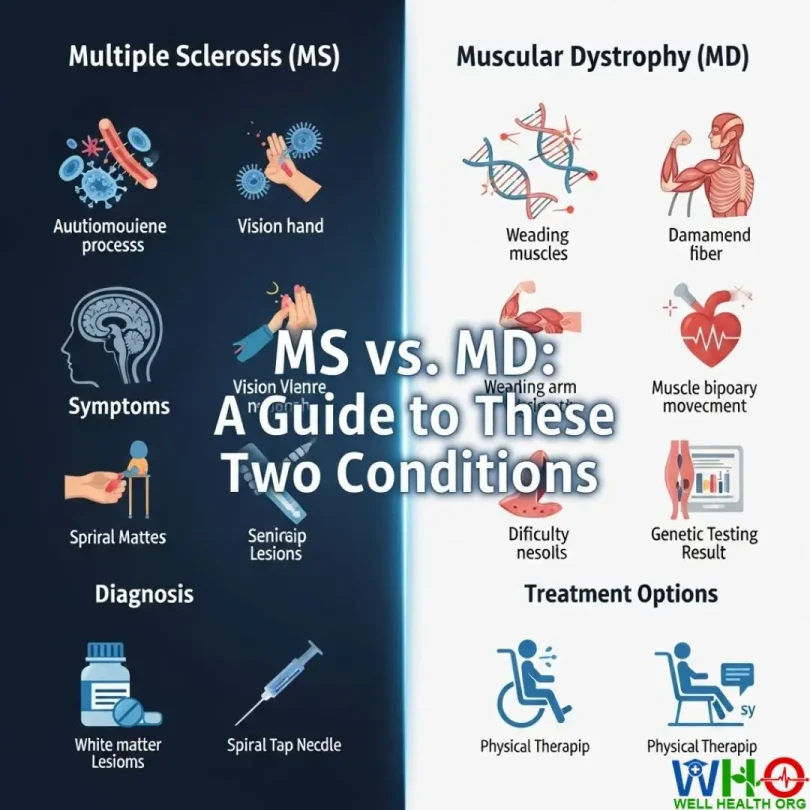
Introduction: Why Multiple Sclerosis vs Muscular Dystrophy Are Often Confused
When you first hear the terms multiple sclerosis (MS) and muscular dystrophy (MD), it’s easy to assume they might be related. After all, both conditions involve muscle weakness, mobility issues, and long-term medical care. The names sound somewhat similar too, which adds to the confusion. But despite these surface-level similarities, MS and MD are two very different conditions with unique causes, mechanisms, and treatments.
- Introduction: Why Multiple Sclerosis vs Muscular Dystrophy Are Often Confused
- What is Multiple Sclerosis (MS)?
- Key Facts About MS:
- Symptoms of Multiple Sclerosis (MS)
- Early Symptoms of MS:
- Progressive Symptoms of MS:
- Why Symptoms Vary:
- How Multiple Sclerosis (MS) is Diagnosed
- Diagnostic Tools for MS:
- Why Diagnosis Matters:
- Treatment Options for Multiple Sclerosis
- 1. Disease-Modifying Therapies (DMTs):
- 2. Symptom-Management Medications:
- 3. Rehabilitation and Therapies:
- 4. Lifestyle Modifications:
- 5. Emerging Treatments:
- What is Muscular Dystrophy (MD)?
- Key Facts About MD:
- Symptoms of Muscular Dystrophy
- General Symptoms of MD:
- Advanced Symptoms:
- Example: Duchenne MD Progression
- How Muscular Dystrophy is Diagnosed
- Diagnostic Tools for MD:
- Treatment Options for Muscular Dystrophy
- 1. Medications:
- 2. Physical and Occupational Therapy:
- 3. Respiratory Support:
- 4. Speech and Swallowing Therapy:
- 5. Lifestyle and Supportive Care:
- 6. Research and Future Treatments:
- MS vs. MD: Comparing the Two Conditions
- Key Differences Between MS and MD:
- Bottom Line:
- Progression and Prognosis of Multiple Sclerosis
- Types of MS Progression:
- Prognosis of MS:
- What Improves Prognosis:
- Progression and Prognosis of Muscular Dystrophy
- Examples of MD Progression:
- Prognosis of MD:
- Living with MS: Daily Challenges and Strategies
- Common Daily Challenges:
- Practical Strategies:
- Living with MD: Daily Challenges and Strategies
- Common Daily Challenges:
- Practical Strategies:
- Support Networks and Resources for MS and MD
- Resources for MS:
- Resources for MD:
- Shared Resources:
- Lifestyle Strategies for Managing MS
- Key Lifestyle Habits:
- Lifestyle Strategies for Managing MD
- Key Lifestyle Habits:
- Innovations in Treatment and Research
- Advances in MS Treatment:
- Advances in MD Treatment:
- Patient Stories: Real-Life Experiences with MS and MD
- Living with MS – Sarah’s Story:
- Living with MD – James’s Story:
- Conclusion: Finding Clarity, Hope, and Support
- FAQs About MS and MD
Multiple sclerosis is an autoimmune disorder that primarily attacks the central nervous system (CNS), affecting how signals travel between the brain and the body. Muscular dystrophy, on the other hand, is a group of genetic disorders that directly damage muscle fibers themselves, leading to gradual muscle degeneration.
Understanding the difference is not just a matter of medical terminology—it’s about ensuring proper diagnosis, treatment, and support. Misunderstanding these conditions can delay care and leave patients without the resources they need. In this guide, we’ll take a deep dive into MS and MD, breaking down their causes, symptoms, treatments, and long-term outlooks. We’ll also highlight the key differences, so you walk away with clarity and confidence in understanding both.
By the end, you’ll know:
- What makes MS an autoimmune condition versus MD a genetic disorder.
- How symptoms overlap—and how they differ.
- Which diagnostic tools are used for each condition.
- The latest treatments available and what research is on the horizon.
- Practical tips for living with either condition, including support systems.
Let’s start by examining multiple sclerosis in detail.
What is Multiple Sclerosis (MS)?
Multiple sclerosis is a chronic autoimmune disease that disrupts the normal functioning of the central nervous system (CNS), which includes the brain, spinal cord, and optic nerves. In people with MS, the immune system mistakenly attacks the myelin sheath—the protective coating that surrounds nerve fibers. Myelin acts like insulation on an electrical wire, ensuring smooth and efficient communication between the brain and the rest of the body.
When myelin is damaged, the electrical signals traveling along the nerves slow down or get interrupted entirely. This process, known as demyelination, leads to scarring, or “sclerosis,” which is visible as lesions on an MRI scan. Over time, the repeated immune attacks may also damage the underlying nerve cells themselves, leading to permanent disability in some cases.
Key Facts About MS:
- Type of condition: Autoimmune disease.
- System affected: Central nervous system (brain, spinal cord, optic nerves).
- Onset: Typically diagnosed between ages 20 and 50, but can occur earlier or later.
- Prevalence: Roughly 2.8 million people worldwide are living with MS.
- Gender: Women are about three times more likely than men to develop MS.
Scientists are still researching what triggers MS, but it’s believed to be the result of a mix of genetic predisposition and environmental factors such as viral infections (notably Epstein-Barr virus), vitamin D deficiency, smoking, and geography (higher rates are observed in northern latitudes).
While MS is not considered hereditary in the same way muscular dystrophy is, having a close relative with MS slightly increases risk. Importantly, MS is not contagious—you cannot “catch” it from another person.
Symptoms of Multiple Sclerosis (MS)
One of the most challenging aspects of MS is its unpredictability. Symptoms can vary widely depending on which part of the CNS is affected, and they may come and go. Many people with MS experience relapses (flare-ups of new or worsening symptoms) followed by remissions (periods of partial or complete recovery). This is especially common in the most prevalent form, relapsing-remitting MS (RRMS).
Early Symptoms of MS:
- Numbness or tingling in the face, arms, or legs.
- Vision problems, such as blurred vision, double vision, or even temporary vision loss.
- Dizziness and balance issues, making walking difficult.
- Weakness or stiffness in muscles, often affecting one side of the body.
Progressive Symptoms of MS:
As the disease advances, individuals may experience:
- Cognitive changes: Difficulty with memory, attention, and problem-solving.
- Mood disturbances: Higher rates of depression and anxiety.
- Bladder and bowel dysfunction, such as incontinence or constipation.
- Severe fatigue, often described as an overwhelming tiredness not relieved by rest.
- Spasticity and muscle spasms, which can interfere with daily activities.
Why Symptoms Vary:
The CNS controls nearly every function in the body, from movement to vision to thinking. Because MS attacks different regions at different times, the symptoms are rarely identical between patients. Two people with MS might have completely different experiences. This variability can make diagnosis tricky and sometimes lengthy.
Despite the uncertainty, early detection is critical. The sooner MS is identified, the quicker patients can begin treatment that slows progression and protects nerve function.
How Multiple Sclerosis (MS) is Diagnosed
There is no single test for MS; instead, doctors use a combination of medical history, neurological exams, and imaging/lab tests to make a diagnosis. Because its symptoms overlap with other neurological conditions, ruling out alternative explanations is a big part of the process.
Diagnostic Tools for MS:
- Magnetic Resonance Imaging (MRI):
- The gold standard for MS diagnosis.
- Detects lesions or plaques in the brain and spinal cord caused by demyelination.
- A “contrast dye” may be used to highlight active inflammation.
- Evoked Potential Tests:
- Measures how quickly the brain responds to stimuli (visual, auditory, or electrical).
- Slowed responses can indicate nerve damage consistent with MS.
- Lumbar Puncture (Spinal Tap):
- Analyzes cerebrospinal fluid (CSF) for abnormal proteins and immune cells.
- Presence of oligoclonal bands is often linked to MS.
- Blood Tests:
- Not used to confirm MS but to rule out conditions like lupus, Lyme disease, or vitamin deficiencies.
Doctors typically look for “dissemination in time and space”—meaning lesions appear in different parts of the CNS and at different times. Meeting this criteria strongly supports an MS diagnosis.
Why Diagnosis Matters:
Getting the right diagnosis early makes a huge difference. Many modern treatments are most effective when started soon after symptoms appear, slowing the disease before extensive nerve damage occurs. Misdiagnosis, on the other hand, can delay care and cause unnecessary stress.
Treatment Options for Multiple Sclerosis
There is currently no cure for MS, but treatments can manage symptoms, reduce relapse frequency, and slow disease progression. Treatment plans are usually personalized based on the type of MS, severity of symptoms, and overall health of the patient.
1. Disease-Modifying Therapies (DMTs):
- Designed to suppress the immune system’s overreaction that damages myelin.
- Can reduce relapse rates by 30–70% depending on the drug.
- Examples include interferons, glatiramer acetate, natalizumab, fingolimod, and ocrelizumab.
2. Symptom-Management Medications:
- Muscle relaxants for spasticity (e.g., baclofen).
- Antidepressants for mood changes.
- Fatigue-reducing drugs like amantadine.
- Pain management therapies.
3. Rehabilitation and Therapies:
- Physical therapy: Helps maintain mobility and strength.
- Occupational therapy: Teaches strategies for daily activities.
- Speech therapy: Supports those with speech or swallowing issues.
- Cognitive rehabilitation: Assists with memory and focus.
4. Lifestyle Modifications:
- Regular exercise tailored to ability.
- Balanced diet rich in omega-3s and antioxidants.
- Adequate rest and stress management.
5. Emerging Treatments:
- Stem cell transplants (HSCT) show promise for aggressive MS.
- Ongoing research into remyelination therapies that could repair damaged myelin.
While living with MS can be challenging, modern medicine has transformed it from a highly disabling disease into one where many patients live long, full lives with proper management.
What is Muscular Dystrophy (MD)?
Muscular dystrophy (MD) isn’t a single illness—it’s actually a group of more than 30 genetic disorders that share one thing in common: progressive muscle weakness and degeneration. Unlike multiple sclerosis, which affects the nervous system, MD directly attacks the muscle fibers themselves. Over time, muscle tissue breaks down and is replaced by fat and connective tissue, causing increasing weakness and mobility challenges.
The root cause of MD lies in gene mutations. These mutations interfere with the body’s ability to produce key proteins necessary for building and maintaining healthy muscles. For example, in Duchenne muscular dystrophy—the most common and severe form—there’s a mutation in the gene responsible for producing dystrophin, a protein critical for muscle strength. Without dystrophin, muscle fibers are fragile and easily damaged.
Key Facts About MD:
- Type of condition: Genetic disorder.
- System affected: Skeletal muscles (movement), sometimes heart and respiratory muscles.
- Onset: Often begins in childhood, though some forms appear in adolescence or adulthood.
- Prevalence: About 1 in 7,250 males worldwide is affected by Duchenne MD. Other types are rarer.
- Gender: Some types, like Duchenne and Becker, mainly affect boys because the faulty gene is on the X chromosome.
Unlike MS, MD is always inherited or caused by spontaneous genetic mutations. It cannot be triggered by environment or lifestyle, though supportive care and treatment can significantly influence quality of life.
Symptoms of Muscular Dystrophy
The symptoms of MD vary depending on the type, age of onset, and progression speed. However, all forms share the hallmark sign of progressive muscle weakness. Unlike MS, there are no “remission” periods—muscles steadily weaken over time.
General Symptoms of MD:
- Difficulty standing up or climbing stairs due to weak leg muscles.
- Waddling gait or frequent falls.
- Toe walking, common in children with Duchenne MD.
- Low muscle tone (hypotonia), especially noticeable in infants.
- Contractures, where muscles shorten and joints become stiff.
- Scoliosis, or curvature of the spine, due to weak back muscles.
Advanced Symptoms:
- Respiratory complications, as weakened diaphragm muscles reduce lung function.
- Cardiomyopathy, or heart muscle weakness, which can be life-threatening.
- Swallowing difficulties as throat and tongue muscles weaken.
- Cognitive or learning challenges (in some MD types, though not all).
Example: Duchenne MD Progression
- Ages 2–5: First signs appear, often delayed walking or frequent falling.
- By age 12: Most children require a wheelchair.
- Late teens to 20s: Breathing and heart complications become more serious.
The relentless nature of MD makes early detection and supportive care critical for prolonging independence and improving quality of life.
How Muscular Dystrophy is Diagnosed
Diagnosing MD typically begins when parents or doctors notice unusual weakness or delayed milestones in a child. From there, a variety of specialized tests help confirm the diagnosis and identify the exact type of muscular dystrophy.
Diagnostic Tools for MD:
- Genetic Testing:
- The most definitive diagnostic tool.
- Identifies the specific mutation in the gene associated with muscle protein production.
- Blood Tests:
- Elevated levels of creatine kinase (CK), an enzyme released when muscles are damaged, may indicate MD.
- Electromyography (EMG):
- Records the electrical activity of muscles.
- Shows abnormal patterns consistent with muscle fiber damage.
- Muscle Biopsy:
- A small tissue sample is taken to study muscle fibers under a microscope.
- Confirms the absence or deficiency of critical proteins like dystrophin.
- Heart and Lung Tests:
- Echocardiograms and pulmonary function tests check for complications affecting the heart and respiratory system.
Since MD is genetic, family history is also an important clue in the diagnostic process. In some cases, prenatal testing may identify mutations before birth.
Treatment Options for Muscular Dystrophy
Currently, there is no cure for muscular dystrophy. Treatment focuses on slowing disease progression, managing symptoms, and maximizing independence. Advances in gene therapy and drug development, however, are offering new hope.
1. Medications:
- Corticosteroids (e.g., prednisone, deflazacort):
Slow muscle degeneration, improve strength, and delay loss of mobility in Duchenne MD. - Exon-skipping therapies (e.g., eteplirsen):
Target specific genetic mutations to help the body produce dystrophin. - Heart medications (ACE inhibitors, beta-blockers):
Manage cardiomyopathy in certain forms of MD.
2. Physical and Occupational Therapy:
- Helps maintain flexibility and prevent contractures.
- Supports mobility through stretching, bracing, and mobility aids.
3. Respiratory Support:
- Non-invasive ventilation or CPAP machines may be needed as breathing muscles weaken.
4. Speech and Swallowing Therapy:
- Assists patients with eating difficulties, reducing the risk of aspiration.
5. Lifestyle and Supportive Care:
- Low-impact exercise, such as swimming, helps maintain flexibility.
- Nutrition plans prevent obesity, which can worsen mobility issues.
- Counseling and support groups address emotional and mental health challenges.
6. Research and Future Treatments:
- Gene therapy: Experimental approaches aim to correct or replace faulty genes.
- Stem cell therapy: Investigated for potential to regenerate muscle tissue.
- New medications: Trials are underway for drugs that target inflammation and fibrosis in muscles.
Although MD cannot currently be reversed, modern therapies significantly improve both life expectancy and quality of life, giving patients more years of mobility and independence.
MS vs. MD: Comparing the Two Conditions
At this point, we’ve explored MS and MD individually. Now let’s look at how they compare side by side. While both can lead to weakness, disability, and the need for long-term care, their causes, symptoms, and progression differ dramatically.
Key Differences Between MS and MD:
| Feature | Multiple Sclerosis (MS) | Muscular Dystrophy (MD) |
|---|---|---|
| Cause | Autoimmune disease attacking the CNS | Genetic mutations damaging muscle fibers |
| System Affected | Brain, spinal cord, optic nerves | Skeletal muscles, heart, and respiratory system |
| Onset | Typically ages 20–50 | Often childhood (varies by type) |
| Progression | Relapsing-remitting or progressive, may stabilize | Always progressive, symptoms steadily worsen |
| Symptoms | Vision issues, numbness, fatigue, cognitive problems | Muscle weakness, mobility loss, heart/lung complications |
| Diagnosis | MRI, spinal tap, evoked potentials | Genetic testing, muscle biopsy, CK blood test |
| Treatment | Disease-modifying therapies, rehab, lifestyle changes | Steroids, gene therapy (experimental), supportive care |
| Life Expectancy | Usually near normal | Reduced, depending on type (Duchenne: 20s–30s; milder forms: normal lifespan) |
Bottom Line:
- MS is an autoimmune attack on the nervous system.
- MD is a genetic disease that directly damages muscles.
- Both require lifelong management but have very different treatment approaches.
Progression and Prognosis of Multiple Sclerosis
The course of MS is unpredictable. Some people experience mild symptoms that rarely interfere with daily life, while others may face significant disability over time. Doctors typically classify MS into different disease courses based on how it behaves:
Types of MS Progression:
- Relapsing-Remitting MS (RRMS):
- The most common form, affecting about 85% of newly diagnosed patients.
- Involves flare-ups (relapses) followed by periods of recovery (remissions).
- With treatment, many patients manage symptoms effectively.
- Secondary-Progressive MS (SPMS):
- Often develops from RRMS after years of relapses.
- Symptoms steadily worsen, with fewer remissions.
- Primary-Progressive MS (PPMS):
- Affects about 10–15% of patients.
- Symptoms gradually worsen from the start, without distinct relapses.
- Progressive-Relapsing MS (PRMS):
- The rarest form.
- Steady progression from the beginning, with occasional relapses.
Prognosis of MS:
- Life expectancy is only slightly reduced compared to the general population.
- Severe disability develops in about one-third of patients, but many remain mobile with the help of treatment.
- Fatigue, mobility challenges, and cognitive issues can affect quality of life more than lifespan.
What Improves Prognosis:
- Early use of disease-modifying therapies (DMTs).
- Healthy lifestyle, including exercise and a balanced diet.
- Avoiding smoking, which worsens MS progression.
- Access to comprehensive care teams (neurologists, therapists, counselors).
Overall, MS is rarely fatal. The main goal is preserving function and slowing damage to the nervous system.
Progression and Prognosis of Muscular Dystrophy
Unlike MS, muscular dystrophy does not involve relapses and remissions—it follows a progressive, predictable decline in muscle strength. The prognosis varies significantly depending on the type of MD.
Examples of MD Progression:
- Duchenne Muscular Dystrophy (DMD):
- Symptoms begin in early childhood.
- By the early teens, most patients require a wheelchair.
- Life expectancy is typically into the 20s or 30s, though advances in care are extending survival.
- Becker Muscular Dystrophy (BMD):
- Similar to Duchenne but milder and slower to progress.
- Many patients live into their 40s–60s.
- Myotonic Dystrophy:
- Can appear in adulthood.
- Progresses more slowly, though heart and lung complications may occur.
- Facioscapulohumeral MD (FSHD):
- Affects face, shoulder, and upper arm muscles.
- Many patients live a normal lifespan but may face significant disability.
Prognosis of MD:
- Life expectancy depends on the type and severity.
- Heart and respiratory complications are the leading causes of reduced lifespan.
- Supportive care, physical therapy, and emerging gene therapies are helping many patients live longer, healthier lives than in the past.
Living with MS: Daily Challenges and Strategies
A diagnosis of MS changes life in many ways, but with the right strategies, individuals can still lead fulfilling, active lives.
Common Daily Challenges:
- Unpredictable fatigue: A top complaint, sometimes making even simple tasks difficult.
- Mobility issues: Weakness, balance problems, or spasticity may require canes, walkers, or wheelchairs.
- Cognitive difficulties: Trouble focusing, remembering, or processing information.
- Emotional struggles: Higher risk of depression and anxiety due to brain changes and lifestyle impacts.
Practical Strategies:
- Energy Management:
- Use the “spoon theory” approach to budget energy throughout the day.
- Prioritize important activities, take rest breaks, and delegate tasks.
- Adaptive Tools:
- Voice-to-text software for work or communication.
- Grab bars and mobility aids to maintain independence at home.
- Healthy Lifestyle Choices:
- Regular stretching and low-impact exercise (yoga, swimming).
- Anti-inflammatory diet rich in omega-3s, fruits, and vegetables.
- Mental Health Support:
- Counseling and support groups to process the emotional toll of living with a chronic condition.
- Mindfulness practices like meditation to manage stress.
By building a personalized care plan and leaning on both medical and community resources, many people with MS maintain careers, hobbies, and social lives.
Living with MD: Daily Challenges and Strategies
Muscular dystrophy presents different challenges because of its steady progression. Families often have to adapt continuously as muscle weakness increases.
Common Daily Challenges:
- Loss of mobility: Most patients eventually need wheelchairs or other mobility aids.
- Breathing difficulties: As respiratory muscles weaken, breathing support may be necessary.
- Dependency on caregivers: Daily assistance with dressing, bathing, or eating may become essential.
- Social and emotional impact: Patients may feel isolated due to reduced independence.
Practical Strategies:
- Home Modifications:
- Wheelchair ramps, wider doorways, and accessible bathrooms.
- Adjustable beds and supportive seating to ease pressure on weakened muscles.
- Physical Therapy and Exercise:
- Gentle stretching to prevent contractures.
- Aquatic therapy to maintain flexibility without strain.
- Assistive Technology:
- Communication devices for those with speech difficulties.
- Electric wheelchairs for independent mobility.
- Community and Family Support:
- Involving family members in care decisions.
- Connecting with MD associations for education and resources.
- Emotional Well-being:
- Counseling for both patients and caregivers.
- Participation in online or local support groups to reduce isolation.
Living with MD requires long-term adaptation, but many families find strength in community networks and advances in medical technology that extend independence.
Support Networks and Resources for MS and MD
Both MS and MD require not just medical treatment but also strong social and emotional support systems.
Resources for MS:
- National Multiple Sclerosis Society (NMSS): Offers educational resources, support groups, and advocacy.
- MS International Federation (MSIF): Connects global communities with research and support.
- Local MS chapters: Provide peer support and community events.
Resources for MD:
- Muscular Dystrophy Association (MDA): Provides funding for research, summer camps for children, and patient advocacy.
- Parent Project Muscular Dystrophy (PPMD): Focuses on Duchenne MD research and family support.
- CureDuchenne and FSHD Society: Specialized organizations for specific MD types.
Shared Resources:
- Counseling and mental health services.
- Online forums and support groups, which connect patients worldwide.
- Physical therapy centers and rehabilitation clinics for both MS and MD.
These networks not only provide information and financial assistance but also help patients feel less alone—a critical factor in long-term resilience.
Lifestyle Strategies for Managing MS
Managing MS isn’t just about medications—it’s also about everyday choices that help protect health and quality of life. Small lifestyle changes can make a big difference in slowing disease progression and managing symptoms.
Key Lifestyle Habits:
- Balanced Diet:
- Many MS specialists recommend a Mediterranean-style diet rich in vegetables, fruits, fish, whole grains, and olive oil.
- Reducing processed foods and added sugars may help lower inflammation.
- Vitamin D supplementation is often suggested, since low levels are linked to MS risk and progression.
- Exercise and Movement:
- Low-impact activities like swimming, yoga, and tai chi help maintain flexibility and reduce stiffness.
- Regular movement improves mood, energy, and overall resilience.
- Fatigue management is key—pacing is more important than pushing too hard.
- Stress Management:
- Stress can trigger relapses, so incorporating relaxation techniques is essential.
- Practices like meditation, breathing exercises, and mindfulness can calm the nervous system.
- Sleep Hygiene:
- Fatigue is one of the most disabling MS symptoms.
- Maintaining a consistent sleep routine, reducing screen time before bed, and using relaxation techniques can improve rest.
- Avoiding Triggers:
- Heat often worsens MS symptoms. Cooling vests, cold drinks, and avoiding overexertion in hot weather can help.
Adopting these lifestyle strategies empowers individuals with MS to feel more in control of their condition and maintain independence for longer.
Lifestyle Strategies for Managing MD
For people with muscular dystrophy, lifestyle strategies focus on maximizing mobility, preserving muscle function, and preventing complications.
Key Lifestyle Habits:
- Nutrition for Muscle Health:
- A balanced diet with adequate protein supports muscle repair and energy.
- Omega-3 fatty acids (from fish or flaxseed) may help reduce inflammation.
- Preventing excessive weight gain is critical to avoid putting extra strain on weak muscles.
- Safe Exercise and Stretching:
- Gentle, low-impact exercise like swimming or cycling helps keep joints flexible.
- Daily stretching reduces the risk of contractures.
- Overexertion should be avoided, as it can accelerate muscle breakdown.
- Breathing Support:
- Respiratory therapy, including deep-breathing exercises, can strengthen lung function.
- Some individuals benefit from assisted ventilation at night.
- Assistive Devices and Technology:
- Power wheelchairs, braces, and standing frames can extend mobility.
- Voice-controlled technology enables independence in communication and daily tasks.
- Emotional and Social Well-being:
- Living with MD can be isolating, so connecting with peer groups, advocacy organizations, and social events can strengthen resilience.
- Counseling or therapy may help patients and caregivers cope with stress and loss of independence.
By combining medical care with these lifestyle strategies, many individuals with MD live longer and more fulfilling lives than in past generations.
Innovations in Treatment and Research
Both MS and MD are at the forefront of medical research breakthroughs, offering new hope for patients.
Advances in MS Treatment:
- Next-Generation Disease-Modifying Therapies (DMTs):
- New oral and injectable medications are being developed to provide stronger immune regulation with fewer side effects.
- Remyelination Research:
- Scientists are exploring treatments to regrow the myelin sheath damaged by MS, potentially reversing some disability.
- Stem Cell Therapy (HSCT):
- Involves using chemotherapy to reset the immune system, followed by reinfusion of a patient’s own stem cells. Early results are promising for aggressive MS cases.
Advances in MD Treatment:
- Gene Therapy:
- Researchers are using gene-editing tools like CRISPR to correct faulty genes responsible for MD.
- Early trials for Duchenne MD show encouraging signs of slowing progression.
- Exon Skipping Therapies:
- Drugs like eteplirsen help the body produce partially functional dystrophin protein, extending mobility in Duchenne patients.
- Muscle Regeneration Research:
- Scientists are exploring ways to stimulate muscle repair and slow degeneration.
These innovations highlight a hopeful future. While cures may not yet exist, today’s research suggests that both MS and MD may one day become far more manageable conditions.
Patient Stories: Real-Life Experiences with MS and MD
Hearing from others who live with these conditions provides perspective and inspiration.
Living with MS – Sarah’s Story:
Sarah, a 34-year-old teacher, was diagnosed with relapsing-remitting MS after experiencing blurred vision and fatigue. At first, she feared losing her independence. But with early treatment, lifestyle adjustments, and a strong support system, she continues teaching full-time. Her advice: “Don’t be afraid to ask for help. MS doesn’t define me—it’s just part of my story.”
Living with MD – James’s Story:
James, diagnosed with Duchenne muscular dystrophy at age six, now uses a power wheelchair at 19. Despite his challenges, he attends college and advocates for accessibility on campus. He participates in MDA programs and clinical trials, giving him hope for future treatments. “My disability doesn’t stop me from dreaming big,” he shares.
These stories remind us that while MS and MD bring challenges, resilience, community, and medical progress make a meaningful difference in daily life.
Conclusion: Finding Clarity, Hope, and Support
While multiple sclerosis and muscular dystrophy share certain symptoms like muscle weakness, they are fundamentally different conditions—MS is an autoimmune disease targeting the nervous system, while MD is a genetic disorder weakening muscles.
Understanding these distinctions is crucial for diagnosis, treatment, and long-term planning.
- MS often follows an unpredictable course with relapses and remissions, but most people live a near-normal lifespan.
- MD typically causes steady progression of weakness, sometimes affecting the heart and lungs, but advances in treatment are improving outcomes.
For both conditions, treatment, lifestyle choices, and support networks play a vital role in improving quality of life. Innovations in gene therapy, stem cells, and remyelination research bring new hope for the future.
The most important takeaway? No one has to face MS or MD alone. From healthcare teams to advocacy groups, support systems are ready to help individuals and families navigate these journeys with strength and dignity.
FAQs About MS and MD
1. Can someone have both MS and MD?
No, MS and MD are separate conditions with different causes. MS is autoimmune, while MD is genetic. It is extremely rare for a person to be diagnosed with both.
2. Which condition is more common—MS or MD?
MS is more common, affecting nearly 1 million people in the U.S. Muscular dystrophy, while serious, is rarer, with about 250,000 Americans living with some form of MD.
3. Do lifestyle changes really help with MS and MD?
Yes. While lifestyle changes cannot cure either condition, they can reduce symptoms, slow progression, and improve quality of life. Diet, exercise, and stress management are especially important.
4. Is there hope for a cure for MS or MD?
Research is advancing rapidly. Gene therapies, stem cell treatments, and remyelination strategies offer real hope that future generations may see effective cures or long-term disease control.
5. How can families support loved ones with MS or MD?
Families can provide emotional encouragement, help with daily tasks, and connect loved ones to support groups. Just being present and informed can make a huge difference in a patient’s well-being.
Medically Reviewed by Prof. Dr. Akram
Orthopedic Surgeon | Professor | Senior Medical Specialist
Prof. Dr. Akram is a distinguished surgeon with over 15 years of clinical expertise. Having served as a lead Emergency Specialist at Complex International Government Hospital, he currently leads a specialized team of 13 medical professionals at his private hospital. As a Professor at top medical universities, he ensures that every article on WellHealthOrg.com meets rigorous clinical standards.
Medical Disclaimer:
The information provided is for educational purposes only and is not a substitute for professional medical advice, diagnosis, or treatment. Always consult your physician for any medical concerns.
Our content is rigorously fact-checked by our 13-member Editorial Team under the clinical supervision of Prof. Dr. Akram.