Post-traumatic stress disorder (PTSD) affects millions of people across the United States, yet many continue to suffer in silence—unaware of the wide network of programs, peer groups, crisis helplines, and financial assistance options available to them.
- Understanding PTSD and Its Impact
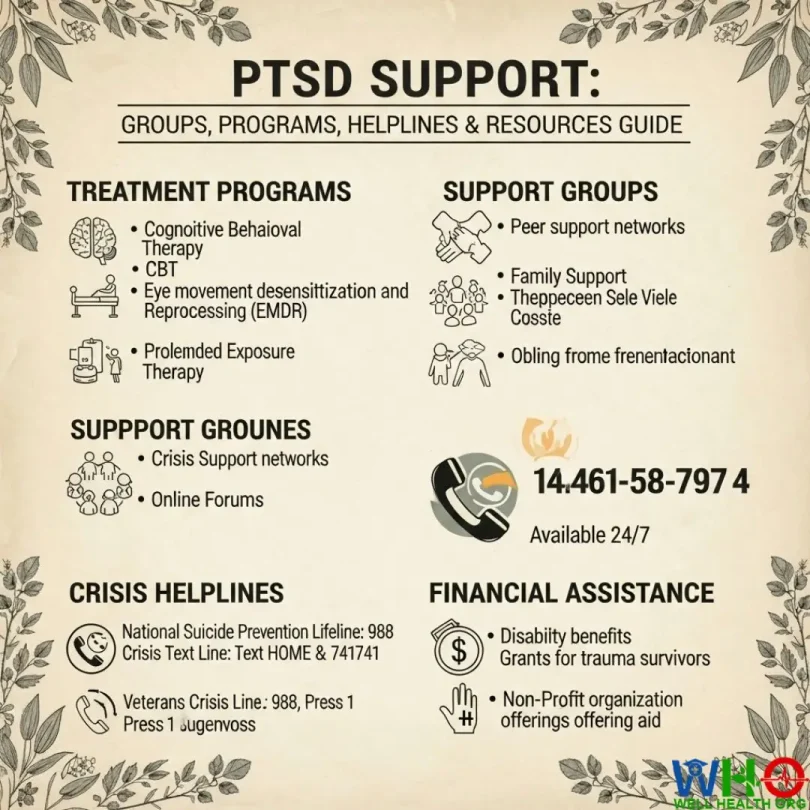
- PTSD Treatment Programs: Evidence-Based Approaches That Work
- Accessing Affordable Treatment
- Therapy Options That Make a Difference
- PTSD Support Groups: The Power of Shared Experience
- Where to Find Support Groups
- Online Support Communities
- Crisis Support and Helplines: Help When You Need It Most
- National Crisis Helplines
- Specialized Trauma Helplines
- Veterans: Specialized PTSD Support Services
- VA Benefits and Services
- Military-Specific Crisis Support
- Financial Support: Reducing Economic Stress During Recovery
- Social Security Disability Benefits
- Application Process
- Community Resources: Local Support Networks
- Taking the Next Step: Your Path to Recovery
- What Recovery Looks Like
- Stories of Hope
- Practical Tips for Supporting a Loved One with PTSD
- Your Support Network Awaits
- Conclusion
- FAQs About PTSD Support
Whether you’re a veteran adjusting to civilian life, a survivor of abuse or disaster, or a family member supporting a loved one with PTSD, understanding your support options can be a life-changing first step toward recovery.
This comprehensive guide explores the many layers of PTSD support—from evidence-based treatments to peer-led groups, from financial aid to crisis helplines. By the end, you’ll have a clear map of the resources that can help you or someone you love take meaningful steps toward healing.
Understanding PTSD and Its Impact
PTSD is a mental health condition that develops after someone experiences or witnesses a traumatic event such as war, abuse, accidents, or natural disasters. Its symptoms can include flashbacks, nightmares, avoidance of triggers, hypervigilance, and emotional numbness.
According to the National Center for PTSD, about 6% of the U.S. population will experience PTSD at some point in their lives. For veterans, the risk is far higher: between 11–20% of service members from Operation Iraqi Freedom and Operation Enduring Freedom have been diagnosed with PTSD.
But the condition does not only affect the individual—it ripples through families and communities.
Take Sarah, a military spouse, for example. She recalls:
“When my husband came back from deployment with PTSD, I felt lost. I didn’t know how to support him, and our family life began to crumble. Finding a support group and connecting with other military families changed everything. It reminded us that healing is possible, and we didn’t have to go through it alone.”
PTSD can disrupt relationships, employment, finances, and overall quality of life, but with the right support, recovery is possible.
PTSD Treatment Programs: Evidence-Based Approaches That Work
Professional treatment is the cornerstone of recovery. Studies published in the Journal of Clinical Psychiatry reveal that when people receive the right treatment soon after trauma, long-term PTSD can be prevented in up to 80% of cases.
Accessing Affordable Treatment
One of the biggest challenges people face is cost. Fortunately, several programs are available:
- Federally Qualified Health Centers (HRSA) – These centers provide care on a sliding scale based on income. Many offer trauma-informed therapy for PTSD.
- HealthCare.gov – Lists health insurance options, including affordable plans for low-income families that cover mental health treatment.
- ClinicalTrials.gov – Offers opportunities to participate in ongoing PTSD treatment studies, often providing free access to experimental therapies.
- The Gavin Farrell Foundation – Subsidizes evidence-based psychotherapies to make high-quality PTSD treatment more accessible.
Therapy Options That Make a Difference
Different therapeutic approaches can reduce PTSD symptoms significantly. Some of the most effective include:
- Cognitive Behavioral Therapy (CBT) – Helps individuals identify and change harmful thought patterns. Studies show up to 70% of patients experience major improvement.
- Prolonged Exposure Therapy (PE) – Encourages patients to gradually confront trauma-related memories and triggers in a safe environment.
- Eye Movement Desensitization and Reprocessing (EMDR) – Uses guided eye movements to help reprocess traumatic memories and reduce their emotional impact.
- Group Therapy – Provides a sense of community and reduces isolation, allowing survivors to share and validate experiences.
The Open Path Psychotherapy Collective is an excellent resource for finding therapists who charge sliding-scale fees, making therapy more affordable.
Dr. Martinez, a trauma specialist, emphasizes:
“The most important thing people with PTSD should know is that effective treatments exist. With the right therapy, symptoms can be managed—and in many cases, people can experience full recovery.”
PTSD Support Groups: The Power of Shared Experience
Therapy provides professional guidance, but support groups offer something equally vital: connection. The sense of community and shared understanding helps people feel less isolated and more empowered.
Research from the American Psychological Association shows that participation in support groups can reduce feelings of isolation by up to 50% among PTSD survivors.
Where to Find Support Groups
Several organizations maintain directories of in-person and virtual support groups:
- National Center for PTSD – Offers a comprehensive list of groups across the country.
- Sidran Institute – Focuses on trauma survivors and organizes specialized support groups for various trauma types.
- Anxiety & Depression Association of America (ADAA) – Lists PTSD-focused groups and co-occurring disorder programs.
- NAMI (National Alliance on Mental Illness) – Provides peer-led support groups for individuals and family members.
- CPTSD Safe Group – A dedicated space for people living with complex PTSD.
Marcus, a car accident survivor, shares his story:
“Walking into my first support group, I was terrified. But hearing others describe the same nightmares and fears I had—it gave me hope. That group became my lifeline when I needed it most.”
Online Support Communities
When attending in-person groups isn’t possible, online communities can provide 24/7 support. Many platforms offer moderated forums and virtual meetings. However, it’s essential to choose groups with trained moderators to maintain safety and credibility.
Crisis Support and Helplines: Help When You Need It Most
PTSD symptoms can sometimes trigger overwhelming moments of fear, panic, or hopelessness. In these moments, having immediate access to crisis resources can save lives.
National Crisis Helplines
- 988 Suicide & Crisis Lifeline – Dial 988 anytime to connect with trained crisis counselors.
- Crisis Text Line – Text CONNECT to 741741 for support via text.
- National Suicide Prevention Lifeline – Still active at 1-800-273-8255 (TALK).
Specialized Trauma Helplines
- RAINN (Rape, Abuse & Incest National Network) – Hotline: 800-656-HOPE (4673); offers confidential sexual assault support.
- National Domestic Violence Hotline – Available at 1-800-799-SAFE (7233) for survivors of domestic abuse.
- 1in6 – Specialized support for male survivors of sexual assault.
These services are free, confidential, and available around the clock.
Veterans: Specialized PTSD Support Services
Veterans face unique challenges with PTSD. Military culture, combat exposure, and the transition back to civilian life can all complicate recovery. Fortunately, a wide network of veteran-specific programs and benefits exists to provide tailored support.
VA Benefits and Services
The U.S. Department of Veterans Affairs (VA) provides extensive PTSD-focused resources, including:
- VA Disability Compensation – Veterans whose PTSD is connected to military service can receive tax-free monthly payments. Applications can be submitted online or through local VA offices.
- VA Healthcare Benefits – Comprehensive PTSD treatment services, including therapy, medication management, and group counseling. Veterans with a 50% disability rating or higher receive free healthcare for service-connected conditions.
- Vet Centers – Community-based facilities offering confidential counseling for combat veterans and their families. These centers emphasize readjustment counseling and support the transition to civilian life.
Military-Specific Crisis Support
Sometimes immediate, crisis-level support is needed. Veterans and service members have access to hotlines staffed by professionals who understand military experiences:
- Veterans Crisis Line – Call 988, press 1, text 838255, or chat at veteranscrisisline.net.
- Safe Helpline – Confidential support for survivors of sexual assault in the military. Call 877-995-5247 or access online chat.
- PTSD Foundation of America Helpline – Call 877-717-PTSD (7873) for combat trauma support from counselors trained in military culture.
These specialized services recognize that military trauma requires tailored understanding and care.
Financial Support: Reducing Economic Stress During Recovery
PTSD doesn’t just affect mental health—it often impacts employment, income, and financial stability. For many, financial stress adds another layer of difficulty to recovery.
Social Security Disability Benefits
The Social Security Administration (SSA) offers two primary programs for people whose PTSD prevents them from maintaining employment:
- Social Security Disability Insurance (SSDI) – Available to individuals with a work history who have paid into Social Security. Benefits are based on past earnings.
- Supplemental Security Income (SSI) – For individuals with limited income and assets, regardless of work history.
To qualify, applicants must meet the requirements outlined in Section 12.15 of the SSA Blue Book. This includes documentation of PTSD with:
- Severe limitations in at least one area of mental functioning, or
- Marked limitations in two areas (e.g., concentration, social interaction, adapting to change).
Application Process
Applying can be complex, but being prepared helps.
- Apply Online: Visit ssa.gov or call 800-772-1213 to request an appointment.
- Medical Documentation: Include detailed records from therapists, psychiatrists, and hospitals.
- Daily Functioning Notes: Describe how PTSD affects your ability to work, care for yourself, and interact socially.
Many applicants benefit from working with disability advocates or attorneys, as approval rates are higher with professional guidance.
Community Resources: Local Support Networks
While national organizations provide broad access, local community resources often offer more personalized and culturally relevant support.
- American Red Cross – Provides disaster relief, emergency counseling, and mental health services for trauma survivors.
- Community Centers – Many host support groups, workshops, and affordable counseling sessions tailored to local needs.
- Faith-Based Organizations – Churches, mosques, and temples often run support groups or partner with mental health professionals to serve their members.
- Trauma-Informed Care Providers – Specialized professionals who understand trauma’s impact and help clients navigate multiple resources, from housing to healthcare.
For people in marginalized or underserved areas, community-based care can often bridge gaps left by larger systems.
Taking the Next Step: Your Path to Recovery
Recovery from PTSD is not a straight line. It’s a journey—sometimes slow, sometimes challenging, but always possible with the right support.
What Recovery Looks Like
- For some, recovery may mean significant reduction of symptoms.
- For others, it may mean learning coping strategies that allow them to live meaningful lives despite lingering symptoms.
- Many find that healing requires a mix of professional treatment, peer support, crisis resources, and lifestyle changes.
Stories of Hope
Lisa, a workplace shooting survivor, describes her turning point:
“For months, I tried to manage on my own, but my symptoms only worsened. The day I finally called a crisis line, I felt like I had taken my first real breath in months. From there, I joined a support group and started therapy. That combination saved my life.”
Her story echoes countless others—proof that reaching out is the first, most powerful step.
Practical Tips for Supporting a Loved One with PTSD
If you’re caring for someone with PTSD, your role is both vital and challenging. Here are some practical ways to provide support:
- Listen without judgment – Allow them to share at their own pace.
- Learn about PTSD – Understanding symptoms and triggers helps reduce frustration.
- Encourage professional help – Offer to assist with research, scheduling, or attending appointments.
- Maintain routines – Stability in daily life can be grounding for someone with PTSD.
- Take care of yourself – Supporting someone with PTSD can be draining; consider joining a family support group to avoid burnout.
Remember, you can’t “fix” someone else’s PTSD—but you can walk beside them on their journey.
Your Support Network Awaits
PTSD can make the world feel overwhelming, unpredictable, and isolating. But no one has to face it alone. Across the country—and online—a robust network of support groups, helplines, treatment programs, financial resources, and veteran-specific services is available.
The most important step is the first one: reaching out. Whether that means calling a helpline tonight, attending a support group next week, or scheduling an appointment with a therapist, every step forward matters.
Healing doesn’t happen overnight, but it does happen—with help, persistence, and the right network of support.
Conclusion
PTSD is a serious but treatable condition. With evidence-based therapies, supportive communities, crisis resources, and financial assistance programs, recovery is within reach for anyone who seeks it.
If you’re living with PTSD—or supporting someone who is—remember: asking for help is not weakness, but strength. Support is out there, and people are ready to walk with you every step of the way.
FAQs About PTSD Support
1. What is the most effective treatment for PTSD?
Evidence-based therapies like CBT, EMDR, and Prolonged Exposure Therapy are highly effective, often reducing symptoms significantly.
2. Are PTSD support groups free?
Many are free or low-cost. Organizations like NAMI, the VA, and local community centers frequently offer no-cost group options.
3. Can PTSD qualify me for disability benefits?
Yes. If PTSD prevents you from working, you may qualify for SSDI or SSI benefits through the Social Security Administration.
4. What’s the difference between PTSD and Complex PTSD (CPTSD)?
PTSD often results from a single traumatic event, while CPTSD is linked to repeated or prolonged trauma (e.g., childhood abuse, captivity). Both require specialized treatment.
5. What should I do if I feel overwhelmed right now?
Call 988 for immediate crisis support. Trained counselors are available 24/7 to help you through urgent distress.
✨ Final Word: PTSD may change your life, but it doesn’t have to define it. With the right support—whether through therapy, community, or crisis services—you can build a path toward recovery and reclaim your future.
Medically Reviewed by Prof. Dr. Akram
Orthopedic Surgeon | Professor | Senior Medical Specialist
Prof. Dr. Akram is a distinguished surgeon with over 15 years of clinical expertise. Having served as a lead Emergency Specialist at Complex International Government Hospital, he currently leads a specialized team of 13 medical professionals at his private hospital. As a Professor at top medical universities, he ensures that every article on WellHealthOrg.com meets rigorous clinical standards.
Medical Disclaimer:
The information provided is for educational purposes only and is not a substitute for professional medical advice, diagnosis, or treatment. Always consult your physician for any medical concerns.
Our content is rigorously fact-checked by our 13-member Editorial Team under the clinical supervision of Prof. Dr. Akram.