
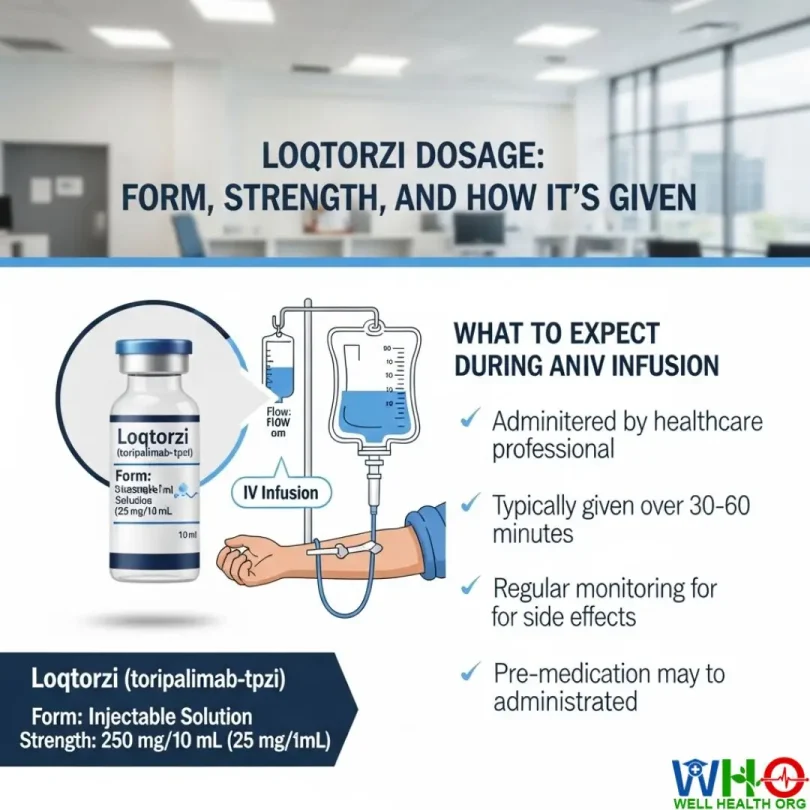
If you’ve recently been prescribed Loqtorzi (toripalimab-tpzi), chances are you have questions about how the treatment works and what dosage is right for you. Understanding the details of your medication—such as its forms, strengths, and how it’s administered—is essential for staying informed and confident during your cancer care journey.
- What Is Loqtorzi? A Closer Look
- How Loqtorzi Works
- When Loqtorzi Is Prescribed
- Loqtorzi Forms and Strengths
- Typical Loqtorzi Dosage
- 1. Loqtorzi with Chemotherapy (Cisplatin + Gemcitabine)
- 2. Loqtorzi as a Standalone Therapy
- How Loqtorzi Is Administered
- Preparation
- Administration
- Duration of Infusion
- Treatment Timeline
- What to Do If You Miss a Dose
- Risks and Common Side Effects of Loqtorzi
- Common Side Effects
- Serious Immune-Related Side Effects
- Common Questions About Loqtorzi
- How long does it take for Loqtorzi to start working?
- Is Loqtorzi dosage similar to Xeloda?
- How long will I need to take Loqtorzi?
- Working with Your Healthcare Team
- Final Thoughts on Loqtorzi Dosage
This in-depth guide explores the recommended dosages of Loqtorzi, its available forms, how doctors determine the right strength, and what to expect during treatment. You’ll also learn practical tips for managing missed doses, recognizing potential side effects, and communicating effectively with your healthcare team.
While this guide provides detailed, research-backed information, remember: only your doctor can decide the correct dosage and treatment schedule for your specific needs. Always follow their medical advice.
What Is Loqtorzi? A Closer Look
Loqtorzi is a prescription immunotherapy drug approved by the U.S. Food and Drug Administration (FDA) for the treatment of nasopharyngeal carcinoma (NPC), a rare type of head and neck cancer that begins in the upper part of the throat behind the nose.
Unlike chemotherapy, which directly kills rapidly dividing cancer cells, Loqtorzi belongs to a class of medications known as programmed death receptor-1 (PD-1) blocking antibodies. These drugs work by enhancing your immune system’s ability to recognize and attack cancer cells.
How Loqtorzi Works
Your immune system has “checkpoints” that prevent it from attacking healthy cells. Cancer cells often exploit these checkpoints to hide from immune attack. Loqtorzi blocks PD-1, a key immune checkpoint, effectively “removing the brakes” from your immune system so it can better detect and destroy cancer cells.
This makes Loqtorzi part of a groundbreaking group of cancer treatments known as checkpoint inhibitors, which have revolutionized oncology care in recent years.
When Loqtorzi Is Prescribed
Doctors may prescribe Loqtorzi:
- As a standalone treatment for patients with NPC.
- In combination with chemotherapy drugs such as cisplatin and gemcitabine, especially for newly diagnosed or advanced cases.
Your oncologist will decide whether Loqtorzi is used alone or as part of a combination therapy, depending on your cancer stage, prior treatments, and overall health profile.
Loqtorzi Forms and Strengths
Understanding how Loqtorzi is supplied and administered helps you prepare for treatment. Unlike oral medications, Loqtorzi requires intravenous (IV) infusion under medical supervision.
- Form: Loqtorzi is supplied as a liquid solution for IV infusion.
- Strength: Each vial contains 240 milligrams (mg) of Loqtorzi in 6 milliliters (mL) of solution.
This standardized strength allows healthcare providers to calculate the exact dosage you need based on your body weight or treatment regimen.
💡 Patient Insight: Because Loqtorzi is not taken at home like pills, you’ll always receive it at a hospital, cancer treatment center, or infusion clinic under the care of trained professionals. This ensures precise dosing and immediate medical support if side effects occur.
Typical Loqtorzi Dosage
Your Loqtorzi dosage depends on two key factors:
- Whether you’re receiving it with chemotherapy or on its own.
- Your body weight.
1. Loqtorzi with Chemotherapy (Cisplatin + Gemcitabine)
For patients receiving combination therapy:
- Standard Dose: 240 mg Loqtorzi administered once every 3 weeks.
- This schedule is designed to align with chemotherapy cycles, providing a consistent and synergistic treatment effect.
2. Loqtorzi as a Standalone Therapy
When prescribed alone:
- Weight-based dose: 3 mg per kilogram (kg) of body weight.
- Frequency: Once every 2 weeks.
Example: A person weighing 75 kg (165 lbs) would typically receive a 225 mg dose every 2 weeks.
👉 This difference matters: combination therapy follows a fixed dose, while monotherapy requires a weight-based calculation.
💡 Tip: Your doctor may occasionally adjust dosage or timing depending on how well you tolerate treatment, lab test results, and side effect management.
How Loqtorzi Is Administered
Because Loqtorzi is given through IV infusion, patients must attend treatment sessions at a medical facility. Here’s a breakdown of the process:
Preparation
- A nurse or pharmacist prepares your infusion by diluting Loqtorzi with 0.9% sodium chloride solution.
- This step ensures your body receives the medication safely and evenly during the infusion.
Administration
- A healthcare professional inserts a small catheter into a vein in your arm.
- The diluted Loqtorzi solution is infused slowly through this IV line.
Duration of Infusion
- First infusion: Usually lasts about 60 minutes, so your medical team can closely monitor your response.
- Subsequent infusions: If tolerated well, these may be shortened to about 30 minutes.
Treatment Timeline
- Loqtorzi is intended for long-term use, meaning you’ll likely continue infusions as long as the medication is effective and safe for you.
- Regular check-ups and imaging tests help your doctor determine whether to continue, adjust, or stop treatment.
💡 Patient Tip: Bring a book, headphones, or another form of entertainment to infusion sessions—they may take time, especially at the beginning.
What to Do If You Miss a Dose
Since Loqtorzi requires scheduled infusions, missing an appointment can disrupt your treatment plan.
- Step 1: Contact your doctor’s office or infusion center immediately if you miss a session.
- Step 2: Your medical team will reschedule the infusion and adjust your treatment calendar as needed.
- Step 3: Use tools like smartphone reminders, calendars, or caregiver support to stay on track with appointments.
💡 Why it matters: Consistency ensures the drug maintains steady effectiveness against cancer. Missing doses without rescheduling could reduce treatment benefits.
Risks and Common Side Effects of Loqtorzi
Like all cancer treatments, Loqtorzi carries risks. Because it stimulates your immune system, it can sometimes cause your body to mistakenly attack healthy cells and tissues.
Common Side Effects
- Fatigue
- Rash or skin irritation
- Thyroid problems (hypothyroidism or hyperthyroidism)
- Diarrhea
- Loss of appetite
Serious Immune-Related Side Effects
In rare cases, Loqtorzi may cause immune-mediated reactions that affect major organs such as:
- Lungs: Pneumonitis (inflammation)
- Liver: Hepatitis
- Intestines: Colitis
- Kidneys: Nephritis
- Hormonal glands: Adrenal or pituitary issues
Because these complications can be serious, your doctor will perform regular blood tests and physical evaluations to monitor your health during treatment.
💡 Patient Advice: Report any unusual symptoms—such as persistent cough, abdominal pain, yellowing of the skin, or severe fatigue—immediately to your healthcare provider. Early intervention can prevent serious complications.
Common Questions About Loqtorzi
How long does it take for Loqtorzi to start working?
Loqtorzi begins working with your first infusion. However, its effects are not always immediately noticeable. Doctors rely on imaging tests, lab results, and symptom tracking over weeks or months to determine how well the treatment is working.
Is Loqtorzi dosage similar to Xeloda?
No. Loqtorzi and Xeloda (capecitabine) differ significantly:
- Loqtorzi: IV infusion, given every 2–3 weeks.
- Xeloda: Oral tablets, taken twice daily.
While Xeloda is sometimes prescribed “off-label” for NPC, it is not FDA-approved for this specific cancer type. Your oncologist will decide which drug—or combination—is best suited for your treatment plan.
How long will I need to take Loqtorzi?
There’s no single timeline. Some patients receive Loqtorzi for several months, while others may continue for years, as long as it remains effective and side effects are manageable. Your oncologist will personalize this decision.
Working with Your Healthcare Team
Your healthcare team is your biggest ally in navigating cancer treatment. Open communication is key to managing your Loqtorzi therapy effectively.
- Ask questions: Don’t hesitate to clarify dosage, side effects, or treatment goals.
- Keep a treatment journal: Record symptoms, infusion dates, and how you feel after each session. This helps your doctor track patterns.
- Bring support: Having a friend or family member accompany you to infusions can provide emotional comfort and help remember important information.
💡 Patient Empowerment: Many people feel anxious before starting immunotherapy. Remember—your care team has experience guiding patients through this exact process. The more openly you share your concerns, the better they can support you.
Final Thoughts on Loqtorzi Dosage
Loqtorzi represents a powerful tool in the fight against nasopharyngeal carcinoma, offering new hope where traditional treatments may fall short. Understanding its forms, strengths, dosage schedules, and infusion process empowers you to actively participate in your treatment plan.
While side effects and risks exist, careful monitoring by your doctor helps ensure your safety. With consistent communication, adherence to infusion schedules, and proactive self-care, you can maximize the benefits of Loqtorzi while minimizing potential complications.
Your treatment journey is uniquely yours. Stay informed, stay engaged, and most importantly—remember you are not alone. A supportive medical team, loved ones, and advancements in cancer care are all on your side.
Medically Reviewed by Prof. Dr. Akram
Orthopedic Surgeon | Professor | Senior Medical Specialist
Prof. Dr. Akram is a distinguished surgeon with over 15 years of clinical expertise. Having served as a lead Emergency Specialist at Complex International Government Hospital, he currently leads a specialized team of 13 medical professionals at his private hospital. As a Professor at top medical universities, he ensures that every article on WellHealthOrg.com meets rigorous clinical standards.
Medical Disclaimer:
The information provided is for educational purposes only and is not a substitute for professional medical advice, diagnosis, or treatment. Always consult your physician for any medical concerns.
Our content is rigorously fact-checked by our 13-member Editorial Team under the clinical supervision of Prof. Dr. Akram.







