
Dysentery Defense
It starts with a rumble in your stomach—a warning sign that something isn’t right. Soon, that rumble turns into sharp, cramping pain, followed by a frantic dash to the bathroom. But unlike a standard stomach bug that passes in twenty-four hours, this feels different. You feel weaker, the urgency is constant, and you may notice alarming signs like blood or mucus in your stool.
- Part 1: Know Your Enemy: What Is Dysentery?
- The Two Main Types
- The Symptoms Timeline
- Part 2: The Critical Priority: Mastering Hydration
- The Science of ORS (Oral Rehydration Solution)
- How to Make Your Own Emergency Rehydration Drink
- Other Hydration Heroes
- Part 3: The Nutritional Reset: What to Eat (and What to Ban)
- The “Safe Foods” List
- The “Danger Foods” List (Strictly Avoid)
- Part 4: Nature’s Pharmacy: Herbal Home Remedies
- 1. Pomegranate Rind: The Astringent Powerhouse
- 2. Fenugreek Seeds (Methi)
- 3. Turmeric: The Golden Healer
- 4. Ginger Tea
- 5. Black Tea with Lemon
- Part 5: Rebuilding the Gut: The Role of Probiotics
- The Yogurt Exception
- Fermented Foods
- Part 6: Nursing Care and Hygiene Protocols
- 1. Stopping the Spread
- 2. Caring for the Skin
- 3. Managing Fever and Cramps
- Part 7: Traveler’s Dysentery (Delhi Belly)
- Part 8: When to Abandon Home Remedies (Red Flags)
- Part 9: Frequently Asked Questions (FAQ)
- Conclusion: Empowering Your Recovery
This is dysentery, and it is an experience that can leave you feeling completely drained, both physically and emotionally.
Dysentery is more than just severe diarrhea; it is an inflammation of the intestine (specifically the colon) that can be caused by bacteria, parasites, or viruses. It strikes hard, stripping your body of essential fluids and leaving your digestive system raw and sensitive. While the medical definition sounds clinical, the reality of living through it—even for just a few days—is exhausting.
However, there is good news. While severe cases require medical intervention, the vast majority of dysentery cases can be managed effectively from the comfort of your own bedroom. Your body is resilient, and with the right support, hydration, and natural remedies, you can help it fight off the infection and heal the inflammation.
This comprehensive guide is your roadmap to recovery. We will move beyond simple advice and dive deep into the science of hydration, specific recipes for healing foods, ancient herbal remedies that have stood the test of time, and crucial safety protocols. Whether you are nursing yourself back to health or caring for a sick family member, this guide will empower you to take control of the situation safely and naturally.
Part 1: Know Your Enemy: What Is Dysentery?
To treat dysentery effectively, you need to understand what is happening inside your body. Dysentery is not a single disease but a clinical syndrome. It is essentially the body’s violent reaction to an unwanted invader in the gut.

The Two Main Types
Understanding the cause can sometimes help you tailor your approach, though immediate home care remains similar for both.
- Bacillary Dysentery (Shigellosis): This is the most common form, caused by bacteria like Shigella, Campylobacter, Salmonella, or E. coli. It hits fast and hard. The bacteria attack the lining of the large intestine, causing swelling and ulcers (small sores). This is why you might see blood in the stool.
- Amoebic Dysentery (Amoebiasis): This is caused by a microscopic parasite called Entamoeba histolytica. It is more common in tropical areas. This type can be trickier because the amoeba can burrow into the intestinal wall and sometimes persist for weeks if not treated.
The Symptoms Timeline
Dysentery is not subtle. It usually presents a cluster of symptoms that distinguish it from regular watery diarrhea:
- The hallmark sign: Diarrhea containing blood, pus, or mucus.
- Pain: Tenesmus—a clinical term for the feeling that you need to pass stool even when your bowels are empty, often accompanied by cramping rectal pain.
- Systemic signs: Fever, nausea, vomiting, and rapid weight loss due to dehydration.
The infection is highly contagious. It spreads through the “fecal-oral route,” which is a polite way of saying that microscopic particles of infected stool make their way into your mouth, usually via contaminated water, unwashed food, or dirty hands.
Part 2: The Critical Priority: Mastering Hydration
If you remember only one thing from this guide, let it be this: Dehydration is the real killer.

When you have dysentery, your large intestine stops doing its job. Normally, the colon acts like a sponge, absorbing water from food waste to create solid stool. During dysentery, the inflamed colon stops absorbing water and may even secrete excess fluid to flush out the bacteria. This results in a massive loss of water and, more importantly, electrolytes (sodium, potassium, and chloride).
You cannot simply drink plain water to fix this. In fact, drinking gallons of plain water can sometimes be counterproductive because it dilutes the remaining electrolytes in your blood, leading to a dangerous condition called hyponatremia.
The Science of ORS (Oral Rehydration Solution)
The World Health Organization (WHO) calls ORS one of the greatest medical advancements of the 20th century. It relies on the “sodium-glucose cotransport mechanism.” Put simply, your intestine struggles to absorb salt or water on its own during an infection. However, when you mix salt and sugar together in the right ratio, the sugar acts like a “key” that opens the cell door, allowing the salt and water to rush in.
How to Make Your Own Emergency Rehydration Drink
If you cannot get to a pharmacy to buy pre-mixed ORS packets, you can make a highly effective version in your kitchen. Precision is key here—too much salt can be dangerous, and too much sugar will make diarrhea worse (osmotic diarrhea).
The Golden Recipe:
- Water: 1 Liter (about 4.2 cups) of clean, boiled, or bottled water.
- Sugar: 6 level teaspoons (provides glucose for energy and absorption).
- Salt: 1/2 level teaspoon (replenishes sodium).
- Optional: A squeeze of lime or lemon (adds potassium).
Instructions:
Mix until fully dissolved. Sip this slowly. Do not gulp it down, as a full stomach can trigger vomiting. Aim to drink at least one cup of this solution after every loose bowel movement.
Other Hydration Heroes
While ORS is medicinal, you need variety to keep your spirits up.
- Coconut Water: Nature’s electrolyte drink. It is high in potassium, which is often lost during diarrhea. Ensure it is fresh or from a source without added sugar.
- Rice Water: This is a traditional remedy in many Asian cultures. When boiling rice, use extra water. Once the rice is cooked, strain the milky white water. It is rich in starch, which coats the stomach and helps form firmer stools.
- Buttermilk: In Ayurvedic tradition, fresh buttermilk (not the store-bought cultured type for baking, but the liquid left after churning butter, or watered-down yogurt) is considered cooling for the gut. It contains probiotics and hydration.
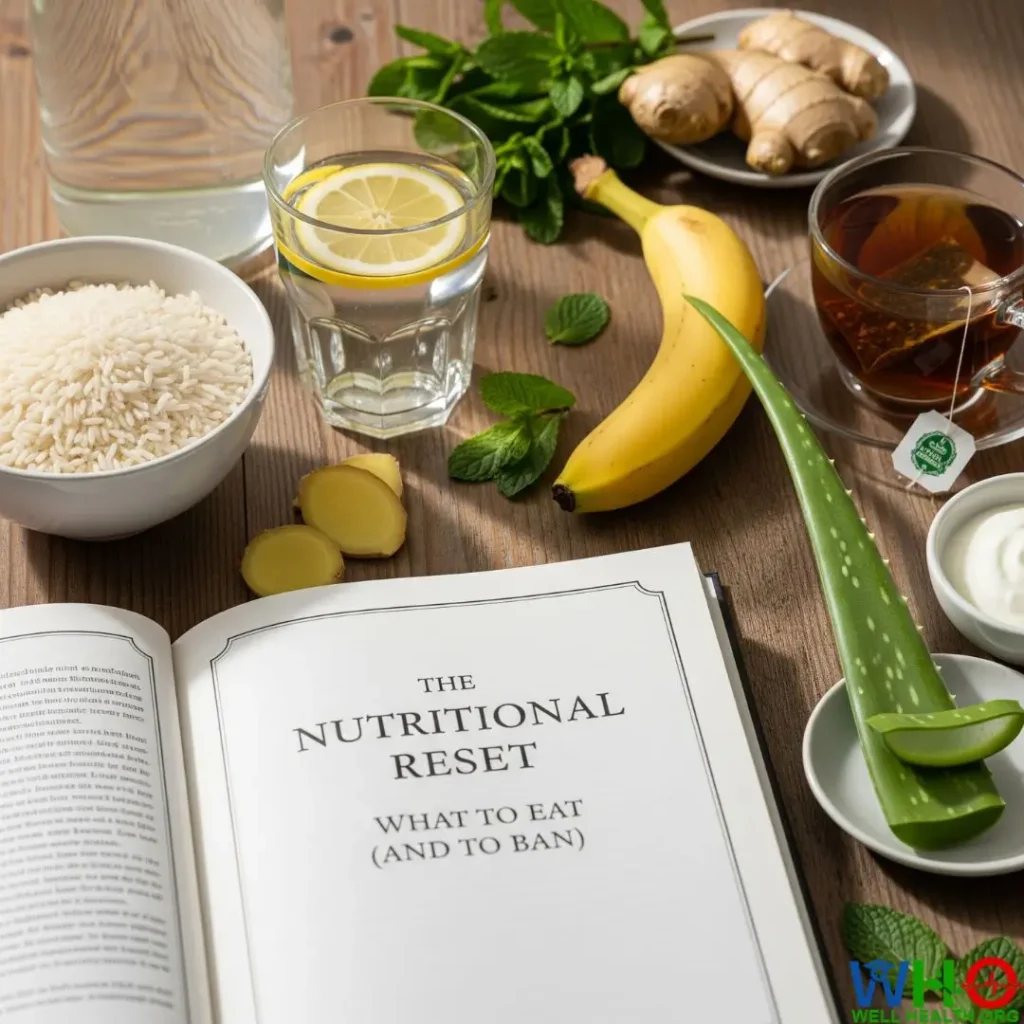
Part 3: The Nutritional Reset: What to Eat (and What to Ban)
When your stomach is in knots, the thought of food might be repulsive. However, your body needs fuel to fight the infection. The strategy here is “Low Residue, High Comfort.”
The “Safe Foods” List
We need foods that require almost no digestion—foods that are absorbed high up in the small intestine so they don’t irritate the inflamed colon.
1. The BRAT Diet (Modified)
This is the classic standard: Bananas, Rice, Applesauce, and Toast.
- Bananas: These are a superfood for dysentery. They provide pectin (a soluble fiber that helps absorb liquid in the intestines) and high levels of potassium to replace what you’ve lost.
- White Rice: Stick to white rice, not brown. White rice is low in fiber and easy to digest. It acts as a binder.
- Applesauce: Cooked apples are better than raw. The cooking breaks down the cellulose, and the pectin helps firm up stool.
- Toast: Use white bread. Whole wheat is too rough for now.
2. Khichdi or Congee
In India, Khichdi (a mushy mix of rice and yellow lentils) is the go-to sick food. In East Asia, it’s Congee (rice porridge). These dishes provide protein and carbohydrates in a semi-liquid form that soothes the gut lining. Cook them until they are almost soup-like.
3. Steamed Potatoes
Peel them and boil or steam them. Potatoes offer easy carbohydrates and potassium. Mash them with a little salt, but skip the butter and milk for now.
4. Clear Broths
Chicken bone broth or vegetable broth provides savory comfort and essential minerals. The gelatin in bone broth can also help heal the mucosal lining of the gut.
The “Danger Foods” List (Strictly Avoid)
Eating the wrong thing during dysentery is like pouring gasoline on a fire. Avoid these for at least 3 to 5 days after symptoms stop.
- Dairy: Most people become temporarily lactose intolerant during dysentery because the enzyme lactase is washed away from the gut lining. Milk, cheese, and ice cream will cause bloating and more diarrhea. (Yogurt is the only exception).
- Caffeine: Coffee and strong tea act as diuretics (dehydrating you) and stimulants (making your bowel muscles contract faster).
- Spicy Food: Chili powder and hot peppers irritate the mucous membranes.
- High Fiber: Raw vegetables, salads, nuts, and seeds are usually healthy, but right now, they are like sandpaper to your inflamed colon.
- Sugar-Free Sweets: Anything containing sorbitol or xylitol (artificial sweeteners) can have a laxative effect.
Part 4: Nature’s Pharmacy: Herbal Home Remedies
Before antibiotics existed, our ancestors used plants to treat dysentery. Many of these remedies have been backed by modern science for their antimicrobial and astringent properties.

1. Pomegranate Rind: The Astringent Powerhouse
We usually throw away the peel of the pomegranate, but in Traditional Chinese Medicine and Ayurveda, the rind is the most valuable part for diarrhea. It contains tannins and polyphenols that are strong astringents—they physically tighten the tissues of the intestine, reducing fluid secretion.
- How to Use:
- Take the peel of a pomegranate and dry it in the sun or use it fresh.
- Boil a handful of the rind in two cups of water for 10-15 minutes.
- Strain the liquid. It will be bitter, but it is potent. Drink half a cup twice a day.
2. Fenugreek Seeds (Methi)
Fenugreek is excellent for bulking up stool. The seeds contain high amounts of mucilage, a gooey substance that expands when wet. This helps coat the irritated lining of the stomach and intestine.
- How to Use:
- Mix one teaspoon of fenugreek powder with a cup of yogurt.
- Alternatively, swallow half a teaspoon of whole seeds with water (do not chew them, as they are very bitter).
3. Turmeric: The Golden Healer
Turmeric contains curcumin, a compound with proven anti-inflammatory and antibacterial properties. It helps reduce the swelling in the colon and fights the bacteria causing the infection.
- How to Use:
- Make “Golden Water.” Mix half a teaspoon of turmeric powder into a cup of warm water.
- Add a pinch of black pepper (this increases the absorption of turmeric by 2000%).
- Sip this once or twice a day. Avoid mixing it with milk if you are avoiding dairy.
4. Ginger Tea
Ginger is an antispasmodic, meaning it helps stop the spasms and cramping in the stomach. It also reduces nausea.
- How to Use:
- Grate fresh ginger into boiling water. Let it steep for 10 minutes.
- Add a little honey (which is also antibacterial).
- Sip slowly. Note: If ginger feels too “hot” for your stomach, switch to peppermint tea.
5. Black Tea with Lemon
Known as “The Carpenter’s Remedy” in some cultures, strong black tea helps due to its tannin content (similar to pomegranate), which reduces intestinal motility. The lemon provides Vitamin C and acidity to kill pathogens.
Part 5: Rebuilding the Gut: The Role of Probiotics
Dysentery is a war in your gut, and unfortunately, the “good guys” (beneficial bacteria) often become casualties alongside the bad bacteria. Once the acute diarrhea slows down, you must repopulate your microbiome. If you don’t, you risk developing “Post-Infectious IBS,” where your stomach remains sensitive for months.

The Yogurt Exception
While we said to avoid dairy, yogurt and kefir are the exceptions. They are fermented, meaning the lactose is largely broken down, and they are packed with Lactobacillus and Bifidobacterium.
- Tip: Look for plain, unsweetened yogurt with “live active cultures” listed on the label.
Fermented Foods
Once you are back to eating solids, introduce:
- Miso Soup: A Japanese fermented soybean paste that is gentle and probiotic-rich.
- Sauerkraut/Kimchi: Just a small forkful with meals (too much cabbage might cause gas, so go slow).
Part 6: Nursing Care and Hygiene Protocols
Treating the patient is not just about food and medicine; it is about comfort and preventing the spread of infection.

1. Stopping the Spread
Dysentery is incredibly contagious. If you are caring for someone with it:
- Hand Hygiene: Wash hands with soap and warm water for 20 seconds after every bathroom visit and before touching food. Hand sanitizer is good, but soap is better for physically removing fecal matter.
- Laundry: Wash soiled sheets and clothes in the hottest water setting available.
- Bathroom Sanitation: Wipe down the toilet handle, seat, and faucet with a bleach-based cleaner daily.
2. Caring for the Skin
Frequent diarrhea can cause painful chafing and diaper rash-like symptoms in adults.
- Clean Gently: Use wet wipes instead of dry toilet paper, or wash with water (using a bidet or spray bottle).
- Barrier Cream: Apply a zinc oxide cream or petroleum jelly (Vaseline) to the anal area to protect the skin from the acidity of the stool.
3. Managing Fever and Cramps
- Heat Therapy: A hot water bottle or heating pad placed on the abdomen can do wonders for relieving the cramping pain associated with dysentery.
- Rest: Your body is fighting a significant battle. Do not try to work. Sleep is essential for immune function.
Part 7: Traveler’s Dysentery (Delhi Belly)
A significant portion of dysentery cases happen during travel. If you are on the road:
- “Boil it, cook it, peel it, or forget it.” This is the traveler’s mantra.
- Water Safety: Never drink tap water in high-risk areas. Even brushing your teeth with tap water can make you sick. Keep your mouth shut in the shower.
- The Ice Cube Trap: You might order a bottled soda, but if it comes with ice, that ice was likely made from tap water. Always order drinks “no ice.”
- Charcoal Tablets: Activated charcoal can help absorb toxins in the gut. While not a cure, it can help with gas and bloating during travel.
Part 8: When to Abandon Home Remedies (Red Flags)
We believe in the power of natural healing, but dysentery can kill. It is vital to know the limit. You must see a doctor if:
- Dehydration is Severe: If you (or the patient) have dry, sticky mucous membranes, sunken eyes, confusion, or haven’t urinated in more than 8 hours. This is a medical emergency requiring IV fluids.
- Blood Volume: A streak of blood is common. Passing large amounts of blood or passing only blood is dangerous.
- High Fever: A fever over 102°F (39°C) indicates a systemic infection that your body might not be able to handle alone.
- Vulnerable Patients: Infants, young children, the elderly, and pregnant women have much lower reserves. Do not gamble with home remedies for these groups if they are not improving within 24 hours.
- Duration: If symptoms persist for more than 5 to 7 days despite home treatment.
Your doctor will likely request a stool sample to identify the specific bacteria or parasite. Treatment may involve targeted antibiotics (like Ciprofloxacin or Azithromycin) or anti-amoebic drugs (like Metronidazole).
Part 9: Frequently Asked Questions (FAQ)
Q: Should I take anti-diarrhea medication like Imodium (Loperamide)?
A: Generally, NO. This is a common mistake. Medications that stop diarrhea work by paralyzing the gut muscles. In dysentery, your body is trying to flush out a toxin or bacteria. If you take Imodium, you trap the bacteria inside your intestine, which can make the infection much worse and lead to toxic megacolon. Only take these under a doctor’s supervision.
Q: Can stress cause dysentery?
A: No. Stress can cause “nervous diarrhea” or IBS flare-ups, but true dysentery is an infection caused by a pathogen (bug). However, stress weakens your immune system, making you more susceptible to catching dysentery if exposed.
Q: How long am I contagious?
A: You can be contagious while you have symptoms and for several weeks after the symptoms stop. This is why continued hygiene is vital even when you feel better.
Q: Can I drink soda or sports drinks?
A: Sports drinks (like Gatorade) are better than water, but they often have too much sugar and not enough salt for dysentery. Flat soda (soda that has lost its fizz) is an old remedy, but the high sugar content can sometimes draw more water into the gut, worsening diarrhea. ORS is always superior.
Conclusion: Empowering Your Recovery
Dysentery is a humbling illness. It forces you to slow down, listen to your body, and prioritize the basics of survival: water, rest, and nutrition. While the symptoms are frightening, remember that the human body is an incredible self-healing machine.
By strictly managing your hydration with ORS, soothing your inflammation with foods like rice and bananas, and utilizing the astringent power of pomegranate or turmeric, you can navigate this storm safely.
Treat yourself with patience. Recovery takes time. Your energy levels may remain low for a week or two after the infection clears. This is normal. Continue to eat gently, stay hydrated, and practice diligent hygiene to ensure that once the infection is gone, it stays gone. You have the tools and the knowledge—now, give your body the rest it needs to heal.
Medically Reviewed by Prof. Dr. Akram
Orthopedic Surgeon | Professor | Senior Medical Specialist
Prof. Dr. Akram is a distinguished surgeon with over 15 years of clinical expertise. Having served as a lead Emergency Specialist at Complex International Government Hospital, he currently leads a specialized team of 13 medical professionals at his private hospital. As a Professor at top medical universities, he ensures that every article on WellHealthOrg.com meets rigorous clinical standards.
Medical Disclaimer:
The information provided is for educational purposes only and is not a substitute for professional medical advice, diagnosis, or treatment. Always consult your physician for any medical concerns.
Our content is rigorously fact-checked by our 13-member Editorial Team under the clinical supervision of Prof. Dr. Akram.