Home Remedies for Facial Allergies: Experiencing sudden itchiness, redness, or swelling on your face can feel alarming—especially when it appears out of nowhere. One moment your skin looks and feels normal, and the next, it’s irritated, blotchy, and uncomfortable. Facial allergies are incredibly common, and most people deal with them at least once in their lifetime. The good news? When you understand what’s triggering the reaction and how to soothe it properly, you can take back control and restore your skin’s comfort far more quickly than you may think.
- What Causes a Facial Allergy? Understanding the Real Triggers Behind Skin Reactions
- Cosmetics and Skincare Products
- Environmental Allergens
- Food Allergies
- Medications
- Insect Bites and Stings
- How to Identify Facial Allergy Symptoms: Early Signs and What They Mean
- Redness and Warmth
- Itching
- Swelling (Angioedema)
- Hives or Welts
- Dry or Scaly Patches
- Small Bumps or Blisters
- 6 Highly Effective Home Remedies for Fast, Gentle Facial Allergy Relief
- 1. Apply a Cold Compress to Reduce Itching and Swelling
- How to Use It Effectively
- Why It Works
- Bonus Tip
- 2. Take an Oatmeal Bath or Apply an Oatmeal Paste
- How to Use It
- • Oatmeal Bath (for widespread irritation)
- • Oatmeal Paste (for targeted facial allergies)
- Why It Works
- 3. Soothe with Pure Aloe Vera Gel
- How to Apply It
- Precaution
- Why It Works
- 4. Moisturize Gently to Repair the Skin Barrier
- How to Moisturize Properly
- Why It Works
- 5. Use an Over-the-Counter Hydrocortisone Cream for Persistent Itching
- How to Use It Safely
- Important Warning
- Why It Works
- 6. Try a Soothing Chamomile Compress
- How to Make a Chamomile Compress
- Why It Works
- Lifestyle Changes to Prevent Future Facial Allergies
- Identify and Avoid Your Triggers
- Choose Hypoallergenic Products
- Patch Test Every New Product
- Protect Your Skin From Outdoor Allergens
- When to Seek Medical Attention for Facial Allergies
- Signs of a Severe Allergic Reaction (Anaphylaxis)
- When to See a Dermatologist or General Doctor
- 1. The rash becomes increasingly severe or painful
- 2. The rash spreads or covers large portions of your face
- 3. Home remedies don’t improve your symptoms after several days
- 4. You develop signs of infection, such as:
- 5. You’re unsure what caused the reaction
- 6. You frequently experience facial allergies
- Your Path to Clearer, Calmer, Allergy-Free Skin
- Conclusion: Your Complete Roadmap to Managing and Preventing Facial Allergies
- Frequently Asked Questions
- 1. How long does a facial allergic reaction usually last?
- 2. Can facial allergies suddenly appear even if I’ve used the same product for years?
- 3. Is it safe to apply makeup during a facial allergy?
- 4. Does drinking more water help reduce facial allergies?
- 5. Can stress trigger or worsen facial allergies?
This comprehensive guide explores facial allergies in a deeper, more practical way. It explains not only why they happen but also how to recognize early symptoms, manage them effectively at home, and make smart lifestyle adjustments to prevent future flare-ups. You’ll also find expanded, dermatologist-informed insights and real examples that make the information easier to understand and apply in daily life.
By the end of this guide, you’ll feel more confident navigating flare-ups, identifying triggers, and using safe, natural remedies that bring real relief. Whether your skin reacts to pollen, cosmetics, food, or something you haven’t identified yet, this resource gives you the tools to calm your skin and protect your face from future irritation.
What Causes a Facial Allergy? Understanding the Real Triggers Behind Skin Reactions
A facial allergy occurs when your immune system misidentifies a harmless substance and overreacts to it. This “false alarm” triggers the release of chemicals—most notably histamine—which causes visible symptoms such as redness, puffiness, itching, or hives. While the reaction is usually harmless, the symptoms can be extremely uncomfortable and may worsen if left untreated.
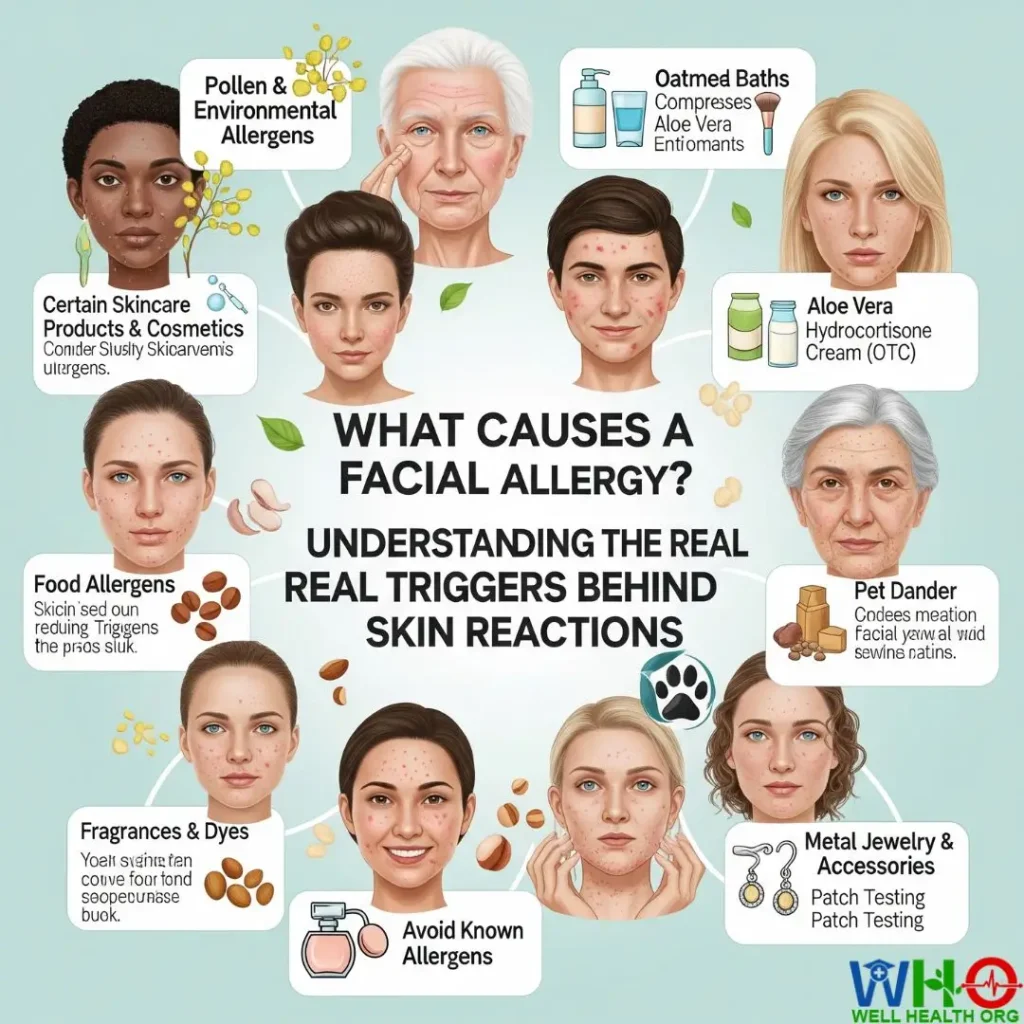
Understanding your triggers is crucial because identifying the culprit helps you avoid repeated flare-ups. And surprisingly, even ingredients or foods you’ve used for years without any issue can suddenly begin causing reactions due to changes in your skin barrier or immune sensitivity.
Here are some of the most common causes of facial allergies, explained in more depth:
Cosmetics and Skincare Products
Makeup, moisturizers, sunscreens, serums, and facial cleansers are among the biggest causes of facial allergies. Even products labeled “organic” or “natural” can trigger reactions because the skin can be sensitive to plant extracts, essential oils, or botanical fragrances.
Common irritants include:
- Artificial fragrance
- Preservatives like parabens or formaldehyde releasers
- Essential oils (lavender, peppermint, citrus, tea tree)
- Metals like nickel found in certain makeup pigments
- Alcohol-based formulations
- Retinoids or strong exfoliating acids
Sensitive skin often reacts to products with multiple active ingredients, especially when they are used together.
Environmental Allergens
Pollen, dust mites, pet dander, mold spores, and air pollution can all irritate facial skin. Many people only associate these triggers with sneezing or watery eyes, but environmental allergies frequently extend to the skin—especially around the cheeks, eyelids, and nose.
For instance:
- Pollen can stick to your hair and skin after being outdoors.
- Wind can blow allergens directly onto your face.
- High humidity or dry air can weaken the skin barrier, making your face more reactive.
Food Allergies
Some people experience facial swelling, hives, or rashes after eating certain foods—even foods they believe they tolerate well. Common triggers include:
- Nuts
- Shellfish
- Eggs
- Milk
- Strawberries
- Food additives or dyes
These reactions typically appear within minutes to a couple of hours after eating the allergen.
Medications
Both oral medications and topical treatments can trigger allergic reactions that show up on the face. Antibiotics, anti-seizure medications, and certain pain relievers are common culprits. Even medicated skincare (like benzoyl peroxide or antibiotics in creams) can irritate sensitive facial skin.
Insect Bites and Stings
A single bite or sting on the face can cause dramatic swelling because facial skin is thinner and more vascularized. This does not always indicate a serious allergy, but it can still be uncomfortable and may take longer to calm down compared to other body areas.
How to Identify Facial Allergy Symptoms: Early Signs and What They Mean
Recognizing facial allergy symptoms early helps prevent a mild reaction from becoming more severe. Allergic reactions on the face are often noticeable but can vary widely depending on the trigger, your skin type, and how long the allergen stays in contact with your skin.
Here’s an expanded look at the most common symptoms:
Redness and Warmth
Your face may appear flushed or blotchy, especially around the cheeks, forehead, or jawline. This happens because histamine causes tiny blood vessels in the skin to expand. The area may feel warm or tender to the touch.
Itching
Itchiness is one of the most irritating and persistent symptoms. Some people describe the sensation as a “crawling” feeling, while others feel burning or prickling. Rubbing or scratching only makes the inflammation worse and can lead to tiny tears in the skin.
Swelling (Angioedema)
Swelling is particularly common around:
- Eyes
- Lips
- Cheeks
- Eyelids
This puffiness may appear suddenly and can be dramatic—but most mild cases improve with proper care.
Hives or Welts
Hives are raised, red or skin-colored bumps that may appear anywhere on the face. They often change shape, move around different areas, and come with intense itching.
Dry or Scaly Patches
When the skin barrier becomes disrupted, your face may develop flaky, rough patches—similar to eczema. These patches may sting, crack, or peel.
Small Bumps or Blisters
Some allergic reactions result in tiny fluid-filled bumps or even clusters of small blisters. They can be tender and may ooze if scratched.
6 Highly Effective Home Remedies for Fast, Gentle Facial Allergy Relief
When a facial allergy suddenly disrupts your day, it’s natural to feel panicked or uncomfortable. Fortunately, you don’t always need prescriptions or harsh treatments to bring your skin back under control. Many people find that simple, dermatologist-approved home remedies can calm irritation quickly and safely—especially when applied as soon as symptoms appear.
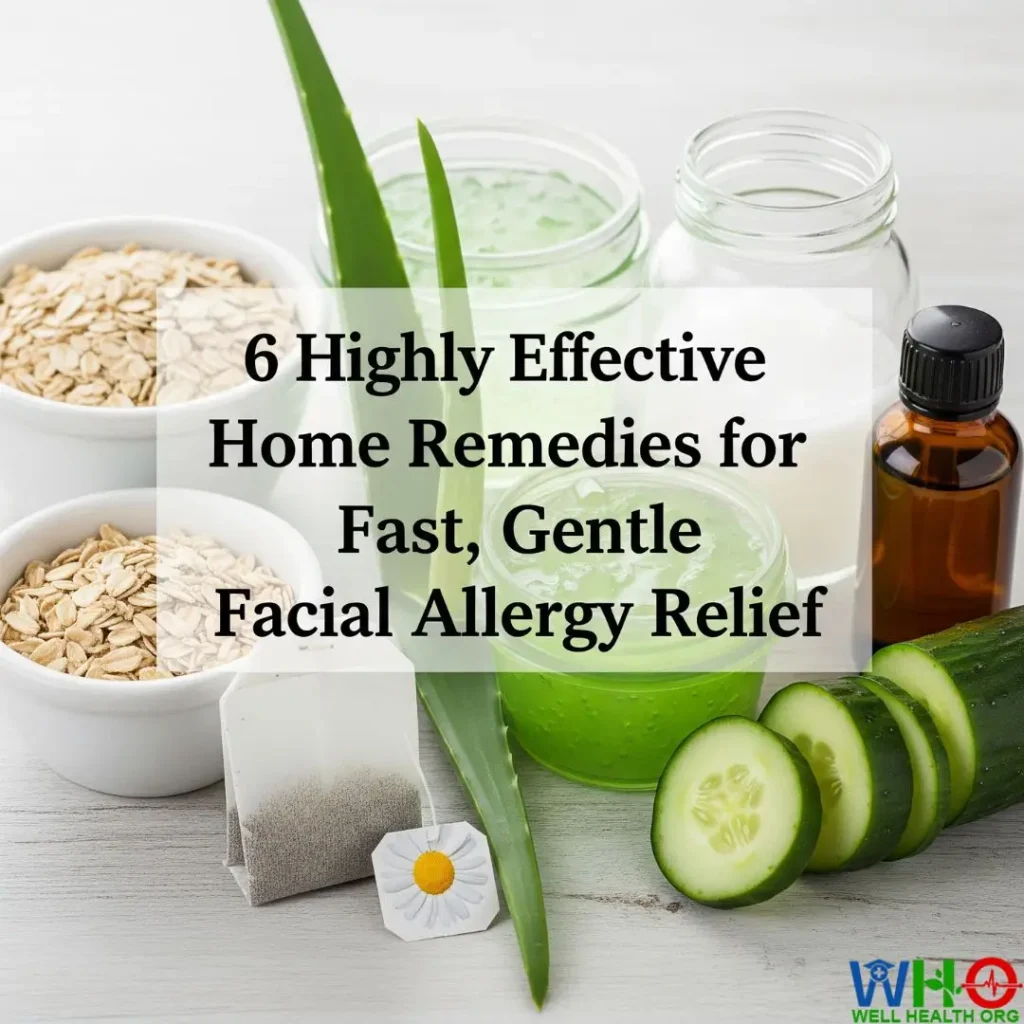
Below are six deeply explained home treatments that work well for soothing redness, reducing swelling, and restoring your facial comfort.
1. Apply a Cold Compress to Reduce Itching and Swelling
A cold compress is one of the quickest and easiest ways to calm irritated facial skin. Cold temperatures narrow the blood vessels, which reduces redness, swelling, and itchiness almost instantly.
How to Use It Effectively
- Soak a clean cotton cloth in cold water.
- Gently wring it out so it’s cool but not dripping.
- Place it over the irritated area for 5–10 minutes.
- Repeat up to several times a day for relief.
If you prefer something colder, wrap a few ice cubes in a thin towel. Avoid applying ice directly to the skin, as this can worsen irritation.
Why It Works
Cold therapy slows the release of inflammatory chemicals in the skin and provides fast relief without any risks or side effects. People with sensitive or reactive skin often find this remedy helpful because it’s gentle and doesn’t require applying any product.
Bonus Tip
If your eyes are swollen from allergies, chilled spoons or cold green tea bags can reduce puffiness effectively.
2. Take an Oatmeal Bath or Apply an Oatmeal Paste
Oatmeal is a long-established natural remedy for irritated skin conditions like eczema, hives, and allergic rashes. It contains powerful compounds called avenanthramides, known for their anti-inflammatory and anti-itch properties.
How to Use It
There are two helpful methods:
• Oatmeal Bath (for widespread irritation)
- Grind colloidal oatmeal into a very fine powder.
- Add it to a basin or bowl of cool or lukewarm water.
- Gently splash the mixture onto your face or soak a soft towel in it.
• Oatmeal Paste (for targeted facial allergies)
- Mix a tablespoon of colloidal oatmeal with enough water to create a soft paste.
- Apply a thin layer to the affected area.
- Leave it on for 10–15 minutes.
- Rinse gently with cool water, then pat dry.
Why It Works
Oatmeal forms a protective barrier on the skin, locking in moisture and calming irritation. It reduces redness, soothes itching, and supports healing—making it ideal for people with dry, sensitive, or eczema-prone skin.
3. Soothe with Pure Aloe Vera Gel
Aloe vera is famous for its cooling and anti-inflammatory effects. When applied to irritated skin, it instantly relieves burning sensations, reduces redness, and promotes healing.
How to Apply It
- Use fresh aloe vera gel directly from the plant when possible.
- Alternatively, choose a store-bought gel with minimal additives.
- Apply a thin layer to clean, dry skin.
- Let it absorb fully—do not rinse off immediately.
Precaution
Although aloe vera is gentle, always perform a patch test first. Even natural ingredients can irritate extremely sensitive skin.
Why It Works
Aloe vera contains antioxidants, enzymes, and vitamins that soothe inflammation and support the skin’s natural recovery process. It can also hydrate the skin without greasiness, making it suitable even for oily or acne-prone individuals experiencing allergy-related irritation.
4. Moisturize Gently to Repair the Skin Barrier
A facial allergy often damages the skin’s natural protective barrier. When this barrier becomes compromised, irritants can penetrate more easily and worsen the reaction.
That’s why a gentle, fragrance-free moisturizer is essential—not optional—during allergy flare-ups.
How to Moisturize Properly
- Choose a hypoallergenic, non-comedogenic moisturizer.
- Avoid products with fragrance, alcohol, or acids.
- Apply moisturizer while the skin is slightly damp to lock in hydration.
- Reapply twice a day or as needed to prevent dryness.
Why It Works
Moisturizing helps:
- Strengthen the skin barrier
- Reduce peeling or flaking
- Prevent further irritation
- Support overall healing
Many dermatologists emphasize barrier repair as a key part of allergy recovery, especially for people with sensitive or eczema-prone skin.
5. Use an Over-the-Counter Hydrocortisone Cream for Persistent Itching
Hydrocortisone is a mild corticosteroid that reduces inflammation and suppresses the immune response in the skin. It can be extremely effective for facial allergies that don’t improve with natural remedies alone.
How to Use It Safely
- Choose a low-strength hydrocortisone cream (0.5% or 1%).
- Apply a very thin layer to the affected areas.
- Use once or twice a day.
- Avoid using it for more than one week without medical guidance.
Important Warning
Do NOT apply hydrocortisone around the eyes unless advised by a doctor. The skin in that area is delicate, and overuse can cause side effects.
Why It Works
Sometimes the immune system becomes too active during an allergic reaction. Hydrocortisone gently slows the response, allowing your skin to calm down and heal faster.
6. Try a Soothing Chamomile Compress
Chamomile is naturally anti-inflammatory and contains compounds that act like mild antihistamines, making it perfect for calming irritated or itchy facial skin.
How to Make a Chamomile Compress
- Steep 1–2 chamomile tea bags in hot water.
- Allow them to cool completely in the refrigerator.
- Place the cool, damp tea bags on the affected areas for 5–10 minutes.
You can also soak a soft cloth in cooled chamomile tea and use it as a compress.
Why It Works
Chamomile helps reduce redness, itching, and puffiness while providing a gentle cooling sensation. It’s a safe option for most skin types, including sensitive skin.
Lifestyle Changes to Prevent Future Facial Allergies
Home remedies help manage symptoms, but long-term relief comes from prevention. Consistent changes in your daily habits and skincare routine can dramatically reduce the frequency and severity of allergy flare-ups.

Here are practical adjustments that make a meaningful difference:
Identify and Avoid Your Triggers
Keeping track of when symptoms appear allows you to pinpoint the specific triggers causing your reactions.
Helpful tips include:
- Maintain a simple diary noting foods, products, and environmental exposures.
- Stop using any new product immediately if irritation occurs.
- Pay attention to seasonal symptoms—spring and fall often worsen allergies.
Once you know what triggers your reaction, avoiding it becomes far easier.
Choose Hypoallergenic Products
Choose skincare and makeup labeled:
- “Hypoallergenic”
- “Fragrance-free”
- “For sensitive skin”
Fragrance is one of the most common irritants, even in luxury skincare lines.
Patch Test Every New Product
This step alone prevents countless facial allergic reactions.
How to patch test:
- Apply a small amount of the new product behind your ear or on your inner arm.
- Leave it for 24–48 hours.
- Check for redness, bumps, itching, or burning.
If there’s any reaction, do not apply it on your face.
Protect Your Skin From Outdoor Allergens
On days with high pollen, strong winds, or extreme temperatures:
- Wear sunglasses
- Use a hat with a wide brim
- Rinse your face with cool water after coming indoors
This helps remove irritants that may cling to your skin or hair.
When to Seek Medical Attention for Facial Allergies
Most facial allergies are mild and can be treated at home with simple remedies and a bit of patience. However, it’s important to understand when a skin reaction is more serious than it seems. Ignoring certain symptoms can lead to complications, especially if an infection develops or if the allergy is part of a more severe reaction.
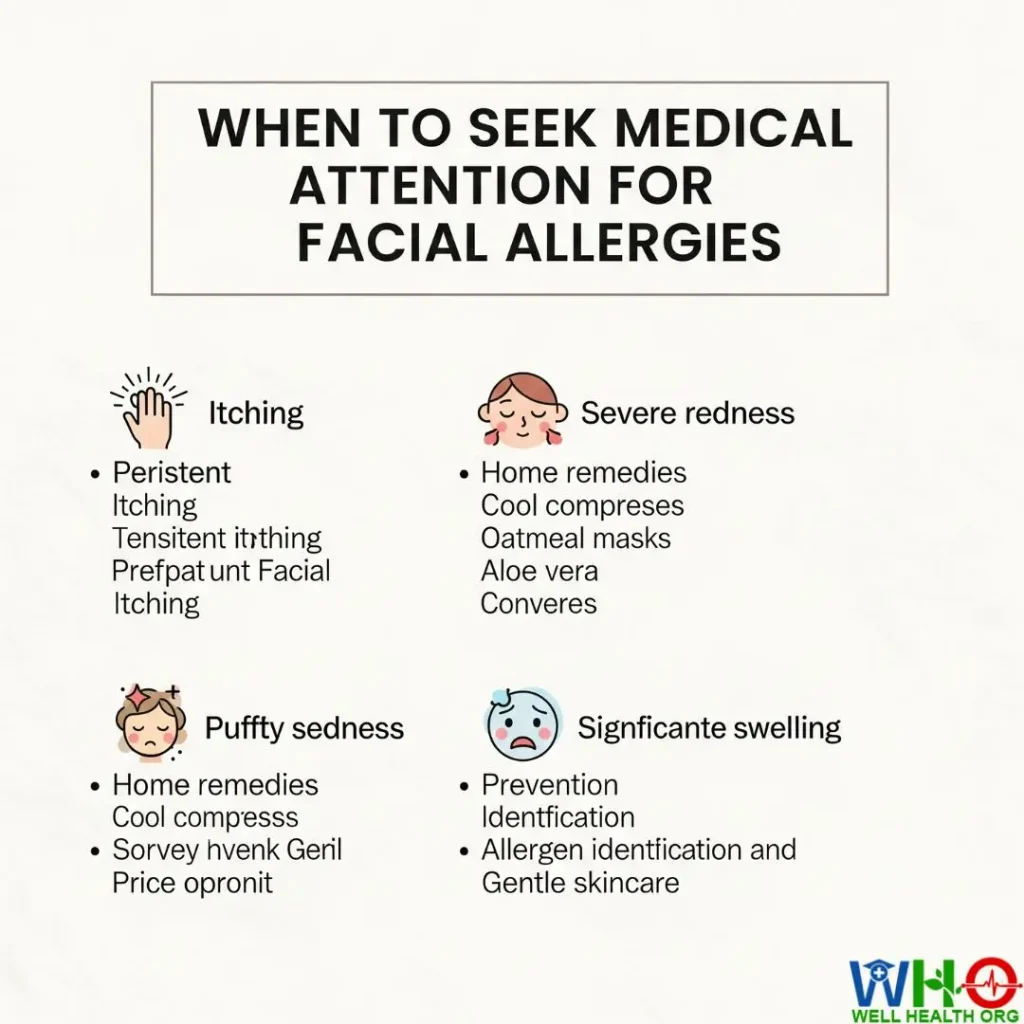
Below are clear, helpful guidelines to help you decide when it’s time to consult a healthcare professional.
Signs of a Severe Allergic Reaction (Anaphylaxis)
Anaphylaxis is a medical emergency. Although relatively rare, it requires immediate medical attention because it can be life-threatening if not treated quickly. Even if you only experience facial symptoms at first, the reaction can escalate within minutes.
Seek emergency care right away if you notice:
- Trouble breathing or wheezing
- Rapid swelling of the lips, tongue, or throat
- Difficulty swallowing
- Tightness in the chest
- Feeling faint or lightheaded
- A rapid or weak pulse
- Severe hives spreading across the body
Even if symptoms improve on their own, follow-up medical care is still important because a second wave of symptoms (known as a biphasic reaction) can sometimes occur.
When to See a Dermatologist or General Doctor
Not all concerning symptoms are emergencies, but some require a professional evaluation. You should schedule a medical visit if any of the following apply:
1. The rash becomes increasingly severe or painful
Pain, burning, or worsening redness may indicate a complication.
2. The rash spreads or covers large portions of your face
This can indicate intense inflammation or a reaction to something still present on the skin.
3. Home remedies don’t improve your symptoms after several days
If you’ve been treating your skin carefully and the irritation persists, a doctor can prescribe stronger medications or help identify the trigger.
4. You develop signs of infection, such as:
- Pus
- Yellow crusts
- A fever
- Warmth spreading from the rash
- Increased pain
Scratching allergic rashes can break the skin barrier, increasing the risk of infection.
5. You’re unsure what caused the reaction
Allergy testing can identify specific ingredients or allergens you may not even realize you’re reacting to.
6. You frequently experience facial allergies
Recurring flare-ups often signal chronic conditions like contact dermatitis, eczema, or environmental allergies. Proper guidance can dramatically reduce the frequency of reactions.
A dermatologist can provide personalized skincare recommendations, prescribe medications like antihistamines or stronger topical steroids, and help build a skin-care plan tailored to your sensitivity type.
Your Path to Clearer, Calmer, Allergy-Free Skin
Facial allergies can be frustrating, uncomfortable, and even emotionally draining—especially if they happen often or without warning. But understanding your skin’s triggers and knowing how to respond effectively gives you a significant advantage.
Through small lifestyle adjustments, mindful product choices, and the home remedies covered in this guide, you can reduce flare-ups and soothe your skin more quickly when irritation occurs. And when symptoms persist or worsen, reaching out to a medical professional ensures you get the right treatment at the right time.
Healthy, calm skin is absolutely within reach. With the right balance of awareness, prevention, and gentle care, you can regain control over your skin’s comfort and keep facial allergies from interfering with your daily life.
Conclusion: Your Complete Roadmap to Managing and Preventing Facial Allergies
Facial allergies can be overwhelming, uncomfortable, and disruptive—especially when symptoms strike out of nowhere. But the more you understand your skin, your triggers, and the right remedies, the easier it becomes to manage flare-ups with confidence. Whether your reaction stems from skincare ingredients, environmental allergens, food sensitivities, or simply a weakened skin barrier, having a clear and practical plan makes a world of difference.
By relying on gentle, proven home remedies—like cold compresses, aloe vera gel, chamomile, or oatmeal—you can soothe irritation quickly without harsh chemicals. Reinforcing your skin barrier with fragrance-free moisturizers and staying mindful of what products you use can prevent many flare-ups before they even begin. And perhaps most importantly, learning to recognize severe symptoms ensures that you seek professional help when necessary, avoiding complications and promoting better long-term skin health.
Every skin type is unique, and allergic reactions vary from person to person. What matters most is paying attention to how your skin responds, staying patient with the healing process, and consistently choosing what supports your skin’s well-being. Small habits—like patch-testing new products, removing allergens from your environment, and hydrating your skin properly—can create remarkable changes over time.
With the right mix of prevention and gentle care, calm and healthy skin is well within reach. Your skin can recover, your confidence can return, and flare-ups can become far less frequent. And when in doubt, seeking guidance from a dermatologist ensures you always have support on your journey toward clearer, more resilient skin.
Frequently Asked Questions
1. How long does a facial allergic reaction usually last?
Most mild facial allergies last anywhere from a few hours to three days, especially when treated early with soothing home remedies. More stubborn reactions—like contact dermatitis—may take several days to a week to fully resolve. If symptoms persist beyond that or worsen, medical advice is recommended.
2. Can facial allergies suddenly appear even if I’ve used the same product for years?
Yes. Many people assume a product is safe simply because they’ve used it for a long time. However, allergies can develop gradually. Changes in skin sensitivity, ingredient formulations, or your overall immune response can trigger new reactions to products that previously caused no issues.
3. Is it safe to apply makeup during a facial allergy?
It’s best to avoid makeup while your skin is irritated. Cosmetics—especially those containing fragrance or preservatives—can aggravate symptoms, slow healing, and increase the risk of infection. Once your skin fully recovers, reintroduce makeup slowly, starting with hypoallergenic formulas.
4. Does drinking more water help reduce facial allergies?
Hydration supports a healthy skin barrier, which makes your skin more resilient against allergens and irritants. While drinking water won’t directly stop an allergic reaction, it helps the body function better overall and supports healing from the inside out.
5. Can stress trigger or worsen facial allergies?
Absolutely. Stress doesn’t directly cause allergies, but it weakens your skin barrier and immune response, making your skin more reactive. Many people notice flare-ups during periods of emotional stress or lack of sleep. Stress-management routines—like breathing exercises, proper sleep, and mindful relaxation—can help keep symptoms under control.
Medically Reviewed by Prof. Dr. Akram
Orthopedic Surgeon | Professor | Senior Medical Specialist
Prof. Dr. Akram is a distinguished surgeon with over 15 years of clinical expertise. Having served as a lead Emergency Specialist at Complex International Government Hospital, he currently leads a specialized team of 13 medical professionals at his private hospital. As a Professor at top medical universities, he ensures that every article on WellHealthOrg.com meets rigorous clinical standards.
Medical Disclaimer:
The information provided is for educational purposes only and is not a substitute for professional medical advice, diagnosis, or treatment. Always consult your physician for any medical concerns.
Our content is rigorously fact-checked by our 13-member Editorial Team under the clinical supervision of Prof. Dr. Akram.