

There are few things physically more exhausting than a persistent, chesty coughs. It is that heavy, rattling sensation deep in your lungs that seems to weigh you down with every breath. It disrupts your meetings, wakes you up in the middle of the night, and leaves your abdominal muscles sore from the sheer effort of coughing. You feel tired, foggy, and desperate for relief.
- The Anatomy of a Cough: Why Do We Do It?
- Wet vs. Dry: Knowing the Difference
- Phase 1: The Foundation of Fluid Dynamics
- Beyond Water: Strategic Hydration
- Phase 2: The Kitchen Apothecary
- The Power of Honey
- The Ginger Root Revival
- Thyme: The Lung Herb
- The Pineapple Surprise (Bromelain)
- The “Onion Syrup” (Grandma’s Secret)
- Phase 3: Steam and Aromatherapy
- The “Tent” Method
- What to Add to the Water?
- Phase 4: Physical Therapies and Techniques
- 1. Coupage (Chest Percussion)
- 2. Postural Drainage
- 3. The Saltwater Gargle
- Phase 5: Environmental Control
- The Humidity Factor
- Air Quality Management
- Phase 6: Diet and Nutrition for Recovery
- The “Spicy” Solution
- The Dairy Debate
- Avoid Sugar
- When to Seek Medical Attention: Recognizing the Red Flags
- Conclusion: Patience and Consistency
In our modern, fast-paced world, the knee-jerk reaction is often to rush to the pharmacy aisle and grab the strongest chemical suppressant available. While modern medicine has its place, suppressants can sometimes work against the body’s natural healing logic. A chesty cough is “productive” for a reason: your body is trying to evict invaders.
This comprehensive guide is designed to help you work with your body, not against it. We are going to explore a holistic approach to clearing chest congestion, utilizing time-tested natural remedies, forgotten kitchen cures, and lifestyle adjustments that can speed up your recovery. Whether you are a parent looking for gentle options for your children or an adult seeking to avoid drowsiness-inducing medications, this guide will serve as your complete handbook for respiratory relief.
The Anatomy of a Cough: Why Do We Do It?
To treat a cough effectively, you first need to understand the mechanism behind it. Why is your body doing this to you?

Your respiratory system is lined with a mucous membrane. In a healthy state, this membrane produces a thin, slippery fluid that acts as a conveyor belt, trapping dust, bacteria, and allergens. Tiny hair-like structures called cilia wave back and forth, moving this mucus up to the throat to be swallowed unnoticed.
However, when a virus (like a cold or flu) or bacteria invades, your immune system launches a counterattack. It creates inflammation and ramps up mucus production to trap the invaders. The mucus becomes thicker, stickier, and more abundant. The cilia get overwhelmed and can’t move the heavy load.
This is where the cough reflex kicks in. It is your body’s backup generator—a violent blast of air designed to dislodge the “gunk” (phlegm) from the lungs and trachea.
Wet vs. Dry: Knowing the Difference
It is crucial to distinguish between a dry cough and a wet (chesty) cough because the treatments are different.
- Dry Cough: Ticky, scratchy, and produces nothing. This is often caused by irritation or post-nasal drip.
- Chesty (Wet) Cough: You can feel the rattle. When you cough, you expel mucus (sputum). This guide focuses on the chesty cough. The goal here is not to stop the cough completely (which would trap the infection in your lungs) but to make the cough more efficient so you can clear the chest faster and rest easier.
Phase 1: The Foundation of Fluid Dynamics
If you take only one thing away from this guide, let it be this: Hydration is the single most powerful expectorant available.

Imagine trying to wash thick, dried glue off a plate. It’s nearly impossible. Now imagine washing that glue after soaking it in warm water—it slides right off. The mucus in your lungs behaves similarly. When you are dehydrated, phlegm becomes like rubber cement—sticky, thick, and hard to move. When you are well-hydrated, the mucus thins out, becoming watery and easy to cough up.
Beyond Water: Strategic Hydration
While chugging plain water is good, strategic hydration is better.
- Warm vs. Cold: Always opt for warm liquids when dealing with congestion. Cold water can cause the tiny blood vessels in your throat to constrict. Warm liquids, on the other hand, promote vasodilation (opening of blood vessels) and help soothe the raw, inflamed tissue of the throat.
- Broths and Soups: A classic chicken soup isn’t just comfort food; it’s medicine. The steam acts as a decongestant, the salt helps retain hydration, and the cysteine (an amino acid found in chicken) helps break down mucus bonds. Even a simple vegetable broth rich in garlic and onions can provide immune-boosting electrolytes.
- The “Morning flush”: Your mucus is thickest when you wake up because you haven’t been drinking for 8 hours. Start your day with 16 ounces of warm water with a squeeze of lemon to jumpstart the thinning process.
Phase 2: The Kitchen Apothecary
You likely have a potent pharmacy sitting in your kitchen cabinets right now. Before the advent of modern pharmacology, our ancestors relied on roots, herbs, and spices to manage respiratory illness. Science has since caught up, confirming that many of these old wives’ tales are rooted in chemical reality.

The Power of Honey
Honey is the gold standard of natural cough remedies. In fact, several studies have compared honey favorably against dextromethorphan (a common cough suppressant ingredient).
- How it works: Honey is a demulcent, meaning it forms a soothing film over mucous membranes, relieving minor pain and inflammation. It is also antimicrobial.
- The “Super-Charged” Honey Spoon: Don’t just eat plain honey. Mix one tablespoon of raw, dark honey (like buckwheat or Manuka) with a pinch of white pepper or turmeric. The spices increase circulation to the throat, enhancing the healing effect.
- Note: Never give honey to children under one year of age due to the risk of infant botulism.
The Ginger Root Revival
Ginger is a warming herb. In traditional medicine, chest congestion is often viewed as a “cold, damp” condition, and ginger provides the “heat” to dry it up.
- The Science: Ginger contains gingerol, a bioactive compound with powerful anti-inflammatory and antioxidant effects. It helps relax the smooth airway muscles, which can relieve that tight, constricted feeling in your chest.
- Preparation: Tea bags are okay, but fresh is best. Smash a two-inch piece of fresh ginger root (no need to peel) and boil it in water for 10 minutes. Strain and drink. The spicy “kick” at the back of your throat is exactly what you want—it signals the active compounds are working.
Thyme: The Lung Herb
If you have thyme in your spice rack, you have a powerful respiratory aid. Thyme has been approved in Germany as a treatment for bronchitis and whooping cough.
- The Secret Ingredient: Thyme leaves contain volatile oils, specifically thymol. Thymol is an antispasmodic (reduces coughing fits) and an expectorant (helps bring up mucus).
- Thyme Tea Recipe: steep two teaspoons of dried thyme (or a handful of fresh sprigs) in a cup of boiling water for 10 to 15 minutes. It tastes earthy and medicinal. Sweeten with honey to make it palatable.
The Pineapple Surprise (Bromelain)
Here is a remedy that often surprises people: Pineapple.
- Why it works: The core and fruit of the pineapple contain an enzyme called bromelain. Bromelain is a mucolytic—it literally digests proteins and breaks down the structure of mucus.
- How to use it: You can drink fresh pineapple juice (not the sugary syrup stuff from a can) or eat the fruit. Eating the core, which is harder but richer in bromelain, provides the most benefit.
The “Onion Syrup” (Grandma’s Secret)
This sounds unappealing, but it is a legendary folk remedy for stubborn chest congestion. Onions are rich in sulfur and quercetin, which help break up congestion.
- The Recipe: Slice a white onion and place a layer in a jar. Cover the layer with sugar or honey. Repeat until the jar is full. Let it sit on the counter overnight. By morning, the sugar will have drawn the liquid out of the onion, creating a sweet, potent syrup. Take a teaspoon every few hours. The taste is surprisingly mild!
Phase 3: Steam and Aromatherapy
Inhaling therapeutic steam is one of the most direct ways to treat a chest infection because it delivers moisture and medicine straight to the source: the lungs.

The “Tent” Method
This is more effective than a quick shower.
- Boil a pot of water and transfer it to a large, heat-safe bowl on a table.
- Add your additives (see below).
- Drape a large bath towel over your head and the bowl, creating a sealed tent.
- Lean over (keeping your face at least 10 inches from the water to avoid burns) and breathe deeply through your nose and mouth for 10–15 minutes.
What to Add to the Water?
- Eucalyptus Oil: This is the classic scent of Vicks VapoRub. It contains cineole, which creates a cooling sensation in the nose and helps loosen phlegm.
- Peppermint Oil: The menthol in peppermint acts as a natural decongestant.
- Tea Tree Oil: Known for its antimicrobial properties, this can help if your cough is bacterial in nature.
- Dried Herbs: If you don’t have oils, throw a handful of dried rosemary or chamomile into the water.
Warning: If you have asthma, be careful with steam. For some asthmatics, hot steam can trigger wheezing. Test it cautiously first.
Phase 4: Physical Therapies and Techniques
Sometimes, you need mechanical help to move the mucus. These physical techniques are often used by respiratory therapists but are easy to do at home.

1. Coupage (Chest Percussion)
This technique uses vibration to loosen mucus stuck to the bronchial walls. It is excellent for children or bedridden adults who have trouble coughing effectively.
- How to do it: Cup your hand (curved like you are holding water). Gently but rhythmically pat the person’s back, avoiding the spine and the kidney area (lower back). Focus on the area over the ribs/lungs. The sound should be hollow and popping, not a slapping sound. Do this for a few minutes on each side to help “shake loose” the congestion.
2. Postural Drainage
Gravity is your friend. Postural drainage involves lying in different positions to help drain mucus from specific lobes of the lungs toward the main airways so it can be coughed out.
- Technique: Lie on your bed with your hips propped up on pillows so your chest is lower than your hips. Lie on your back, then your sides, and then your stomach, spending about 5 minutes in each position. Do this on an empty stomach to avoid nausea.
3. The Saltwater Gargle
We often think of gargling for sore throats, but it helps chest coughs too.
- The Mechanism: High-salinity water creates an osmotic effect. It draws excess fluid out of the swollen tissues in the upper throat and vocal cords. It also helps wash away the sticky mucus hanging at the back of the throat that triggers the cough reflex.
- Recipe: Dissolve half a teaspoon of salt in a glass of warm water. Gargle loudly for 30 seconds and spit.
Phase 5: Environmental Control
You can drink all the tea in the world, but if your environment is irritating your lungs, you won’t get better.

The Humidity Factor
Winter air and indoor heating systems are notoriously dry. Dry air acts like a sponge, sucking moisture from your airways and leaving your mucus glue-like.
- Humidifiers: Running a cool-mist humidifier in your bedroom is essential. Aim for a humidity level between 40% and 50%.
- Hygiene Alert: A dirty humidifier is worse than no humidifier. Mold and bacteria love the water tank. Clean it with vinegar every few days to ensure you aren’t pumping spores into your lungs.
Air Quality Management
Your lungs are already inflamed; don’t give them more work to do.
- Smoke: If you smoke, you must stop while you are sick. Smoke paralyzes the cilia (the hair-like sweepers), making it impossible to clear the infection. Secondhand smoke is just as damaging.
- Chemicals: Avoid using bleach, strong floor cleaners, or aerosol sprays while you are recovering. The fumes can trigger coughing fits.
- Dust: Change your bedding frequently to minimize dust mites, which can aggravate respiratory issues.
Phase 6: Diet and Nutrition for Recovery
What you eat can influence how much mucus you produce and how fast you heal.
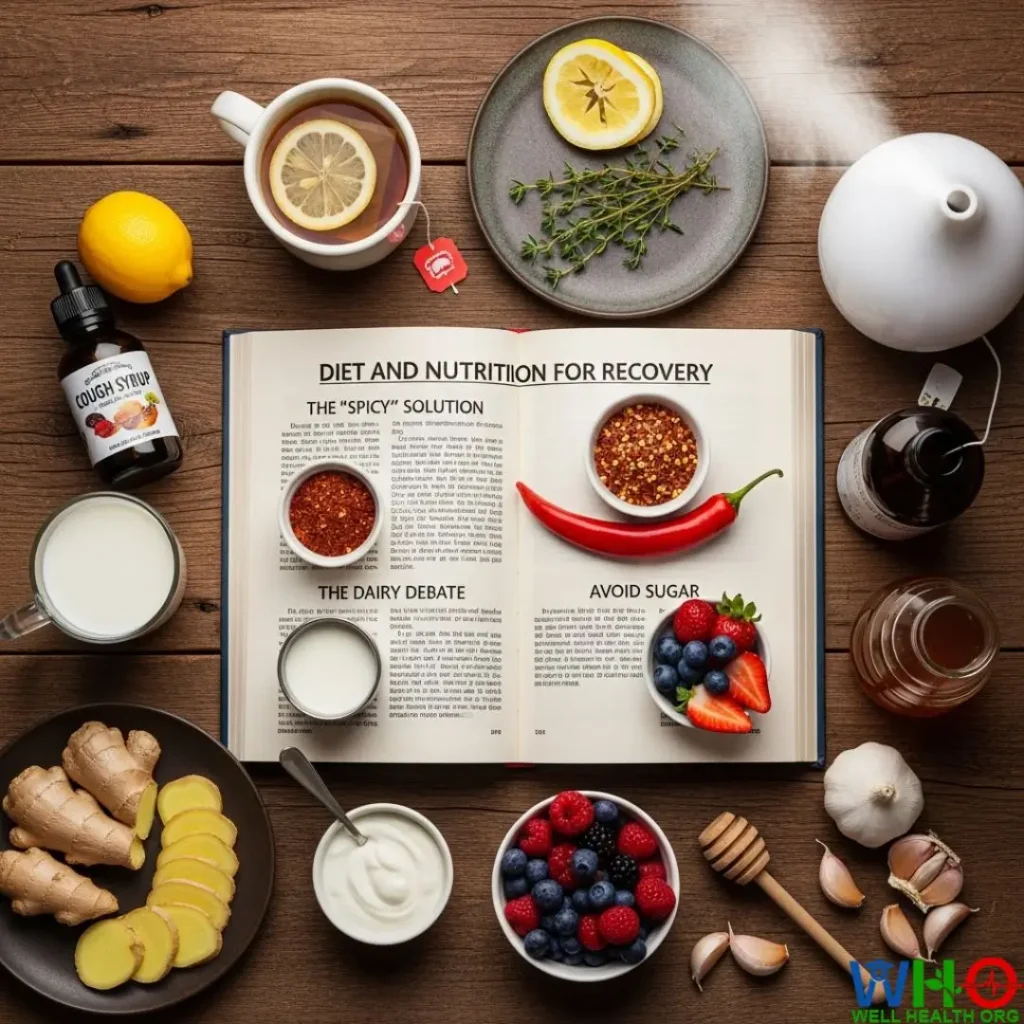
The “Spicy” Solution
If you can handle heat, eat spicy food. Capsaicin (the compound in chili peppers) is a potent mucolytic. Eating a spicy curry or soup can immediately cause your nose to run and your chest to loosen up. It stimulates the secretions that thin out the mucus.
The Dairy Debate
You may have heard that “dairy causes mucus.” The science on this is mixed. Technically, milk does not cause the body to produce more mucus. However, full-fat dairy can make existing mucus feel thicker and coat the throat, creating a sensation of more congestion.
- Practical Tip: If milk or yogurt makes you feel more phlegmy, skip it for a few days. If it doesn’t bother you, feel free to consume it, as it is a good source of protein and calories.
Avoid Sugar
Sugar suppresses the immune system. When your white blood cells are trying to fight a virus, a high-sugar diet acts like kryptonite, slowing them down. Stick to whole foods, broths, and fruits.
When to Seek Medical Attention: Recognizing the Red Flags
While natural remedies are incredibly effective for the vast majority of viral coughs, it is vital to know when “home care” needs to switch to “urgent care.
A typical chesty cough from a cold can last 2 to 3 weeks. However, you should see a doctor if:
- The “Color” Rule: While yellow or green mucus is normal for a virus, pink, red, or rust-colored mucus can indicate bleeding in the lungs or serious pneumonia.
- Breathing Difficulty: If you feel like you cannot get enough air, your lips turn blue, or you are wheezing audibly, seek help immediately.
- Fever Patterns: A fever that goes away for a few days and then spikes back up high is a classic sign of a secondary bacterial infection (like bacterial pneumonia) that requires antibiotics.
- Chest Pain: Muscle soreness from coughing is normal. Sharp, stabbing pain when you inhale (pleurisy) is not.
- Duration: If the cough persists for more than 3 weeks with no sign of improvement, it could be “walking pneumonia,” tuberculosis, or non-infectious issues like heart conditions or reflux.
A Note on Children: Children’s airways are much smaller than adults. If a child is breathing rapidly, grunting with every breath, or if the skin sucks in between their ribs (retractions), this is a medical emergency.
Conclusion: Patience and Consistency
Healing a chesty cough is a marathon, not a sprint. The body takes time to clear the debris of a viral battle. It is frustrating to wake up coughing day after day, but remember that the cough is a sign your immune system is working.
By layering these natural remedies—hydrating deeply, using herbal expectorants like thyme and ginger, keeping your air moist, and resting intentionally—you are giving your body the best possible environment to heal. You aren’t just suppressing a symptom; you are facilitating a cure.
So, boil the kettle, fluff your pillows, and trust your body. With a little help from nature, you will be breathing easier soon.
Medically Reviewed by Prof. Dr. Akram
Orthopedic Surgeon | Professor | Senior Medical Specialist
Prof. Dr. Akram is a distinguished surgeon with over 15 years of clinical expertise. Having served as a lead Emergency Specialist at Complex International Government Hospital, he currently leads a specialized team of 13 medical professionals at his private hospital. As a Professor at top medical universities, he ensures that every article on WellHealthOrg.com meets rigorous clinical standards.
Medical Disclaimer:
The information provided is for educational purposes only and is not a substitute for professional medical advice, diagnosis, or treatment. Always consult your physician for any medical concerns.
Our content is rigorously fact-checked by our 13-member Editorial Team under the clinical supervision of Prof. Dr. Akram.







