
Introduction: Why Understanding Social Fears Matters
Imagine walking into a crowded room. Your heart races, your palms sweat, and your mind instantly floods with worries like “What if I say something embarrassing?” or “Everyone must be judging me right now.” For many, these feelings fade after a few minutes. But for others, the anxiety lingers, grows stronger, and begins to shape everyday decisions — from turning down social invitations to avoiding career opportunities.
- Introduction: Why Understanding Social Fears Matters
- What Is Social Phobia?
- How Social Phobia Manifests
- Diagnostic Criteria for Social Anxiety Disorder
- Symptoms: More Than Just Nervousness
- What Is Social Anxiety?
- Common Experiences of Social Anxiety
- When Social Anxiety Is Normal
- Key Similarities Between Social Anxiety and Social Phobia
- Common Symptom Overlap
- Shared Triggers
- Impact on Social Functioning
- Distinguishing Differences: Severity, Duration, and Impact
- Severity and Intensity
- Duration and Persistence
- Functional Impairment
- Real-Life Example
- Overlapping Symptoms and Diagnostic Challenges
- The Gray Area Between Normal Anxiety and Disorder
- Cultural and Social Context
- Why Diagnosis Can Be Tricky
- Evidence-Based Management Strategies
- Two Levels of Care
- Self-Management Techniques for Social Anxiety
- Lifestyle Modifications
- Stress Management Tools
- Building Social Confidence
- Professional Intervention Approaches
- Psychotherapy Options
- Medication Options
- Combination Approaches
- Seeking Professional Help: When and How
- Warning Signs That Professional Support Is Needed
- How to Find the Right Support
- Overcoming Barriers to Treatment
- Building Your Support System
- The Role of Trusted Relationships
- Creating Safe Social Spaces
- Professional and Peer Support
- Long-Term Maintenance Strategies
- Regular Self-Assessment
- Continued Practice of Coping Skills
- Stress Management During Transitions
- Professional Check-Ins
- Prevention Strategies: Reducing the Risk of Escalation
- Early Intervention
- Healthy Lifestyle Foundations
- Building Social Competence
- Encouraging Open Conversations About Mental Health
- Take the Next Step in Understanding Your Social Anxiety
- Your Action Plan
- Remember This
- Conclusion: Breaking Free from Social Fear
- FAQs About Social Anxiety and Social Phobia
- 1. Is social phobia the same as shyness?
- 2. Can social anxiety turn into social phobia?
- 3. What is the best treatment for social phobia?
- 4. Can diet and exercise really help with social anxiety?
- 5. How do I know when it’s time to seek professional help?
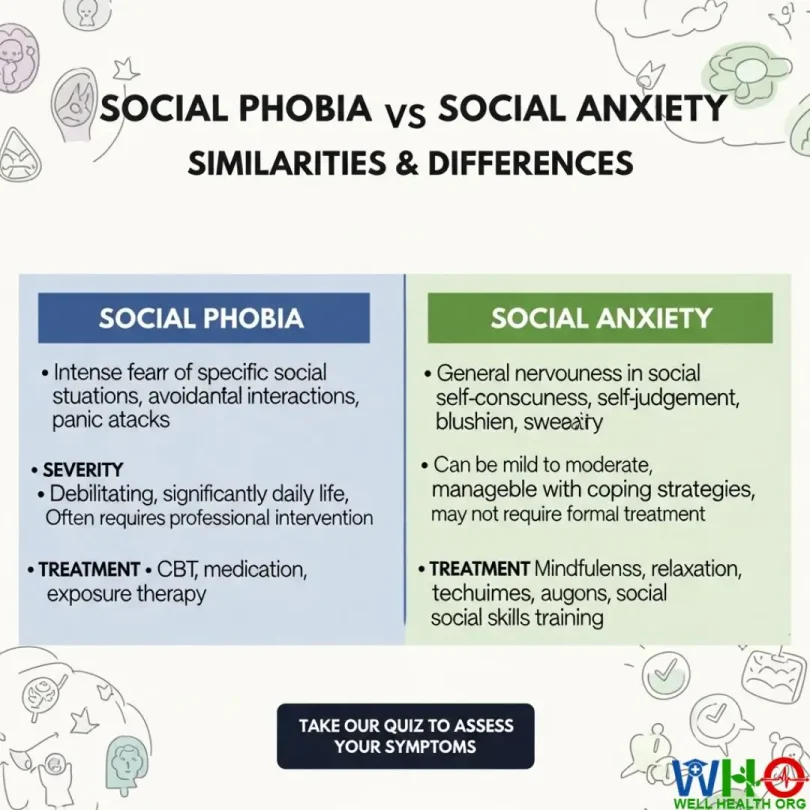
This is where the terms social anxiety and social phobia come into play. While they may sound interchangeable, they actually represent different levels of social fear. Social anxiety describes the more common, often temporary nervousness in social settings, whereas social phobia — now officially referred to as social anxiety disorder — represents a clinically significant mental health condition that can disrupt daily life.
Understanding the distinctions between these experiences is crucial. It can help you identify when normal social nervousness crosses the threshold into something that requires attention and professional care. In this guide, we’ll break down the symptoms, causes, similarities, and differences between social anxiety and social phobia, while also exploring treatment strategies, coping techniques, and ways to regain confidence in social settings.
What Is Social Phobia?
Social phobia, now formally recognized as social anxiety disorder (SAD) in the Diagnostic and Statistical Manual of Mental Disorders (DSM-5-TR), is not just shyness or stage fright. It’s a chronic, overwhelming fear of being judged, humiliated, or rejected in social situations. People with social phobia don’t just worry about how they’re perceived — they experience crippling anxiety that can interfere with work, school, relationships, and overall quality of life.
How Social Phobia Manifests
Unlike mild social nervousness, social phobia often leads to:
- Avoiding job interviews, presentations, or public speaking opportunities.
- Declining invitations to social events out of fear of embarrassment.
- Struggling with daily activities like eating in public or making phone calls.
For example, someone with social phobia might avoid career advancement because the new role requires leading meetings. Another person might refuse medical appointments because of anxiety about interacting with staff.
Diagnostic Criteria for Social Anxiety Disorder
Mental health professionals use strict DSM-5-TR guidelines to diagnose social phobia. To receive a diagnosis, symptoms must include:
- Persistent fear (lasting at least six months) about one or more social situations.
- Fear of negative evaluation, including rejection, humiliation, or embarrassment.
- Consistent triggers where the same situations almost always provoke fear.
- Avoidance behaviors to escape feared scenarios.
- Disproportionate anxiety compared to the actual level of threat.
- Significant life impairment, affecting school, work, or personal relationships.
Symptoms: More Than Just Nervousness
Social phobia symptoms typically fall into two categories — physical and emotional:
- Physical signs: rapid heartbeat, trembling, excessive sweating, dizziness, stomach distress, or shortness of breath.
- Emotional signs: intense fear of scrutiny, constant self-consciousness, catastrophic thinking about mistakes, or ongoing dread of upcoming social events.
These symptoms often feed into each other. For example, someone who notices their hands trembling may think, “Everyone will see this and laugh at me,” which increases anxiety further.
What Is Social Anxiety?
On the other side of the spectrum is social anxiety — a more general, common experience of nervousness in social settings. Unlike social phobia, social anxiety isn’t necessarily a diagnosable condition. Instead, it’s considered a normal response to social uncertainty or high-pressure situations.
Common Experiences of Social Anxiety
Almost everyone has felt some level of social anxiety at some point. Examples include:
- Nervousness before giving a speech or presentation.
- Feeling awkward when meeting new people.
- A touch of self-consciousness in an unfamiliar setting.
- Worrying briefly about what others think after saying something.
When Social Anxiety Is Normal
Feeling anxious in certain social scenarios doesn’t automatically signal a disorder. In fact, social anxiety is often adaptive — it helps us stay aware of social cues, build rapport, and avoid behaviors that might damage relationships.
Typical situations where social anxiety is expected include:
- Performance settings like job interviews, auditions, or presentations.
- Unfamiliar environments such as a party where you don’t know anyone.
- High-stakes encounters like meeting a partner’s family or attending an important networking event.
In these cases, the anxiety usually diminishes over time as you adjust to the environment, gain confidence, or repeat the experience.
Key Similarities Between Social Anxiety and Social Phobia
While social anxiety and social phobia differ in severity, they share several overlapping features that can cause confusion.
Common Symptom Overlap
Both involve:
- Fear of negative judgment from others.
- Self-consciousness and worry about how one is perceived.
- Physical symptoms like sweating, blushing, or a racing heart.
- Avoidance of certain social scenarios.
- Anticipatory anxiety before events (worrying days in advance).
For instance, someone might feel nervous about public speaking (social anxiety), while another avoids it entirely due to debilitating fear (social phobia). Both experiences involve the same trigger, but differ in intensity and consequences.
Shared Triggers
Common triggers for both include:
- Speaking in public.
- Attending parties or large gatherings.
- Dating or romantic interactions.
- Eating or drinking in front of others.
- Job interviews or performance reviews.
- Using public restrooms.
Impact on Social Functioning
Both conditions can affect relationships, opportunities, and confidence. The difference lies in the degree of disruption. Social anxiety might make someone hesitant to attend a party, but they’ll still go. Social phobia, however, might lead someone to cancel, withdraw, or make excuses consistently, missing out on important social or professional opportunities.
Distinguishing Differences: Severity, Duration, and Impact
The main differences between social anxiety and social phobia revolve around intensity, persistence, and life impact.
Severity and Intensity
- Social anxiety is usually mild to moderate. It’s uncomfortable but manageable with coping strategies, and often proportionate to the situation.
- Social phobia, by contrast, involves extreme, overwhelming fear that feels uncontrollable and often out of proportion to the actual social context.
Duration and Persistence
- Social anxiety typically lasts only during or just before an event and fades afterward.
- Social phobia symptoms persist for months or years, often with a consistent pattern across multiple situations.
Functional Impairment
Perhaps the clearest difference lies in how much each affects daily life:
- Social anxiety may cause mild discomfort but doesn’t usually prevent someone from participating in necessary activities.
- Social phobia leads to significant impairment — skipped opportunities, relationship strain, and avoidance that impacts career, education, and social life.
Real-Life Example
Picture two people asked to give a work presentation:
- The person with social anxiety feels nervous, sweats a little, and stumbles over a few words, but completes the task.
- The person with social phobia may spend weeks dreading it, lose sleep, consider calling in sick, or even quit the job to avoid the situation entirely.
This distinction between “difficult but doable” versus “impossible to face” often marks the line between normal social anxiety and a diagnosable disorder.
Overlapping Symptoms and Diagnostic Challenges
One of the biggest hurdles in distinguishing between social anxiety and social phobia (social anxiety disorder) is that their symptoms often look very similar at first glance. Both can involve nervousness, avoidance behaviors, and physical signs of anxiety such as sweating or a racing heart.
The Gray Area Between Normal Anxiety and Disorder
Not everyone fits neatly into the categories of “occasional social nervousness” or “full-blown disorder.” Many people fall into a gray area where symptoms are too severe to be dismissed as normal but not consistent enough for a clinical diagnosis.
Examples include:
- Someone who avoids public speaking but functions well in other social situations.
- A person who experiences severe anxiety in romantic interactions but feels fine in professional environments.
- Individuals whose symptoms fluctuate with life circumstances — stressful periods may worsen their anxiety, while calmer times bring relief.
Cultural and Social Context
Cultural norms also play a major role. For example, in some societies, shyness and modesty are valued traits, making it harder to distinguish between personality differences and actual disorder. A person might appear socially anxious by Western standards but is simply following cultural expectations of reserved behavior.
Why Diagnosis Can Be Tricky
Mental health professionals must carefully evaluate:
- Symptom severity — does the fear feel overwhelming or manageable?
- Duration — is this short-term nervousness or a six-month pattern?
- Functionality — is daily life being disrupted?
- Context — are cultural or environmental factors influencing behavior?
This careful assessment ensures that normal shyness isn’t pathologized while those truly struggling get the help they need.
Evidence-Based Management Strategies
The good news is that both social anxiety and social phobia can be managed successfully with the right strategies. Treatment typically depends on symptom severity, frequency, and the level of impairment in a person’s life.
Two Levels of Care
- Self-help and lifestyle strategies — suitable for mild or temporary social anxiety.
- Professional treatment — recommended for social phobia or when anxiety significantly interferes with daily functioning.
Both approaches can also be combined for maximum effectiveness.
Self-Management Techniques for Social Anxiety
For those experiencing mild social nervousness, self-help tools and lifestyle adjustments can be very effective. The goal is to build resilience, improve coping skills, and reduce physical symptoms of anxiety.
Lifestyle Modifications
- Exercise regularly: Physical activity helps release endorphins, reduce stress hormones, and promote overall calmness. Even a 20-minute walk can make a difference.
- Eat a balanced diet: Avoid excessive caffeine and sugar, which can spike anxiety. Incorporate calming foods rich in magnesium, omega-3s, and B vitamins.
- Prioritize sleep: Lack of rest worsens irritability and emotional reactivity. A consistent sleep schedule supports better emotional regulation.
- Limit alcohol: While alcohol may feel like a social lubricant, it often increases anxiety in the long run and disrupts sleep.
Stress Management Tools
- Deep breathing exercises: Practicing slow, controlled breathing helps regulate heart rate and reduce immediate anxiety.
- Progressive muscle relaxation: Systematically tensing and releasing muscles helps relieve physical tension associated with stress.
- Mindfulness and meditation: Staying present reduces racing thoughts about “what if” scenarios in social settings.
- Journaling: Writing down thoughts and feelings can identify triggers and track progress.
Building Social Confidence
- Gradual exposure: Start small — talk to a cashier, attend a small gathering, or join a group activity — and work your way up to more challenging situations.
- Practice conversation starters: Prepare a few go-to topics to reduce fear of awkward silences.
- Role-playing: Rehearse social interactions with a trusted friend to increase comfort.
- Celebrate small wins: Acknowledge progress, even if it feels minor. Confidence builds through repeated successes.
These strategies not only reduce immediate anxiety but also retrain the brain to view social settings as less threatening over time.
Professional Intervention Approaches
When self-help isn’t enough, professional therapy and medical support can be life-changing. Social phobia, in particular, typically requires structured treatment.
Psychotherapy Options
- Cognitive Behavioral Therapy (CBT)
- The gold standard for treating social phobia.
- Helps individuals identify distorted thought patterns like “Everyone will laugh at me” and replace them with realistic alternatives.
- Includes exposure exercises to gradually reduce avoidance.
- Exposure Therapy
- A branch of CBT focused specifically on facing fears step by step.
- For example, starting with imagining giving a speech, then practicing in front of one friend, and eventually presenting to a larger group.
- Acceptance and Commitment Therapy (ACT)
- Encourages acceptance of anxious feelings rather than fighting them.
- Focuses on living a values-driven life despite anxiety.
- Group Therapy
- Provides a safe space to practice social skills with others who understand the same struggles.
- Offers both support and accountability, helping participants realize they’re not alone.
Medication Options
Medication is not always necessary but can be helpful when symptoms are severe. Common prescriptions include:
- SSRIs and SNRIs (antidepressants) — regulate brain chemistry to reduce long-term anxiety.
- Beta-blockers — useful for performance-specific anxiety (e.g., public speaking) by controlling physical symptoms like trembling or sweating.
- Benzodiazepines — effective for short-term relief but not recommended for long-term use due to dependency risks.
Combination Approaches
Often, the best outcomes come from combining therapy with medication. For instance, a person might use CBT to challenge thought patterns while taking SSRIs to manage biological factors.
Seeking Professional Help: When and How
One of the hardest steps for people with social anxiety disorder is recognizing when it’s time to seek help. Because avoidance is part of the condition, many suffer in silence for years.
Warning Signs That Professional Support Is Needed
- Symptoms last longer than six months.
- You completely avoid important situations like work events or social gatherings.
- Anxiety interferes with relationships, school, or career goals.
- You rely on substances (alcohol, drugs, or medication misuse) to get through social interactions.
- Physical symptoms like panic attacks feel overwhelming or uncontrollable.
- Anxiety is accompanied by depression or other mental health issues.
How to Find the Right Support
- Start with your primary care doctor: They can rule out medical causes and refer you to a specialist.
- See a mental health professional: Psychologists, psychiatrists, or licensed therapists with experience in anxiety disorders are best suited for treatment.
- Look into specialized programs: Some clinics offer social anxiety or CBT-focused therapy groups.
- Consider accessibility: If in-person therapy feels overwhelming, teletherapy can be an effective alternative.
Overcoming Barriers to Treatment
Unfortunately, many people delay treatment for years due to:
- Stigma around mental health.
- Fear of seeking help — ironically, social interaction required for treatment can deter people.
- Lack of awareness of effective treatment options.
- Financial concerns or limited insurance coverage.
The Anxiety & Depression Association of America notes that over one-third of people with social anxiety disorder wait 10+ years before getting help. Recognizing this delay is common may encourage those struggling to seek support sooner.
Building Your Support System
Managing social anxiety or social phobia isn’t just about personal coping strategies — it often requires a strong support network. Having people who understand, encourage, and provide safe spaces for practice can make a significant difference in recovery.
The Role of Trusted Relationships
Supportive friends, family members, or mentors can:
- Provide encouragement before social events.
- Serve as practice partners for role-playing conversations.
- Offer constructive feedback without judgment.
- Remind you of progress when self-doubt sets in.
For example, someone preparing for a job interview may practice with a sibling or friend, gradually building confidence before the real event.
Creating Safe Social Spaces
Not every environment is supportive — some can trigger anxiety more than others. Building safe spaces involves:
- Spending time with people who are empathetic and patient.
- Choosing smaller, low-pressure gatherings before tackling larger ones.
- Seeking communities — online or in person — where others share similar struggles.
Support groups, whether virtual or face-to-face, can be especially powerful. They normalize the experience and allow members to share coping techniques that have worked in real life.
Professional and Peer Support
Support doesn’t have to come only from personal relationships. Many find additional strength in:
- Therapist-led group programs designed for social anxiety.
- Peer-led groups where individuals share experiences and progress.
- Online forums that provide anonymity while still offering connection.
The act of connecting with others who “get it” reduces isolation and reinforces the reality that progress is possible.
Long-Term Maintenance Strategies
Managing social anxiety or social phobia is often a long-term journey rather than a quick fix. While symptoms can improve dramatically with treatment, maintenance strategies are essential to prevent relapse and sustain confidence.
Regular Self-Assessment
- Keep a journal of triggers, progress, and setbacks.
- Use self-reflection tools like rating anxiety levels before and after events.
- Celebrate small improvements — such as staying at a social gathering longer than before.
Continued Practice of Coping Skills
Even when anxiety lessens, it’s important to keep practicing. Just as muscles weaken without exercise, social confidence can fade without reinforcement. Strategies like deep breathing, grounding techniques, and gradual exposure should remain part of daily routines.
Stress Management During Transitions
Life changes — new jobs, moving cities, or major milestones — can reawaken anxiety. Preparing ahead helps:
- Revisit coping techniques during transitions.
- Consider “booster” therapy sessions to reinforce skills.
- Maintain supportive routines like exercise and adequate sleep.
Professional Check-Ins
Just as people with chronic physical conditions see doctors for maintenance, individuals with social phobia may benefit from periodic mental health check-ins. A few sessions each year can:
- Monitor progress.
- Adjust strategies.
- Prevent symptoms from escalating again.
Prevention Strategies: Reducing the Risk of Escalation
While not all cases of social phobia can be prevented, certain steps may reduce the risk of social anxiety escalating into a disorder.
Early Intervention
- Parents, teachers, and peers should recognize signs of intense social withdrawal in children and adolescents.
- Early support, such as counseling or social skills training, can prevent lifelong struggles.
Healthy Lifestyle Foundations
- Regular exercise, balanced nutrition, and proper sleep are critical for mental health resilience.
- Limiting alcohol and drug use helps prevent dependence as a coping mechanism.
Building Social Competence
Exposure to varied social experiences at a young age builds confidence. Encouraging participation in group activities, clubs, or volunteer opportunities helps children and young adults develop strong social skills.
Encouraging Open Conversations About Mental Health
Reducing stigma makes it easier for people to seek help earlier. Families, schools, and workplaces that normalize discussions about mental health create supportive environments where people don’t feel ashamed of their struggles.
Take the Next Step in Understanding Your Social Anxiety
At its core, the difference between social anxiety and social phobia lies in intensity and impact. Social anxiety is a natural response that most people experience occasionally. Social phobia, or social anxiety disorder, is a chronic, impairing condition that demands recognition and treatment.
The good news is that both can be managed. With lifestyle strategies, professional treatment, and strong support systems, individuals can reduce symptoms, regain confidence, and lead fulfilling lives.
Your Action Plan
- If your anxiety is occasional and mild:
- Practice self-help techniques like deep breathing, journaling, and gradual exposure.
- Maintain healthy routines for sleep, exercise, and nutrition.
- If your anxiety is persistent and impairing:
- Seek professional support through therapy or counseling.
- Consider medical options if recommended by a doctor.
- Join a support group to connect with others on a similar journey.
Remember This
Seeking help is not weakness — it is strength. Every step toward understanding and managing social fears is a step toward greater freedom, connection, and self-confidence.
If you recognize these symptoms in yourself or someone you care about, don’t wait. Taking action today — whether by talking to a professional, confiding in a friend, or practicing a coping skill — can change the course of your life.
Conclusion: Breaking Free from Social Fear
Social interactions are a natural part of life — from casual conversations at work to major milestones like weddings, job interviews, or public speeches. For many, these situations spark a little nervousness, but for others, they trigger overwhelming dread.
The difference between social anxiety and social phobia (social anxiety disorder) lies in degree and impact. Social anxiety is common, temporary, and often manageable with healthy coping strategies. Social phobia, however, is persistent, debilitating, and requires professional treatment to prevent long-term consequences on relationships, career, and mental health.
The important takeaway? You don’t have to live in silence or avoidance. Social anxiety and social phobia are both treatable. With the right combination of self-help strategies, therapy, medication (when necessary), and supportive environments, individuals can reduce symptoms, build confidence, and regain control over their lives.
If you’ve recognized yourself in these descriptions, remember: seeking help is not a weakness. It is the first, most powerful step toward reclaiming your freedom in social settings. Whether you begin by confiding in a friend, practicing relaxation techniques, or scheduling a consultation with a mental health professional, every step matters.
Your journey may take time, but progress is possible — and thousands of people with social anxiety disorders have proven that recovery is within reach.
FAQs About Social Anxiety and Social Phobia
1. Is social phobia the same as shyness?
No. While shyness describes a personality trait, social phobia (social anxiety disorder) is a recognized mental health condition. Shy individuals may feel reserved but can still participate in social activities without overwhelming fear. Social phobia, on the other hand, involves persistent anxiety that significantly disrupts daily life.
2. Can social anxiety turn into social phobia?
Yes. If mild social anxiety is left unmanaged, it can escalate over time — particularly if avoidance behaviors increase. For example, avoiding one uncomfortable event can make future events feel even more daunting, reinforcing the fear. Early intervention and healthy coping strategies can prevent social anxiety from progressing into a disorder.
3. What is the best treatment for social phobia?
The most effective treatment is Cognitive Behavioral Therapy (CBT), often combined with gradual exposure techniques. In some cases, medication such as SSRIs or beta-blockers may be prescribed to manage symptoms. Many people benefit most from a combination of therapy, lifestyle changes, and social support.
4. Can diet and exercise really help with social anxiety?
Absolutely. Regular exercise reduces stress hormones and increases endorphins, which naturally ease anxiety. A balanced diet helps stabilize mood, while limiting caffeine and alcohol can reduce physical symptoms like jitteriness or panic. These lifestyle changes are not a cure but play a critical role in overall symptom management.
5. How do I know when it’s time to seek professional help?
You should seek professional help if:
- Anxiety lasts longer than six months.
- You consistently avoid important situations.
- Your work, relationships, or education suffer.
- Physical symptoms feel overwhelming.
- You rely on substances to cope.
If any of these apply, consulting a healthcare provider or therapist can make a significant difference in recovery.
Final Words
Social fear exists on a spectrum. On one end, there’s normal social anxiety — butterflies in your stomach before a presentation. On the other end, there’s social phobia — crippling fear that prevents you from even showing up. Recognizing where you fall on this spectrum is the first step toward change.
Whether your challenges are mild or severe, help is available. Social anxiety and social phobia do not define who you are — they are experiences you can manage, overcome, and grow beyond.
Take a deep breath. Take a small step forward. And remember: you are not alone in this journey.
Medically Reviewed by Prof. Dr. Akram
Orthopedic Surgeon | Professor | Senior Medical Specialist
Prof. Dr. Akram is a distinguished surgeon with over 15 years of clinical expertise. Having served as a lead Emergency Specialist at Complex International Government Hospital, he currently leads a specialized team of 13 medical professionals at his private hospital. As a Professor at top medical universities, he ensures that every article on WellHealthOrg.com meets rigorous clinical standards.
Medical Disclaimer:
The information provided is for educational purposes only and is not a substitute for professional medical advice, diagnosis, or treatment. Always consult your physician for any medical concerns.
Our content is rigorously fact-checked by our 13-member Editorial Team under the clinical supervision of Prof. Dr. Akram.







