
Home Remedies for Mastitis
The “Fourth Trimester” is a blur of emotions. You are navigating the overwhelming love for your newborn, the exhaustion of sleepless nights, and the steep learning curve of feeding a human being with your own body. It is a time of beauty, but it is also a time of intense physical demand.
- Home Remedies for Mastitis
- Part 1: Demystifying Mastitis – What is Actually Happening?
- The Mechanism of the Clog
- Inflammatory vs. Bacterial Mastitis
- The “Why” Factors: Common Causes
- Part 2: The Red Flags – Identifying Symptoms Early
- Part 3: The “Protocol” – 9 Expert Home Remedies
- 1. Therapeutic Rest (The “Bed-In”)
- 2. Strategic Breastfeeding (Drainage is Key)
- 3. Gravity-Assisted Feeding (Dangle Feeding)
- 4. Cold Therapy vs. Heat (The New Protocol)
- 5. The Cabbage Leaf Compress
- 6. Lymphatic Drainage (Not Deep Massage)
- 7. The Natural Medicine Cabinet
- 8. Hyper-Hydration and Electrolytes
- 9. Castor Oil Packs
- Part 4: Managing the Pain
- Part 5: Prevention – Stopping the Cycle
- Part 6: Emotional Health and “Mom Guilt”
- Part 7: When to Call the Doctor (The Safety Check)
- Conclusion: You Are Stronger Than You Think
Then, one morning, you wake up feeling like you have been hit by a freight train. Your body aches, you are shivering under three blankets, and one side of your chest feels hot, heavy, and exquisitely painful. You might assume you have caught the flu, but the source of the misery is likely much closer to home.
You are likely experiencing mastitis.
For breastfeeding mothers, mastitis is one of the most dreaded hurdles. It is an inflammation of the breast tissue that can bring even the most resilient mother to her knees. The pain can be sharp enough to make you consider ending your breastfeeding journey right then and there.
But here is the reassurance you need right now: You can get through this, and you do not necessarily have to stop nursing. In fact, continuing to feed your baby is often the fastest route to recovery.
While antibiotics are a necessary tool for severe infections, many cases of early-stage mastitis can be managed effectively at home. By understanding the physiology of your breast, recognizing the early warning signs, and applying evidence-based natural remedies, you can resolve the inflammation and return to bonding with your baby.
This guide goes beyond the basics. We will dive deep into the science of lactation, explore advanced home therapies, and provide a holistic roadmap to healing your body from the inside out.
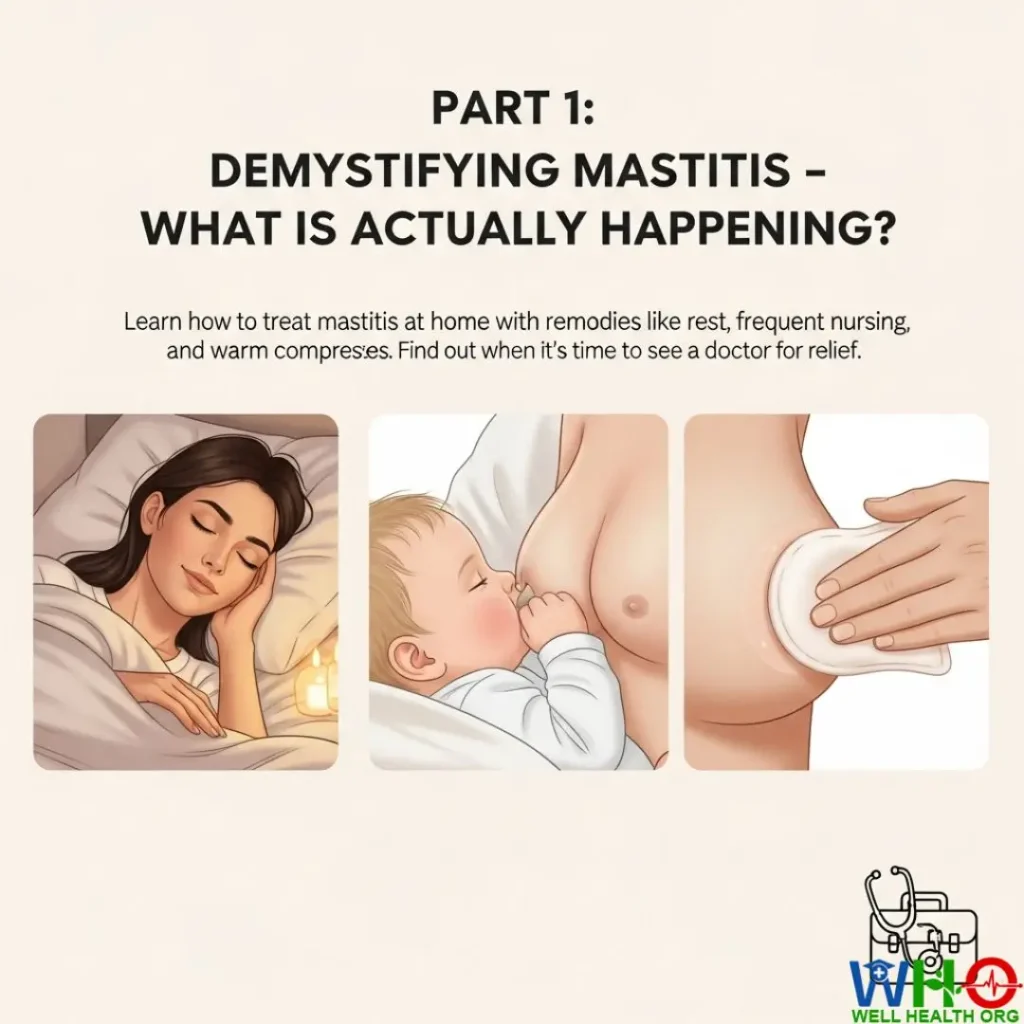
Part 1: Demystifying Mastitis – What is Actually Happening?
To treat mastitis effectively, we must first understand the mechanics of the breast. Your breasts are complex organs made up of alveoli (milk-making cells) and a network of ducts that transport milk to the nipple.
The Mechanism of the Clog
Mastitis typically begins as a condition called milk stasis. Imagine a traffic jam on a highway. If one milk duct becomes compressed or fails to drain efficiently, the milk backs up. The protein in the milk can thicken, causing a plug.
When milk sits in the breast for too long, it leaks into the surrounding tissue. Your body identifies this milk protein as a foreign invader—similar to how it treats a virus. Your immune system responds by sending a flood of white blood cells to the area to “attack” the intruder. This immune response causes the classic symptoms: redness, swelling, heat, and pain.
Inflammatory vs. Bacterial Mastitis
It is crucial to distinguish between two types of mastitis, though they often overlap:
- Inflammatory Mastitis: This is sterile inflammation. There is no infection yet; just a severe immune reaction to backed-up milk. This is where home remedies are most effective.
- Bacterial Mastitis: If the milk remains stagnant, it becomes a breeding ground for bacteria. Bacteria (often Staphylococcus aureus) can enter through a cracked nipple or travel up the milk ducts. This requires medical intervention.
The “Why” Factors: Common Causes
Why does this happen to some women and not others? It is rarely just bad luck. Several factors contribute to this “traffic jam”:
- Mechanical Pressure: A tight underwire bra, a heavy diaper bag strap across the chest, or even sleeping on your stomach can compress a duct.
- The “Oversupply” Trap: Mothers with an abundant milk supply (hyperlactation) are at higher risk because the breast is rarely fully empty.
- Ineffective Latch: If the baby is nipple-feeding rather than breast-feeding, or if they have a tongue tie, they may not be extracting milk efficiently.
- Abrupt Weaning: Skipping a feed or forcing the baby to sleep through the night suddenly can leave the breast engorged.
- Maternal Fatigue: When you are exhausted, your immune system is compromised, making it harder for your body to fight off minor inflammation before it becomes a major problem.
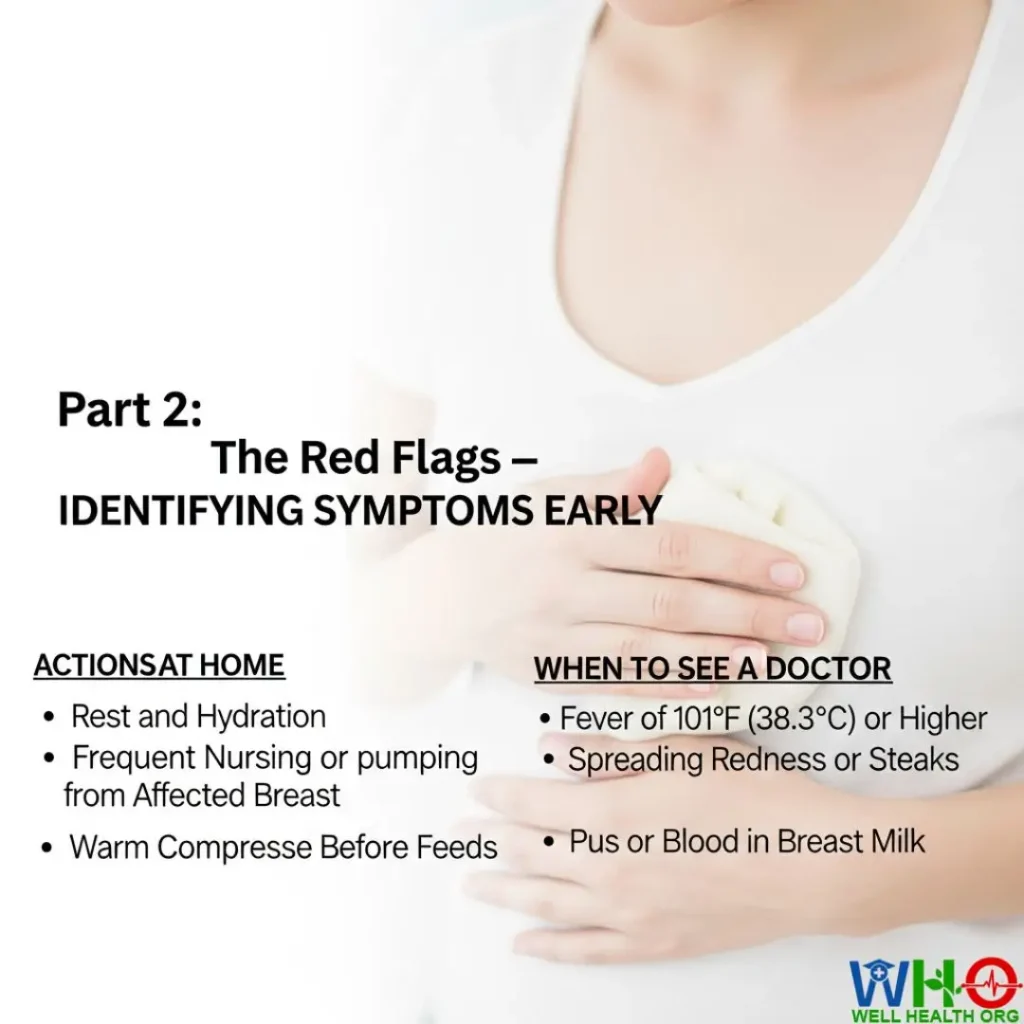
Part 2: The Red Flags – Identifying Symptoms Early
Mastitis moves fast. You can feel fine at breakfast and have a high fever by lunch. Early detection is your best defense against developing an abscess or needing hospitalization.
The Local Symptoms (In the Breast):
- The Wedge: A classic sign is a hard, wedge-shaped area of the breast that feels tender or lumpy.
- Heat: The skin over the affected area radiates heat.
- Streaking: Redness or pink streaks extending from the lump toward the armpit.
- Pain: A deep, aching throb that persists even when not nursing, often becoming sharp during the let-down reflex.
The Systemic Symptoms (In the Body):
- The “Flu” that isn’t the Flu: Intense chills (rigors), body aches, headache, and extreme lethargy.
- Fever: A temperature of 101°F (38.3°C) or higher.
- Anxiety: Many women report a sudden onset of anxiety or feeling emotionally overwhelmed just before the physical symptoms hit.
Important Note: If both breasts are inflamed, it is usually simple engorgement or a viral illness. Mastitis almost always affects only one breast at a time.
Part 3: The “Protocol” – 9 Expert Home Remedies
If you have caught these symptoms early (within the first 12-24 hours), implementing an aggressive home care protocol can often reverse the condition.

1. Therapeutic Rest (The “Bed-In”)
We often roll our eyes at the advice to “sleep when the baby sleeps,” but with mastitis, rest is a prescription, not a suggestion. Your body is fighting a significant inflammatory event.
How to execute a “Bed-In”:
Take your baby and get into bed. Stay there. Your only job is to feed the baby and sleep.
- Delegate Everything: Laundry, cooking, and diaper changes are now someone else’s job. If you have a partner, they bring the baby to you for feeding and take the baby away for burping and changing.
- The Oxytocin Connection: Stress inhibits oxytocin, the hormone responsible for the “let-down” reflex (getting the milk out). By resting and skin-to-skin cuddling, you boost oxytocin, which helps clear the blockage naturally.
2. Strategic Breastfeeding (Drainage is Key)
The golden rule of mastitis is: Empty the breast. While it might be painful, stopping breastfeeding will make the infection worse and could lead to an abscess.
- Frequency: Nurse at least every 2 hours. Do not let the breast fill up.
- Start on the Sore Side: Although it hurts, the baby’s suck is strongest at the start of the feed. This vigorous suction is needed to dislodge the plug.
- The “Chin Point” Trick: Position the baby so their chin is pointing directly toward the clog. The jaw motion during sucking applies gentle pressure to the duct, helping to massage the milk out.
3. Gravity-Assisted Feeding (Dangle Feeding)
This is an unconventional but highly effective technique used by lactation consultants worldwide. It utilizes gravity to help move the milk obstruction.
How to do it:
- Lay your baby flat on the center of the bed or a soft play mat.
- Get on your hands and knees, positioning yourself over the baby.
- Lower your breast into the baby’s mouth.
- Allow the baby to nurse in this position. Gravity helps pull the milk through the ducts while the breast hangs freely, removing any external pressure from breast tissue.
4. Cold Therapy vs. Heat (The New Protocol)
For years, women were told to use heat. However, modern breastfeeding medicine has shifted. While heat helps milk flow, excessive heat can increase inflammation and swelling (edema), making it harder for milk to exit.
- When to use Heat: Use gentle warmth (like a warm shower or warm washcloth) for only 2-3 minutes immediately before feeding to trigger a let-down. Do not leave heat on for long periods.
- When to use Cold: This is your best friend. After feeding, apply cold packs to the breast for 10-15 minutes. Cold is a vasoconstrictor; it shrinks swollen blood vessels, reduces pain, and decreases tissue swelling, which opens up the ducts.
- The “Peas” Trick: A bag of frozen peas is moldable and fits the curve of the breast perfectly. Always wrap it in a thin cloth to prevent ice burn.
5. The Cabbage Leaf Compress
This sounds like folklore, but it is backed by science. Cabbage leaves contain sulfur compounds and glucosinolates that have anti-inflammatory properties similar to a mild steroid cream. They also have a cooling effect.
The Method:
- Buy a head of green cabbage (green works better than purple/red for staining reasons).
- Wash the leaves and place them in the fridge.
- Crush the veins of the leaf with a rolling pin or wine bottle to release the enzymes.
- Cup the cold leaf over your breast (avoiding the nipple area).
- Leave it on for 20 minutes or until it wilts.
- Caution: Do not use this more than 3 times a day, as cabbage can eventually decrease milk supply if overused.
6. Lymphatic Drainage (Not Deep Massage)
Critical Update: Old advice suggested “massaging out the lump” with force. Do not do this. Deep tissue massage on inflamed tissue causes bruising and more swelling, which traps the milk further.
Instead, use Lymphatic Drainage Massage:
- The goal is to move fluid away from the nipple toward the armpit (where the lymph nodes are).
- Use a feather-light touch—like you are petting a cat.
- Gently stroke the skin from the nipple outward toward your collarbone and armpit. This reduces the fluid congestion (edema) surrounding the duct, allowing the milk to pass through.
7. The Natural Medicine Cabinet
Several supplements can aid your body’s fight against inflammation.
- Sunflower Lecithin: This is the MVP for women prone to clogs. Lecithin is a natural emulsifier (fat disperser). It reduces the “stickiness” of the milk, preventing fat globules from clumping together and forming plugs. Taking 1200mg of sunflower lecithin 3-4 times a day during active mastitis can help milk flow more freely.
- Raw Garlic: Known as “nature’s antibiotic,” garlic contains allicin, a compound with potent antimicrobial properties. If you can stomach it, mince 1-2 cloves of raw garlic and swallow them with water.
- Vitamin C: High doses of Vitamin C boost the immune system and help repair damaged tissue. Aim for foods like kiwi, bell peppers, and citrus, or take a supplement.
- Probiotics: Specifically, strains like Lactobacillus fermentum and Lactobacillus salivarius have been shown in clinical trials to reduce the bacterial load in breast milk and help prevent mastitis recurrence.
8. Hyper-Hydration and Electrolytes
Fever and inflammation burn through your body’s water reserves. Additionally, making milk requires significant fluid. If you are dehydrated, your lymph fluid becomes sluggish, slowing down the healing process.
Aim for 3-4 liters of fluid a day. However, don’t just drink plain water. When you sweat out a fever, you lose minerals. Include:
- Coconut water (high in potassium).
- Bone broth (rich in minerals and gut-healing collagen).
- Homemade electrolyte drinks (water, lemon, honey, and a pinch of high-quality sea salt).
9. Castor Oil Packs
A staple in holistic medicine, castor oil is believed to stimulate lymphatic circulation and reduce inflammation.
How to use:
- Soak a small flannel cloth in high-quality, hexane-free castor oil.
- Place the cloth over the hard lump (wipe the nipple clean first).
- Cover with plastic wrap and apply a warm heating pad over the top.
- Relax for 20 minutes.
- Important: ALWAYS wash the breast thoroughly with soap and water before nursing again, as castor oil is a strong laxative and should not be ingested by the baby.
Part 4: Managing the Pain
You do not get extra points for suffering. Treating the pain helps you relax, which helps your milk let down, which helps clear the infection. It is a positive feedback loop.
- NSAIDS: Ibuprofen (Advil/Motrin) is the drug of choice. It is safe for breastfeeding and targets inflammation specifically. Acetaminophen (Tylenol) helps with fever and pain but does not reduce swelling. Using them in combination (consult your doctor for dosage) can be very effective.
- Epsom Salt Soaks: Fill a silicone breast pump (like a Haakaa) or a small bowl with warm water and Epsom salts. Submerge the nipple and dangle the breast into it. The magnesium aids relaxation and can help draw out any blockage at the nipple tip (like a milk blister or bleb).
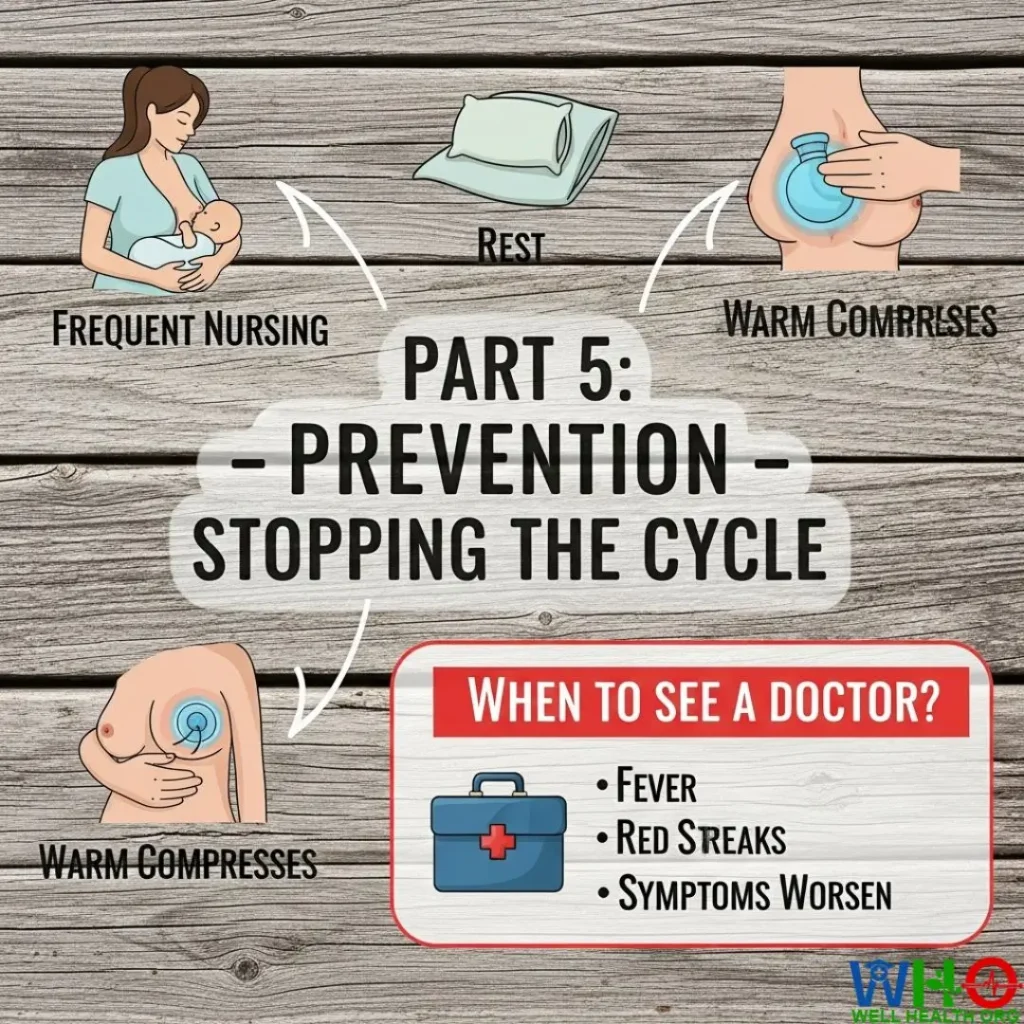
Part 5: Prevention – Stopping the Cycle
Once you have had mastitis, you never want it again. Unfortunately, having it once increases your risk of recurrence. Here is how to “mastitis-proof” your life.
1. Assess Your Gear
If you pump, check your flange size. A flange that is too small or too large can compress ducts. Most pumps come with 24mm or 28mm flanges, but many women actually need 17mm or 19mm. A lactation consultant can size you properly.
2. Bra Audit
Throw away underwire bras for the first few months. Look for soft, stretchy nursing tanks. If you have large breasts, ensure your bra offers support without “cutting in.” If you notice a red mark on your skin when you take the bra off, it is too tight.
3. Wean Slowly
If you decide to stop breastfeeding, do not go cold turkey. Drop one feeding every 3-4 days. This gives your body time to down-regulate milk production without causing engorgement.
4. Address the “Milk Bleb”
Sometimes a tiny white dot appears on the nipple. This is a bleb—skin growing over a milk duct. It creates a dam behind it. Soften it with olive oil and warm soaks, then gently exfoliate with a washcloth. Do not pick at it with a needle, as this introduces infection.
Part 6: Emotional Health and “Mom Guilt”
It is vital to address the mental toll of mastitis. When you are sick, in pain, and trying to feed a crying baby, it is easy to spiral into despair. You might feel like your body is failing you or that you are failing your baby.

Please know this: Mastitis is not a reflection of your worth as a mother. It is a common medical condition, like a sprained ankle or a sinus infection. It does not mean you are doing it wrong.
Many mothers feel pressured to switch to formula during mastitis because they worry their milk is “bad” or “infected.” Your milk is safe. The antibacterial properties of breast milk actually protect the baby, and your baby’s stomach acid destroys any bacteria.
However, if the pain is too severe to nurse, it is okay to pump. If you need to supplement with formula while you heal, that is okay too. The priority is a healthy mother and a fed baby.
Part 7: When to Call the Doctor (The Safety Check)
While we champion natural remedies, safety is paramount. Mastitis can escalate into sepsis (a life-threatening blood infection) or a breast abscess (a pocket of pus requiring surgical drainage) if ignored.
Seek immediate medical attention if:
- The “24-Hour Rule”: You have tried the home remedies (Rest, Ice, Drainage, Ibuprofen) for 24 hours and the fever has not broken, or the redness is spreading.
- Bilateral Symptoms: You have redness and pain in both breasts (this is rare for mastitis and could indicate a different infection like Strep).
- Visual Changes: The nipple looks infected, or there is pus/blood in the milk (a little pink is okay, but frank blood needs checking).
- Red Streaks: Red lines traveling from the breast toward the armpit or chest wall are a sign of lymphangitis (infection spreading to lymph nodes).
- The “Divot”: If the lump feels like a fluid-filled balloon or the skin dimples inward, it may be an abscess.
- Systemic Decline: You feel confused, dizzy, or your heart rate is rapid.
A Note on Antibiotics:
If your doctor prescribes antibiotics (usually Dicloxacillin or Cephalexin), take the full course. Even if you feel better in two days, stopping early can lead to antibiotic-resistant bacteria and a swift return of the infection. These medications are generally safe for the baby, though you might notice your baby gets a little unparalleled tummy or diaper rash (probiotics for the baby can help).
Conclusion: You Are Stronger Than You Think
Mastitis is a trial by fire, but it is one you can survive. By listening to your body, slowing down, and utilizing these natural tools, you can often turn the corner within 24 hours.
Create a “Mastitis Toolkit” before you need it: keep a bag of frozen peas, a bottle of ibuprofen, a jar of sunflower lecithin, and the phone number of a good lactation consultant (IBCLC) handy.
Treat yourself with the same tenderness you treat your baby. Hydrate, rest, and trust your body’s ability to heal. This is just a bump in the road of your motherhood journey, and soon it will be nothing more than a memory. You’ve got this.
Medically Reviewed by Prof. Dr. Akram
Orthopedic Surgeon | Professor | Senior Medical Specialist
Prof. Dr. Akram is a distinguished surgeon with over 15 years of clinical expertise. Having served as a lead Emergency Specialist at Complex International Government Hospital, he currently leads a specialized team of 13 medical professionals at his private hospital. As a Professor at top medical universities, he ensures that every article on WellHealthOrg.com meets rigorous clinical standards.
Medical Disclaimer:
The information provided is for educational purposes only and is not a substitute for professional medical advice, diagnosis, or treatment. Always consult your physician for any medical concerns.
Our content is rigorously fact-checked by our 13-member Editorial Team under the clinical supervision of Prof. Dr. Akram.