
Home Remedies for Body Aches
We have all been there. The alarm clock rings, and as you attempt to roll out of bed, your body protests. It feels as though your limbs are made of lead, and every movement sends a dull throb through your joints. Perhaps you conquered a high-intensity interval training session yesterday, or maybe you spent six hours hunching over a garden bed. Or, potentially, you are battling the prodromal stages of a seasonal virus.
- Home Remedies for Body Aches
- Part 1: Decoding the Ache – Why Do We Hurt?
- Delayed Onset Muscle Soreness (DOMS)
- Systemic Inflammation and Viral Response
- Stress and Tension
- Part 2: Hydration – The Biological Foundation of Muscle Health
- The Role of Synovial Fluid
- Flushing Metabolic Waste
- Part 3: The Electrolyte Equation – Beyond Just Water
- Potassium: The Relaxation Mineral
- Magnesium: Nature’s Muscle Relaxant
- Sodium: The Hydration Keeper
- Part 4: The Healing Power of Rest and Sleep Architecture
- The Science of Deep Sleep and Growth Hormone
- Optimizing Your Sleep Hygiene for Pain Relief
- Part 5: Thermal Therapy – Heat vs. Cold
- When to Use Heat
- When to Use Cold (Cryotherapy)
- The Pro Trick: Contrast Therapy
- Part 6: Active Recovery – Motion is Lotion
- Low-Impact Movement
- Targeted Stretching for Common Aches
- Part 7: The Anti-Inflammatory Kitchen
- Turmeric and Curcumin
- Tart Cherry Juice
- Omega-3 Fatty Acids
- Bromelain (Pineapple)
- The Role of Protein
- Part 8: The Stress-Pain Connection
- Breaking the Cycle with Mindfulness
- Part 9: Natural Topical Treatments
- Essential Oils
- Self-Massage Tools
- Part 10: Prevention and Ergonomics
- The Workspace Check
- Footwear
- Part 11: When to See a Doctor
- Conclusion: Listening to Your Body’s Language
Whatever the culprit, muscle fatigue and full-body aches act as a specialized kind of prison, bringing your daily productivity and general zest for life to a screeching halt.
The modern reflex is almost Pavlovian: reach for the medicine cabinet. While non-steroidal anti-inflammatory drugs (NSAIDs) like ibuprofen or acetaminophen are marvels of modern medicine, they are not always the ideal long-term strategy. Relying on pills for every ache can mask the signals your body is desperately trying to send you. Furthermore, frequent use comes with a ledger of potential side effects, ranging from gastrointestinal distress to liver strain.
Fortunately, the human body is an incredible biological machine designed with an innate capacity for self-repair. It just needs the right raw materials and environment to do the job.
By pivoting toward natural home remedies, you aren’t just numbing the pain; you are addressing the root cause—whether that is inflammation, electrolyte imbalance, or accumulated metabolic waste. This comprehensive guide will walk you through the science of soreness and provide a robust toolkit of natural strategies. From nutritional adjustments to thermal therapies, these methods will help you reclaim your vitality without relying on harsh chemicals.
Part 1: Decoding the Ache – Why Do We Hurt?
Before diving into the remedies, it is crucial to understand what is happening under your skin. Not all body aches are created equal, and understanding the “why” can help you choose the correct “how.”

Delayed Onset Muscle Soreness (DOMS)
If you’ve recently started a new workout routine or increased the intensity of your exercise, the pain you feel 24 to 48 hours later is likely DOMS. This is caused by microscopic tears in the muscle fibers. While this sounds alarming, it is actually a positive process. As the body repairs these micro-tears, it rebuilds the muscle tissue stronger and larger than before. The ache is essentially the feeling of your body upgrading itself.
Systemic Inflammation and Viral Response
When you are fighting a flu or virus, your body releases chemicals called cytokines to fight the infection. These chemicals cause inflammation, which is necessary for the immune response but results in that familiar “hit by a truck” feeling.
Stress and Tension
Never underestimate the psychosomatic connection. Chronic stress triggers the release of cortisol and adrenaline, keeping your muscles in a semi-contracted “fight or flight” state. Over days or weeks, this leads to tension headaches, stiff shoulders, and a rigid lower back.
Understanding these distinctions helps us apply the E-E-A-T (Expertise, Experience, Authoritativeness, and Trustworthiness) principles to your recovery. We aren’t just throwing spaghetti at the wall; we are targeting the physiology of pain.
Part 2: Hydration – The Biological Foundation of Muscle Health
It is the most cliché advice in the health world for a reason: hydration is non-negotiable. However, most people do not understand the specific mechanics of how water—or the lack thereof—affects pain levels.
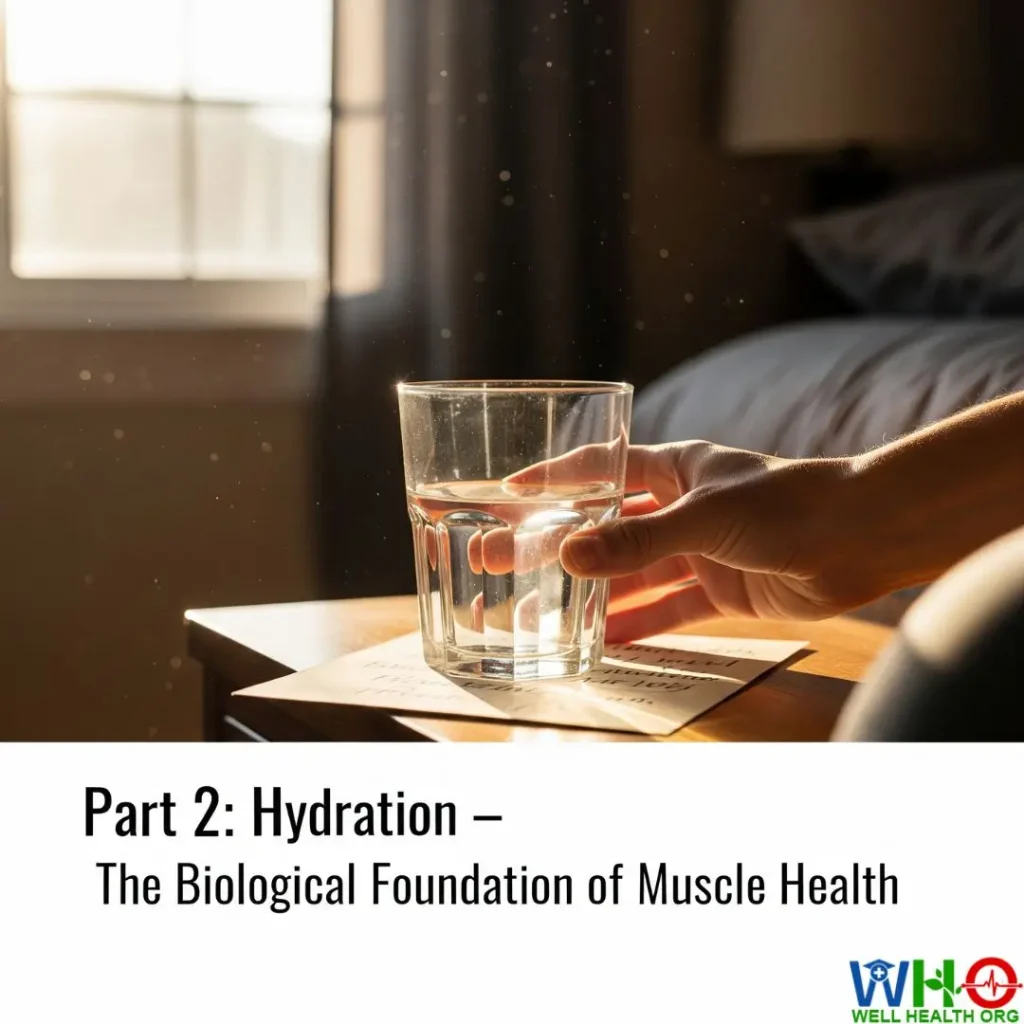
Water is the primary component of your muscle tissue. Think of your muscles like a sponge. When a sponge is wet, it is pliable, flexible, and difficult to tear. When a sponge is dry, it becomes brittle, hard, and tears easily.
The Role of Synovial Fluid
Hydration doesn’t just affect the muscle belly; it dictates the health of your joints. Synovial fluid is the lubrication found between your joints (knees, elbows, hips). This fluid is largely comprised of water. When you are dehydrated, the volume of this fluid decreases, leading to increased friction, “creaky” joints, and pain.
Flushing Metabolic Waste
When muscles work hard or fight off illness, they produce metabolic waste products. If you are dehydrated, your blood volume decreases, making the circulation thicker and slower. This prevents your body from efficiently flushing out these toxins, leaving them to stagnate in your tissues and prolong inflammation.
Practical Hydration Strategy:
Don’t wait until you are thirsty. Thirst is a lagging indicator; by the time you feel it, you are already dehydrated. Aim to drink half your body weight in ounces of water daily. If you weigh 160 pounds, aim for 80 ounces.
Part 3: The Electrolyte Equation – Beyond Just Water
While water is the vehicle, electrolytes are the drivers. You can drink gallons of water, but without the proper mineral balance, your muscles cannot function correctly. In fact, drinking too much plain water without replenishing minerals can flush out your existing electrolytes, leading to a condition called hyponatremia, which can actually cause muscle cramping.

Potassium: The Relaxation Mineral
The original article mentioned bananas, and they are indeed a classic remedy. Potassium is vital for nerve transmission and muscle contraction. Without it, muscles can’t “turn off” properly, leading to twitches and cramps.
- Sources: While bananas are famous, sweet potatoes, avocados, and spinach actually pack more potassium per serving.
Magnesium: Nature’s Muscle Relaxant
If there is one mineral you should focus on for body aches, it is magnesium. It is responsible for over 300 biochemical reactions in the body, including the active relaxation of muscle fibers. A deficiency in magnesium is one of the most common causes of chronic muscle tightness and restless leg syndrome.
- Sources: Pumpkin seeds, almonds, dark chocolate, and leafy greens.
Sodium: The Hydration Keeper
Sodium has been demonized due to its link with high blood pressure, but for an active person or someone recovering from illness, it is essential. Sodium helps your body retain the fluid you drink so it can be absorbed into the tissues rather than passing straight through you.
- Tip: If you are feeling particularly achy or fatigued, add a pinch of high-quality sea salt or pink Himalayan salt to your morning water.
Part 4: The Healing Power of Rest and Sleep Architecture
In our hyper-productive society, we often wear sleep deprivation as a badge of honor. However, if you are battling body aches, skipping sleep is like trying to drive a car with a flat tire—you might keep moving, but you are damaging the vehicle.

The Science of Deep Sleep and Growth Hormone
Sleep is not a passive state; it is an active metabolic process. Specifically, we need to look at Stage 3 Non-REM sleep, often called “Deep Sleep.”
During this phase, your pituitary gland releases pulses of Human Growth Hormone (HGH). HGH is the primary compound responsible for cellular repair and tissue growth. It fixes the micro-tears in your muscles and regenerates cells damaged by oxidative stress. If you cut your sleep short or rely on alcohol to pass out (which inhibits deep sleep), you are chemically depriving your body of the ability to heal.
Optimizing Your Sleep Hygiene for Pain Relief
If you are in pain, sleeping can be difficult, creating a vicious cycle. Here is how to break it:
- Temperature Control: Your body temperature needs to drop to initiate sleep. Keep your room between 60-67 degrees Fahrenheit. A cooler room also reduces inflammation.
- Pillow Ergonomics: If you have neck or back pain, your sleep position matters.
- Side Sleepers: Place a pillow between your knees to align your hips and take pressure off the lower back.
- Back Sleepers: Place a small pillow under your knees to maintain the natural curve of your spine.
- The Digital Detox: The blue light emitted by phones and TVs suppresses melatonin, the hormone that signals sleep. Try to switch to reading a physical book or listening to soft music 60 minutes before bed.
Part 5: Thermal Therapy – Heat vs. Cold
One of the most common questions in pain management is: “Should I use ice or heat?” The answer depends entirely on the type and timing of your pain. Using the wrong one can sometimes make the issue worse.
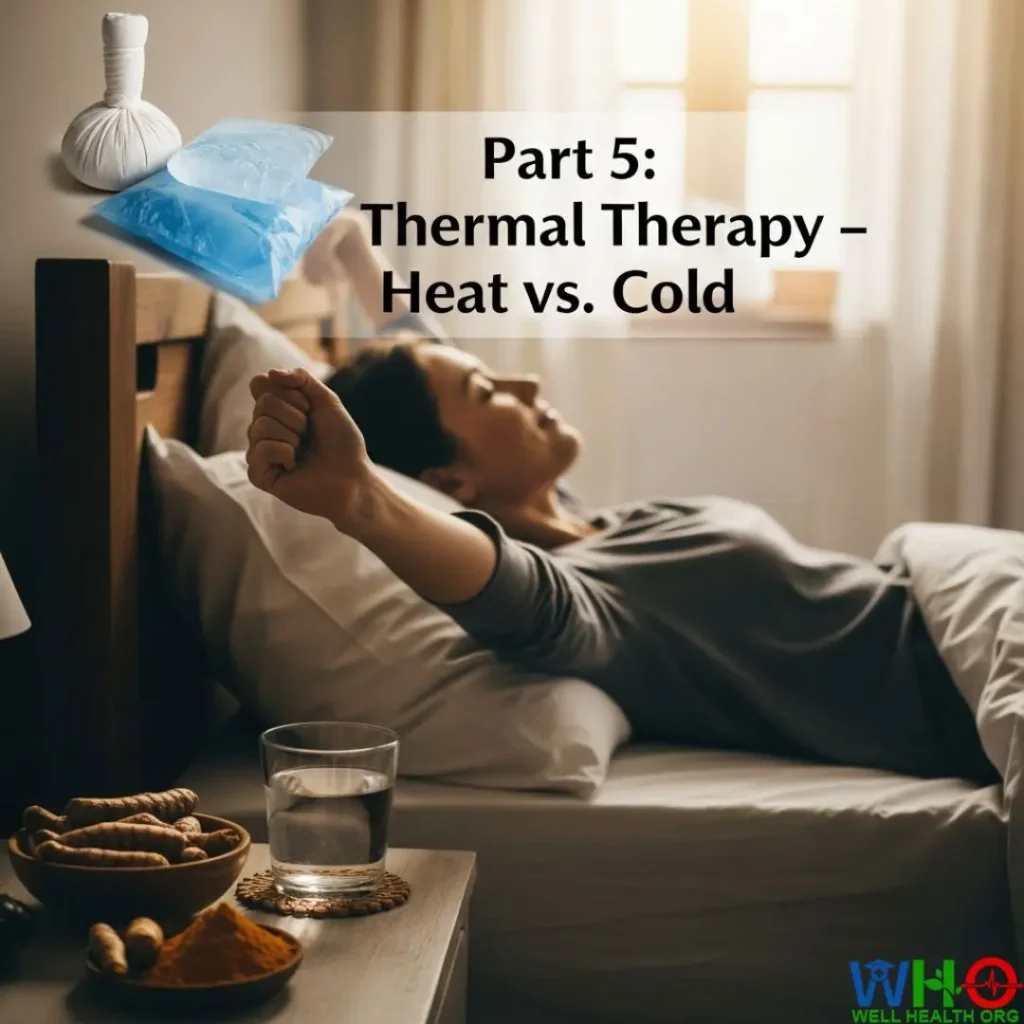
When to Use Heat
Heat is a vasodilator. It opens up blood vessels, increasing blood flow to the area. This influx of blood brings oxygen and nutrients while washing away metabolic waste. Heat is best for:
- Chronic Pain: Old injuries that feel stiff.
- Muscle Knots/Tightness: Stress tension in the shoulders or back.
- Delayed Onset Muscle Soreness (DOMS): 48 hours after a workout.
Methods of Heat Application:
- Moist Heat: This is generally superior to dry heat because it penetrates deeper into the tissue. Think hot baths, steamed towels, or hot showers.
- Epsom Salt Bath: Adding magnesium sulfate (Epsom salts) to a hot bath is a double-whammy. The heat relaxes the muscles, and the theory is that magnesium absorbs through the skin to further aid relaxation. Aim for 2 cups of salts and soak for at least 20 minutes.
When to Use Cold (Cryotherapy)
Cold is a vasoconstrictor. It narrows blood vessels, which reduces blood flow to the area. This is essential for stopping inflammation and numbing pain signals. Cold is best for:
- Acute Injuries: Sprains, strains, or sudden pulls (within the first 48 hours).
- Swelling: Any time an area is puffy, red, or hot to the touch.
- Joint Flare-ups: Such as an arthritis flare or gout.
Safety Warning: Never apply ice directly to the skin, as this can cause frostbite. Wrap ice packs in a thin towel. Limit application to 15-20 minutes maximum per hour.
The Pro Trick: Contrast Therapy
For general body aches and fatigue, contrast therapy is a powerful tool used by elite athletes. It involves alternating between hot and cold.
- How to do it: In the shower, run hot water for 3 minutes, then switch to cold water for 1 minute. Repeat this cycle 3 times, always ending on cold.
- Why it works: This creates a “pumping” action in your circulatory system, rapidly forcing fresh blood in and out of the tissues, accelerating recovery.
Part 6: Active Recovery – Motion is Lotion
When you are sore, your instinct is to curl up on the couch and not move a muscle. Paradoxically, total sedation is often the enemy of recovery. “Motion is lotion” is a favorite saying among physical therapists for a reason.
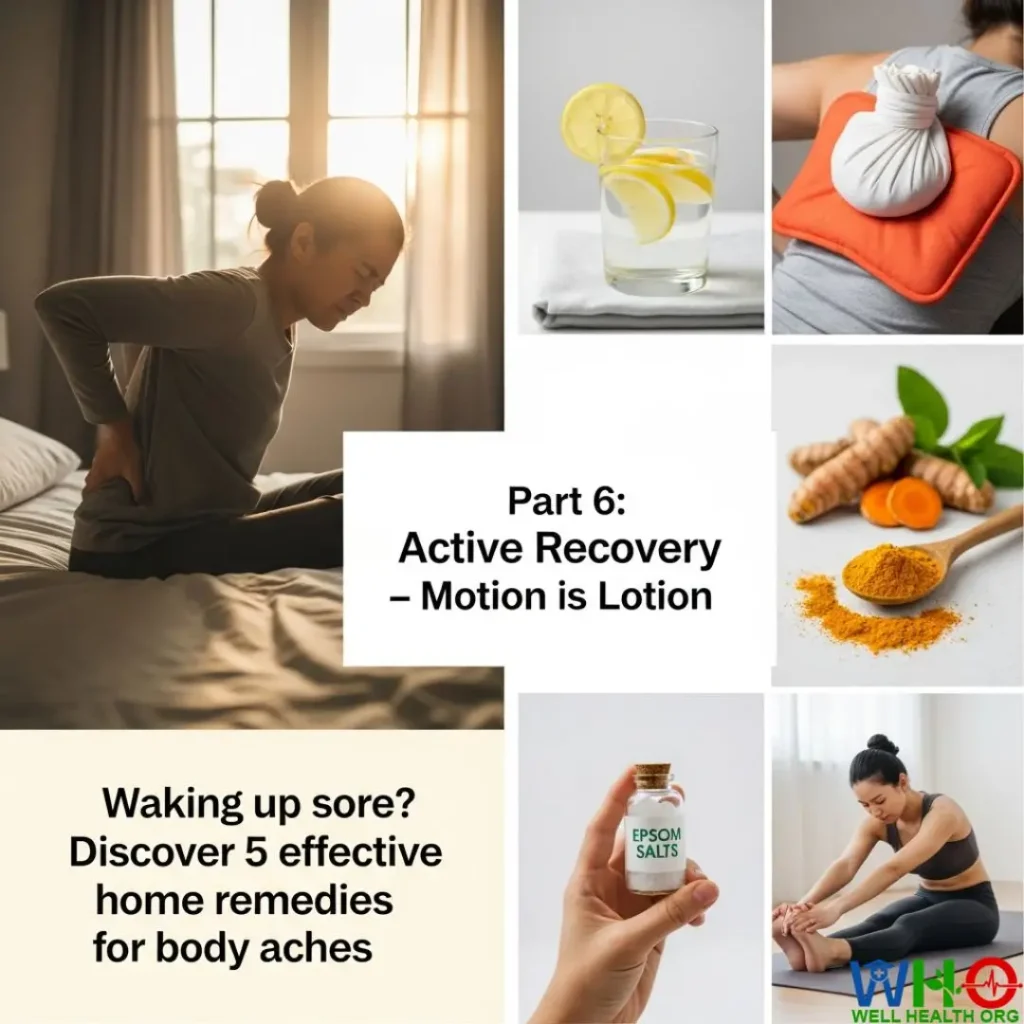
Sedentary behavior causes muscles to shorten and stiffen. It also slows down circulation, meaning those waste products causing the pain stay trapped in the tissue longer.
Low-Impact Movement
The goal isn’t to work out; it is to mobilize. You want to elevate your heart rate just enough to get the blood moving without tearing more muscle fibers.
- Walking: A brisk 20-minute walk is often the best cure for lower body stiffness.
- Swimming: The ultimate active recovery. The water supports your weight, taking pressure off the joints, while the resistance provides gentle movement.
Targeted Stretching for Common Aches
- For Lower Back Pain: Try the “Cat-Cow” yoga stretch. On hands and knees, alternate between arching your back (looking up) and rounding your spine (looking at your navel). This lubricates the spinal discs.
- For Tight Hips: The “Child’s Pose.” Kneel on the floor, touch your big toes together, sit back on your heels, and stretch your arms forward on the ground.
- For Tech-Neck: If your aches are in your upper traps from computer work, try “Ear-to-Shoulder” drops. Gently lower your right ear to your right shoulder, hold for 10 seconds, and switch.
Important Note: Stretching should never be painful. If you feel sharp pain, stop immediately. You are looking for a gentle tension, not a tear.
Part 7: The Anti-Inflammatory Kitchen
You cannot out-train or out-rest a bad diet. What you put on your plate dictates the level of systemic inflammation in your body. By incorporating specific “functional foods,” you can treat your body aches from the inside out.
Turmeric and Curcumin
Turmeric is arguably the king of anti-inflammatory spices. Its active compound, curcumin, has been shown in studies to match the effectiveness of some anti-inflammatory drugs without the side effects.
- The Golden Rule: Curcumin is poorly absorbed by the body on its own. You must consume it with piperine (found in black pepper) and a healthy fat (like coconut oil or olive oil) to increase absorption by up to 2000%.
- Try This: Make “Golden Milk.” Warm up almond or oat milk, whisk in a teaspoon of turmeric, a pinch of black pepper, a dash of ginger, and a little honey.
Tart Cherry Juice
This is a favorite among marathon runners. Tart cherries are rich in anthocyanins, which block the same inflammation enzymes that aspirin targets. Drinking a glass of tart cherry juice after physical exertion can significantly reduce the severity of soreness the next day.
Omega-3 Fatty Acids
Omega-3s are the fire extinguishers of the body. Found in fatty fish (salmon, mackerel, sardines), walnuts, and flaxseeds, they actively reduce the production of substances linked to inflammation. If you suffer from chronic body aches, increasing your Omega-3 intake is a must.
Bromelain (Pineapple)
Pineapple contains an enzyme called bromelain, which helps digest protein. Interestingly, when taken on an empty stomach, bromelain has been shown to reduce pain and swelling, particularly in the nose and sinuses, but also in muscular injuries.
The Role of Protein
Your muscles are made of protein. If you don’t eat enough of it, your body doesn’t have the bricks to repair the house. Ensure you are getting a serving of quality protein (eggs, lean meat, legumes, tofu) with every meal, especially if your aches are exercise-induced.
Part 8: The Stress-Pain Connection
We often separate the mind from the body, treating them as two different entities. In reality, they are inextricably linked. Emotional stress manifests as physical pain.
When you are stressed, you unconsciously tighten your muscles. You might clench your jaw (leading to headaches), hike up your shoulders (leading to neck pain), or grip your glutes (leading to lower back pain). This is called “protective guarding.”
Breaking the Cycle with Mindfulness
You don’t need to be a meditation guru to benefit from mindfulness.
- Body Scanning: Lie down in a quiet room. Close your eyes. Mentally scan your body from your toes to your head. Notice where you are holding tension. Consciously imagine that muscle unclenching and melting into the floor.
- 4-7-8 Breathing: Inhale through your nose for 4 seconds, hold the breath for 7 seconds, and exhale forcefully through your mouth for 8 seconds. This breathing pattern stimulates the Vagus nerve, which shifts your body from “Fight or Flight” (Sympathetic) to “Rest and Digest” (Parasympathetic).
Part 9: Natural Topical Treatments
Sometimes you need to treat the pain directly at the source. Before reaching for a chemical-laden menthol cream, consider natural alternatives.
Essential Oils
- Peppermint Oil: Contains menthol, which provides a cooling sensation and improves blood flow. It acts as a natural analgesic.
- Lavender Oil: Known for its calming properties, it also has anti-inflammatory and antispasmodic effects, making it great for menstrual cramps or tension headaches.
- Eucalyptus Oil: Often used for respiratory issues, it also helps cool and soothe muscle pain.
- Arnica: Arnica montana is a flower used for centuries to treat bruising and swelling. It is available as a gel or cream and is fantastic for acute trauma-based aches.
Safety First: Essential oils are potent. Never apply them directly to the skin undiluted. Mix a few drops with a “carrier oil” like coconut oil, jojoba oil, or almond oil before massaging into the sore area.
Self-Massage Tools
You don’t always need a professional masseuse.
- Foam Rolling: This is a form of “Self-Myofascial Release.” It works by pressing into the fascia (the connective tissue surrounding muscles) to smooth out knots. It can be uncomfortable while doing it, but the relief afterward is immense.
- Tennis Ball Therapy: For hard-to-reach spots like the area between your shoulder blades, lean against a wall with a tennis ball trapped between your back and the wall. Roll gently to work out the trigger point.
Part 10: Prevention and Ergonomics
The best cure for body aches is not to get them in the first place. While we can’t avoid the flu or workout soreness entirely, we can mitigate chronic daily aches by looking at our environment.
The Workspace Check
If you work at a desk, your setup is likely a primary contributor to your pain.
- Monitor Height: The top of your screen should be at eye level. If you are looking down, you are putting massive strain on your cervical spine.
- Chair: Your feet should be flat on the floor, with your knees at a 90-degree angle.
- The 20-20-20 Rule: Every 20 minutes, look at something 20 feet away for 20 seconds. This reduces eye strain, which reduces tension headaches.
Footwear
Your feet are the foundation of your skeletal structure. If you are wearing unsupportive shoes, the misalignment travels up the chain—affecting your knees, hips, and lower back. If you stand often, invest in high-quality insoles or shoes with proper arch support.
Part 11: When to See a Doctor
While natural remedies are powerful, they have their limits. It is vital to recognize when “body aches” are a symptom of something more serious. Applying E-E-A-T principles means knowing where our expertise ends and medical intervention is required.
Consult a healthcare professional if:
- The pain persists: If aches last longer than 7-10 days despite home treatment.
- Severity: The pain is sharp, shooting, or wakes you up at night.
- Tick Bites: If you have recently been in nature and develop body aches accompanied by a rash (a bullseye shape), this could be Lyme disease.
- Associated Symptoms: If aches are accompanied by high fever, chest pain, shortness of breath, confusion, or stiff neck.
- Medication Side Effects: If you recently started a new medication (like statins for cholesterol) and suddenly feel muscle weakness, it could be a reaction to the drug.
Conclusion: Listening to Your Body’s Language
Ultimately, body aches are a form of communication. Your body is telling you that something is out of balance. It might be screaming for water, begging for sleep, requesting better fuel, or demanding a break from stress.
By ignoring these signals and silencing them with painkillers, we miss the opportunity to improve our overall health. By choosing natural remedies—hydration, nutrition, heat, rest, and movement—you aren’t just treating the symptom; you are honoring the vessel that carries you through life.
Recovery is not a passive act. It is an active discipline. Start small today. Drink that extra glass of water. Add a scoop of Epsom salts to your bath. stretch for five minutes before bed. These small, consistent investments in your self-care will compound over time, leading to a stronger, more resilient, and pain-free life.
Medically Reviewed by Prof. Dr. Akram
Orthopedic Surgeon | Professor | Senior Medical Specialist
Prof. Dr. Akram is a distinguished surgeon with over 15 years of clinical expertise. Having served as a lead Emergency Specialist at Complex International Government Hospital, he currently leads a specialized team of 13 medical professionals at his private hospital. As a Professor at top medical universities, he ensures that every article on WellHealthOrg.com meets rigorous clinical standards.
Medical Disclaimer:
The information provided is for educational purposes only and is not a substitute for professional medical advice, diagnosis, or treatment. Always consult your physician for any medical concerns.
Our content is rigorously fact-checked by our 13-member Editorial Team under the clinical supervision of Prof. Dr. Akram.