
We invest heavily in our faces. We buy expensive serums for our cheeks, eye creams for our crow’s feet, and specialized cleansers for our T-zones. Yet, just a few inches south of the jawline, the neck is often neglected. It is treated as an afterthought—until one day, you catch a glimpse of yourself in a dressing room mirror or a candid photo, and you notice it: a band of skin that looks significantly darker, thicker, and duller than the rest of your complexion.
- Part 1: The Diagnosis – What is “Dark Neck” Really?
- Understanding Acanthosis Nigricans
- The Primary Culprits
- Part 2: The Kitchen Pharmacy – Effective Home Remedies
- 1. The Potato Juice Treatment (Catecholase Power)
- 2. The Baking Soda Exfoliant
- 3. The Aloe Vera Mask
- 4. The “Ubtan” Paste (Gram Flour & Turmeric)
- 5. Apple Cider Vinegar (The pH Balancer)
- 6. Oatmeal & Tomato Scrub
- 7. Almond Oil & Vitamin E Massage
- Part 3: The Lifestyle Overhaul – Treating the Root Cause
- 1. The Diet for Clear Skin
- 2. Weight Management and Visceral Fat
- 3. Stop the Friction
- Part 4: Developing a Daily Neck Care Routine
- Morning Routine (The Protection Phase)
- Evening Routine (The Treatment Phase)
- Part 5: When to See a Dermatologist
- Red Flags to Watch For
- Professional Treatments
- Part 6: Frequently Asked Questions (FAQs)
- Conclusion: Reclaiming Your Confidence
This condition, often colloquially referred to as “dark neck,” can be a source of immense self-consciousness. You might find yourself constantly wearing collared shirts, scarves, or keeping your hair down to hide it. You might even scrub it furiously in the shower, assuming it’s just stubborn dirt, only to find the skin becoming red, irritated, and darker than before.
If this sounds familiar, take a deep breath. You are not alone, and in most cases, this is not a permanent sentence. While the medical reality of a dark neck—often known as Acanthosis Nigricans—is complex, the path to improvement is accessible.
This comprehensive guide is designed to be the only resource you will ever need. We will move beyond basic advice and dive deep into the biology of why this happens, how to treat it safely with powerful ingredients from your kitchen, and the lifestyle changes necessary to keep the brightness permanently.
Part 1: The Diagnosis – What is “Dark Neck” Really?
Before you can treat the problem, you must understand what you are fighting. Many people mistake dark neck for a hygiene issue. Let’s be clear right now: Dark neck is rarely caused by a lack of washing. In fact, scrubbing it harder often makes it worse.

Understanding Acanthosis Nigricans
The clinical term for this darkening is Acanthosis Nigricans. It is characterized not just by hyperpigmentation (darkening) but also by hyperkeratosis (thickening of the skin). If you touch the affected area, it likely feels different from your face—velvety, rough, or slightly raised, almost like a corduroy fabric.
This texture change happens because the skin cells (keratinocytes) and pigment-producing cells (melanocytes) are overactive. They are reproducing too quickly, creating a buildup of tissue that appears dark brown or grayish-black.
The Primary Culprits
Why does your body decide to thicken and darken the skin here? It is usually a distress signal from your internal systems.
- Insulin Resistance (The #1 Cause): This is the most common driver. When your body becomes resistant to insulin (often a precursor to Type 2 Diabetes), your pancreas pumps out excess insulin to compensate. High levels of insulin in the bloodstream can cross-react with receptors on skin cells, telling them to grow rapidly. This growth manifests as dark, velvety patches in skin folds—the neck, armpits, and groin.
- Hormonal Imbalances: Conditions like Polycystic Ovary Syndrome (PCOS) in women or thyroid disorders (hypothyroidism) disrupt hormonal harmony, leading to skin pigmentation changes.
- Obesity: Excess adipose tissue (body fat) can increase insulin resistance and inflammation, contributing to the darkening.
- Genetics: Sometimes, it is simply in your DNA. If your parents or siblings have darker pigmentation in their skin folds, you may be predisposed to it.
- Medications: Certain strong medications, including high-dose niacin, birth control pills, and corticosteroids, can trigger this reaction.
- Sun Exposure and Neglect: The neck is often exposed to the sun but rarely gets the same SPF protection as the face. Chronic sun damage leads to “poikiloderma of Civatte,” a combination of darkening and thinning skin.
Part 2: The Kitchen Pharmacy – Effective Home Remedies
While medical treatments exist, nature provides potent ingredients that can exfoliate, brighten, and soothe the skin without harsh chemicals. However, consistency is the secret ingredient. You cannot do these once and expect a miracle; you must build them into a routine.

1. The Potato Juice Treatment (Catecholase Power)
Potatoes are surprisingly effective for pigmentation. They contain an enzyme called catecholase, which acts as a natural bleaching agent. It helps inhibit melanocytes, gradually lightening dark patches.
- The Recipe:
- Grate one medium-sized raw potato.
- Squeeze the grated pulp through a cheesecloth or sieve to extract the juice.
- Alternatively, you can just slice a potato into thin rounds.
- How to Apply:
- Dip a cotton ball into the juice and apply it generously to the neck.
- Let it dry for 15–20 minutes.
- Rinse with lukewarm water.
- Pro Tip: If using slices, rub the slice in circular motions on the neck for 5 minutes before letting the residue sit.
2. The Baking Soda Exfoliant
Baking soda (sodium bicarbonate) is a physical exfoliant. It is excellent for removing the layer of dead, thick skin cells that make the neck look dull. It also helps neutralize bacteria.
- The Recipe:
- Mix 2 tablespoons of baking soda with enough water to form a smooth, toothpaste-like consistency.
- How to Apply:
- Apply the paste to the wet skin of your neck.
- Crucial Step: Gently massage in circular motions for 2–3 minutes. Do not scrub aggressively. The goal is to buff, not scratch.
- Let it sit for another 5 minutes to dry.
- Rinse thoroughly and apply moisturizer immediately.
- Warning: Baking soda has a high pH (alkaline). Do not use this every day, or you risk disrupting your skin barrier. Limit this to 2 times a week.
3. The Aloe Vera Mask
Aloe Vera is rich in aloin, a natural depigmenting compound that has been scientifically proven to lighten skin and work effectively as a nontoxic hyperpigmentation treatment. It is also deeply hydrating, which helps fix the “velvety” texture.
- The Recipe:
- Fresh is best. Cut open an aloe leaf and scoop out the clear gel.
- If using store-bought gel, ensure it is 99% pure aloe with no added green dye or alcohol.
- How to Apply:
- Apply a thick layer to the neck.
- You do not need to wash this off quickly. In fact, you can leave it on overnight for maximum absorption.
- Frequency: This is gentle enough to use twice daily.
4. The “Ubtan” Paste (Gram Flour & Turmeric)
This is an ancient Ayurvedic remedy used for centuries in South Asia for bridal brightening. Gram flour (besan) acts as a cleansing agent, while turmeric contains curcumin, a powerful anti-inflammatory and antioxidant that regulates melanin.
- The Recipe:
- 2 tablespoons of Gram Flour (Besan).
- A pinch of Turmeric (Haldi) – don’t use too much, or it will stain yellow.
- 1 teaspoon of Yogurt (contains lactic acid for chemical exfoliation).
- A squeeze of Lemon Juice.
- How to Apply:
- Mix into a thick paste.
- Apply to the neck and let it dry completely (about 20 minutes).
- To remove, wet your hands and scrub the dried paste off in gentle circles. This pulling action removes fine hair and dead skin.
- Rinse with cool water.
5. Apple Cider Vinegar (The pH Balancer)
The skin on our neck can sometimes harbor bacteria or fungi that contribute to darkening. Apple Cider Vinegar (ACV) contains malic acid, which exfoliates, and its acidic nature balances the skin’s pH, making it inhospitable to germs.
- The Recipe:
- Never use undiluted ACV. It can burn.
- Mix 2 tablespoons of ACV with 4 tablespoons of water.
- How to Apply:
- Soak a cotton ball in the solution.
- Swipe it across the neck.
- Leave it on for 10 minutes, then rinse.
- Moisture Check: ACV can be drying, so follow up with a heavy cream or oil.
6. Oatmeal & Tomato Scrub
Oats contain saponins, natural cleansers that remove dirt and oil. When combined with tomato juice, which is rich in lycopene and antioxidants, you get a scrub that heals sun damage while exfoliating.
- The Recipe:
- Grind oats into a coarse powder.
- Mix with enough fresh tomato juice (or rose water) to make a gritty paste.
- How to Apply:
- Massage onto the neck for 5 minutes.
- Leave it on for 20 minutes to allow the tomato acids to work.
- Rinse gently.
7. Almond Oil & Vitamin E Massage
Sometimes, the darkness is purely due to extreme dryness and lack of circulation. Vitamin E is a powerhouse for skin repair.
- The Recipe:
- Mix 1 teaspoon of Sweet Almond Oil with the oil from one Vitamin E capsule.
- Alternatively, add a few drops of Tea Tree Oil if you suspect a fungal element.
- How to Apply:
- Warm the oil between your palms.
- Massage the neck in upward strokes for 10 minutes before bed.
- The heat and massage increase blood flow, while the oils nourish the skin barrier.
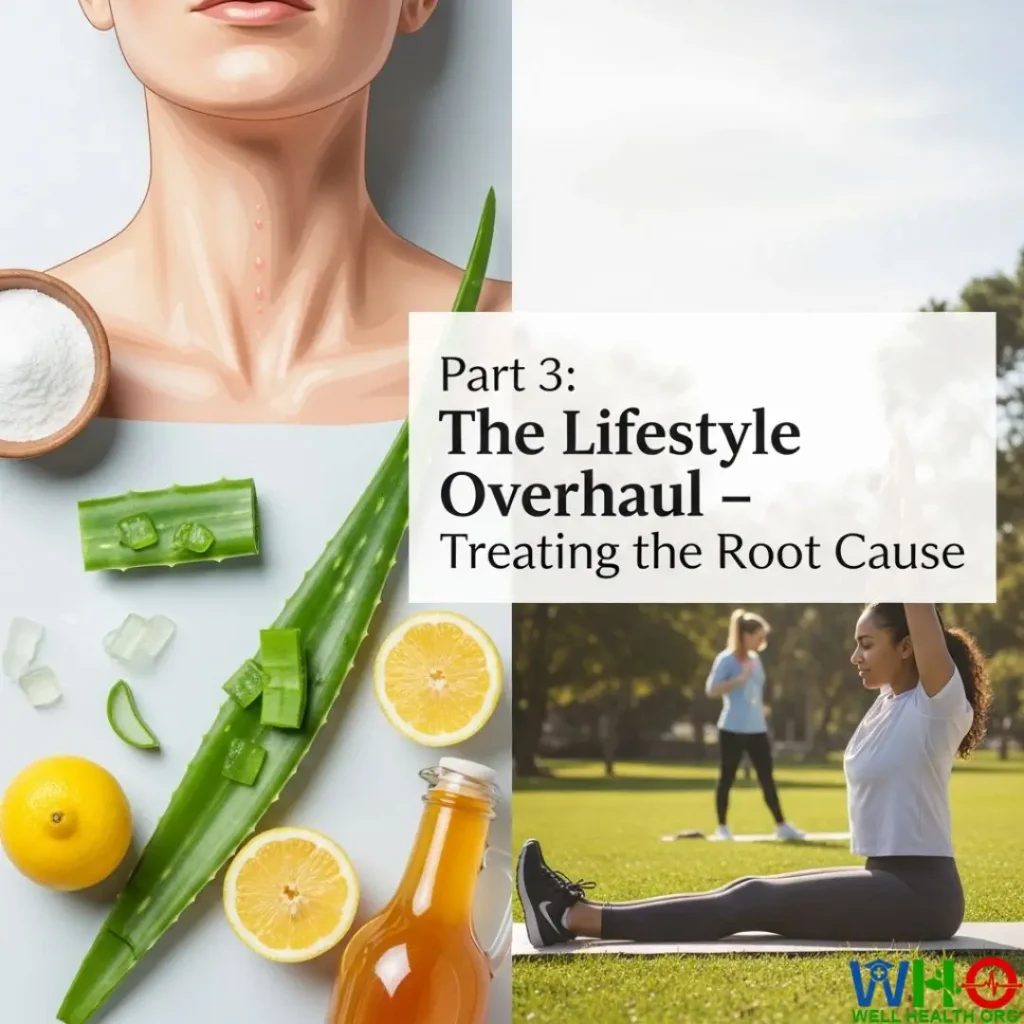
Part 3: The Lifestyle Overhaul – Treating the Root Cause
You can apply all the potato juice in the world, but if your insulin levels are spiking daily, the dark neck will return. Treating Acanthosis Nigricans requires an internal reset.
1. The Diet for Clear Skin
Since insulin resistance is the primary driver, your diet should focus on stabilizing blood sugar.
- Eliminate “White” Carbs: Reduce intake of white bread, white rice, pasta, and sugary pastries. These spike your insulin immediately.
- Embrace Fiber: Switch to whole grains (oats, quinoa, brown rice), legumes, and leafy greens. Fiber slows down sugar absorption.
- Antioxidant-Rich Foods: Berries, nuts, and green tea help fight the inflammation causing the skin to darken.
- Hydration: Drink at least 2-3 liters of water a day. Dehydrated skin looks darker and duller.
2. Weight Management and Visceral Fat
It is a sensitive topic, but carrying excess weight, specifically around the abdomen (visceral fat), dramatically increases hormonal imbalances. Studies have shown that even a modest weight loss of 5-10% can significantly improve insulin sensitivity and lead to the fading of Acanthosis Nigricans patches without any topical treatment.
3. Stop the Friction
Mechanical irritation can worsen the condition.
- Jewelry: Heavy metal chains can rub against the neck, causing “friction melanosis.” Switch to lightweight jewelry or take a break from necklaces.
- Collars: Tight, starched collars on dress shirts can chafe the skin. Opt for softer fabrics or collarless styles when possible.
- Clothing Material: Synthetic fabrics that don’t breathe can trap sweat, irritating the skin folds. Stick to cotton or linen.
Part 4: Developing a Daily Neck Care Routine
To see results, you need a disciplined regimen. Treat your neck with the same respect as your face. Here is a sample routine to follow:

Morning Routine (The Protection Phase)
- Cleanse: Wash your neck with a gentle, non-drying cleanser. Avoid bar soaps that leave a residue.
- Antioxidant Serum: If you use a Vitamin C serum on your face, bring it down to your neck. This protects against free radicals.
- Moisturize: Apply a lightweight lotion.
- Sun Protection (Non-Negotiable): Apply a broad-spectrum sunscreen of at least SPF 30 to the front, sides, and back of your neck. Sun exposure makes hyperpigmentation darker instantly.
Evening Routine (The Treatment Phase)
- Deep Cleanse: Use micellar water or an oil cleanser to remove the day’s sweat, dirt, and sunscreen.
- Exfoliate (2-3 times a week): Use the Baking Soda or Oatmeal scrub mentioned in the remedies section. Do not over-exfoliate.
- Treat: Apply the Potato Juice, Aloe Vera, or ACV solution.
- Restore: Apply a thick moisturizer containing urea or lactic acid. These ingredients are “keratolytics,” meaning they help break down the thick, dark skin over time.
Part 5: When to See a Dermatologist
While home remedies are fantastic for mild to moderate cases, there are times when professional intervention is necessary.
Red Flags to Watch For
- Rapid Onset: If your neck turned dark very suddenly (over weeks rather than months or years), see a doctor immediately. In rare cases, this can be a sign of an internal malignancy (cancer), specifically of the stomach or liver.
- Itching or Bleeding: If the patches become itchy, start to crack, or bleed, you may have a secondary fungal or bacterial infection that requires prescription cream.
- Unexplained Symptoms: If the dark neck is accompanied by severe fatigue, unquenchable thirst, frequent urination, or unintended weight loss, get your blood sugar checked immediately.
Professional Treatments
If natural remedies aren’t cutting it after 3-6 months, a dermatologist can offer stronger solutions:
- Prescription Retinoids: Creams like Tretinoin speed up cell turnover, shedding the dark skin faster.
- Chemical Peels: A professional-grade glycolic or salicylic acid peel can remove the top layers of dead skin in a single session.
- Laser Therapy: Advanced lasers can target the melanin pigment directly, breaking it up so the body can absorb it.
Part 6: Frequently Asked Questions (FAQs)
Q1: Is a dark neck contagious?
A: Absolutely not. Dark neck (Acanthosis Nigricans) is a skin condition caused by metabolic, hormonal, or genetic factors. You cannot catch it from someone, nor can you give it to anyone else through touch or sharing towels.
Q2: Can I just scrub the darkness away with a loofah?
A: Please don’t! This is a common mistake. The darkness is not dirt sitting on top of the skin; it is the skin itself that has thickened and darkened. Scrubbing aggressively with a loofah or brush will cause micro-tears and inflammation. The skin will respond to this injury by becoming even thicker and darker as a defense mechanism. Gentle chemical exfoliation (like yogurt or lemon) is far better than harsh physical scrubbing.
Q3: How long does it take to see results from home remedies?
A: Natural remedies are gentle, which means they are slow. If you are consistent with your routine (applying remedies 3-4 times a week), you should start seeing a difference in texture within 4 weeks. Visible lightening of the pigment usually takes 8 to 12 weeks. Patience is vital.
Q4: Will the dark neck come back after I treat it?
A: It can. Since the condition is often linked to insulin resistance or weight, if you return to a high-sugar diet or stop your skincare routine, the internal triggers will cause the skin cells to overproduce pigment again. Maintenance—both in skincare and lifestyle—is required to keep the results.
Q5: Can children get dark neck?
A: Yes, and it is becoming increasingly common due to the rise in childhood obesity and early-onset insulin resistance. If you notice this on your child, do not scrub their neck. Instead, consult a pediatrician. It is often one of the earliest visible signs that a child is at risk for Type 2 Diabetes, and early dietary intervention can reverse it completely.
Q6: Is bleach safe to use on the neck?
A: We strongly advise against using cosmetic bleach or hair bleach on the neck. The skin on the neck is sensitive and prone to chemical burns. Burning the skin will result in post-inflammatory hyperpigmentation, leaving you with dark burn marks on top of the existing condition. Stick to natural brighteners like potato or Vitamin C.
Q7: Can pregnancy cause dark neck?
A: Yes. This is often called chloasma or “the mask of pregnancy.” The surge in hormones (estrogen and progesterone) stimulates melanin production. The good news is that pregnancy-induced pigmentation usually fades on its own within a few months after delivery as hormone levels regulate.
Conclusion: Reclaiming Your Confidence
A dark neck can feel like a heavy burden, affecting how you dress and how you feel in social situations. But remember, your skin is a map of your internal health. By reading the signs it is giving you—whether it’s asking for better nutrition, hormonal balance, or just a little more sun protection—you can heal it.
The journey to brighter skin is two-fold. On the outside, use the power of lemon, aloe, and exfoliation to reveal the fresh skin underneath. On the inside, nourish your body with whole foods and movement to turn off the signals causing the darkening.
Start today. Go to your kitchen, slice a potato or mix some oats, and treat your neck with the care it deserves. With consistency and patience, you will not only see a brighter reflection in the mirror but also enjoy a healthier body overall.
Medically Reviewed by Prof. Dr. Akram
Orthopedic Surgeon | Professor | Senior Medical Specialist
Prof. Dr. Akram is a distinguished surgeon with over 15 years of clinical expertise. Having served as a lead Emergency Specialist at Complex International Government Hospital, he currently leads a specialized team of 13 medical professionals at his private hospital. As a Professor at top medical universities, he ensures that every article on WellHealthOrg.com meets rigorous clinical standards.
Medical Disclaimer:
The information provided is for educational purposes only and is not a substitute for professional medical advice, diagnosis, or treatment. Always consult your physician for any medical concerns.
Our content is rigorously fact-checked by our 13-member Editorial Team under the clinical supervision of Prof. Dr. Akram.