Homeopathy is a profound and nuanced system of natural medicine that has been practiced globally for over two centuries. Rooted in the principle of Similia Similibus Curentur—or “like cures like”—it suggests that a substance capable of causing specific symptoms in a healthy person can, when micro-diluted and potentized, stimulate the body’s self-healing mechanisms to cure similar symptoms in a sick person.
- The Phosphorus Constitution: A Profile of the “Sparkler”
- 1. Physical Characteristics and General Appearance
- 2. The Mental and Emotional Landscape
- Key Clinical Indications: When is Phosphorus Needed?
- 1. Respiratory Ailments
- 2. Gastrointestinal Disorders
- 3. Circulatory and Bleeding Issues
- 4. Nervous System and Neurological Issues
- The Phosphorus Child: A Special Section
- Modalities: The Guide to Better and Worse
- Aggravating Factors (What makes them worse?)
- Ameliorating Factors (What makes them better?)
- Comparative Materia Medica: Phosphorus vs. Other Remedies
- 1. Anxiety: Phosphorus vs. Arsenicum Album
- 2. Respiratory Issues: Phosphorus vs. Bryonia
- 3. Emotional Sensitivity: Phosphorus vs. Pulsatilla
- Dosage, Potency, and Safety Guidelines
- Lifestyle Recommendations for the Phosphorus Type
- 1. Grounding is Essential
- 2. Manage Your Boundaries
- 3. Soothe the Senses
- Conclusion: Embracing the Light
Within the vast Materia Medica (the encyclopedia of homeopathic remedies), few substances are as fascinating, versatile, and widely used as Phosphorus.
Derived from the chemical element phosphorus—a substance that naturally glows in the dark and is highly reactive—this remedy mirrors the qualities of its source. In Latin, Phosphorus translates to “light bearer.” This is incredibly fitting, as the remedy is often prescribed to individuals who are described as “sparkling,” bright, and full of light, yet who burn out quickly if not nurtured.
This comprehensive guide serves as a deep dive into the Phosphorus homeopathic remedy. We will move beyond basic definitions to explore the psychological profile, the physiological affinities, practical applications for acute and chronic conditions, and lifestyle advice for the “Phosphorus type.” Whether you are a student of homeopathy, a practitioner, or someone seeking natural relief for respiratory or anxiety issues, this guide offers essential insights.
The Phosphorus Constitution: A Profile of the “Sparkler”
In homeopathy, a “constitutional remedy” treats the whole person—mind, body, and spirit—rather than just a single isolated symptom. The Phosphorus constitution is one of the most recognizable and distinct archetypes in homeopathic practice.
To understand Phosphorus, imagine a matchstick or a firework. It ignites instantly, burns with a brilliant and intense light, captures everyone’s attention, but consumes its fuel rapidly and can easily extinguish if the conditions aren’t right. This dynamic of rapid energy followed by sudden exhaustion is the core essence of this remedy.
1. Physical Characteristics and General Appearance
While homeopathy cautions against stereotyping based solely on appearance, certain physical traits are classically associated with the Phosphorus constitution. These individuals are often:
- Tall and Slender: They tend to have a narrow chest and a lanky build. Children may experience “growing pains” because they shoot up in height so quickly.
- Fine Features: They often possess refined, delicate features with long, curving eyelashes and fine, translucent skin.
- Complexion: The skin may be pale or waxy but flushes easily with emotion or heat. They bruise easily, indicating the remedy’s affinity for the blood vessels.
- Posture: Due to a weak back or rapid growth, they may have a slight stoop (kyphosis) or slouch when sitting.
The Metabolic Engine: Phosphorus individuals typically have a fast metabolism. They are often hungry, needing to eat frequently to maintain their energy. If they miss a meal, they may get a headache or start trembling—a sign of rapid blood sugar drops. Despite eating well, they often struggle to put on weight.
2. The Mental and Emotional Landscape
The emotional realm is where Phosphorus truly shines—and where it struggles. This is a remedy of connection, diffusion, and sensitivity.
- The Social Butterfly: These individuals are affectionate, extroverted, and sympathetic. They make friends easily and are often the life of the party. They do not like being alone; they thrive on the energy of others.
- Extreme Empathy: The Phosphorus person has “porous” boundaries. They don’t just understand your pain; they feel it physically. If a friend is crying, the Phosphorus person is crying with them. This lack of emotional boundaries can lead to severe fatigue, as they absorb the emotional “static” of their environment.
- The Artist and The Dreamer: They are often artistic, clairvoyant, or highly intuitive. Their minds are full of vivid imaginations, which makes them creative but also prone to intense fears.
Fears and Anxieties: Because their imagination is so active, their fears are vivid.
- Fear of the Dark: This is not just a childhood phase; it can persist into adulthood. They may imagine faces in the corners or intruders in the shadows.
- Thunderstorms: Phosphorus is one of the key remedies for storm phobia. The change in atmospheric pressure and the sudden loud noises can cause them to tremble with anxiety.
- Health Anxiety: They are easily worried about their health. If they hear about a disease, they often begin to imagine they have the symptoms.
Key Clinical Indications: When is Phosphorus Needed?
Phosphorus is a polychrest, meaning it is a remedy with a wide range of applications across many different organ systems. It is characterized by symptoms that are sudden, intense, and often involve burning sensations or hemorrhage.
1. Respiratory Ailments
The lungs are a primary seat of action for Phosphorus. It is invaluable during flu season and for chronic respiratory weaknesses.
- The “Phosphorus Cough”: This cough is distinctive. It is usually a dry, hard, hacking cough caused by a tickling sensation in the throat or specifically “the suprasternal notch” (the dip at the base of the neck).
- Chest Oppression: Patients often describe a feeling of a heavy weight on the chest, or a sense of tightness.
- Pneumonia and Bronchitis: When a cold moves quickly into the chest (descending infection), Phosphorus is often the remedy of choice. It is indicated when the patient has rusty-colored sputum (traces of blood) and feels worse lying on their left side.
- Laryngitis: It is a premier remedy for hoarseness. The voice may be lost completely or become painful to use. The throat feels raw and rough, like “raw meat.”
Practical Tip: If a person goes from a warm room out into cold air and immediately starts coughing, or if talking and laughing trigger a coughing fit, Phosphorus should be considered.
2. Gastrointestinal Disorders
The digestive tract of a Phosphorus patient is highly sensitive. The defining characteristic here is the relationship with temperature.
- The “Cold Water” Keynote: This is perhaps the most famous symptom of Phosphorus. The patient craves ice-cold water. They will drink it voraciously. However, as soon as the water warms up in the stomach (usually 10 to 15 minutes later), they vomit it back up.
- Burning Stomach Pain: They often experience burning sensations in the stomach (gastritis) that are temporarily relieved by cold food or drink (ice cream is a favorite soothing food).
- Hunger and Faintness: There is often a sensation of emptiness or “goneness” in the entire abdomen. They must eat, or they feel they might faint.
- Diarrhea: The stool is often watery and pours out profusely (like a hydrant). Interestingly, the anus can feel open or loose. This type of diarrhea can be painless but leaves the patient feeling utterly exhausted.
3. Circulatory and Bleeding Issues
Phosphorus has a profound effect on the blood and blood vessels. It helps to regulate blood flow and coagulation.
- Hemorrhage: This remedy is indicated for “hemorrhagic diathesis”—a tendency to bleed freely from small wounds. The blood is usually bright red and does not clot easily.
- Nosebleeds (Epistaxis): It is frequently used for children who get recurrent nosebleeds, especially during rapid growth spurts or after washing their face.
- Heavy Menstruation: Women who experience periods that are too early, profuse, and last too long may find relief with this remedy.
- Palpitations: Heart palpitations are common, often triggered by emotional excitement or lying on the left side.
4. Nervous System and Neurological Issues
Because the Phosphorus constitution is so “electrically” sensitive, it is a top remedy for nerve-related issues.
- Burning Sensations: Patients may feel burning heat anywhere in the body, but specifically between the shoulder blades or up the spine.
- Sensory Overload: They are sensitive to light, noise, and odors. Strong smells can cause headaches or nausea.
- Brain Fog: After a period of intense mental work or emotional stress, they may suffer from “brain fag”—a state where the mind feels sluggish and they cannot concentrate.
The Phosphorus Child: A Special Section
Recognizing the Phosphorus constitution in children can be incredibly helpful for parents. These children are often described as “golden children.” They are affectionate, love to cuddle, and are eager to please.
- School Performance: They are often bright and quick learners but lack stamina. They may start the school term with high energy and excellent grades but burn out and lose focus halfway through the year.
- Growth: As mentioned, they grow tall quickly. They may complain of bone pains or growing pains in the legs at night.
- Fears: They may be terrified of being alone in a room. If they wake up at night, they will almost always crawl into their parents’ bed for reassurance and physical contact.
- Illness Pattern: When they get sick, they get sick fast. A high fever can spike suddenly, accompanied by a flushed face and bright eyes, yet they may still remain surprisingly alert compared to other children who might become lethargic.
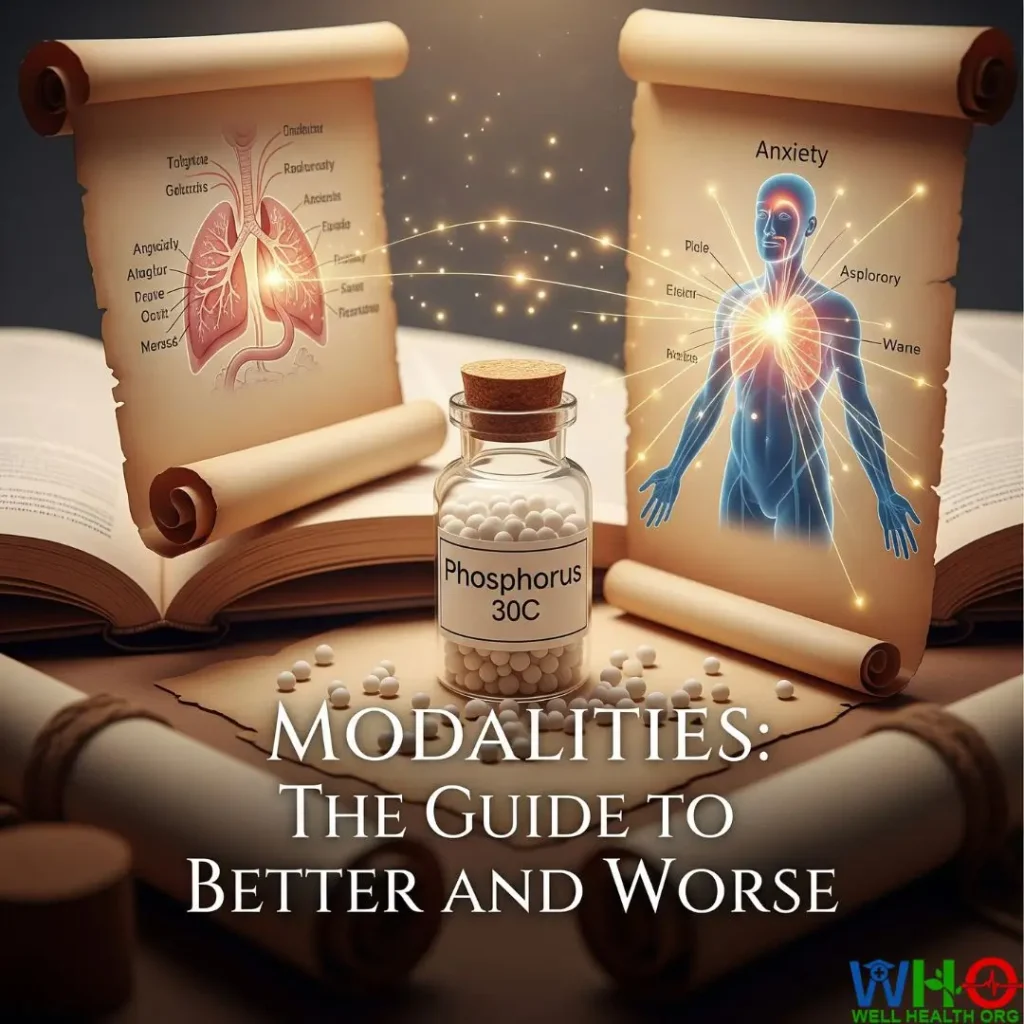
Modalities: The Guide to Better and Worse
In homeopathy, “modalities” are the specific conditions that make a symptom better or worse. They are critical for confirming that Phosphorus is the correct remedy.
Aggravating Factors (What makes them worse?)
- Lying on the Left Side: This is a major confirmation point. Lying on the left often aggravates heart palpitations or respiratory symptoms (coughing).
- Weather Changes: They are human barometers. Thunderstorms, wind, and sudden changes from hot to cold affect them deeply.
- Twilight: Anxiety often peaks in the evening as the sun goes down and darkness approaches.
- Missing Meals: Hunger aggravates their headache and causes tremors.
- Spicy or Warm Foods: Warm foods can trigger nausea (specifically in gastric cases), and spicy foods can upset their delicate digestion.
Ameliorating Factors (What makes them better?)
- Sleep: Even a short nap can be incredibly restorative for a Phosphorus person (unlike Lachesis, who wakes up worse).
- Cold Drinks and Food: As noted, cold items soothe gastric burning and general anxiety.
- Company and Touch: They are ameliorated by “magnetism”—rubbing, massage, or simply being held. Being around people energizes them.
- Right Side: Lying on the right side often relieves chest symptoms.
Comparative Materia Medica: Phosphorus vs. Other Remedies
To ensure you are selecting the right remedy, it is helpful to compare Phosphorus with others that have similar symptoms. Here is how to tell them apart.
1. Anxiety: Phosphorus vs. Arsenicum Album
Both remedies involve significant anxiety, restlessness, and burning pains.
- Phosphorus: The anxiety is diffuse. They want company because they feel safer with others. They are messy, open, and suggestible. They fear specific external things (storms, dark).
- Arsenicum Album: The anxiety is controlling. They are fastidious, obsessive about order and tidiness, and critical. Their fear is deeply centered on death and disease. They sip warm water (Phosphorus gulps cold water).
2. Respiratory Issues: Phosphorus vs. Bryonia
Both are major remedies for coughs and pneumonia.
- Phosphorus: The patient is restless and uncomfortable. They crave fresh air. The cough is worse lying on the left.
- Bryonia: The key is aggravation from motion. The Bryonia patient wants to lie perfectly still and be left alone. They will hold their chest when they cough to prevent movement. They are irritable (Phosphorus is generally pleasant).
3. Emotional Sensitivity: Phosphorus vs. Pulsatilla
Both are affectionate, weepy, and crave company.
- Phosphorus: Their connection is empathetic and electric. They are “bubbly.” They are generally chilly and love cozy warmth (except for the head/stomach).
- Pulsatilla: Their connection is clingy and dependent. They are “moody.” A key difference is that Pulsatilla is almost always warm-blooded and cannot stand stuffy rooms; they need open air even more than Phosphorus. Pulsatilla is usually thirstless; Phosphorus is thirsty.
Dosage, Potency, and Safety Guidelines
Using homeopathy effectively requires understanding potency. Phosphorus is a deep-acting remedy, so respect for dosage is required.
For Acute Conditions (Coughs, Nausea, Nosebleeds):
- Potency: 6C or 30C is widely available and safe for home use.
- Frequency: For intense symptoms (like a nosebleed or sudden cough), the remedy can be taken every 15 to 30 minutes for up to 3 doses. Once improvement begins, stop dosing. Repeat only if symptoms return.
- Format: Dissolve pellets under the tongue. Avoid touching them with your hands.
For Chronic Conditions (Anxiety, Constitution, Recurring Illness):
- Potency: Higher potencies like 200C, 1M, or 10M are often used.
- Warning: These should only be prescribed by a professional homeopath. High-potency Phosphorus can provoke a “healing crisis” or aggravation if used incorrectly. Because Phosphorus has such a deep affinity for the lungs and blood, it should be used with caution in people with advanced pathology (like tuberculosis or severe degeneration) unless under expert supervision.
Antidoting: It is generally believed that strong physiological stimulants can antidote (cancel out) homeopathic remedies. When taking Phosphorus, try to avoid:
- Strong coffee.
- Camphor or menthol (including strong mint toothpaste).
- Electric blankets (specifically for Phosphorus, who is sensitive to electricity).
Lifestyle Recommendations for the Phosphorus Type
If you identify as a Phosphorus constitution, you likely have a brilliant energy but struggle with sustainability. Beyond the remedy itself, specific lifestyle adjustments can help you stay balanced.
1. Grounding is Essential
Because Phosphorus types are so “airy” and mental, they need physical grounding.
- Diet: Focus on root vegetables (potatoes, carrots, beets) and protein. These “earthy” foods help anchor the metabolic energy.
- Exercise: Avoid over-exertion. Gentle, rhythmic exercise like walking, Tai Chi, or Yoga is better than high-intensity interval training, which might burn you out.
2. Manage Your Boundaries
Your empathy is a gift, but it is also your leak.
- The “Bubble” Technique: Visualize a protective bubble around you when you are in crowded places or dealing with emotional friends. Learn to say “no” to social engagements when you feel your battery draining.
- Sleep: Prioritize sleep. You replenish your nervous system during rest. A short 20-minute power nap in the afternoon can prevent evening anxiety.
3. Soothe the Senses
Since you are prone to sensory overload:
- Limit screen time, especially before bed. The flickering light of screens mimics the “phosphorescent” stimulation that can over-excite your brain.
- Create a calm, dimly lit sanctuary for relaxation.
Conclusion: Embracing the Light
Phosphorus is a remedy of light, connection, and intensity. It captures the essence of the sparkling conversationalist, the sensitive artist, and the empathetic friend. However, it also addresses the shadow side of this brilliance: the burnout, the anxiety, and the physical fragility that comes with burning too bright.
From a sudden hacking cough to deep-seated fears of the dark, Phosphorus offers a healing touch that is both gentle and profoundly deep. It reminds us that while it is beautiful to shine, we must also protect our fuel source.
Important Note on Professional Care: While this guide provides a comprehensive overview, homeopathy is a highly individualized art. Chronic conditions, deep anxiety, and recurrent physical issues require the objective eye of a trained professional. A homeopath can navigate the subtle distinctions between remedies and select the potency that matches your vital force.
If you see yourself in the description of Phosphorus—the desire for cold water, the sensitivity to storms, the need for company—you may have found a key to unlocking a higher level of health and vitality.
Medically Reviewed by Prof. Dr. Akram
Orthopedic Surgeon | Professor | Senior Medical Specialist
Prof. Dr. Akram is a distinguished surgeon with over 15 years of clinical expertise. Having served as a lead Emergency Specialist at Complex International Government Hospital, he currently leads a specialized team of 13 medical professionals at his private hospital. As a Professor at top medical universities, he ensures that every article on WellHealthOrg.com meets rigorous clinical standards.
Medical Disclaimer:
The information provided is for educational purposes only and is not a substitute for professional medical advice, diagnosis, or treatment. Always consult your physician for any medical concerns.
Our content is rigorously fact-checked by our 13-member Editorial Team under the clinical supervision of Prof. Dr. Akram.